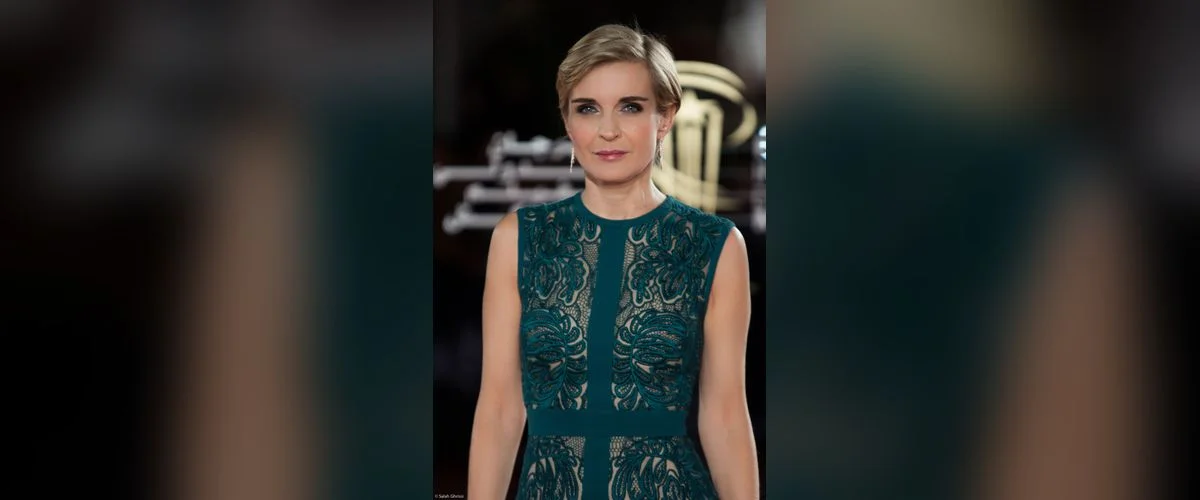
Cover photo: Mélita Toscan du Plantier, festival director — Salah Ghrissi / Wikimedia Commons, CC BY-SA 4.0.
In Marrakech, the international film festival is not only about screenings. For its 23rd edition, held from 20 to 28 November 2026, the FIFM brings together actors, directors, screenwriters and artists from many backgrounds. Around Marion Cotillard, the jury president, Jeff Goldblum, John Turturro and Younès Mégri will be celebrated for their careers. The "Conversations" programme will also give the floor to ten personalities of international and Moroccan cinema. An edition that highlights the different generations of creators and the diversity of perspectives on the seventh art.
A festival that puts artists at the heart of the encounter
Every year, the Marrakech International Film Festival turns the city into a meeting place for film professionals, artists and lovers of the seventh art. The films are naturally the heart of the event, but the presence of the people who imagine, perform and accompany them is just as much a part of its identity.
The 23rd edition, held from 20 to 28 November 2026, confirms this international dimension. The festival brings together recognised figures of world cinema, but also artists whose careers reflect the vitality of different national scenes. This diversity runs through three complementary events: the official competition jury, the tributes paid to notable artists and the public encounters of the "Conversations" programme.
These three strands allow cinema to be approached from several angles. The jury represents the critical gaze cast on new generations of directors. The tributes recall the importance of careers that have marked the history of cinema and popular culture. The "Conversations", for their part, propose to go beyond the roles and the works to discover the experiences, artistic choices and reflections of those who make contemporary cinema.
This structure gives the festival a dimension that goes beyond a simple succession of screenings. It creates a space for dialogue between generations, disciplines and cinematic traditions. An Oscar-winning actress can thus share the festival's institutional billing with an independent director, an American actor known for his singular roles or a Moroccan artist whose career was built between music and cinema.
For Marrakech, this meeting of different paths is one of the event's great riches. It is a reminder that cinema is a collective art, nourished by exchanges, influences and personal experiences.
Marion Cotillard, president of the FIFM 2026 jury
The presidency of the 23rd edition's jury goes to Marion Cotillard, one of the most internationally recognised French actresses. Her career spans French cinema, European productions and major Hollywood films. Her experience, built between auteur cinema and widely distributed films, gives her a particular place at the head of a jury tasked with distinguishing new talents.
Her international breakthrough stems in particular from her portrayal of Édith Piaf in La Vie en Rose, directed by Olivier Dahan. For this role, she won the Oscar for Best Actress in 2008. She became the second French actress to receive this distinction and the first to be awarded for a performance in a French-language film.
This recognition does not, however, sum up her career. Marion Cotillard has gradually built a filmography marked by the diversity of its worlds and collaborations. She has worked with French and international filmmakers, alternating roles in independent productions, intimate dramas and large-scale films.
Among the works that have marked her career are Two Days, One Night by the Dardenne brothers, Rust and Bone by Jacques Audiard, Inception by Christopher Nolan, Midnight in Paris by Woody Allen and Annette by Leos Carax. This variety reflects a career that has not confined itself to a single register.
Her choice to head the FIFM 2026 jury takes on particular meaning in light of the official competition's mission. It is dedicated to first and second feature films. The jury members are therefore called upon to discover filmmakers who are still building their artistic language and seeking to make their work known beyond their borders.
Marion Cotillard knows the demands of an international career, but also the different stages that allow an artist to find their place in the cinematic landscape. Her perspective can thus help appreciate works that do not necessarily rest on the same codes, the same means of production or the same narrative traditions.
Chairing a jury does not only involve naming a winning film. It means leading exchanges between professionals with sometimes very different sensibilities, confronting interpretations and reaching a collective decision. The president's personality and artistic experience contribute to this dynamic.
By choosing Marion Cotillard, the festival therefore places at the centre of this mission an artist whose career combines international recognition, a diversity of collaborations and a commitment to very different projects.
An international jury of nine personalities
Around Marion Cotillard, eight other professionals make up the official competition jury. Actors and filmmakers come from Denmark, Luxembourg, France, Tunisia, the United Kingdom, Senegal and Morocco.
This composition reflects a desire to bring together different artistic experiences. Some members are mainly known as performers, while others have developed a body of directing or writing work. Several have also worked in international productions without abandoning the specific features of their original cinema.
Claes Bang: a singular presence of Danish cinema
The Danish actor Claes Bang became known to a wide international audience thanks to The Square, Ruben Östlund's film awarded the Palme d'Or at the Cannes Film Festival in 2017.
In this work, he plays Christian, the director of a contemporary art museum confronted with a series of situations that challenge his certainties. The film uses humour, unease and social satire to question individual behaviour and the contradictions of the contemporary world.
This performance allowed him to take a step forward in his international career. He received the Best Actor award at the European Film Awards for his performance.
Since then, Claes Bang has taken part in projects of different genres, in cinema and television. He appears notably in The Northman, William Tell and several television productions, including the series Dracula.
His career illustrates a European actor's ability to move from demanding auteur cinema to international productions without losing a particular acting identity. His presence on the jury brings experience nourished by Scandinavian cinema and international collaborations.
Vicky Krieps: independence and sensitivity of performance
Originally from Luxembourg, Vicky Krieps has gradually established herself as a major actress of contemporary European cinema.
Her international recognition is notably linked to Phantom Thread by Paul Thomas Anderson, in which she shares the screen with Daniel Day-Lewis. Her performance attracted the attention of critics and the international public.
She then pursued a career marked by varied artistic choices. In Corsage, directed by Marie Kreutzer, she plays the Empress Elisabeth of Austria, known as Sissi, in an approach that moves away from traditional representations of the historical figure.
The film brought her significant recognition, notably at the Cannes Film Festival. Her work stands out for a way of building complex characters, often crossed by tensions between their personal identity and the expectations of their environment.
Vicky Krieps thus represents a generation of European actresses who move freely between national and international productions. Her presence on the FIFM jury brings a particular sensitivity to performance and character construction.
Emma Mackey: a generation between cinema and new forms of storytelling
The French-British actress Emma Mackey belongs to a generation whose career developed in an audiovisual landscape profoundly transformed by streaming platforms and the international circulation of works.
She became known to the wider public thanks to the series Sex Education, in which she plays Maeve Wiley. The success of the series allowed her to reach an international audience and gradually move into film projects.
She then appeared in Death on the Nile, Kenneth Branagh's adaptation, then in Barbie by Greta Gerwig, a production that enjoyed worldwide success.
Her career reflects the diversity of the paths that now lead young actors to international cinema. A series can be an important first showcase, but the rest of a career also depends on the ability to choose different projects and build an artistic identity of one's own.
Her presence on the jury brings the perspective of a performer who knows the recent developments of the audiovisual industry and the new forms of visibility for artists.
Gilles Lellouche: from performing to directing
A French actor, screenwriter and director, Gilles Lellouche has a career that combines popular cinema, comedy, drama and directing.
He has stood out as an actor in Little White Lies by Guillaume Canet, The Stronghold by Cédric Jimenez and All Your Faces by Jeanne Herry. These roles show an ability to move between very different registers, from ensemble comedy to social drama.
But Gilles Lellouche is not limited to performing. He also moved behind the camera with Sink or Swim, a comedy-drama about a group of men who take up synchronised swimming. The film was a major success and revealed a sensitive approach to characters confronting their fragilities.
He continued this experience with Beating Hearts, presented at the Cannes Film Festival. This work confirms his ambition to develop a personal cinema while keeping a strong relationship with the public.
His dual experience as an actor and director is particularly interesting on a jury devoted to first and second films. He knows the demands of the set, but also the responsibilities that come with building a feature film.
Kaouther Ben Hania: a major voice of Tunisian cinema
The Tunisian director Kaouther Ben Hania brings to the jury an essential experience of Arab and international cinema.
Her work stands out for an exploration of power relations, injustice and the situations in which individuals find themselves confronted with systems that overwhelm them.
She has developed a personal approach, situated on the border between documentary and fiction. This way of working allows her to question the limits of cinematic representation and to offer narratives that interrogate both reality and the forms used to tell it.
Among her best-known films are Challat of Tunis, Beauty and the Dogs, The Man Who Sold His Skin and Four Daughters. The latter, at the crossroads of documentary and staging, won the Golden Eye at Cannes and received an Oscar nomination in the Best Documentary Feature category.
Her international career was also strengthened with The Voice of Hind Rajab, presented in competition at the Venice Film Festival, where it won the Grand Jury Prize.
Kaouther Ben Hania represents a cinema that does not necessarily separate formal research from social and political questions. Her presence on the Marrakech jury underlines the importance of filmmakers able to renew narrative forms while giving a central place to human realities.
Andrew Haigh: intimacy as cinematic material
The British director and screenwriter Andrew Haigh is recognised for his work on human relationships, feelings and the traces left by the past.
His cinema gives an important place to details, silences and emotions that are sometimes expressed without being stated directly. Rather than favouring spectacular events, he is often interested in the way characters live their relationships and face their contradictions.
His film 45 Years, carried by Charlotte Rampling and Tom Courtenay, explores the upheaval caused by the discovery of an old secret in a couple settled together for several decades.
With All of Us Strangers, he offers a deeply intimate work about memory, solitude and family ties. The film was widely praised by critics and received several BAFTA nominations.
Andrew Haigh has also worked for television, notably with the series Looking, which explores the relationships and experiences of a group of friends in San Francisco.
His presence on the jury brings an attentive eye to the direction of actors, emotional construction and a film's ability to create a lasting relationship with the viewer.
Ramata-Toulaye Sy: a new generation of directors
The French-Senegalese director and screenwriter Ramata-Toulaye Sy represents a generation of filmmakers who build their careers between several cultures and narrative traditions.
Her first feature film, Banel & Adama, was presented in official competition at the Cannes Film Festival. The film tells a love story set in a village in northern Senegal and develops a world marked by beliefs, traditions and the tensions between individual desire and collective expectations.
The work stands out for its visual approach and atmosphere, which draw as much on the tale as on intimate drama. The director explores the characters' freedom and the consequences of their choices in a community structured by strong social rules.
Her career reflects the growing place of African filmmakers and the diversity of the narratives emerging on the international scene.
On the jury, Ramata-Toulaye Sy brings a perspective linked to a recent experience of a first feature film. This perspective is particularly relevant in a competition that seeks to reveal directors at the start of their careers.
Saïd Hamich Benlarbi: the Moroccan perspective on the jury
The presence of Saïd Hamich Benlarbi gives a Moroccan dimension to the composition of the 2026 jury.
Born in Fès in 1986 and a graduate of La Fémis, he is a director, screenwriter and producer. He works between Paris and Casablanca and has developed a career marked by production and film creation.
He already knows the Marrakech Festival's official competition as a filmmaker. In 2024, he presented his second feature film there, Across the Sea. Two years later, he returns in a different role, that of juror.
This move from the status of selected director to that of jury member is an interesting feature of this edition. It is a reminder that festivals are not only places of one-off recognition: they can accompany professional careers and allow artists to take part, at different stages of their careers, in the life of cinema.
His experience as a producer also gives him knowledge of the concrete realities of creation: developing projects, finding partners, financing, making and circulating films.
Through Saïd Hamich Benlarbi, the jury thus welcomes a Moroccan professional who knows the stakes of independent cinema and the relations between the European and Moroccan film industries.
Three tributes to celebrate exceptional careers
The FIFM 2026 pays tribute to three artists whose careers reflect the diversity of cinema and artistic creation: Jeff Goldblum, John Turturro and Younès Mégri.
The choice of these three personalities is particularly interesting. The two American actors have marked several generations of spectators through very different roles, while Younès Mégri represents a Moroccan artistic career built between music, composition and performance.
These tributes are not limited to recalling a succession of films. They allow the recognition of artistic identities, career choices and contributions that have gone beyond the scope of a single work.
Jeff Goldblum: an immediately recognisable signature
Jeff Goldblum holds a particular place in American cinema. For nearly six decades, he has built a career marked by an immediately identifiable screen presence.
His silhouette, his delivery, his humour and his way of playing characters have allowed him to develop a singular style. He can move from a dramatic role to a comedy or a spectacular production without losing this personality that characterises his acting.
One of his most memorable roles remains that of Seth Brundle in The Fly by David Cronenberg. In this film, he plays a scientist whose experiment causes a gradual and tragic physical transformation. The story rests on a metamorphosis that becomes a reflection on the body, identity and loss of control.
With Jurassic Park by Steven Spielberg, Jeff Goldblum definitively entered the popular imagination. His portrayal of the mathematician Ian Malcolm, an ironic character critical of the protagonists' scientific ambitions, became one of the most memorable elements of the saga.
He continued his career in varied worlds, notably with Independence Day, The Grand Budapest Hotel by Wes Anderson and Thor: Ragnarok. More recently, he plays the Wizard of Oz in the productions Wicked and Wicked: For Good.
This ability to cross genres is one of the hallmarks of his career. Jeff Goldblum is not associated with a single type of character. He has built a career in which eccentricity, elegance and humour can coexist with darker performances.
His artistic activity is not limited to cinema. A music lover, he also pursues a career as a jazz pianist with the Mildred Snitzer Orchestra. The group has released several albums, including Night Blooms, released in 2026.
This musical dimension sheds additional light on his relationship to creation. For Jeff Goldblum, performance, improvisation and artistic presence are not only linked to acting in front of a camera.
By paying tribute to him, the Marrakech Festival celebrates an artist whose career has spanned several generations and whose personality remains recognisable well beyond his most famous roles.
John Turturro: an actor between independent cinema and major productions
John Turturro is one of the notable figures of contemporary American cinema. For more than forty years, he has built a filmography that combines independent cinema, major productions, television, theatre and directing.
His acting stands out for its precision and its ability to give a strong personality to characters who are sometimes eccentric, fragile or contradictory.
His collaboration with Spike Lee is one of the important aspects of his career. He appears notably in Do the Right Thing and Jungle Fever, two works that hold an important place in the director's filmography.
He also maintains a notable artistic relationship with the brothers Joel and Ethan Coen. His performance in Barton Fink won him the Best Actor award at the Cannes Film Festival in 1991. The film also won the Palme d'Or that year.
A few years later, he played Jesus Quintana in The Big Lebowski. This character, which became emblematic, perfectly illustrates his taste for singular roles and performances that stay in the spectators' memory.
His filmography also includes collaborations with Martin Scorsese in The Color of Money, Robert Redford in Quiz Show, Nanni Moretti in Mia Madre and Pedro Almodóvar in The Room Next Door.
John Turturro has also developed a career as a director. His first feature film, Mac, received the Caméra d'Or at the Cannes Film Festival in 1992. He continued with several films, including Illuminata, Romance & Cigarettes and Fading Gigolo.
On television, he received an Emmy Award for his appearance in the series Monk. He also stood out in The Night Of and Severance, where he once again demonstrated his ability to build complex characters.
In Marrakech, his tribute thus highlights a career that is not limited to a succession of famous roles. It showcases an artist who has been able to move between different forms of creation and to collaborate with directors from very different worlds.
Younès Mégri: a Moroccan figure between music and cinema
The tribute paid to Younès Mégri has a particular significance in the Moroccan cultural context.
Born in Oujda in 1951, he grew up in a family where music and the arts held a central place. The Mégri brothers and sister developed an artistic world that durably marked Moroccan song.
An author, composer and performer, Younès Mégri stands out for a personal musical approach. His song Lili Twil, a great success in 1972 that earned a gold record, contributed to his recognition with the public.
His musical career led him to perform on several international stages, notably at the Olympia in Paris. This circulation beyond borders contributed to the influence of Moroccan music and to the recognition of a generation of artists seeking new sounds.
But Younès Mégri did not limit himself to song. He also developed a career in cinema, both as an actor and as a composer of film scores.
From the late 1980s, he took part in several Moroccan productions. Among the works he contributed to are Ali, Rabiaa and the Others… by Ahmed Boulane, Satan's Angels, The Return of the Son, The Moroccan Symphony by Kamal Kamal and The Blind Orchestra by Mohamed Mouftakir.
His performance in The Blind Orchestra earned him several international awards in 2015.
He also took part in foreign productions, which reflects the diversity of his career and his presence in different artistic worlds.
The importance of this tribute lies in this dual contribution. Younès Mégri belongs to a Moroccan musical history, but he is also an actor and composer who took part in several works of national cinema.
His career is a reminder that the boundaries between artistic disciplines are often more open than one might think. Music can accompany a film career, just as the experience of performing can enrich the work of a musician.
By devoting a tribute to him, the FIFM therefore recognises a figure whose influence goes beyond cinema alone. It also sheds light on part of Moroccan cultural memory.
"Conversations": ten personalities talk about their relationship to cinema
Among the important events of the FIFM 2026, the "Conversations" programme holds a special place.
Its principle is different from a press conference or a film presentation. The idea is to offer an exchange with a film personality in order to look back over their career, their inspirations, their professional choices and the experiences that have marked their artistic life.
These encounters allow the public to discover what lies behind the works: the hesitations, the intuitions, the decisive meetings, the difficulties of creation and the convictions that guide a career.
For this edition, ten personalities are announced in the programme. Among them are actors, directors and screenwriters from different countries.
Monica Bellucci: a career between European cinema and international productions
The Italian actress Monica Bellucci has a career built between European cinema, international productions and several languages.
She first drew attention with The Apartment, before appearing in Malèna by Giuseppe Tornatore and Irreversible by Gaspar Noé.
Her filmography also includes international productions such as The Matrix and Spectre. She has thus moved through very different worlds, from intimate drama to action cinema and major franchises.
More recently, she took part in Beetlejuice Beetlejuice. Her career illustrates a European actress's ability to work in several film industries and to collaborate with directors of very different sensibilities.
In Marrakech, her encounter with the public should allow her to look back over this international career, but also over the transformations of the acting profession and the way an artist builds her place in cinema over the years.
Xavier Dolan: an early and personal career
The Québécois director, screenwriter and actor Xavier Dolan became known very young with I Killed My Mother, his first feature film made when he was only nineteen.
The film quickly attracted attention through its energy, its personal approach to family relationships and its way of representing generational tensions.
He continued with Heartbeats, Laurence Anyways, Tom at the Farm and Mommy. The latter received the Jury Prize at the Cannes Film Festival.
With It's Only the End of the World, he won the Grand Prix at Cannes. His cinema regularly looks at family relationships, identities, emotions and difficulties of communication.
His career is interesting because it illustrates a rare path: that of an artist who gained international visibility with his very first works and who developed a personal cinematic language.
His participation in the "Conversations" offers a chance to look back over the building of a career begun very early and over the choices that accompany such rapid artistic development.
Arthur Harari: writing and the complexity of characters
A French director and screenwriter, Arthur Harari is notably known for Dark Diamond and Onoda: 10,000 Nights in the Jungle.
His work is characterised by an interest in characters confronted with complex situations and in paths that gradually distance them from their initial environment.
His collaboration on the screenplay of Anatomy of a Fall, directed by Justine Triet, earned him international recognition. The film won the Oscar for Best Original Screenplay, shared with Justine Triet and the other credited writers.
Arthur Harari is also associated with L'Inconnue, a film awarded the Prix Jean-Vigo.
His presence in the programme allows an essential dimension of cinema to be addressed: the work of writing. Before being a succession of images, a film rests on characters, a narrative structure and directorial choices.
Rian Johnson: a taste for storytelling and mystery
The American director Rian Johnson is known for his work on riddle-based narratives and stories built around characters whose intentions are not always immediately visible.
He drew attention with Brick, before directing Looper, a science-fiction film that plays with questions of time and destiny.
He then joined the Star Wars universe with The Last Jedi, before enjoying great success with Knives Out and its sequel Glass Onion: A Knives Out Mystery.
These films rest on a narrative construction in which information is gradually revealed to the viewer. The pleasure of the story comes as much from the characters as from the surprises and twists that structure the plot.
The encounter with Rian Johnson may thus interest film lovers who want to understand how a director builds a plot, arranges the clues and holds the audience's attention.
Cristian Mungiu: the social gaze of Romanian cinema
The Romanian director Cristian Mungiu holds an important place in contemporary European cinema.
He is notably known for 4 Months, 3 Weeks and 2 Days, the film that won him the Palme d'Or at the Cannes Film Festival in 2007.
His cinema is interested in social realities, moral dilemmas and individuals confronted with difficult situations. He often favours precise staging and attentive observation of behaviour.
In 2026, his film Fjord is also part of his international career. The director is announced among the personalities of the "Conversations" programme.
His experience allows the relations between cinema and society to be addressed, but also the way a film can deal with moral questions without offering simple answers.
James Gray: telling family ties and human contradictions
The American director James Gray has for several years developed a body of work marked by family relationships, origins, ambitions and disillusionments.
He drew attention with Little Odessa, before continuing with The Yards, We Own the Night, Two Lovers, The Immigrant and Armageddon Time.
His cinema is often interested in characters caught between their personal aspirations and the constraints of their environment. Family relationships, memory and transmission hold an important place in his narratives.
In Marrakech, he is also expected around Paper Tiger, presented at the festival.
His encounter with the public offers a chance to discover his relationship to storytelling, staging and the representation of America through deeply human stories.
Luca Guadagnino: the cinema of sensations and relationships
The Italian filmmaker Luca Guadagnino has established himself on the international scene with a body of work that explores emotions, desire, human relationships and the tensions between individuals.
He is notably known for Call Me by Your Name, a film that marked contemporary cinema with its sensitive approach to a story of love and self-discovery.
He continued with Suspiria, Bones and All and Challengers, works that reflect a great diversity of genres and styles.
For the FIFM 2026, he is also associated with Artificial, presented as part of the gala screenings.
His presence in the "Conversations" allows a look back over a career characterised by great formal freedom and an interest in the relationships between characters, their bodies and their environment.
Laïla Marrakchi: a Moroccan view of social change
The Moroccan director Laïla Marrakchi holds a particular place among the personalities announced for the encounters.
Her first feature film, Marock, released in 2005, marked part of Moroccan cinema by addressing the aspirations, contradictions and questions of a youth growing up in a changing social environment.
The film sparked discussions around the representation of Moroccan society, individual freedoms and relations between generations.
Laïla Marrakchi continued her career with Rock the Casbah and several television projects. Her work regularly looks at family relationships, social conventions and the place of individuals in their environment.
She is also associated with La más dulce, presented at the FIFM 2026.
Her presence in the "Conversations" programme is an opportunity to look back over several stages of her career and over the evolution of her view of Moroccan society.
She also brings an important perspective on the conditions of creation for Moroccan women directors and on the way local stories can resonate with an international audience.
Jeff Goldblum and John Turturro: two encounters around singular careers
The two artists honoured by the festival will also take part in the "Conversations" programme.
For Jeff Goldblum, the encounter will allow a look back over nearly six decades of career, from The Fly to Jurassic Park and more recent productions. His relationship to music and jazz is also an interesting dimension of his career.
John Turturro, for his part, will be able to discuss the different facets of his career, from independent cinema and his collaborations with the Coen brothers to major Hollywood productions and his directing projects.
Bringing these two artists together in the same programme makes it possible to go beyond the logic of tribute. The public can discover their experiences, their way of working and the evolution of their relationship to cinema.
Why these personalities give the FIFM 2026 a particular identity
The composition of the jury, the three tributes and the "Conversations" programme together draw a picture of contemporary cinema in all its diversity.
The personalities gathered in Marrakech do not necessarily share the same working methods, the same influences or the same careers. Some began in independent cinema, others gained international recognition through popular productions. Several have also developed an activity of directing, writing or producing.
This diversity is important, because it allows cinema to be considered as a set of practices and sensibilities rather than as a uniform industry.
Jeff Goldblum's career shows how an actor can build a strong identity while crossing several genres. John Turturro's recalls the importance of independent cinema and lasting artistic collaborations. Younès Mégri, for his part, illustrates the close links between music and cinema in Moroccan cultural history.
The jury brings together professionals who know different realities of creation. Marion Cotillard brings her experience as an international actress. Kaouther Ben Hania and Ramata-Toulaye Sy represent the perspectives of directors who question narrative forms and social realities. Andrew Haigh, Gilles Lellouche and Saïd Hamich Benlarbi bring complementary experiences of directing and production.
The "Conversations" extend this diversity by giving space to the words of the artists. The public can thus discover the motivations behind the works and better understand the choices that shape a career.
This approach contributes to the festival's cultural vocation. It helps create a link between the films and the people who bring them to life.
Morocco's place in this international dialogue
The international dimension of the FIFM does not mean that Morocco holds a secondary place in its own festival.
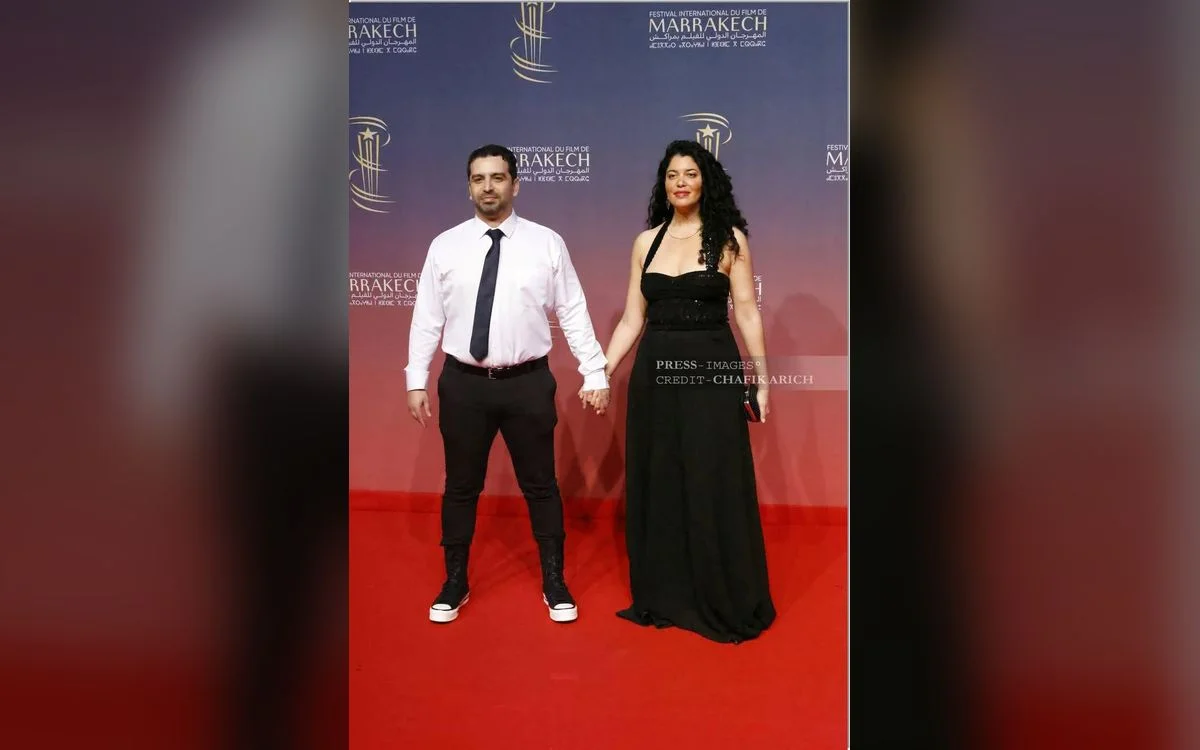
The presence of Younès Mégri among the honoured artists and of Saïd Hamich Benlarbi on the jury shows that Moroccan careers fully take part in the institutional programming of this edition.
Laïla Marrakchi, a guest of the "Conversations", also represents a generation of women directors who have helped evolve the subjects addressed by Moroccan cinema and the way they are presented.
These presences are important because they give visibility to different national paths. They are a reminder that Moroccan cinema is not limited to its films or its shooting locations: it is also built thanks to artists, technicians, producers, composers and directors whose careers can be part of international networks.
The festival offers a space where these experiences can be put into perspective with those of professionals from Europe, America, Africa and the Arab world.
It also allows the Moroccan public to discover personalities whose works have sometimes circulated in cinemas and international festivals without their careers always being known as a whole.
The tribute to Younès Mégri has a particular symbolic scope here. It recalls the contribution of a Moroccan artist whose career developed in both music and cinema. His path is part of a cultural memory that deserves to be passed on to new generations.
The presence of Saïd Hamich Benlarbi on the jury brings another dimension: that of a Moroccan professional who takes part directly in the evaluation and recognition of new international works.
These two forms of presence, one linked to artistic memory and the other to contemporary creation, illustrate two complementary ways of taking part in the global cinematic dialogue.
The jury and the discovery of new filmmakers
One aspect deserves particular attention: the mission entrusted to the official competition jury.
Unlike some international competitions that bring together films by already established directors, the FIFM competition is devoted to first and second feature films.
This orientation gives jury members a particular responsibility. They are not only tasked with comparing finished works. They must also recognise artistic propositions that may herald the emergence of new voices.
A first film may be imperfect in certain technical aspects while revealing a remarkable directorial personality. A second feature can confirm a talent or, on the contrary, show a filmmaker's desire to take new risks.
Evaluating these works therefore requires particular attention to the artistic approach, the construction of the narrative, the direction of actors and the film's ability to offer a personal perspective.
The diversity of the jury members can enrich these exchanges. The experiences of Marion Cotillard, Claes Bang, Vicky Krieps, Emma Mackey, Gilles Lellouche, Kaouther Ben Hania, Andrew Haigh, Ramata-Toulaye Sy and Saïd Hamich Benlarbi are not identical. It is precisely this plurality that can make the deliberations interesting.
The jury must announce its prize list on Saturday 28 November 2026, during the closing ceremony. The Golden Star will be awarded to one of the fourteen films in the official competition.
Beyond the winner's name, this award can represent an important stage in a director's career. A distinction obtained in Marrakech can help attract the attention of distributors, producers, programmers and new audiences.
For a filmmaker at the start of their career, this international visibility can open up prospects that extend well beyond the few days of the festival.
Marrakech, a space for dialogue between generations
The gathering of personalities with such different careers gives the FIFM a particular dimension.
An artist like Younès Mégri belongs to a generation whose work accompanied several transformations of Moroccan music and cinema. Jeff Goldblum and John Turturro represent international careers built over several decades. Marion Cotillard, Kaouther Ben Hania and Andrew Haigh embody other paths, marked by very different forms of creation and worlds.
Alongside them, artists like Emma Mackey and Ramata-Toulaye Sy represent more recent generations, who work in an internationalised audiovisual landscape.
This dialogue between generations is one of the festival's most interesting aspects. It allows experiences to be compared, know-how to be passed on and the discovery of how the profession of filmmaker or actor is changing.
Cinema evolves with technologies, modes of production, distribution platforms and audience expectations. But certain questions remain: how do you tell a story? How do you build a credible character? How do you find your place in a competitive industry? How do you keep artistic freedom while working with economic constraints?
The encounters organised in Marrakech allow these questions to be addressed through concrete experiences.
They are also a reminder that festivals are places of transmission. Young filmmakers can meet artists they have long regarded as references. Spectators can discover the behind-the-scenes of creation. Professionals can exchange around the sector's developments.
This human dimension gives particular depth to an event that might otherwise be seen only as a showcase of films.
An edition that celebrates both the works and those who make them
The FIFM 2026 highlights several essential dimensions of film creation.
With Marion Cotillard and the eight other jury members, the festival entrusts the discovery of new talents to professionals from different backgrounds. With the tributes to Jeff Goldblum, John Turturro and Younès Mégri, it recognises careers that have left a lasting mark on cinema and culture. With the "Conversations", it gives artists a space to share their experience and their vision of the profession.
These three events complement one another. They allow cinema to be seen at once as a work, a career and a human experience.
The presence of Moroccan and international personalities also underlines the festival's openness. Morocco appears there not only as a host country, but as a cultural space where artists, professionals and audiences from different parts of the world come together.
For Marrakech, this 23rd edition is a new opportunity to strengthen its role in the landscape of the major international festivals. But its cultural success is also measured by the quality of the exchanges it makes possible and by the place it gives to artists.
Through the encounters, the tributes and the deliberations, the festival recalls an essential idea: cinema does not live only through the images projected on a screen. It also exists thanks to the people who create them, the stories they choose to tell and the spectators who give them a new life.
Key information on the jury, tributes and personalities of the FIFM 2026
- Event: 23rd Marrakech International Film Festival
- Dates: 20 to 28 November 2026
- Jury president: Marion Cotillard
- Jury composition: nine film personalities
- Jury members: Marion Cotillard, Claes Bang, Vicky Krieps, Emma Mackey, Gilles Lellouche, Kaouther Ben Hania, Andrew Haigh, Ramata-Toulaye Sy and Saïd Hamich Benlarbi
- Honoured artists: Jeff Goldblum, John Turturro and Younès Mégri
- "Conversations" programme: ten personalities of international and Moroccan cinema
- Prize list: announced on Saturday 28 November 2026
- Main award: the Golden Star
Also read
- Marrakech Film Festival 2026: the complete practical guide
- Full FIFM 2026 programme: films, screenings and schedules
- How to get your tickets: E-Pass and E-Ticket
- Where the festival takes place: the four venues
- Moroccan cinema at the Marrakech Film Festival 2026
References and sources
The information on the jury, the tributes and the "Conversations" programme is mainly drawn from the official communications of the Marrakech International Film Festival, supplemented by press publications devoted to the 2026 edition.
- Marrakech International Film Festival – Official press release: the jury of the 23rd edition.
- Marrakech International Film Festival – Official press release: the three tributes to Jeff Goldblum, John Turturro and Younès Mégri.
- Marrakech International Film Festival – Official press release: "Conversations" programme.
- Marrakech International Film Festival – Press releases and official announcements.
- Le Desk – FIFM 2026: Jeff Goldblum, John Turturro and Younès Mégri honoured.
- TelQuel – Marrakech unveils the jury of its 23rd edition, chaired by Marion Cotillard.