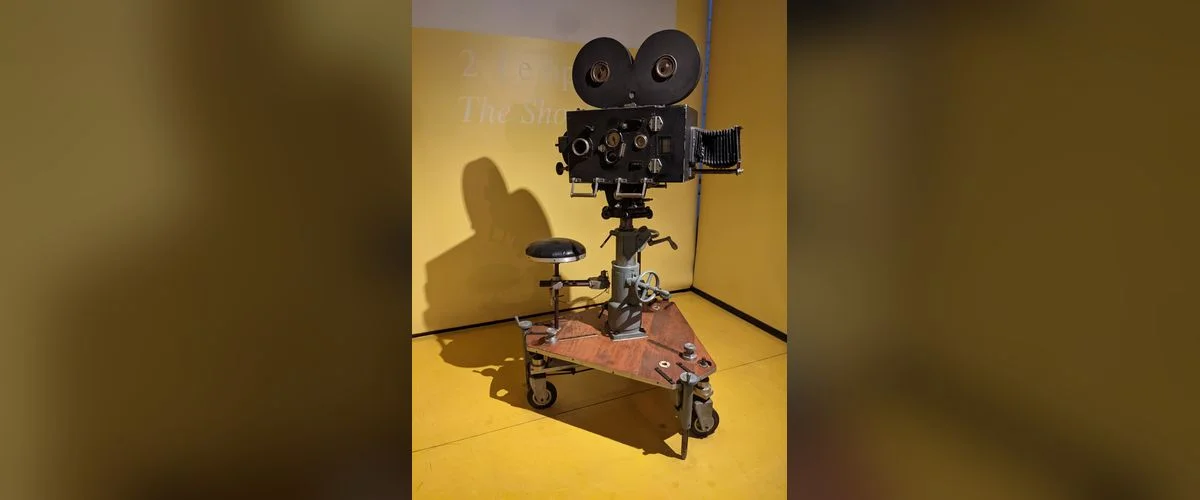
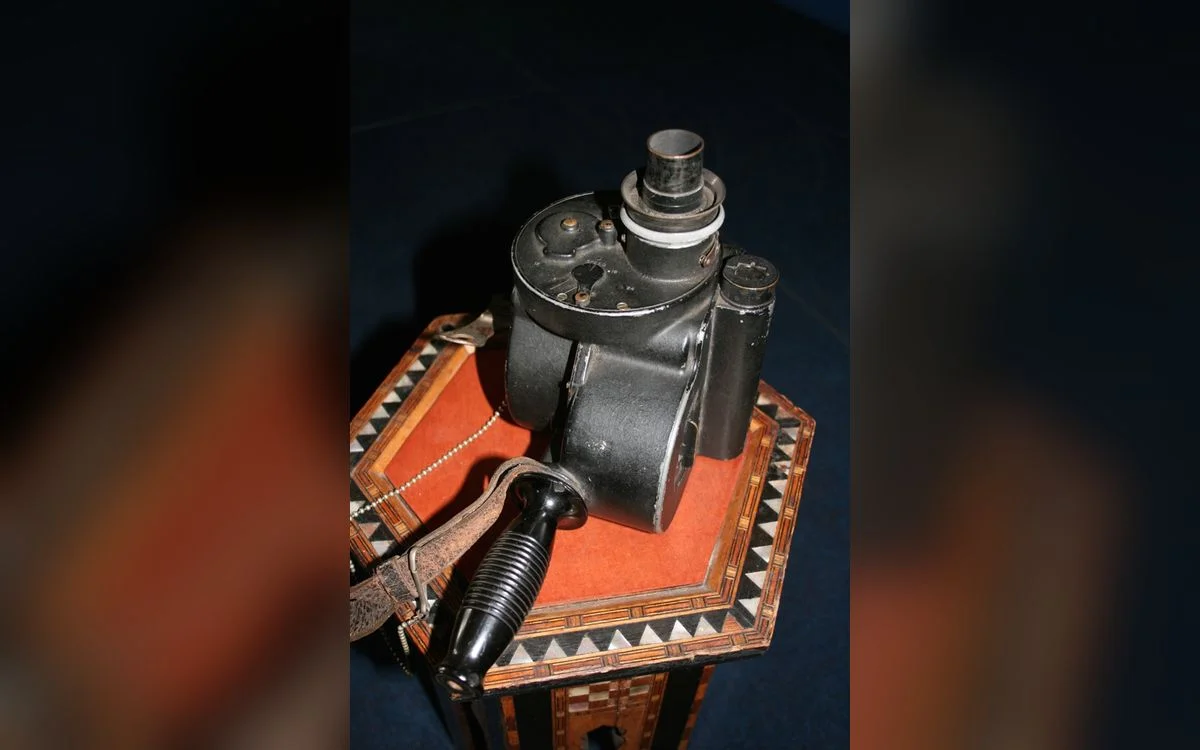
Cover photo: 35 mm film camera (illustration) — SunOfErat / Wikimedia Commons, CC BY-SA 4.0.
Introduction
Every year, Marrakech becomes one of the world's privileged meeting points for international cinema. For a few days, directors, actors, producers, distributors, critics and film lovers gather in the ochre city around a single language: that of images and stories. Yet behind the red carpets, the prestigious screenings and the encounters with the great figures of the seventh art, the Marrakech International Film Festival serves another function, one that is especially important for Moroccan culture: giving visibility to national film production and helping to write it into the international landscape.
The 23rd edition of the Marrakech International Film Festival, held from 20 to 28 November 2026, is a privileged occasion to observe the transformations of Moroccan cinema. Its programme brings together 76 films from 39 countries. Among them, eleven Moroccan films appear across the various sections, alongside three works shot in Morocco. The Moroccan Cinema Panorama, for its part, gathers six fiction features and documentaries. This presence is therefore not confined to a national section: it runs through the competition, the gala screenings and the spaces devoted to nurturing new projects.
Stories rooted in social realities, tales of transmission, portraits of women, childhood memories, rural territories and lives marked by the country's transformations: the films presented this year reveal several ways of telling contemporary Morocco and its memories. They also testify to the diversity of artistic paths, forms of production and international collaborations that shape the evolution of this cinematography.
To grasp the scope of this edition, one has to look beyond the film selection. One has to return to the history of Moroccan cinema, understand the conditions of its development, observe the role of institutions and festivals, and then examine the works that today make up this new cinematic cartography.
1. Moroccan cinema: a history built between heritage, modernity and the search for identity
Moroccan cinema did not develop outside its political and cultural history. Since the first decades of independence, it has maintained a constant dialogue with the transformations of society, questions of identity, urban change, regional legacies and the relationship between tradition and modernity.
The history of national cinema is also that of a gradual search for means of production, financing structures and forms of expression capable of giving a place to Moroccan perspectives in a sector long dominated by foreign productions.
From the first productions to the birth of a national cinema
After Morocco gained independence in 1956, the question of representing the country through its own images progressively became a cultural stake. Developing a national production then required the training of professionals, the building of infrastructure and the establishment of institutions able to support directors.
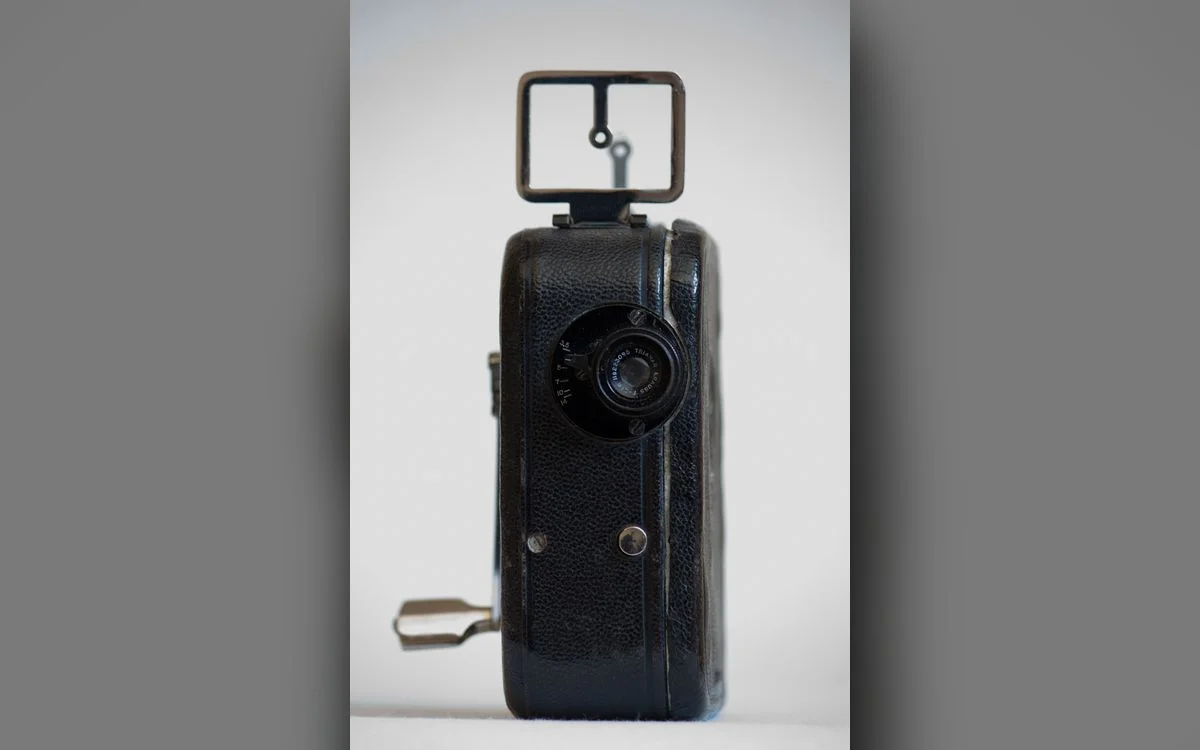
The Moroccan Cinematographic Centre (CCM), created in 1944, plays an essential role in this structuring. It is involved in particular in organising the sector, supporting production, promoting Moroccan cinema and cooperating with foreign professionals.
Among the early milestones of this history is The Cursed Son (Le Fils maudit), directed by Mohamed Ousfour in 1958. The film is regularly cited among the first feature-length works made by a Moroccan filmmaker after independence.
But it is above all in the 1960s and 1970s that the contours of a more assertive national cinema gradually take shape. Directors begin to explore different narrative and aesthetic forms, moving away from purely commercial models to question society and individuals.
Wechma: a turning point in the history of Moroccan cinema
Directed by Hamid Bennani in 1970, Wechma holds a particular place in the history of Moroccan cinema. Considered one of the founding works of its cinematic modernity, the film marks a significant aesthetic and narrative break.
Its symbolic approach, its visual construction and its interest in social and psychological mechanisms reflect a will to develop a cinematic language of its own.
Around this period other filmmakers also emerge whose careers will enrich national production: Souheil Ben Barka, Jilali Ferhati, Ahmed El Maanouni and Mustapha Derkaoui, among others.
Their works explore varied subjects, from the transformations of society to questions of memory, social class, individual freedom and the relationship with power.
This period matters because it gradually establishes a fundamental idea: Moroccan cinema should not merely represent the country as a backdrop or a shooting location. It can also become a space for reflection on its history, its contradictions and its aspirations.
From the 1980s to the 2000s: structuring and diversification
The following decades see the conditions of production and financing evolve. Public support mechanisms take on growing importance and allow new projects to see the light of day.
The Fund for Support to Film Production, created in 1980, is a major instrument of this policy. Its evolution gradually accompanies the structuring of the industry and the multiplication of national productions.
In the early 1990s, films such as Love in Casablanca (L'Amour à Casablanca) by Abdelkader Lagtaâ and Looking for My Wife's Husband (À la recherche du mari de ma femme) by Mohamed Abderrahman Tazi illustrate different directions in Moroccan cinema: the exploration of human relationships, social comedy, the transformations of urban life and the tensions between traditional values and individual aspirations.
The following years see the emergence of a generation of filmmakers who help renew the subjects and forms of national cinema. Among them are Nabil Ayouch, Nour-Eddine Lakhmari, Ismaël Ferroukhi and other directors who develop careers between Morocco and international production networks.
Their films address social realities that are sometimes harsh, but also the changes affecting youth, class relations, the place of women, urban tensions and the consequences of economic transformations.
Cinema thus becomes a space where different representations of Morocco confront one another: the country of traditions, that of great cities in flux, that of the social margins and that of a youth seeking its own place.
A plural cinematography
It would be reductive to speak of Moroccan cinema as a homogeneous whole. The works produced in Morocco are distinguished by their languages, their territories, their narrative forms and their sensibilities.
Moroccan Arabic, Amazigh, French and other languages can coexist within productions, reflecting the country's linguistic and cultural diversity.
Films can also take very different directions: social dramas, popular comedies, documentaries, historical narratives, auteur cinema, experimental works or productions intended for international release.
This plurality is one of the riches of Moroccan cinematography. It also explains why an international festival like Marrakech's can play an important role: it offers a space where different artistic expressions can be discovered and set in dialogue.
2. The 2026 Marrakech Festival: a Moroccan presence beyond the national section
The 23rd edition of the Marrakech International Film Festival presents 76 films from 39 countries. This international programme is spread across several sections: Official Competition, Gala Screenings, Horizons, 11th Continent, Moroccan Cinema Panorama, Young Audiences & Families and Tributes.
Within this whole, eleven Moroccan films appear across the various sections, alongside three films shot in Morocco.
This distinction matters. It helps to understand that the national presence does not rest solely on films produced exclusively in Morocco. It also includes co-productions and international works that call on Moroccan professionals or use the territory as a creative space.
The Moroccan Panorama brings together six films, but other works associated with Morocco appear in the international sections. This distribution gives broader visibility to national filmmaking and allows several forms of participation in the film industry to be showcased.
Alkebulan: Morocco in the Official Competition
Directed by Yassine Marco Marroccu, Alkebulan is one of the most noted Moroccan titles in the selection. The film is presented in the Official Competition, which brings together fourteen first and second features vying for the Golden Star.
It is a co-production between Morocco, Hungary and Qatar, running 130 minutes. The story follows Edoardo, who travels across Morocco from Casablanca to the edges of the Sahara in search of a ship lost off the Atlantic coast. His path crosses that of Amastan, a young Tuareg shaman searching for a sacred amulet stolen from his tribe.
The narrative is built around two trajectories that meet in a tribal sanctuary, where the secrets of the present awaken the shadows of the past.
The presence of Alkebulan in the Official Competition is significant. It shows that productions associated with Morocco can also take their place in an international selection that highlights the new voices of world cinema.
The film draws on several languages, notably Arabic, Berber, French and Italian. This linguistic dimension accompanies a story that crosses several territories and several cultural worlds.
Its presence in Marrakech also underlines the importance of co-productions in developing contemporary film projects. Such collaborations can bring together funding, technical skills and distribution networks from several countries.
3. The Moroccan Cinema Panorama: six films to explore the country's realities
The Moroccan Cinema Panorama is the heart of this edition for viewers who wish to discover national filmmaking. The six selected films do not form a single artistic movement. They offer, rather, several perspectives on society, memory, tradition, human relationships and individual journeys.
The presence of both fiction and documentary also makes it possible to observe the diversity of forms used by Moroccan filmmakers.
Bardi, by Tala Hadid: the Tbourida as living memory
Presented as the Panorama's opening film, Bardi is a documentary by Tala Hadid, co-produced by Morocco, France, the United States and Qatar. Running 109 minutes, the film is supported by the Atlas Workshops.
Tala Hadid is a photographer and director. Her artistic path lies at the meeting point of documentary imagery, the observation of individuals and aesthetic research.
In Bardi, she follows a brotherhood of horsemen across central Morocco. The film focuses on the Tbourida, an equestrian tradition deeply rooted in the country's cultural history.
The Tbourida, also known as fantasia, is a collective practice in which riders advance in formation before simultaneously firing their black-powder weapons. Beyond the equestrian feat, it represents a tradition tied to martial memory, collective celebration and the transmission of know-how.
Tala Hadid's film explores the border between documentary and fiction. It takes an interest in a world of men and boys gathered around a centuries-old ritual.
This choice is especially fitting for an event held in Marrakech. It reminds us that Moroccan heritage is not limited to monuments, medinas and historic architecture. It also includes living practices, gestures, rituals and traditions passed down across generations.
The Tbourida belongs to that category of intangible heritage that continues to exist in rural spaces and community gatherings.
Through its cinematic gaze, Bardi invites us to observe how a tradition can be filmed, interpreted and transmitted to a contemporary audience.
Banou, by Mouhssine El Badaoui: a woman facing a male tradition
With Banou, director Mouhssine El Badaoui offers a 79-minute documentary, co-produced by Belgium and Morocco and presented as a world premiere.
The film follows Hanane Talid, who seeks to establish herself as Marrakech's sole female representative in the world of the Tbourida. To achieve her ambition, she has formed her own troupe of horsewomen.
The practice is costly and traditionally male. Hanane must therefore face economic, social and cultural obstacles to keep her project alive.
The documentary takes on an added dimension when bulldozers threaten to destroy her village to make way for luxury housing developments. Facing this threat, she decides to take part with her troupe in Morocco's most prestigious moussem.
The narrative thus goes beyond the simple depiction of an equestrian tradition. It brings to light the relationship between heritage, territory, urban transformation and the place of women in cultural practices.
The confrontation between an ancient tradition and contemporary real-estate pressures is one of the film's most compelling threads.
Here the Tbourida is at once a cultural practice, a collective activity and a space in which a woman seeks to assert her legitimacy.
This approach reminds us that safeguarding heritage is not only about preserving traditional forms. It also means reflecting on the people who keep them alive, the conditions of their transmission and the possibility of letting them evolve.
By placing Hanane at the centre of his narrative, Mouhssine El Badaoui offers a human reading of cultural transmission.
Hoods (Cagoules), by Mohamed Mouftakir: social tensions and the secrets of the past
Directed by Mohamed Mouftakir, Hoods (Cagoules) is a 97-minute Moroccan fiction presented as a world premiere.
The film follows Mona, a woman who lives alone in a working-class neighbourhood and organises private parties. One evening, as she returns home, a hooded young man under the age of twenty breaks into her flat. In the nearby streets, other hooded youths spread chaos, destroying and setting fire to whatever lies in their path.
The encounter between Mona and this intruder brings buried secrets from her past back to the surface.
The narrative looks at the clash between an individual story and a collective situation marked by violence and disorder.
Mohamed Mouftakir already holds an important place in Moroccan cinema. His first feature, Pegasus (Pégase), released in 2009, received several awards, notably at the Tangier Festival and at FESPACO.
With Hoods, he returns to a form of fiction that uses suspense and dramatic tension to address human relationships and the wounds of the past.
The film's world premiere in Marrakech is an important occasion to discover this new work in its first context of public presentation.
Halima, by Yassine El Idrissi: a woman's memory and the transformations of the Rif
The film Halima, directed by Yassine El Idrissi, is an 85-minute Moroccan fiction.
The main character, aged 86, lives with her husband in a modest house by the sea. To scrape a living, she gathers and sells mussels. Her days are organised around the rhythm of the tides, but her past continues to weigh on her existence.
Years earlier, Halima lived alone in an old house deep in the mountains of the Rif. This home had been built by her first husband and represented a deep bond with their shared history.
When the region is affected by a conservation project that forces residents to leave, Halima refuses to abandon her house. After her husband's death and the loss of her livestock, she goes through a period of hardship and ends up sheltering men and goods that move clandestinely through the mountains.
The film addresses several questions that go beyond its character's fate: the bond with the land, family memory, forced displacement, precarity and the transformation of rural territories.
The Rif is an essential space in the narrative. The mountains, houses and landscapes are not mere backdrops. They take part in constructing the character's memory and her relationship with the world.
Yassine El Idrissi — filmmaker, screenwriter and producer trained at the Netherlands Film Academy — has also worked as a photojournalist. This experience of observing social realities sheds light on his interest in human journeys.
The film's festival run includes a competition screening at the Shanghai International Film Festival, where it won the awards for Best Director and Best Actress.
With Halima, the Panorama makes room for a story set far from the major cities and recalls the richness of regional narratives in Moroccan cinema.
Man of Signs (L'Homme des signes), by Zhor Fassi-Fihri: art as an answer to the wounds of childhood
Directed by Zhor Fassi-Fihri, Man of Signs (L'Homme des signes) is a 116-minute Moroccan-French fiction, presented as a world premiere.
The film draws on the life of the painter Mehdi Qotbi. It recounts the journey of Mehdi, an internationally recognised artist, who looks back on a childhood marked by poverty, violence and rejection.
During a retrospective held in a Parisian gallery, the character revisits the stages of his path and the encounters that led him towards art.
Painting appears as a means of personal transformation. It allows the character to turn his wounds into a vocation and to build an identity that goes beyond the painful experiences of his childhood.
But behind the artistic recognition remains an intimate quest: to find Florence again, the one who revealed to him love, freedom and the possibility of another life.
This narrative links several important themes: memory, transmission, inner exile, recognition and the power of artistic creation.
The choice of Mehdi Qotbi as a source of inspiration also gives the film a particular cultural dimension. The Moroccan artist is associated with a visual research founded on signs, scripts and graphic forms.
Zhor Fassi-Fihri's film thus offers a reflection on how art can become a universal language, capable of transcending geographic and cultural borders.
Until Dawn (Jusqu'à l'aube), by Mohamed Zineddaine: rediscovering 1970s Morocco
With Until Dawn (Hatta Al Fajr), Mohamed Zineddaine returns to the Morocco of the 1970s through the eyes of a sixteen-year-old boy.
The film is set in Kénitra, between the banks of the Sebou and the bustle of a port city marked by the presence of American soldiers and a lively nightlife.
Hamid tries to find his place in a difficult family environment. His father, a marginal figure, cares for wounded storks. His mother forces a marriage upon him that pushes him to grow up too fast.
To survive, the teenager sells newspapers and gradually discovers violence, but also the tenderness of the world. His relationship with Ghenou, a sex worker described as gentle and clear-sighted, contributes to his learning of freedom and human complexity.
Running 85 minutes, the film is a co-production between Morocco and Italy. It is supported by the Atlas Workshops.
The work's interest lies notably in its historical and geographic anchoring. Kénitra, the Sebou, the port spaces and the social relations of the era compose an environment rarely placed at the centre of international cinematic representations of Morocco.
The film offers a sensitive memory of a period of transformation, observed not through a general historical discourse but from the experience of a teenager.
The presence of Until Dawn in the Panorama thus broadens the geography of Moroccan cinema and recalls the importance of regional narratives.
4. Beyond the Panorama: films associated with Morocco in the international sections
Morocco's presence at the festival is not limited to the six Panorama films.
Several works presented in the other sections testify to the diversity of relationships between Moroccan filmmakers and international productions.
La más dulce: Moroccan women workers at the centre of an international story
Directed by Laïla Marrakchi, La más dulce (Strawberries) is presented in the Gala Screenings. It is a co-production between France, Morocco, Spain and Belgium.
The film follows Moroccan seasonal workers in the strawberry greenhouses of southern Spain. Behind the products consumed daily in Europe, it reveals the working conditions and power relations that structure part of seasonal agriculture.
The characters are confronted with situations of abuse and harassment. With the help of a lawyer, they decide to denounce what they have endured, at the risk of losing everything.
Laïla Marrakchi, known notably for Marock and Rock the Casbah, turns here to a reality that connects Morocco to Europe through migration, labour and economic inequality.
The film is especially interesting because it shifts the gaze. Morocco is represented not only through its territories or traditions: it also appears in the trajectories of its citizens abroad.
The experiences of these women workers become a subject of cinema that questions globalisation, dignity and the visibility of people whose labour often remains absent from dominant narratives.
The film was chosen to represent Morocco in the race for the Oscar for Best International Feature. Its appearance in Marrakech gives it additional visibility among audiences and professionals.
Leila and the Night: Marrakech and the memory of Leila Alaoui
Presented in the Gala Screenings, Leila and the Night (Leila et la nuit), by Fellipe Barbosa, is a co-production between France, Morocco and Brazil.
The film draws on the life of the Moroccan photographer Leila Alaoui. It follows Christine and Aziz, who are preparing to welcome their children to their family estate in Marrakech. Their balance is shattered when they learn that their daughter Leila has been gravely wounded during an assignment in Burkina Faso.
The story is built around absence, memory and the relationship between the members of a family facing painful news.
The reference to Leila Alaoui gives the film a particular resonance. The photographer devoted an important part of her work to representing identities, migrations and human realities through portraiture and documentary photography.
Her artistic trajectory was also marked by her commitment and her interest in people whose stories are often under-represented in the media.
Fellipe Barbosa's film is therefore not limited to a family narrative. It dialogues with the memory of an artist whose work helped give visibility to different communities and human experiences.
Morocco's participation in this co-production also shows how national cultural figures can inspire works produced in an international framework.
The Roses of Marrakech: the city as a space of creation
In the Horizons section, The Roses of Marrakech (Les Roses de Marrakech), directed by Ginevra Elkann, is a work shot in Morocco with, among others, Fanny Ardant and Nisrin Erradi.
Its presence in the selection highlights another dimension of the relationship between Marrakech and cinema: the city is not only a host for festivals or a backdrop for foreign productions. It can also become a narrative and artistic space.
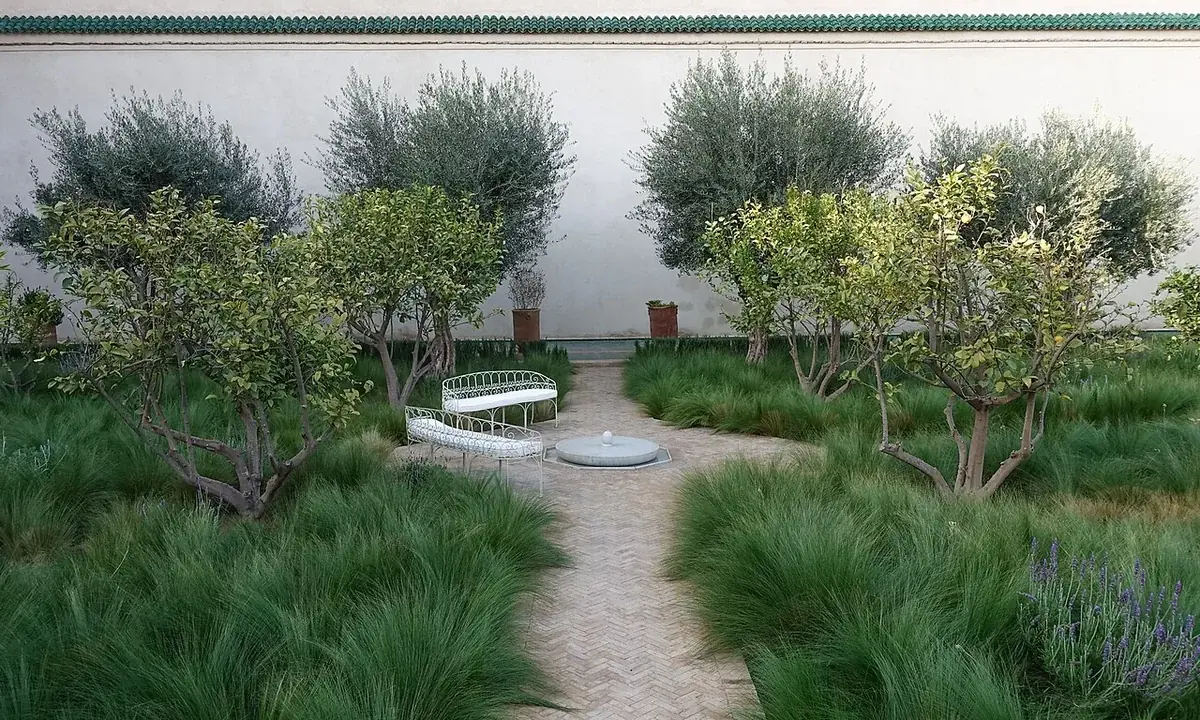
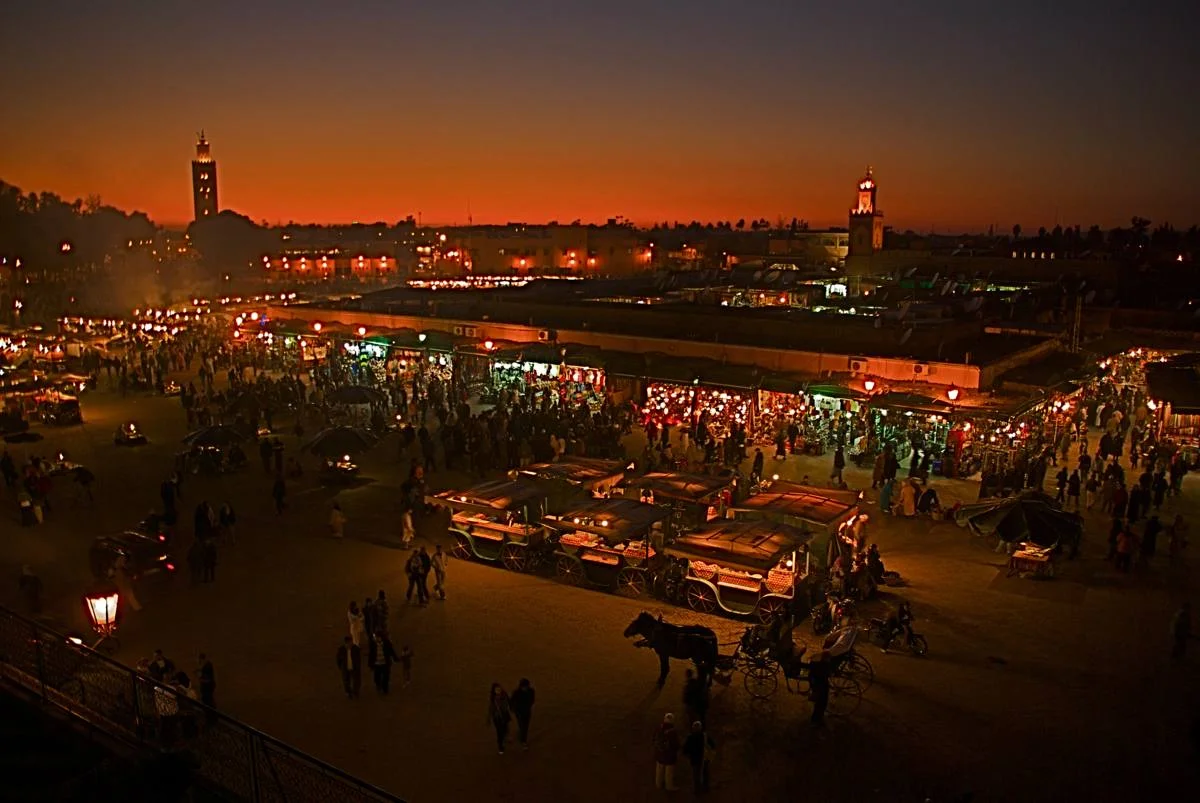
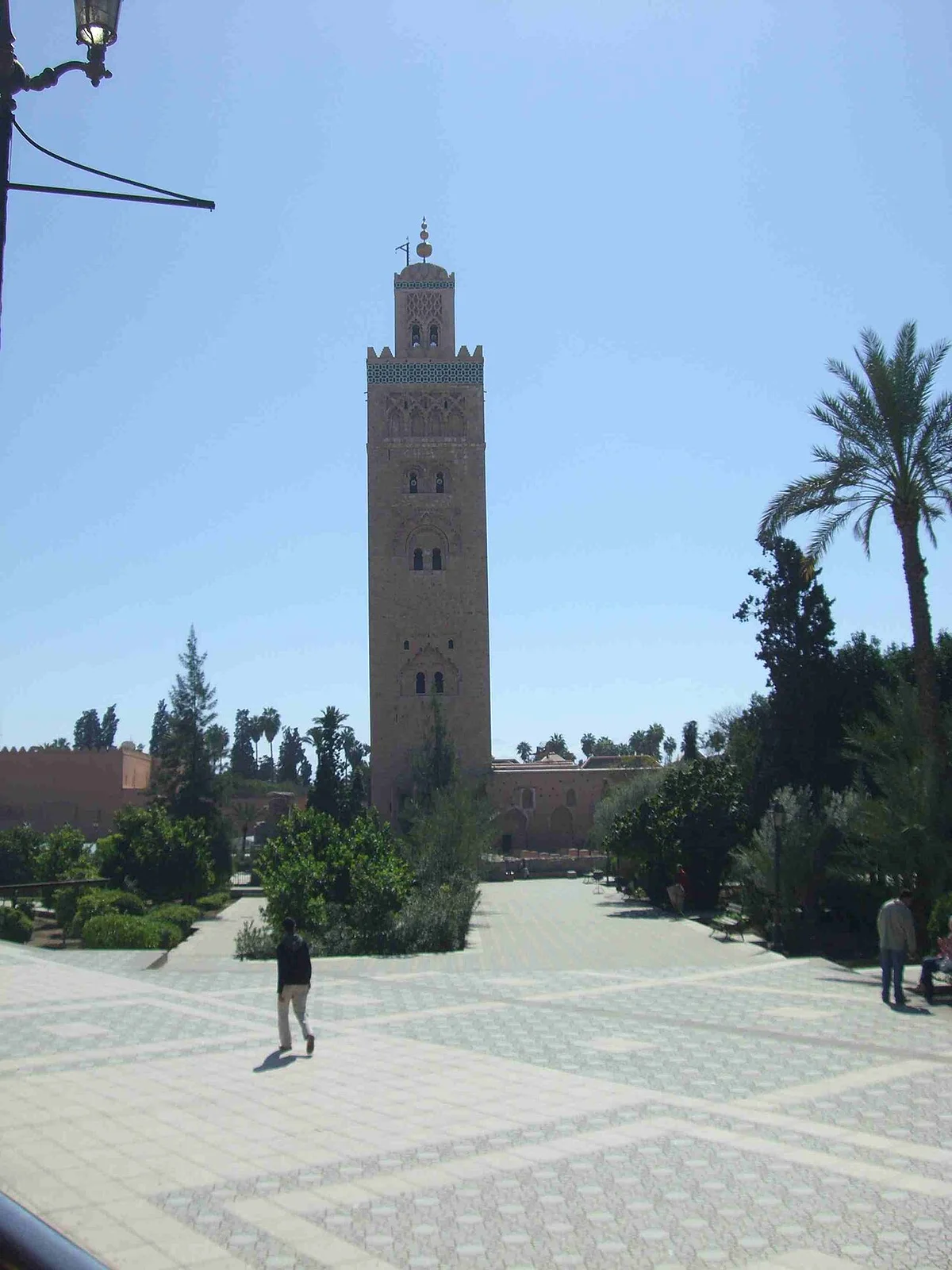
Marrakech has a distinctive visual identity, built around its architecture, its gardens, its historic spaces and its urban contrasts.
This richness has long contributed to its appeal for international directors.
But the essential question remains that of the gaze cast upon the city: how to film Marrakech without reducing it to a tourist image? How to represent its inhabitants, its transformations and its everyday realities?
These questions are important for understanding the place of territory in contemporary cinema.
5. The Atlas Workshops: supporting films before they reach the screen
A film festival is not measured solely by the films it screens. It is also measured by its capacity to support works that are still being created.
It is in this spirit that the Atlas Workshops hold an essential place in the ecosystem of the Marrakech Festival.
Created in 2018, this professional platform supports Moroccan, Arab and African filmmakers and producers at different stages of developing and producing their films.
The ninth edition runs from 22 to 26 November 2026, under the patronage of the Brazilian filmmaker Kleber Mendonça Filho.
This year, thirty projects and films from fourteen countries were selected from among 410 submissions.
The selection includes fourteen projects in development, eleven films in production or post-production and five works in the Atlas Perspectives section, dedicated to Moroccan cinema.
This structure makes it possible to support films according to their needs: writing, development, financing, editing, post-production, partnerships and distribution.
The Moroccan projects in development
Among the selected Moroccan projects are Ashes (Cendres), by Meryem Benm'Barek, The Sleepers (Les Endormis), by Sofia Alaoui, and The Waltz of the Wild (La Valse des sauvages), by Yasmine Benkiran.
These projects represent different stages in the directors' careers and illustrate the importance of supporting works before they reach the production stage.
A film is not born at the moment of its first screening. It is the result of an often long process, which begins with an idea, a script and a search for partners.
Professional workshops allow projects to be confronted with outside perspectives, to improve their presentation and to facilitate their encounter with producers and distributors.
Atlas Perspectives: five Moroccan projects
The Atlas Perspectives section highlights five Moroccan projects:
- Amar Fulfilled His Dream (Amar a réalisé son rêve), by Samira El Mouzghibati.
- B512, the Man Who Forgot to Die (B512, l'homme qui oublia de mourir), by Jihane El Bahhar.
- Like My Sister (Comme ma sœur), by Sonia Terrab.
- Medina, by Yassine Fennane.
- The Birds of the Cemetery (Les Oiseaux du cimetière), by Madane El Ghazouani.
This selection is an interesting indicator of the diversity of generations and artistic approaches present in Moroccan cinema.
It also gives visibility to projects that are not yet necessarily accessible to the general public but that represent part of tomorrow's cinema.
A platform that reaches beyond national borders
The Atlas Workshops are not reserved for Moroccan projects alone. Their vocation is also to support Arab and African cinemas.
This regional dimension is important. It makes it possible to build professional relationships between producers, directors and institutions that work in sometimes very different economic and cultural environments.
Co-productions can thus facilitate access to financing, technical skills and distribution networks.
They also offer a possibility of circulating films beyond their country of origin.
For Moroccan cinema, this openness represents an opportunity — provided that international collaborations make it possible to preserve the singularity of the projects and the artistic intentions of their authors.
6. Cinema and heritage: why Marrakech is a symbolic place
Marrakech has a particular relationship with the visual arts and forms of representation.
Its architectural heritage, its medinas, its gardens, its public squares, its historic districts and its surrounding landscapes form an especially rich environment for artists and directors.
But the relationship between the city and cinema is not limited to its aesthetic potential.
Marrakech is also a space where different histories meet: those of its inhabitants, its artisans, its merchants, its artists, its travellers and the communities that make up its identity.
The Marrakech International Film Festival helps to write this diversity into a cultural event of international scope.
The screenings held at the Palais des Congrès, the Colisée cinema and the Yves Saint Laurent Museum contribute to this presence of cinema across several spaces of the city.
The festival thus becomes an experience that goes beyond the screening room. It creates opportunities for encounters between the public, professionals and works.
Filming Morocco: beyond the tourist image
One of the challenges of contemporary Moroccan cinema is to develop representations that go beyond the country's best-known images.
Marrakech, the dunes of the Sahara, the Atlas mountains, the medinas and the coastal landscapes are often used as visual elements in international productions.
These places have real aesthetic power, but their representation can sometimes reduce Morocco to a succession of landscapes and symbols.
Cinema made by Moroccan authors makes it possible to introduce other dimensions: social relationships, family memories, inner conflicts, the transformations of territories and everyday experiences.
In Banou, the Tbourida is filmed through the journey of a woman seeking to keep her troupe alive. In Halima, the Rif becomes a space of memory and displacement. In Until Dawn, Kénitra and the Sebou take part in the construction of a historical and personal narrative.
These films show that territory can become a genuine character in the cinematic narrative.
It is no longer simply a matter of filming a recognisable place, but of understanding how individuals live in that space, how they transform it and how it shapes their identity.
Intangible heritage as cinematic material
The presence of Bardi and Banou in the Panorama offers a particular occasion to reflect on the relationship between cinema and intangible heritage.
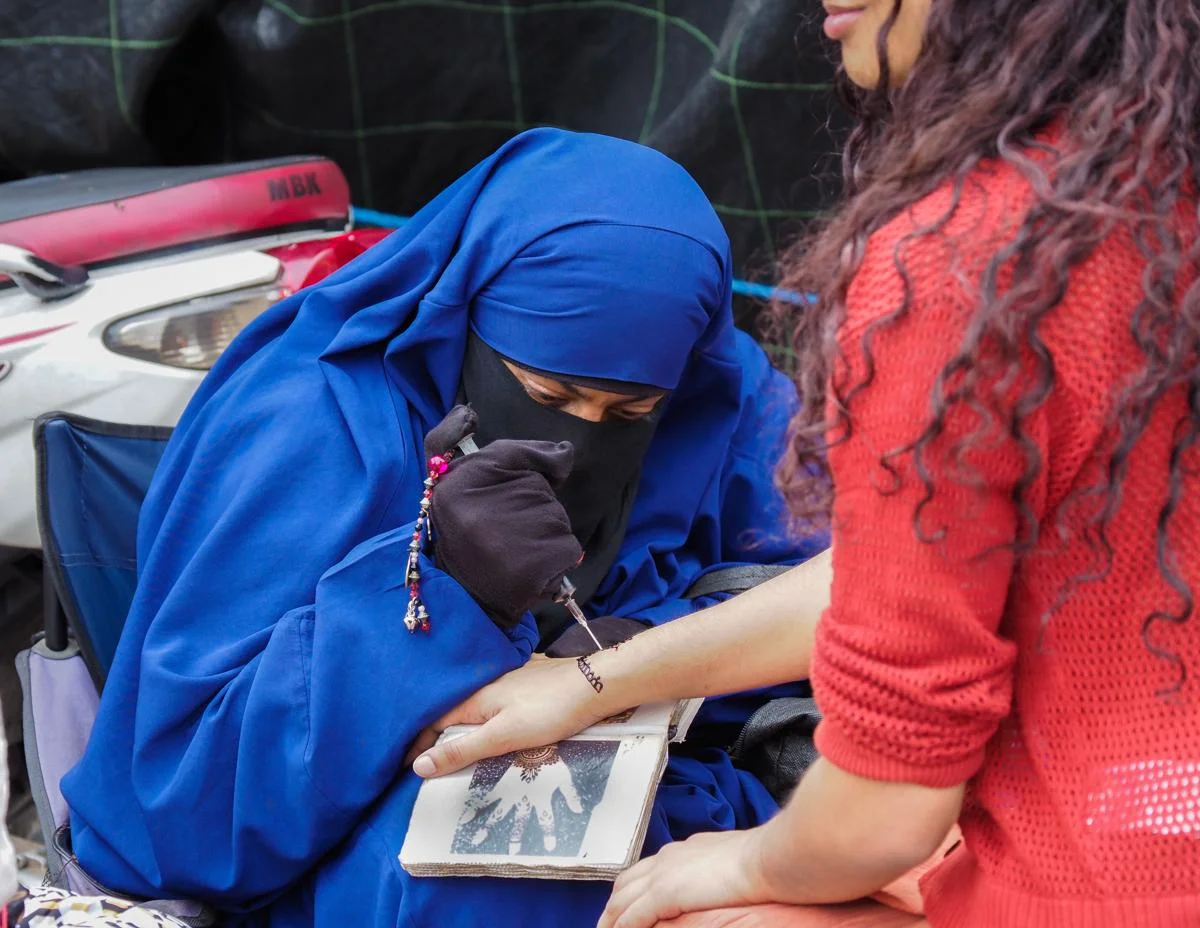
Cultural practices, rituals, festivals, equestrian traditions and know-how cannot be understood solely through their spectacular dimension.
They have a history, rules, social meanings and modes of transmission.
Cinema can help to document these practices and make them accessible to audiences who do not necessarily know them.
It can also question their evolution and the conditions of their preservation.
In the case of the Tbourida, the two documentaries present complementary approaches: one takes an interest in a world of horsemen and the collective dimension of the tradition, while the other follows the journey of a woman seeking to find her place within it.
This complementarity shows that heritage is not a fixed reality. It is living, traversed by social change and by individual experiences.
7. Women in Moroccan cinema: characters, directors and new perspectives
The 2026 programme also gives an important place to stories centred on women.
In Banou, Hanane Talid seeks to establish herself in a traditionally male practice. In Halima, an elderly woman carries the memory of a life marked by displacement and precarity. In La más dulce, Moroccan seasonal workers confront harsh working conditions in Spain.
These characters do not represent a single female experience. They make it possible to explore different realities: cultural transmission, ageing, migration, labour, autonomy and the place of women in public spaces.
The presence of directors such as Tala Hadid, Zhor Fassi-Fihri, Laïla Marrakchi, Meryem Benm'Barek, Sofia Alaoui and Yasmine Benkiran across the various dimensions of the programme also testifies to the diversity of women's paths in the sector.
This visibility does not mean that the challenges tied to access to financing, production and distribution have disappeared.
It does, however, remind us that women fully take part in building Moroccan cinema, both in front of and behind the camera.
The question is therefore not limited to the representation of women in the stories told. It also concerns the conditions under which they can write, direct, produce and circulate their works.
8. An industry in development: financing, co-production and the circulation of films
Film creation depends on several material conditions.
A film requires financial resources, technical skills, infrastructure, artistic teams, post-production work and distribution possibilities.
Morocco has a public mechanism of support for film production that has evolved since the creation of the support fund in 1980.
According to UNESCO's cultural policy monitoring platform, support measures for the sector have evolved progressively, both in terms of regulation and of financial resources and beneficiary branches.
The figures reported for 2023 testify to the international activity of Moroccan cinema: national productions were represented at more than 120 international film festivals and events, took part in 87 official competitions and received 50 awards for 38 feature films and 12 short films.
These data show that the international presence of Moroccan cinema does not depend solely on the Marrakech Festival.
It is part of a broader network of festivals, professional events and distribution circuits.
The role of co-productions
Several films associated with Morocco in the 2026 selection come from international co-productions.
This is the case for Bardi, produced with France, the United States and Qatar; Banou, co-produced with Belgium; Man of Signs, associated with France; Until Dawn, co-produced with Italy; or La más dulce, which brings together France, Spain, Belgium and Morocco.
These collaborations can make it possible to assemble the resources needed for ambitious projects and to strengthen their prospects for circulation.
But co-production also raises an essential question: how to preserve the artistic and cultural identity of a film when its making depends on several partners?
The answer rests notably on the place given to the director, on the coherence of the project and on the producers' capacity to build a collaboration that respects the artistic intentions of the work.
Distribution: a stake as important as production
A film's success is not measured solely by its selection at a festival or by winning an award.
It also depends on its capacity to reach its audience.
Distribution, theatrical release, international sales and digital platforms are decisive stages.
A film can be recognised at an international festival while facing difficulties in reaching the screens of its own country.
This issue particularly concerns cinematographies whose domestic markets are limited or whose distribution infrastructure remains concentrated in a few large cities.
For Moroccan cinema, developing distribution is therefore a strategic stake.
It means strengthening the circulation of works within Morocco, diversifying screening venues and facilitating access for regional and international audiences.
The Marrakech Festival contributes to this visibility, but it cannot replace the policies and structures needed for sustainable distribution.
9. The Moroccan audience: rediscovering cinema as a cultural experience
The relationship between Moroccan cinema and its audience remains a central subject.
The development of a film industry cannot rest solely on producing films or on their recognition abroad.
It also requires the existence of an audience able to discover, understand and support national works.
Cinemas play an essential role here. They turn a film into a collective experience, in which viewers share a story, a visual world and a reflection.
Festivals can also help renew this relationship by giving access to works that are not always distributed through the usual commercial circuits.
In Marrakech, the festival offers this possibility through a programme that brings together very different cinematographies.
But the question of access remains important: how to allow inhabitants of Morocco's various regions to discover the films presented in Marrakech? How to extend the festival experience beyond its few days of programming?
The answers lie in developing film clubs, regional festivals and partnerships with schools and universities, as well as in a better circulation of films through theatres.
Cinema can also become a tool of cultural mediation.
Films that address the Tbourida, rural traditions, the memory of cities or social transformations can spark exchanges between generations and contribute to a better knowledge of national heritage.
10. What future for Moroccan cinema after the 2026 Marrakech Festival?
The 23rd edition of the Marrakech International Film Festival is an interesting moment to observe for understanding the directions of Moroccan cinema.
The selected films reveal several tendencies: an important place given to documentary, narratives centred on individual journeys, attention to regional territories and an openness to international co-productions.
The Atlas Workshops, for their part, show that developing new projects remains a central stake for the sector's future.
But several challenges remain.
The first concerns financing. Making a film requires significant resources and continuity in support mechanisms.
The second concerns distribution. Moroccan works must be able to reach their audience in national theatres and benefit from more diversified distribution circuits.
The third concerns training and the renewal of skills. The evolution of technology, new production tools and the transformation of consumption habits require a constant adaptation of professionals.
Finally, Moroccan cinema must continue to develop narrative forms that allow it to dialogue with the world without losing the singularity of its stories.
This question is especially important for young directors. They must be able to experiment, take artistic risks and develop projects that do not respond solely to commercial expectations or international trends.
The Marrakech Festival and the Atlas Workshops can contribute to this environment by offering spaces for encounter, visibility and support.
But the future of Moroccan cinema will also depend on the country's capacity to strengthen its entire ecosystem: production, financing, training, distribution, exhibition and cultural mediation.
Conclusion: Marrakech, a rendezvous for looking at Moroccan cinema differently
The 2026 Marrakech International Film Festival offers a privileged occasion to discover the diversity of Moroccan cinema.
Through the six Panorama films, the presence of Alkebulan in the Official Competition, the works shown in the gala screenings and the projects supported by the Atlas Workshops, this edition brings to light several generations of filmmakers and different ways of telling the country.
The films by Tala Hadid and Mouhssine El Badaoui recall the richness of living traditions and the need to reflect on their transmission. Halima and Until Dawn explore the links between memory, territory and individual experience. Hoods and Man of Signs offer fiction narratives built around the wounds of the past, human relationships and the search for freedom.
Through La más dulce and Leila and the Night, Morocco also appears in stories that reach beyond its geographic borders and take their place within international co-productions.
These works do not constitute an exhaustive representation of Moroccan cinema. They offer, rather, a snapshot at a precise moment of its evolution.
Their interest lies in their diversity, in the territories they explore and in the questions they raise.
For Marrakech, the festival represents far more than an event devoted to the seventh art. It is a space of dialogue between heritage and contemporary creation, between national memory and international openness, between works already completed and those still to be invented.
Moroccan cinema continues to seek its forms, its narratives and its audiences. Through this 23rd edition, Marrakech offers it a stage where these searches can be seen, discussed and shared.
And perhaps that is one of the festival's most important contributions: a reminder that a country's cinema is built not only with films, but with a society's capacity to tell its own stories and make them heard beyond its borders.
Practical information: 2026 Marrakech International Film Festival
- Event: 23rd Marrakech International Film Festival
- Dates: 20 to 28 November 2026
- Moroccan Panorama: six films
- International selection: 76 films from 39 countries
- Moroccan films: eleven films across the various sections, alongside three films shot in Morocco
- Atlas Workshops: 22 to 26 November 2026
- Screening venues: Palais des Congrès, Colisée cinema and Yves Saint Laurent Museum in Marrakech
Also read
- Marrakech Film Festival 2026: the complete practical guide
- Full FIFM 2026 programme: films, screenings and schedules
- How to get your tickets: E-Pass and E-Ticket
- Where the festival takes place: the four venues
- Jury, tributes and personalities of the FIFM 2026
Sources and documentary references
Official festival sources
- Marrakech International Film Festival – 2026 Official Selection (press release PDF)
- Official festival programme
- Official Competition – Marrakech Festival
Official film pages
- Bardi – Tala Hadid
- Banou – Mouhssine El Badaoui
- Hoods (Cagoules) – Mohamed Mouftakir
- Halima – Yassine El Idrissi
- Man of Signs (L'Homme des signes) – Zhor Fassi-Fihri
- Until Dawn (Jusqu'à l'aube / Hatta Al Fajr) – Mohamed Zineddaine
- Alkebulan – Yassine Marco Marroccu
- Leila and the Night (Leila et la nuit) – Fellipe Barbosa
History and economics of Moroccan cinema
- UNESCO – Support for the national film industry in Morocco
- UNESCO – The creative economy and film industry in Morocco
Atlas Workshops and talent development
- SNRT News – 30 projects and films selected for the 9th edition of the Atlas Workshops
- Marrakech International Film Festival – Atlas Workshops
Editorial note: this article is based on the official information available before and at the start of the 23rd edition. It does not claim to present a review of the screenings, audience reactions or the final prize list. The analyses of identity, memory and the sector's stakes are editorial readings of the works and institutional data, not statements attributed to the filmmakers.