Where to Eat in Marrakech: Moroccan Cuisine, Restaurants and Dinner Shows
Eating in Marrakech is an integral part of the travel experience.
Marrakech cuisine tells part of the city's story through its flavors: slow-cooked tanjia, mechoui, tagines, couscous, pastilla, Moroccan salads, mint tea and traditional pastries.
But there is no single way to experience food in Marrakech.
You can share mechoui at a small restaurant in the Medina, have lunch on a rooftop overlooking the souks, discover contemporary Moroccan cuisine, or dedicate an entire evening to a dinner accompanied by music and traditional performances.
Here are some restaurants and experiences that reveal different sides of Marrakech's culinary scene.
Before You Choose: Discover Moroccan Cuisine
If you want to understand the dishes you will encounter on restaurant menus, start with our guide to Morocco's essential specialties:
Discover 30 Must-Try Moroccan Dishes
Tagine, couscous, pastilla, harira, rfissa, tanjia and mechoui are just some of the specialties covered in this guide to the dishes worth trying during a trip to Morocco.
To go further and explore culinary traditions, markets and Moroccan food culture, also read:
Moroccan Gastronomy: Flavors, Traditions and Street Food
Chez Lamine: Mechoui and Tanjia in the Heart of Marrakech
For one of the culinary experiences most closely associated with Marrakech, head to the mechoui district near Jemaa el-Fna.
Mechoui
Mechoui is a traditional preparation of lamb, slowly roasted until the meat becomes exceptionally tender.
In Marrakech, it can be served very simply with bread, cumin and salt.
That simplicity is part of the experience.
Tanjia Marrakchia
Tanjia is probably the dish most closely associated with Marrakech.
The meat is placed in an earthenware jar with spices and seasonings before being cooked very slowly.
Chez Lamine Hadj Mustapha is now one of the best-known places in Marrakech to experience both specialties.
The establishment highlights a family history dating back to the early 20th century and also associates its story with Hadj Mustapha, presented as a former cook to King Hassan II.
Best for: discovering mechoui and tanjia in a popular, informal setting rather than a fine-dining environment.
Al Fassia: An Institution of Moroccan Cuisine
Al Fassia is one of Marrakech's established references for Moroccan cuisine.
The restaurant is particularly known for a feature that has long been part of its identity: a historically female team in both the kitchen and dining room.
The menu offers several classics of Moroccan cuisine, including traditional salads, tagines, couscous and other dishes inspired by family cooking.
With several decades of history in Marrakech, Al Fassia remains an interesting choice for travelers looking to experience traditional Moroccan cuisine in a more refined setting.
Best for: a traditional Moroccan dinner at one of Marrakech's established culinary institutions.
Nomad: A Contemporary Take on Moroccan Cuisine
In the heart of the Medina, near the Spice Square, Nomad represents another side of Marrakech's food scene.
Here, Moroccan ingredients and flavors provide the foundation for more contemporary cooking.
The menu focuses on local produce and recipes inspired by Morocco's culinary heritage, presented with a more modern approach.
Nomad is also appreciated for its terraces overlooking the rooftops of the Medina.
It makes an especially pleasant stop after exploring the surrounding souks.
Best for: contemporary Moroccan cuisine and a rooftop experience in the heart of the Medina.
La Terrasse des Épices: Dining Above the Souks
Located in Souk Cherifia, La Terrasse des Épices has become one of the Medina's well-known rooftop addresses for lunch and dinner.
The restaurant serves cuisine combining Moroccan and Mediterranean influences.
But the setting is also an important part of the experience.
From the terrace, Marrakech reveals itself from a different perspective, with views across the Medina's rooftops and minarets and, when visibility allows, the Atlas Mountains on the horizon.
The atmosphere changes throughout the day.
Lunch is ideal for enjoying the views, while evenings take on a more musical and contemporary atmosphere.
Best for: a rooftop lunch during a day exploring the Medina.
Folk Marrakech: Dinner and a Festive Evening
For a more contemporary experience, Folk Marrakech offers another way to spend an evening in Marrakech.
The venue combines dining, Moroccan-inspired décor and musical entertainment.
Throughout the evening, the atmosphere can evolve with live music, Gnawa rhythms, singers, dancing and DJs, gradually transforming dinner into a full night out.
Folk therefore offers a different experience from the traditional restaurants of the Medina.
The idea is not simply to come for dinner, but to continue the evening in the same venue.
Best for: dinner followed by a lively atmosphere without having to change venues.
Dar Essalam: Dinner and Traditional Entertainment in the Medina
For travelers looking for a more traditional experience, Dar Essalam offers another option.
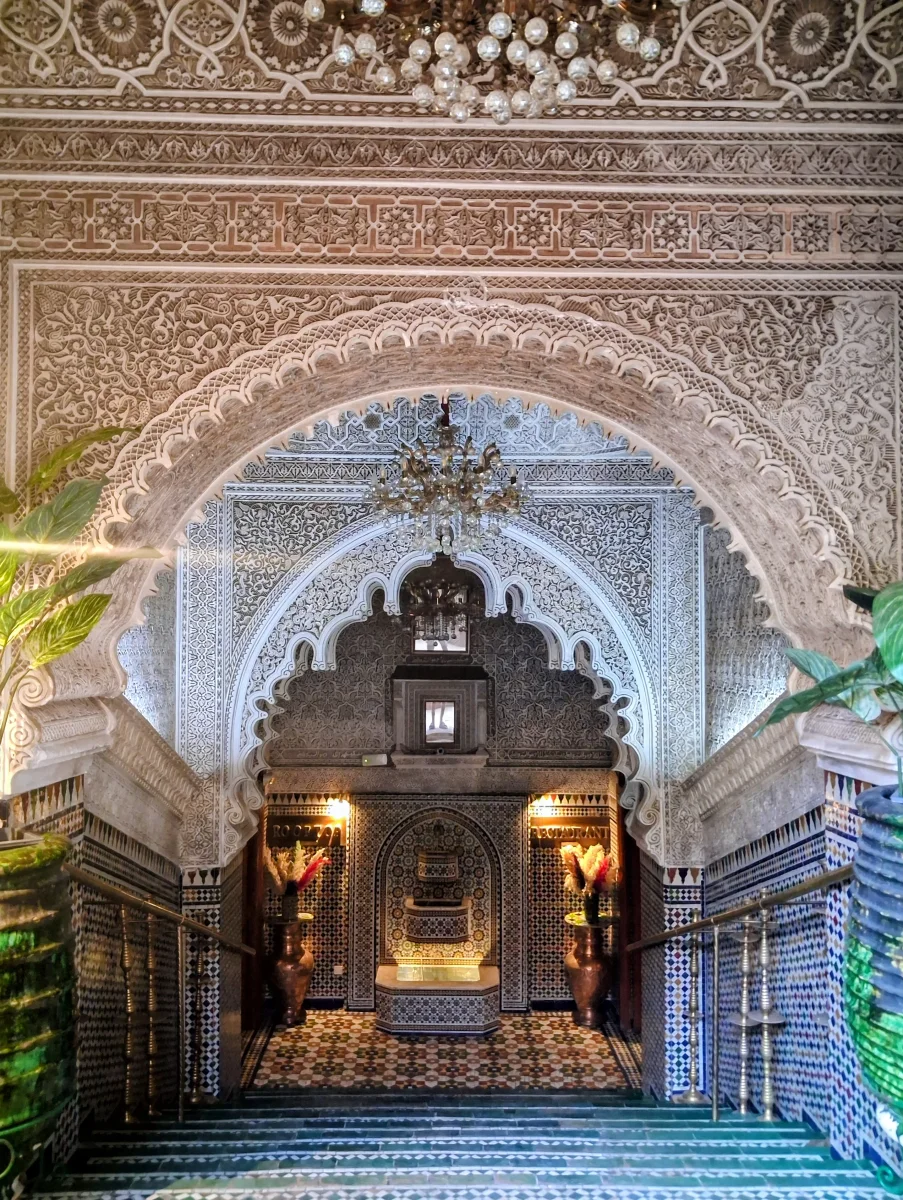
Located in the Medina, the restaurant features interiors inspired by grand Moroccan architecture and decorative traditions.
The evening combines Moroccan cuisine, musicians and traditional entertainment.
It is an interesting way to combine food and entertainment while remaining in the heart of Marrakech's old city.
Different dinner options may be available depending on the experience selected.
Best for: a traditional dinner show in the Medina.
Discover the Dar Essalam Dinner Show
Chez Ali: Marrakech's Famous Fantasia Evening
Chez Ali offers an experience that is very different from a conventional restaurant.
Located outside Marrakech's historic center, the complex welcomes visitors into a vast setting inspired by traditional Moroccan tents and palaces.
The evening combines dinner, musicians, folklore groups, horsemen and Fantasia performances.
Fantasia and Tbourida
Fantasia draws inspiration from the Moroccan equestrian tradition known as tbourida.
Groups of horsemen gallop together before traditionally ending their charge with a synchronized rifle shot.
Tbourida was inscribed on UNESCO's Representative List of the Intangible Cultural Heritage of Humanity in 2021.
Chez Ali incorporates this equestrian heritage into a large-scale performance designed for visitors.
The evening also provides an introduction to musical and clothing traditions inspired by different regions of Morocco.
Best for: a large-scale folkloric and equestrian show rather than simply a restaurant dinner.
Discover and Book the Chez Ali Fantasia Evening
Folk, Dar Essalam or Chez Ali: Which Evening Should You Choose?
These three experiences cater to very different expectations.
Folk Marrakech
Choose Folk if you are looking for a more modern and festive evening combining dinner, music and entertainment.
Dar Essalam
Choose Dar Essalam if you want to dine in a traditional Moroccan setting and enjoy entertainment without leaving the Medina.
Chez Ali
Choose Chez Ali if the show itself is your priority: horsemen, Fantasia, folklore and large-scale entertainment.
Rather than being three competing restaurants, they represent three very different ways to spend an evening in Marrakech.
Essential Dishes to Try in Marrakech
Tanjia Marrakchia
It is almost impossible to talk about Marrakech without mentioning tanjia.
This slow-cooked dish prepared in an earthenware jar is deeply associated with the city's culinary identity.
Mechoui
Lamb is slowly roasted until exceptionally tender.
In Marrakech, specialist restaurants around the traditional mechoui district offer an opportunity to experience it in its simplest form.
Tagine
Chicken with preserved lemon and olives, meat with prunes, kefta or vegetables: tagine comes in countless variations.
Couscous
Traditionally associated with the family meal on Friday, couscous remains one of the most important dishes in Moroccan cuisine.
Pastilla
Pastilla combines a crisp pastry shell with a generous filling, spices and contrasting sweet notes.
Harira
Prepared with ingredients such as tomatoes, legumes, herbs and spices, harira holds an important place in Moroccan food traditions, particularly during Ramadan.
Learn more about the history and characteristics of these specialties in our guide to 30 must-try Moroccan dishes.
Street Food and Popular Cuisine: Another Side of Marrakech
Restaurants tell only part of Marrakech's culinary story.
Throughout the Medina, communal ovens, msemen vendors, juice stalls, small eateries, pastry shops and markets provide an opportunity to discover a much more everyday style of Moroccan food.
This popular dimension is essential to understanding Moroccan culinary culture.
Our guide to Moroccan gastronomy: a journey through flavors, traditions and street food explores this aspect of Morocco's heritage in greater detail.
Tips for Eating in Marrakech
For Marrakech's best-known restaurants, booking in advance is recommended during busy travel periods.
For smaller local restaurants in the Medina, reservations are often less important.
Take the time to observe where locals eat and occasionally venture beyond the main tourist routes.
Above all, do not limit yourself to a single type of experience.
A simple mechoui lunch, mint tea on a Medina rooftop and a dinner accompanied by music in the evening can reveal three very different sides of Marrakech.
Gastronomy and Heritage: Discover Marrakech Differently
Gastronomy is not simply something to fit between two sightseeing visits.
It is part of Morocco's cultural heritage.
Recipes, cooking techniques, spices, markets, artisans and family traditions all tell part of the country's story.
Discovering Marrakech therefore means exploring its food as much as its palaces, madrasas, gardens, museums and souks.
With MoroccoMuseum, discover Morocco's heritage, prepare your visits and explore cultural experiences that help you better understand Marrakech and Morocco.