Discover Morocco Through Its Flavors
Close your eyes for a moment.
Imagine a bustling alley in the medina of Marrakech. The sun gently warms the ochre walls. The air is fragrant with a blend of cumin, cinnamon, coriander, saffron, and freshly baked bread from a traditional oven.
A few steps away, a vendor fills a steaming bowl with bissara, a creamy soup made from dried fava beans, generously drizzled with olive oil, spiced with cumin, and served with a piece of warm khobz.
Across the way, kefta skewers sizzle over the coals. The smoke fills the street as the vendor expertly turns the meat, a skill honed over years of practice.
A bit further, a young man quickly peels hard-boiled eggs. They will be served with a sprinkle of salt, cumin, and sometimes harissa, a simple yet beloved snack at any time of day.
Just a few meters away, a maakouda vendor pulls golden potato cakes from the oil. Nearby, another prepares a sandwich stuffed with kefta, fries, salad, and spicy sauce.
At the corner of a square, the aroma of grilled sardines draws in passersby. Even further, a pot of loubia has been simmering for hours, offering a comforting dish to workers, students, and local residents.
Welcome to Morocco.
Here, gastronomy is not limited to grand tables or gourmet restaurants.
It thrives in family homes, at markets, in neighborhood eateries, around traditional ovens, and in the streets where street food has been part of daily life for generations.
Tasting Moroccan cuisine is discovering a different way to tell the country's story.
Each recipe, even the simplest, is the result of centuries of encounters between Amazigh, Arab, Andalusian, Moroccan Jewish, African, and Mediterranean peoples. Each has left its mark on the flavors, culinary techniques, and eating habits that today define Morocco's reputation.
This richness explains why Moroccan cuisine is regularly ranked among the best in the world.
But to reduce this cuisine to couscous or tajine would be a mistake.
The true culinary treasure of Morocco often lies in everyday dishes, those that families have prepared for generations and that locals enjoy standing in an alley, sitting on a small plastic stool, or gathered around a large table sharing the same dish.
For in Morocco, eating is much more than a simple need.
It is a moment of sharing.
A tradition.
A form of hospitality.
A way to transmit a story, a culture, and a know-how.
In this guide, MoroccoMuseum invites you to discover the flavors that shape the culinary identity of the Kingdom. From iconic specialties to hidden street food treasures, from spices to family traditions, you will learn why Moroccan cuisine is considered one of the most beautiful living heritages of the country.
A Cuisine Shaped by Over a Thousand Years of History
Moroccan cuisine reflects the history of the Kingdom.
Every civilization that has crossed Morocco has left its mark on the plates.
The Amazigh, the first inhabitants of the land, passed down a simple, generous cuisine deeply connected to the products of the earth. Barley, wheat, legumes, olives, olive oil, almonds, and aromatic herbs were already essential in their diet.
From the 7th century onwards, the arrival of the Arabs introduced new culinary techniques, spices from the East, and a refined gastronomic culture that gradually transformed eating habits.
A few centuries later, refugees from Al-Andalus brought to Morocco a more sophisticated cuisine, characterized by the balance between sweet and savory, the use of dried fruits, cinnamon, orange blossom water, and delicate pastries that still today enhance the reputation of cities like Fès, Tétouan, or Rabat.
The Moroccan Jewish community also contributed to enriching this culinary heritage by developing specific recipes adapted to religious traditions, some of which have become staples in contemporary Moroccan cuisine.
Trade exchanges with Sub-Saharan Africa gradually introduced new products, while contacts with Europe enriched certain preparations over the centuries.
The result is a unique cuisine.
A cuisine capable of marrying spices without overshadowing the flavors.
A cuisine where each region has its specialties.
A cuisine where tradition remains alive despite the evolutions of the modern world.
Even today, it only takes a few hundred kilometers to discover different recipes, different breads, different spices, and sometimes even a completely different way of preparing a dish known throughout the country.
It is this diversity that makes Moroccan gastronomy so rich.
The Great Moroccan Dishes: More Than Just Recipes, a Living Heritage
When one mentions Moroccan cuisine, certain dishes immediately come to mind.
Couscous.
Tajine.
Pastilla.
Yet behind each of them lies a story, regional traditions, and know-how passed down from generation to generation.
In Morocco, a dish is never just a meal.
It often accompanies a celebration, a family gathering, a religious event, or a simple moment of sharing among friends.
Each region has its own recipes, sometimes very different from one city to another.
Couscous: The Dish of Sharing
If there is one dish that symbolizes Morocco, it is undoubtedly couscous.
Traditionally prepared on Fridays after prayer, it brings the whole family together around a single dish.
The semolina, slowly steamed, is accompanied by seasonal vegetables and a meat that varies by region: beef, lamb, chicken, or sometimes even fish along certain coasts.
In the Atlas Mountains, couscous is often made with barley instead of wheat.
In Souss, some families add argan oil.
In Fès, more refined versions may be flavored with saffron.
Each family has its recipe.
And it is often the grandmother's recipe that remains the reference.
Tajine: Slow Cooking that Enhances Flavors
Contrary to popular belief, tajine is not a single recipe.
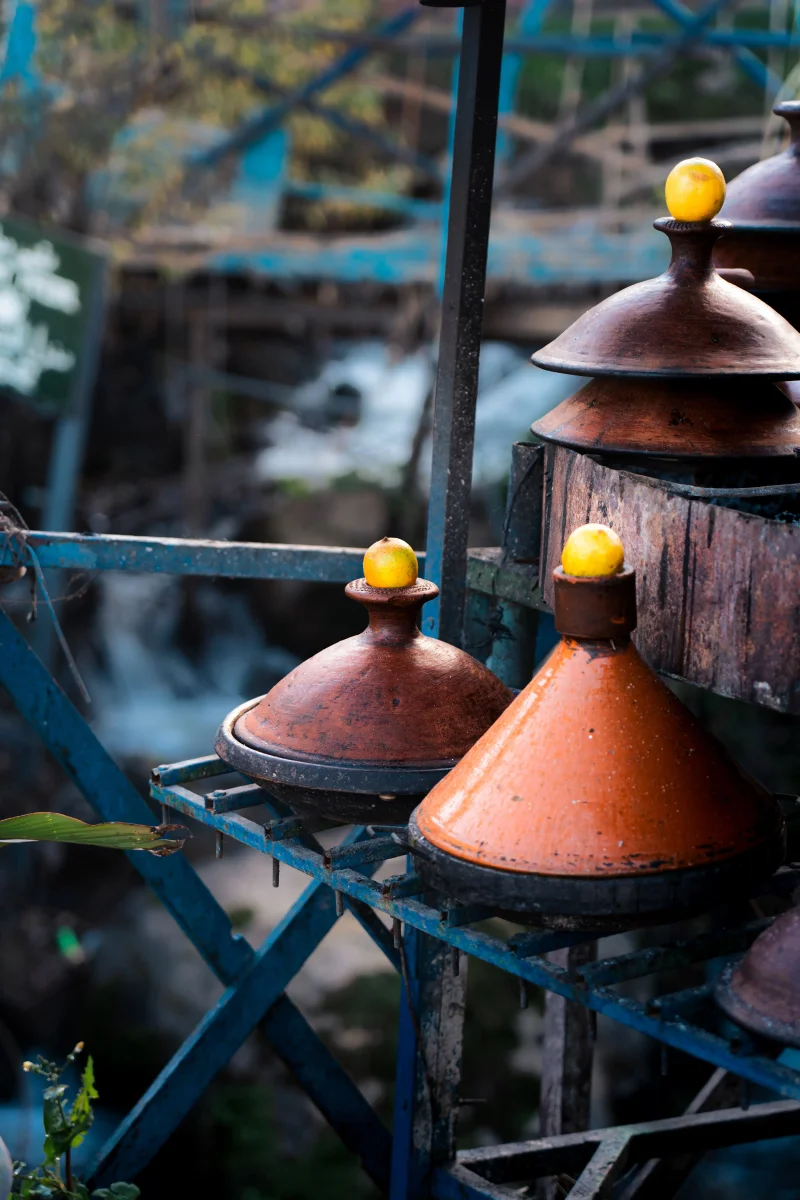
It primarily refers to the famous earthenware pot in which the food simmers slowly.
This gentle cooking allows the flavors to blend without losing their identity.
The result is particularly tender meat and delicately flavored vegetables.
Among the most popular versions are:
- chicken tajine with preserved lemon and olives;
- beef tajine with prunes and almonds;
- kefta tajine with eggs;
- lamb tajine with vegetables;
- fish tajine along the Atlantic and Mediterranean coasts.
Each city also has its variations.
In Marrakech, some recipes highlight the spices more.
In Fès, the balance between sweet and savory is particularly sought after.
Pastilla: The Legacy of Al-Andalus
Pastilla is perhaps the dish that best illustrates the Andalusian influences in Moroccan cuisine.
This fine, crispy pastry traditionally contains a filling of pigeon—often replaced today with chicken—mixed with almonds, eggs, spices, and orange blossom water.
Before being served, it is dusted with powdered sugar and cinnamon.
This surprising blend of sweet and savory is one of the signatures of Moroccan gastronomy.
In Fès, pastilla is considered a true culinary art.
Its preparation requires several hours of work and precise know-how.
Tanjia Marrakchia: The Secret of Marrakech
It is impossible to talk about Moroccan gastronomy without mentioning tanjia, the true culinary emblem of Marrakech.
Unlike tajine, tanjia is prepared in a clay jar.
The meat, usually beef or lamb, is seasoned with preserved lemon, garlic, cumin, saffron, smen, and various spices before being sealed tightly.
In the past, artisans from the medina would place their tanjia in the still-hot embers of public ovens or hammams before heading off to work.
The cooking would last several hours.
Upon their return, the meal would be ready.
This tradition still exists today in some neighborhoods of Marrakech.
Harira: More Than Just a Soup
For many Moroccans, harira immediately evokes the month of Ramadan.
This generous soup, made from tomatoes, lentils, chickpeas, meat, celery, coriander, and spices, traditionally accompanies the breaking of the fast.
But it is also consumed throughout the year.
Served with dates, hard-boiled eggs, or pastries like chebakia, it constitutes a complete and nourishing meal.
Rfissa: A Dish of Transmission
Less known to foreign visitors, rfissa holds a special place in Moroccan families.
Prepared with chicken, lentils, fenugreek, and crumbled msemen, it is often cooked during family events.
Traditionally, it is offered to new mothers after childbirth, but it also accompanies many celebrations.
Its preparation requires time, patience, and a perfect mastery of spices.
It is a dish deeply linked to the transmission of family culinary traditions.
A Cuisine That Varies from Region to Region
One of the greatest riches of Moroccan gastronomy lies in its regional diversity.
In Tangier, Mediterranean influences are found in fish and seafood.
In Fès, the cuisine is renowned for its refinement.
In Marrakech, the flavors are bolder, with a significant emphasis on spices.
In Souss, argan oil and amlou accompany many preparations.
In the Rif, some recipes make greater use of mountain products.
In the Sahara, the cuisine adapts to the climate and highlights dates, grains, and slow-cooked meats.
Traveling in Morocco is thus also about discovering a new cuisine at every stop on your itinerary.
And it is this diversity that makes Moroccan gastronomy a living heritage, always evolving and deeply rooted in the identity of the Kingdom.
Moroccan Street Food: Where the Heart of Popular Gastronomy Beats
If the palaces tell the story of sultans, the streets of Morocco tell that of its people.
To discover true Moroccan gastronomy, it is not enough to book a table at a restaurant.
You must push open the door of a small neighborhood eatery, stop in front of a vendor set up on a sidewalk, sit on a plastic stool, or share a meal with locals.
Moroccan street food is not a recent trend.
It has been part of daily life for generations.
Every morning, noon, and night, thousands of Moroccans have their breakfast, lunch, or dinner in these modest establishments where the same recipes have often been cooked for decades.
Here, luxury is measured neither by decor nor by service.
It lies in the quality of the products, the mastery of cooking, and the know-how passed down from father to son or mother to daughter.
Bissara: The Moroccan Breakfast
When the sun rises over the medinas, the first pots begin to steam.
One of them contains bissara, a puree of dried fava beans—sometimes split peas depending on the region—slowly simmered with garlic, olive oil, and spices.
Served hot, it is generously sprinkled with cumin, sometimes paprika, and then drizzled with a splash of olive oil.
It is enjoyed with a piece of khobz that is dipped directly into the bowl.
Simple, nourishing, and economical, bissara has accompanied workers, students, artisans, and families for generations.
During winter mornings, it becomes a true comfort dish.
For many Moroccans, a good bissara enjoyed in a small eatery is part of childhood memories.
Loubia: A Classic of Popular Neighborhoods
In a large pot, white beans slowly cook for several hours in a tomato sauce flavored with cumin, paprika, garlic, and olive oil.
This is loubia.
This generous dish is particularly appreciated on cool days.
Served with traditional bread, loubia is a complete, simple meal deeply rooted in Moroccan popular cuisine.
Each cook has their recipe.
Some add pieces of meat.
Others prefer a vegetarian version.
In any case, the secret lies in the slow cooking, which allows the beans to absorb all the flavors of the sauce.
Kefta Sandwiches: A Street Food Staple
At lunchtime, grills take over the sidewalks.
The coals glow red.
The flames lick the skewers.
The smell of charcoal immediately attracts passersby.
Among the classics is the kefta sandwich.
The minced meat, seasoned with parsley, coriander, garlic, cumin, paprika, and pepper, is shaped by hand before being grilled.
It is then served in a crispy bread with Moroccan salad, tomatoes, onions, sometimes fries, and a spicy sauce.
Each neighborhood has its famous spot.
And every regular claims to know the best sandwich in town.
Maakouda: The Queen of Moroccan Fritters
It is impossible to talk about Moroccan street food without mentioning maakouda.
Made from crushed potatoes, garlic, parsley, coriander, and spices, this cake is breaded and then fried until it achieves a golden, crispy crust.
It can be enjoyed alone, with a spicy sauce, or tucked into a sandwich.
In many cities, it is one of the most popular snacks.
Seemingly simple, it perfectly illustrates Moroccan cuisine's ability to transform a few everyday ingredients into a delicious dish.
Skewers: The Aroma of Coals
As night falls, the streets fill with fragrant smoke.
Beef, lamb, chicken, or liver skewers grill slowly over charcoal embers.
The sounds of grilling, the crackling of fire, and the swift movements of cooks create a spectacle almost as important as the meal itself.
Served with bread, a Moroccan salad, and sometimes olives, skewers are among the most beloved street food meals in Morocco.
Grilled Sardines: A Coastal Treasure
Morocco boasts one of the largest coastlines in Africa.
Unsurprisingly, seafood holds a vital place in the cuisine of many cities.
In Essaouira, Safi, Agadir, Casablanca, Tangier, or Larache, grilled sardines are a true institution.
Marinated with chermoula—a blend of coriander, parsley, garlic, cumin, paprika, lemon, and olive oil—they are grilled just minutes before being served with bread and a salad.
Fresh, flavorful, and accessible, they perfectly illustrate the richness of Moroccan popular cuisine.
Hard-Boiled Eggs, Potatoes, and Everyday Delights
In the souks and busy squares, it is not uncommon to encounter vendors offering hard-boiled eggs simply seasoned with salt and cumin.
Nearby, others serve steamed potatoes, chickpeas, fava beans, or grilled corn depending on the season.
These modest snacks remind us that in Morocco, gastronomy does not always rely on complex recipes.
Sometimes, a few quality ingredients, well-prepared and shared in a friendly atmosphere, are enough to create an unforgettable memory.
More Than a Meal, An Experience
Moroccan street food is not just about what is on the plate.
It is lived.
It is listened to.
It is breathed in.
The vendor calling out to passersby with a smile.
The warm bread coming out of the oven.
The freshly ground spices.
The conversations among regulars.
The children waiting for their sandwich.
The mint tea served in a burning glass.
It is this atmosphere that makes Moroccan street food so endearing.
It reflects the generosity, simplicity, and sense of sharing that have always characterized Moroccan hospitality.
And for many travelers, it is often these impromptu meals taken at the corner of a street or in a small eatery that leave the most authentic memories.
Moroccan Spices: The Soul of the Kingdom's Cuisine
If there is one ingredient found in almost all Moroccan kitchens, it is neither meat, nor vegetables, nor even olive oil.
It is spices.
Upon entering a souk, they catch the eye with their vibrant colors and enchanting aromas. Pyramids of cumin, paprika, turmeric, ginger, cinnamon, or ras el hanout create a true tableau where each color tells a flavor.
In Morocco, spices are not used to mask the taste of food.
They are used precisely to reveal flavors, balance a dish, and give it personality.
Each family has its own blend, often passed down through generations.
Ras el hanout, which means "the head of the shop," is perhaps the most famous blend. Depending on the regions and spice merchants, it can contain ten, sometimes more than twenty different spices.
Cumin accompanies bissara, loubia, grilled meats, and many salads.
Cinnamon enhances both pastries and certain tajines and pastilla.
Saffron, produced notably in the Taliouine region, adds its delicate aroma to festive dishes.
Paprika, ginger, turmeric, black pepper, anise seeds, sesame seeds, and coriander complete an aromatic palette that contributes to the renown of Moroccan cuisine.
Bread: The Guest of Every Meal
In Morocco, a meal without bread is almost unthinkable.
Much more than a side dish, bread occupies a central place in eating habits and daily life.
Every morning, traditional ovens begin their work before the sun rises. In many neighborhoods, residents still bring their dough to the baker to be baked in a communal oven, perpetuating a tradition that is centuries old.
Khobz, with its golden crust and generous crumb, accompanies nearly all dishes.
It is used to share a tajine, savor loubia, enjoy bissara, or simply to relish quality olive oil.
Alongside khobz, other breads hold significant places in Moroccan gastronomy.
Batbout, soft and cooked in a pan, is often filled with meat or vegetables.
Msemen, flaky and crispy, is enjoyed at breakfast or as a snack.
Meloui, recognizable by its many layers, offers an airy texture particularly appreciated with a glass of tea.
Harcha, made from semolina, delights with its slightly sandy texture and buttery flavor.
Baghrir, known as "the thousand-hole pancake," is served with melted butter and honey.
Each of these breads tells a different facet of Moroccan culinary culture.
Mint Tea: A Symbol of Moroccan Hospitality
It is impossible to talk about Moroccan gastronomy without mentioning mint tea.
In Morocco, offering a glass of tea is much more than a gesture of politeness.
It is a mark of welcome.
An invitation to take your time.
A way to create dialogue.
Prepared with green tea, fresh mint, and a generous amount of sugar, it accompanies breakfast, family gatherings, visits among friends, or negotiations in a souk.
Serving it is an art.
The tea is poured from a height to create a fine foam on the surface, a sign of successful service.
Each region, each family, and sometimes each host has their own way of preparing it.
Some add absinthe or verbena depending on the seasons.
Others prefer a lighter or stronger tea.
Whatever the recipe, it remains one of the strongest symbols of Moroccan hospitality.
Moroccan Sweets: A Heritage of Patience and Know-How
Moroccan pastries reflect the country: generous, refined, and deeply rooted in traditions.
Prepared during religious holidays, weddings, or large family gatherings, pastries hold a special place in the culinary heritage.
Gazelle horns, delicately flavored with orange blossom, contain a fine almond paste.
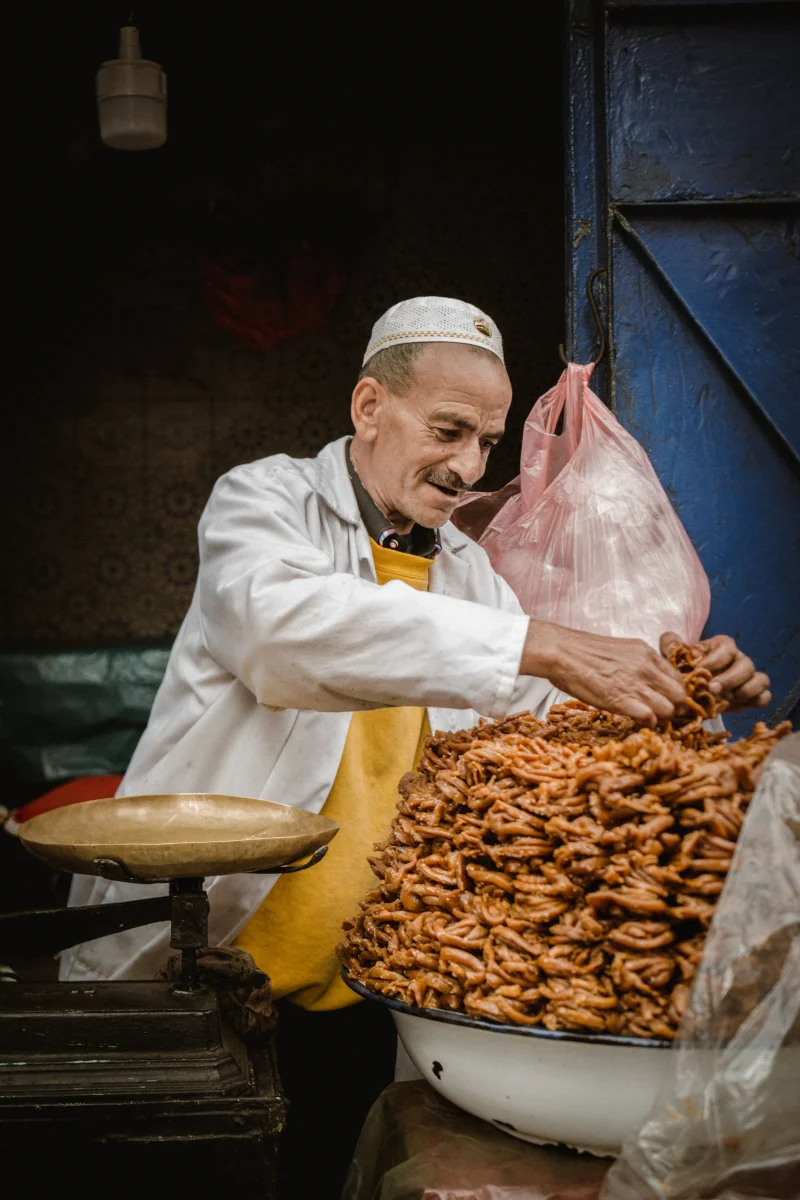
Chebakia, a must during Ramadan, is shaped by hand before being fried, then coated in honey and sesame seeds.
Ghriba, crunchy on the outside and melting on the inside, come in many variations.
Sellou, a mixture of roasted flour, almonds, sesame seeds, butter, and spices, is traditionally prepared during major celebrations.
Fekkas, similar to a dry biscuit, pairs perfectly with a glass of tea.
All these specialties require time, precision, and a know-how often passed down within families.
They perfectly illustrate a reality of Moroccan cuisine: behind every recipe lie gestures repeated for generations, a living heritage that continues to be shared from mother to daughter, from father to son, or among loved ones during grand celebrations.
Traditions at the Table: When a Meal Becomes a Moment of Sharing
In Morocco, a meal is never just about what is on the plate.
It is a moment to take the time to reconnect, exchange, and share. The Moroccan table reflects values deeply rooted in the culture of the country: hospitality, generosity, and respect for guests.
In many families, the main dish is placed at the center of the table. Everyone takes their share with a piece of bread or a spoon, generally remaining within the portion in front of them. This way of eating fosters conviviality and reminds us that the meal is primarily a collective moment.
Welcoming guests is essential. Refusing a glass of tea or an invitation to share a meal is often seen as a sign of reserve, as hospitality is an integral part of Moroccan culture.
On Fridays, many families gather around a couscous. During Ramadan, tables are filled with harira, dates, chebakia, briouates, and many other dishes prepared especially for breaking the fast. Weddings, religious holidays, and major celebrations also lead to meals where several generations gather around recipes passed down for decades.
This human dimension explains why Moroccan gastronomy is considered a living heritage.
Where to Discover Authentic Moroccan Cuisine?
The best culinary experiences are not always found in the most luxurious establishments.
On the contrary.
To discover the most authentic flavors, it is often better to stray from exclusively tourist spots.
Neighborhood markets allow you to observe fresh products, spices, olives, dried fruits, and traditional breads that make up daily cuisine.
Small eateries offer simple recipes prepared in front of customers, often using methods unchanged for generations.
Traditional ovens, still present in some medinas, testify to a lifestyle where residents come to bake their bread or tanjia.
Sharing a meal in a local home, participating in a cooking workshop, or discovering a small restaurant frequented by locals often provides a deeper understanding of Moroccan culture than any tourist guide.
Some Must-Try Specialties During a Trip to Morocco
If you wish to discover the diversity of Moroccan gastronomy, here are some must-try dishes:
- Bissara: a comforting fava bean soup, ideal for breakfast.
- Loubia: white beans simmered in a tomato sauce flavored with spices.
- Tanjia Marrakchia: an emblematic Marrakech specialty slow-cooked in a clay jar.
- Couscous: the classic Friday dish, available in many regional versions.
- Tajine: dozens of different recipes depending on the regions and seasons.
- Pastilla: a subtle blend of sweet and savory flavors.
- Maakouda: crispy potato cakes, very popular in street food.
- Kefta Skewers: grilled over charcoal and served in bread with salad and fries.
- Babouch: snails cooked in a herb and spice broth, very popular in the medinas.
- Grilled Sardines: an essential specialty of coastal cities.
- Msemen, Meloui, Harcha, and Baghrir: breads and pancakes that accompany Moroccan breakfasts.
- Chebakia, Gazelle Horns, Ghriba, and Sellou: sweets that showcase the refinement of Moroccan pastries.
This list is far from exhaustive. Each region, each city, and sometimes each village has its own recipes, local products, and culinary traditions.
Conclusion
Discovering Moroccan gastronomy is not just about tasting couscous or tajine.
It is understanding how centuries of history, trade, migration, and cultural exchanges have shaped a cuisine of exceptional richness.
It is sensing the aroma of spices in the souks, watching a baker pull khobz from a traditional oven, sharing a steaming bissara at dawn, savoring a tanjia after hours of cooking, or stopping in front of a stall where skewers grill over the coals.
Moroccan cuisine tells the country’s story in a different way.
It speaks of its regions, its seasons, its traditions, its hospitality, and its people.
It connects the Atlas Mountains to the Atlantic coasts, the southern oases to the imperial medinas, family recipes to popular markets.
Each dish carries a story.
Each recipe is a heritage.
Each meal is an invitation to share.
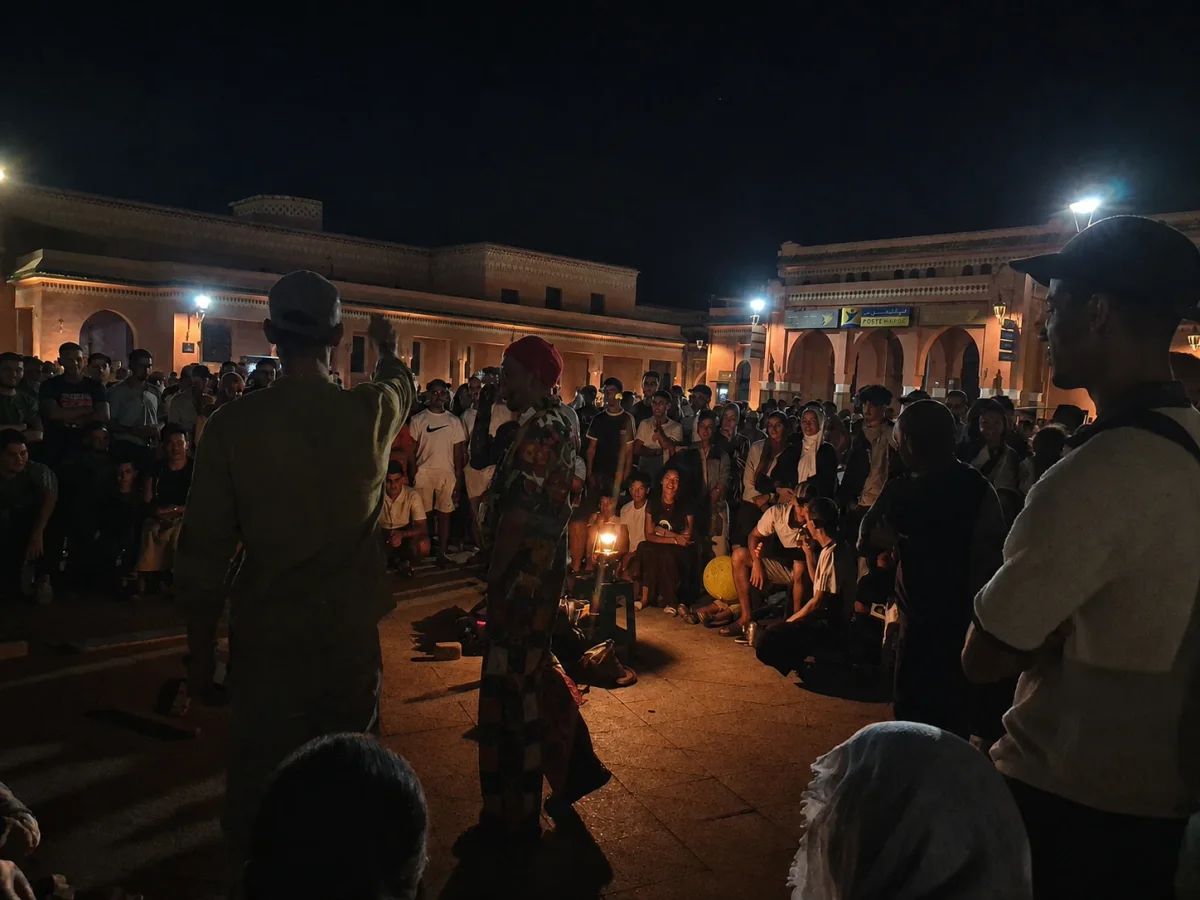
At MoroccoMuseum, we believe that heritage is not limited to palaces, madrasas, or archaeological sites. It is also found in the gestures of cooks, in the ovens of neighborhoods, in the spices of the souks, in recipes passed down through generations, and in the street food that, every evening, brings Jemaa el-Fna square to life in Marrakech. An authentic Moroccan breakfast with a local family offers another way to experience this everyday cuisine, away from tourist restaurants.
For traveling in Morocco is about admiring its monuments…
But it is also about stopping in front of a small eatery, ordering a simple bissara or a kefta sandwich, exchanging a few words with the cook, and discovering that the most beautiful memories often arise from the simplest experiences.
Moroccan gastronomy nourishes not only the body.
It tells the soul of Morocco.