Practical information checked on 2 October 2026. Opening times, addresses, offers and prices of restaurants and experiences change: check them before you go or book.
In Casablanca, traditional Moroccan cooking sits alongside a modern urban scene: you eat tagines, grilled fish and pastries, but also international dishes. This Casablanca food guide doesn't repeat the list of Moroccan dishes: it helps you discover and eat Moroccan food in Casablanca, that is, what to try, where to look depending on the district, how to approach street food, and how to enjoy a guided food experience.
For a broader presentation of dishes, see our article 30 Moroccan dishes you must try and our guide to Moroccan cuisine.
What to eat in Casablanca: a selection for a first discovery
Here are the most useful dishes to try on a first stay, with when they are usually eaten.
| Dish | What is it? | When to eat it |
|---|---|---|
| Tagine | Slow-cooked stew in a clay dish, meat or vegetables, sometimes fish on the coast | Lunch or dinner |
| Couscous | Semolina topped with vegetables and meat, traditionally associated with Fridays | Lunch |
| Pastilla | Crisp flaky pastry, often with pigeon or chicken, sweet and savoury | Festive meals, dinner |
| Harira | Soup of tomatoes, lentils and chickpeas | Starter, or a snack |
| Briouates | Small stuffed pastries | Starter or snack |
| Rfissa | A dish of shredded msemen and chicken | Family meals |
| Brochettes | Grilled meat skewers | Street food, dinner |
| Msemen | Layered flatbread | Breakfast |
| Baghrir | The thousand-hole pancake | Breakfast, afternoon snack |
| Moroccan pastries | Gazelle horns, ghriba, chebakia, almond pastries | A break, tea |
| Mint tea | The sign of hospitality | Any time |
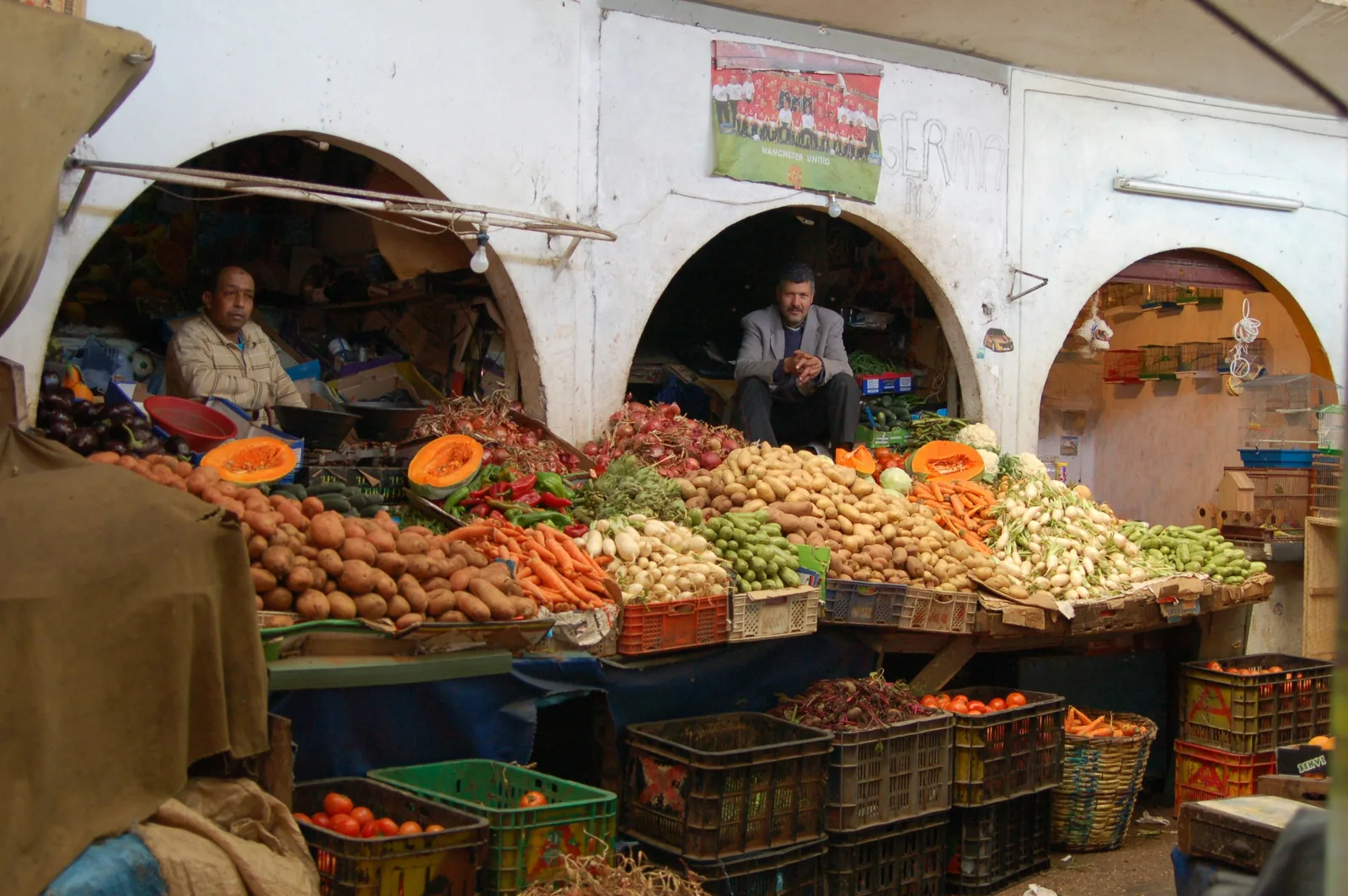
Fish and seafood. Casablanca is on the Atlantic: grilled fish, sardines and seafood are worth trying. At the Central Market, several sources describe stalls where you choose your fish before having it cooked in a small restaurant in the market.
A few specialities often mentioned as street food: merguez sandwiches, maakouda (potato fritters), bissara (broad bean soup) and kebda mchermla (liver in tomato sauce). You will find them mainly in markets and shopping districts.
Where to eat in Casablanca: by district
Rather than a list of restaurants, here is where to look depending on what you want. To find addresses, see the Gastronomy section of Visit Casablanca, which lists Moroccan and international restaurants.
City centre
A good starting point for Moroccan restaurants, cafés and international cuisine. The Central Market, on Boulevard Mohammed V, brings together fresh produce stalls and several small fish restaurants. The Café de France is mentioned on the official city-centre route. For the architecture of the district, see our Art Deco route.
Habous
A district for crafts, pastries and Moroccan cooking. The official Visit Casablanca Habous route mentions in particular the Bennis pastry shop, presented as one of the oldest and best known, and the Café de la Place. For all the detail, see our guide to the Habous quarter.
Gauthier and Maarif
Districts of modern restaurants and international cuisine, practical for an urban stay. Check addresses and hours before you go.
Ain Diab and the Corniche
Restaurants and cafés, with a seaside atmosphere and meals facing the ocean. As with any restaurant, check the hours and book at peak times.
Markets and food products
Markets are the best way to understand local food: fresh produce, spices, olives, fruit and bread. The Central Market (opened in 1917, neo-Moorish in style) is known for its fish and seafood stalls, with fruit, vegetables, spices and flowers too. In Habous, the official route mentions the olive market. If you want to discover them with a guide, a food tour goes through both places (see below).
Street food in Casablanca: how to do it
Street food means sandwiches, skewers, msemen, snacks, pastries, juices and tea. A few simple tips, without exaggerating:
- Watch how fast the food turns over: a stall that cooks continuously is more reassuring.
- Choose busy places, especially with locals.
- Check the cooking: meat and fish well cooked, served hot.
- Be careful with raw food if conditions look uncertain.
- Drink bottled water if you have doubts about the water.
- Carry tissues or gel to clean your hands.
Where to eat Moroccan food in Casablanca depending on what you want
This table is a guide by need, not a ranking.
| What you want | Area or type of experience |
|---|---|
| Traditional cooking | Moroccan restaurants, city centre or Habous |
| Pastries | Habous, specialist pastry shops |
| Fish and seafood | Central Market, coastal restaurants |
| Street food | Shopping districts, markets |
| Modern cooking | Gauthier, Maarif |
| A meal by the sea | Corniche and Ain Diab |
| Understanding the cuisine | Food tour, cooking class, guided experience |
A food experience with MoroccoMuseum
Want to discover Moroccan cooking rather than just eat in a restaurant? A guided experience lets you understand the ingredients, the traditions and the eating habits. Here is what MoroccoMuseum offers for Casablanca, according to our partners' listings. Check the programme, duration, inclusions, price, cancellation conditions and availability in each listing.
- Private guided street food tour with tastings. It goes through the Habous quarter, then the Central Market. The listing mentions among the tastings local oysters, bread with cheese and honey crêpes or amlou, mint tea and a kefta tagine.
- Moroccan cooking with a local family. A cooking class in a local home, with a market visit, mint tea and a meal; the listing says vegetarians and vegans are welcome.
- Cook Moroccan dishes and try traditional clothes like a local. A cooking class in a local home (tagine, zaalouk, taktouka, couscous, msemen), with a mint tea demonstration, a home-cooked lunch or dinner and recipes in an e-book.
- Casablanca night tour with traditional Moroccan dinner and night tour with Andalusian dinner show. A city tour followed by dinner; for the first, the listing mentions three menus (chicken, beef or fish) and a vegetarian menu, drinks not included.
To see all the offers: experiences available in Casablanca.
With family
Moroccan meals are shared: dishes to share suit a group well. For children, choose mild dishes, skewers, crêpes or pastries. The Moroccan breakfast (msemen, baghrir) often appeals to the youngest. Before choosing a restaurant, check the atmosphere and hours: we can't guarantee that a particular place is suitable for families.
Vegetarians and special diets
Moroccan cooking has good meat-free options: vegetable tagine, vegetable couscous, Moroccan salads (zaalouk, taktouka), grilled vegetables, some briouates and harira depending on the recipe. Careful: a "vegetable" dish may be made with meat stock or animal fat. Tell the restaurant about your restrictions, preferably in simple words or with an allergy card. Among the experiences, some listings mention vegetarian options (see above).
The Moroccan breakfast
It is a good way to start a first morning: msemen, baghrir, fresh bread, olive oil, amlou (almond and argan oil paste), honey, olives, mint tea and coffee. Many cafés and hotels offer it: check what is included if you book accommodation. See our guide on where to stay in Casablanca.
Where to have mint tea
Mint tea is drunk in traditional cafés, pastry shops, tea rooms and in the historic districts, with Moroccan pastries. The official routes mention the Café de France and the Café de la Place. Opening times vary: check before you go.
What budget for eating in Casablanca?
Prices vary with the venue, the products and the district: we don't publish prices. Think in three levels:
- Small budget: street food, snacks, pastries.
- Mid-range budget: traditional restaurant.
- Higher budget: fine-dining restaurant, guided experience or organised dinner.
In restaurants, check whether the menu shows prices and whether drinks are included.
A food day in Casablanca
An example, to adapt to your tastes and your timings:
- Moroccan breakfast: msemen, baghrir, mint tea.
- A walk and the market: the Central Market, fresh produce.
- Lunch: a tagine or couscous, or grilled fish in a small market restaurant.
- Tea and pastries: in Habous (a few kilometres from the centre: a taxi or public transport, depending on traffic).
- Food tour or experience: a guided tasting or a cooking class.
- Moroccan dinner: at a restaurant, or on a night tour with dinner.
To fit this day into a stay, see Casablanca in one day or our itinerary for Casablanca in two days.
FAQ — Food in Casablanca
What should you eat in Casablanca?
Tagine, couscous, fish and seafood, harira, pastries and mint tea, for a first discovery.
Where should you eat in Casablanca?
In the city centre, in Habous, in Gauthier and Maarif, or on the Corniche, depending on what you are looking for.
What is the street food in Casablanca?
Sandwiches, skewers, msemen, snacks, pastries, juices and tea.
Where can you eat fresh fish?
At the Central Market and in coastal restaurants.
Is there a food tour in Casablanca?
Yes: MoroccoMuseum lists a private guided street food tour with tastings. Check the programme and conditions.
Can you take a cooking class in Casablanca?
MoroccoMuseum lists classes in local homes. Check the content and conditions of each listing.
Are there vegetarian options?
Yes, many Moroccan dishes are made without meat. Tell the restaurant about your restrictions.
What is a typical Moroccan breakfast?
Msemen, baghrir, bread, olive oil, amlou, honey, olives, mint tea and coffee.
How much does a meal cost in Casablanca?
It depends on the place and type of cooking. Check prices on the menu.
Is the food spicy?
Moroccan cooking is fragrant more than spicy, but ask the restaurant if you want a mild dish.
Discovering Casablanca through its food
Eating in Casablanca is a way of understanding the city: the ocean's fish, the markets, the pastries of Habous, the tea that welcomes you. To place the districts, see our complete guide to Casablanca.
If you want to live the cooking rather than watch it, see the food experiences available in Casablanca on MoroccoMuseum for your dates.
Opening times, addresses, offers and prices may change. During Ramadan, restaurant hours and menus change: check them before you go.