Practical information checked on 2 October 2026. Access to interiors, opening times and events may change: check them before you visit.
Casablanca is more than the Hassan II Mosque. In the city centre, the city is an open-air architecture museum: wrought-iron balconies, rounded corners, geometric façades, a mix of Art Deco and neo-Moorish style. You can see most of it on foot in two or three hours, without a ticket, as long as you know where to look.
This page offers a practical Art Deco walking route in Casablanca: what to see, in what order, how long to allow, where to take a break, which buildings can only be seen from outside, and how to combine it with the rest of the city.
Why does Casablanca have so much Art Deco architecture?
Casablanca grew very fast in the 20th century. The modern centre was designed from 1915 on the plan of the urban planner Henri Prost, with Place Mohammed V as its landmark. The architects mixed the geometric forms of Art Deco with Moroccan references (zellige, carved wood, green tiles), which explains the neo-Moorish style you will see on several façades.
This heritage is recognised: Casablanca has been on UNESCO's Tentative List since 2013, under the title "Casablanca, 20th-century city, crossroads of influences". The city is not a World Heritage Site, and inscription is not guaranteed. The association Casamémoire, founded in 1995, works to protect this heritage. For the wider history of the city, see our article on the history and heritage of Casablanca.
How to recognise Art Deco in Casablanca
A few pointers for looking at façades:
- rounded corners and stepped-back volumes;
- wrought-iron balconies with geometric patterns;
- carved friezes and bas-reliefs;
- signs and clock faces built into the architecture;
- Moroccan references: zellige, green tiles, cedar wood, arches.
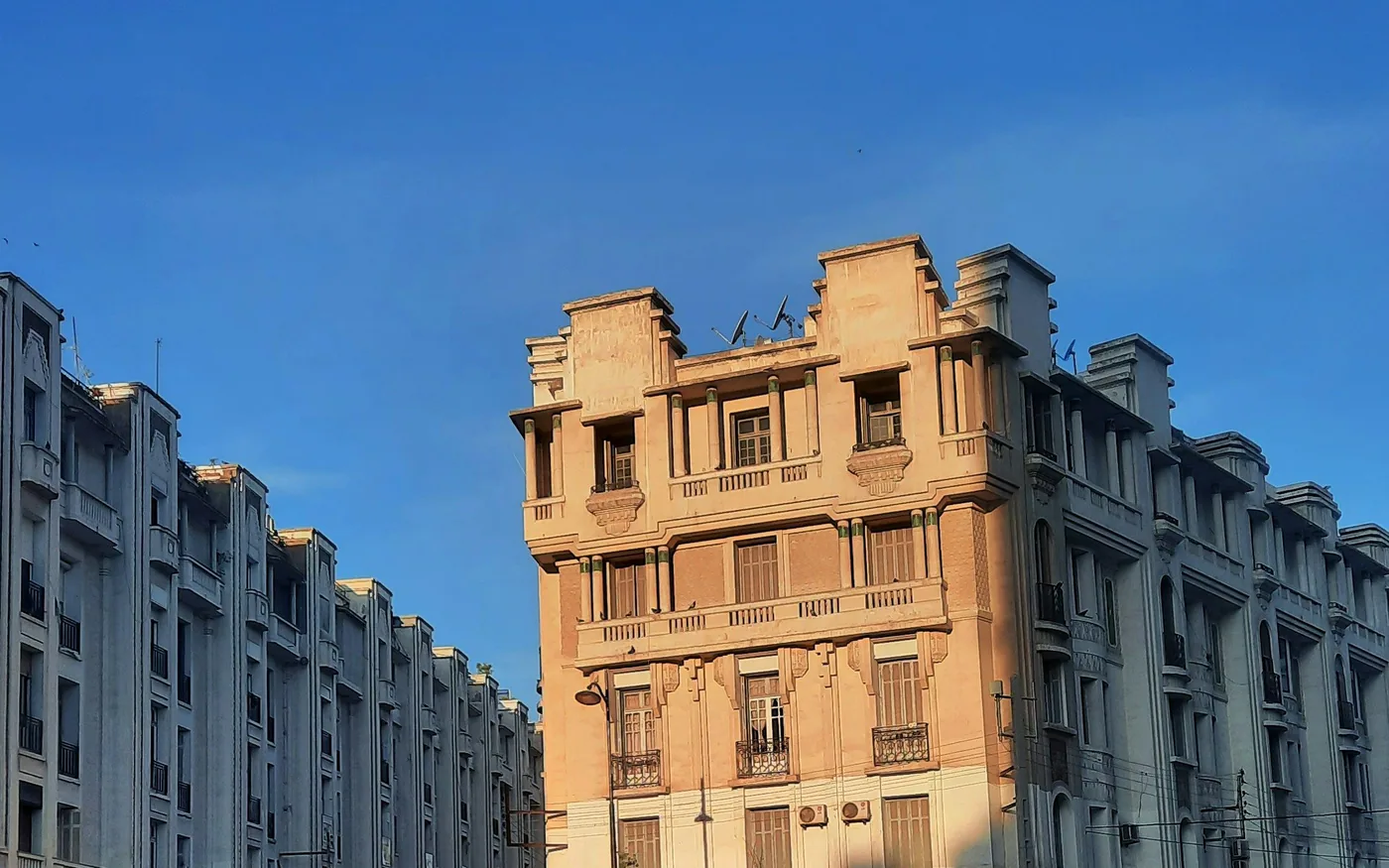
The centre also mixes neo-Moorish, modernism and European styles: not every building is "Art Deco" in the strict sense, and it is this mix that makes the walk interesting.
The city-centre Art Deco walking route
Indicative duration: 2 to 3 hours on foot, with a break (estimate). Start: Place Mohammed V. Tickets: none for the exteriors.
This route adapts the stops of the "City centre" route offered by Visit Casablanca. Durations are estimates: they depend on your pace and pedestrian traffic.
Stop 1 – Place Mohammed V (30 to 40 min)
Place Mohammed V is the ideal starting point. Around it stand several institutional buildings from the 1920s and 1930s: the Wilaya (former city hall), the Palace of Justice, the Grande Poste and Bank Al-Maghrib. The style is mostly neo-Moorish, with Art Deco touches: green tiles, zellige, colonnades, clock towers.
Worth knowing: the Palace of Justice and the bank are administrative buildings, admired from outside without counting on interior access. The Grande Poste, by Adrien Laforgue (1918–1920), is something to observe from the square: don't count on an organised tourist visit of the interior.
Stop 2 – United Nations Square and Café de France (30 min, break)
Continue to United Nations Square. The Café de France, listed on Visit Casablanca's official route, is a good coffee break before the next part. Other cafés and tea rooms in the centre also work: choose according to your timing.
Stop 3 – Hotel Excelsior and the Zevaco dome (20 to 30 min)
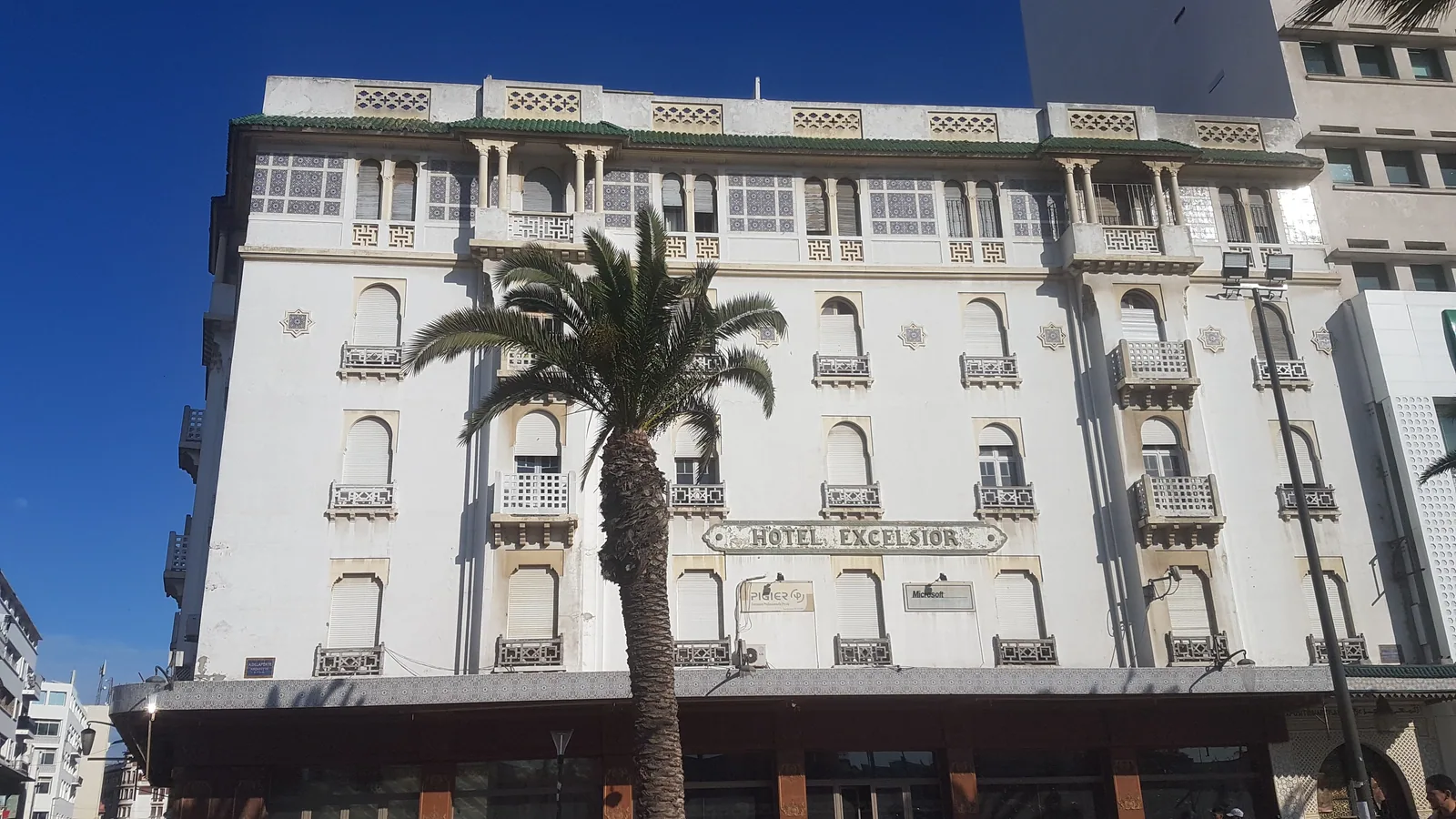
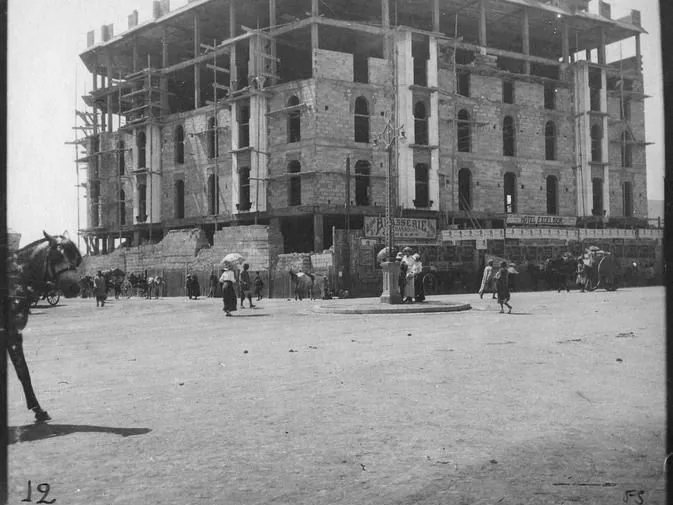
The official route then mentions the Hotel Excelsior and the dome by the architect Zevaco. The latter is modern rather than Art Deco architecture: it shows how the style evolved after the 1930s.
Stop 4 – Rialto cinema (15 to 20 min)
The Rialto is one of the best-known Art Deco buildings in the city: built in 1929 by the architect Pierre Jabin, it is presented by Visit Casablanca as a cinema that still welcomes the public, with a remarkable auditorium, dome and balcony. It is both a monument and a cultural venue: check the programme before planning to go in, and at least admire the façade.
Stop 5 – Central Market (30 to 40 min)
The Central Market, also on the official route, is a good lunch stop: fish, seafood, fresh produce. See our guide on what to eat in Casablanca.
Optional extension – Arab League Park and the former Sacré-Cœur cathedral (45 to 60 min)
A little further on, the Arab League Park contains the former Sacré-Cœur church, by Paul Tournon and begun in 1930, with lines that mix Art Deco and Gothic. Deconsecrated after 1956, it reopened in 2023 as a cultural space. According to the official visiting page, the space is open every day from 8:00 to 18:30 (last visit at 18:15), with booking recommended but not compulsory for individual visitors. Entry is paid: 50 MAD for an adult, 25 MAD for under-25s and children aged 6 to 12, 120 MAD for the family pack, free for residents of Morocco and people with reduced mobility. During events, access to the monument may not be allowed. Opening times, prices and conditions may change: check before you come. For this extension, a taxi or the tram is more practical than a long walk.
If you like museums, the Villa des Arts and the Abderrahman Slaoui Museum can round off the morning: check their opening times and prices with the venues.
The buildings: outside only, or can you go in?
| Building | What you will see | Exterior | Interior |
|---|---|---|---|
| Wilaya, Palace of Justice, Bank Al-Maghrib | Neo-Moorish and Art Deco façades, green tiles, zellige | Yes | Administrative buildings: access not guaranteed |
| Grande Poste | Façade and interior hall | Yes | No organised tourist visit |
| Rialto cinema | 1929 Art Deco façade | Yes | Working cinema, depending on the programme: to check |
| Former Sacré-Cœur cathedral | Art Deco and Gothic architecture | Yes | Paid, open every day (last visit 18:15), access sometimes restricted during events |
| Villa des Arts, Slaoui Museum | Cultural venues | Yes | Opening times and prices to check |
Photo tips
- Look up: the balconies, friezes and rounded corners are above the shop windows.
- Favour low light in early morning or late afternoon, which brings out the relief.
- Frame wide on Place Mohammed V, then close in on details (zellige, ironwork, clocks).
- Be discreet near administrative or security buildings and respect posted rules.
- Avoid busy hours on narrow pavements.
Where to take a break
The Café de France (on the official route) and the city-centre cafés suit a break in the middle of the route. The Central Market is handy for lunch. These addresses change: check the hours on the day.
When to do the route
Morning and late afternoon are nicer for walking and photography. If you are also planning the Hassan II Mosque, plan its tour time first and fit the Art Deco route before or after. See our guide to visiting the Hassan II Mosque.
Guided tour: to understand what you are seeing
Without a guide you see beautiful façades. With a guide you understand who built them, why they mix these styles and what they say about the city. Several options exist:
- Casamémoire organises the Heritage Days, three days a year of free guided visits, as well as other events including the Heritage Nights. Dates vary from year to year: check the association's website.
- A guided tour of Casablanca can include the city centre. MoroccoMuseum's Casablanca Half-day guided tour listing announces an overview of the city's architecture, Art Deco included, with Hassan II, Habous and the old medina. It is not a tour devoted exclusively to Art Deco: check the programme and conditions with the provider.
Prefer to discover the buildings with a guide who explains their history? See the tours and experiences in Casablanca available on MoroccoMuseum.
Combining Art Deco with the rest of the city
- With the Hassan II Mosque and the old medina: the Art Deco route fits in the afternoon, after the guided visit of the mosque. See our itinerary Casablanca in one day.
- With the Habous quarter, built between 1918 and 1955: a different architecture, more inspired by traditional forms. See our guide to the Habous quarter.
- Over two days: you can give a whole morning to this route. See Casablanca in two days.
- During a layover: if you only have a few hours, the city centre is easier to fit in than a long visit. See our guide on Mohammed V airport and layovers.
To place this route in the city, see our complete guide to visiting Casablanca.
FAQ — Casablanca Art Deco
Why is Casablanca famous for Art Deco?
The city grew very fast in the 20th century, and its modern centre was built in the 1920s and 1930s, with a mix of Art Deco and neo-Moorish style.
Where can you see Art Deco in Casablanca?
In the city centre: Place Mohammed V, United Nations Square, Boulevard Mohammed V, the Rialto cinema, the Central Market.
How long does the Art Deco route take?
Allow generally 2 to 3 hours on foot, with a break (estimate).
Can you go inside the buildings?
Not always. Many are administrative or change status. Admire them from outside and check access before you come.
Is there a guided tour?
Casamémoire organises guided visits during events. A guided tour of Casablanca offered on MoroccoMuseum may also include the city centre: check its programme.
Is Casablanca a UNESCO World Heritage Site?
No: the city has been on the Tentative List since 2013, but it is not inscribed as a World Heritage Site.
What is the best time to photograph the façades?
Early morning and late afternoon.
Can you do the route and the Hassan II Mosque on the same day?
Yes: see our one-day itinerary.
Discovering Casablanca beyond Art Deco
Casablanca is best discovered by alternating moods: medina, Art Deco façades, mosque, Habous, Corniche. To organise your visit, see the tours and experiences available in Casablanca on MoroccoMuseum and, if you have more time, our day trips from Casablanca.
Interior access, opening times, prices and event programmes may change. Check with the venues or organisers before your visit.
Photo credits: Hotel Excelsior, United Nations Square, Reda benkhadra, and photograph of the Hotel Excelsior under construction (1916), Normant, Médiathèque de l'architecture et du patrimoine, under the CC BY-SA 4.0 licence, via Wikimedia Commons; images resized.