Information verified on October 2, 2026. Opening hours, access conditions and visiting arrangements may change: check official sources before your visit.
History and Heritage of Casablanca: From Anfa to the Modern Metropolis
Casablanca is often presented as a modern and dynamic city, primarily known for its role as Morocco's economic capital.
This image is not wrong, but it tells only part of the story.
Behind the major boulevards, contemporary buildings and port activity lies a remarkably rich heritage: the ancient city of Anfa, the Portuguese fortress, a medina rebuilt after the upheavals of the 18th century, an exceptional Art Deco and Neo-Moorish architectural heritage, as well as religious monuments reflecting the city's cultural diversity.
Casablanca is therefore a city where several centuries of history overlap.
This guide traces the major stages of its development and introduces the main monuments and neighborhoods to explore today.
To plan your stay, also see our complete guide to Casablanca.
Casablanca in Antiquity: The Ancient City of Anfa
The history of Casablanca began long before its current name.
On the site of today's modern city stood Anfa, an ancient settlement whose origins are generally placed around the 7th century, on a site occupied by humans since much earlier periods.
Thanks to its position on the Atlantic coast, Anfa gradually became an important port.
The city experienced different influences over the centuries and was notably associated with Berber populations, the Phoenicians and the Romans.
In the 8th century, Anfa was considered the capital of the Barghawata Berber kingdom, according to several historical sources.
Its maritime position encouraged commercial development but also attracted the attention of European powers.
The Destruction of Anfa in 1468
In 1468, a Portuguese expedition commanded by Infante Ferdinand, brother of King Afonso V, attacked and destroyed Anfa.
The expedition was notably carried out in retaliation for maritime raiding activities associated with the city.
When the chronicler Leo Africanus saw the ruins at the beginning of the 16th century, Anfa had lost much of its importance.
The destruction of 1468 was one of the major turning points in the city's history.
The Portuguese Fortress and the Birth of Casa Branca
The Portuguese returned to the site several decades later.
In 1515, they built a fortress and established a new settlement called Casa Branca, meaning "white house."
A new urban center developed around the fortification.
This area corresponds to the heart of today's Old Medina of Casablanca.
The Portuguese presence, however, remained difficult to maintain.
Attacks by neighboring tribes gradually weakened their settlement, and the Portuguese eventually abandoned the city.
The 1755 Lisbon earthquake, which also affected Morocco's Atlantic coast, is associated with this period of destruction and abandonment.
The Revival of Casablanca under the Alaouite Sultans
At the end of the 18th century, Casablanca entered a new phase in its history.
The Alaouite Sultan Sidi Mohammed Ben Abdallah, who was also responsible for the development of Essaouira, undertook the reconstruction of the city.
The walls were rebuilt and Casablanca gradually regained urban and commercial activity.
The city was then known as Dar el-Beïda, meaning "white house" in Arabic.
The Spanish name Casablanca is a deformation of this name.
Thanks to its strategic position on the Atlantic, the city gradually became an active commercial port and attracted European merchants.
This maritime opening prepared the spectacular transformation Casablanca would undergo at the beginning of the 20th century.
Casablanca under the Protectorate: The Birth of an Economic Capital
The real turning point in Casablanca's modern history came at the beginning of the 20th century.
When Marshal Lyautey arrived in 1912, the city had around 20,000 inhabitants.
Yet only a few years were enough to profoundly change its destiny.
Construction of a major artificial port began as early as 1913, while the establishment of the protectorate that same year accelerated the city's economic and urban transformation.
Henri Prost and the New City
In 1914, Lyautey appointed urban planner Henri Prost to head Casablanca's Architecture and Planning Department.
Prost presented a first development plan as early as 1915.
One of the main objectives was to organize the coexistence of the old medina and a new European city.
This approach gave rise to a vast urban area where modern architecture, Moroccan references and new urban-planning principles came together.
Casablanca thus became a genuine architectural laboratory.
Art Deco, Neo-Moorish and modernist buildings appeared along the new avenues and around major squares.
According to Casamémoire, an association specializing in the preservation of 20th-century architectural heritage in Morocco, this period made Casablanca a major reference in the history of urban planning in North Africa.
Within a few decades, the city became the country's largest urban area and established itself as Morocco's economic capital, a role it retains today.
What to See in Casablanca to Discover Its History
Casablanca's history is not found only in museums.
It can be read directly in its streets, neighborhoods, walls and buildings.
Here are the main places to include in your exploration of the city.
Hassan II Mosque
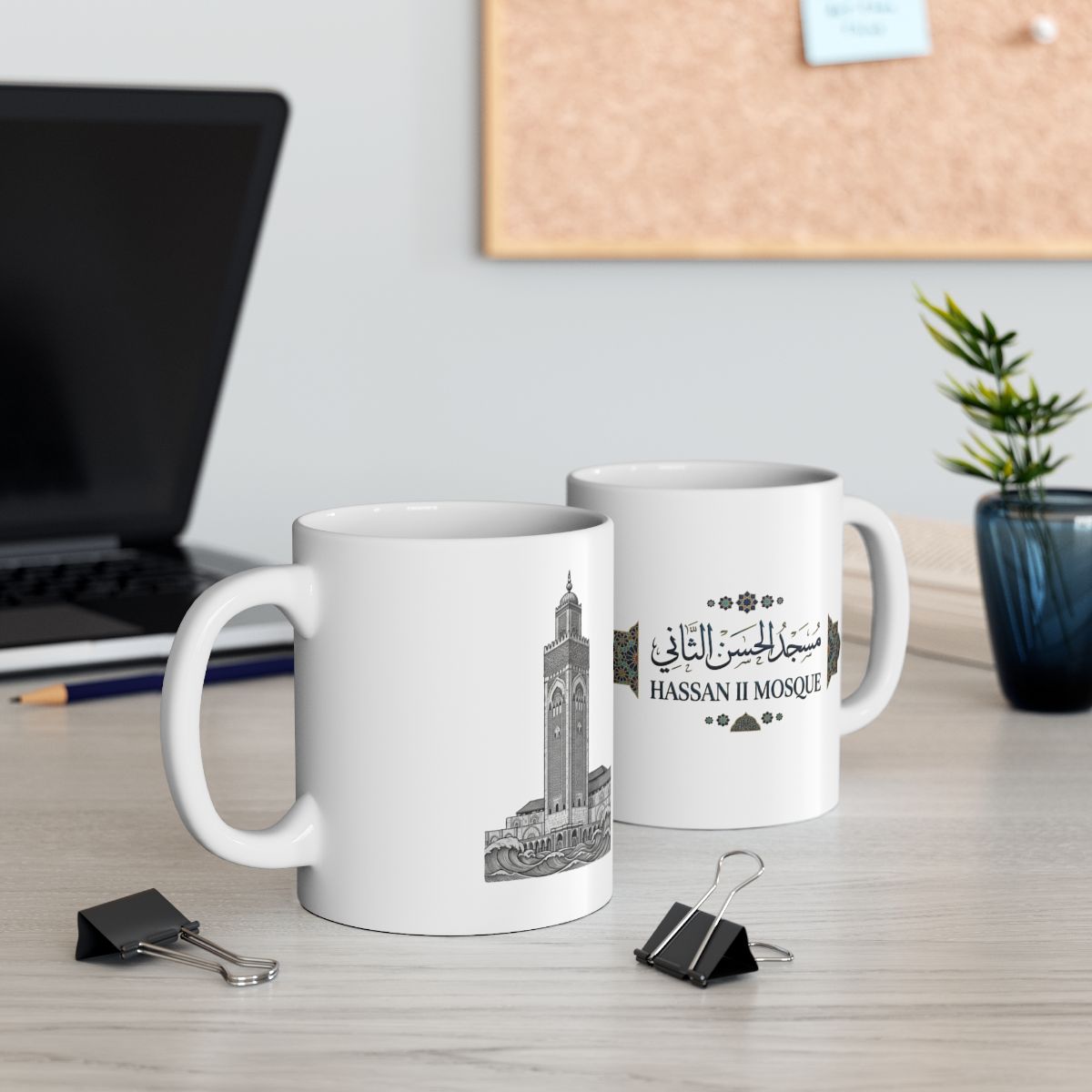
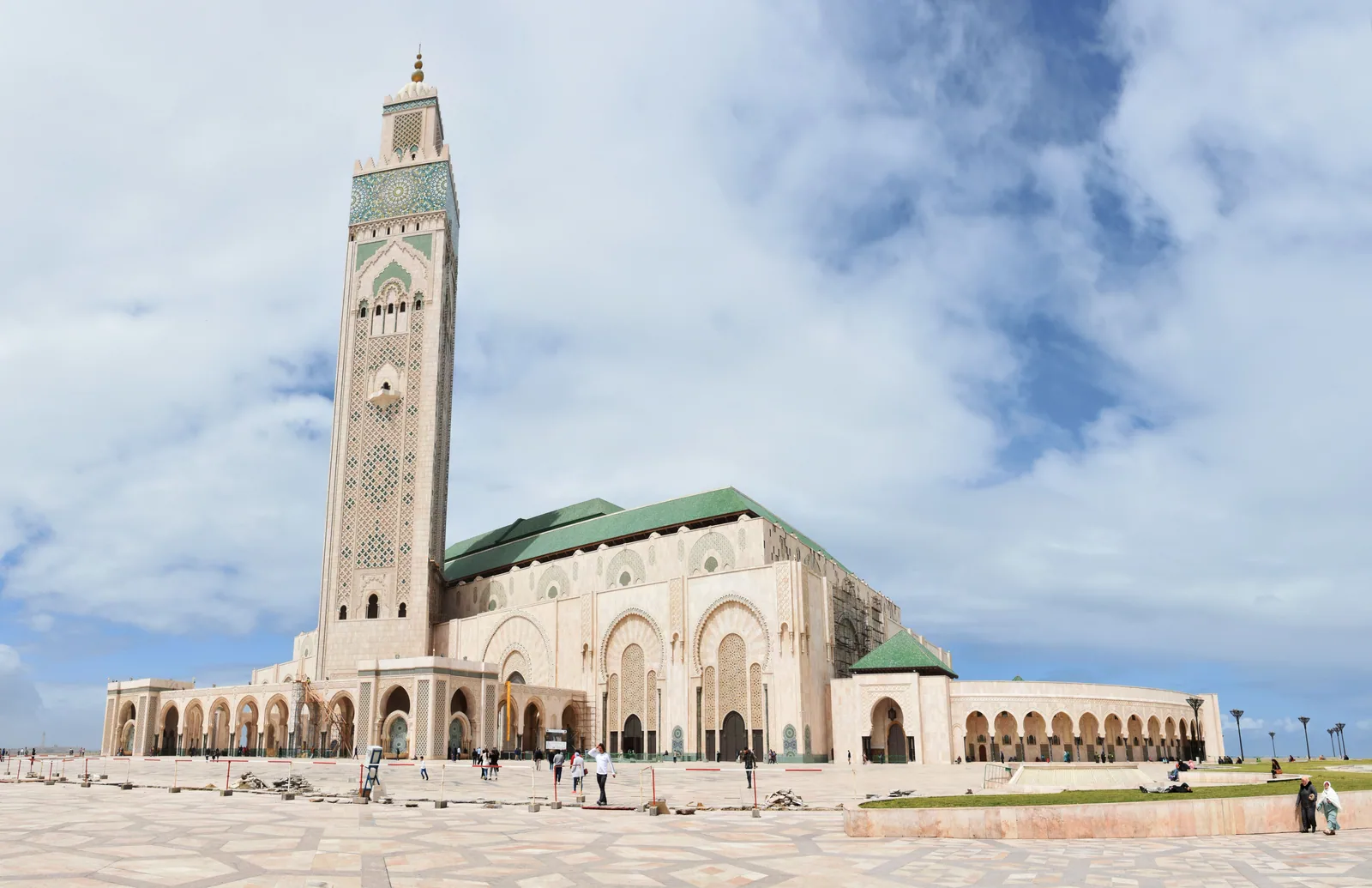
Completed in 1993 after several years of construction, the Hassan II Mosque is now one of Morocco's most iconic monuments.
Its minaret reaches 210 meters, making it one of the city's most remarkable architectural landmarks.
Built partly over the Atlantic Ocean, the mosque combines monumental architecture with traditional Moroccan craftsmanship.
The prayer hall can accommodate around 25,000 worshippers, while the esplanade can accommodate several tens of thousands more.
It is also one of the few mosques in Morocco open to non-Muslim visitors, through guided tours organized at fixed times.
The Old Medina of Casablanca
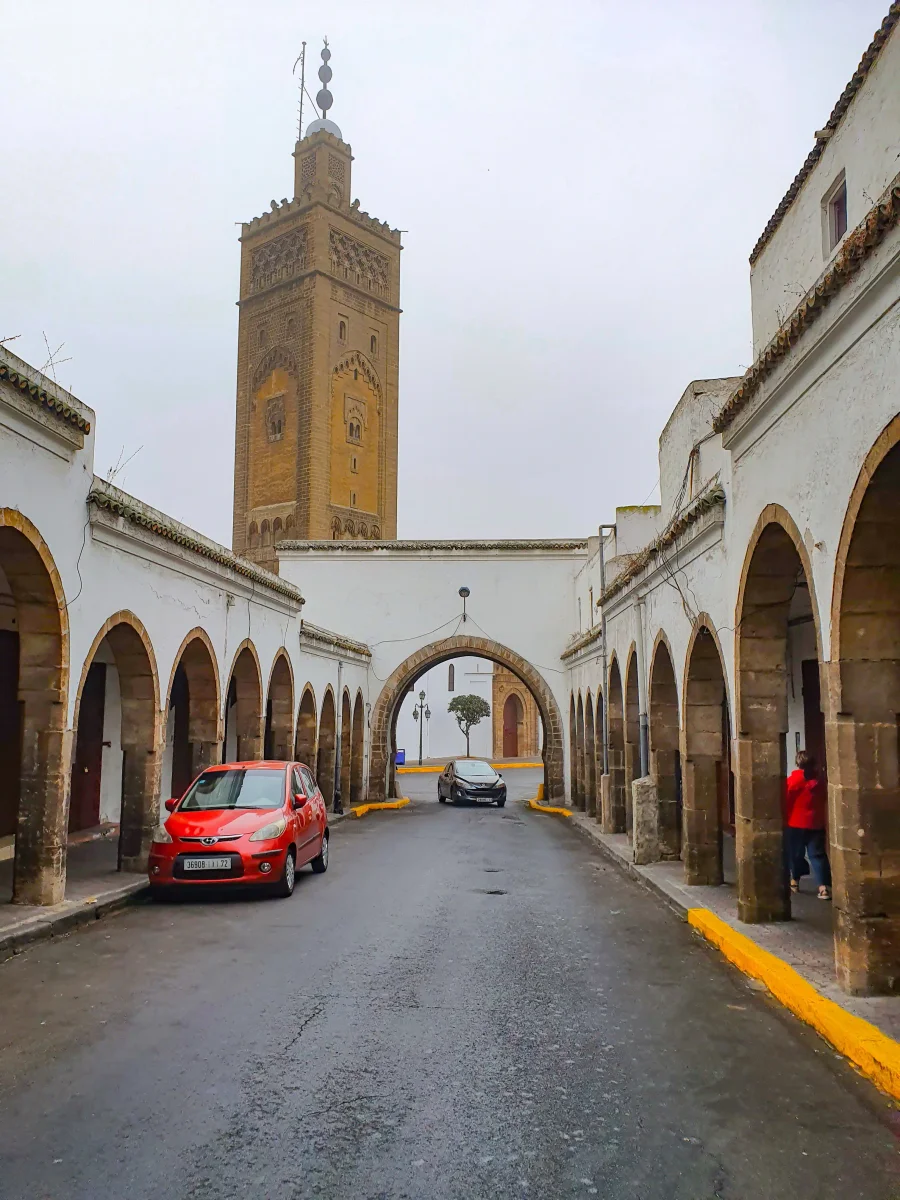
The Old Medina of Casablanca is one of the city's main witnesses to its early history.
Its development is directly linked to the former Portuguese settlement of Casa Branca in the 16th century.
The medina was later largely rebuilt following the destruction and upheavals of the 18th century.
Today, it is smaller and generally less tourist-oriented than the major imperial medinas of Fez or Marrakech.
Its streets, shops and immediate proximity to the port nevertheless offer a chance to discover another side of Casablanca, one that is more local and everyday.
The neighborhood also faces preservation challenges, and some buildings require significant restoration work.
Visiting the medina therefore provides an opportunity to discover a living heritage while also understanding the challenges involved in preserving it.
Discover the Old Medina of Casablanca
The Habous Quarter
The Habous Quarter is one of the most interesting examples of the combination of traditional Moroccan architecture and modern urban planning.
Designed in the 1930s as part of Casablanca's development during the protectorate, it incorporates several features of traditional medinas:
- arcades;
- narrow streets;
- courtyards;
- decorated doors;
- shops and souks.
Unlike the old medinas, however, the neighborhood was designed according to an organized urban plan.
It is often described as a "new medina."
Today, its souks, bookstores, traditional pastry shops and handicraft stores make it both a lively neighborhood and a particularly interesting place to understand Casablanca's architecture.
Mahkamat al-Pacha
Located in the Habous Quarter, Mahkamat al-Pacha is one of Casablanca's most remarkable historic buildings.
Built between 1941 and 1952 according to plans by French architect Auguste Cadet, this former courthouse of the Pasha of Casablanca covers approximately 6,000 m² and contains more than sixty rooms.
Its architecture combines traditional Moroccan techniques and materials with a monumental design.
Construction began during the Second World War and relied in particular on traditional craftsmen and materials at a time when some modern materials were being requisitioned for the war effort.
The building features, among other things:
- stone from Ben Slimane and Bouskoura;
- zellige and green tiles from Fez;
- hand-carved Atlas cedar ceilings.
The building still houses administrative services.
Interior access may therefore be subject to specific conditions and should be checked before visiting.
La Sqala
La Sqala recalls the strategic importance of Casablanca and its port.
Restored in 1769 during the reign of Sultan Sidi Mohammed Ben Abdallah, this former defensive fortification was equipped with cannons intended to protect the city from attacks coming from the sea.
Built against the walls of the Old Medina, it still retains part of its military character.
Today, the site has been converted into a restaurant and leisure area.
Its thick walls, cannons and position facing the ocean nevertheless make it possible to imagine the defensive role it once played.
Sacred Heart Church
The Sacred Heart Church reflects Casablanca's multicultural history during the protectorate period.
Built in the 1930s, it combines Neo-Gothic and Art Deco influences.
It has not been used as a place of worship since Morocco's independence, but remains one of the most recognizable buildings in the city center.
Its slender silhouette and stained-glass windows also make it a popular location for photographers.
The building can be particularly photogenic toward the end of the day.
Ettedgui Synagogue
Casablanca's history is also closely connected to its Jewish community.
For much of the 20th century, the city was home to one of Morocco's largest Jewish communities and already played a major economic role in the country.
The Ettedgui Synagogue, located in the Old Medina, is a testament to this heritage.
It is one of the places that helps visitors better understand the multicultural and multi-faith character of Casablanca.
Together with the city's mosques and former churches, it reminds us that Casablanca's heritage cannot be reduced to a single religious or architectural tradition.
Discover the Ettedgui Synagogue
Villa des Arts
Housed in an elegant 1930s Art Deco villa, the Villa des Arts in Casablanca is now one of the city's main spaces dedicated to contemporary Moroccan art.
The venue hosts temporary exhibitions and a permanent collection in a building that is itself part of Casablanca's architectural heritage.
Villa des Arts therefore illustrates another evolution of the city's heritage: the conversion of a historic building into a contemporary cultural space.
Abderrahman Slaoui Museum
Opened in 2014, the Abderrahman Slaoui Museum presents the personal collection of renowned Moroccan collector Abderrahman Slaoui.
The museum features, among other things:
- traditional Moroccan jewelry;
- vintage advertising posters;
- glassware;
- works of art;
- various objects collected throughout his life.
The museum offers a different perspective on Moroccan heritage.
It helps visitors understand how art, craftsmanship, advertising and visual culture evolved in Morocco during the 20th century.
Discover the Abderrahman Slaoui Museum
Mohammed V Square
Mohammed V Square is one of the most important urban ensembles in central Casablanca.
It is surrounded by several emblematic administrative buildings dating from the 1920s and 1930s.
They feature a combination of Neo-Moorish and Art Deco influences characteristic of the architecture developed during the protectorate.
The square is directly connected to Henri Prost's urban-planning scheme and helps visitors understand the ambitions behind Casablanca's transformation at the beginning of the 20th century.
Its central fountain and surrounding architectural ensemble make it one of the city's most recognizable urban spaces today.
What Itinerary Should You Follow to Discover Casablanca's Heritage?
If you want to understand Casablanca's history rather than simply see its monuments, it is useful to visit them in roughly chronological order.
One day
You could start with:
Old Medina → La Sqala → Hassan II Mosque → city center → Mohammed V Square.
This route allows you to move gradually from the city's ancient history to its modern architecture.
A second day
Add:
Habous → Mahkamat al-Pacha → Villa des Arts → Abderrahman Slaoui Museum.
This gives you a broader view of Casablanca's different architectural and cultural periods.
To build your itinerary according to the time available, also see our guides:
Getting Around Casablanca
Casablanca is a large metropolitan area and distances between some neighborhoods can be significant.
To plan your stay, including transportation, where to stay, visiting times and excursions, consult our complete guide to Casablanca.
The best approach is to group visits by area to avoid spending too much time traveling between sites.
The city center, Old Medina and Hassan II Mosque can be combined on the same day, while the Habous Quarter can be combined with sites located south of the city center.
Casablanca: A City Whose Heritage Is Still Waiting to Be Rediscovered
Casablanca cannot be reduced to its modern buildings or its role as Morocco's economic capital.
Its identity has been built layer by layer.
First came Anfa, the ancient city facing the Atlantic.
Then came Casa Branca, the Portuguese fortress.
The city was later revived under the Alaouite sultans before undergoing a spectacular transformation in the 20th century with the development of the port, the arrival of the protectorate and Henri Prost's major urban projects.
Today, these different periods coexist.
The Old Medina recalls the city's maritime history. The Habous Quarter illustrates the meeting of Moroccan architecture and modern urban planning. Art Deco buildings tell the story of Casablanca's transformation during the 20th century. The Hassan II Mosque represents another stage in this long history.
This layering is precisely what makes Casablanca so fascinating to explore.
The city is not a frozen museum: its heritage remains part of everyday life.
Continue Exploring Morocco
Morocco's heritage is not limited to Casablanca.
Palaces, madrasas, museums, archaeological sites, historic medinas and religious monuments each tell a part of the country's history.
🎟️ Discover Morocco's heritage and book your tickets
📖 Read our guides and travel inspiration
MoroccoMuseum.com — Discover. Explore. Experience Morocco's heritage.