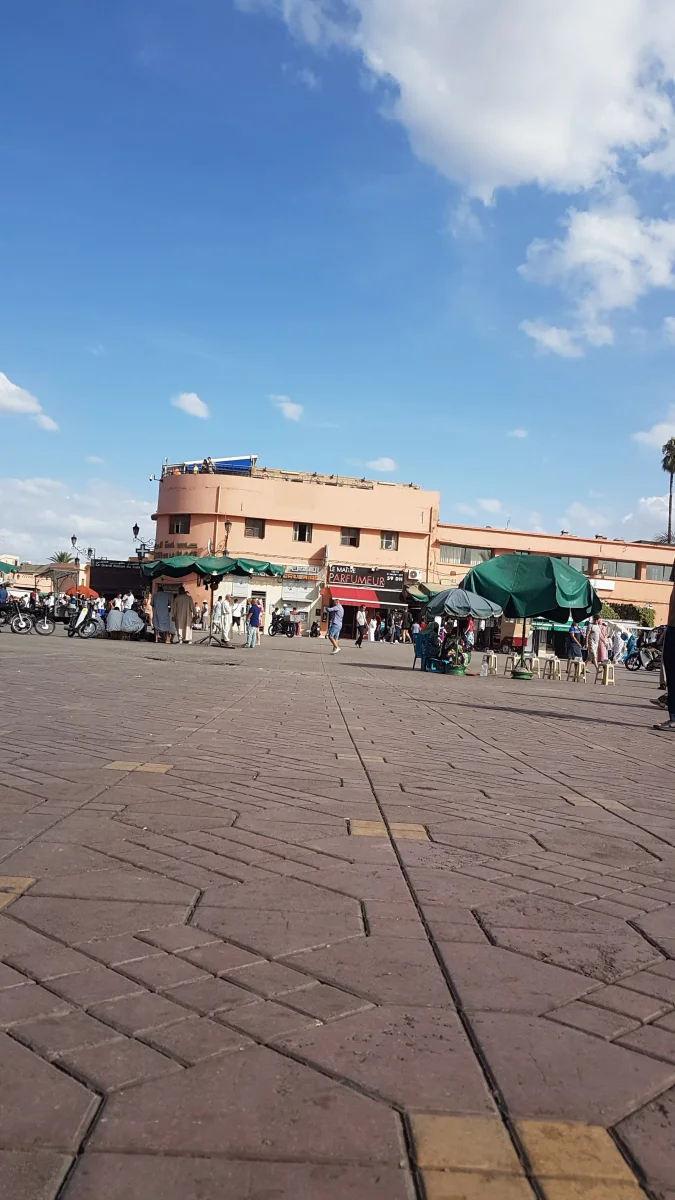





When to visit Jemaa el-Fna square?
The square is always open and free, but it changes character through the day:
- in the morning it is quiet: orange-juice and dried-fruit stalls, the first passers-by;
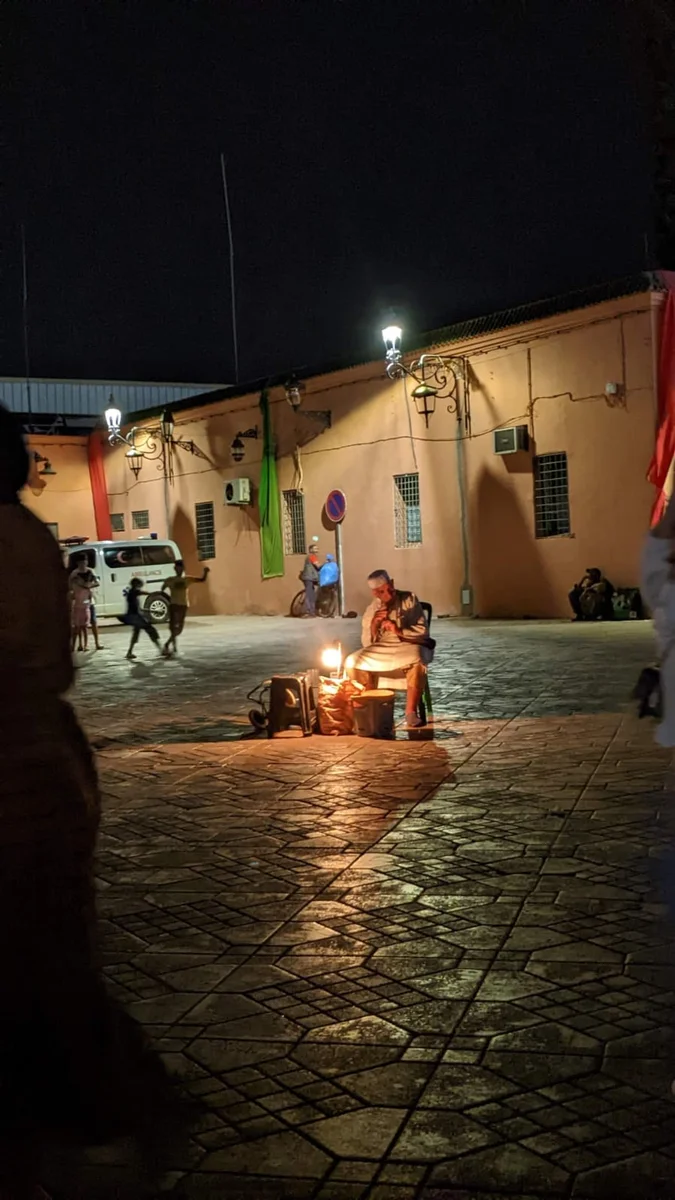
- in the afternoon the storytellers, musicians, animal handlers and henna artists arrive;
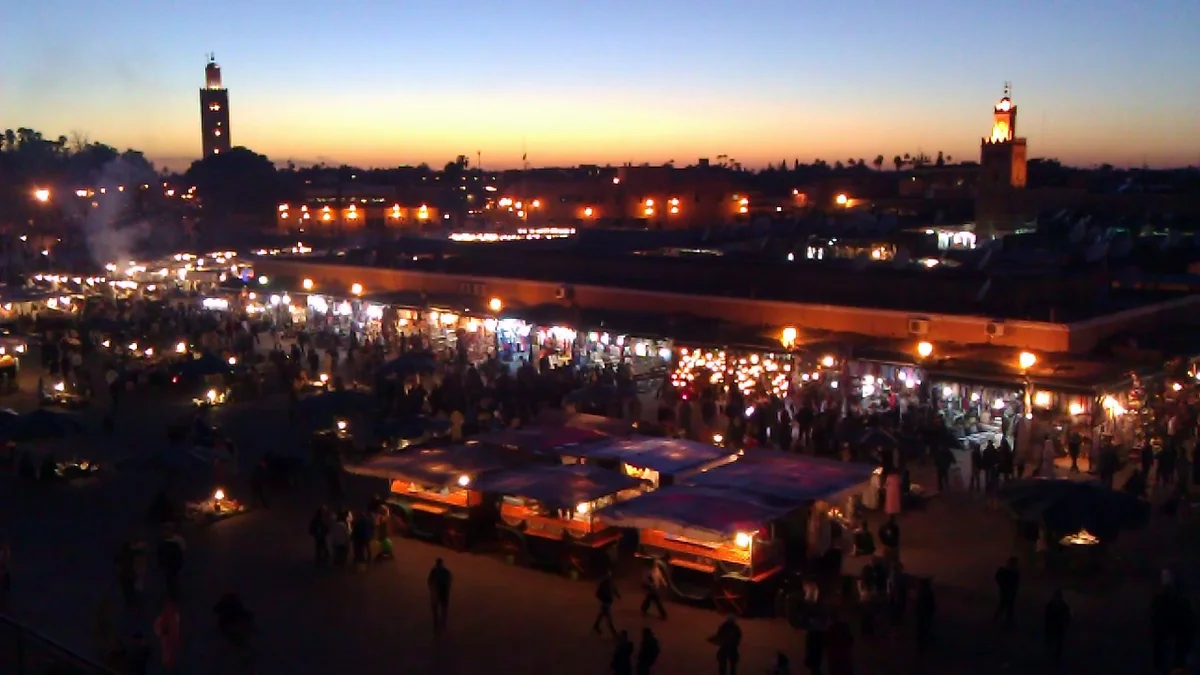
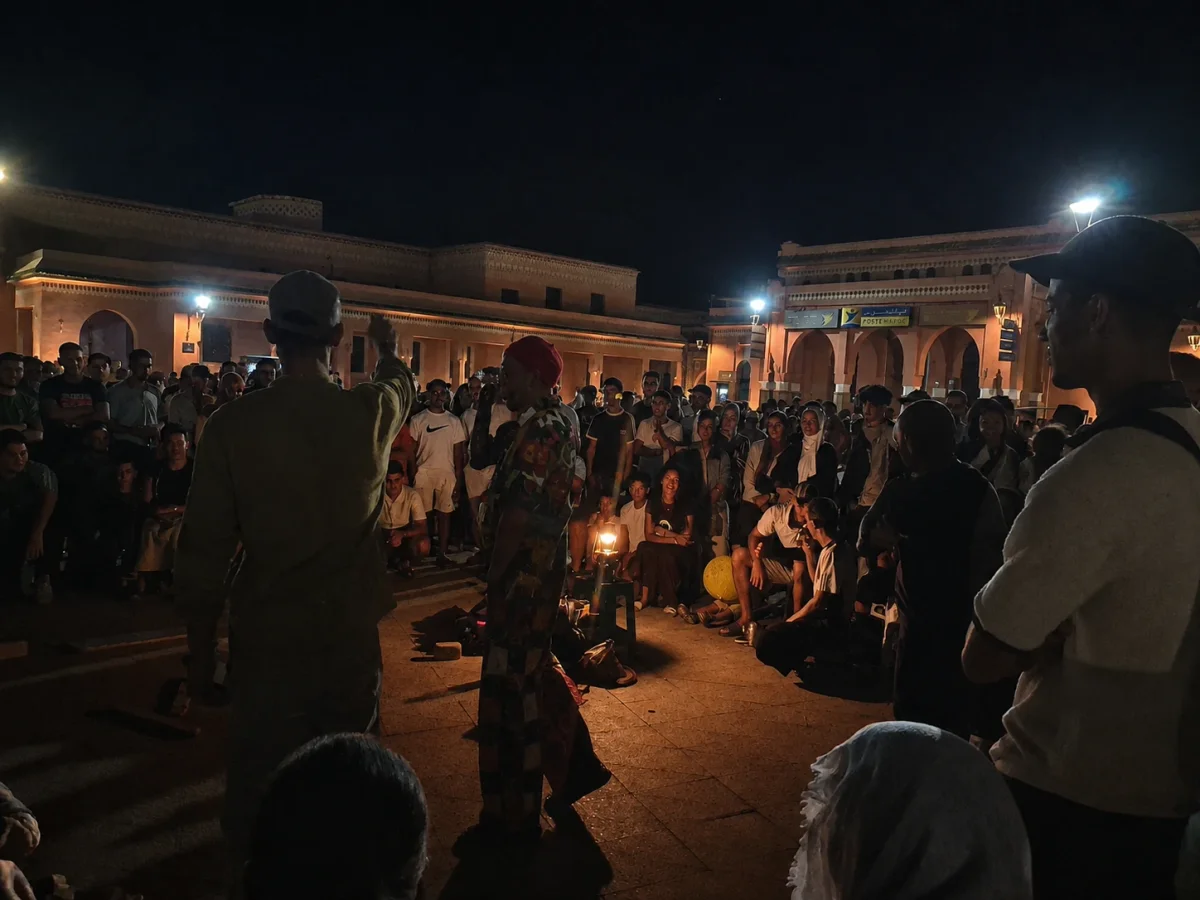
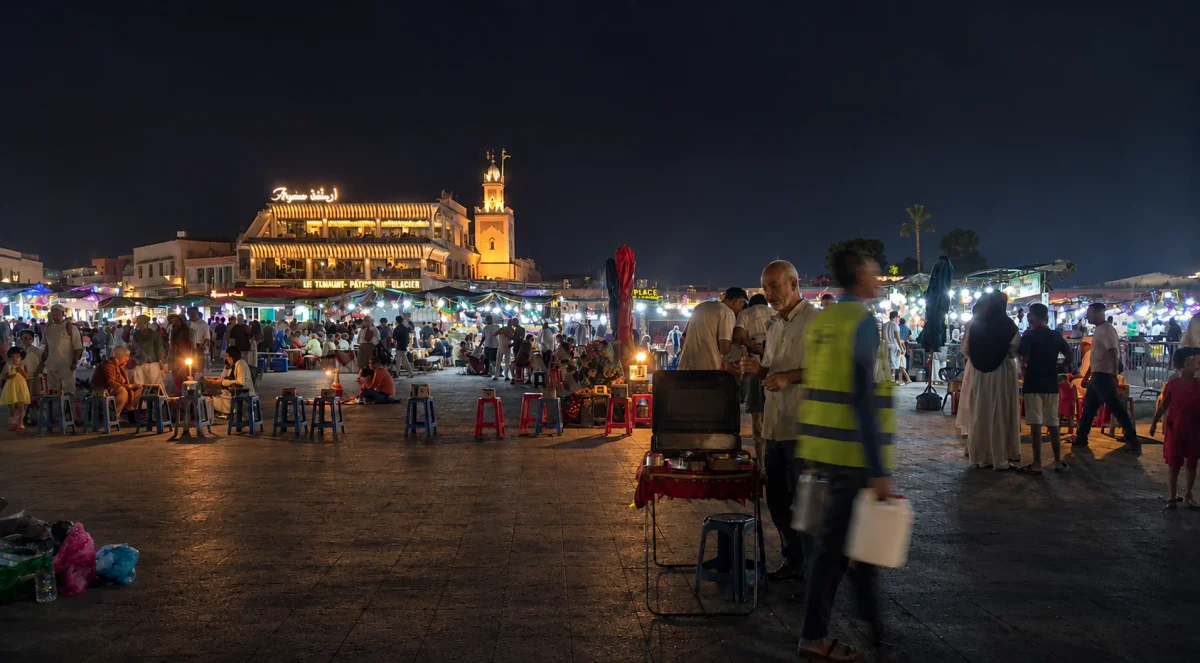
- from sunset the food stalls set up, smoke rises from the grills and circles of musicians and storytellers form: this is the liveliest time, until late in the evening.
To watch the transformation, go up to one of the café terraces overlooking the square around 6 pm, then come down as night falls.
A living heritage
The square dates back to the early centuries of Marrakech; the origin of its name is still debated. In 2001, UNESCO proclaimed the cultural space of Jemaa el-Fna square a Masterpiece of the Oral and Intangible Heritage of Humanity: what is recognised is the living tradition of storytellers, musicians and street performers rather than a monument. The Jemaa el-Fna Museum of Intangible Heritage, on the edge of the square, tells its story.
What not to miss
- The circles of Gnawa musicians, with the guembri and metal castanets (krakeb).
- The storytellers' halqas, in Darija: even without understanding, you can feel the art of performance.
- The evening food stalls: harira soup, kebabs, tagines, snails.
- Freshly squeezed orange juice from the numbered stalls.
How long to allow?
From 1 to 3 hours, as you like. Many visitors come back several evenings.
Getting there
The square is in the heart of the medina, about 5 minutes' walk east of the Koutoubia.
- By taxi: taxis drop you at the edge of the square. Ask for the meter or agree the fare before setting off.
- On foot: all the main streets of the medina lead here; it is the city's landmark.
Safety and scams
- Pickpockets: the evening crowds attract them. Keep your phone and wallet in a closed pocket and don't flash wads of notes.
- Photos with animals or musicians: you will be asked to pay. If you don't want to pay, don't take close-up photos, or agree the price first.
- Henna: ask the price before holding out your hand; some artists start a design without warning.
- Food stalls: ask for prices or the menu before sitting down, and check the bill.
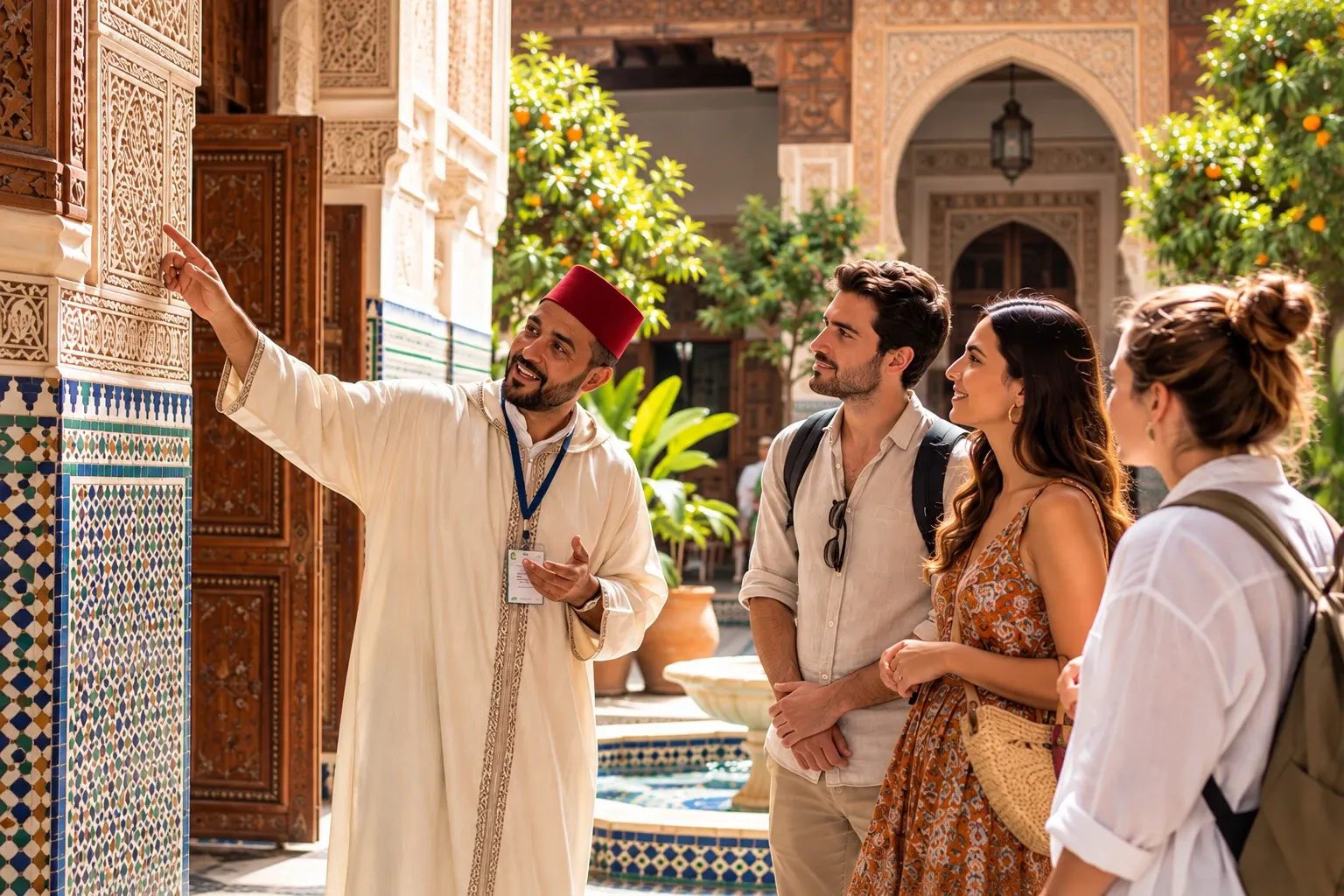
- Fake guides: people who offer to take you into the souks from the square expect a commission or a tip.
The monkeys and snakes displayed on the square raise animal-welfare concerns; you may prefer not to encourage the practice.
Combine with other visits
The square is the starting point for most walks: the souks to the north, the Koutoubia to the west, the Bahia Palace to the south-east, and the Kasbah with the Saadian Tombs to the south.