Name and origins
The name "Jemaa el-Fna" translates roughly as "assembly of the dead" or "mosque of nothingness" — a reference to the public executions once held there, in front of the gates of a mosque that overlooked the square. The square has existed since the founding of Marrakech by the Almoravids in 1062.
Evolution through the dynasties
Under the Almoravids (1062–1147), the square served as a place of justice and trade. Under the Saadians (16th century), troupes of acrobats and storytellers settled there permanently. By the 19th century, European travelers were already describing exactly the same scene: snake charmers, musicians, herb sellers.
Under the French Protectorate (1912–1956), attempts at "modernizing" development nearly turned the square into a parking lot — saved at the last minute by the listing of the medina as a protected site.
UNESCO recognition (2001)
In 2001, Jemaa el-Fna became the first living cultural expression inscribed on UNESCO's Intangible Cultural Heritage list — a groundbreaking recognition that protects not a building but an ongoing cultural practice.
Today
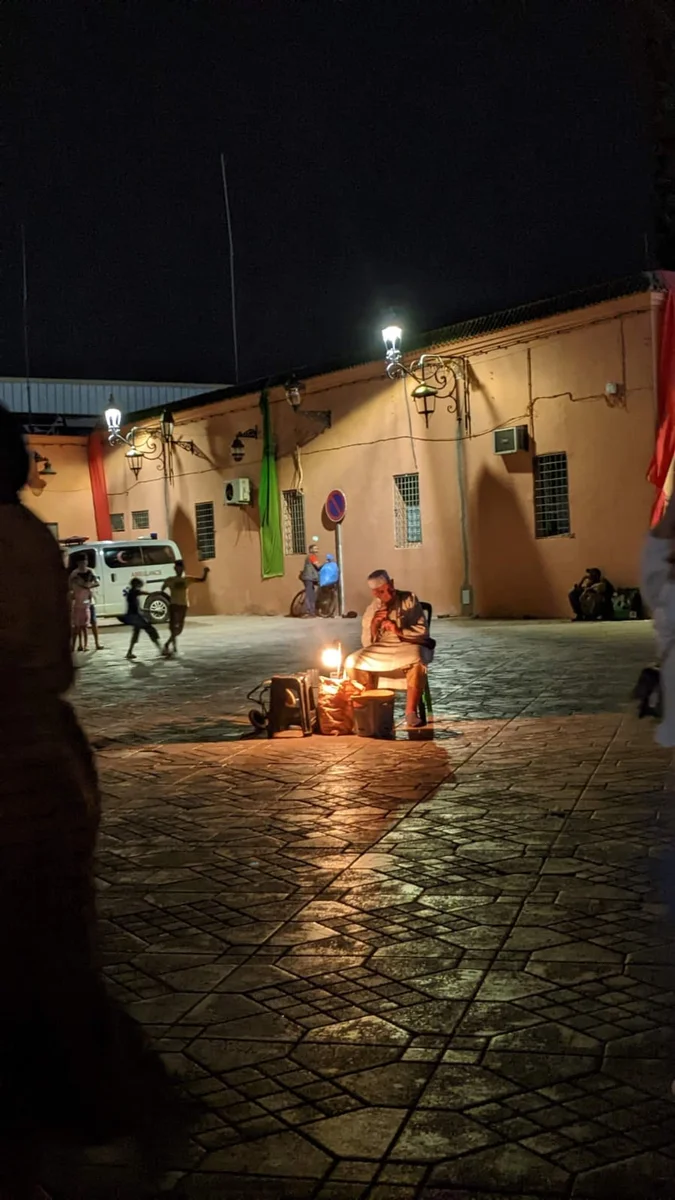
Storytellers, gnaoua musicians, snake charmers, henna artists, and fortune tellers by day. Dozens of street food stalls, the smell of smoke, and a general hubbub by night. The square is the beating heart of Marrakech — looking much as it did in the 19th century, and world-famous since 2001.
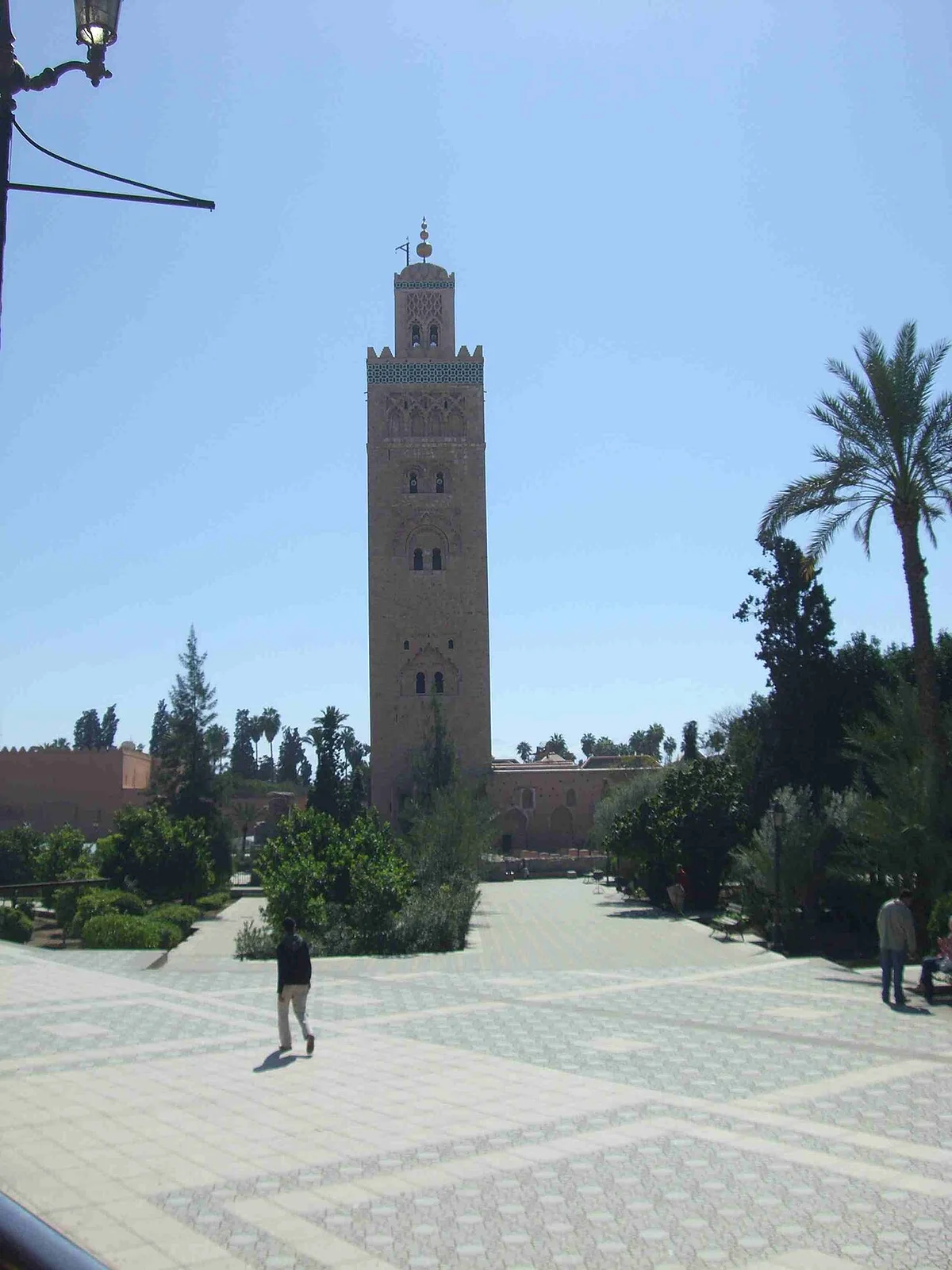
The square pairs naturally with the nearby Koutoubia, whose minaret is visible from Jemaa el-Fna.