Aït Ben Haddou: History of Morocco's Iconic Fortified Ksar
At the southern foothills of the High Atlas Mountains, in the province of Ouarzazate, stands one of Morocco's most recognisable architectural landscapes: the Ksar of Aït Ben Haddou.
With its earthen buildings rising from the hillside, defensive walls, decorated towers and narrow lanes, Aït Ben Haddou is one of the most remarkable examples of traditional pre-Saharan architecture in Morocco.
The site has been inscribed on the UNESCO World Heritage List since 1987.
But Aït Ben Haddou is much more than a beautiful kasbah or a famous film location.
It is primarily a ksar: a fortified village containing houses, communal spaces, religious buildings and defensive structures.
Its history offers a fascinating insight into the communities of southern Morocco, the ancient trade routes crossing the Atlas Mountains and, above all, an exceptional tradition of earthen architecture.
Aït Ben Haddou: a Ksar, Not Simply a Kasbah
Aït Ben Haddou is frequently referred to as the "Kasbah of Aït Ben Haddou".
This name is widely used in travel guides and online searches, but it is not entirely precise.
The term ksar — ksour in the plural — generally refers to a group of houses enclosed within defensive walls.
A kasbah, on the other hand, usually refers to a particular fortified structure, which may take the form of a residence, stronghold or citadel.
Aït Ben Haddou is therefore more accurately described as the Ksar of Aït Ben Haddou.
UNESCO describes it as a mainly collective group of dwellings enclosed by defensive walls reinforced with corner towers.
Understanding this distinction is important: Aït Ben Haddou was not an isolated palace but an entire fortified village.
Where Is Aït Ben Haddou?
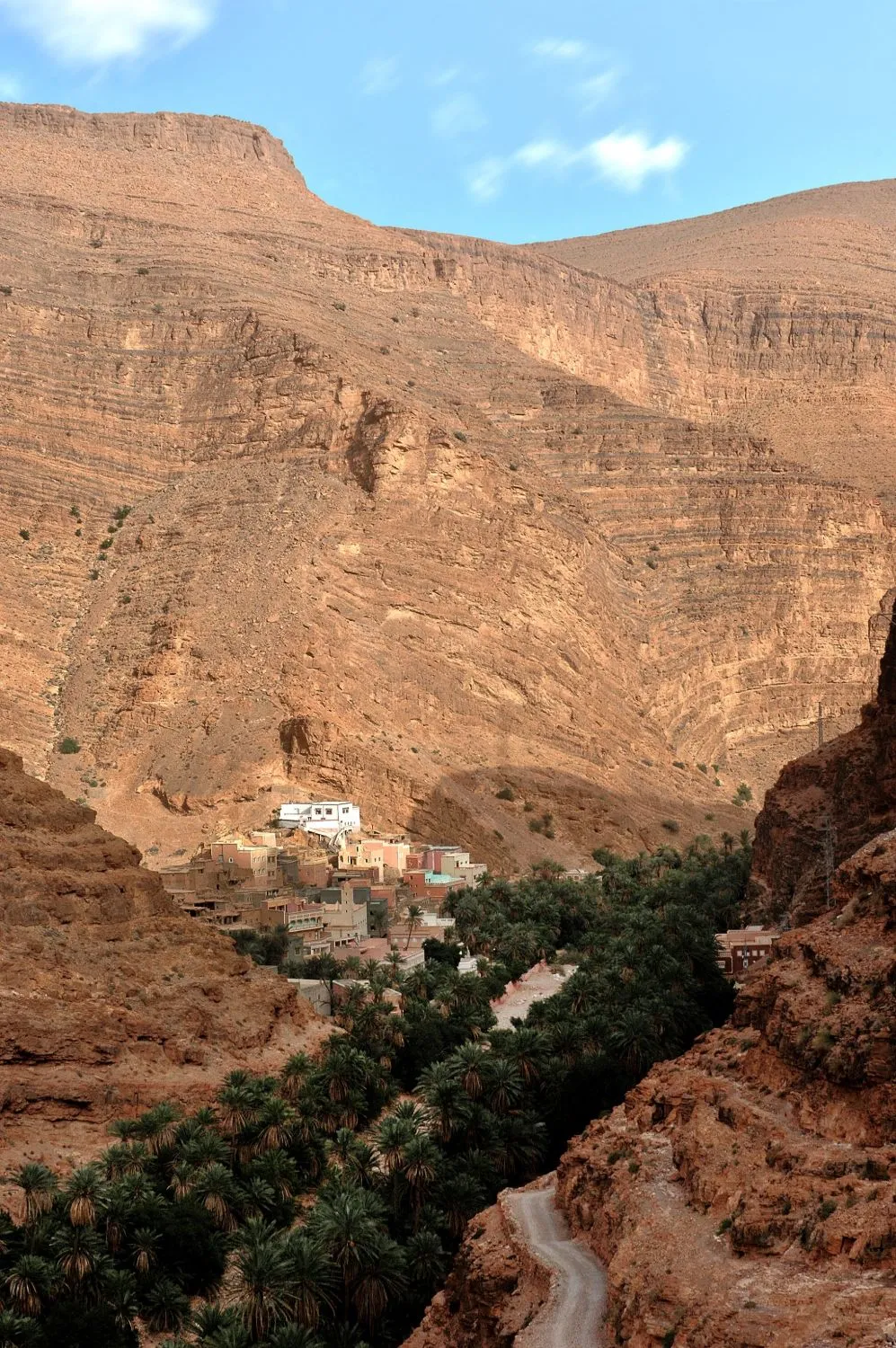
The ksar is located in the province of Ouarzazate, on the southern slopes of the High Atlas.
It lies within the Ounila Valley, a historic region along one of the routes traditionally used to cross the Atlas Mountains.
This geographical position helps explain the historical importance of the site.
For centuries, the valleys of southern Morocco formed important corridors between pre-Saharan regions, oases, mountain passes and the major cities farther north.
Aït Ben Haddou developed within this commercial and caravan environment.
Continue exploring the region with our guide to Ouarzazate and its heritage.
What Is the History of Aït Ben Haddou?
It is difficult to assign a single foundation date to the ksar.
Some traditions and local accounts trace settlement in the area to a much earlier period.
However, when discussing the buildings that visitors can see today, greater caution is necessary.
According to UNESCO, none of the oldest surviving buildings within the ksar appear to date from before the 17th century.
The architectural forms and construction techniques used at Aït Ben Haddou are nevertheless considerably older and have a long history in the pre-Saharan valleys of southern Morocco.
The ksar should therefore be understood as the result of a long architectural tradition, maintained, modified and rebuilt across generations.
Aït Ben Haddou and the Ancient Trade Routes
The location of the ksar was closely connected with regional routes across southern Morocco.
According to UNESCO, Aït Ben Haddou was one of many trading posts situated along an ancient commercial route linking the ancient Sudan with Marrakech, passing through the Drâa Valley and the Tizi n'Telouet Pass.
In this historical context, "Sudan" referred broadly to regions south of the Sahara rather than only to the modern country bearing that name.
These trans-Saharan routes enabled the movement of merchandise, travellers, knowledge and cultural influences.
Caravans crossed oasis regions and valleys before travelling through the Atlas Mountains towards Marrakech and other commercial centres.
Aït Ben Haddou formed part of this wider network of exchange.
To discover the northern end of this historic route, explore our guide to the Medina of Marrakech.
Architecture Adapted to Southern Morocco
One of the most important aspects of Aït Ben Haddou is its architecture.
UNESCO considers the ksar an outstanding example of the earthen construction techniques found in the pre-Saharan regions of Morocco.
Buildings were constructed primarily from locally available materials, including:
- earth;
- wood;
- plant materials;
- unfired earthen bricks.
The architecture blends naturally into the surrounding landscape.
The ochre and brown tones of the buildings come directly from the materials used, creating a remarkable visual continuity between the village, the hillside and the surrounding land.
Rammed Earth and Traditional Earthen Construction
Building with earth is one of Morocco's great architectural traditions.
Different techniques can be used depending on the building and structural element, including rammed earth and unfired earthen bricks.
Rammed earth involves compacting earth inside temporary formwork to create thick, solid walls.
These substantial walls are well suited to the major temperature variations found in pre-Saharan environments.
However, earth is not an indestructible material.
Rainfall, erosion and insufficient maintenance can quickly damage earthen structures.
Preserving a ksar such as Aït Ben Haddou therefore requires regular maintenance and continued knowledge of traditional construction techniques.
The Decorated Towers of Aït Ben Haddou
Among the most spectacular architectural features of the ksar are the high corner towers found on some of its larger residences.
Their upper sections display geometric decoration formed in earth or unfired brick.
These patterns give the façades considerable visual richness despite the relatively simple materials used to construct them.
More modest homes stand alongside larger and more elaborate buildings that UNESCO describes as resembling small urban castles.
This diversity also reflects differences in status and function within the fortified settlement.
A Village Organised Behind Defensive Walls
Aït Ben Haddou was not simply a collection of houses.
Like many ksour in southern Morocco, it functioned as an organised community.
UNESCO identifies several important elements within the site, including:
- a mosque;
- a public square;
- houses;
- communal spaces;
- threshing areas outside the walls;
- a fortification;
- a granary in the upper part of the village;
- a caravanserai;
- two cemeteries, one Muslim and one Jewish;
- the sanctuary of Sidi Ali or Amer.
This organisation demonstrates that a ksar needed to provide spaces where a community could live, work, store resources, practise religion and participate in commercial exchanges.
The Granary and Upper Part of the Ksar
As you climb through the lanes of Aït Ben Haddou, the surrounding landscape gradually opens up.
The upper part of the site helps visitors understand the strategic position of the village.
A fortified structure and storage area were located near the top.
For communities living in pre-Saharan environments, storing grain and other food supplies was essential.
The elevated position also provided broad views over the surrounding landscape and access routes.
Today, the upper part of the ksar offers remarkable views across the valley and surrounding countryside.
Aït Ben Haddou and the Cultural Diversity of Southern Morocco
One particularly interesting detail mentioned by UNESCO is the presence of two cemeteries: one Muslim and one Jewish.
This feature reflects the historical diversity of communities that lived in southern Morocco.
For centuries, Muslim and Jewish communities participated in the commercial, artisanal and social life of many Moroccan towns, oases and villages.
This history can also be explored through the former mellahs found in several Moroccan cities.
In Marrakech, for example, discover our guide to the Mellah of Marrakech.
Why Is Aït Ben Haddou a UNESCO World Heritage Site?
The Ksar of Aït Ben Haddou was inscribed on the UNESCO World Heritage List in 1987.
UNESCO recognised the site under criteria (iv) and (v).
An Outstanding Example of Earthen Architecture
Under criterion (iv), Aït Ben Haddou represents an outstanding example of a ksar in southern Morocco illustrating the principal types of earthen construction found from the 17th century onwards in several major valleys of southern Morocco.
UNESCO specifically mentions the valleys of:
- the Drâa;
- the Todgha;
- the Dadès;
- the Souss.
A Testimony to Traditional Settlement in Southern Morocco
Criterion (v) recognises Aït Ben Haddou as an important example of traditional earthen settlement and the culture of southern Morocco.
This form of settlement has become increasingly vulnerable because of social, economic and cultural changes.
The UNESCO designation therefore recognises more than the spectacular appearance of the ksar.
It also protects a historical way of building, organising space and living as a community.
A Fragile Architectural Heritage
Earthen architecture has exceptional visual and environmental qualities, but it requires continuous maintenance.
UNESCO has highlighted the vulnerability of the buildings to deterioration and the gradual abandonment of some houses.
Water is one of the principal challenges.
When protective surface layers deteriorate, rainfall can rapidly erode earthen walls.
Preserving Aït Ben Haddou therefore means protecting not only the buildings themselves but also the traditional knowledge required to maintain them.
The Role of CERKAS
The conservation of the site is supported by CERKAS, the Centre for the Conservation and Rehabilitation of Architectural Heritage of Atlas and Sub-Atlas Zones.
The institution works on the conservation and rehabilitation of traditional architecture across the Atlas and southern regions of Morocco.
One of the central challenges is preserving the architectural authenticity of the ksar.
UNESCO particularly emphasises the importance of maintaining traditional materials such as earth and wood.
Protecting Aït Ben Haddou therefore does not simply mean rebuilding damaged structures with modern materials that imitate their historical appearance.
The objective is to preserve, as far as possible, the materials, forms and construction techniques that define the architectural identity of the site.
Aït Ben Haddou: Living Heritage or Historic Monument?
Aït Ben Haddou occupies an unusual position between living settlement and protected historic monument.
Over time, much of the population moved to the more modern village on the opposite side of the river.
However, the old ksar has not become a completely frozen historical setting.
Some buildings continue to be maintained or used, while others accommodate craft activities and services connected with visitors.
This evolution raises an important question faced by many historic sites: how can architectural heritage be preserved while allowing local communities to continue benefiting from and participating in their territory?
Aït Ben Haddou illustrates this challenge particularly well.
Aït Ben Haddou and Cinema
The dramatic silhouette of the ksar and the landscapes around Ouarzazate have also attracted the international film industry.
Aït Ben Haddou and the wider Ouarzazate region have appeared in or served as locations for numerous film and television productions.
This association has contributed greatly to the site's international fame.
However, its cinematic reputation should not overshadow its historical importance.
Aït Ben Haddou existed long before the film industry arrived in southern Morocco.
Its UNESCO status is based on its architectural, historical and cultural significance, not on its use as a film set.
To explore this aspect of the region, see our guide to Ouarzazate: heritage and cinema.
Aït Ben Haddou and Telouet
The history of Aït Ben Haddou is also connected with the old route through the Ounila Valley towards Telouet and the mountain passes of the High Atlas.
Travelling through this valley reveals numerous earthen villages and mountain landscapes before reaching routes leading towards Marrakech.
The Kasbah of Telouet therefore makes an especially interesting complement to Aït Ben Haddou.
The two sites, however, tell very different stories.
Aït Ben Haddou primarily represents a fortified communal settlement, while Telouet is best known for its kasbah and its historical association with the Glaoui family.
Aït Ben Haddou, Ouarzazate and the Kasbahs of Southern Morocco
Aït Ben Haddou is an excellent introduction to the architectural heritage of southern Morocco.
From here, travellers can continue towards Ouarzazate, the Drâa Valley, oasis settlements and other kasbahs and ksour.
These landscapes demonstrate how earthen architecture adapted to environments very different from those of Morocco's northern imperial medinas.
In Marrakech, visitors encounter palaces, madrasas, mosques and souks.
At Aït Ben Haddou, the heritage tells more about pre-Saharan communities, commercial routes and earthen architecture.
Together, these different environments reveal complementary dimensions of Morocco's cultural heritage.
What Should You Look for During Your Visit?
Aït Ben Haddou deserves to be explored as an entire historic settlement rather than simply admired as a panorama.
During your visit, take time to observe:
The Defensive Walls
They reveal the fortified character of the ksar and historically defined the community's protected space.
The Corner Towers
Some display remarkable geometric decoration formed in earth and unfired brick.
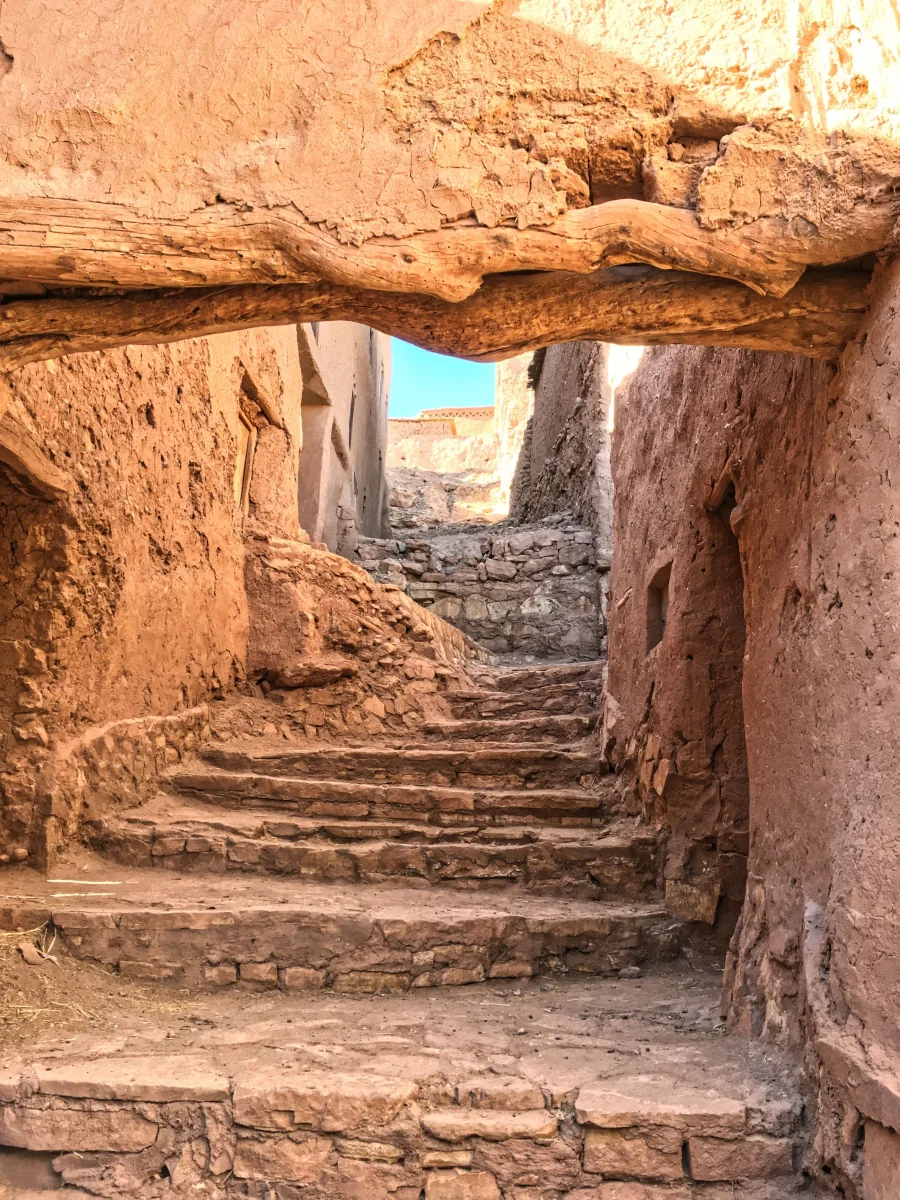
The Narrow Lanes
The narrow and sometimes covered passages help visitors understand the density and internal organisation of the settlement.
The Houses
Buildings vary considerably in size and decoration, reflecting different functions and levels of status.
The Communal Spaces
The mosque, public square, storage areas and other facilities remind visitors that Aït Ben Haddou was first and foremost a place where people lived.
The Landscape
From the upper parts of the ksar, observe the relationship between the settlement, valley, cultivated land and mountains.
This relationship between architecture and environment is essential to understanding Aït Ben Haddou.
Aït Ben Haddou: One of Morocco's Great Heritage Sites
Aït Ben Haddou is frequently described as one of the most beautiful kasbahs in Morocco.
Its true significance is even more interesting.
It is a historic ksar, a fortified communal settlement and one of the finest surviving examples of earthen architecture in southern Morocco.
Its walls, towers, houses, communal spaces and position along an ancient commercial route tell a story spanning centuries.
Its UNESCO World Heritage status also reminds us how fragile this architectural tradition can be.
Preserving Aït Ben Haddou means preserving not only buildings but also materials, construction techniques and cultural memory deeply connected with the pre-Saharan regions of Morocco.
Continue your journey through southern Morocco by exploring Ouarzazate, the Kasbah of Telouet and our guide to the heritage of Morocco.
Sources and References
- UNESCO World Heritage Centre — Ksar of Ait-Ben-Haddou
- UNESCO — Technical assistance for the enhancement of the Ksar of Ait-Ben-Haddou
- [UNESCO World Heritage Centre — Morocco: Properties inscribed on the World Heritage List](https://whc.unesco