Chellah in Rabat: From the Ancient City of Sala to the Marinid Necropolis
Just a few minutes from central Rabat, behind an imposing medieval enclosure, lies one of Morocco's most fascinating archaeological sites: Chellah.
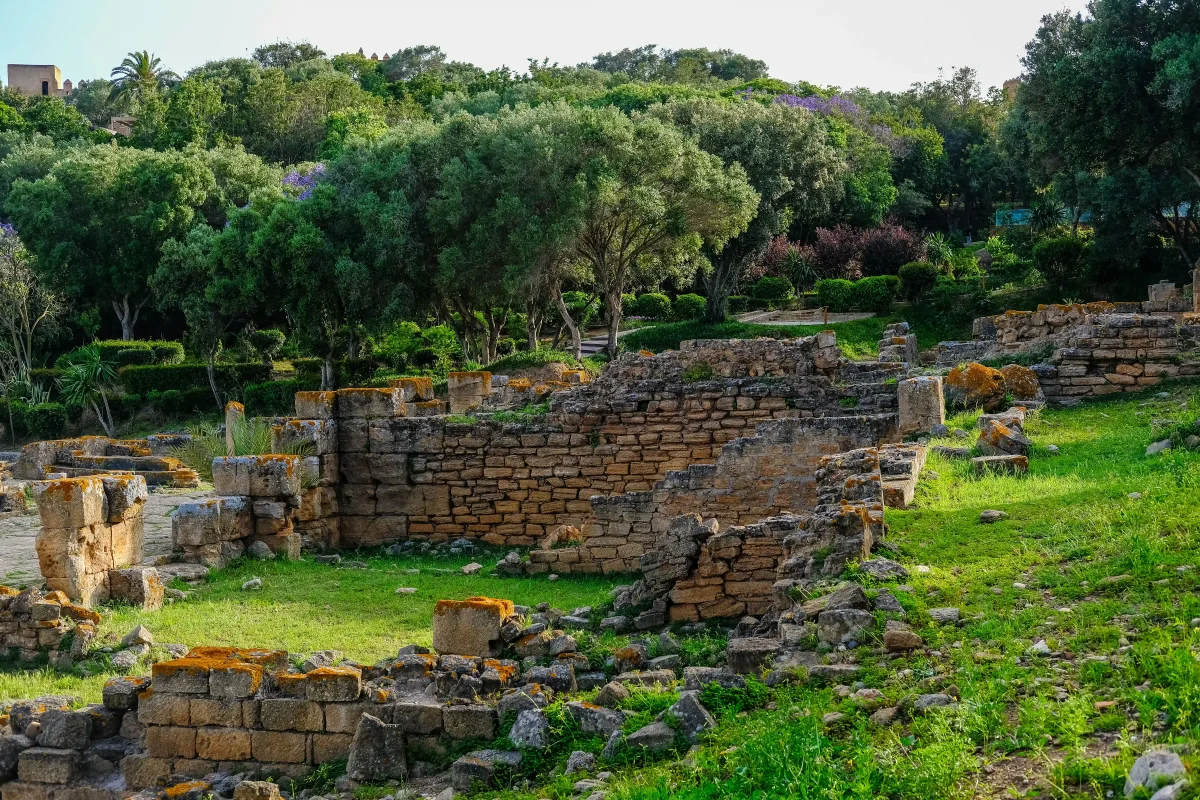
At first glance, visitors discover a garden dotted with ruins, tombs, ancient columns and a minaret decorated with zellige.
But beneath this landscape lie several major chapters of Moroccan history.
Before becoming the royal necropolis of the Marinids, the site was home to ancient Sala, a Mauretanian city connected to Mediterranean trade, and later a city integrated into the Roman world under the name Sala Colonia.
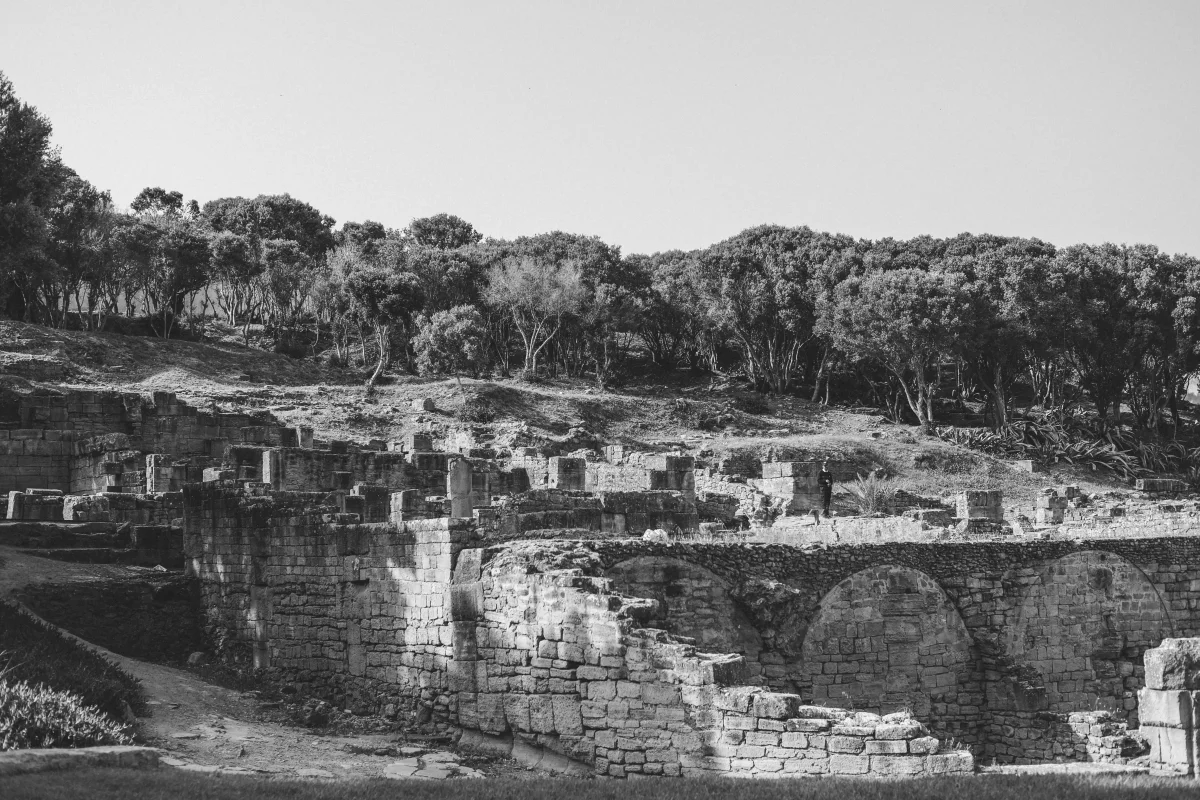
Forums, temples, baths, ancient roads and public monuments still bear witness to this period.
Several centuries later, the Marinids reused the site and transformed it into a dynastic necropolis and religious complex.
Chellah therefore brings together ancient archaeology, Islamic architecture, dynastic history and natural landscape in a single place.
Since 2012, the site has formed part of "Rabat, Modern Capital and Historic City: a Shared Heritage", inscribed on the UNESCO World Heritage List.
Where Is Chellah?
Chellah is located in Rabat, on the left bank of the Bouregreg, close to the Royal Palace and outside the former Almohad walls.
The choice of this location dates back to Antiquity.
The proximity of the river, fertile land and access to the Atlantic made the Bouregreg region particularly favourable for trade and human settlement.
Long before the creation of Rabat as we know it today, an important settlement already existed in this area.
Before Rome: The Ancient Origins of Sala
The history of Chellah does not begin with the Romans.
Archaeological research has revealed a much older occupation of the site.
Evidence linked to Phoenician trade dates back to the early centuries of the first millennium BCE.
From the 7th–6th centuries BCE, a Mauretanian settlement developed on the site.
The term Mauretania here does not refer to the modern country of Mauritania.
In Antiquity, it referred to territories in North Africa inhabited in particular by Amazigh populations and gradually integrated into major Mediterranean trade networks.
Archaeological excavations have revealed traces of several temples and an urban network predating the Roman presence.
Sala was therefore already a city before becoming part of the Roman world.
Sala, a City Open to the Mediterranean
Sala's position close to the mouth of the Bouregreg gave it particular importance.
The city participated in trade linking Morocco's Atlantic coast with the Mediterranean world.
Phoenician, Carthaginian, Mauretanian and later Roman influences therefore succeeded one another or overlapped.
This helps explain one essential feature of Chellah:
the site does not belong to a single civilisation.
It is the result of several centuries of contact, exchange and transformation.
Sala Colonia in the Roman Period
After Rome annexed the Kingdom of Mauretania in the 1st century CE, Sala was incorporated into the Roman province of Mauretania Tingitana.
The city then developed under the influence of Roman urban planning.
Ancient sources refer to it as Sala and Sala Colonia.
Archaeologists have gradually uncovered several monuments that help us understand the organisation of the ancient city.
Among the most important remains are:
- the forum;
- the capitol;
- a basilica;
- the curia;
- baths;
- a nymphaeum;
- a monumental arch;
- paved streets;
- various commercial and residential areas.
These remains make Chellah one of the key sites for understanding the Roman presence in north-western Morocco.
The Forum: Heart of the Ancient City
As in many Roman cities, the forum formed the political, administrative and religious centre of the city.
Several important public buildings were grouped around this space.
The forum was not simply a monumental area.
It was also a meeting place where administration, commerce, religion and everyday life intersected.
The remains visible today still make it possible to understand the overall organisation of this monumental district.
The Capitol and Public Monuments
Close to the forum stood several buildings reflecting the civic organisation of the Roman city.
The capitol was one of the city's important religious monuments.
Excavations have also revealed a basilica, a curia and various spaces linked to public life.
These monuments show that Sala was not simply a peripheral settlement.
It possessed the infrastructure characteristic of a well-organised ancient city.
The Baths of Sala
The remains of the baths reveal another essential aspect of Roman urban life.
Public baths were not only used for hygiene.
They were also places of social interaction.
People came to bathe, but also to talk, meet other residents and take part in the social life of the city.
The hydraulic system needed to operate these facilities also demonstrates the level of organisation reached by Sala.
The Nymphaeum and Water in the Ancient City
Among the site's most interesting structures is the nymphaeum.
Sala's hydraulic complex included an imposing structure supplied by an aqueduct.
Water was essential to the functioning of the city: it supplied fountains, baths and different urban spaces.
Chellah's hydraulic remains therefore offer particularly valuable evidence of ancient engineering in North Africa.
A City on the Edge of the Roman World
Sala occupied a particular position within Roman territorial organisation.
The city stood close to the southern limits of permanent Roman presence in Mauretania Tingitana.
Beyond lay territories that were less directly controlled by Rome.
This position gave Sala strategic importance.
It functioned simultaneously as an urban centre, a place of exchange and a point of contact between different political and cultural areas.
The Decline of the Ancient City
From Late Antiquity onwards, the situation in Sala began to change.
Roman organisation in the region gradually transformed, and some districts were abandoned or reused in different ways.
The site did not, however, disappear completely from history.
Several centuries later, a new Moroccan dynasty would give it an entirely different function.
The Marinids Rediscover Chellah
Between the 13th and 14th centuries, the Marinids chose the site of ancient Sala to establish an important necropolis.
The Marinid dynasty then ruled Morocco and made Fez one of its major political and intellectual centres.
The choice of Chellah profoundly transformed the site.
The ancient remains were not simply destroyed.
They were integrated into a new architectural and spiritual environment.
A new enclosure was built.
Religious and funerary monuments appeared.
The ancient city gradually became Shâlla, medieval Chellah.
A Royal Marinid Necropolis
Chellah became one of the great burial places of the Marinid dynasty.
Members of the ruling family and several important figures were buried here.
The necropolis included:
- funerary chambers;
- a mosque;
- a zawiya;
- a prayer hall;
- an ablution room;
- a minaret;
- various religious spaces.
This transformation made Chellah a place where dynastic power, religion and memory came together.
Abu al-Hasan and the Development of Chellah
The Marinid sultan Abu al-Hasan played an important role in the monumental development of the necropolis during the 14th century.
Under his reign, the complex was enlarged and embellished.
His own funerary monument is located at Chellah.
Its richly decorated stele is one of the most valuable surviving examples of Marinid funerary art.
His son, Abu Inan Faris, continued to maintain and enhance the site.
Chellah therefore became far more than a simple royal cemetery.
It developed into a true religious and dynastic complex.
The Great Marinid Gate
Even before entering the site, visitors encounter one of its most impressive monuments: the monumental Marinid gate.
Flanked by two towers, it forms the main entrance to the medieval enclosure.
Its decoration combines several features characteristic of Marinid architecture:
- arches;
- geometric motifs;
- inscriptions;
- carved ornamentation.
The monumentality of this entrance immediately conveys the symbolic importance of the site.
Once through the gate, the contrast is striking.
Visitors leave Rabat's urban environment and enter a landscape of gardens, ancient ruins and medieval architecture.
The Minaret of Chellah
The Marinid minaret is one of the most recognisable features of the site.
Its silhouette rises above the gardens and ruins.
It is particularly notable for its polychrome zellige decoration.
Even in its partially preserved state, it allows visitors to imagine the architectural richness of the religious complex that once occupied this part of the necropolis.
The contrast between the medieval minaret and the Roman ruins located only a few dozen metres away is one of the most characteristic images of Chellah.
The Marinid Tombs
The funerary spaces naturally form an essential part of the visit.
Several tombs and stelae are still visible.
They remind visitors that Chellah was above all a place of burial and dynastic memory.
The funerary decorations combine inscriptions, geometric motifs and elements characteristic of Marinid art.
They also reflect the importance attached to the memory of rulers and members of their entourage.
The Basin and Popular Traditions
Chellah is not only an archaeological site.
Over the centuries, different popular traditions have also developed around the place.
A basin located in the medieval area is associated with several stories and folk practices.
Fish, eels and turtles have long been part of the site's popular imagination.
These traditions remind us that heritage is not limited to stones and monuments.
It also includes stories, beliefs and practices transmitted through generations.
The Storks of Chellah
Storks have become inseparable from the image of Chellah.
Their nests frequently occupy the tops of walls, towers and monuments.
The characteristic clattering of their beaks often accompanies a visit.
Their presence gives the site a particularly distinctive atmosphere.
Architecture, vegetation and wildlife come together in the same landscape.
This is also one of the reasons why Chellah does not feel like a conventional archaeological museum.
It is a living historic site set within a garden.
The 1755 Earthquake
Like several monuments along Morocco's Atlantic façade, Chellah was affected by the great earthquake of 1755, generally associated with the Lisbon earthquake.
Several structures already weakened over time were damaged.
With the passing of the years, parts of the monuments fell into ruin.
This destruction helped create the romantic landscape that characterises Chellah today: ancient walls, minaret, tombs, vegetation and archaeological remains all blend together in the same space.
The First Archaeological Excavations
From the beginning of the 20th century, Chellah became an important field for archaeological research.
The first excavation campaigns gradually identified and uncovered several areas of the ancient city.
The forum, baths, public monuments and urban districts were studied over the following decades.
In 1920, Chellah was classified as a historic monument.
Research continued throughout the 20th century.
But the archaeological history of the site is far from complete.
New Archaeological Discoveries
Recent research shows that much of ancient Sala still remains to be understood.
In 2023, new excavations and archaeological surveys were carried out in areas that had received very little study since the 1960s.
This research made it possible to better determine the extent of the Mauretanian and Roman city.
It also helped identify the defensive system of the city and locate an ancient port area linked to Sala.
These discoveries are particularly important.
They remind us that Chellah is not simply a preserved monument.
It remains an active archaeological research site today.
Future excavation campaigns may therefore continue to change our understanding of Rabat's ancient history.
Chellah and UNESCO World Heritage
Since 2012, Chellah has formed part of the World Heritage property:
"Rabat, Modern Capital and Historic City: a Shared Heritage."
The UNESCO inscription recognises Rabat's exceptional richness, where several historical periods coexist within the same urban landscape.
Chellah holds a special place within this ensemble.
It represents some of the earliest periods in the history of the city: Mauretanian occupation, Phoenician influence, the Roman period and later the Marinid presence.
Only a few kilometres away, Hassan Tower tells the story of the Almohad period, while the Kasbah of the Udayas and the medina reveal other chapters of Rabat's history.
The heritage of the capital therefore forms a true open-air chronology.
What Should You Absolutely See at Chellah?
The site deserves to be explored slowly.
Several features are particularly important.
The Marinid Gate
Take time to observe its decoration before entering the site.
It is already a monument in its own right.
The Ancient City
Look for traces of the forum, ancient streets, baths and public buildings.
They help reveal that Chellah was once a real city.
The Marinid Necropolis
The minaret, tombs and religious remains form the medieval heart of the site.
The Gardens
Vegetation is an integral part of the experience.
It creates a particularly photogenic contrast with the ancient stonework and Marinid monuments.
The Storks
Remember to look up regularly.
Chellah is also famous for the storks that nest on its monuments and walls.
How Much Time Should You Allow for Chellah?
For a first visit, allow approximately 1.5 to 2 hours.
Visitors interested in history, archaeology or photography can easily spend longer.
Unlike a monument consisting of a single building, Chellah needs to be explored on foot.
You have to descend towards the ancient remains, explore the Marinid section, observe the gardens and take time to understand the site's different historical layers.
What Is the Best Time to Visit?
The morning is particularly pleasant for exploring the site in a quieter atmosphere.
The light also makes it easier to observe the relief and details of the monuments and ancient remains.
The late afternoon offers a different atmosphere, with softer light on the walls and minaret.
In summer, it may be preferable to avoid the hottest part of the day.
Chellah Opening Hours
The official Chellah archaeological site currently lists seasonal opening hours:
Winter hours: from 1 October to 31 March, 9:00 am to 6:00 pm.
Summer hours: from 1 April to 30 September, 9:00 am to 8:00 pm.
Ramadan: 9:00 am to 4:00 pm.
Opening hours may change, so it is advisable to check official information before your visit.
What to Visit After Chellah?
Chellah can easily be included in a full day dedicated to Rabat's heritage.
Hassan Tower and Mohammed V Mausoleum
Hassan Tower and the Mohammed V Mausoleum allow visitors to continue their journey through Moroccan history.
Hassan Tower reflects the imperial ambitions of the Almohads in the 12th century, while the mausoleum is linked to the history of modern Morocco.
Kasbah of the Udayas
The Kasbah of the Udayas offers another side of Rabat, with its fortifications, narrow streets and views over the Bouregreg.
Medina of Rabat
The Medina of Rabat completes the experience with its souks, historic streets and traditional urban heritage.
By combining these sites, visitors can explore several major periods of the capital's history in a single day.
Why Visit Chellah?
Chellah is much more than a collection of ruins.
It shows that Rabat's history did not begin with the Almohads or with the creation of the modern capital.
People were already living and trading along the banks of the Bouregreg several centuries before our era.
A Mauretanian city developed here.
Rome later transformed Sala into an organised city structured around public monuments.
Centuries later, the Marinids chose the same land to create a royal necropolis.
Archaeologists then gradually began uncovering the different layers of this history.
Even today, excavations continue to enrich our knowledge.
Few sites in Morocco allow visitors to pass so naturally from an ancient city to an Islamic necropolis within just a few minutes' walk.
This superposition of civilisations is the true richness of Chellah.
Here, Moroccan history is not told only through books.
It can be read directly in the landscape.
Practical Information
Location: Rabat, left bank of the Bouregreg
Ancient name: Sala / Sala Colonia
Main periods: Mauretanian, Roman and Marinid
Marinid period: mainly 13th–14th centuries
Historic classification: listed as a historic monument since 1920
World Heritage: component of the Rabat property inscribed on the UNESCO World Heritage List since 2012
Recommended duration: approximately 1.5 to 2 hours
Winter hours: 9:00 am–6:00 pm
Summer hours: 9:00 am–8:00 pm
Ramadan: 9:00 am–4:00 pm
Nearby: Hassan Tower, Mohammed V Mausoleum, Kasbah of the Udayas and Medina of Rabat
Sources and References
- Official Chellah Archaeological Site
- UNESCO — Rabat, Modern Capital and Historic City: a Shared Heritage
- Ministry of Youth, Culture and Communication — Heritage and Chellah
- Visit Rabat — Chellah
MoroccoMuseum tip: do not visit Chellah only as a Marinid necropolis. Begin by observing the remains of Sala and try to distinguish the different historical periods of the site. The visit becomes far more meaningful once you understand how the ancient city and the medieval complex overlap.