Dar Bellarj Foundation: Art, Heritage and Culture in the Heart of Marrakech
In the heart of the Marrakech Medina, just a few steps from the Ben Youssef Madrasa and the souks, Dar Bellarj offers a different way to discover the city’s heritage.
There is no fixed route or simple succession of objects to observe here. Dar Bellarj is above all a living cultural space where Moroccan heritage, contemporary creation, transmission and human encounters come together.
Housed in a traditional riad in the Medina, the Foundation invites visitors to see Marrakech from a different perspective: through its artists, artisans, inhabitants and the knowledge that continues to be passed down from one generation to the next.
Dar Bellarj, a Cultural Space in the Heart of the Medina
The Dar Bellarj Foundation was created on the initiative of Susanna Biedermann, with the ambition of establishing a space dedicated to culture, transmission and exchange.
Over time, it has become a meeting place for artists, artisans, researchers, Marrakech residents and visitors.
This dimension is essential to understanding Dar Bellarj: heritage is not presented merely as a legacy of the past. Instead, it is seen as something living, capable of engaging with contemporary creation and the questions of today.
For visitors, this approach offers the opportunity to discover a more intimate side of Marrakech’s cultural life, beyond visits focused solely on its major monuments.
A Traditional Riad Transformed into a Cultural Space
The experience begins with the building itself.
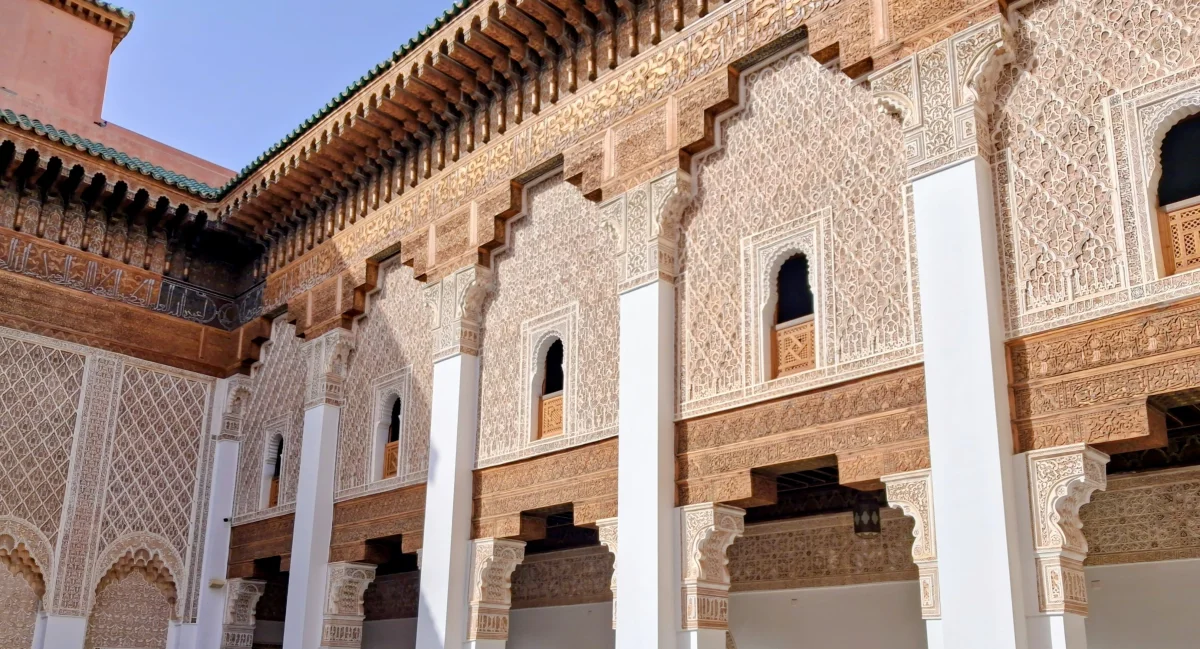
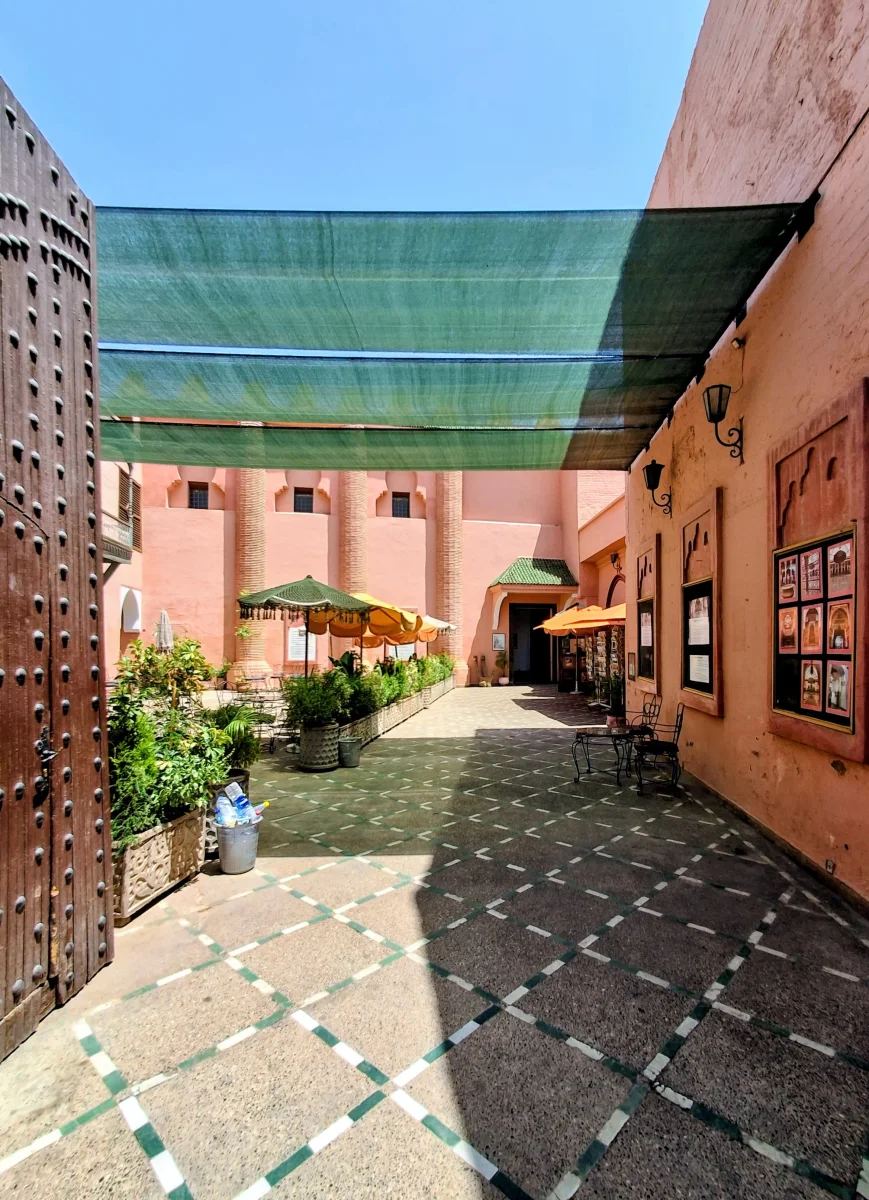
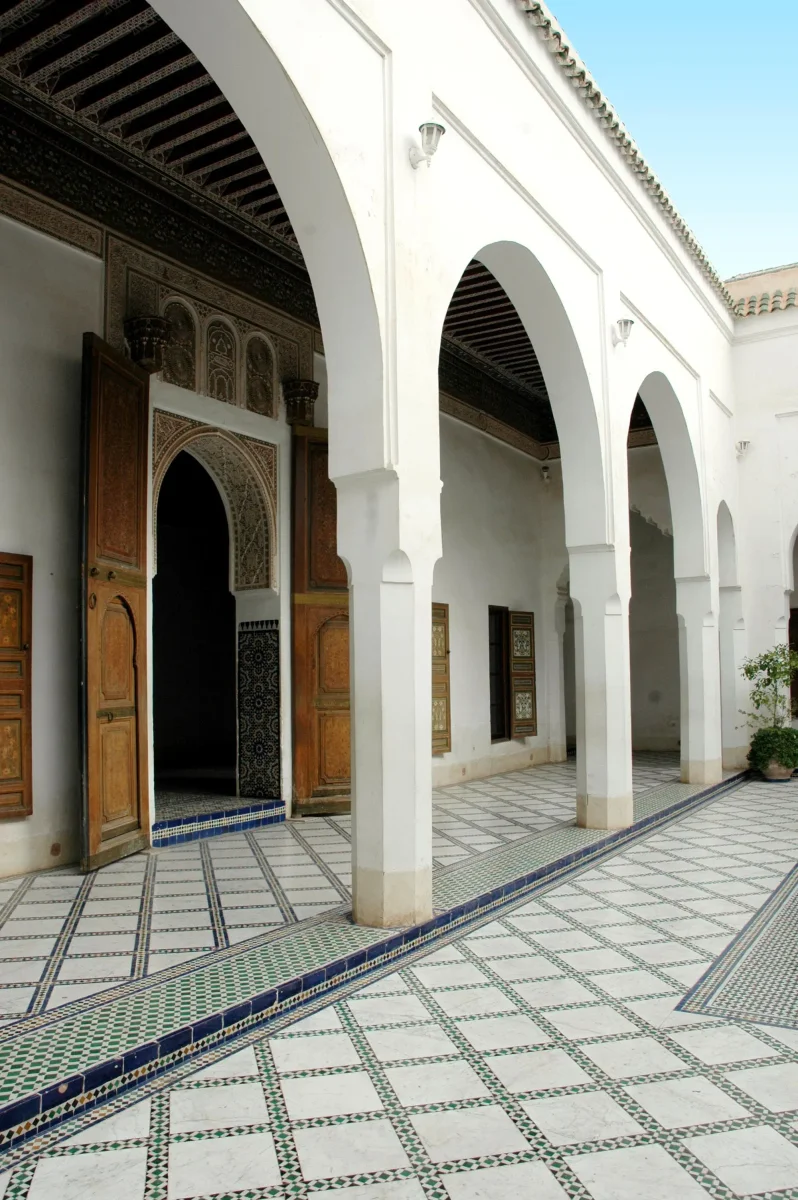
Behind a discreet entrance in the Medina lies a riad arranged around an inner courtyard. Its architecture creates an immediate transition from the bustle of the surrounding alleyways.
As in many traditional Marrakech residences, the spaces are organised around a central patio. The light, proportions and architectural details all contribute to the atmosphere of the place.
But Dar Bellarj is not simply a historic building to admire.
Its spaces host exhibitions, installations, workshops, meetings and artistic projects. The historic architecture thus becomes the setting for an ever-evolving cultural programme.
Preserving a Heritage That Continues to Live
One of Dar Bellarj’s distinctive features is its approach to Morocco’s tangible and intangible cultural heritage.
Objects, gestures, stories, traditions and skills are not treated simply as traces of a vanished world.
They continue to be transmitted, studied, reinterpreted and sometimes transformed.
This approach is particularly relevant in Marrakech, a city where traditional crafts still play an important role in the Medina.
Woodworking, textiles, metalwork, decoration, architecture, oral traditions and social practices: behind each form of knowledge and craftsmanship are men and women who contribute to the continuity of this heritage.
Dar Bellarj helps create spaces where this cultural memory can encounter new forms of creativity.
Where Contemporary Art Meets Moroccan Craftsmanship
One of the most interesting aspects of the Foundation is the dialogue it creates between contemporary creativity and Moroccan traditions.
Artists and creators can explore techniques, materials and themes connected to heritage while developing their own artistic language.
This encounter helps move beyond a static vision of craftsmanship.
Traditional skills can be passed down while continuing to evolve. An ancient technique can inspire a contemporary work. An artisan and an artist can bring their practices together and create something new.
Heritage then becomes a starting point rather than simply a reference to the past.
A Space for Encounters and Dialogue
Dar Bellarj is also a place for exchange.
Meetings, discussions, collective projects and events bring together people from different backgrounds to explore questions related to art, culture, heritage and society.
This human dimension is an important part of the identity of the place.
It reminds us that heritage is not limited to monuments. It also exists in stories, everyday practices, knowledge and experiences shared within a community.
In a city as widely visited as Marrakech, spaces like this also help create a different relationship between visitors and local culture.
Passing Heritage on to New Generations
Transmission plays an important role in the Foundation’s activities.
Projects and workshops give children and young people the opportunity to experiment with different forms of creativity and develop their curiosity about art, culture and knowledge.
This approach goes beyond a simple introduction to the arts.
It helps build a connection between younger generations and their heritage while giving them the freedom to interpret it through their own perspective.
Preserving heritage does not simply mean protecting buildings or objects. It also means enabling future generations to understand this legacy, make it their own and, in turn, allow it to evolve.
Why Visit Dar Bellarj in Marrakech?
Dar Bellarj deserves a place on any cultural itinerary through the northern Medina.
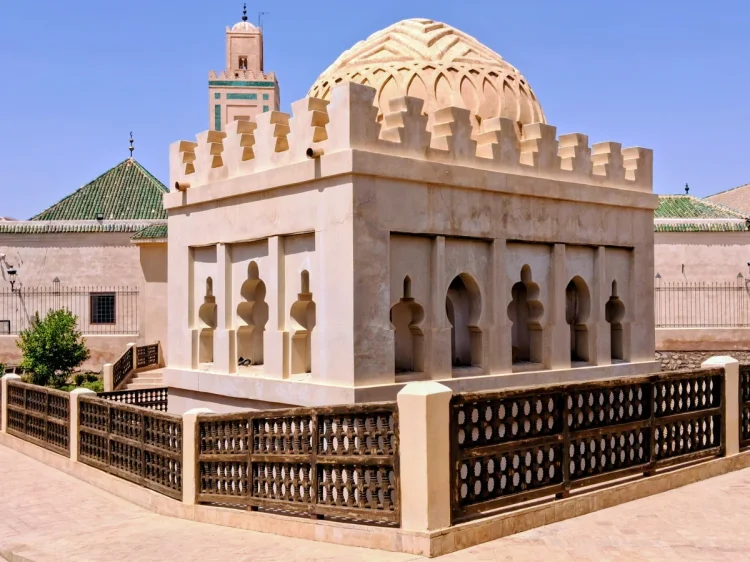
Its proximity to the Ben Youssef Madrasa, the Marrakech Museum, the Almoravid Qubba and the souks makes it easy to include as part of a day exploring this historic area.
But a visit to Dar Bellarj offers something different.
After discovering the city’s major monuments, Dar Bellarj provides an opportunity to approach heritage through the people who continue to create, study and transmit it.
As the programme changes over time, two visits at different periods may also offer very different experiences.
Before visiting, it is therefore worth checking the latest practical information and current programme.
Another Way to Understand Marrakech
Marrakech is often discovered through its palaces, gardens, souks and monuments.
They are essential to understanding its history.
But the city’s heritage does not end with walls built centuries ago.
It also lives through the gestures of artisans, the creations of artists, the stories that are passed down and the places that allow different generations to meet.
Dar Bellarj is one of those places where heritage is not simply preserved: it continues to be shared, questioned and reinvented.
That may be precisely what makes a visit here so worthwhile.
In Marrakech, some places tell the story of the past. Others show how that past continues to live. Dar Bellarj belongs to the latter.
— The MoroccoMuseum Team