The Storks' Hospital
"Bellarj" means "stork" in Arabic — a bird considered a symbol of good luck in Moroccan and Islamic culture. This medieval establishment had a rare and touching function: caring for injured storks before releasing them. This charitable practice toward animals, rooted in the Islamic tradition of rahma (mercy), is believed to date back at least to the 14th century.
White storks still nest every year on the rooftops of Marrakech's monuments — including El Badi Palace and the Ben Youssef Madrasa. Dar Bellarj symbolically keeps their memory alive.
Transformation into a Cultural Center (2001)
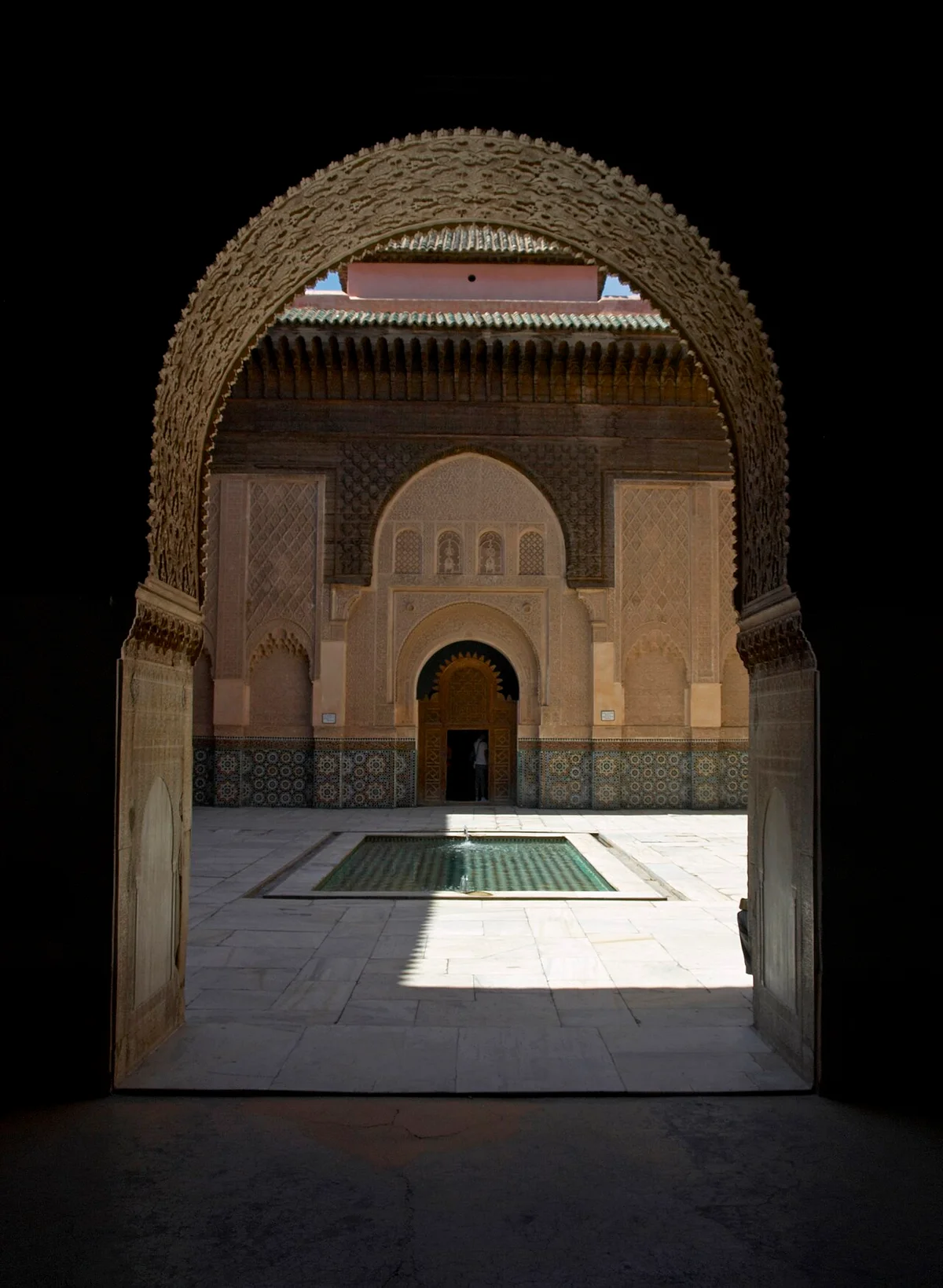
Bought and restored in the 1990s by Suzy Marquis, a French-Moroccan woman passionate about Marrakech's heritage, Dar Bellarj opened its doors as a cultural center in 2001. The restoration revealed a remarkably preserved medieval riad — cedar columns, central pool, painted ceilings.
A Free and Engaged Cultural Venue
Dar Bellarj's program is deliberately popular and accessible:
- Concerts of gnaoua, Andalusian and Amazigh music
- Exhibitions by contemporary Moroccan artists
- Storytelling and poetry readings in darija and Arabic
- Workshops for children on traditional Moroccan arts
Admission is always free — a rare exception in Marrakech.
Architectural Heritage
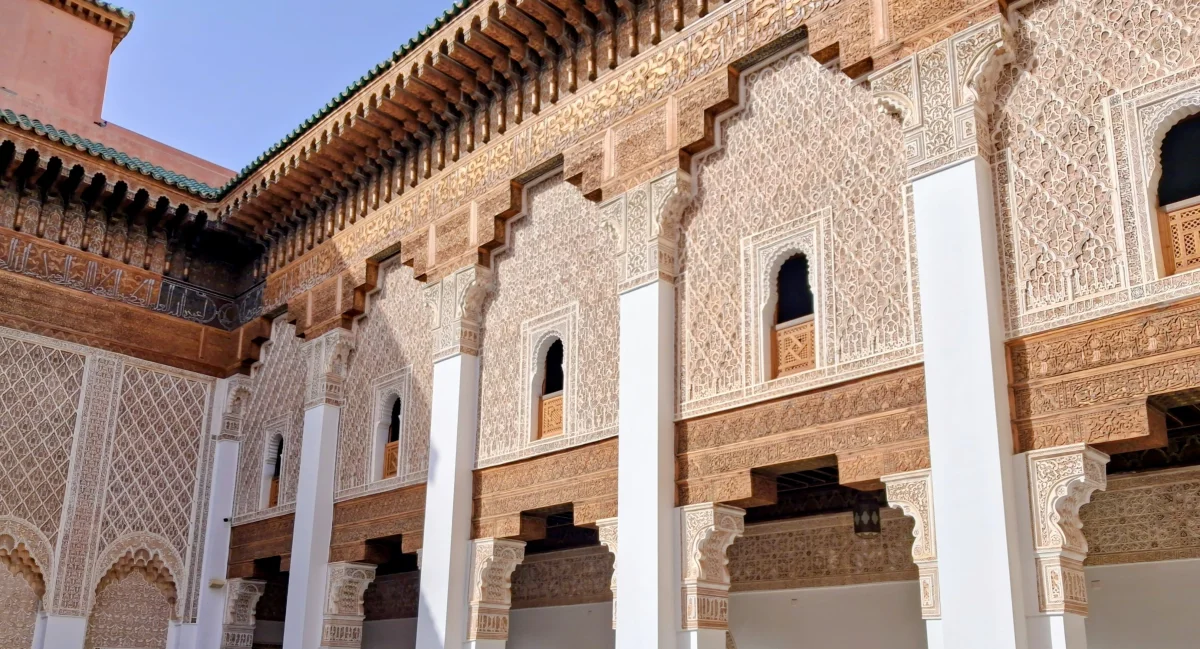
The Dar Bellarj riad is itself a monument. Its proportions, columns and pool illustrate the medieval civil architecture of the northern medina.