Origins and Inauguration
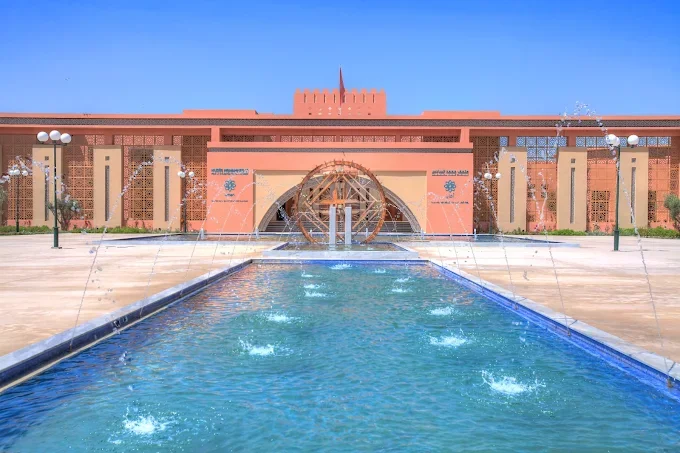
The Mohammed VI Museum for the Civilization of Water in Morocco was inaugurated in 2017 in the Palmeraie of Marrakech. Its existence stems from an essential reality: Morocco is a semi-arid country where water management has, for millennia, always been a matter of survival and civilization.
An Aqueduct Building
The museum's architecture is its first message: the building is designed in the shape of a broken aqueduct, directly evoking Morocco's historic hydraulic structures. Designed by a Moroccan architecture firm, it engages in visual dialogue with the surrounding Palmeraie, itself heir to millennia-old irrigation techniques.
Khettaras: Ancestral Underground Water
The collection is organized around khettaras — underground irrigation channels dug by hand since the 10th century to carry water from aquifers to oases and villages. This system, comparable to the Persian qanat, could stretch several dozen kilometers. Marrakech largely owes its founding to the khettaras that supplied it for centuries.
The museum displays full-scale models, maps and explanations of water law — the complex legal system governing irrigation rights passed down from generation to generation in Morocco's valleys.
Museum Content
- History of Morocco's hydraulic systems (khettaras, seguias, dams)
- Water law: ancestral irrigation rules
- History of Morocco's major modern dams
- Water supply to cities and oases
- Contemporary water issues in the Maghreb
This museum pairs naturally with a visit to Menara Pavilion, whose historic basin offers a concrete illustration of this ancestral mastery of water.