Visiting the Caves of Hercules in Tangier: History, Legends and Complete Guide
A few kilometers from Tangier, facing the Atlantic Ocean, the Caves of Hercules are among the most iconic natural and heritage sites in northern Morocco.
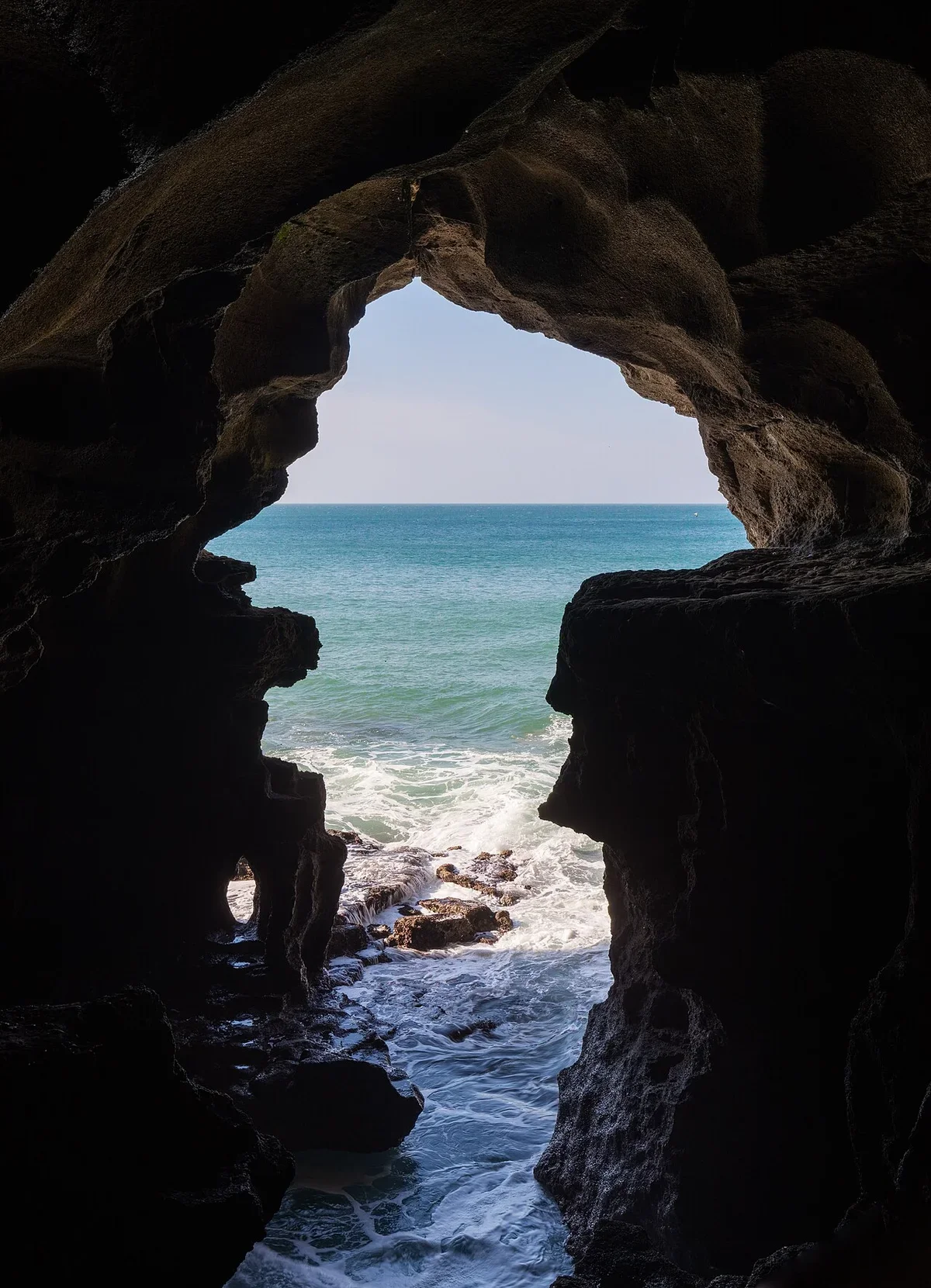
Carved into the Cape Spartel area, they are famous for their spectacular opening onto the ocean, whose silhouette is often compared to the outline of the African continent.
But reducing the Caves of Hercules to this famous image would mean overlooking much of what makes the site so fascinating.
The caves bring together geology, archaeology, local history, mythology and Atlantic landscapes in an exceptional setting west of Tangier.
The site and its surroundings also have genuine heritage significance: the Caves of Hercules have been protected as part of Morocco's heritage since the mid-20th century.
Whether you are visiting Tangier for a day or staying longer in northern Morocco, the Caves of Hercules are one of the main places to discover around the city.
Discover the Caves of Hercules and plan your visit
Where Are the Caves of Hercules?
The Caves of Hercules are located on the Atlantic coast, west of Tangier, in the Cape Spartel area.
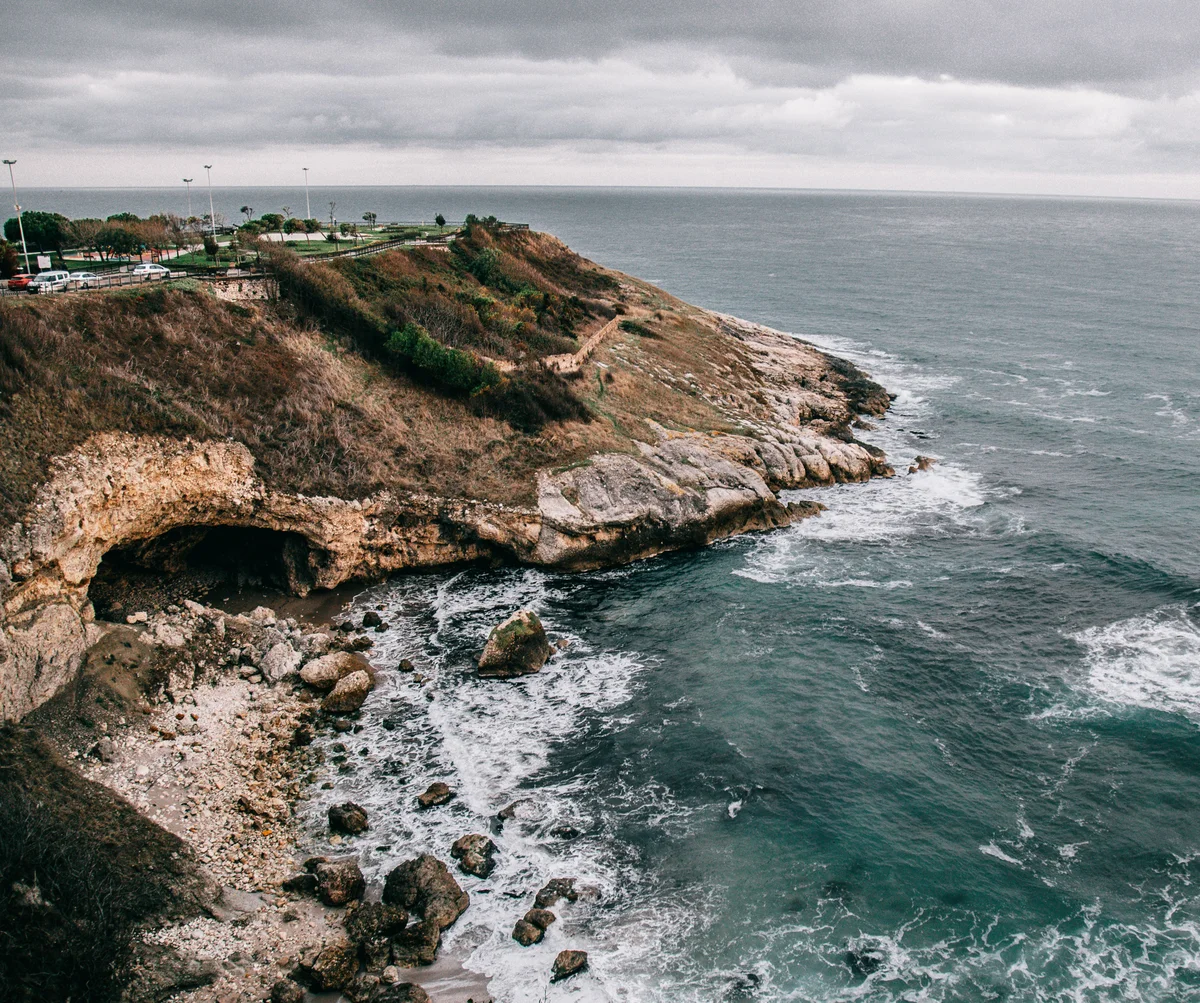
They lie in a landscape where cliffs, beaches, vegetation and ocean views create one of the most distinctive coastal environments around Tangier.
This geographical setting explains much of the site's appeal.
From inside the caves, the Atlantic Ocean appears directly through openings in the rock.
Outside, the surrounding coastline also offers impressive views over the ocean.
Why Are the Caves of Hercules So Famous?
The reputation of the Caves of Hercules is based on several different elements.
The first is, of course, their spectacular opening onto the Atlantic, which has become one of the most recognizable images of Tangier.
The second is their association with the legends of Hercules.
But the caves also have important historical and archaeological significance.
The Tangier Urban Agency mentions the discovery of archaeological evidence dating in particular from the Neolithic period during research carried out in the caves.
The site is therefore fascinating not only for its landscapes and legends, but also for its archaeological heritage.
The Famous Africa-Shaped Opening
The best-known image of the Caves of Hercules appears when looking toward the ocean from inside the cave.
The sea opening forms a silhouette often compared to an inverted map of the African continent.
This unusual shape has become a genuine symbol of tourism in Tangier.
Light from outside contrasts dramatically with the darker interior of the cave, while the Atlantic appears directly beyond the rock.
Depending on the time of day and weather conditions, the atmosphere can change considerably.
Light, waves and shadows continuously transform the view.
Natural Caves Transformed by Humans
The present appearance of the Caves of Hercules is the result of interaction between natural processes and human activity.
Marine erosion contributed to the formation and evolution of the cavities.
However, parts of the caves also bear traces of human quarrying.
Stone was extracted from this area for a long period.
Marks left on some of the walls can still be seen today.
This helps explain why certain sections of the caves have geometric or regular shapes that contrast with the natural rock formations.
Observing these details reveals that the Caves of Hercules are more than a natural landscape.
They also tell the story of the people who used this space over time.
An Ancient Archaeological Heritage
The Tangier region has a particularly long history of human occupation.
Archaeological research around Cape Spartel and Tangier has revealed several prehistoric sites.
Regarding the Caves of Hercules themselves, the Tangier Urban Agency reports the discovery of significant archaeological evidence, particularly from the Neolithic period.
This dimension is often overshadowed by the famous Hercules legend.
Yet it is essential for understanding the site's genuine heritage value.
The caves belong to a territory that has been occupied and frequented by human communities since very ancient times.
A Protected Heritage Site in Morocco
The Caves of Hercules are not simply a tourist attraction.
They form part of the protected heritage of the Tangier region.
Morocco's Ministry of Youth, Culture and Communication lists the Caves of Hercules site among Tangier's protected elements of national material heritage.
The protection decree dates from December 30, 1950, with publication in the Official Bulletin in January 1951.
This recognition highlights the historical, cultural and landscape importance of the site.
Why Are They Called the Caves of Hercules?
The name of the caves is linked to the famous hero of Greco-Roman mythology: Hercules, known as Heracles in the Greek tradition.
Several legends gradually connected the hero with this part of the world.
One of the best known concerns the Twelve Labors of Hercules.
In one of these stories, Hercules must reach the Garden of the Hesperides to obtain the golden apples.
The exact location of this mythological garden varies according to ancient traditions, but the far western Mediterranean and regions associated with the Atlas were long connected with the legend.
Hercules and the Pillars of Hercules
Another mythological tradition links Hercules to the Strait of Gibraltar.
In Antiquity, the mountains on either side of the strait were associated with the Pillars of Hercules, symbolically marking the western limits of the known Mediterranean world.
According to some later versions of the legend, Hercules opened the passage separating Europe and Africa.
These stories belong to mythology rather than documented history.
However, they help explain why Tangier, the Strait of Gibraltar and the Caves of Hercules have long been associated with the legendary hero.
Did Hercules Really Sleep in the Caves?
A popular local and tourist legend says that Hercules rested or slept in the caves before continuing his adventures.
It is more accurate to regard this story as a legend associated with the site rather than an episode supported by historical evidence.
Nevertheless, the story has become an important part of the contemporary identity of the Caves of Hercules.
This meeting between archaeological reality and mythological imagination is precisely what makes the site so distinctive.
What Can You See During the Visit?
The visit allows you to explore the main accessible parts of the cave and observe the different textures and shapes of the rock.
The principal attraction remains the opening directly onto the Atlantic.
However, take time to examine the walls as well.
Some bear marks from the historical extraction of stone, while others reveal the effects of natural erosion.
The changing light also creates different atmospheres as you move through the accessible areas.
The visit itself is relatively short, making it easy to combine with a wider excursion around Cape Spartel.
How Much Time Should You Allow for the Caves of Hercules?
If you are visiting only the caves, the experience can be relatively short.
However, it would be a shame to travel to this part of Tangier simply to enter the cave and immediately leave.
Allow additional time to enjoy the coastline and surrounding landscapes.
If you combine the Caves of Hercules with Cape Spartel, dedicating half a day to this part of Tangier allows you to explore the area at a much more relaxed pace.
Plan your visit to the Caves of Hercules
Cape Spartel and the Caves of Hercules
The Caves of Hercules are closely connected to the landscape of Cape Spartel.
The Moroccan National Tourist Office places the caves in the Cape Spartel area on the Atlantic coast.
The cape and its historic lighthouse form one of the best-known landscapes in the Tangier region.
The area is often described as the place where "the Atlantic meets the Mediterranean."
Geographically, it is more accurate to describe Cape Spartel as a major landmark near the western entrance to the Strait of Gibraltar, which connects the Atlantic Ocean with the Mediterranean Sea.
The Caves of Hercules and Cape Spartel therefore form a particularly coherent excursion around Tangier.
A Half-Day Around Cape Spartel
To make the most of this part of Tangier, you can organize a half-day trip around several stops.
Begin with the Caves of Hercules when visitor numbers are still relatively moderate.
Then continue to Cape Spartel to discover its lighthouse and coastal landscapes.
Depending on your itinerary, the excursion can also be combined with the Rmilat forest and Perdicaris Palace.
Discover Perdicaris Palace in Tangier
This combination allows you to experience several aspects of Tangier's heritage within just a few hours: caves, mythology, archaeology, Atlantic landscapes, forest and historic architecture.
The Caves of Hercules and Tangier's Heritage
The Caves of Hercules provide an excellent introduction to Tangier's natural heritage.
But they represent only one part of the city's history.
Tangier also has a historic Medina, a Kasbah, an exceptional diplomatic past and several monuments reflecting its role as a crossroads between Morocco, Europe, the Mediterranean and the Atlantic.
To explore this history in greater depth, read our complete city guide:
Tangier: history, heritage and places to discover
You can also find the sites and monuments featured on MoroccoMuseum on our:
When Is the Best Time to Visit the Caves of Hercules?
The site can be visited throughout different periods of the year.
Spring and autumn generally offer pleasant temperatures for combining the caves with a walk along the coast.
Summer attracts more visitors to the Tangier region.
If you are traveling during a busy period, visiting earlier in the day generally provides a quieter experience.
In winter, the Atlantic coast can offer a much more dramatic atmosphere, although weather conditions are also more variable.
What Is the Best Light for Photos?
Photography is one of the main reasons why the Caves of Hercules have become so famous.
The classic photograph captures the Atlantic opening from inside the cave.
However, the strong contrast between the dark interior and bright exterior can make this image more difficult to photograph than it appears.
For interesting photographs:
- do not focus exclusively on the famous opening;
- photograph the textures and marks on the cave walls;
- use the silhouettes created by the light coming from outside;
- explore the Atlantic landscapes around the site;
- adjust your exposure for the strong contrast between the cave interior and the ocean.
Light conditions can vary considerably depending on the time of day, season and weather.
Practical Tips for Visiting
The Caves of Hercules are easy to include in a stay in Tangier, but a few precautions can make the visit more comfortable.
Wear comfortable shoes, as some surfaces can be uneven or damp.
Children should be supervised around stairs, rocky passages and areas open to the exterior.
Visitors with reduced mobility should check current accessibility conditions before visiting, as some parts of a natural cave can present practical difficulties.
Opening hours, admission prices and access conditions may change.
For current practical information about visiting, see the dedicated page:
Caves of Hercules in Tangier: visitor information
What to Visit After the Caves of Hercules
If you have a full day in Tangier, the caves can be incorporated into a broader itinerary.
After Cape Spartel, you can continue toward Rmilat and Perdicaris Palace before returning to Tangier's historic center.
In the Medina, the Kasbah, Grand Socco and historic streets reveal an entirely different side of the city.
This creates an interesting contrast between a morning devoted to Atlantic landscapes and an afternoon exploring Tangier's urban heritage.
Why Visit the Caves of Hercules?
The Caves of Hercules combine several dimensions rarely found in a single place.
They offer spectacular views of the Atlantic.
They preserve traces of human activity and form part of an ancient archaeological landscape.
They are also associated with some of the great legends of the ancient Mediterranean world.
Finally, their location near Cape Spartel makes them easy to include in one of the most beautiful excursions around Tangier.
It is this combination of nature, heritage, archaeology and mythology that explains the enduring fascination of the site.
Explore More of Tangier
To continue planning your discovery of the city and its surroundings, see also:
- Caves of Hercules: plan your visit
- Perdicaris Palace: history and visit
- Tangier: history, heritage and complete guide
- Discover Tangier and its heritage sites
These pages can help you build an itinerary combining historical heritage, natural landscapes and the discovery of Tangier.
Sources and References
- Moroccan Ministry of Youth, Culture and Communication — National Material Heritage
- Tangier Urban Agency — Tangier Heritage and the Caves of Hercules
- Moroccan National Tourist Office — Nature in Tangier
- Moroccan National Tourist Office — Discover Tangier
The Caves of Hercules, Between History and Legend
The Caves of Hercules have become one of Tangier's most iconic images thanks to their spectacular opening onto the Atlantic Ocean.
But their true significance extends far beyond this famous photograph.
Their location near Cape Spartel, their archaeological value, the traces left by human activity and their association with the legends of Hercules make them a place where several stories meet.
Here, natural heritage, human history and mythology come together facing the Atlantic.
Visiting the Caves of Hercules therefore means discovering much more than a geological curiosity: it is a gateway to the history, legends and landscapes of the Tangier region.
With MoroccoMuseum, plan your visit to the Caves of Hercules and continue exploring the historical and natural heritage of northern Morocco.