At the northernmost tip of Morocco, Tangier boasts an exceptional geographical position. The city overlooks the Strait of Gibraltar, where the Mediterranean and Atlantic meet, facing Europe.
This location has profoundly shaped its history.
For centuries, Tangier has been a Moroccan city, a strategic port, a coveted place for various powers, and a crossroads between Africa, Europe, and the Mediterranean world.
Even today, this history is evident in the city: a Moroccan medina, a kasbah overlooking the strait, palaces, former diplomatic legations, buildings inherited from European periods, and a cultural tradition that has attracted artists, writers, and travelers.
The Moroccan National Tourism Office presents Tangier as a deeply cosmopolitan city, marked by multiple influences.
Tangier in Antiquity
The history of Tangier is very ancient.
In antiquity, the city was known as Tingis.
Its location on the strait already gave it great importance in Mediterranean trade.
The area experienced various influences and occupations during antiquity, including Phoenician, Carthaginian, and then Roman.
Tangier eventually became an important city of Mauretania Tingitana, a province of the Roman Empire from which it derives part of its name.
The National Museum Foundation also recalls the antiquity of the current Kasbah area and its occupation during various periods of Mediterranean history.
Several ancient legends associate Tangier and its surroundings with Hercules. These tales are part of the Mediterranean imagination of the region but must be distinguished from established historical and archaeological data.
Tangier and the History of Muslim Morocco
After antiquity, Tangier gradually integrated into the Islamic world and the political history of Morocco.
Its position remained essential. The strait constitutes one of the major passages between Morocco and the Iberian Peninsula, making Tangier a strategic point for trade, navigation, and military movements.
Different Moroccan dynasties controlled the region over the centuries.
However, from the 15th century onwards, the pressure from European powers on the Moroccan coasts profoundly changed the history of Tangier.
The Portuguese Conquest of Tangier
In 1471, the Portuguese captured Tangier.
This occupation occurred during a period of Portuguese expansion over several coastal cities in Morocco.
The Portuguese presence in Tangier lasted nearly two centuries.
The National Museum Foundation indicates that a residence for Portuguese governors occupied the area where the Kasbah Palace stands today from 1471 to 1661.
But in 1661, Tangier underwent another dramatic change.
Tangier Becomes English
In 1661, Tangier came under English control in the context of the marriage between Charles II of England and Catherine of Braganza, a Portuguese princess.
The city thus became a possession of the English Crown.
This period was relatively short. Between 1662 and 1684, an important castle known as Upper Castle served as a residence for English governors. The National Museum Foundation documents this occupation in the history of the Kasbah site.
In 1684, the English abandoned Tangier.
The city then returned under Moroccan authority following pressure from forces led by Ali Ben Abdellah Errifi, a significant figure in northern Morocco during the reign of Sultan Moulay Ismaïl.
This reconquest opened a new period in the urban history of Tangier.
Dar Al-Makhzen: The Kasbah Palace
One of the best places to understand this history today is the Museum of the Kasbah of Mediterranean Cultures.
The museum occupies the former Dar Al-Makhzen, also known as the Sultan's Palace.
The current building is attributed to Ahmed Ben Ali Errifi, son of Ali Ben Abdellah Errifi.
An inscription preserved in the palace indicates the date of 1151 of the Hijra, or 1737-1738, for an important stage of its construction.
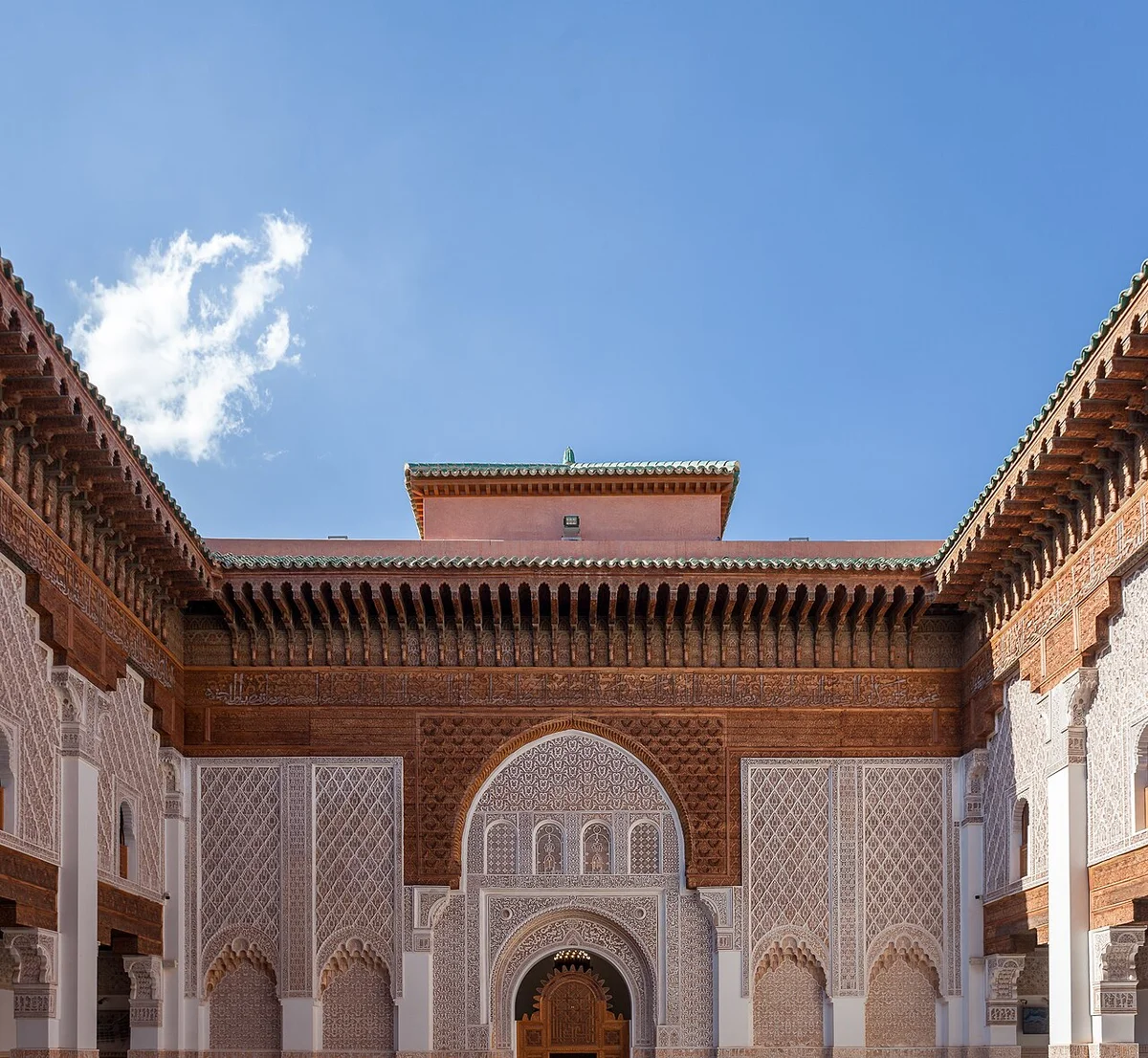
The palace features several characteristics of Moroccan residential architecture: courtyards, gardens, zelliges, sculpted plaster, and decorated wooden elements.
Some elements also reflect the Mediterranean exchanges specific to Tangier, notably the presence of columns and capitals derived from European architectural traditions.
Today, the museum showcases archaeological and ethnographic collections that place Tangier within the broader history of Morocco and the Mediterranean world.
Tangier, a Diplomatic City
From the 19th century onwards, Tangier gradually acquired a major diplomatic role.
Its proximity to Europe and strategic position attracted numerous foreign representations.
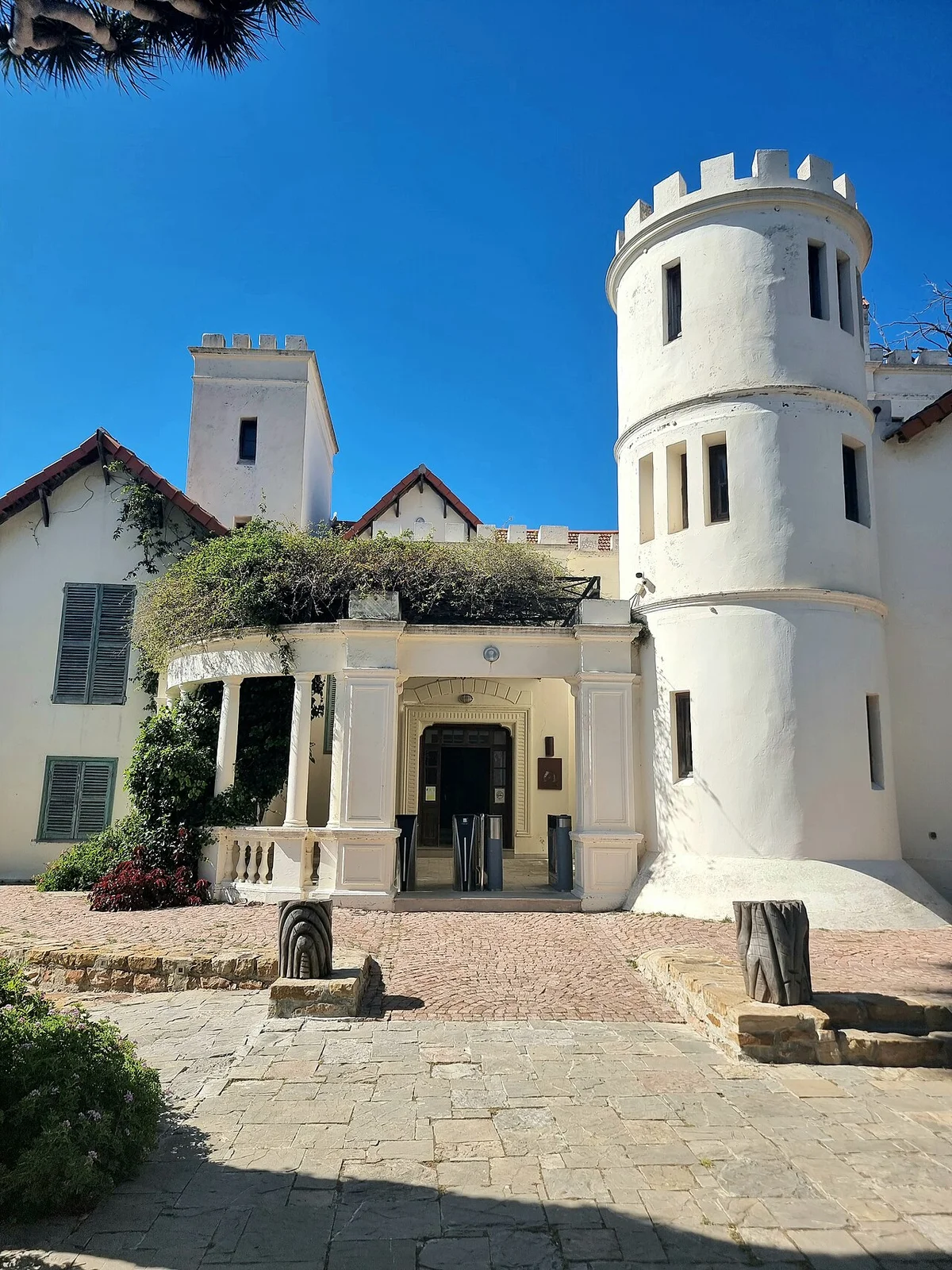
One of the most remarkable buildings from this period is the American Legation in Tangier.
In 1821, Sultan Moulay Slimane offered the United States a building for their diplomatic representation.
The Tangier American Legation Institute indicates that the site served American diplomatic functions for over 140 years.
Today, the building houses a museum, a cultural center, and a research center.
The American Legation also holds a unique status: it is recognized as the only National Historic Landmark of the United States located outside American territory.
It thus serves as an exceptional testimony to the long-standing relations between Morocco and the United States.
The International Zone of Tangier
One of the most unique chapters in the city's history begins in the 20th century.
A convention signed on December 18, 1923, established a special international regime for Tangier.
France, Spain, and Great Britain played a central role in this organization, to which other powers later participated.
American diplomatic archives from the time document this convention and the functioning of the international administration.
This situation gave rise to what is generally referred to as the International Zone of Tangier.
The city then became a very particular political and economic space, attracting diplomats, merchants, entrepreneurs, artists, and residents from many countries.
This period significantly contributed to Tangier's cosmopolitan reputation.
Tangier During World War II
The international status experienced an interruption in 1940.
During World War II, Francoist Spain occupied Tangier and took control of its administration.
Official archives from the U.S. State Department notably document the entry of Spanish forces into the zone in 1940.
After the war, the international regime was restored.
It ultimately disappeared in the context of Morocco's independence and the reunification of the country in the 1950s.
Tangier and the Artists
The cultural history of Tangier far exceeds its diplomatic role.
In the 19th and 20th centuries, the city attracted numerous artists and writers.
The Moroccan National Tourism Office notably cites Eugène Delacroix, Henri Matisse, Tennessee Williams, and Paul Bowles among the personalities linked to Tangier.
The light, the strait, the medina, and the cosmopolitan atmosphere of the city nurtured a significant artistic and literary production.
However, this foreign presence is only one layer of Tangier's cultural history.
The city primarily possesses a much older Moroccan and Mediterranean identity.
What to See in Tangier?
The Kasbah
The Kasbah of Tangier overlooks the medina and is one of the most important historical areas of the city.
Its narrow streets allow for the discovery of an ancient urban fabric while enjoying several views towards the sea and the strait.
It is also in the Kasbah that the former Sultan's Palace is located.
The Museum of the Kasbah of Mediterranean Cultures
Housed in Dar Al-Makhzen, the museum allows visitors to explore the history of Tangier and the region through various collections.
According to the National Museum Foundation, the current published hours are:
- open from 10 AM to 6 PM;
- closed on Tuesdays;
- standard rate: 30 DH;
- reduced rate: 15 DH;
- free for children under 6 years old;
- day pass: 50 DH.
Discover the Kasbah of Tangier and the Museum of the Kasbah
The Medina
The medina of Tangier has a different identity from those of Fez or Marrakech.
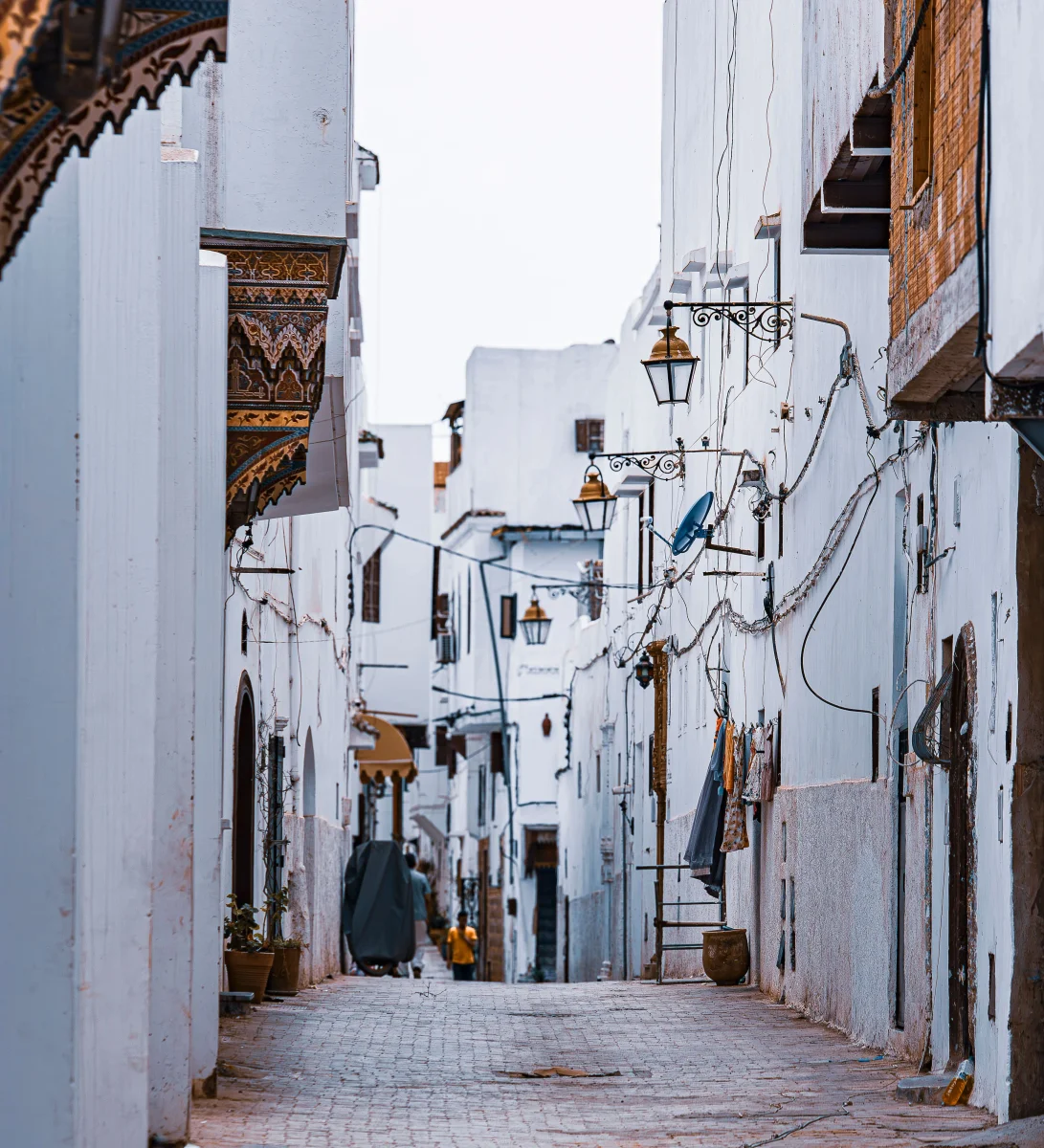
Its white streets, small shops, and buildings reflect the Moroccan history of the city but also the numerous influences accumulated over the centuries.
It can easily be explored on foot from the Grand Socco to the heights of the Kasbah.
Discover the Medina of Tangier
The Grand Socco
The Grand Socco serves as one of the main gateways to the medina.
The square marks the transition between the old town and the more modern neighborhoods of Tangier.
Nearby are the gardens of Mendoubia, also mentioned by the Moroccan National Tourism Office among the places to discover.
The Petit Socco
In the heart of the medina, the small square of Petit Socco (Souq Dakhli) occupies a historically significant site: according to several local sources, it corresponds to the location of the forum of ancient Tingis during Roman times.
During the International Status of Tangier (1923-1956), the square became the nerve center of the city's business and nightlife: banks, newspapers, and gaming houses coexisted, reflecting the vibrancy of the International Zone.
It is this atmosphere that attracted, starting in the 1950s, writers from the Beat Generation. The American Paul Bowles, who settled in Tangier in 1931, mingled with William S. Burroughs—who wrote part of Naked Lunch there—as well as Allen Ginsberg, Jack Kerouac, and the French writer Jean Genet. The café terraces of Petit Socco, particularly the Café Central, became a meeting place for these literary figures and the Moroccan writer Mohamed Choukri.
Even today, its facing terraces make it one of the liveliest spots in the medina, where merchants, locals, and travelers converge.
The American Legation
Located in the medina at 8 Rue d'Amérique, the American Legation is one of the most original historical sites in Tangier.
Its official site currently indicates the following hours:
- Monday to Friday: 10 AM to 5 PM;
- Saturday and Sunday: 10 AM to 3 PM.
The visit allows for the discovery of the history of relations between Morocco and the United States, as well as a remarkable historical residence within the medina.
Discover the American Legation in Tangier
The Tangier Cinematheque
On the Grand Socco square stands another emblematic place of Tangier's cultural life: the former Cinema Rif, now the Tangier Cinematheque.
Built in the late 1930s, this cinema experienced its golden age when Tangier reportedly had one of the highest densities of cinema halls in Morocco. Like many other theaters in the city, it later underwent a long period of decline.
In 2004, the Tangier photographer Yto Barrada purchased the building, which was then under threat, together with producer Irina Prentice and producer Cyriac Auriol. The association they founded with Moroccan director Latif Lahlou officially opened the Tangier Cinematheque (CDT) in February 2007, according to information published by the institution itself.
The Art Deco building was restored by French architect Jean-Marc Lalo. The Cinematheque became the first art and experimental cinema in North Africa, a member of the NAAS (Network of Arab Arthouse Screens), which brings together independent cinema halls in the Arab world.
Its programming prioritizes the diversity of international film production, far from the hegemony of commercial films, and the institution preserves a collection of films, posters, and documents related to the history of Moroccan and North African cinema.
Discover the Tangier Cinematheque
The Grand Mosque of Tangier
Located in the heart of the medina, the Grand Mosque of Tangier occupies a religious site whose history, according to local tradition, dates back to antiquity: it is generally situated on the remnants of a Roman temple dedicated to Hercules, followed by a church from the 5th century.
After the Arab conquest, the building was transformed into a mosque. It became a place of Christian worship twice, during the Portuguese and then English occupations of the city, before being definitively returned to Islam in 1684, after the reconquest of Tangier by forces of Ali Ben Abdallah Errifi on behalf of Sultan Moulay Ismaïl.
The mosque reconstructed during this time was, however, deemed rudimentary by travelers of the era. In 1815, Sultan Moulay Slimane, shocked by the state of the building during a visit, ordered its complete reconstruction. The current building, completed around 1817-1818, owes much of its appearance to this renovation campaign.
The site also holds a place in the political history of contemporary Morocco: Sultan Mohammed V reportedly visited it on April 11, 1947, before delivering a famous speech in the nearby gardens of Mendoubia, which is considered one of the milestones of the independence movement.
Like most active Moroccan mosques, its interior access remains reserved for Muslims.
Discover the Grand Mosque of Tangier
The Cervantes Theatre
Not far from the medina stands the silhouette of the Cervantes Theatre (Gran Teatro Cervantes), one of the most representative monuments of the Spanish presence in Tangier.
Its cornerstone was laid on April 2, 1911, at the initiative of a couple of emigrants from Cadiz, Esperanza Orellana and Manuel Peña, along with businessman Antonio Gallego. The theatre opened its doors on December 11, 1913, with a capacity of around 1,400 seats according to the most cited sources, making it the largest performance venue in Africa for a long time.
The construction materials were largely imported from Spain. In the following decades, it hosted operetta companies, theatrical performances, and some of the very first film screenings in the region, reflecting the cosmopolitan nature of the city during the International Zone period.
Facing financial difficulties, its owner bequeathed it to the Spanish state in 1929. The theatre closed in 1974 and remained symbolically rented before entering a long period of abandonment.
In 2019, Spain committed to transferring the building to Morocco, provided it was restored in accordance with its original architecture and retained its name. The property transfer was officially completed in 2023. Restoration work, funded by the Northern Development Agency, is still ongoing.
Discover the Cervantes Theatre
Perdicaris Palace and Rmilat Park
To the west of Tangier, the Rmilat forest is home to one of the most unique episodes in the city's diplomatic history: the Perdicaris castle.
The building was constructed starting in 1872 by Ion Perdicaris, a Greco-American businessman, on a domain of about sixty hectares. He settled his wife Ellen Varley, who suffered from a lung disease, there, as the air in this elevated forest facing the strait was then considered beneficial.
On May 18, 1904, Perdicaris and his stepson Cromwell Varley were kidnapped by the rebel leader Ahmed al-Raisuli. The affair gained international attention: the U.S. government, under President Theodore Roosevelt, dispatched a war fleet and demanded the release of the hostages, summarized by the famous telegram: "Perdicaris alive, or Raisuli dead." A ransom of $70,000 was ultimately paid in late June 1904 to secure his release.
Purchased in 1930 by Thami El Glaoui, pasha of Marrakech, the property changed hands several times before returning to the Moroccan state.
Since 2022, the former castle has housed a Heritage Interpretation Center dedicated to the history of the character and the biodiversity of the Rmilat forest, now classified as a site of biological and ecological interest. The surrounding park, accessible for free, remains one of the few large green spaces open to the public in Tangier.
Discover Perdicaris Palace and Rmilat Park
Cape Spartel and the Caves of Hercules
To the west of the city center lie two of the most well-known sites around Tangier: Cape Spartel and the Caves of Hercules.
Cape Spartel offers vast panoramas of the coastline and the strait.
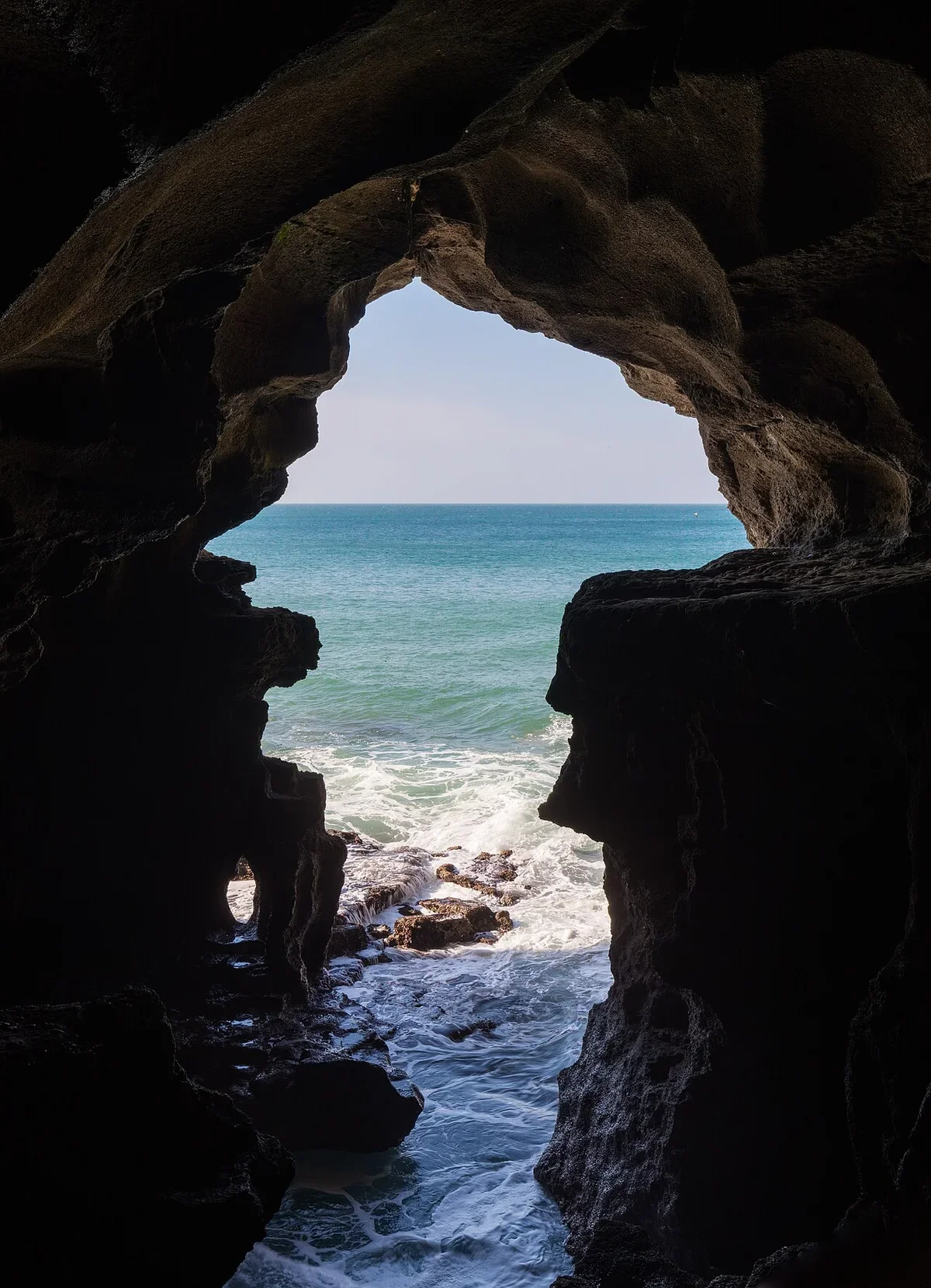
The Caves of Hercules are a natural site surrounded by numerous traditions and legends.
The Moroccan National Tourism Office presents them among the main natural attractions near Tangier.
The name of the site refers to the hero of Greek mythology, but the stories claiming that Hercules actually stayed in these caves belong to the realm of legend.
How Much Time to Allocate for Visiting Tangier?
A full day allows you to discover a large part of the historic center: Kasbah, museum, medina, Grand Socco, and American Legation.
To include Cape Spartel, the Caves of Hercules, and the coastline, two days provide a much more comfortable visit.
Tangier can also serve as a starting point for exploring northern Morocco, including Tétouan, Asilah, and Chefchaouen.
Getting Around Tangier
The historic center is easily explored on foot.
However, the medina has narrow streets, stairs, and several sloping passages.
To reach more distant sites such as Cape Spartel or the Caves of Hercules, a taxi, car, or transfer is generally more practical.
Tangier also has significant transportation infrastructure.
The city is served by train, notably by the high-speed line connecting Tangier to Kénitra, Rabat, and Casablanca.
It also has an international airport and important maritime links with Europe from the strait region.
Tangier, a City Between Worlds
Tangier is often described as the city where Africa meets Europe.
This phrase is appealing, but its history is even richer.
The city has experienced Mediterranean antiquity, centuries of Moroccan history, Portuguese occupation, a brief English period, the development of significant diplomatic activity, and the exceptional experience of the International Zone.
Today, these different periods continue to coexist in its urban landscape.
In just a few hundred meters, visitors can transition from an ancient Moroccan palace decorated with zelliges to a 19th-century American legation, then to the narrow streets of a medina overlooking the Strait of Gibraltar.
It is this accumulation of cultures, eras, and influences that makes Tangier one of the most unique heritage cities in Morocco.
Continue Your Discovery of Morocco
Moroccan heritage is not limited to a single location. Palaces, madrasas, museums, archaeological sites, and monuments each tell a part of its story.
🎟️ Discover the heritage and book your tickets
📖 Read our guides & inspirations
MoroccoMuseum.com — Discover. Explore. Experience Morocco's heritage.