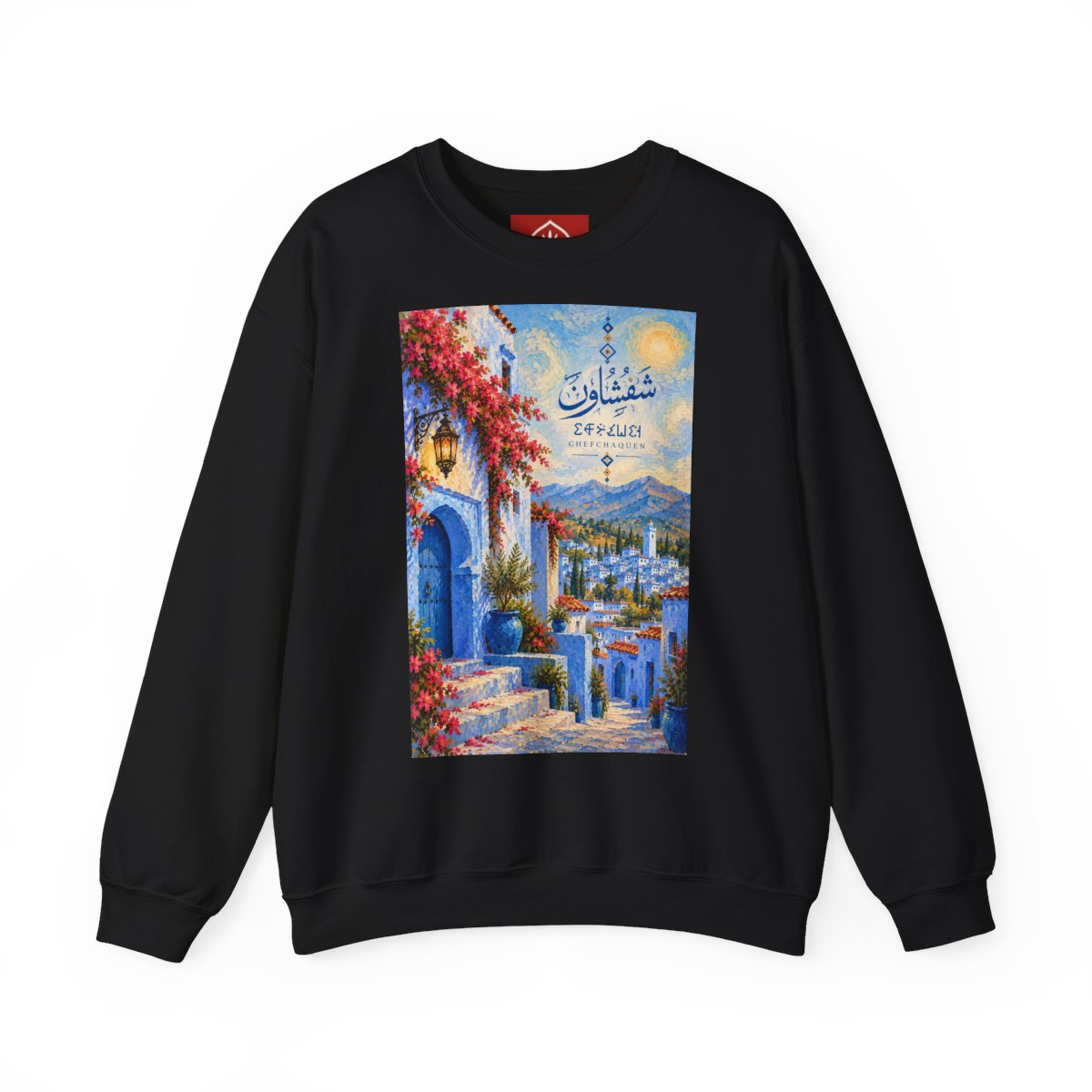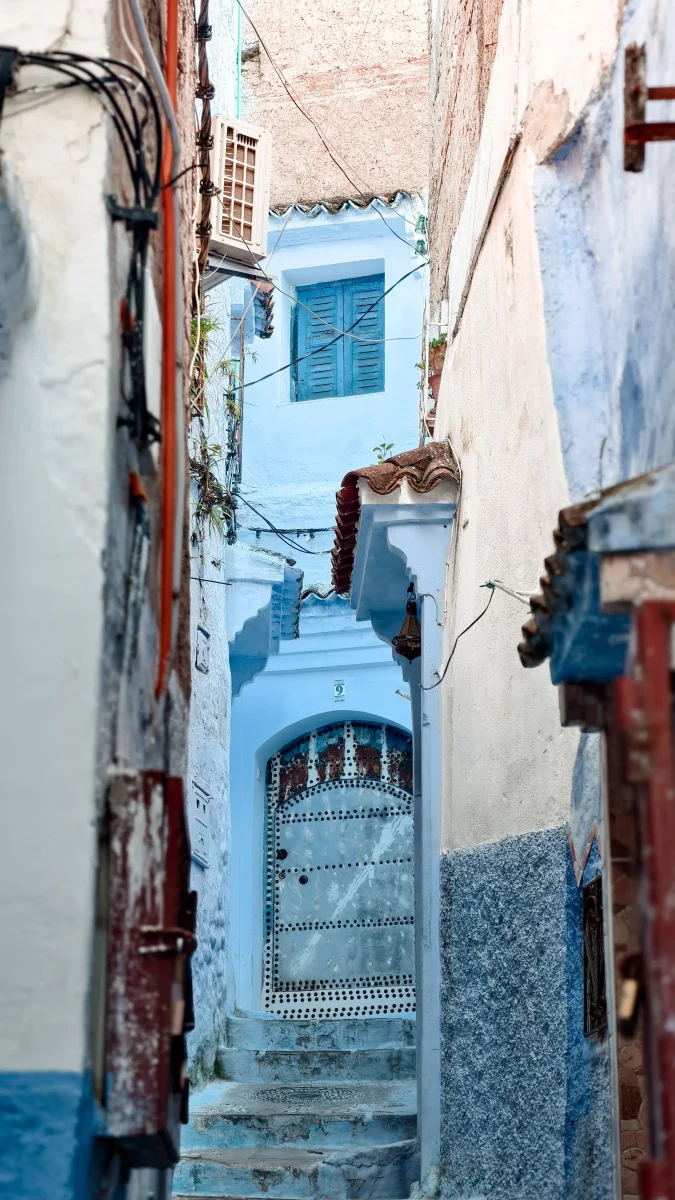
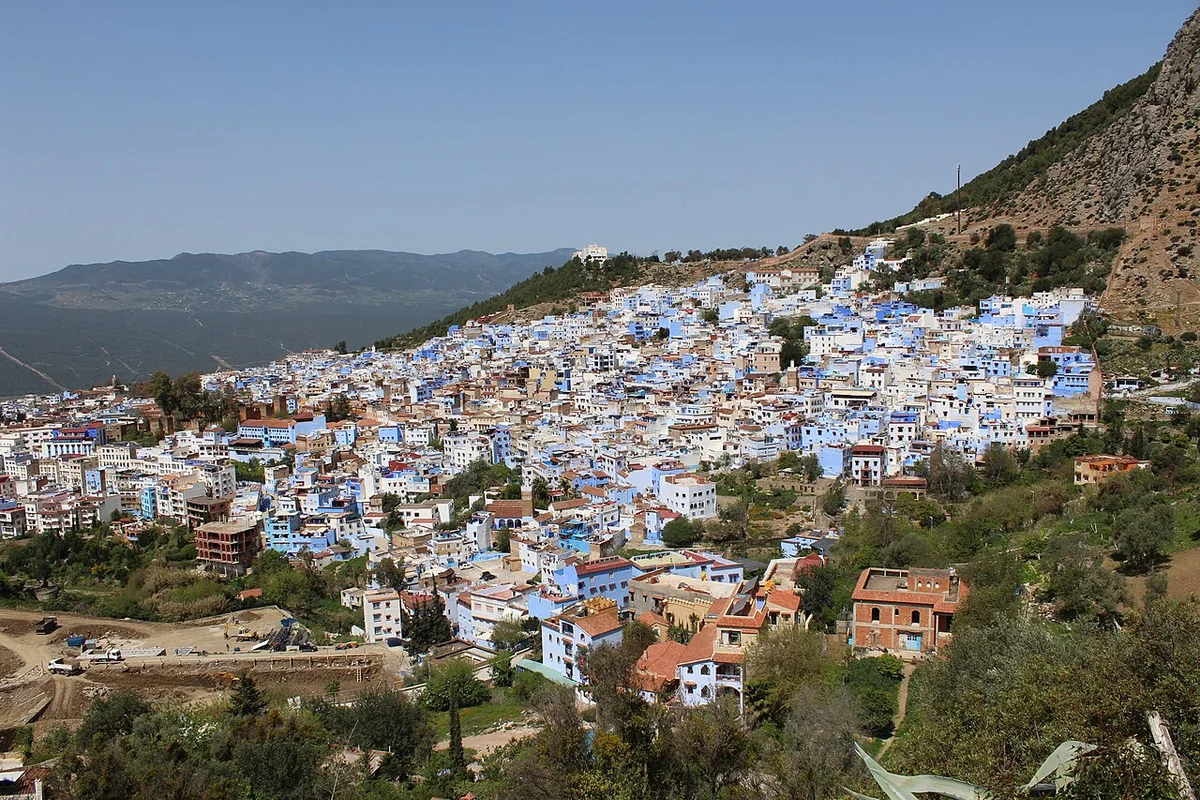
Nestled in the Rif mountains in northern Morocco, Chefchaouen is instantly recognizable for its narrow streets, staircases, and buildings painted in various shades of blue.
However, to reduce Chefchaouen to its photogenic scenery would be to overlook its essence.
Behind the "blue city" lies a settlement with over five centuries of history, shaped by the events in northern Morocco, the arrival of populations from Al-Andalus, and its strategic location in the mountains.
Today, Chefchaouen attracts visitors not only for its heritage but also for its peaceful atmosphere, craftsmanship, and the stunning natural landscapes that surround it. The Moroccan National Tourism Office highlights its medina, architectural heritage, and opportunities to explore the Rif.
A City Founded in the 15th Century
The history of Chefchaouen truly begins in 1471, when Ali Ibn Rachid al-Alami, also known as Moulay Ali Ben Rachid, established a fortified town in this region of the Rif.
This foundation occurred during a particularly tumultuous period. In the 15th century, Iberian powers were expanding their presence along the northern Moroccan coast, with Ceuta under Portuguese control since 1415.
Academic research on the history of Chefchaouen places its foundation within this context of confrontation with Portuguese and Spanish expansion. The chosen location, inland and shielded by mountainous terrain, naturally provided defensive advantages.
The Kasbah of Chefchaouen, still present at the heart of the medina, stands today as one of the main testimonies of this fortified origin.
The Legacy of Al-Andalus
The identity of Chefchaouen is deeply intertwined with the significant population movements caused by the gradual disappearance of Muslim territories in the Iberian Peninsula.
By the end of the 15th century and in the following decades, Muslims and Jews fled Al-Andalus and sought refuge in various regions of Morocco.
Chefchaouen was one of the cities that welcomed these populations.
Academic studies dedicated to this period present the fortified city as a place of refuge for Andalusian Muslim and Jewish exiles. Their arrival contributed to the urban, cultural, and artisanal development of Chefchaouen.
This history partly explains some characteristics of its architecture: houses organized around patios, narrow alleys, fountains, covered passages, and a close relationship between residences and public spaces.
Thus, Chefchaouen is not just a "blue city" created for tourism. Its urban fabric is the result of several centuries of history.
Chefchaouen and Sayyida al-Hurra
One of the most fascinating figures associated with the history of Chefchaouen is Sayyida al-Hurra.
Daughter of the city's founder, she was born at the end of the 15th century into a family profoundly affected by the exile from Al-Andalus.
She later became a major political figure in northern Morocco, governing Tétouan in the 16th century.
Her journey illustrates the importance of political, commercial, and familial relations between Chefchaouen, Tétouan, and other territories in northern Morocco.
Her story is currently studied by several researchers focusing on the western Mediterranean, Morocco, and Andalusian communities established in the Maghreb.
Chefchaouen in the Early 20th Century
The modern history of Chefchaouen is also linked to the Spanish protectorate in northern Morocco.
Spanish forces entered the city in 1920.
A few years later, the region was directly impacted by the Rif War, a major conflict opposing the Rif forces led by Abdelkrim al-Khattabi to the Spanish and then French colonial powers.
Chefchaouen temporarily fell under the control of the Rif forces before being recaptured by the Spanish.
The city remained part of the Spanish protectorate zone in northern Morocco until the country's independence in 1956.
This relatively recent history also contributes to the unique identity of northern Morocco.
Why is Chefchaouen Blue?
This is probably the most famous question regarding the city.
And the answer is less straightforward than one might think.
There is no single, definitive historical explanation for the origin of Chefchaouen's blue facades.
Several interpretations circulate. Some associate the blue with the Jewish communities that lived in the city and with religious symbolism. Others refer to a local aesthetic tradition. Popular explanations also suggest that the color was used to create a sense of freshness or to ward off insects.
None of these theories alone can definitively explain the emergence and, especially, the widespread adoption of blue in the medina.
It is therefore more accurate to consider these various versions as hypotheses or local traditions.
What is undeniable, however, is that the blue and white walls are now one of the most characteristic elements of Chefchaouen's visual identity. The Moroccan National Tourism Office also emphasizes this unique atmosphere in its presentation of the destination.
What to See in Chefchaouen?
The Medina of Chefchaouen
The best way to discover Chefchaouen is simply to walk through its medina.
Smaller than the medinas of Fès or Marrakech, it has a very different atmosphere.
The terrain plays a crucial role here. The streets rise and fall, staircases abound, and the houses seem almost integrated into the mountain.
The most photographed blue alleys represent only a part of the medina. Taking the time to leave the main thoroughfares allows you to observe traditional houses, small squares, fountains, and the daily life of the residents.
Several historic gates punctuate the medina's walls. Bab El Ain, the gate of the spring, is named for its proximity to Ras El Maa and is one of the most frequented access points in the city. Further north, Bab El Onsar traditionally refers to the neighborhood and its inhabitants, the Ansar, the first Andalusian refugees welcomed by the city.
Outa El Hammam Square
At the heart of the medina lies Outa El Hammam, the main historical square of Chefchaouen.
Surrounded by cafes, restaurants, and traditional buildings, it serves as an excellent starting point for visiting the old town.
The Kasbah is located directly on this square.
The Kasbah of Chefchaouen
The Kasbah is one of the most important monuments in Chefchaouen.
With its walls, towers, and gardens, it recalls the defensive role the city played at its founding in the 15th century.
Today, it houses a museum space dedicated to the history and heritage of the region. The Moroccan National Tourism Office mentions among the displayed collections traditional objects, textiles, ancient weapons, and historical photographs.
A visit also allows you to appreciate the architecture of the old fortress and its location at the center of the medina.
Ras El Maa
At the eastern end of the medina lies Ras El Maa, literally associated with the "head of water" or the spring.
Water flows directly from the mountain here before reaching the city.
This place has long been an important space for the residents of Chefchaouen and today offers a pleasant walk that gradually leads away from the busiest streets of the medina.
Ras El Maa is also highlighted by the Moroccan National Tourism Office as a must-see during a stay in Chefchaouen.
The Craftsmanship of Chefchaouen
The city boasts a rich artisanal tradition.
Crafts related to wool, weaving, wood, leather, and carpentry are traditionally present in the region.
In the medina, many small shops offer woven blankets, clothing, wooden objects, and products made by local artisans.
Exploring this craftsmanship allows for a deeper understanding of another facet of Chefchaouen, far beyond its blue facades.
The Spanish Mosque
On a hill facing the medina stands the Spanish Mosque (Jamaa Bouzafar), one of the most sought-after viewpoints over the blue city.
Built in the 1920s during the Spanish protectorate, it has never actually held worship services: local authorities never permitted its opening. Disused but easily accessible, it can be reached in about thirty minutes on foot from the medina and remains a popular spot for walks, especially at sunrise and sunset.
The Great Mosque (Bou Zaafar)
Recognizable by its octagonal minaret, an architectural form typical of northern Morocco, the Great Mosque borders Outa el Hammam square, directly opposite the Kasbah.
Like most active Moroccan mosques, its interior access is reserved for Muslims. Its architecture, blending Andalusian and Rif influences, can be appreciated from the square. Together with the Kasbah, it forms the monumental heart of the medina.
The Mellah of Chefchaouen
The establishment of a Jewish community in Chefchaouen dates back to the early waves of Andalusian refugees, right from the city's founding at the end of the 15th century. The neighborhood was initially located outside the medina, near Bab el-Hammar, before being moved inside the walls, close to the Kasbah, for security reasons.
This neighborhood, which then had about fifty houses, is now locally known as derb Laâssel. It is accessed from Bab el-Mellah, the gate that once marked the entrance to the Jewish quarter.
The community permanently left Chefchaouen in the 1960s, as part of the massive emigration of Moroccan Jews to Israel, France, and Canada.
The Jewish Cemetery of Chefchaouen
Distinct from the large Muslim cemetery in the city, the Jewish cemetery contains graves dating back to the 16th century, a testament to several centuries of Jewish presence in Chefchaouen. The community largely left the city by the end of the 1960s.
The Hammam of Chefchaouen
Like in most Moroccan medinas, a traditional hammam is part of the built heritage of Chefchaouen, serving as a public bath and a social space inherited from the city’s age-old customs.
Information about its precise history remains limited.
The Church of Chefchaouen
A remnant of the Spanish presence in Chefchaouen between 1920 and 1956, this Catholic church is among the monuments classified by the Ministry of Culture. Less known than the Kasbah or the Spanish Mosque, it complements the multi-confessional heritage of the city, which has historically welcomed Muslim, Jewish, and Christian populations.
Discover the Church of Chefchaouen
Chefchaouen and the Rif Mountains
The city also serves as an excellent starting point for exploring the mountainous landscapes of northern Morocco.
The Talassemtane National Park, located in the region, protects a particularly remarkable mountainous territory.
Its forests, cliffs, valleys, and trails attract hiking and nature enthusiasts.
Among the most well-known destinations around Chefchaouen is Akchour, famous for its scenery, waterways, and waterfalls.
The Moroccan National Tourism Office includes these natural spaces among the main attractions of the Chefchaouen destination.
How to Get to Chefchaouen?
Chefchaouen currently does not have a train station.
Travelers generally reach the city by road.
The main cities providing easy access to Chefchaouen are Tétouan, Tanger, and Fès.
According to information published by the Moroccan National Tourism Office, the approximate road distances are:
Travel time naturally depends on traffic, the chosen route, and the mode of transport.
Buses, taxis, and private transfers allow you to reach Chefchaouen from several major Moroccan cities.
How Much Time to Allocate for Visiting Chefchaouen?
A full day allows you to discover the main sites of the medina: Outa El Hammam, the Kasbah, the historic alleys, and Ras El Maa.
However, spending at least one night on-site offers a different experience.
As visitors on day trips begin to leave the city, the atmosphere generally becomes calmer, allowing for a more enjoyable exploration of the medina in the evening or early morning.
To combine heritage and hiking in the Rif or at Akchour, planning for two to three days is more comfortable.
Practical Tips for Visiting Chefchaouen
Chefchaouen is best explored on foot.
Due to the terrain, numerous stairs, and some cobblestone streets, comfortable shoes are recommended.
The early morning hours are particularly pleasant for wandering through the medina with more tranquility.
Photography is naturally part of the experience, but it’s important to remember that the blue houses are not a tourist backdrop: they are inhabited.
Therefore, it’s essential to respect the privacy of residents and ask for permission before photographing a person or the interior of a home.
Finally, it would be a shame to limit your visit to the few alleys that have become famous on social media. The Kasbah, Ras El Maa, artisans, and mountainous landscapes allow for a much richer discovery of the city.
Chefchaouen, Much More Than the Blue City
The blue has made Chefchaouen known worldwide.
But the history of the city is much older and far more interesting than its image on social media.
Founded in the 15th century in a context of resistance to Iberian advances, enriched by the arrival of populations from Al-Andalus, and deeply connected to the Rif mountains, Chefchaouen possesses a unique identity within Moroccan heritage.
Its alleys, Kasbah, houses, artisanal traditions, and natural environment reflect several centuries of history and exchanges between Morocco and the Mediterranean world.
Taking the time to learn this history completely changes the perspective on the city.
Behind every blue facade lies a Chefchaouen shaped by over five centuries of history.
Continue Your Discovery of Morocco
Moroccan heritage is not limited to a single location. Palaces, madrasas, museums, archaeological sites, and monuments each tell a part of its story.
🎟️ Discover the heritage and book your tickets
📖 Read our guides & inspirations
MoroccoMuseum.com — Discover. Explore. Experience Morocco's Heritage.