Foundation and Saadian Reconstruction
The Ben Youssef Madrasa was founded in the 14th century by the Merinid sultan Abu al-Hasan Ali. Entirely rebuilt between 1564 and 1565 under the Saadian sultan Abdallah al-Ghalib, it took on the appearance we know today: a zellige-stucco-cedar architectural triptych of exceptional mastery. Its name comes from the adjacent Ben Youssef Mosque, founded by the Almoravid emir Yusuf ibn Tachfin in the 12th century.
An International Islamic University
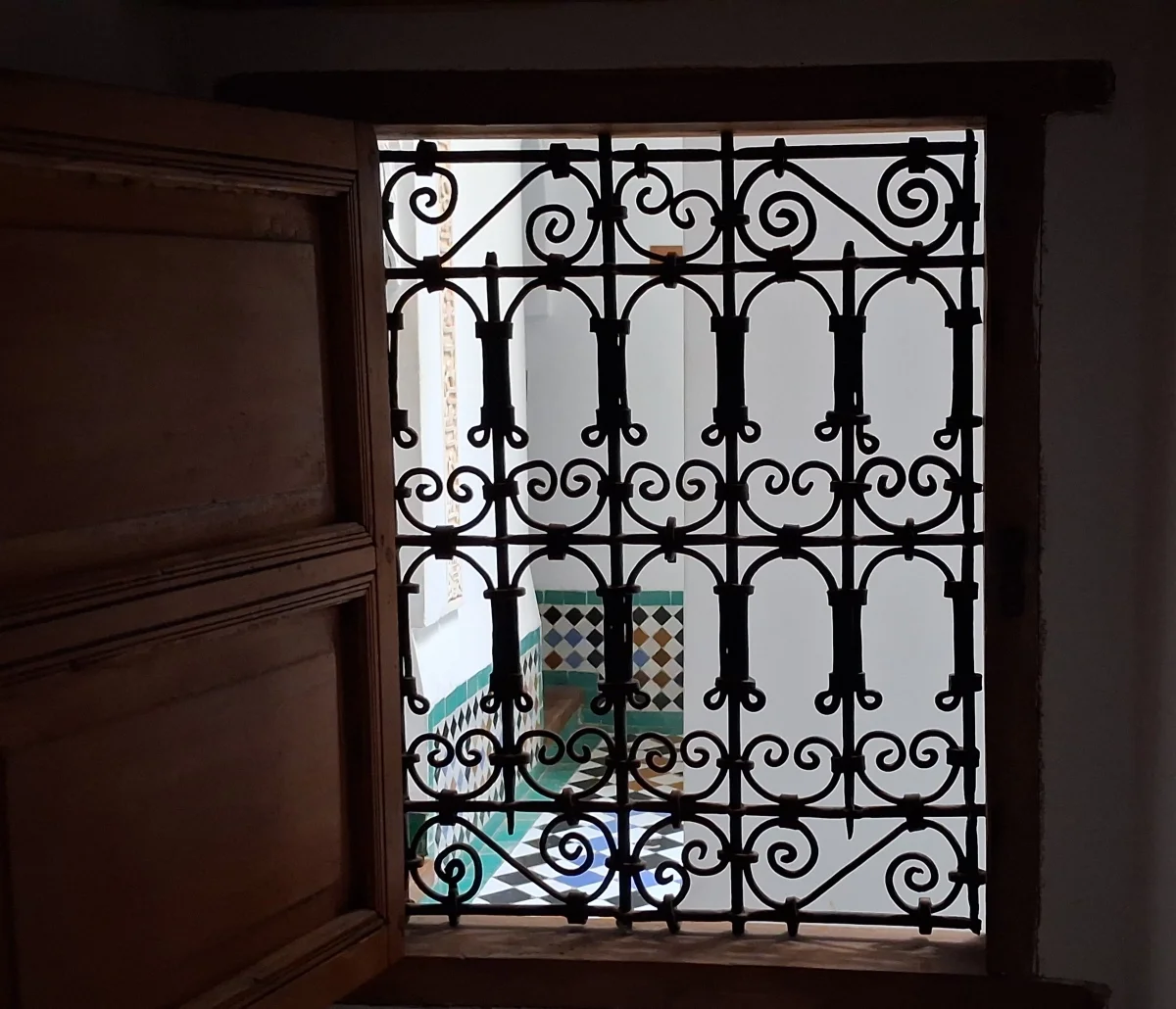
At its peak, the madrasa welcomed up to 900 students from across the Islamic world — Andalusia, sub-Saharan Africa, the Near East. They studied Maliki law, theology, Arabic grammar and Quranic sciences. Their cells (open to visitors on the 1st and 2nd floors) measure about 4 m² — an austere counterpoint to the splendor of the courtyard.
Architecture and Decoration
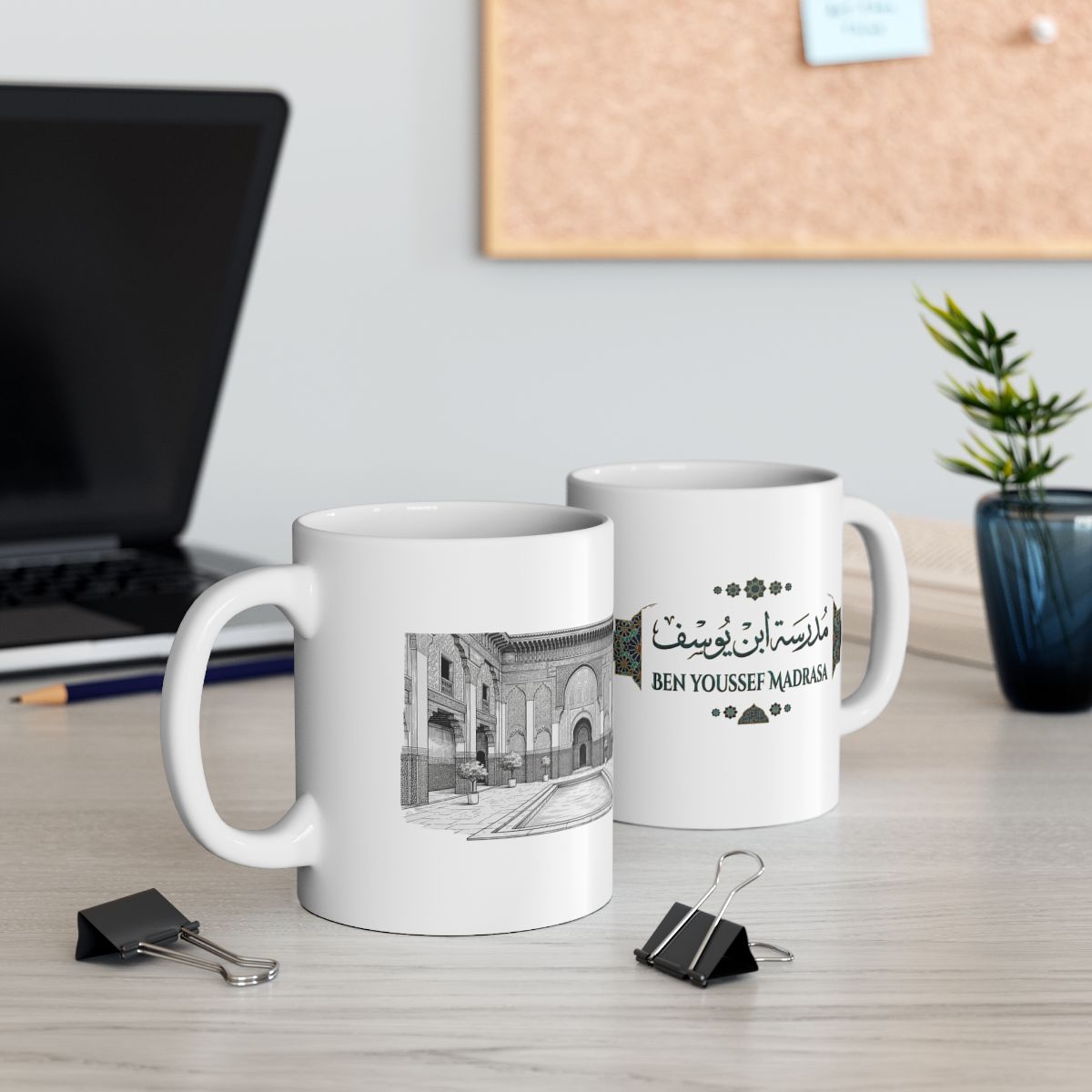
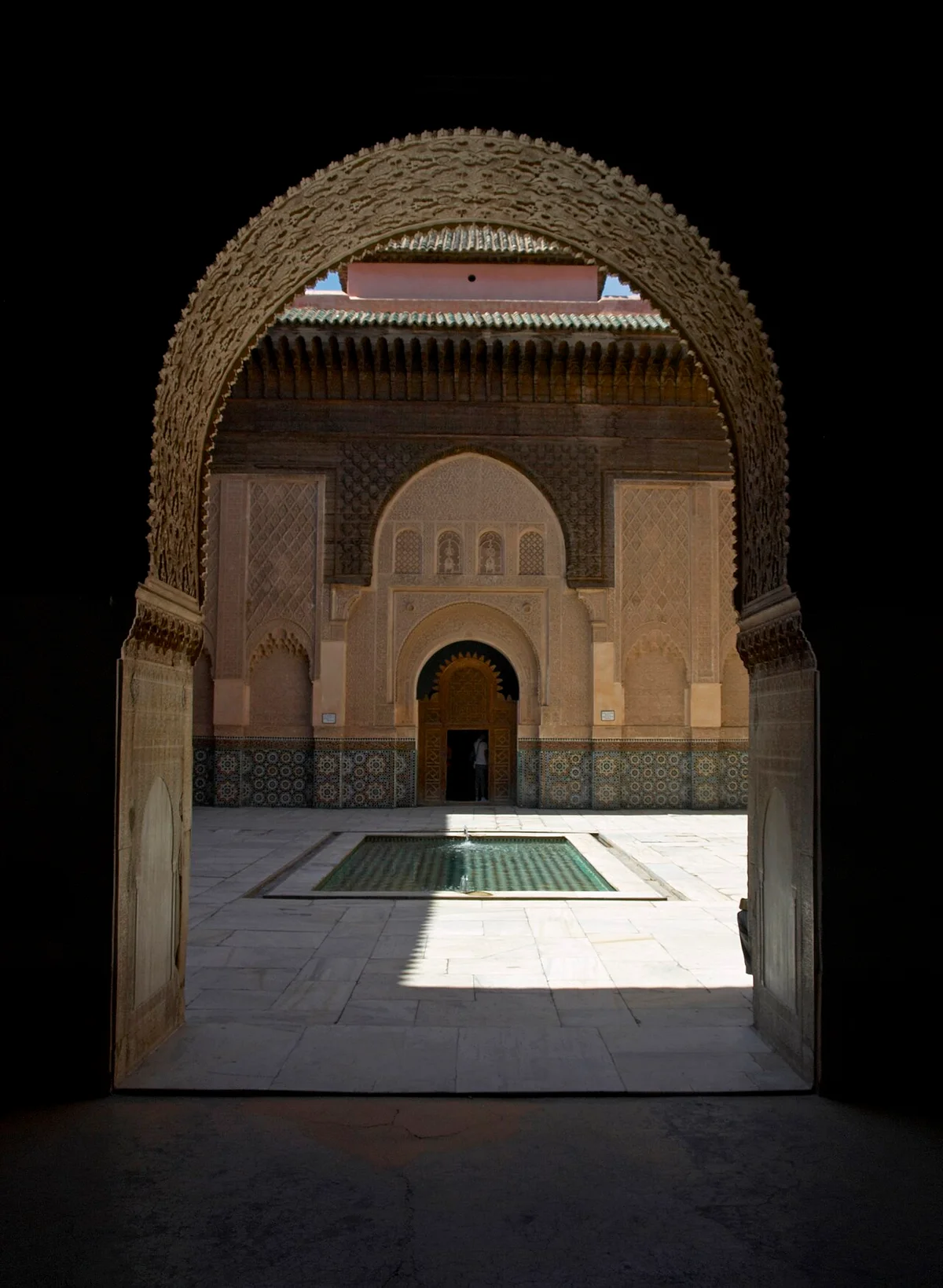
The inner courtyard is one of the most beautiful spaces in Morocco:
- Zellige (up to 1.5m): multicolored geometric mosaics from the 14th–16th century
- Carved stucco: vegetal arabesques and Quranic inscriptions in Kufic calligraphy
- Painted cedarwood: galleries and ceilings with natural pigments preserved since 1565
The white marble central pool reflects the sky and the galleries — one of the most photographed images in Morocco.
Closure and Reopening
The madrasa ceased its educational function in 1960 during the higher education reform. Restored and opened to the public in 1962, it now receives more than a million visitors a year.
To extend this discovery of Marrakech's heritage, many visitors continue on to Bahia Palace, one of the city's must-see monuments.