The Mnebhi Palace
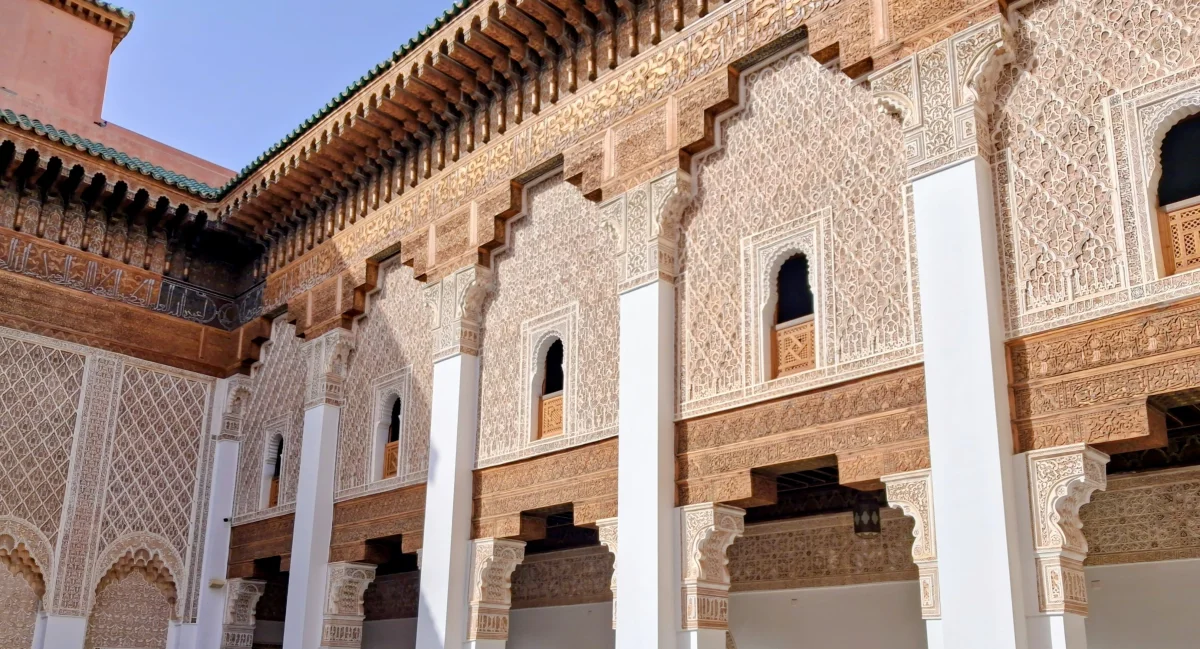
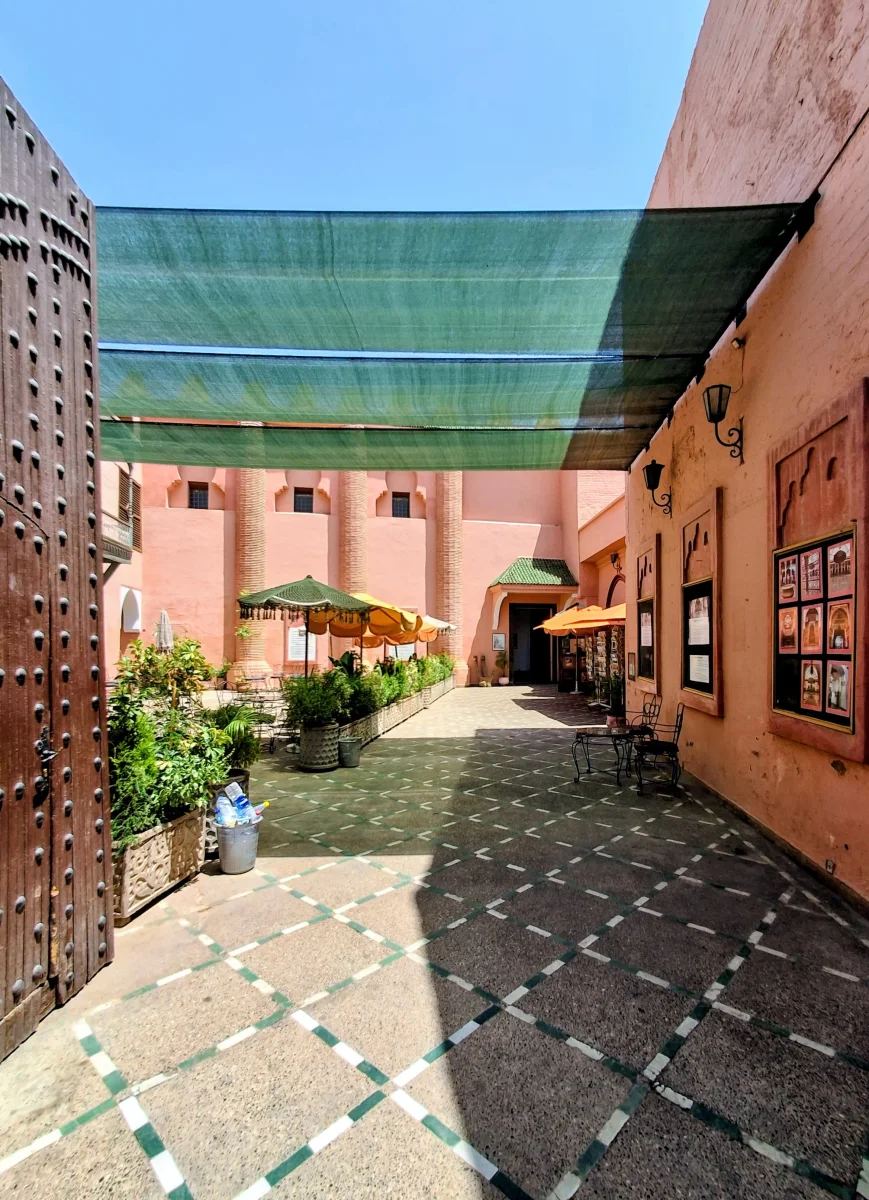
The building housing the museum is the Mnebhi Palace, built in 1898 for Mehdi Mnebhi, Minister of War under Sultan Abdelaziz. It is one of the last great private palaces built in the Arab-Andalusian tradition in Marrakech, on the eve of the Protectorate (1912). Its riad layout — central courtyard, galleries, hammam — is a distillation of 19th-century Moroccan palatial architecture.
Under the Protectorate (1912–1956)
During the French Protectorate, the palace was successively the residence of Marshal Lyautey (the first Resident-General) and senior French officials. Its location between the Ben Youssef Madrasa and the souks made it a strategic position at the heart of the northern medina.
Transformation into a Museum (1997)
Restored in the 1990s, the palace opened its doors as a museum in 1997 thanks to the Omar Benjelloun Foundation. The restoration revealed preserved painted cedar ceilings and intact 19th-century zellige. The centerpiece is the copper basin in the central courtyard, forged by Marrakech artisans — one of the greatest examples of Moroccan artistic coppersmithing.
The Permanent Collection
- Fassi ceramics: blue and white pottery from Fez (17th–20th century)
- Calligraphy: Quranic manuscripts and sultanate letters
- Numismatics: coins from the 10th to the 20th century
- Costumes: ceremonial attire, Berber jewelry
- Historical photographs: Marrakech in the early 20th century
- Temporary exhibitions: contemporary Moroccan artists (changing program)