Marrakech Museum of Music in Mouassine: Practical Visitor Guide
In the heart of the Medina of Marrakech, within the narrow streets of the historic Mouassine district, the Marrakech Museum of Music occupies a remarkable traditional residence built around an old douiria.
The museum is interesting for two main reasons: it introduces visitors to several of Morocco's musical traditions while also offering an opportunity to discover the architecture and restored decoration of a historic Marrakech residence.
The museum is located at 4–5 Derb El Hammam, close to the Mouassine Mosque and the souks.
Why Visit the Marrakech Museum of Music?
Marrakech has many palaces and museums dedicated to decorative arts, but the Museum of Music offers a different perspective.
The visit introduces the diversity of Moroccan musical traditions and their various cultural influences, including:
- Arab-Andalusian music
- Amazigh musical traditions
- Gnawa music
- spiritual and popular musical traditions
- instruments and musical practices from different regions of Morocco
The museum also uses visual and audio elements to present this heritage.
The Douiria: The Architectural Treasure of the Museum
Although music is now the museum's main theme, do not focus solely on the collections.
The architecture itself is worth discovering.
The museum occupies a restored historic residence in the Mouassine district.
Its most remarkable space is the douiria, a traditional apartment historically used, among other purposes, for receiving guests.
Restoration work carried out between 2012 and 2014 revealed old colored plaster decorations that had been covered by later layers over time.
Restorers uncovered historic pigments beneath these successive additions.
Doors, wooden ceilings, carved plaster and surviving colors offer visitors a rare opportunity to observe the historic domestic architecture of Marrakech.
Take Time to Observe the Decoration
In Marrakech's major monuments, attention is often drawn to vast courtyards and monumental decoration.
At Mouassine, the experience is more intimate.
Look closely at:
- the carved plaster motifs
- historic pigments
- wooden ceilings and beams
- the proportions of the rooms
- the organization of the interior spaces
The restoration deliberately emphasized traditional techniques, materials and craftsmanship.
This is one of the most interesting aspects of the building.
Moroccan Musical Traditions
The Museum of Music explores Morocco's musical diversity through several traditions.
Arab-Andalusian Music
Arab-Andalusian music is one of Morocco's major musical traditions.
Developed and transmitted over centuries, it remains particularly associated with historic cities such as Fez, Tetouan, Rabat and other important Moroccan cultural centers.
Amazigh Music
Amazigh musical traditions vary considerably across Morocco.
The High Atlas, Middle Atlas, Souss and Rif regions each have distinctive instruments, rhythms, songs and forms of dance.
Gnawa Music
The Gnawa tradition combines music, rhythm, poetry and spirituality.
The guembri and qraqeb are among its most recognizable instruments.
In 2019, the knowledge, practices and traditions associated with Gnawa were inscribed on UNESCO's Representative List of the Intangible Cultural Heritage of Humanity.
Musical Evenings
One of the distinctive features of the Marrakech Museum of Music is its program of traditional music concerts held in the douiria.
Depending on the program, evenings may feature different Moroccan musical traditions, including Andalusian, Amazigh or Gnawa music.
These concerts offer an opportunity to experience Moroccan music in a much more intimate setting than a large performance venue.
Programs and schedules may change throughout the year, so always check the current calendar before planning your visit.
What Is the Best Time to Visit?
For a standard museum visit, choose a time when you can allow at least 45 minutes to 1 hour.
Because the museum is located in the heart of the souks, it can easily be included in a walking itinerary through the northern Medina.
Another option is to visit the museum in the late afternoon and, when a concert is scheduled, extend your experience with a musical evening.
How Long Should You Allow?
Allow approximately 45 minutes to 1 hour for a relaxed visit.
Visitors particularly interested in architecture, restoration or Moroccan musical traditions may easily spend longer.
If you are also attending a concert, allow additional time according to the scheduled performance.
What to See in the Mouassine District
Do not leave the neighborhood immediately after visiting the museum.
Mouassine is one of the most interesting historic districts of the Medina.
Mouassine Mosque
Close to the museum stands the Mouassine Mosque, built during the Saadian period.
As with most mosques in Morocco, the interior is generally not accessible to non-Muslim visitors, but its minaret and integration into the surrounding neighborhood can still be appreciated from outside.
Mouassine Fountain
The historic Mouassine Fountain forms part of the religious and urban complex developed in the neighborhood during the Saadian period.
It offers an interesting reminder of the important role public fountains once played in the organization of Marrakech.
The Souks of Marrakech
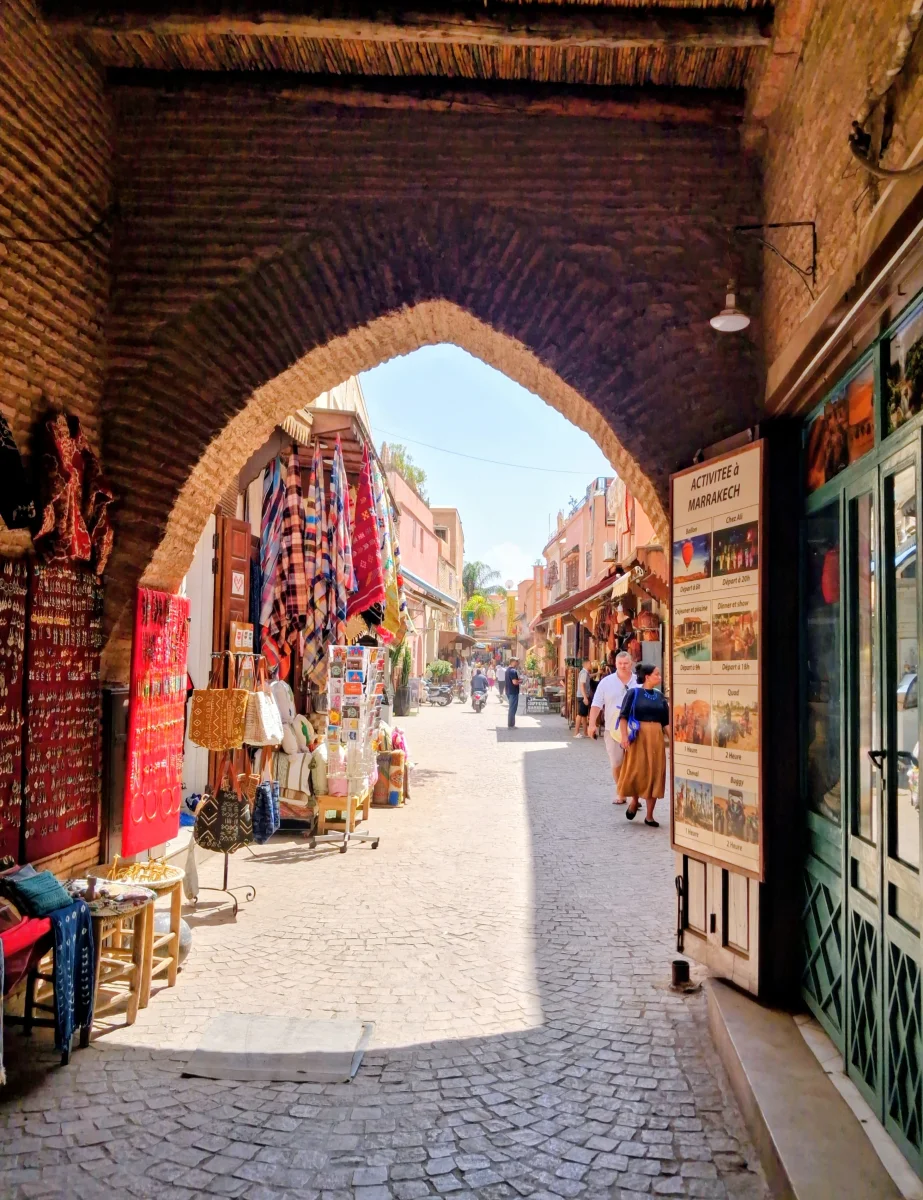
From Mouassine, you can easily continue exploring the souks of the Medina.
Rather than concentrating exclusively on the main commercial streets, take time to observe smaller workshops and traditional crafts that can still be found in some of the surrounding lanes.
Combine the Museum with Other Historic Sites
The Museum of Music can also be included in a cultural itinerary through the northern Medina.
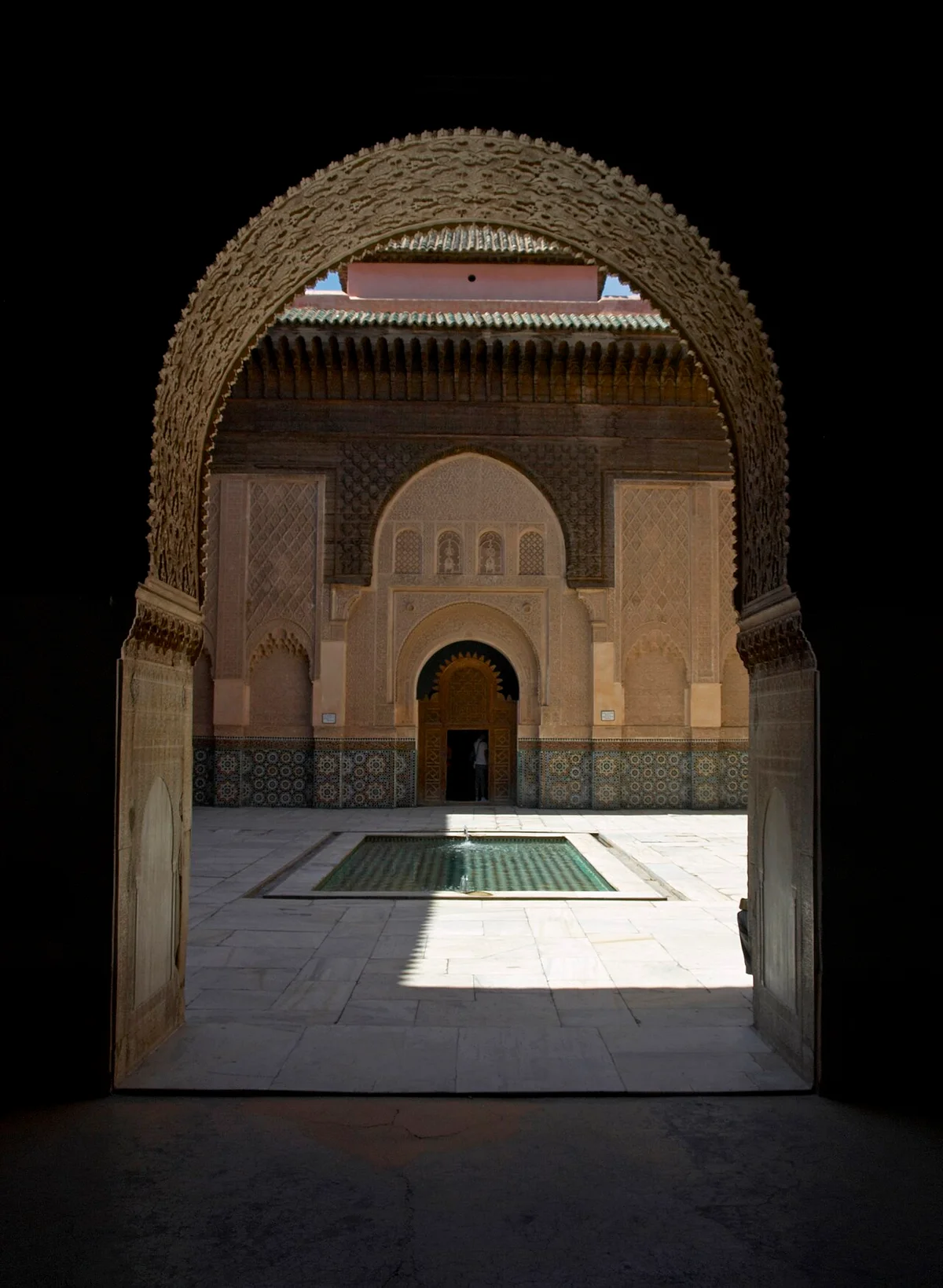
You can continue towards the Ben Youssef Madrasa, the Almoravid Qoubba and the museums around the Ben Youssef district.
This combination allows you to discover several dimensions of Marrakech's heritage within a single half-day: domestic architecture, music, religious architecture, education and traditional craftsmanship.
Be Careful with Unsolicited Guides in the Souks
In the narrow streets of the Medina, some people may spontaneously offer to show you the way to the museum or accompany you through the souks.
This does not automatically mean that they are attempting to scam you.
However, someone who spontaneously offers guiding services in the street is not necessarily a licensed tourist guide.
If you would like a guided visit, check the guide's credentials and agree on the price before the tour begins.
You should also be cautious if someone tells you that a street, monument or souk is "closed" simply to encourage you to follow another route leading towards a shop.
Practical Tips
- Allow approximately 45 minutes to 1 hour for your visit.
- Take time to observe the douiria and its restored decoration.
- Check the current program if you would like to attend a musical evening.
- Combine your visit with a walk through the Mouassine district.
- Do not automatically follow people who spontaneously offer to guide you through the souks.
- Check the latest opening hours and admission prices before visiting.
Plan Your Visit
The Marrakech Museum of Music is an excellent place to discover a different aspect of Moroccan heritage beyond the city's great palaces.
Its appeal lies both in the Moroccan musical traditions it presents and in the historic residence that houses the museum.
Before visiting, check the latest information concerning access, opening hours and admission prices.
View the Marrakech Museum of Music page
Read Also
References and Sources
- Marrakech Museum of Music — Official Website, information about the museum, collections, opening hours and musical evenings.
- Musée de Mouassine — Official Archives, history of the residence and restoration of the douiria between 2012 and 2014.
- Xavier Salmon, La belle oubliée de Marrakech, a publication dedicated to the Mouassine douiria and its restoration.
- UNESCO, Intangible Cultural Heritage — knowledge, practices and traditions associated with Gnawa.