Ouarzazate, the Hollywood of Africa: Tracing the Great Films Shot in Morocco
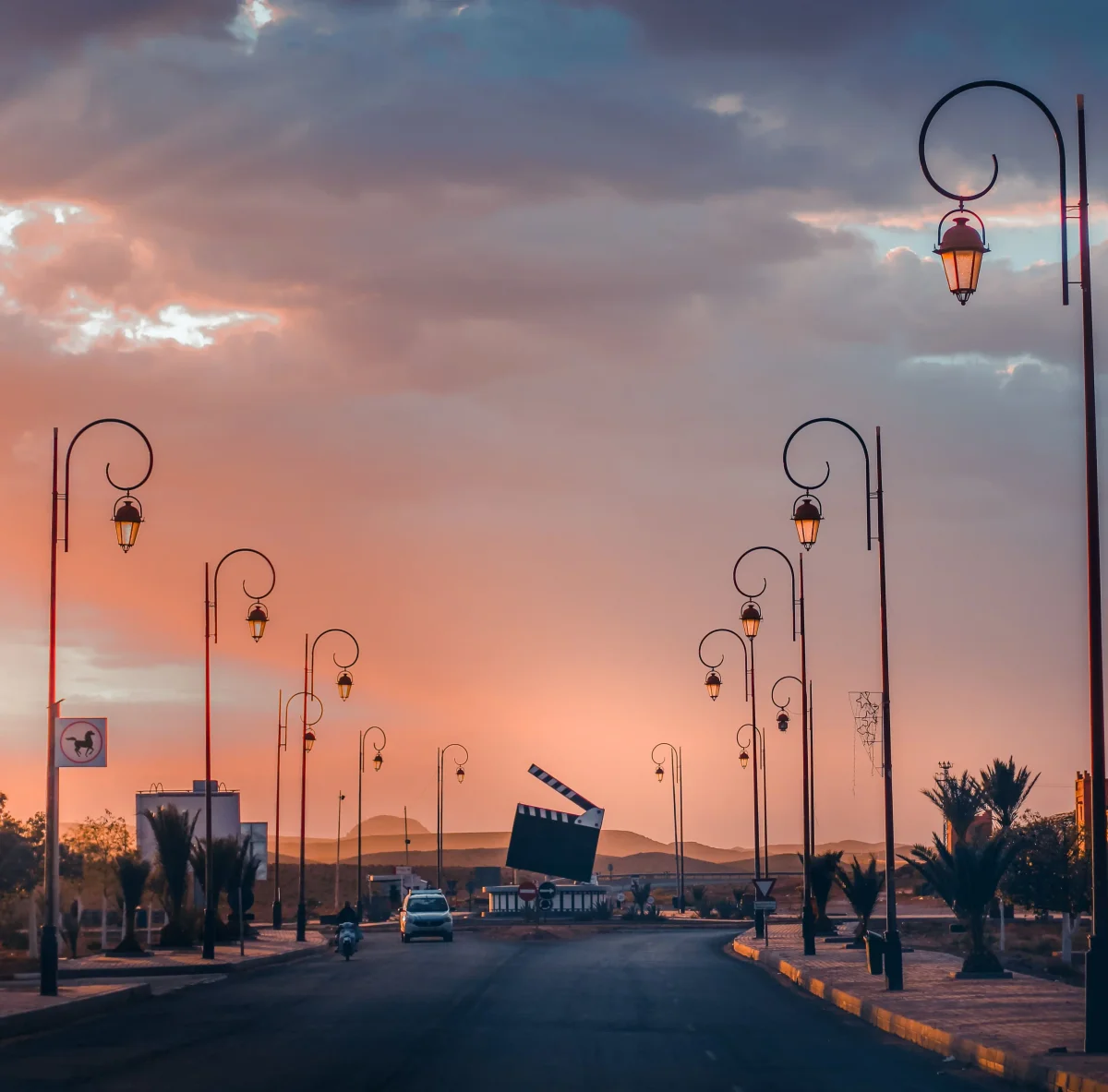
At the gateway to the desert, nestled between the High Atlas Mountains and the arid landscapes of southern Morocco, Ouarzazate boasts a unique identity.
The city is known as one of the main gateways to the valleys, kasbahs, and pre-Saharan landscapes of Morocco. However, for several decades, it has also established itself as one of the major cinematic hubs on the African continent.
Studios, monumental sets, earthen kasbahs, traditional villages, and desert landscapes have attracted international productions from around the globe.
Gladiator, Kingdom of Heaven, The Mummy, Prince of Persia and many other productions have utilized Ouarzazate or its region as a filming location.
This long history with the seventh art has earned it several nicknames, including "Hollywood of Morocco," "Hollywood of Africa," and sometimes "Ouarzawood."
But Ouarzazate's cinematic success is not solely based on its studios.
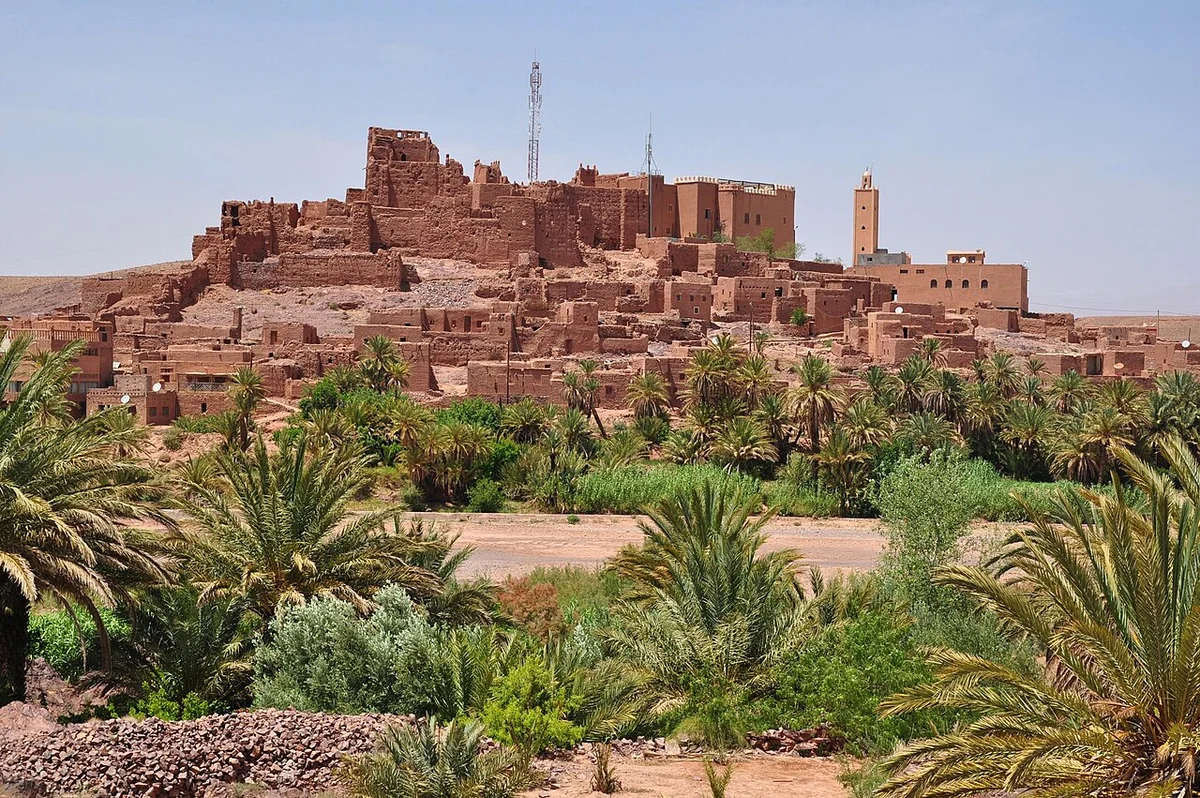
It also relies on something that no artificial set can fully replicate: the landscapes and architectural heritage of southern Morocco.
Why Do Filmmakers Choose to Shoot in Ouarzazate?
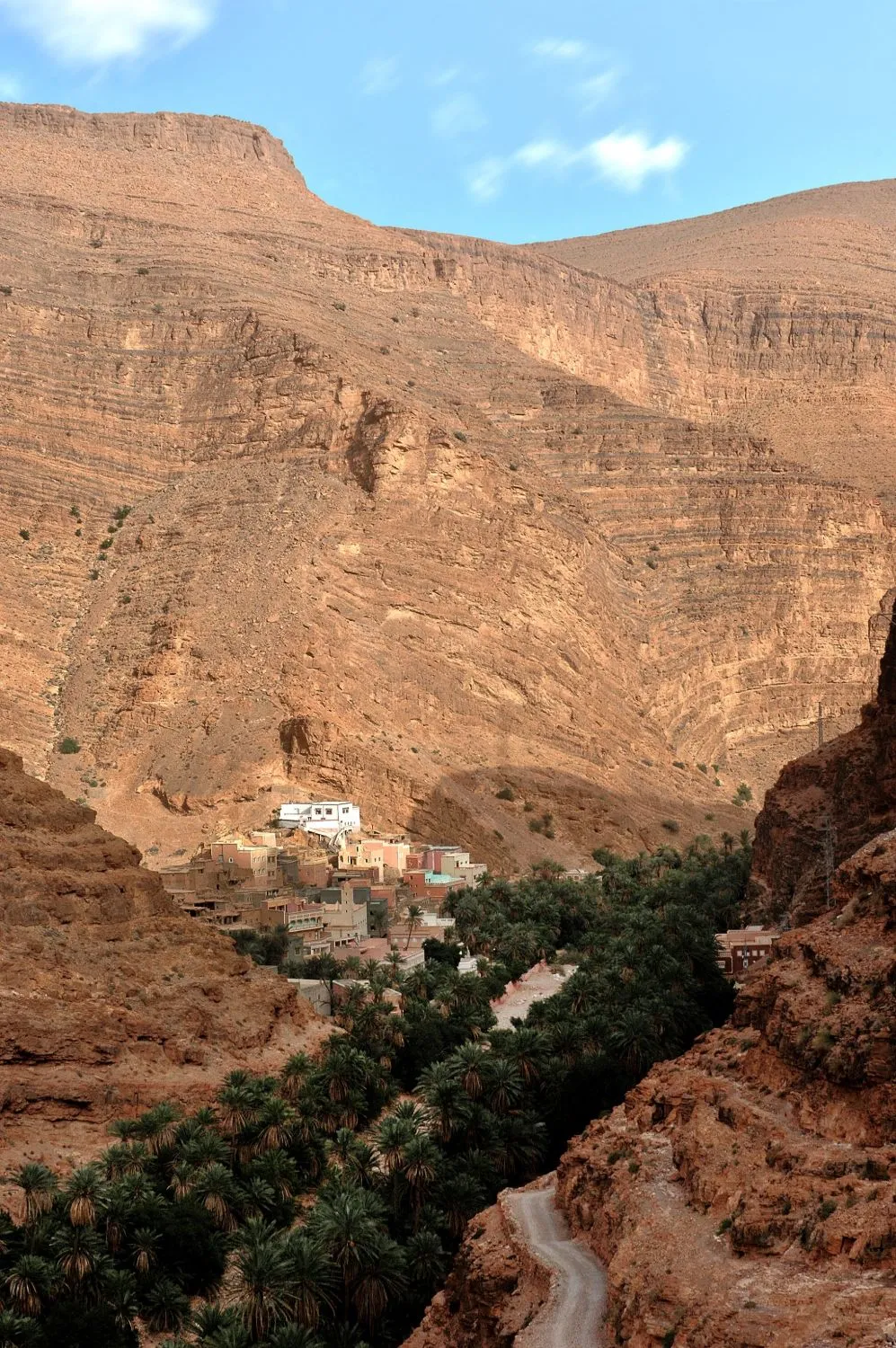
The Ouarzazate region features a diversity of landscapes that is particularly suited for filmmaking.
In just a few dozen kilometers, film crews can find:
- mountains;
- desert plateaus;
- valleys;
- palm groves;
- earthen kasbahs;
- fortified ksour;
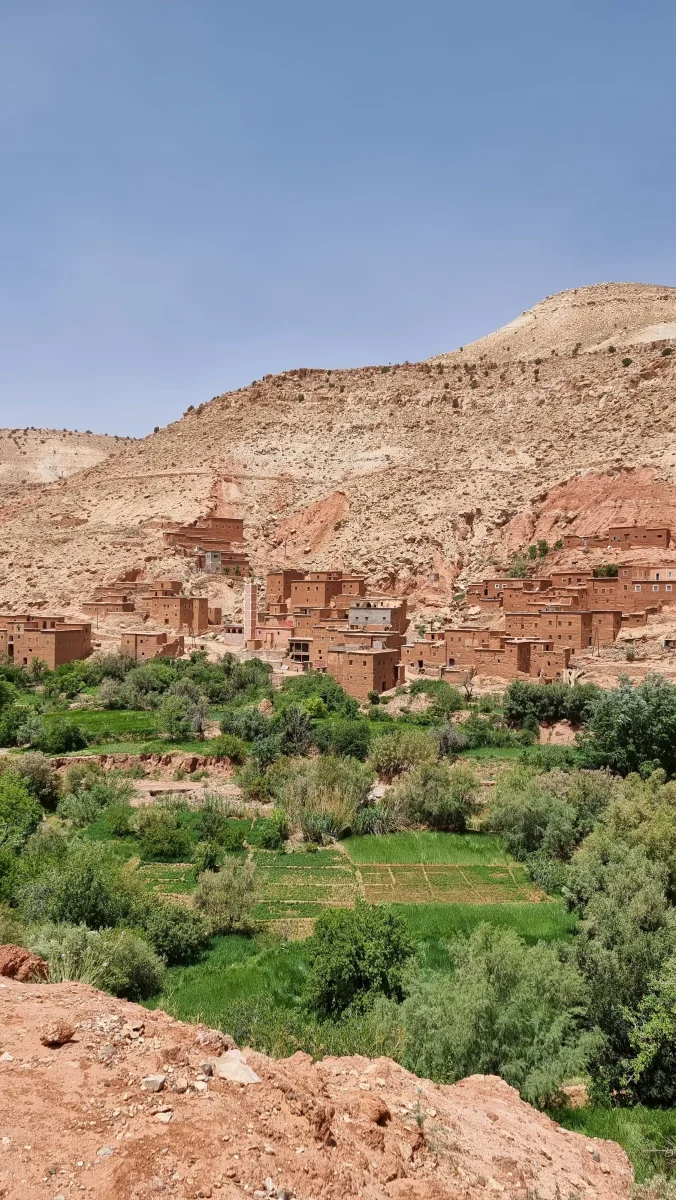
- traditional villages;
- vast, almost uninhabited spaces.
This diversity allows the region to represent very different territories on screen.
Depending on the needs of a production, southern Morocco can transform into an ancient city, a medieval village, a biblical territory, a Middle Eastern fortress, or even an entirely imaginary world.
Additionally, the favorable climate, sought-after lighting by image professionals, and several decades of experience in hosting international productions contribute to this appeal.
The Moroccan Cinematic Center notably highlights the presence of several specialized infrastructures in Ouarzazate designed for filming.
Over time, a whole local economy related to cinema has developed around technicians, artisans, set builders, extras, drivers, stunt performers, and production companies.
Atlas Studios: The Heart of Ouarzazate's Cinema
Among the most emblematic locations of this industry are the famous Atlas Studios, located near Ouarzazate.
Established in the 1980s, they have become one of the symbols of the region's cinematic identity.
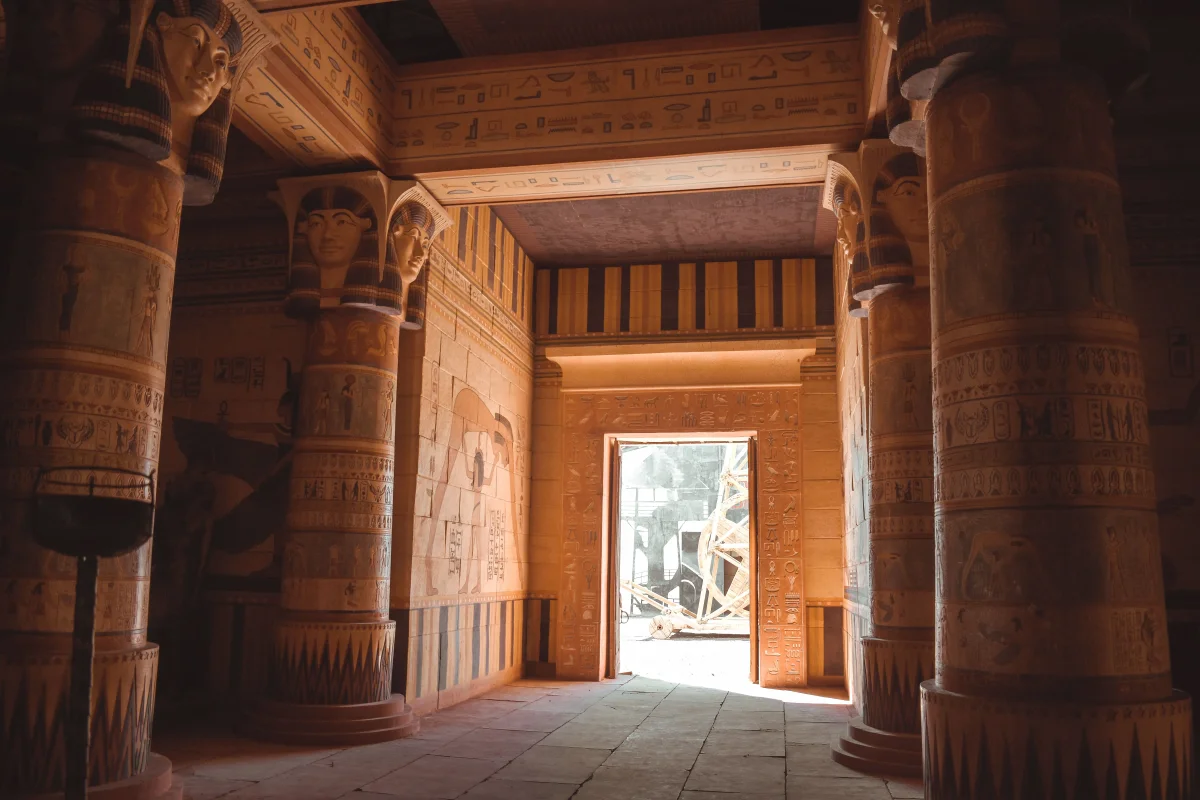
The site features numerous sets built for various productions: temples, palaces, villages, monumental squares, fortifications, and architectures inspired by different historical periods.
Walking through the studios, one can quickly transition from one universe to another.
From Ancient Palaces to Medieval Cities
Some sets evoke ancient Egypt.
Others represent temples, palaces, fortified villages, or grand historical cities.
This transformative capacity explains why Ouarzazate is particularly sought after for historical, biblical, fantasy, and epic films.
Sets are sometimes preserved after filming and then adapted or transformed for new productions.
Visiting the studios thus allows one to discover an unusual facet of Ouarzazate's contemporary heritage: a heritage built for cinema.
Gladiator and Ouarzazate
It is impossible to discuss cinema in Ouarzazate without mentioning Gladiator, directed by Ridley Scott and released in 2000.
Part of the filming took place in Morocco, particularly in the Ouarzazate region.
The landscapes of southern Morocco perfectly matched the ancient world sought for certain sequences of the film.
The global success of Gladiator also helped to enhance Ouarzazate's international image as a preferred destination for major historical productions.
Ridley Scott is indeed one of the international directors most closely associated with the recent history of filming in Morocco.
Kingdom of Heaven: Morocco Transformed into the Middle Ages
A few years after Gladiator, Ridley Scott returned to Morocco to shoot part of Kingdom of Heaven, released in 2005.
This historical epic focused on the Crusades required vast fortifications, monumental gates, and landscapes capable of evoking medieval Middle Eastern settings.
The Ouarzazate region offered precisely this combination.
Monumental sets were constructed to meet the production's needs.
Some still today illustrate the extent of the work required even before the actors arrived in front of the cameras.
Carpenters, masons, painters, sculptors, artisans, costume designers, and builders all contributed to creating these cinematic universes.
The Mummy, Prince of Persia, and Other Major Productions
The list of international productions associated with Ouarzazate and southern Morocco is particularly extensive.
Among the titles frequently linked to this cinematic history are:
- Gladiator
- Kingdom of Heaven
- The Mummy
- Prince of Persia: The Sands of Time
- Kundun
- Astérix & Obélix: Mission Cléopâtre
These films belong to very different universes.
Yet, they found in the region the landscapes, infrastructures, or sets necessary for certain scenes.
This is one of the fascinating peculiarities of Ouarzazate: the same territory can represent multiple eras and civilizations on screen.
Aït Ben Haddou: When Heritage Becomes a Film Set
About 30 kilometers from Ouarzazate lies one of Morocco's most famous heritage sites: the Ksar of Aït Ben Haddou.
Unlike sets built specifically for studios, Aït Ben Haddou is a true historical architectural ensemble.
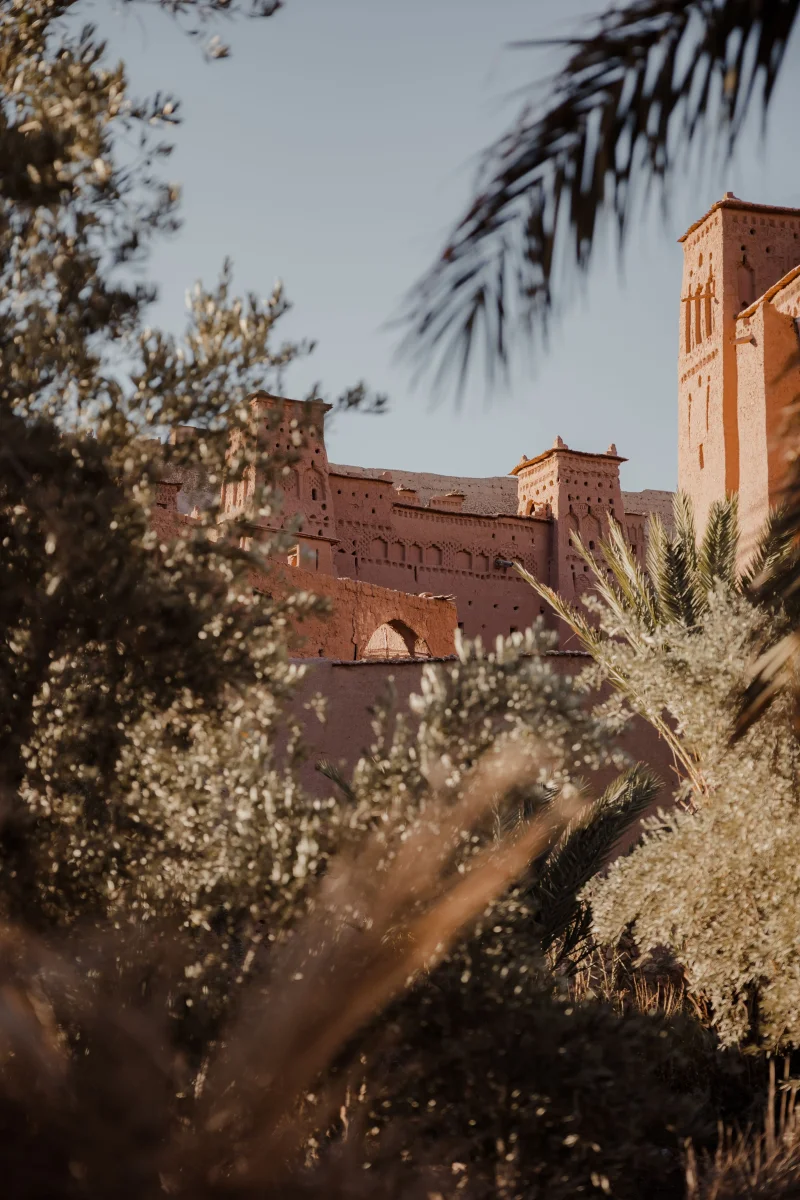
The ksar consists of earthen buildings grouped within a defensive enclosure reinforced by corner towers.
It represents a remarkable example of traditional pre-Saharan architecture in southern Morocco.
The Ksar of Aït Ben Haddou has been listed as a UNESCO World Heritage Site since 1987.
Its significance far exceeds its role in cinema history.
An Exceptional Natural Set
With its earthen constructions, decorated towers, narrow alleys, and the arid landscape surrounding it, Aït Ben Haddou has an instantly recognizable silhouette.
Filmmakers quickly understood its visual potential.
The ksar and its surroundings have thus been used as a backdrop for various international productions.
However, when visiting Aït Ben Haddou, it is important not to view the site solely as a film set.
Cinema belongs to its recent history. Its architectural heritage is much older.
It is precisely this meeting of real heritage and cinematic fiction that makes the place exceptional.
To better understand its history, earthen architecture, and heritage significance, check out our complete guide to the Ksar of Aït Ben Haddou.
For an in-depth exploration of its history — the earthen construction, its UNESCO listing, and its role on trans-Saharan trade routes — read our article Aït Ben Haddou: History of the Iconic Ksar of Southern Morocco.
Game of Thrones and Aït Ben Haddou
The cinematic influence of the region is not limited to feature films.
The series Game of Thrones also utilized several locations in Morocco.
Aït Ben Haddou notably appears in the series to represent Yunkai, one of the cities encountered by Daenerys Targaryen.
The monumental earthen architecture of the ksar perfectly matches the aesthetic sought for the cities in the series.
For fans of Game of Thrones, visiting Aït Ben Haddou thus offers a unique experience: discovering behind the fiction a true monument of Moroccan heritage.
Cinema in Ouarzazate Existed Before the Major Studios
The cinematic history of the region predates the large studio complexes that exist today.
Long before their development, the landscapes of southern Morocco were already attracting foreign directors.
Morocco notably hosted the filming of major international productions during the 20th century.
The gradual creation of specialized infrastructures then allowed Ouarzazate to transition from a mere filming location to a true cinematic production center.
This evolution explains why the city holds a special place in the history of cinema in Morocco.
Cinema Has Transformed the Local Economy
Major international productions do not come with just actors and directors.
A significant shoot can mobilize a large number of professionals.
Over the decades, residents of Ouarzazate and neighboring villages have worked as:
- extras;
- artisans;
- set builders;
- technicians;
- drivers;
- translators;
- stunt performers;
- costume designers;
- production assistants.
Some artisans use techniques similar to those employed in traditional architecture to create sets for cinema.
Carved wood, plaster, paint, earth, textiles, and metal can thus contribute to creating palaces or cities that sometimes seem centuries old in just a few weeks.
Cinema has thus become an important component of Ouarzazate's contemporary economic and cultural identity.
Real Heritage and Film Sets
One of the most interesting experiences in Ouarzazate is comparing the true monuments with the sets built for cinema.
At first glance, some constructions may seem similar.
But their functions are completely different.
A historical kasbah or ksar is the result of a social, familial, and architectural history.
A film set is designed primarily to be seen by a camera.
This difference also allows for a greater appreciation of the decorators' craftsmanship.
Some impressive buildings on screen may consist only of a facade supported by a modern structure.
Just a few kilometers away, the true earthen constructions testify to several generations of architectural know-how.
What to See in Ouarzazate Related to Cinema?
To discover the cinematic identity of the region, several stops can be combined.
Atlas Studios
The Atlas Studios allow visitors to explore different sets used or transformed over the course of productions.
The visit will particularly interest cinema enthusiasts, as well as travelers curious to understand how major historical epics are created.
Aït Ben Haddou
The Ksar of Aït Ben Haddou is a must-see stop.
It allows visitors to simultaneously discover the traditional architecture of southern Morocco and one of the most famous landscapes in Moroccan cinema.
The Landscapes Around Ouarzazate
The road between Ouarzazate, Aït Ben Haddou, and the surrounding valleys also helps to understand why so many filmmakers choose this region.
The landscapes change rapidly: mountains, valleys, desert plateaus, oases, and earthen villages succeed one another.
Even without knowing the films shot here, the cinematic potential of the territory quickly becomes evident.
The Kasbah of Taourirt
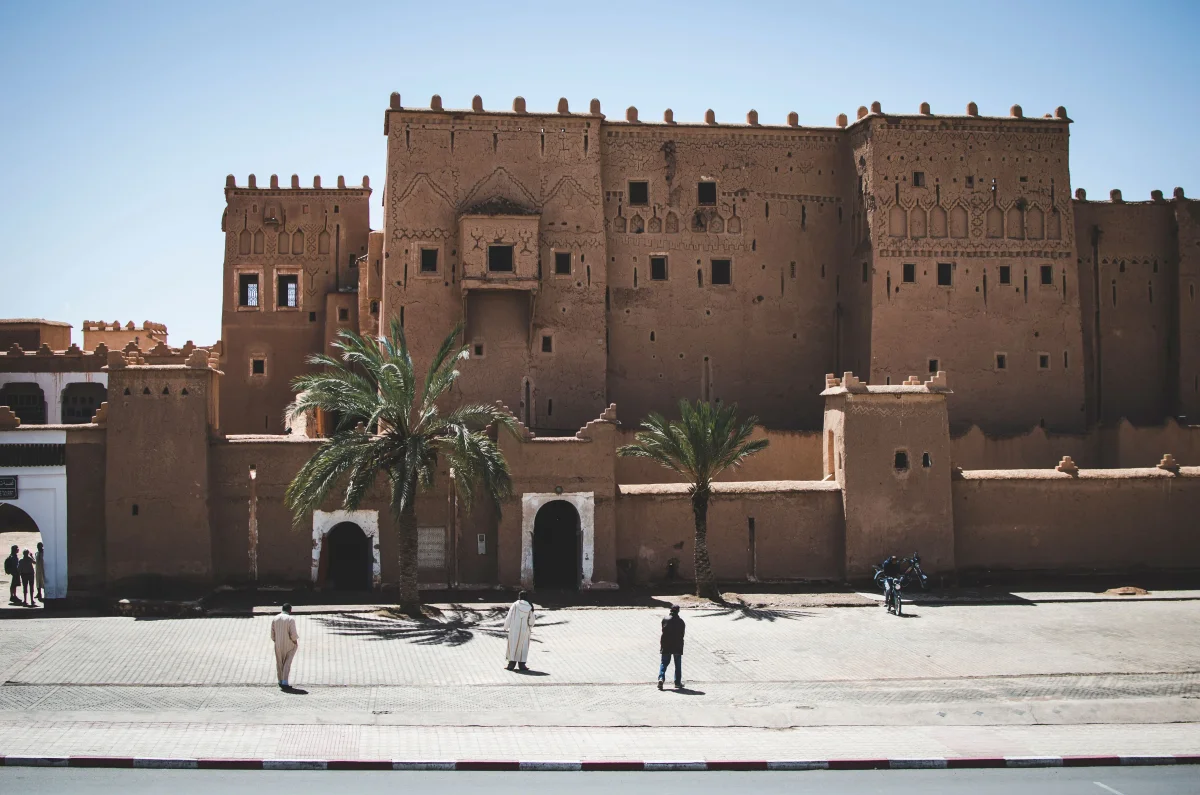
The secondary residence of the powerful Glaoui family, lords of the Atlas, the Kasbah of Taourirt contrasts with the more austere Kasbah of Telouet: its restored facades and central location in Ouarzazate have made it one of the most visited kasbahs in southern Morocco.
Classified as a historical monument, it suffered structural damage during the Al Haouz earthquake in September 2023, like several heritage sites in the region, and has since undergone consolidation work. It is recommended to check current access conditions before visiting.
Discover the Kasbah of Taourirt
The Kasbah of Tifoultoute
A few kilometers from the city center, the Kasbah of Tifoultoute overlooks the Draa Valley and the surrounding oasis from its elevated position.
Like several kasbahs in the region, it has been associated with the Glaoui family and has served as a backdrop for shoots, particularly for scenes requiring a panoramic view of the palm grove. It was also affected by the Al Haouz earthquake of 2023, like most kasbahs in the Ouarzazate region. The sunset from its terraces remains one of the most sought-after moments by visitors who can access it.
Discover the Kasbah of Tifoultoute
The Fint Oasis
About thirty minutes from Ouarzazate, the Fint Oasis offers a striking contrast to the surrounding arid landscapes: a dense palm grove, springs, and small Berber hamlets nestled in the gorges.
Far from the major tourist sites, it is a popular excursion to discover a lifestyle still preserved, between traditional agriculture and earthen dwellings.
The Old Synagogue of Ouarzazate
In the Mellah district, the old synagogue of Ouarzazate bears witness to the historical presence of Berber Jewish communities in the oases of southern Morocco, alongside the kasbahs and ksour that dominate the region's tourist image.
Several centuries old, it has been transformed into a small family museum and recalls the confessional diversity that long characterized the communities of pre-Saharan Morocco.
Discover the Old Synagogue of Ouarzazate
Ouarzazate: Much More Than a Film Set
Reducing Ouarzazate to its nickname of Hollywood of Africa would be a mistake.
Cinema is an important part of its contemporary identity, but the region also possesses a much older architectural and cultural heritage.
Kasbahs, ksour, earthen villages, and caravan routes testify to several centuries of history in this area located between the High Atlas and the pre-Saharan spaces.
Aït Ben Haddou is one of the most famous examples of this.
International cinema did not create the beauty of Ouarzazate.
It discovered it, used it as a set, and helped to make it known worldwide.
Preparing to Explore Ouarzazate
A visit to the region can easily combine cinema, architecture, and heritage.
A day could, for example, start with a tour of the studios before continuing to Aït Ben Haddou and the landscapes of the Ounila Valley.
For travelers interested in the history and architecture of southern Morocco, it is advisable to allocate enough time to visit the monuments independently of their cinematic history.
Also discover Aït Ben Haddou and its traditional architecture as well as our other Moroccan heritage sites.
Sources and References
Continue Discovering Morocco
Ouarzazate perfectly illustrates how Moroccan heritage can engage with contemporary cinema.
From the true earthen walls of Aït Ben Haddou to the monumental sets built for international productions, the region allows for a journey between history and fiction.
To continue your exploration, delve into Moroccan heritage and our travel guides and inspirations on MoroccoMuseum.