El Badi Palace: History and Heritage – A Sultan's Dream Turned Legend
Walking through the gates of El Badi Palace in Marrakech, it's hard to imagine it was once one of the most magnificent palaces in the Islamic world. Today, its vast courtyards, majestic ramparts, and immense pools tell the story of a monument that once symbolized the power of the Saadian dynasty.
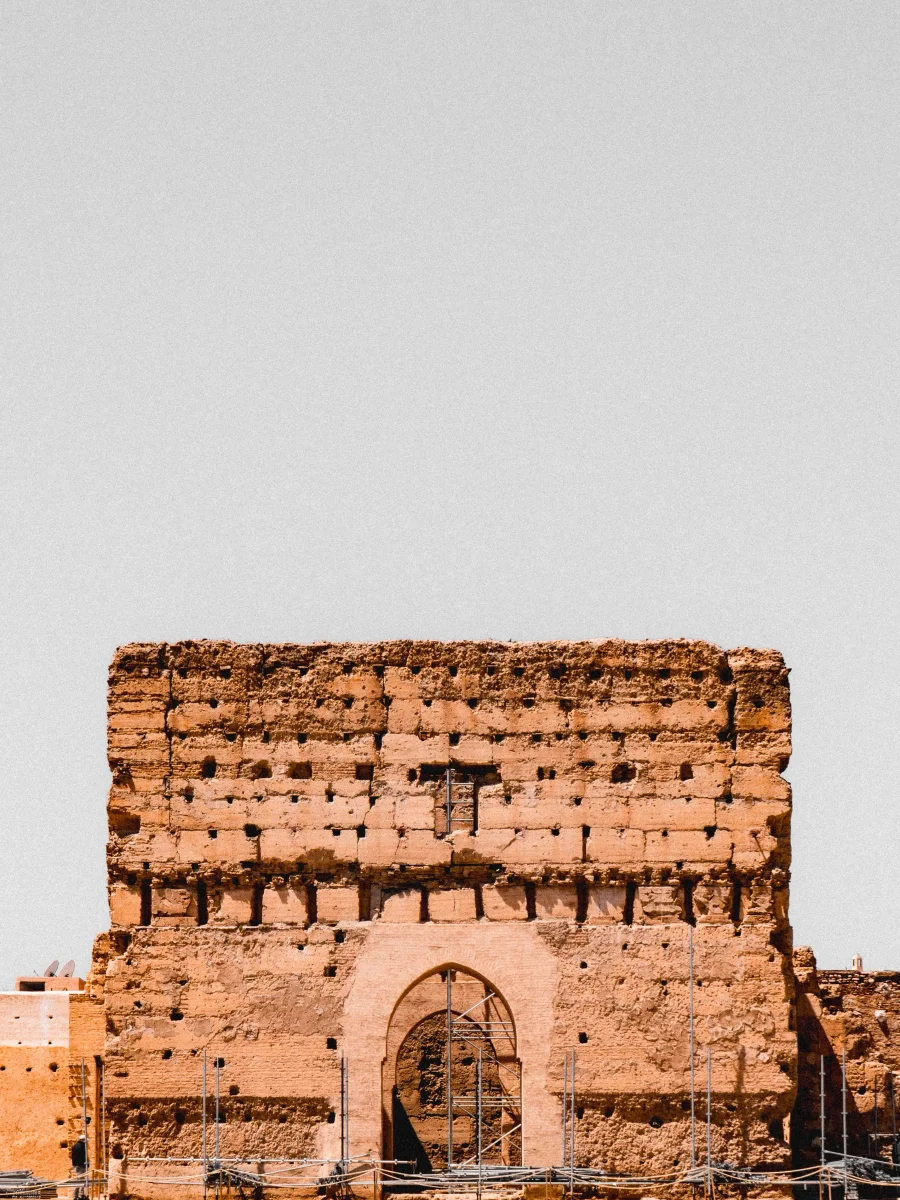
Although only the foundations of its incredible splendor remain, El Badi Palace continues to fascinate visitors from around the world. Behind its ochre earthen walls lies a story of conquest, prestige, art, and political ambition.
The Birth of an Exceptional Palace
El Badi Palace was built at the end of the 16th century by the Saadian sultan Ahmed al-Mansour, one of the most powerful rulers in Moroccan history.
Its construction began shortly after the famous Battle of the Three Kings, won in 1578 near Ksar El Kébir. This victory marked a major turning point: the Portuguese king Sebastian I died there, as did two Moroccan rulers, giving the historic battle its name.
Thanks to this victory, Ahmed al-Mansour strengthened his authority and gained considerable wealth, notably through the ransom of Portuguese prisoners. The sultan then wished to give the kingdom a palace capable of rivaling the greatest royal residences of the Mediterranean world.
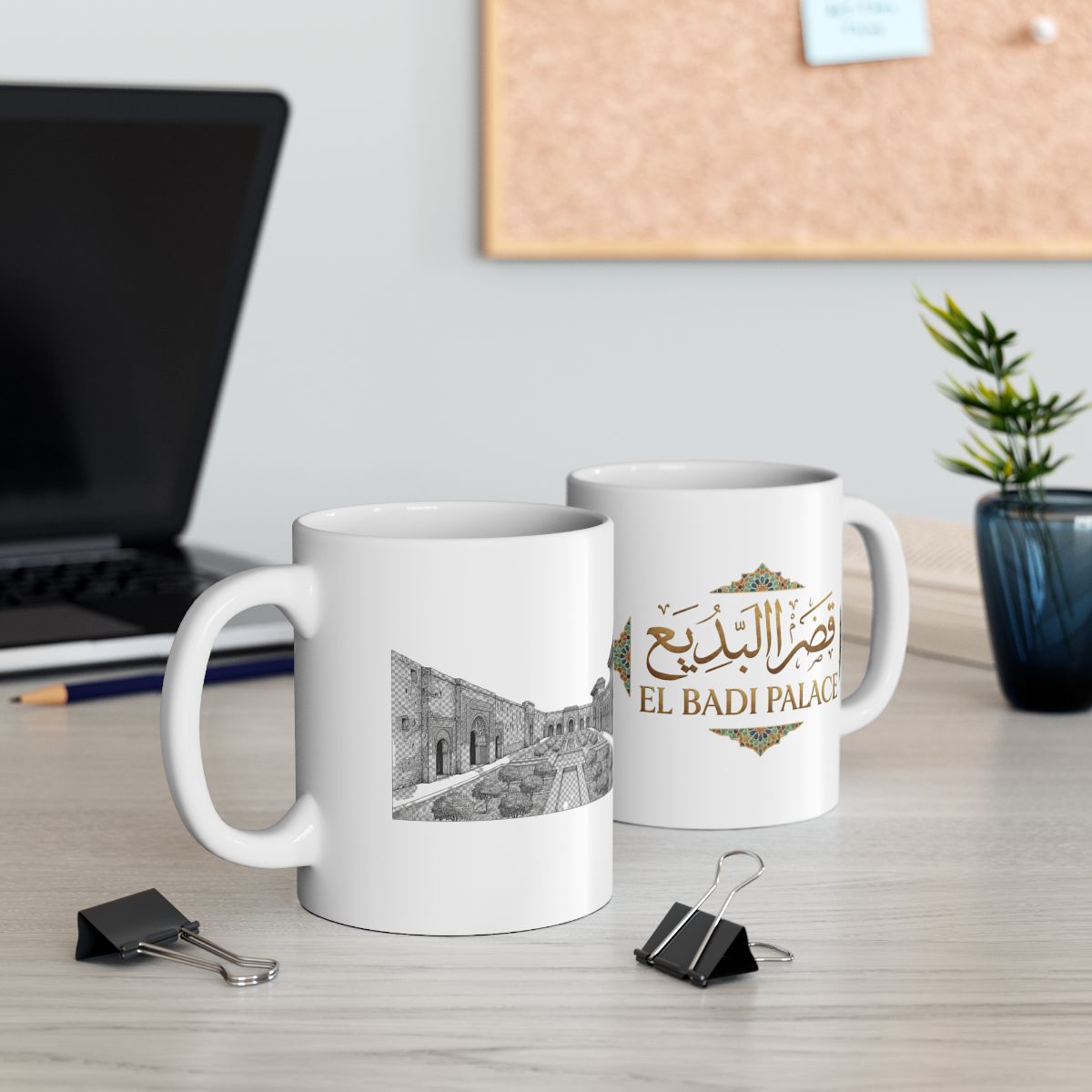
The name "El Badi", meaning the Incomparable or the Marvelous, perfectly captures this ambition.
Twenty-Five Years of Construction
Building the palace mobilized craftsmen from across Morocco, Andalusia, Europe, and sub-Saharan Africa for nearly a quarter of a century.
Ahmed al-Mansour sought not only to build a royal residence. He wanted to create a monument designed to impress foreign ambassadors, merchants, and rulers visiting Marrakech.
The finest craftsmen worked marble, cedar wood, carved stucco, zellige tilework, painted ceilings, and precious metals.
According to several historical chronicles, prestigious materials were imported from various regions of the Mediterranean world to adorn the palace. This openness to international exchange reflects the influence of Saadian Morocco at the time.
A Palace Designed to Impress
Unlike many palaces of its era, El Badi did not seek to charm through decoration alone.
Everything was designed to impress from the moment of arrival.
An immense central courtyard opens before visitors.
At its center lie vast rectangular pools reflecting the Marrakech sky.
Around these pools stretch large gardens planted with orange trees, lemon trees, and fragrant flowers.
Each space is arranged in perfect symmetry, inspired by Islamic gardens where water represents life, purity, and paradise.
Even today, despite the loss of its decorations, these monumental proportions give a sense of the palace's grandeur.
Water, at the Heart of the Project
One of the most remarkable features of El Badi Palace is its hydraulic system.
The Saadians had mastered the art of channeling water through a network of underground pipes feeding the pools, fountains, and gardens.
Beyond their aesthetic function, these installations also naturally cooled the spaces during Marrakech's intense heat.
This alliance of architecture and engineering demonstrates the high level of skill achieved by Moroccan builders in the 16th century.
A Royal and Diplomatic Residence
El Badi Palace is far more than a residence.
It became the heart of Saadian power.
Grand official ceremonies, diplomatic receptions, and royal celebrations were held there.
Ambassadors from Europe, the Ottoman Empire, or Africa discovered a palace whose splendor rivaled the most prestigious courts of their time.
Every detail contributed to this display of power: the dimensions of the courtyards, the quality of the materials, the gardens, the pools, and the richly decorated reception halls.
The palace thus became a true diplomatic tool designed to assert Morocco's place on the international stage.
Did you know?
El Badi Palace had several hundred rooms arranged around the main courtyard. Many served the administration of the kingdom, housing servants, guards, and the royal court.
The Fall of a Masterpiece
After the decline of the Saadian dynasty, the palace's fate changed radically.
At the end of the 17th century, the Alaouite sultan Moulay Ismaïl decided to reclaim much of the precious materials to build his new imperial capital in Meknes.
Marble, columns, woodwork, carved ceilings, and decorative elements were gradually dismantled and transported to Meknes.
This dismantling lasted several years.
It explains why El Badi Palace appears almost empty today.
But this emptiness also tells a story.
The immense courtyards still allow visitors to imagine the monument's past splendor.
Did you know?
The storks that nest today on the ramparts of El Badi Palace have become one of the site's symbols. Every spring, they return to build their nests atop the palace's ancient walls.
Why Visit El Badi Palace Today?
El Badi Palace is not a monument where you only admire decorations.
It's a place where you imagine.
Every pool, every terrace, and every wall evokes a vanished palace whose fame once crossed borders.
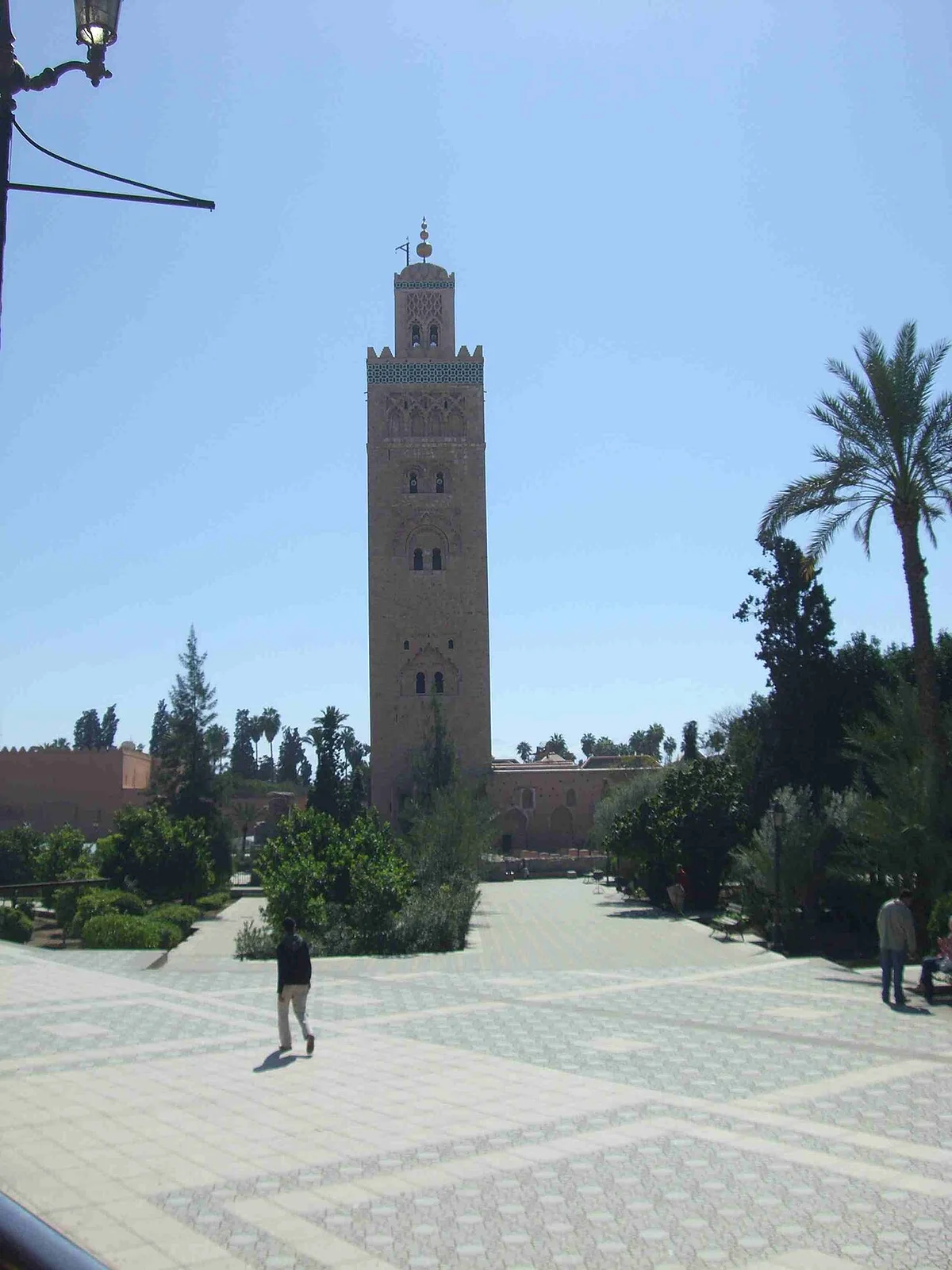
From the ramparts, visitors also enjoy magnificent views over the medina, the Saadian Tombs, the Koutoubia Mosque, and, on clear days, the High Atlas mountains.
The visit is also an opportunity to discover several exhibition spaces displaying historical objects, as well as the famous minbar of the Koutoubia Mosque, a masterpiece of Moroccan Islamic art when on display at the site.
A Visit to Combine with Marrakech's Other Treasures
Thanks to its prime location, El Badi Palace fits perfectly into a day devoted to Marrakech's historical heritage.
A few minutes' walk away are:
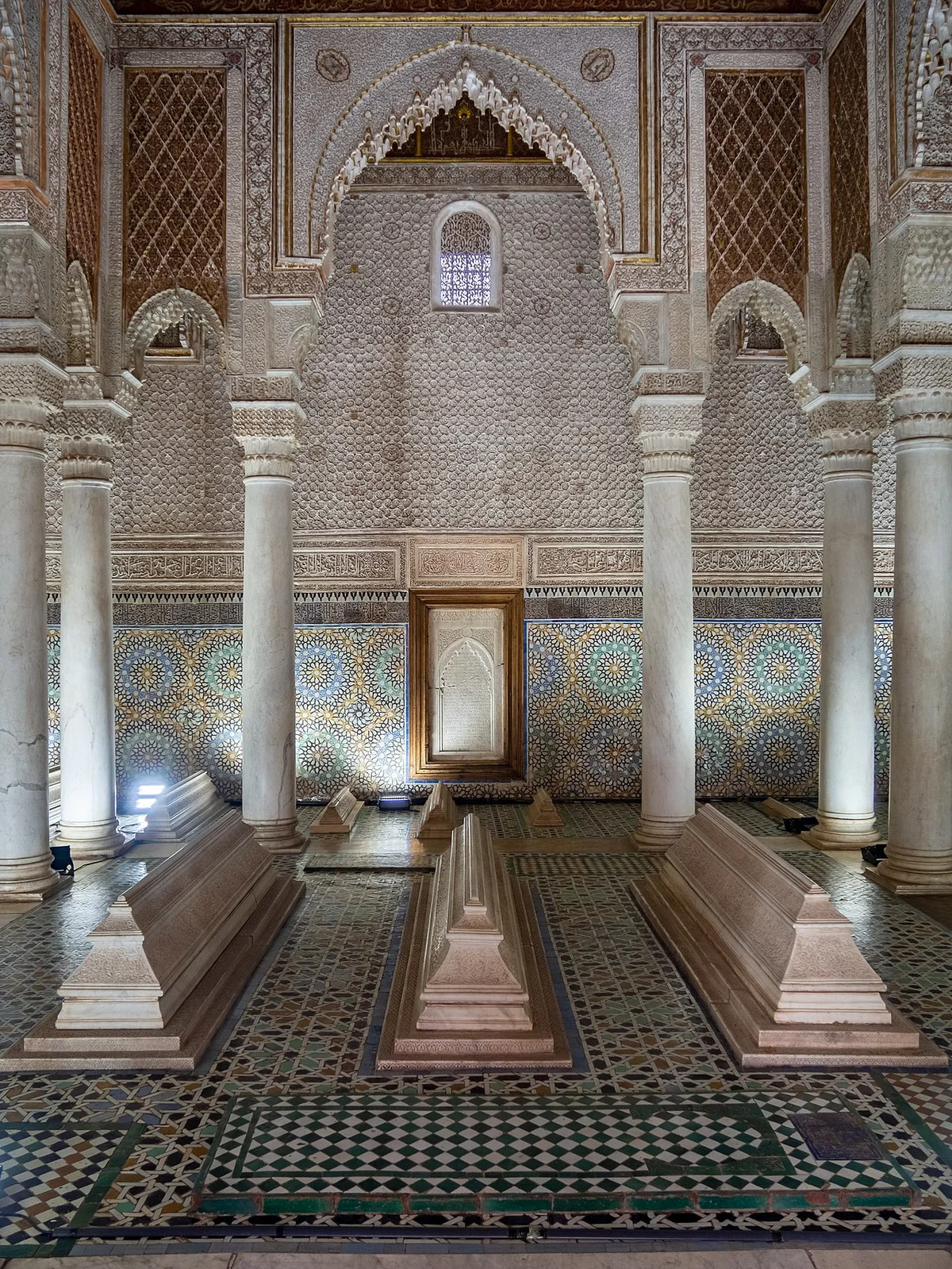
- the Saadian Tombs, a masterpiece of Saadian funerary art;
- the Bahia Palace, a remarkable 19th-century residence;
- Bab Agnaou, one of the most beautiful monumental gates in the ramparts;
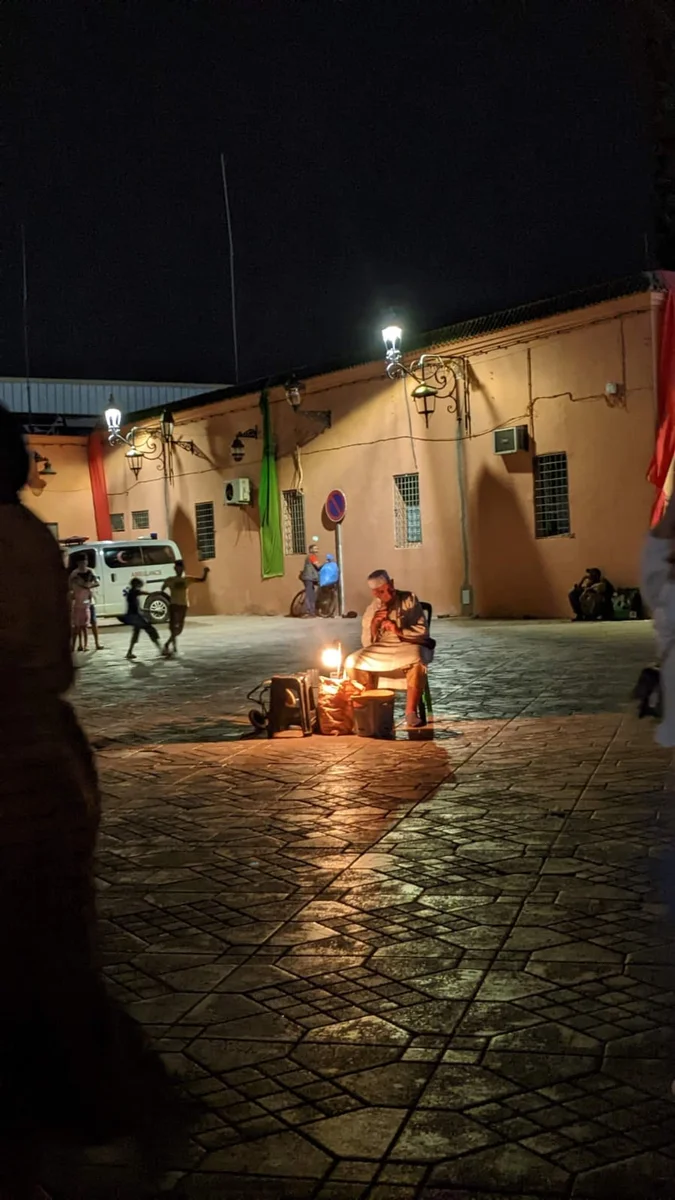
- Jemaa el-Fna square, listed as UNESCO Intangible Cultural Heritage.
These monuments help visitors better understand Marrakech's evolution through the centuries.
A Living Heritage
Today, El Badi Palace is one of Morocco's most visited monuments.
Beyond its historical interest, it regularly hosts cultural events and helps keep Moroccan heritage alive for visitors from around the world.
Every stone recalls the ambition of a ruler who wanted to give Morocco an incomparable palace. More than four centuries later, that ambition continues to impress everyone who walks through its gates.
Plan Your Visit with MoroccoMuseum
To discover El Badi Palace under the best conditions, plan your visit with MoroccoMuseum.
You'll find all the practical information, opening hours, official rates, and tips for organizing your itinerary in Marrakech.
By booking your ticket with MoroccoMuseum, you enjoy simple, quick preparation and access to exclusive content dedicated to Moroccan heritage.
Because every monument tells a story, MoroccoMuseum helps you understand, explore, and fully experience them.
Visit El Badi Palace with an e-ticket and a digital guide
To prepare your visit to El Badi Palace, book your e-ticket on MoroccoMuseum.com: electronic ticket sent by email and digital guide included (illustrated guide, narrative account and audio reading of 10 points of interest, in five languages) to explore the site at your own pace. Visiting several monuments? The skip-the-line pass brings tickets and audio guides together, with no visit date.