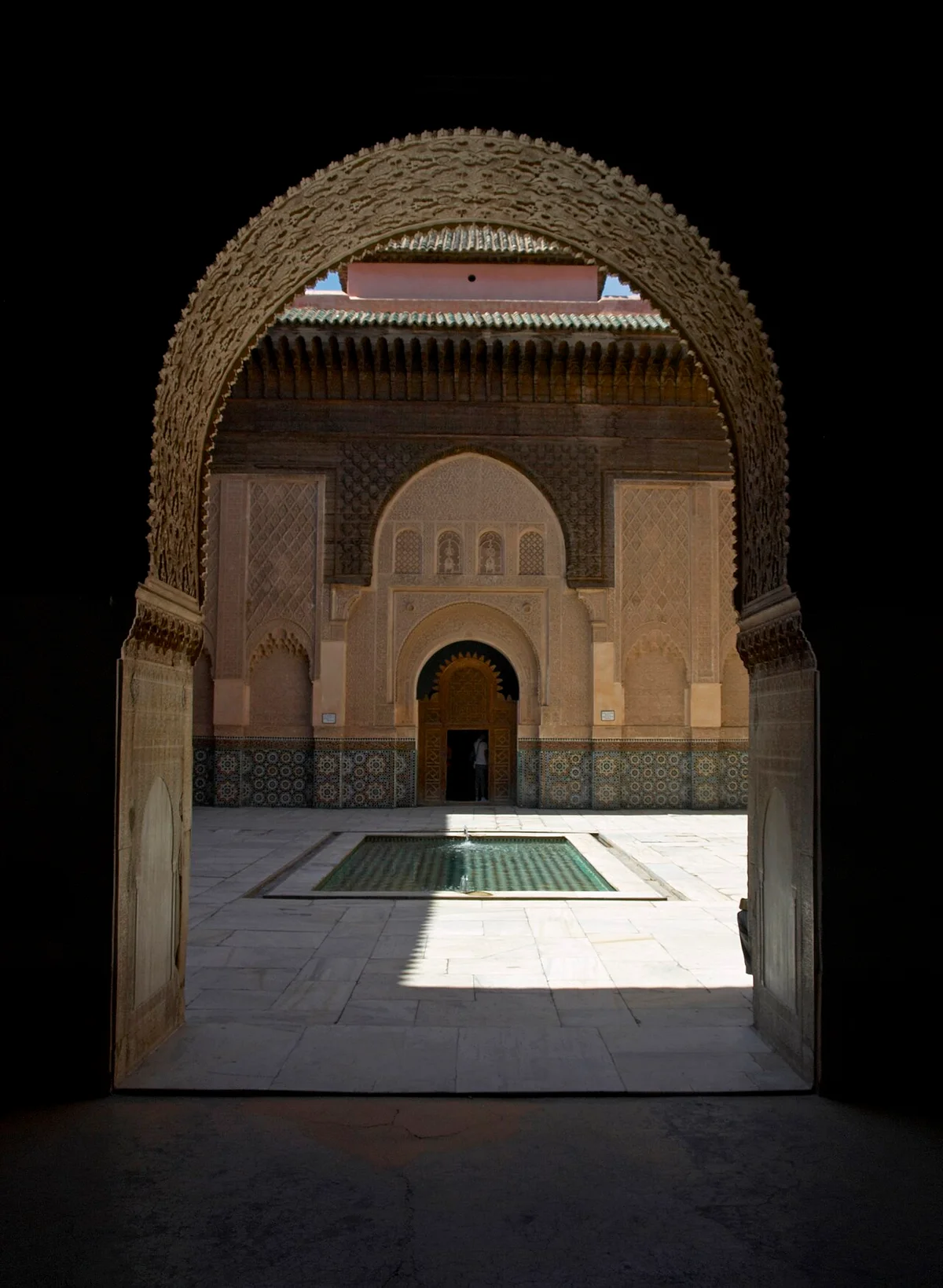
A necropolis north of the Kasbah
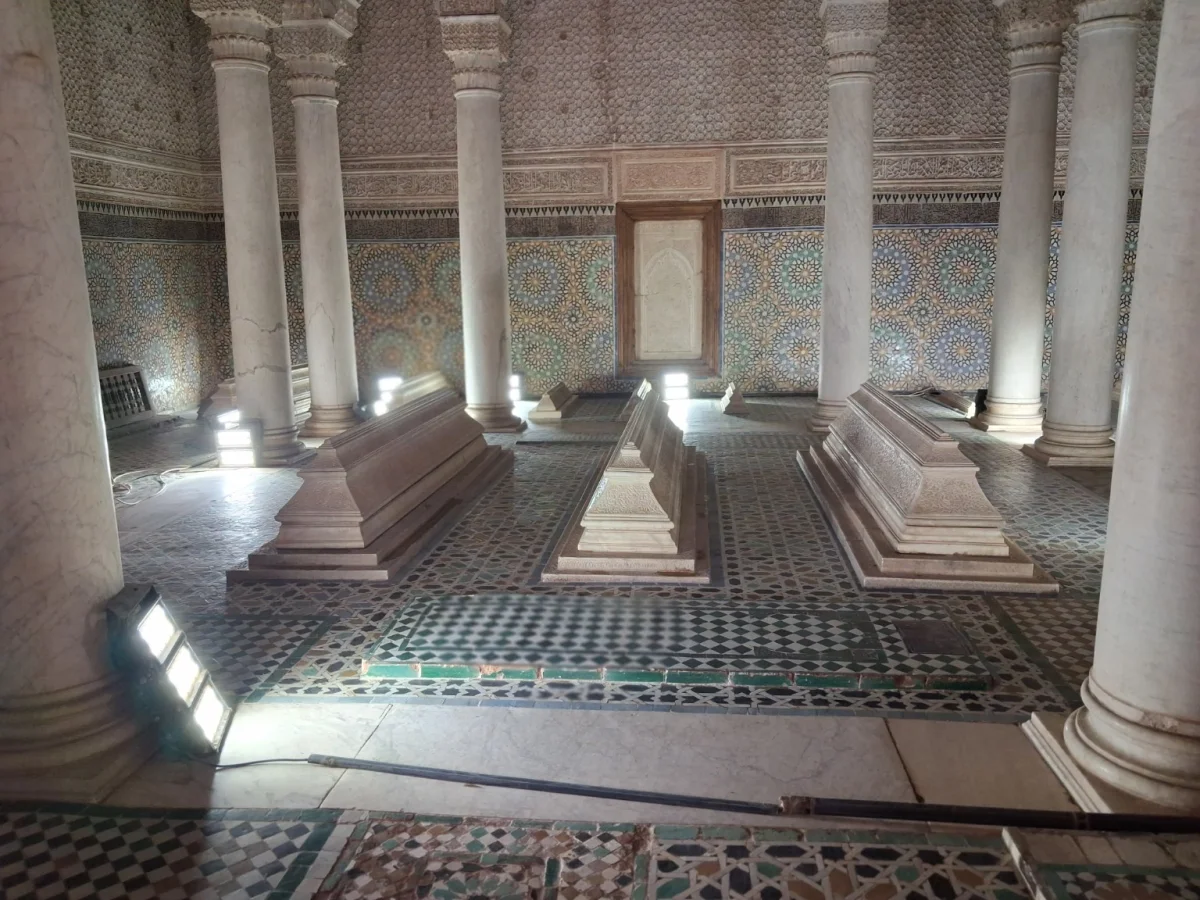
The Saadian tombs are located north of the Almohad Kasbah of Marrakech. This remarkable funerary complex has two architectural sections: the first comprises the Mihrab Hall, the Hall of the Twelve Columns and the Hall of the Three Niches; the second is known as the Koubba Lalla Messaouda.
Discovered in 1917
According to the official ticket office of the Ministry of Culture, the funerary complex was discovered in 1917 by the Service of Fine Arts and Monuments.
Who rests in the Saadian Tombs
The necropolis holds the tomb of Muhammad al-Shaykh, founder of the Saadian dynasty, those of Sultan Abdullah al-Ghalib and several members of the Saadian family, that of Ahmad al-Mansur's mother, Lalla Messaouda, and that of Sultan Ahmad al-Mansur himself, buried with several heirs. It also holds the tomb of the Alaouite sultan Moulay Al Yazid, who died in 1792.
Architecture and decoration
The tombs of this funerary complex are pyramid-shaped and decorated with marble or zellige, in a sumptuous decorative style that reflects both Marinid and Andalusian influences.
After the visit, many travellers continue to El Badi Palace, a few minutes' walk away, to extend their discovery of Marrakech's Saadian heritage.
A necropolis built in several stages
According to the official ticket office of the Ministry of Culture, the core of the necropolis was established in 1557 by Sultan Abdullah al-Ghalib to house the tomb of his father Muhammad al-Shaykh, founder of the Saadian dynasty. Abdullah al-Ghalib, who died in 1574, was buried there too, along with several members of the Saadian family. Sultan Ahmad al-Mansur buried his mother Lalla Messaouda there in 1591 and had enlargement and embellishment works carried out; he was buried there with several heirs. The necropolis also holds the tomb of the Alaouite sultan Moulay Al Yazid, who died in 1792.
Visiting the Saadian Tombs today
The tombs are located north of the Almohad Kasbah of Marrakech; the complex was discovered in 1917 by the Service of Fine Arts and Monuments. It has two sections: the Mihrab Hall, the Hall of the Twelve Columns and the Hall of the Three Niches, then the Koubba Lalla Messaouda. Restoration work is under way in several monuments in Marrakech: some parts may be temporarily closed or rearranged. Book your e-ticket in advance: the site is very popular. The digital guide, included with the ticket, tells the story of the place in five languages with an illustrated guide and an audio reading of 10 points of interest, so you can explore the mausoleums at your own pace.
→ Book my e-ticket for the Saadian Tombs