50 Questions Tourists Really Ask Before Visiting Morocco (And Answers That Will Surprise You)
Before booking a flight, there’s a step that all travelers go through.
Curiosity.
You open Google.
You type a few words.
Then the questions start rolling in.
Is Morocco a safe country?
Can you drink tap water?
Do you need to negotiate everywhere?
Is the desert right next to Marrakech?
Can women travel alone?
Are there really camels in the streets?
Some questions are perfectly legitimate.
Others make you smile.
And a few are so surprising that you really wonder if someone dared to write them down.
Yet, they all exist.
Every day, thousands of travelers from around the world search for answers before discovering Morocco.
The problem is that the internet often mixes reliable information, personal testimonies, clichés, and misconceptions.
As a result, it can sometimes be difficult to distinguish reality from fiction.
Morocco has fascinated people for centuries.
Its proximity to Europe, its millennia-old heritage, its imperial cities, mountains, desert, craftsmanship, and gastronomy feed the imagination of travelers.
But this fascination also comes with many prejudices.
Many imagine a vast desert.
Others think the entire country resembles a medina.
Some are convinced that people still primarily travel on the backs of camels.
And it’s not uncommon to see completely false information circulating, simply repeated over the years.
So, rather than letting clichés answer for you, we decided to compile in one guide the most frequently asked, most unusual, and sometimes most amusing questions that travelers ask before their departure.
Our goal is not only to reassure you.
We primarily want to help you better understand Morocco even before you set foot there.
Because a journey begins well before the airport.
It starts the day you decide to learn more about the destination that makes you dream.
Get comfortable.
You’ll probably discover that many of the questions you have… are also those of millions of other travelers.
Why Does Morocco Spark So Many Questions?
Few destinations in the world awaken as much curiosity as Morocco.
Located just a few hours by plane from many European capitals, the Kingdom seems both close… and deeply exotic.
In just a few days, it’s possible to visit a UNESCO World Heritage-listed medina, have lunch by the Atlantic Ocean, cross the Atlas Mountains, and end the day in a village where traditions have been passed down for generations.
This diversity is exceptional.
But it also fuels many questions.
How should you dress?
Do you need to negotiate?
Is Morocco really as safe as they say?
Is the desert really so close to Marrakech?
Can you travel easily without speaking Arabic?
All these questions are perfectly normal.
Preparing for a trip to a country you don’t know is always a mix of excitement and uncertainty.
The best way to travel peacefully is therefore to get informed… as long as you find reliable answers.
That’s precisely the aim of this guide.
We have gathered the most frequently asked questions by travelers, as well as those that regularly pop up on search engines, forums, and social media.
Some will make you smile.
Others will debunk misconceptions.
And several will likely help you prepare your stay with more confidence.
Let’s start with a question that many ask… sometimes even before looking at a map.
1. Is Morocco in Africa, the Middle East… or elsewhere?
[Image Gauche]
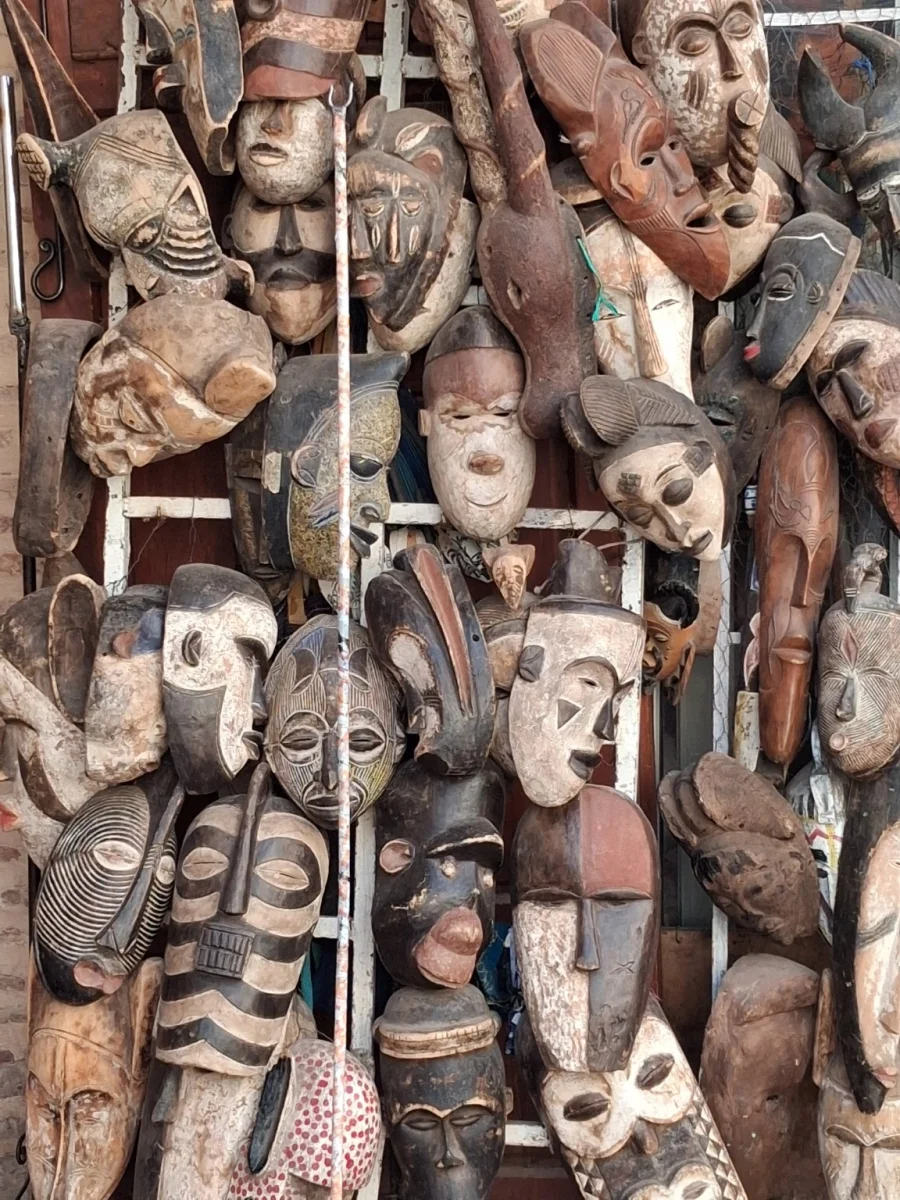 African artisanal masks)
This is probably the most surprising question in this article.
And yet, it is genuinely searched on the internet.
The answer is simple: Morocco is a country in Africa, located at the extreme northwest of the continent.
It is bordered by the Atlantic Ocean, the Mediterranean Sea, Algeria, and Mauritania. At its closest point, it is separated from Spain by the Strait of Gibraltar, a stretch of sea about 14 kilometers wide.
This geographical position explains a large part of its identity.
Morocco is African in geography, deeply Amazigh in its roots, Arab due to part of its history and culture, Mediterranean in its openness to the sea, and marked by Andalusian, African, Jewish, and European influences that can still be seen today in its architecture, cuisine, music, and craftsmanship.
It is precisely this cultural richness that sometimes confuses travelers.
People often seek to categorize Morocco into a single category.
In reality, it is a true crossroads of several worlds.
And that’s probably what makes it so fascinating.
Even before arriving, many visitors discover that Morocco ultimately resembles no other country.
2. Is Morocco a safe country for tourists?
This is probably the most important question travelers ask before booking their stay.
The answer is yes.
Every year, several million visitors from all over the world discover Morocco without encountering any major problems. Families, couples, solo travelers, or groups roam the medinas, mountains, beaches, and desert with peace of mind.
As in any tourist destination, a few common-sense rules are enough to travel calmly.
In very crowded places, it’s advisable to keep an eye on your belongings, avoid displaying valuable items, and stay aware of your surroundings. These precautions are the same as those you would take in a large European city.
Morocco has a significant tourism infrastructure. The main cities welcome international visitors every day, and tourism professionals are accustomed to catering to clients from all backgrounds.
The locals are also known for their hospitality.
It’s not uncommon for a shopkeeper, passerby, or neighbor to take a few minutes to point you in the right direction, offer you tea, or simply engage in conversation.
This friendliness is an integral part of Moroccan culture.
Of course, it can happen that some vendors are a bit more insistent than in other countries or that fake guides approach tourists in very crowded areas. In such cases, a simple "no thank you" said with a smile is usually enough to end the conversation.
By preparing your trip and exercising common sense, you will fully enjoy your stay.
Morocco is primarily a destination where one comes to discover a millennia-old history, varied landscapes, and one of the richest cultures in the Mediterranean basin.
3. Can women travel alone in Morocco

Yes, absolutely.
Every year, many female travelers explore Morocco alone, whether for a few days in Marrakech, a tour of the imperial cities, a hike in the Atlas, or a road trip along the Atlantic coast.
Like anywhere in the world, certain precautions allow for a more peaceful travel experience.
Choosing well-rated accommodation, avoiding very isolated streets late at night, using official taxis or transport apps whenever possible, and staying aware of your surroundings are habits that apply in most destinations.
A common question concerns dress code.
Morocco is a modern country where different ways of life coexist. In major tourist cities, it’s common to see visitors dressed in a wide variety of styles.
However, wearing attire that respects local culture often allows one to feel more comfortable and attract less attention, especially in small villages or places of worship.
It can happen that a female traveler receives some lingering looks or is spoken to in very touristy areas.
This doesn’t necessarily indicate bad intentions.
Moroccans are generally curious and enjoy interacting with foreign visitors. If a situation becomes uncomfortable, ignoring the solicitation and continuing on your way remains the best approach.
Many female travelers leave Morocco with the same memory.
Beyond preconceived notions, they mostly recount the encounters, smiles, exchanges over mint tea, and the generosity of the people met during their stay.
4. Do you need to speak Arabic to travel in Morocco?
Not at all.
One of Morocco’s great strengths is its linguistic diversity.
The official language is Arabic, while Amazigh is also an official language spoken in many regions of the country.
French is widely used in administrations, hotels, restaurants, shops, and tourist sites. In major cities, it is often easy to communicate in French.
English is rapidly growing, especially among younger generations and tourism professionals.
In the most frequented destinations, many guides, receptionists, restaurateurs, and shopkeepers also speak Spanish, Italian, or German.
In other words, it is entirely possible to visit Morocco without knowing a single word of Arabic.
That said, learning a few local expressions is always appreciated.
A simple "Salam," "Choukrane" to say thank you, or "La choukrane" to politely refuse is often enough to create a smile and show your interest in the local culture.
Moroccans generally appreciate visitors who make the effort to pronounce a few words in their language, even with an approximate accent.
These small gestures sometimes open the door to beautiful encounters.
5. Do you need to negotiate prices in Morocco?
Yes… but not everywhere.
Negotiation is part of Moroccan commercial traditions, especially in souks, artisan markets, and certain independent shops.
Contrary to what one might think, negotiating is not seen as a lack of respect. It’s often a friendly exchange where seller and buyer seek a price that suits both.
The goal is not to get the lowest possible price but to find a fair agreement.
In stores with fixed prices, shopping malls, supermarkets, museums, restaurants, or cafés, it is not customary to negotiate.
If you decide to haggle in a souk, take your time.
Smile.
Engage with the merchant.
Ask questions about their work.
Artisans generally appreciate visitors who are interested in their craft rather than those who only seek to lower the price.
It even happens that the conversation over a glass of tea is as enjoyable as the purchase itself.
In Morocco, commerce is often a meeting before being a simple transaction.
6. Is Morocco just a desert?
This is probably one of the most widespread misconceptions.
When Morocco is mentioned, many immediately envision endless sand dunes, caravans of camels, and oases lost in the Sahara.
The reality is quite different.
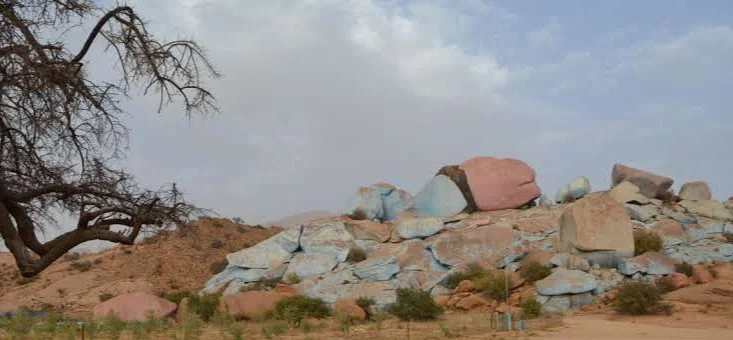
The desert holds an important place in the Moroccan imagination, but it only represents a part of the territory.
Morocco is primarily a country of incredible geographical diversity.
In the north, the Mediterranean coasts offer wild coves and turquoise waters.
To the west, the Atlantic Ocean borders hundreds of kilometers of beaches, cliffs, and seaside resorts.
In the center of the country, agricultural plains alternate with green hills.
The Atlas Mountains rise over 4,000 meters and are snow-capped for part of the year.
In some regions, it is even possible to ski in winter before heading to the desert a few hours later.
As for the Moroccan Sahara, it is mainly located in the southeast of the country.
From Marrakech, it takes several hours by road to reach the famous dunes of Merzouga or Chegaga.
So no, the desert does not start at the gates of Marrakech.
And it is precisely this diversity of landscapes that makes Morocco a unique destination.
In a single trip, you can discover mountains, valleys, beaches, forests, oases, traditional villages, and spectacular dunes.
Few countries offer such variety in such a short distance.
7. Are there really camels in the streets?
Rest assured.
You will probably not encounter a camel while waiting for your taxi in front of the Casablanca train station or at a red light in Rabat.
This image mainly belongs to postcards and films.
Camels primarily live in the desert or semi-desert regions of the south, where they are still used in some traditional and tourist activities.
You can see them during a desert excursion, near oases, or in a few rural areas.
In the city, however, the means of transport are the same as in most countries: cars, buses, trams, trains, taxis, scooters, and bicycles.
Morocco even has one of the most developed railway networks in Africa, with modern trains connecting several major cities and a high-speed line between Tangier and Kenitra, extended to Casablanca with quick connections.
The camel is part of Morocco’s cultural heritage.
But it is no longer the daily means of transport that many imagine.
8. Can you drink tap water in Morocco?
This is a question that almost all travelers ask.
Tap water is distributed and treated in most major Moroccan cities.
However, many visitors prefer to consume bottled water during their stay, mainly to avoid discomfort related to dietary changes or differences in mineral composition.
In hotels, riads, and restaurants, it’s very easy to obtain mineral water.
It is available almost everywhere at an affordable price.
If you go hiking or to more isolated areas, it’s advisable to carry enough water with you, especially during hot periods.
Beyond the water question, it’s also recommended to stay well-hydrated throughout the day.
The Moroccan climate can be particularly dry in summer, especially in the interior regions and at the gates of the desert.
Drinking regularly is often the best way to fully enjoy your trip.
9. What is the best time to visit Morocco?
Morocco can be visited year-round.
It simply depends on what you want to discover.
Spring, between March and May, is often considered one of the most beautiful seasons. The temperatures are pleasant, the landscapes are green, and the days are ideal for visiting cities, hiking in the Atlas, or exploring valleys.
Autumn, from September to November, also offers excellent conditions. The summer heat gradually decreases, and tourist sites are generally more comfortable to visit.
Summer can be very hot in inland cities like Marrakech, Fès, or Meknès, where temperatures sometimes exceed 40 °C. In contrast, coastal cities like Essaouira, Rabat, or Tangier benefit from a more temperate climate thanks to the influence of the ocean.
Winter also holds beautiful surprises.
Days often remain mild in the south, while the Atlas Mountains are covered in snow. It is then possible to go from a snowy landscape to a desert oasis in just a few hours by road.
There is therefore no single good time to discover Morocco.
Each season reveals a different face of the country.
10. Is Morocco an expensive country for tourists?
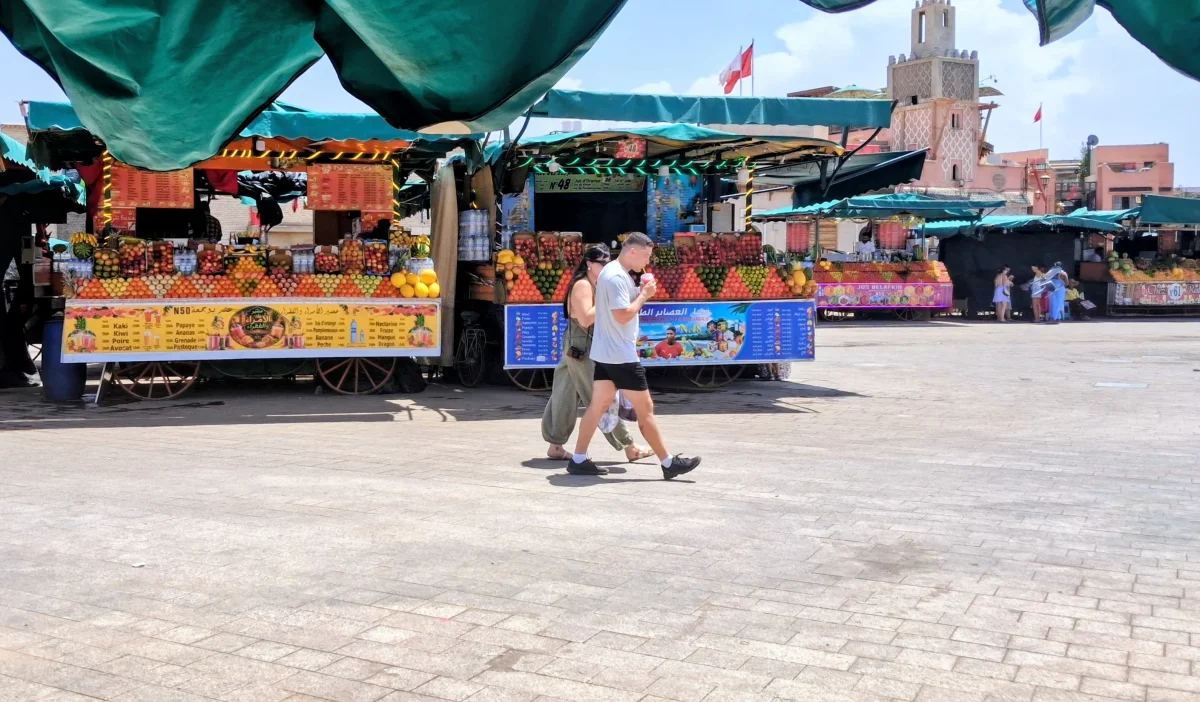
Compared to many European destinations, Morocco remains a place that offers excellent value for money.
Whatever your budget, it’s possible to organize a stay that suits your desires.
Budget travelers will easily find comfortable accommodations, local restaurants, and accessible means of transport.
Conversely, those looking for a high-end experience will discover luxurious riads, five-star hotels, spas, gourmet restaurants, and exclusive experiences.
This diversity allows Morocco to cater to both backpackers and families or travelers seeking premium services.
Prices naturally vary according to the season, city, and level of comfort sought.
Very popular destinations, like Marrakech during school holidays or year-end celebrations, generally display higher rates.
By booking in advance, however, it is possible to take advantage of excellent offers throughout the year.
11. How to get around easily in Morocco?
Traveling in Morocco is now much simpler than one might think.
The country has a modern transport network connecting most major tourist destinations.
The train is one of the most comfortable ways to connect cities like Tangier, Rabat, Casablanca, Meknès, Fès, or Marrakech.
Buses also serve a very large number of cities and villages, including regions less accessible by rail.
To explore the mountains, valleys, or small villages, renting a car offers more freedom.
The main roads are generally in good condition and allow you to discover beautiful landscapes at your own pace.
In cities, taxis remain widely used.
Depending on the destination, there are also trams, modern buses, or transport apps.
For visitors who simply want to enjoy their stay without worrying about organization, it is also possible to book guided excursions or private transfers.
The ideal mode of transport thus mainly depends on your itinerary.
12. Are Moroccans really that welcoming?
If there’s one memory that many travelers keep from Morocco, it’s not just a monument or a landscape.
It’s a meeting.
Hospitality is one of the deeply rooted values in Moroccan culture.
Welcoming a guest is often considered a true pleasure.
It’s not uncommon for a shopkeeper to offer you a glass of tea, for a local to take the time to explain a route, or for a spontaneous conversation to turn into an engaging exchange about daily life.
Of course, as in all countries, each person is different.
But the majority of visitors leave with the feeling of having been welcomed with warmth and kindness.
A smile plays an important role in daily interactions.
A few polite words and a respectful attitude generally suffice to create a pleasant contact.
Traveling in Morocco is not just about visiting monuments.
It’s also about discovering a way of life where sharing is essential.
13. Can you pay by credit card everywhere in Morocco?
Credit cards are now widely accepted in hotels, riads, restaurants, large shops, shopping centers, and most tourist sites.
In major cities like Marrakech, Casablanca, Rabat, Tangier, or Fès, you will also find many ATMs.
However, if you plan to visit villages, traditional markets, or small independent shops, it is advisable to always have some cash on you.
Some artisan shops, taxis, or small cafés do not always accept card payments.
The most practical approach is therefore to combine both: use your card when possible and keep some dirhams for daily expenses.
14. What currency is used in Morocco?
The official currency is the Moroccan dirham (MAD).
In shops, restaurants, hotels, and museums, prices are displayed in dirhams.
Exchange offices are available at airports, city centers, and major tourist areas.
It is also possible to withdraw dirhams directly from ATMs with an international bank card.
Contrary to some misconceptions, it is not necessary to arrive with a large sum of cash.
Most travelers simply withdraw money once on site, according to their needs.
15. Can you visit Morocco during Ramadan?
Yes.
And it can even be a particularly enriching experience.
Ramadan is an important month in the Muslim tradition. During this period, part of the population fasts from dawn to sunset.
For visitors, the main tourist sites generally remain open, as do many hotels and restaurants catering to international clientele.
The atmosphere does change slightly.
The streets are often quieter in the afternoon, then regain a special liveliness at the time of breaking the fast.
At nightfall, families gather around the table, cafés gradually fill up, and cities take on a warm and friendly atmosphere.
For travelers, it’s an opportunity to discover an authentic facet of Moroccan daily life.
It’s simply recommended to be discreet and respectful towards those who are fasting, especially in public spaces.
16. How should one dress in Morocco?
There is no single rule.
Morocco is a modern country where clothing styles are very varied.
In major tourist cities, you will encounter both locals in traditional attire and others dressed very contemporarily.
For visitors, comfortable attire that respects local culture is generally the best option.
In medinas, villages, or religious sites, clothing that covers shoulders and knees often allows one to feel more at ease.
On beaches or in hotels with a pool, swimwear is naturally accepted in designated areas.
The goal is not to follow a strict obligation but simply to adapt to the context.
As in any country, observing local habits is often the best guide.
17. Do Moroccans speak French?
Yes, and it’s one of the reasons why Morocco is a particularly appreciated destination for French-speaking travelers.
French is very present in daily life.
It is used in many administrations, in a large part of shops, hotels, restaurants, and the tourism sector.
This greatly facilitates exchanges with visitors.
In some regions, especially in the north of the country, Spanish is also widely understood.
English, meanwhile, is rapidly developing, especially among younger generations and tourism professionals.
Even if you don’t speak either Arabic or Amazigh, you can generally communicate without difficulty during your stay.
18. Is Morocco suitable for family travel?
Absolutely.
Morocco is a destination that attracts many families thanks to the diversity of its activities.
Children often enjoy walks in gardens, camel rides in the desert, beaches, excursions in the mountains, or traditional shows.
Parents, on their part, benefit from an exceptional historical heritage, renowned gastronomy, and accommodations suitable for all budgets.
Moroccans place great importance on family.
Children are generally welcomed with kindness in restaurants, riads, or shops.
Traveling with young children is therefore quite feasible, provided you adapt the pace of visits and plan breaks during the hottest days.
Morocco offers an interesting balance between cultural discovery, nature, and moments of relaxation, making it a favored destination for travelers of all ages.
19. Can you visit mosques in Morocco?
This is a question that many travelers ask before their departure.
Morocco has some of the most beautiful mosques in the world, admired for their architecture, mosaics, sculpted ceilings, and majestic courtyards.
However, most mosques are reserved for Muslim worshippers.
There is, however, a famous exception: the Hassan II Mosque in Casablanca.
Thanks to guided tours organized at certain times of the day, non-Muslim visitors can discover the interior of this exceptional monument and better understand its architecture and history.
For other mosques, it is often possible to admire the facades, minarets, monumental doors, or surrounding squares.
These buildings are fully part of Morocco’s cultural heritage, even when they are not accessible to the public.
20. Is Moroccan cuisine very spicy?
Contrary to a widely held belief, Moroccan cuisine is primarily flavorful.
It uses a wide variety of spices like cumin, ginger, turmeric, paprika, saffron, and cinnamon.
These spices mainly serve to enhance flavors rather than make dishes spicy.
Very spicy dishes are relatively rare.
If you enjoy mild cuisine, you will easily find your happiness.
Among the most well-known specialties are tagine, couscous, pastilla, harira, skewers, Moroccan salads, and pastries with honey and almonds.
Each region also has its own recipes and culinary traditions.
Discovering Morocco is also about traveling through its flavors.
21. Is mint tea really served everywhere?
Yes, or almost.
Mint tea is much more than just a drink.
It represents a true symbol of Moroccan hospitality.
In many families, offering a glass of tea is a way to welcome a guest.
You can enjoy it in cafés, restaurants, riads, guesthouses, or at locals’ homes.
Its preparation often follows a true ritual.
The tea is poured from a height to create a slight froth on the surface, a gesture that has become emblematic of Moroccan art of hospitality.
Even if you are not a tea lover, accepting a glass when offered is often seen as a moment of conviviality and sharing.
22. Are electrical outlets the same as in Europe?
Yes, in most cases.
Morocco primarily uses type C and E plugs, identical or very similar to those used in many European countries.
The electrical voltage is 220 volts.
Travelers coming from France, Spain, Belgium, Germany, or Italy generally do not need an adapter.
If you are traveling from a country using a different plug standard, it may be useful to bring a universal adapter.
23. Does the internet work well in Morocco?
Yes.
Morocco has a modern internet network covering the vast majority of the territory.
Hotels, riads, cafés, restaurants, and many public spaces offer Wi-Fi connectivity.
Mobile coverage is also very good in major cities and along major roadways.
In the most isolated mountainous regions or in the heart of the desert, the network may naturally be less reliable.
For travelers needing a constant connection, it is very simple to buy a local SIM card or a compatible eSIM depending on their phone.
This allows for internet access throughout the stay at generally affordable costs.
24. Is Morocco a good choice for a first trip to Africa?
Without a doubt.
For many travelers, Morocco serves as an excellent gateway to the African continent.
The country offers developed tourist infrastructure, an efficient transport network, a great diversity of accommodations, and exceptional cultural richness.
It is both exotic and relatively easy to navigate.
In just a few days, you can discover historic medinas, palaces, gardens, mountains, beaches, traditional villages, and desert landscapes.
This diversity allows for a remarkable glimpse into several facets of the country during a single trip.
Many visitors who discover Africa for the first time choose Morocco precisely for this combination of authenticity, accessibility, and heritage richness.
And many leave with just one desire: to return to explore a new region.
25. How many days should you plan to visit Morocco?
The answer naturally depends on your desires.
Morocco is a country with many faces, and each region deserves time.
For a first discovery, a week is already enough to visit one or two major cities, discover several iconic monuments, and enjoy the atmosphere of the medinas.
With ten to fifteen days, it becomes possible to explore very different landscapes: imperial cities, Atlas Mountains, Atlantic coast, desert, oases, and traditional villages.
Travelers with three weeks or more can consider a true road trip across the country and discover lesser-known but equally fascinating regions.
One thing is certain: few visitors feel they have seen everything during their first stay.
Morocco often makes you want to return.
26. Are cats really everywhere in Morocco?
Yes.
And it’s often one of the first things that surprises visitors.
In medinas, fishing ports, gardens, or small alleys, it’s common to encounter cats.
Over the years, they have become part of the urban landscape.
Locals generally maintain a benevolent relationship with them.
Many are fed by shopkeepers, residents, or local associations.
You may notice that they seem particularly relaxed, lounging in the shade of an old door, on a wall, or in the sun in the middle of a bustling square.
For many travelers, these cats have now become part of Morocco’s charm.
They even appear in countless travel photographs.
27. Can you drink alcohol in Morocco?
Yes.
Even though Morocco is a predominantly Muslim country, it is possible to consume alcohol in many hotels, restaurants, bars, tourist establishments, and certain authorized shops.
However, the availability varies depending on the cities and neighborhoods.
In more traditional places or small villages, it can sometimes be more challenging to find.
As everywhere, it’s important to consume in moderation and respect local customs.
Morocco is primarily known for its hospitality, gastronomy, fresh fruit juices, and its famous mint tea, which remain the country’s most emblematic beverages.
28. Are public restrooms easy to find?
In major cities, shopping centers, museums, restaurants, and major tourist sites, it is generally easy to find restrooms.
However, during excursions in more rural areas or on long journeys, they may be less frequent.
It’s advisable to take advantage of stops in cafés, restaurants, or gas stations when the opportunity arises.
Many travelers also carry a small pack of tissues or hand sanitizer, a simple precaution that can be useful during a trip, regardless of the country visited.
29. Are photo-taking allowed everywhere?
Morocco is a particularly photogenic country.
Between the medinas, palaces, kasbahs, mountains, beaches, and colorful souks, there are countless opportunities to take out your camera.
In the vast majority of public places, taking photos poses no problem.
However, it is advisable to ask for permission before photographing a person, especially in villages or markets.
This simple gesture is generally very appreciated.
Some museums, monuments, or exhibitions may also have specific rules regarding photos or the use of flash.
A few seconds to inquire can prevent any misunderstanding.
30. Do Moroccans like tourists discovering their culture?
The answer is almost always yes.
Moroccans are generally proud of their heritage, traditions, and history.
They appreciate visitors who take the time to discover their cuisine, craftsmanship, architecture, or a few words of their language.
Asking questions with curiosity and respect is often the best way to engage in conversation.
You will quickly discover that behind every monument, every recipe, or every artisanal object lies a story passed down through generations.
It’s this human richness that often leaves a lasting impression on travelers long after their return.
Beyond landscapes and monuments, it’s the encounters that make a trip to Morocco truly unforgettable.
31. Can you visit Morocco without renting a car?
Absolutely.
Unlike some destinations where a car is essential, Morocco can be easily explored using public transport, taxis, and organized excursions.
Major cities are well connected by train and buses, making it comfortable to travel from one region to another.
Once on site, taxis facilitate urban travel, while many agencies offer day trips to mountains, valleys, waterfalls, or the desert.
A car becomes particularly interesting if you wish to explore more isolated regions at your own pace.
But for a first trip, it is far from essential.
32. Is it easy to eat vegetarian or vegan in Morocco?
Yes, more than one might think.
Moroccan cuisine places a large emphasis on vegetables, legumes, grains, and fresh fruits.
Many traditional dishes are naturally vegetarian or can be prepared without meat.
Moroccan salads, vegetable tagines, vegetarian couscous, or certain soups are excellent options.
In major cities, it is also becoming increasingly easy to find restaurants offering vegan cuisine or catering to various dietary needs.
If you have an allergy or a specific constraint, it’s always best to mention it before ordering.
Restaurateurs are generally attentive and do their best to accommodate.
33. Can you use a drone in Morocco?
This question comes up regularly.
The use of drones is subject to specific regulations.
It is therefore strongly recommended to inquire with the relevant authorities before bringing a drone on your trip.
In some cases, prior authorization may be required.
To avoid any difficulties upon arrival or during your stay, it’s best to check the rules in effect before your departure.
If your goal is simply to take beautiful photographs, a camera or a modern smartphone will already allow you to capture exceptional images of Moroccan landscapes.
34. Are souks really labyrinths?
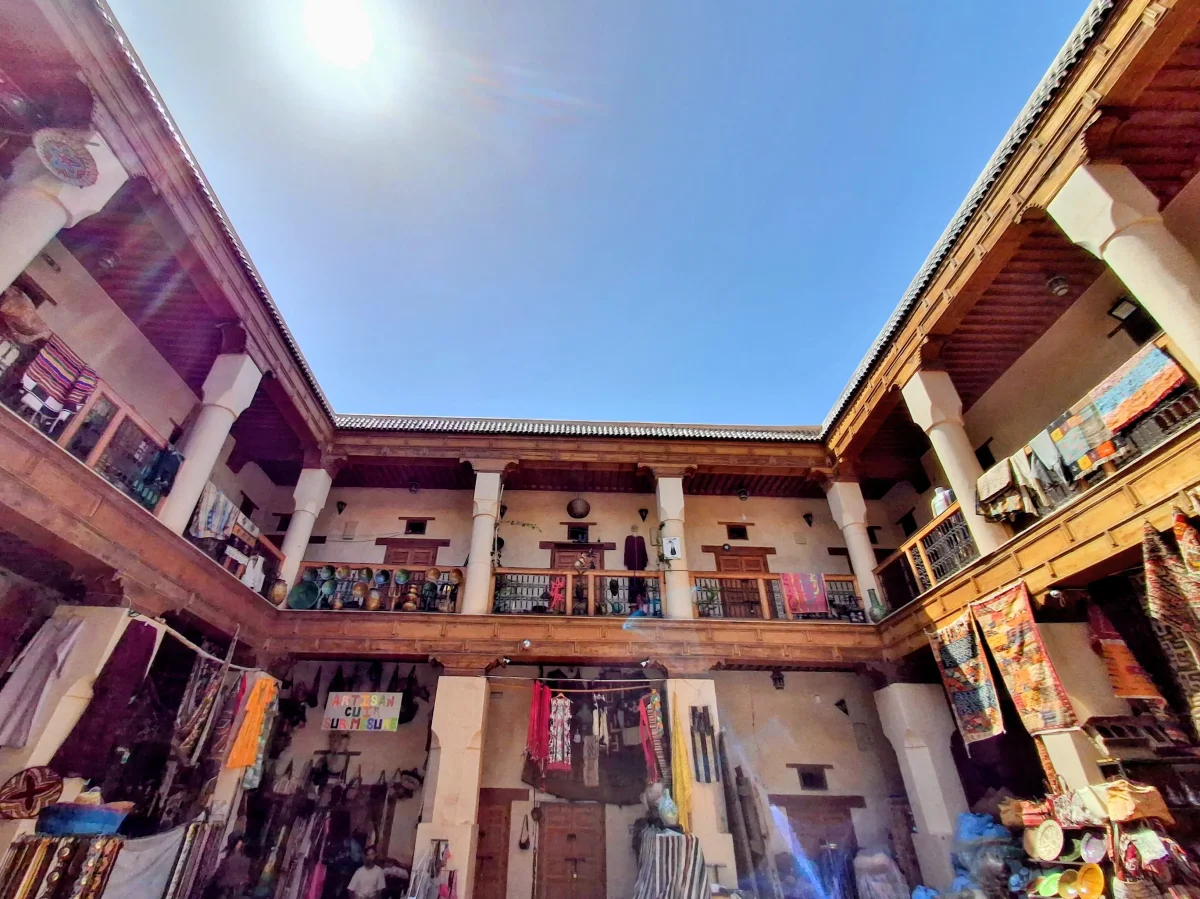
For a visitor discovering them for the first time…
Yes.
Historical medinas were built long before modern urban plans appeared.
Their narrow alleys, covered passages, small squares, and workshops form a true maze where it’s easy to lose your bearings.
But that’s precisely what makes them charming.
Behind every alley may hide an ancient fountain, an artisan’s workshop, a discreet palace, or a small family shop.
Instead of trying to control everything, sometimes let your curiosity guide you.
Getting lost for a few moments in a Moroccan medina often becomes one of the most beautiful travel memories.
35. Is Morocco a good destination for history enthusiasts?
Without a doubt.
Morocco boasts an exceptional heritage spanning several millennia.
From the Roman ruins of Volubilis to the imperial medinas of Fès, Marrakech, Meknès, or Rabat, each era has left its mark.
The country also features magnificent palaces, kasbahs, fortresses, medersas, historical gardens, museums, and numerous UNESCO World Heritage sites.
Each monument tells a part of the Kingdom’s history.
Exploring Morocco is like traversing a true open-air history book.
36. Why are Moroccan doors so famous?
It’s impossible to visit a medina without noticing their colors, carvings, and details.
Moroccan doors are much more than just entrances.
They reflect the craftsmanship of artisans and often represent the identity of the house or building they protect.
Carved wood, wrought iron, zelliges, chiselled plaster, or geometric patterns: each region has its own style.
For many travelers, these doors quickly become a must-photograph subject.
They symbolize the elegance of Moroccan architecture.
37. Is it easy to walk in the medinas?
Yes, but you need to be ready to forget a bit about modern city habits.
Moroccan medinas were designed at a time when cars did not exist. The alleys are often narrow, paved, and exclusively reserved for pedestrians.
This is precisely what gives them all their charm.
You move slowly, at the pace of the shops, artisans, the scents of spices, and the calls of merchants.
In some alleys, you may also encounter bicycles, scooters, or carts transporting goods.
Staying aware of your surroundings is usually enough to navigate without difficulty.
Instead of trying to go fast, take the time to observe.
A medina is discovered more with the eyes than with a map.
38. What souvenirs should you bring back from Morocco?
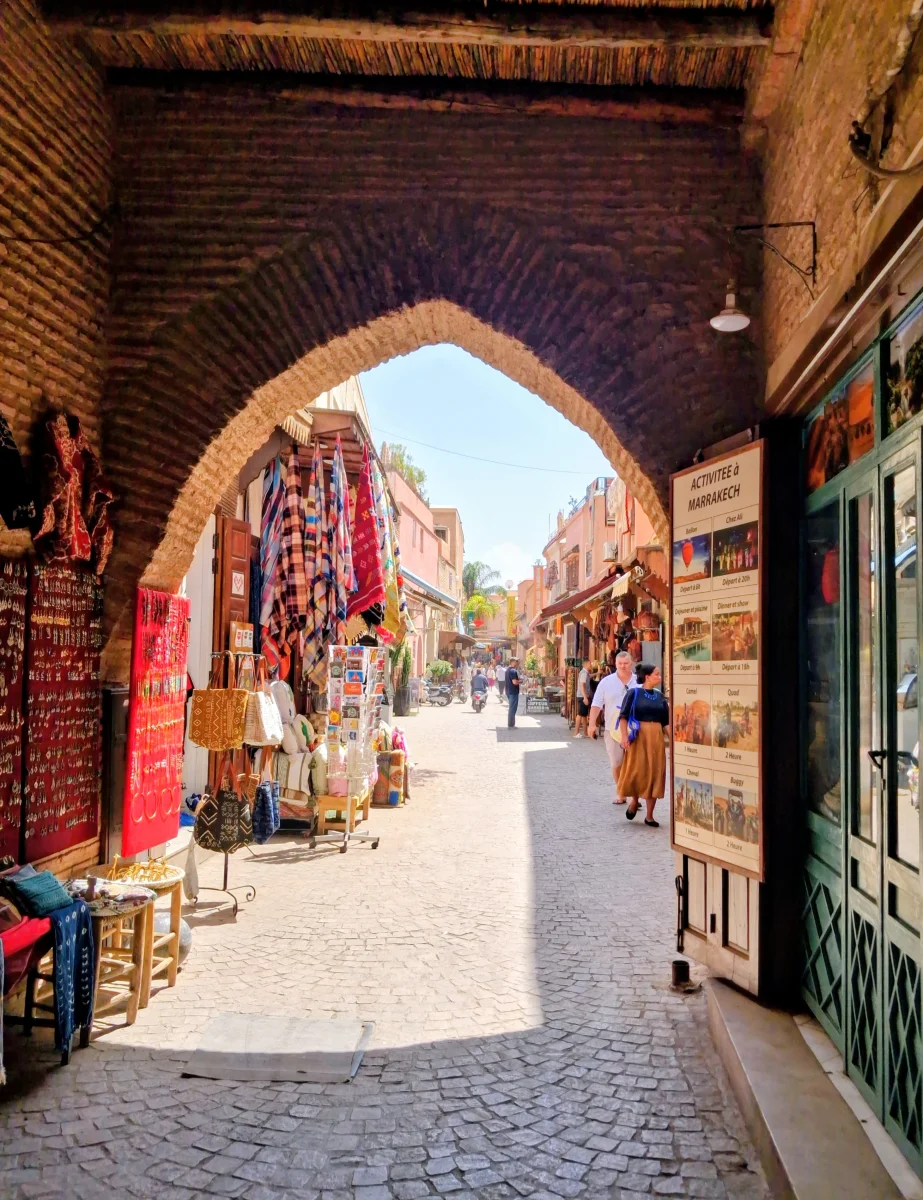
Morocco is a true paradise for craft lovers.
Each region has its specialties, often made using techniques passed down through generations.
Among the most appreciated souvenirs are handwoven carpets, pottery, leather goods, lanterns, baskets made from natural fibers, handcrafted jewelry, argan oil products, spices, and decorated ceramics.
Buying directly from an artisan often allows you to better understand their work and give more meaning to your purchase.
Beyond the object itself, it’s also a way to support local craftsmanship.
39. Are monuments accessible to people with reduced mobility?
The situation varies by site.
Historical monuments were sometimes built centuries ago, long before current accessibility standards existed.
Some palaces, kasbahs, or medinas have steps, ancient pavements, or narrow passages that can complicate movement.
However, many modern museums, gardens, hotels, and tourist facilities are gradually improving their accessibility.
Before your visit, it’s advisable to consult specific information about the monument in question to prepare your route under the best conditions.
40. Why does Morocco attract so many photographers?
Because it offers an incredible diversity of settings.
In just a few days, a photographer can capture lively medinas, snow-capped mountains, wild beaches, golden dunes, earthen villages, lush gardens, richly decorated palaces, and spectacular sunsets.
Moroccan light is also renowned for its quality.
Depending on the seasons and regions, it completely transforms landscapes.
It’s this light that has captivated many painters, filmmakers, and photographers from around the world.
In Morocco, every street seems to tell a story.
And every story often deserves a photo.
41. Can you visit several cities during the same stay?
Yes, and it’s even one of Morocco’s great strengths.
The distances between major tourist destinations easily allow for combining several experiences during the same trip.
It’s entirely possible to start in Marrakech, continue to Essaouira on the Atlantic coast, then discover Fès or Meknès before finishing in Chefchaouen or Tangier.
Other travelers choose to combine imperial cities with a desert excursion or a hike in the Atlas Mountains.
This diversity makes each itinerary unique.
Whether you have a week or several weeks, there is always a route that suits your pace.
42. Is Morocco a romantic destination?
Much more than one might imagine.
Traditional riads, flower-filled patios, historic gardens, terraces with views over the medinas, sunsets in the desert, or walks along the ramparts of Essaouira create an atmosphere particularly conducive to couple travels.
Many establishments also offer spas, traditional hammams, and dinners in exceptional settings.
Morocco is a destination where time is taken.
Time to share a meal.
Time to wander through the alleys.
Time to admire architecture that is several centuries old.
All these moments make a stay for two particularly memorable.
43. Why are riads so popular?
Staying in a riad is often one of the most memorable experiences of a trip to Morocco.
Unlike a standard hotel, a riad is a traditional house organized around a central patio.
From the outside, these homes are often very discreet.
But once you cross the threshold, they reveal indoor gardens, fountains, colorful zelliges, sculpted wooden ceilings, and a peaceful atmosphere that contrasts with the hustle and bustle of the medinas.
Each riad has its own personality.
Some prioritize an authentic style, while others offer more contemporary decor while retaining traditional architecture.
Staying in a riad allows you to discover another facet of Moroccan living.
It’s often a more intimate, warmer, and immersive experience than standard accommodation.
44. Is Morocco suitable for hiking enthusiasts?
Absolutely.
Morocco is a destination still underestimated by hiking and mountain enthusiasts.
The High Atlas, Middle Atlas, Anti-Atlas, Rif, and southern valleys offer hundreds of kilometers of trails crossing landscapes of great diversity.
Depending on the routes, you can discover Amazigh villages, cedar forests, spectacular gorges, high-altitude plateaus, snow-capped peaks, or verdant oases.
Some hikes are accessible to beginners, while others cater to more experienced walkers.
Accompanied by a local guide, it’s also an excellent way to better understand the traditions and way of life of mountain inhabitants.
45. Are Moroccan beaches worth visiting?
Yes, and they are often a pleasant surprise.
With over 3,500 kilometers of coastline between the Mediterranean and the Atlantic Ocean, Morocco offers a great variety of maritime landscapes.
Some beaches attract families with their calm waters.
Others draw surfers, kitesurfers, or windsurfers thanks to world-renowned conditions.
From lively seaside resorts to wilder small coves, everyone can find a spot that suits their desires.
Sunsets over the Atlantic are among the most beautiful natural spectacles the country has to offer.
46. Is Morocco an ideal destination for photography enthusiasts?
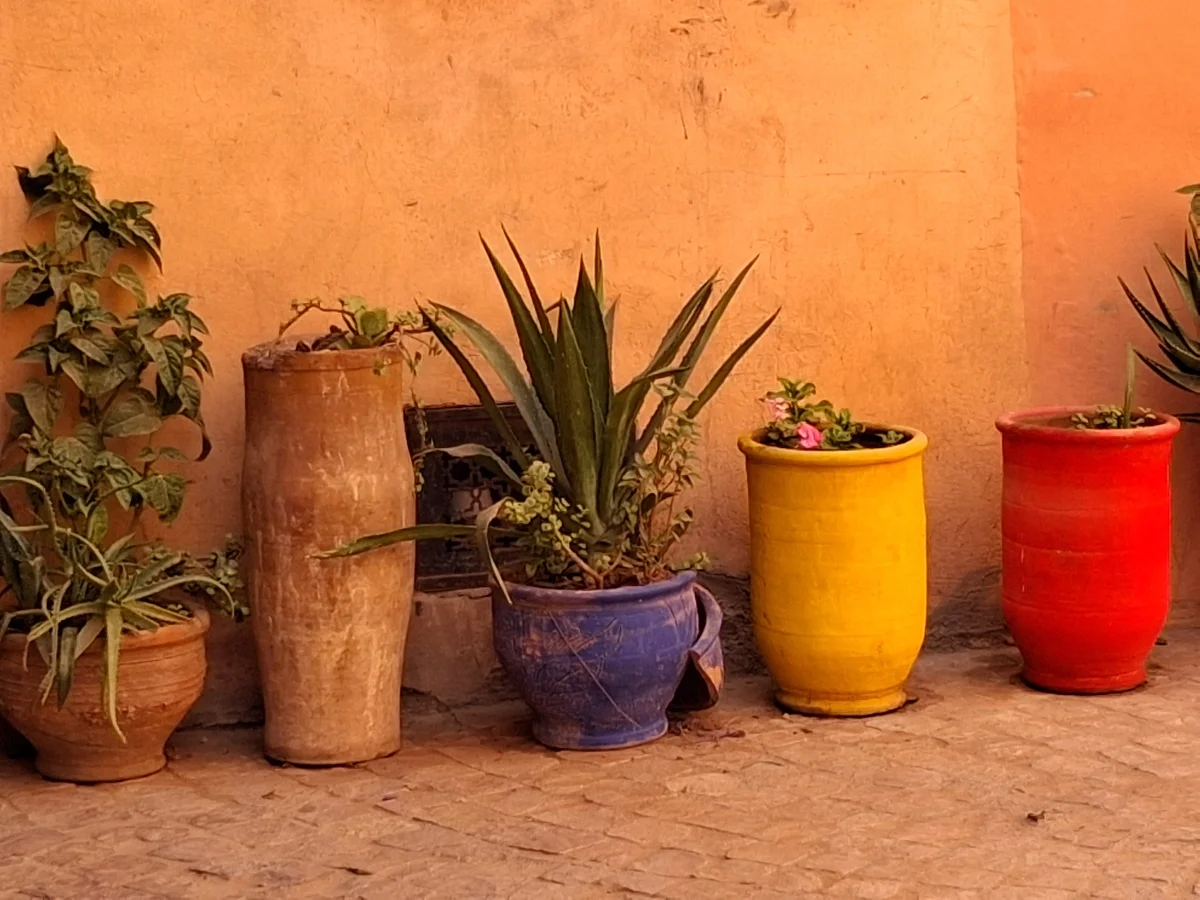
It only takes a few hours to understand why so many photographers fall in love with Morocco.
Every neighborhood, every alley, and every landscape offers a different light.
The early morning hours illuminate the ochre facades of the medinas.
At noon, the colors of the zelliges seem even more vibrant.
At the end of the day, the sun’s rays transform the ramparts, dunes, and mountains into true paintings.
Beyond landscapes, it’s also the details that attract the lens: an old door, an artisan focused on their work, a spice stall, a copper lantern, or a cat sleeping in front of a shop.
Morocco is a country that naturally invites you to look up… and take out your camera.
47. What is probably the biggest surprise for travelers?
The answer varies from person to person.
For some, it’s the diversity of landscapes.
For others, it’s the richness of historical heritage.
Many also mention the hospitality of the locals, the quality of the gastronomy, or the unique atmosphere of the medinas.
But one comment often comes up after a first stay:
"I didn’t expect such a varied country."
This probably summarizes Morocco best.
No cliché is enough to describe it.
You have to discover it to understand all its richness.
48. Why do so many travelers return to Morocco?
Because one trip is usually not enough.
Morocco has this rare ability to inspire a desire to return.
A first stay often allows for the discovery of Marrakech or Fès.
The next leads to the desert.
Then come Essaouira, Chefchaouen, the valleys of the Atlas, the southern kasbahs, the Atlantic beaches, the imperial cities, or archaeological sites.
Each region has its own identity, architecture, gastronomy, and traditions.
You don’t just visit Morocco.
You discover it gradually, trip after trip.
And that’s precisely why so many visitors end up returning.
49. What are the must-visit monuments in Morocco?
Morocco has an exceptionally rich historical heritage.
From palaces to medinas, kasbahs to archaeological sites, each region reveals a part of the Kingdom’s history.
Among the most emblematic places are the Palais de la Bahia and the Palais El Badi in Marrakech, the Saadian Tombs, the Médersa Ben Youssef, the Roman ruins of Volubilis, the Kasbah des Oudayas in Rabat, the medina of Fès, Aït-ben-Haddou, the Hassan Tower, the Hercules Caves near Tangier, or the ramparts of Essaouira.
All these sites testify to several centuries of history and the meeting of different civilizations.
The best advice is not to try to visit everything in one go.
Choose a few monuments, take the time to discover them, and let yourself be carried away by their history.
You will appreciate each visit more than if you rush through the sites without truly experiencing them.
50. Why should you visit Morocco at least once in your life?
Because Morocco is much more than just a destination.
It’s a succession of encounters, landscapes, flavors, and emotions.
It’s a country where you can admire a centuries-old palace in the morning, have lunch by the ocean, cross majestic mountains in the afternoon, and gaze at a starry sky in the desert a few days later.
Few destinations offer such diversity in such an accessible territory.
But what often marks travelers the most is not always what you see.
It’s often the simplest moments.
The smile of an artisan proud of their craft.
The aroma of a simmering tagine.
The calm of a patio hidden behind an old door.
The sound of a fountain in the heart of a riad.
An impromptu conversation over a glass of mint tea.
These memories don’t appear in any guide.
They are lived.
And they linger long in memory.
Morocco is a country that is discovered with the eyes, but also with the heart.
Each city has its character.
Each region tells a different story.
Each journey holds its share of surprises.
It’s probably for this reason that so many visitors promise to return even before leaving the country.
Conclusion
If you’ve made it this far, it’s likely that you’re preparing for your first trip to Morocco… or already dreaming of the next one.
We hope these 50 questions have helped you better understand this fascinating destination, overcome certain clichés, and prepare your stay with greater peace of mind.
Morocco is a country that cannot be summed up by its monuments, its landscapes, or even its gastronomy.
Its true wealth lies in the diversity of its heritage, the generosity of its people, and the unique experiences it offers to every traveler.
Whatever region you choose to explore, take the time to slow down.
Enter the medinas without a precise itinerary.
Engage with artisans.
Taste local specialties.
Look up to admire the details of a sculpted door or a cedar ceiling.
Because it’s often these small moments that become the most beautiful memories.
At MoroccoMuseum, our mission is to help you discover Morocco differently: through its history, culture, monuments, museums, and the women and men who keep this exceptional heritage alive.
We wish you a wonderful journey… and above all, to experience an authentic, curious, and unforgettable Morocco.
Frequently Asked Questions (FAQ)
Is Morocco a good destination for a first trip?
Yes. Thanks to the diversity of its landscapes, the richness of its heritage, and its tourist infrastructure, Morocco is an excellent destination for a first trip to Africa. It is both exotic, accessible, and easy to discover.
What is the most beautiful city in Morocco to visit?
There is no single answer.
Marrakech enchants with its palaces and gardens.
Fès impresses with its historical heritage.
Chefchaouen charms with its blue alleys.
Essaouira attracts lovers of the ocean.
Rabat offers a balance between history and modernity.
Each city has a unique identity.
Can you visit the desert in a day from Marrakech?
No.
Contrary to a common misconception, the great dunes of the Sahara are several hours’ drive from Marrakech.
To fully enjoy the experience, it is generally advisable to plan at least two or three days.
The Agafay desert, however, is less than an hour away and offers a desert-style evening much closer to the city.
Is Morocco suitable for children?
Yes.
Families particularly enjoy gardens, beaches, nature excursions, walks in the medinas, gardens, animals, and the diversity of landscapes.
Moroccans generally extend a warm welcome to children.
Is it necessary to book monuments in advance?
It depends on the period.
For some very popular monuments or during school holidays, booking tickets in advance can save time and avoid queues.
What is the best souvenir to bring back from Morocco?
Craft items hold significant importance.
But when travelers are asked after their return, many respond the same way:
Their best memory is not an object.
It’s a meeting.
Key Takeaways
If you were to remember just a few ideas before your trip, they would probably be:
- Morocco is a safe country for the vast majority of travelers who respect usual precautions.
- It is not limited to the desert: mountains, beaches, imperial cities, oases, and villages compose very varied landscapes.
- Moroccans are known for their hospitality and sense of welcome.
- It is not necessary to speak Arabic to travel easily.
- Each region has its identity, traditions, and culinary specialties.
- One trip is rarely enough to discover all the richness of the country.
The best advice remains ultimately the simplest:
Come with curiosity.
Morocco will take care of the rest.
If you’ve made it this far, you are officially ready to explore Morocco. Congratulations! You are now among the few travelers who arrive in Morocco with more answers than questions.
Now, all that’s left is to live the experience.
Safe travels… and see you soon in Morocco! 🇲🇦
— The MoroccoMuseum Team