Tangier: Between the Mediterranean, the Atlantic and a Cosmopolitan Heritage
At the northwestern tip of Morocco, Tangier occupies an exceptional position overlooking the Strait of Gibraltar, where the influences of the Atlantic Ocean and the Mediterranean Sea meet.
For centuries, this strategic location has made Tangier a gateway between Morocco, Africa and Europe.
Phoenicians, Romans, Moroccan dynasties, Portuguese, English, diplomats, merchants, travelers, writers and artists have all left their mark on the city.
Today, discovering Tangier means exploring a Medina facing the sea, delving into its international history and visiting some of the most spectacular landscapes in northern Morocco.
Tangier, a Crossroads Between Africa and Europe
Geography largely explains the history of Tangier.
Located close to the Strait of Gibraltar, the city has long occupied a strategic position on the maritime routes connecting the Mediterranean and the Atlantic.
This location made it a place of passage, trade, diplomacy and, at times, rivalry between different powers.
Long before the 20th century, several civilizations had already left their traces in the region.
Tangier's history is therefore much older than the famous period of the International Zone.
The Tangier International Zone
One of the most unusual chapters in Tangier's modern history began with the international convention signed in Paris in 1923.
The international status of Tangier came into effect in 1925.
The city and its surrounding zone were then administered through a complex international system while remaining under the sovereignty of the Sultan of Morocco.
Several foreign powers gradually participated in this administration.
An Interruption During the Second World War
The international period was not continuous.
In 1940, during the Second World War, Spain occupied Tangier and the international administration was suspended.
The international regime was restored in 1945.
It finally came to an end in 1956, when Tangier was fully reintegrated into independent Morocco.
This unusual history helps explain the architecture, institutions and cosmopolitan atmosphere that can still be found in several parts of the city today.
A City of Diplomats, Writers and Artists
Tangier's international character encouraged communities from many different backgrounds to settle in the city.
Diplomats, merchants, artists and writers lived in or visited Tangier during different periods of its history.
During the 20th century, the city became particularly associated with several major figures in international literature and artistic creation.
But Tangier's cosmopolitan identity did not begin with the artists of the 20th century.
By the 19th century, the city already played an important diplomatic role in Morocco.
One of the most remarkable reminders of this period can still be visited today in the Medina.
The American Legation: Two Centuries of Relations Between Morocco and the United States
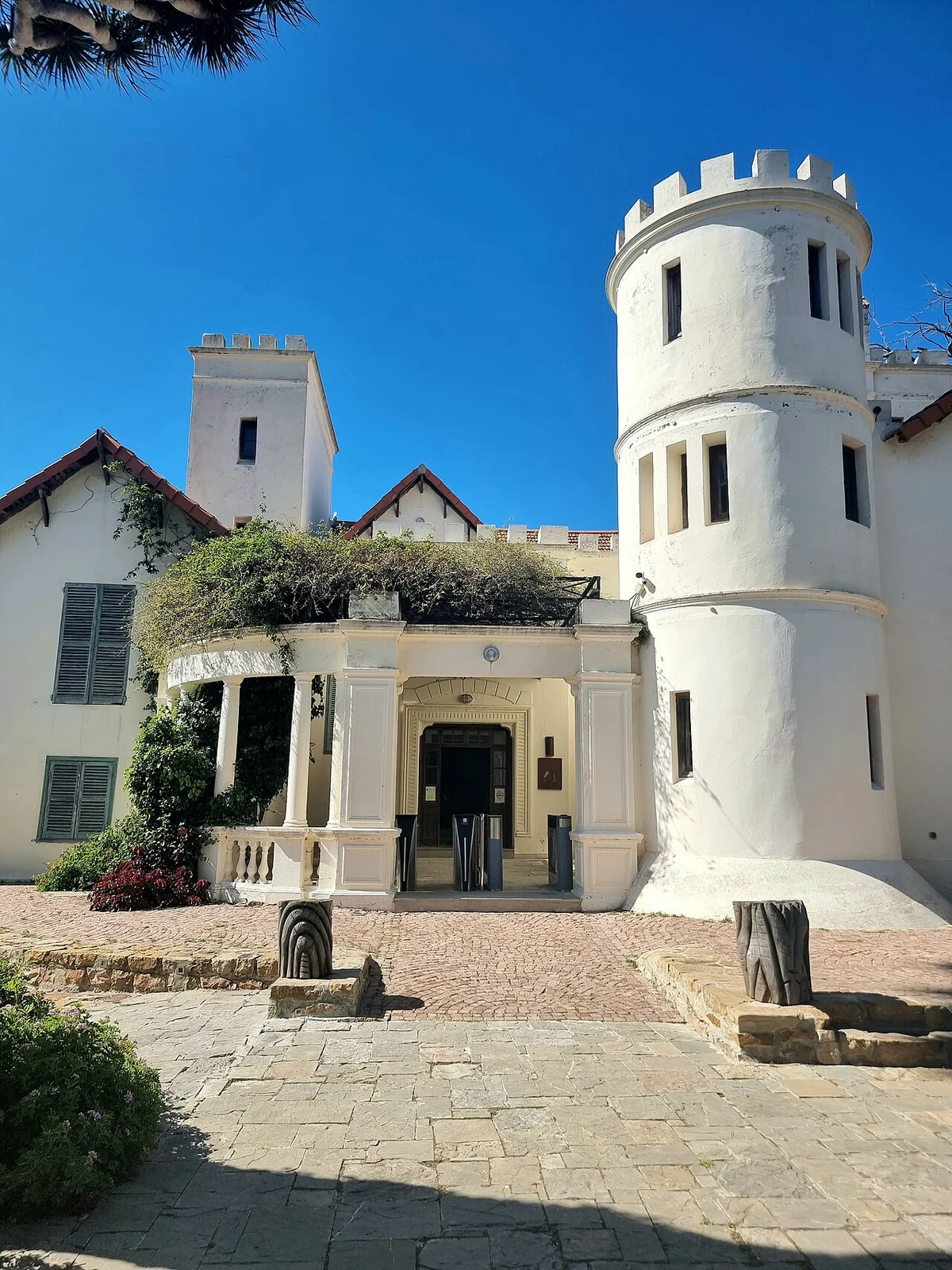
In the heart of the Medina stands a particularly unusual monument: the Tangier American Legation.
In 1821, Sultan Moulay Slimane offered a building to the United States to establish its diplomatic representation.
The site remained associated with the American diplomatic presence in Tangier for more than a century.
Today transformed into a museum, research center and cultural space, the Legation preserves collections and archives related to the history of Tangier and relations between Morocco and the United States.
It is also the only U.S. National Historic Landmark located outside the United States.
For anyone interested in understanding Tangier's international identity, it is a particularly worthwhile visit.
The Medina and Kasbah of Tangier
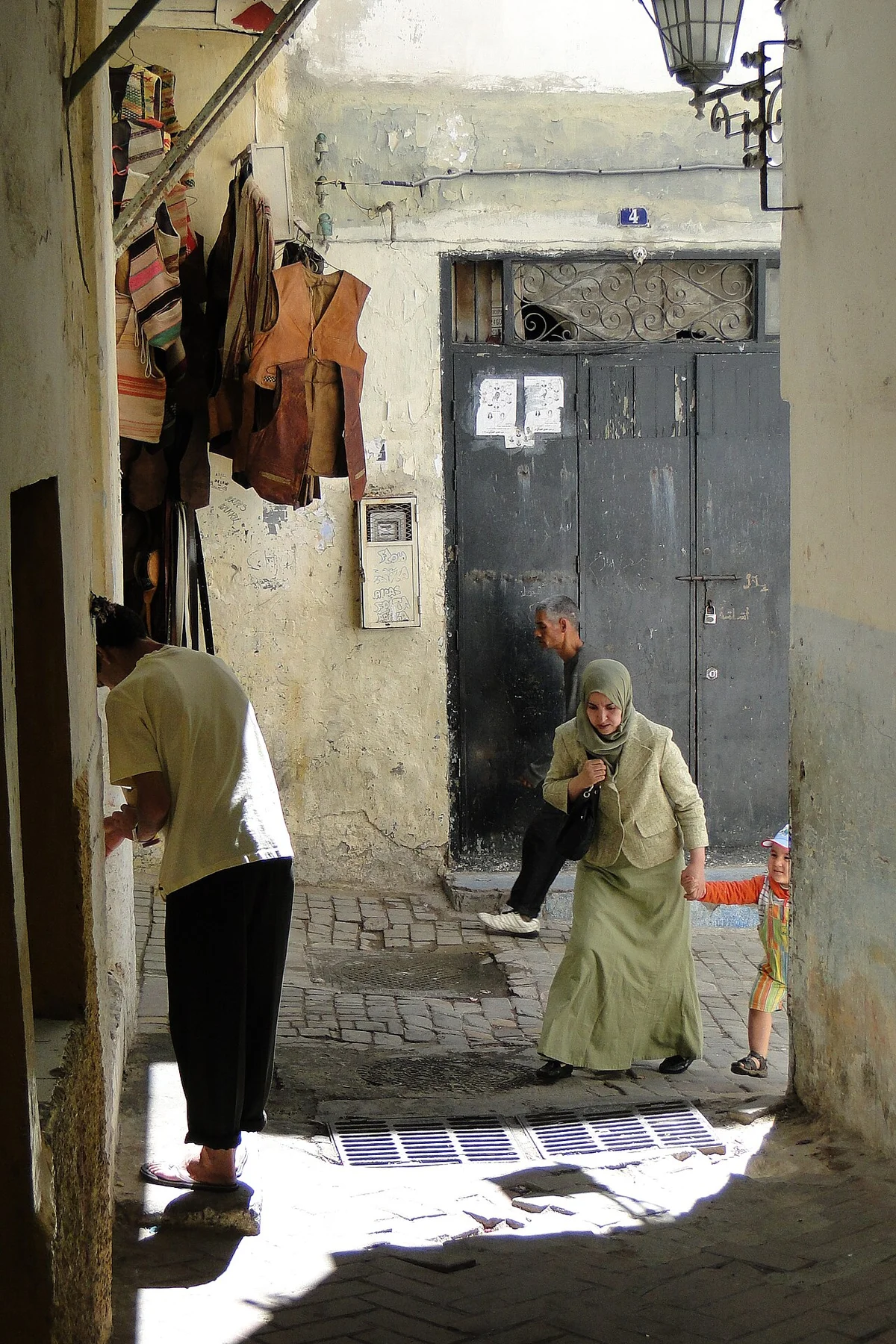
To discover Tangier on foot, the Medina is essential.
Its narrow streets gradually descend toward the port, while the higher Kasbah district offers another perspective over the city and the Strait of Gibraltar.
Unlike the great imperial medinas of Fez or Marrakech, Tangier's Medina strongly reflects its relationship with the sea and with the different communities that have lived in the city.
Grand Socco
Grand Socco marks one of the main entrances to the Medina.
This large square forms a transition between the old city and Tangier's more modern neighborhoods.
The Kasbah
At the top of the Medina, the Kasbah overlooks part of the Strait of Gibraltar.
It is one of the best areas from which to understand Tangier's geography and its historic role as a city facing the sea.
Perdicaris Palace: History and Nature in Rmilat
West of the city center, the Rmilat area reveals a completely different side of Tangier.
Surrounded by a vast forest stands the Perdicaris Palace.
The estate is associated with Ion Perdicaris, whose kidnapping in 1904 triggered a major international diplomatic crisis.
Today, the palace and its surroundings combine historical heritage with the opportunity to walk through one of Tangier's most pleasant natural areas.
Rmilat Forest also offers several spectacular viewpoints overlooking the Strait of Gibraltar.
Discover Perdicaris Palace in Tangier
Cape Spartel: Between the Atlantic and the Strait of Gibraltar
Continuing west from Rmilat brings you to Cape Spartel, one of the great natural landmarks associated with Tangier.
Its lighthouse dominates the coastline near the western entrance to the Strait of Gibraltar.
The site offers extensive views over the ocean and is a natural stop on an excursion to the Caves of Hercules.
Cape Spartel, Rmilat and the Caves of Hercules can therefore easily be combined into the same half-day excursion.
The Caves of Hercules: Between Archaeology and Legend
A few kilometers from Cape Spartel are the famous Caves of Hercules.
The site has become one of the most photographed places in the region, particularly because of its natural opening overlooking the ocean, often compared to the outline of the African continent.
But the caves are interesting for much more than this famous view.
The site is associated with ancient human occupation as well as traditions and legends that have contributed to its reputation.
The caves take their name from Hercules, the hero of Greco-Roman mythology.
Combining maritime landscapes, geology, archaeology and legend, the Caves of Hercules are an essential stop during a stay in Tangier.
Plan your visit to the Caves of Hercules
What to See in Tangier First
For a first visit to the city, several places provide a good introduction to the different sides of Tangier:
- the Medina and Grand Socco to discover the historic heart of the city;
- the Kasbah for its heritage and views over the Strait of Gibraltar;
- the American Legation to understand Tangier's diplomatic and international history;
- Perdicaris Palace and Rmilat Forest to combine history and nature;
- Cape Spartel to discover the coastline;
- the Caves of Hercules for their history, legends and spectacular opening onto the Atlantic.
Together, these sites allow visitors to move gradually from Tangier's urban history to the dramatic landscapes surrounding the city.
How Long Should You Spend in Tangier?
One day is enough to discover the main sites of the historic center and a few places in the surrounding area.
However, two days provide a much more comfortable experience.
Day One
Spend your first day exploring the Medina, Grand Socco, the Kasbah and the American Legation.
Also take time to stop in the city's cafés and wander through its streets without following an overly strict itinerary.
Day Two
Head west to discover Perdicaris Palace, Rmilat Forest, Cape Spartel and the Caves of Hercules.
This itinerary combines heritage, nature and maritime landscapes.
When Is the Best Time to Visit Tangier?
Spring and autumn are particularly pleasant seasons for exploring Tangier on foot.
Temperatures are generally milder than during the height of summer, making it easier to explore the Medina, Rmilat and the coastline.
Summer remains a busy period, particularly because of the city's coastal location.
Winter offers a different and often quieter atmosphere, although weather conditions can be more variable.
How to Get to Tangier
Tangier is now particularly well connected to the rest of Morocco and several European destinations.
By Plane
Tangier Ibn Battouta Airport serves a range of Moroccan and European cities.
By Train
The Al Boraq high-speed train connects Tangier with Kenitra, Rabat and Casablanca.
This service makes Tangier particularly easy to reach from Morocco's major Atlantic cities.
By Sea
Tangier's position opposite Europe also explains the historical and continuing importance of maritime connections across the Strait of Gibraltar.
Explore More of Tangier
Tangier deserves more than a quick excursion.
Its heritage tells several stories at once: ancient civilizations, Moroccan dynasties, relations with Europe, international diplomacy and the artistic creativity of the 20th century.
To find monuments, cultural sites and practical information available on MoroccoMuseum, visit our:
To explore the city's history in greater depth, from Antiquity to the International Zone, also discover:
Complete Tangier guide: history, heritage and places to discover
You can also prepare your visits directly:
Perdicaris Palace: history and visitor information
Caves of Hercules: plan your visit
Sources and References
- Tangier Municipality — History of the City
- Moroccan National Tourist Office — Tangier
- Tangier American Legation — History
- French Diplomatic Archives — International Zone of Tangier
Tangier, a City Between Worlds
Few Moroccan cities have an identity quite like Tangier.
Only a short distance from Europe, between the Mediterranean and the Atlantic, the city has been a meeting point between Morocco and the wider world for centuries.
Its appeal therefore extends far beyond its landscapes.
The Medina, the Kasbah, the American Legation, Perdicaris Palace, Cape Spartel and the Caves of Hercules each tell a different part of this story.
Discovering Tangier means understanding how geography can shape the identity of a city.
With MoroccoMuseum, explore Tangier's heritage, prepare your visits and discover the monuments and historic sites that tell the story of Morocco.