Bahia Palace in Marrakech: History, Architecture and Visitor Guide
In the heart of the Marrakech Medina, close to the Mellah, Bahia Palace is one of the city's major architectural heritage sites.
Built and expanded mainly in the late 19th century, the palace is closely associated with Ahmed Ben Moussa, known as Ba Hmad, Grand Vizier to Sultan Moulay Abdelaziz.
Behind relatively discreet façades lies a complex ensemble of courtyards, gardens, riads, reception rooms and dependencies, remarkable both for its layout and for the richness of its decoration.
Zellige tilework, carved stucco, painted wood, polychrome ceilings and geometric compositions reflect the craftsmanship of Moroccan artisans of this period.
Bahia Palace is also located within the Medina of Marrakech, which has been inscribed on the UNESCO World Heritage List since 1985.
See Bahia Palace visitor information and tickets
The history of Bahia Palace
A palace developed gradually
Bahia Palace was not originally conceived as a single monumental building following one unified plan.
The complex developed progressively as several residential spaces were brought together and transformed over time.
The Moroccan Ministry of Culture describes Bahia Palace as a former residence to which several houses were added and subsequently transformed into a palace in the late 19th century for Grand Vizier Ahmed Ben Moussa, known as Ba Hmad.
This gradual development helps explain one of the monument's most interesting characteristics: instead of being arranged around a single monumental axis, it consists of a succession of courtyards, gardens, apartments, reception rooms and passageways.
Ba Hmad and the expansion of Bahia Palace
Ahmed Ben Moussa, better known as Ba Hmad, became a central figure in Moroccan political life at the end of the 19th century.
Following the death of Sultan Moulay Hassan I in 1894, he occupied a particularly important political position during the early years of the reign of the young Sultan Moulay Abdelaziz.
It was mainly during this period that Bahia Palace acquired much of the scale and character visible today.
The works are associated with a Moroccan master builder referred to in sources from the Ministry of Culture as El Mekki.
As the palace expanded, different residences and plots were incorporated into the complex.
The result is a palace composed of numerous interconnected spaces.
Understanding the architecture of Bahia Palace
To appreciate Bahia Palace, it is useful to forget the European image of a palace organised around a monumental façade and long formal perspectives.
Here, the architecture reveals itself gradually.
A doorway leads into a courtyard.
A passage opens onto a garden.
A gallery gives access to a richly decorated room.
Then a relatively intimate space suddenly opens onto a vast courtyard.
This succession of spaces creates a genuine architectural experience.
It also helped preserve the privacy of different areas while allowing air, natural light and vegetation to play an important role within the residence.
Courtyards and gardens: the heart of the palace
At Bahia Palace, open spaces are not simply gaps separating buildings.
They are an integral part of the architecture.
Gardens introduce greenery and shade, while courtyards bring natural light into the surrounding rooms.
This relationship between architecture, light, shade, water and vegetation is one of the keys to understanding traditional Moroccan residences.
It is particularly evident in the palace's riads.
The Grand Riad
The Grand Riad is one of the important spaces within the historic complex.
It is organised around an interior garden surrounded by rooms and galleries.
Unlike the more monumental sections of Bahia Palace, much of its appeal comes from the relationship between architecture and garden.
Take time to look in several directions.
The façades, doors and ceilings do not all feature the same decorative compositions.
Spaces such as this also help visitors understand the principle of the traditional Moroccan riad, where the garden forms the heart of the residence.
The Petit Riad
The Petit Riad is another notable part of Bahia Palace.
The Moroccan Ministry of Culture specifically mentions this space in its historical presentation of the monument.
Several richly decorated rooms are arranged around its garden.
Zellige, stucco and painted wood create an interior in which almost every surface contributes to the overall decoration.
The Petit Riad also acquired new functions during the 20th century, particularly during the French Protectorate.
The Great Courtyard
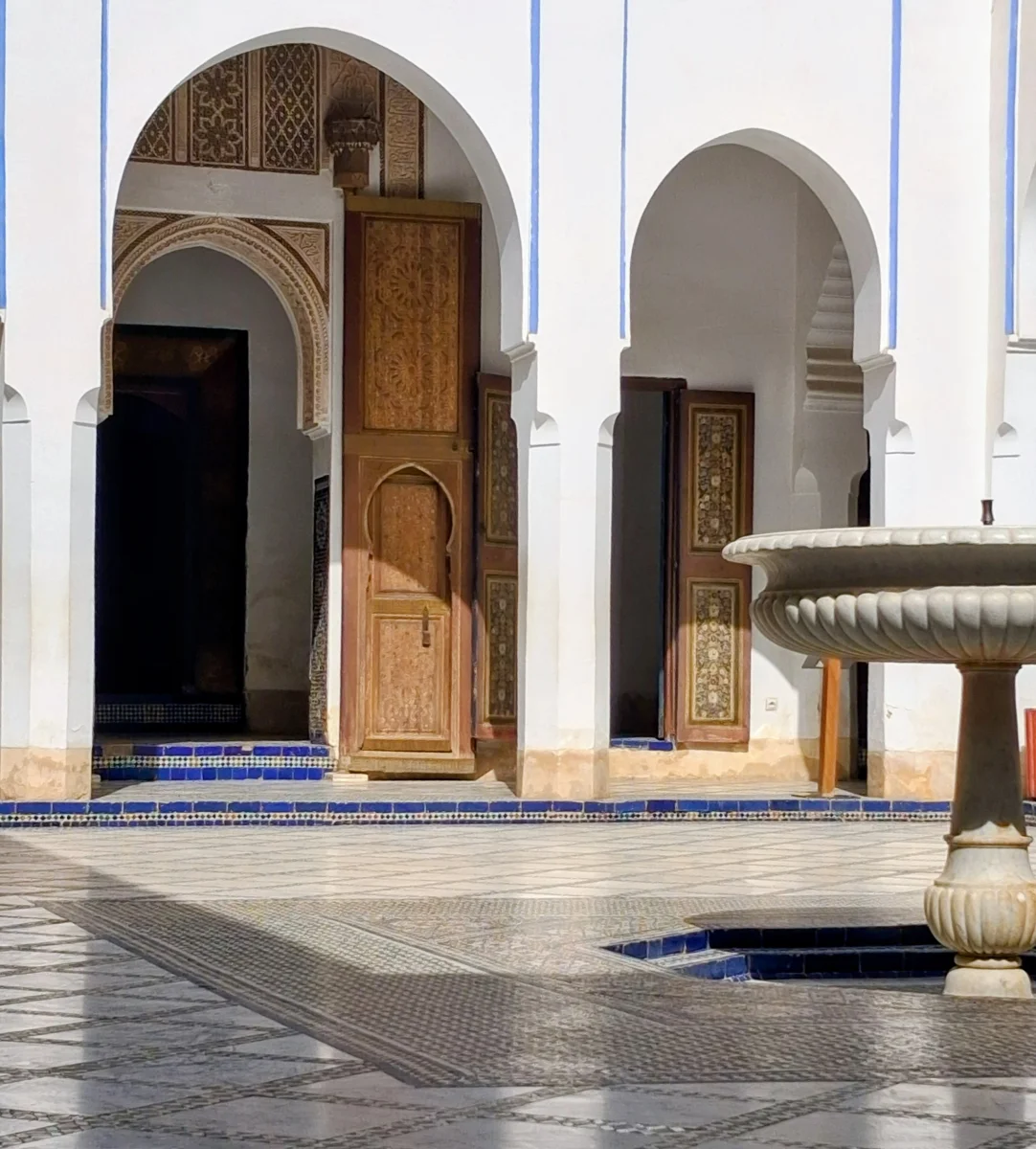
The Great Courtyard is one of the most impressive spaces in Bahia Palace.
After passing through several corridors, gardens and relatively intimate areas, its scale creates a striking contrast.
It is surrounded by façades, galleries and rooms decorated with elements including painted wood, zellige and carved stucco.
[Left Image]
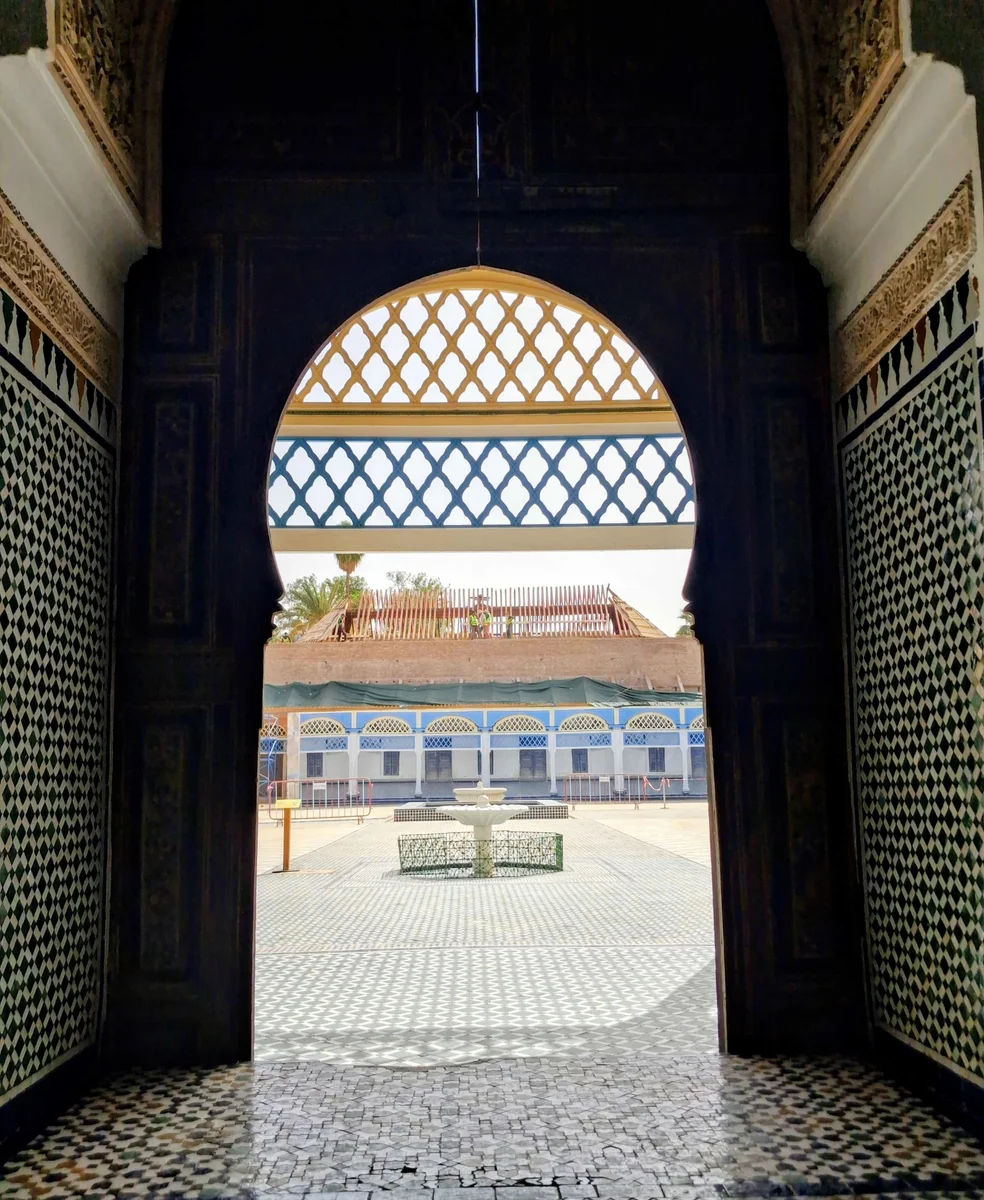
MoroccoMuseum tip: do not simply cross the courtyard through its centre. Stand beneath the galleries and look at it through different doorways and arches. The architectural frames create very different perspectives depending on your position.
Zellige, wood and stucco: look closely at Bahia Palace
Bahia Palace is a monument that rewards close observation.
Much of its significance lies in the combination of several important traditions of Moroccan decorative arts.
Zellige
Zellige consists of individually cut pieces of glazed ceramic assembled to create geometric compositions.
At Bahia Palace, it can be seen on floors, lower wall sections, fountains and around certain passageways.
From a distance, these compositions can appear repetitive.
Look more closely and you begin to see the precision required to assemble individual shapes into complex geometric patterns.
Painted wooden ceilings
Remember to look up regularly during your visit.
Some of the most spectacular decoration at Bahia Palace is found above visitors' heads.
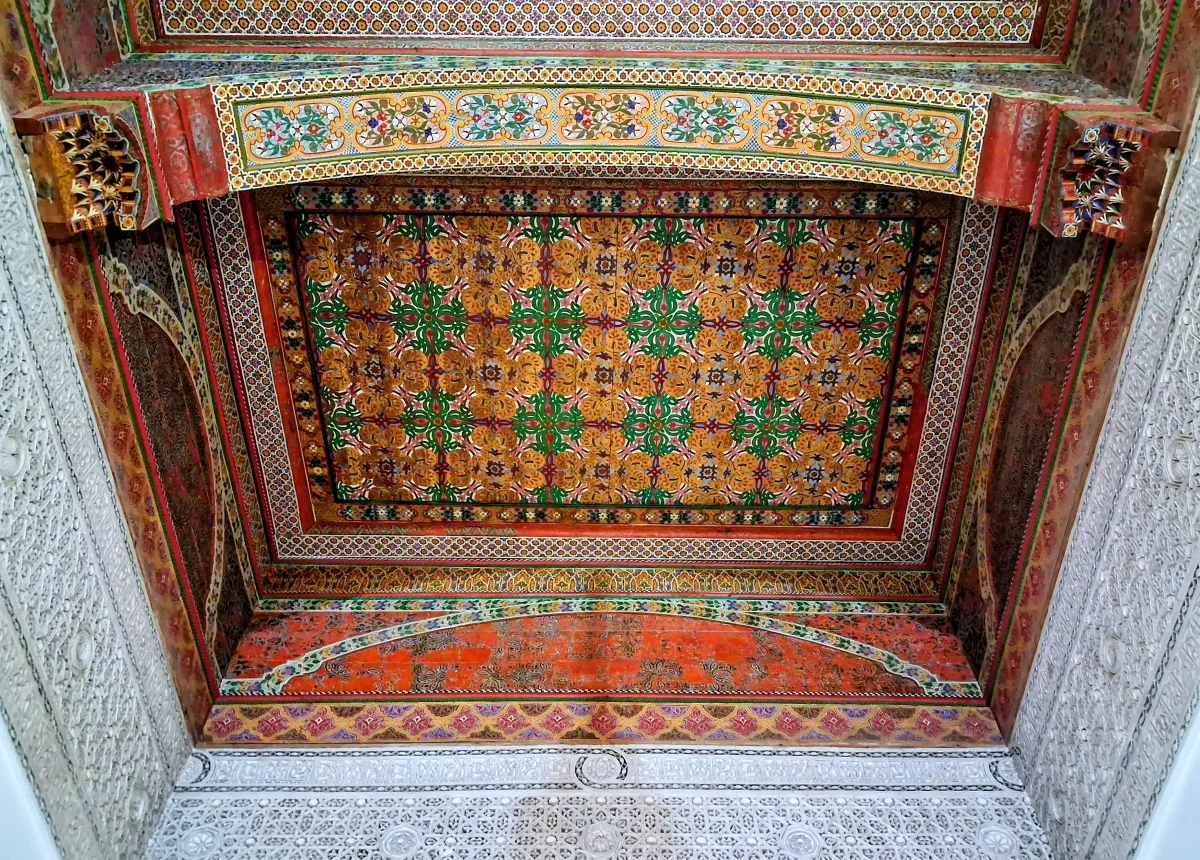
Wood appears throughout the palace in ceilings, doors, galleries, lintels and numerous decorative elements.
The compositions combine geometric and vegetal motifs with polychrome painting.
These decorations offer an opportunity to appreciate the craftsmanship of the Moroccan artisans who worked on the palace.
Carved stucco and inscriptions
Stucco is another essential element of Bahia Palace's decoration.
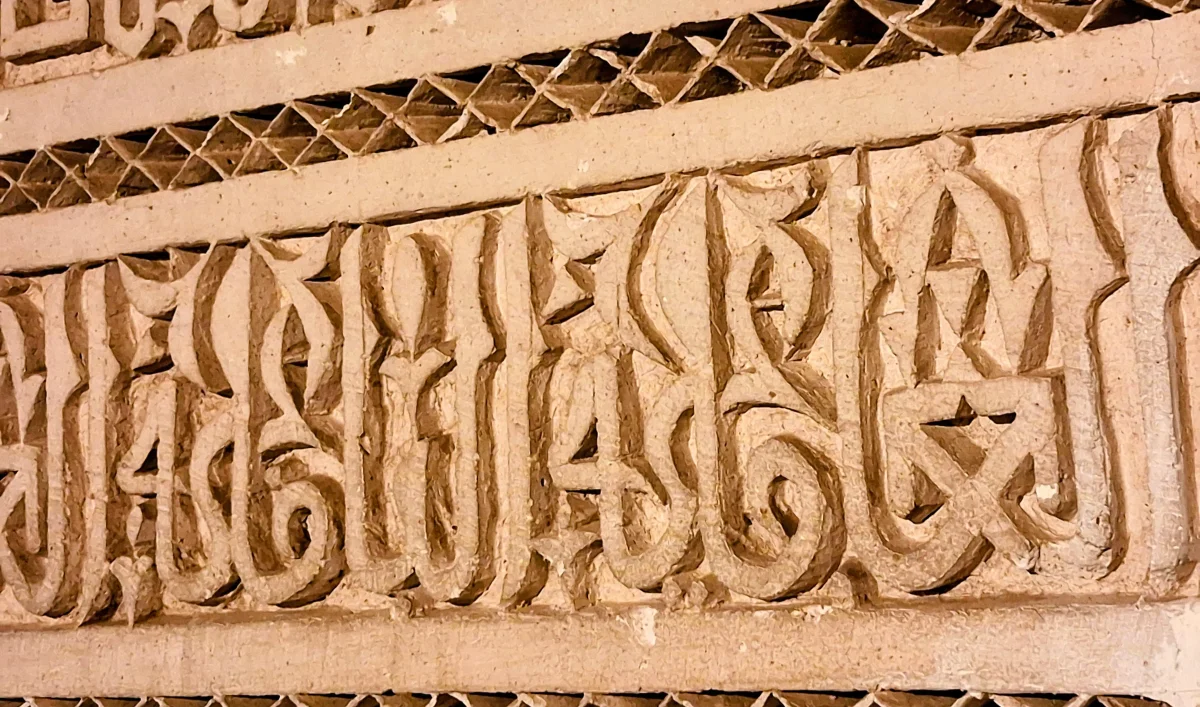
Artisans used carved plaster to create geometric, vegetal and epigraphic compositions around openings and across the upper sections of walls.
The combination of zellige, carved stucco and painted wood is one of the major characteristics of Moroccan architectural decoration.
To continue exploring these traditional crafts, the Ben Youssef Madrasa provides a particularly interesting complement to a visit to Bahia Palace.
Why does Bahia Palace sometimes feel like a labyrinth?
It is easy to lose your sense of direction during a visit.
This is not simply the result of the modern visitor route.
It also reflects the history of the complex itself.
Bahia Palace developed gradually through the incorporation and transformation of several spaces.
It therefore resembles an ensemble of residences, courtyards and gardens connected to one another rather than a building constructed as a single unified block.
This characteristic is part of the experience of visiting the palace.
Why are many of the rooms sparsely furnished?
Today, Bahia Palace is primarily visited as an architectural and heritage monument.
Visitors should therefore not expect a complete reconstruction of Ba Hmad's residence with all of its original furnishings.
Instead, the palace itself provides the main evidence for understanding the residence:
- courtyards;
- gardens;
- ceilings;
- doors;
- zellige;
- stucco decoration;
- the organisation of the different rooms.
Rather than focusing only on objects or furniture, take time to observe the architecture surrounding you.
Bahia Palace in the 20th century
The history of Bahia Palace continued after Ba Hmad.
When the French Protectorate was established in Morocco in 1912, parts of the palace acquired new uses.
The Moroccan Ministry of Culture notes that spaces within the Petit Riad were transformed into offices for Resident-General Hubert Lyautey.
This reuse represents another chapter in the history of the monument.
Today, Bahia Palace is primarily one of Marrakech's major heritage sites open to visitors.
Bahia Palace and UNESCO World Heritage
Bahia Palace is located within the Medina of Marrakech, which was inscribed on the UNESCO World Heritage List in 1985.
UNESCO cites Bahia Palace among the important monuments contributing to Marrakech's outstanding heritage value.
However, the World Heritage inscription applies to the historic Medina as a whole rather than to Bahia Palace as an individually inscribed World Heritage property.
This distinction is important.
Marrakech's heritage value lies in an urban ensemble where different periods of Moroccan history remain visible.
Several monuments can be visited alongside Bahia Palace to understand this historical evolution:
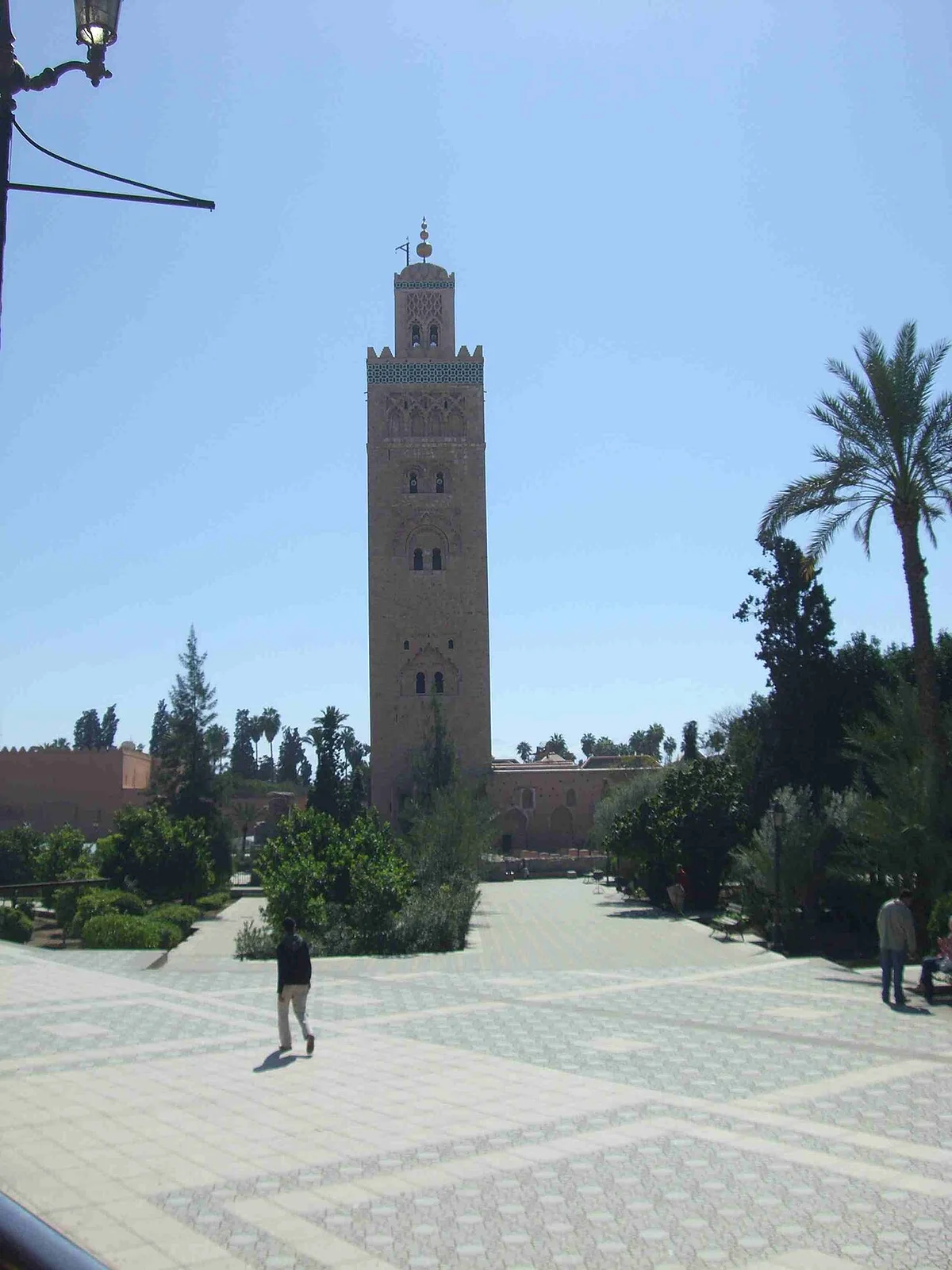
- the Koutoubia Mosque for the Almohad heritage;
- El Badi Palace for the Saadian period;
- the Saadian Tombs for Saadian funerary architecture;
- the Ben Youssef Madrasa for religious and educational architecture;
- Bahia Palace for Moroccan palatial architecture of the late 19th century.
How long should you spend at Bahia Palace?
Allow approximately 1 hour 30 minutes to explore the monument without rushing.
Visitors particularly interested in architecture, photography or decorative arts may easily spend longer.
Bahia Palace rewards a slow visit.
Some of its most interesting features are relatively small: a ceiling detail, a carved inscription, a zellige composition or a painted doorway can easily be missed when moving quickly through the rooms.
What is the best time to visit Bahia Palace?
Bahia Palace is one of Marrakech's best-known monuments.
For a more comfortable visit, early morning is generally a good choice.
Morning can also provide attractive natural light in several courtyards and gardens.
Visitor numbers vary according to the season, day and presence of organised groups.
Before visiting, always check the latest information regarding opening hours, access conditions and any temporary changes to the visitor route.
Check current Bahia Palace visitor information and tickets
Practical information for visiting Bahia Palace
- City: Marrakech
- Area: Medina, Riad Zitoun Jdid
- Type of monument: historic palace
- Main period: late 19th century
- Recommended visit: approximately 1 hour 30 minutes
- Look out for: courtyards, gardens, riads, zellige, painted wooden ceilings and carved stucco
Opening hours, admission prices and access conditions may change.
To avoid publishing practical information that can quickly become outdated in this historical guide, current visitor information is available on the dedicated monument page:
Bahia Palace: tickets, opening hours and visitor information
Tips for visiting Bahia Palace
- Visit early in the morning if possible.
- Do not focus only on the Great Courtyard.
- Look up regularly to see the painted ceilings.
- Examine the zellige closely to appreciate its geometric construction.
- Look for carved stucco around doors and arches.
- Turn around after passing through some openings: the architecture often creates entirely different perspectives in the opposite direction.
- Respect areas that are temporarily closed or undergoing restoration.
- Wear comfortable shoes if you plan to continue exploring the Medina afterwards.
What to visit near Bahia Palace
Bahia Palace is ideally located for creating a walking itinerary through the southern part of the Medina.
The Mellah of Marrakech
The Mellah, Marrakech's historic Jewish quarter, is located close to the palace.
Exploring the district introduces another dimension of Marrakech's social and urban history.
Discover the Mellah of Marrakech
Place des Ferblantiers
Located between the Mellah, Bahia Palace and El Badi Palace, Place des Ferblantiers forms a natural link between several heritage sites in this part of the Medina.
El Badi Palace
El Badi Palace takes visitors several centuries further back into Marrakech's history and reveals the monumental ambitions of the Saadian dynasty.
The two palaces are very different.
Bahia Palace is notable for its decorated interiors, courtyards and gardens, while El Badi impresses through its vast ruins and the scale of its former palatial architecture.
Saadian Tombs
The Saadian Tombs are another major heritage site in the southern Medina.
Their decoration also provides an opportunity to observe zellige, stucco and woodwork in an architectural setting very different from Bahia Palace.
Bahia Palace or El Badi Palace: which should you visit?
The two monuments complement one another.
Bahia Palace primarily offers an insight into a late 19th-century palatial residence and the richness of Moroccan decorative arts.
El Badi Palace, built several centuries earlier under the Saadian dynasty, represents a very different chapter in Marrakech's history.
If you have enough time, visiting both is one of the best ways to compare two very different expressions of Moroccan palatial architecture.
A heritage itinerary around Bahia Palace
A half-day heritage route can easily connect several nearby sites:
Bahia Palace → Mellah → Place des Ferblantiers → El Badi Palace → Saadian Tombs
This walking route introduces several periods of Marrakech's history without requiring long journeys across the city.
For a broader introduction to the historic centre, see our guide to the Marrakech Medina.
Why visit Bahia Palace?
A visit to Bahia Palace reveals a comparatively recent chapter in Marrakech's long history.
The Almoravid Qoubba recalls the city's medieval origins.
The Koutoubia Mosque represents the Almohad period.
El Badi Palace and the Saadian Tombs tell the story of Saadian power.
Bahia Palace, by contrast, reveals Moroccan palatial architecture and decorative arts of the late 19th century.
More than through a single monumental façade, the palace impresses through the accumulation of details.
A carved doorway.
A painted ceiling.
A geometric zellige composition.
An inscription in stucco.
A garden glimpsed through a gallery.
Taking the time to notice these elements is one of the best ways to appreciate the richness of the palace.
Bahia Palace is not simply a palace to photograph: it is a monument to observe in detail.
Plan your visit
Find current access and visitor information on the dedicated monument page:
Visit Bahia Palace in Marrakech
Continue exploring Marrakech's heritage:
- El Badi Palace
- Saadian Tombs
- Ben Youssef Madrasa
- Almoravid Qoubba
- Koutoubia Mosque
- Explore the Marrakech Medina
- Explore Morocco's heritage sites
Sources and references
The historical information in this guide has been checked with priority given to institutional and heritage sources.