Sidi Ifni, a Town Between the Atlantic and Southern Morocco
On Morocco’s southern Atlantic coast, between Tiznit and Guelmim, Sidi Ifni stands out for its distinctive architecture, dramatic cliffs, fishing port and peaceful atmosphere. Located approximately 160 kilometres south of Agadir by road, this coastal town is an appealing stop for travellers seeking a different side of Morocco, away from the bustle of the country’s major tourist destinations.
Sidi Ifni’s identity has been shaped by several influences. The region’s Amazigh heritage, the history of the Aït Baâmrane, maritime trade and the Spanish period have all contributed to a town whose streets tell a unique story. Geometric façades, white and blue buildings and structures inherited from the colonial era give the historic centre a character quite different from that of Morocco’s traditional medinas.
Sidi Ifni is also a destination closely connected to nature. The ocean shapes everyday life, fishing boats head out to sea according to the tides, and nearby beaches attract visitors looking to explore a coastline that remains relatively unspoilt.
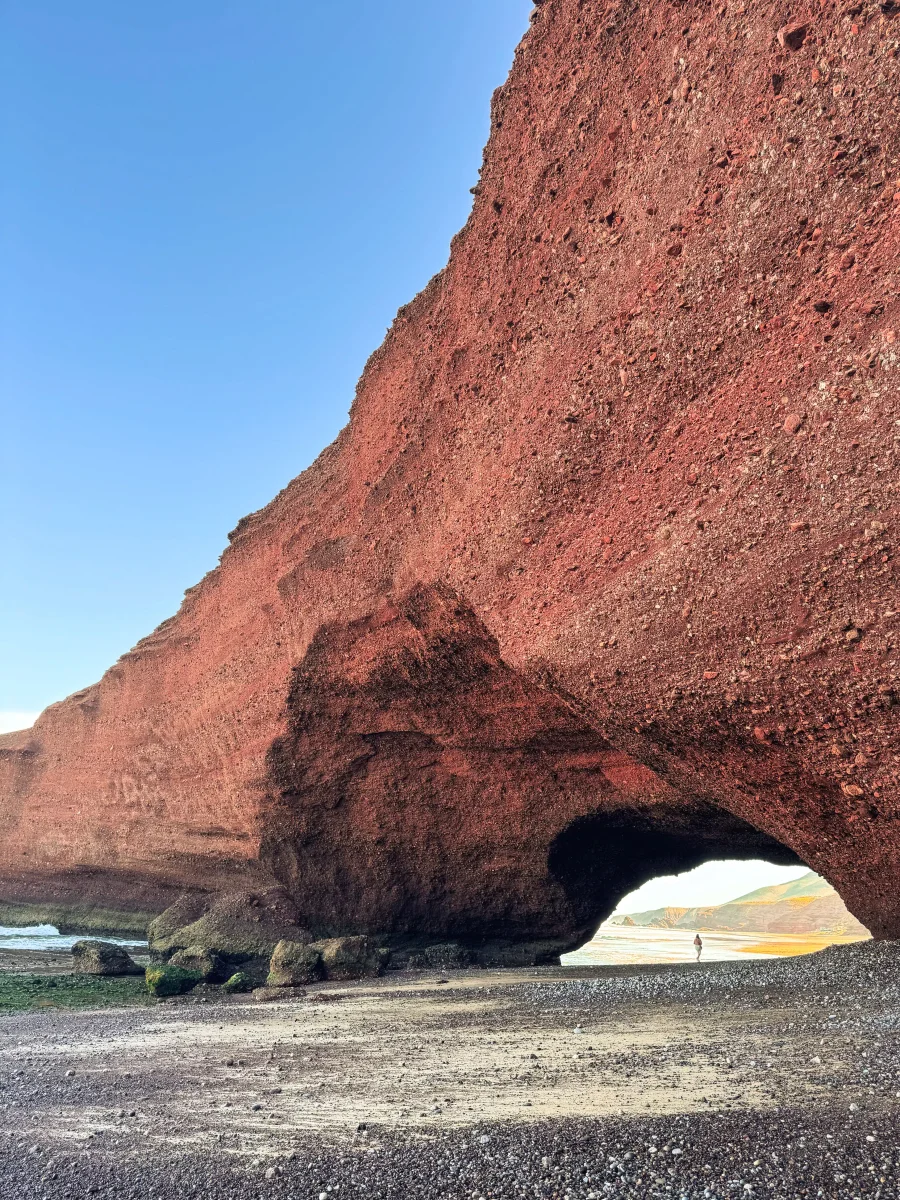
Just a few kilometres away, Legzira Beach impresses visitors with its red sandstone cliffs sculpted by erosion. Further along the coast, Mirleft, secluded coves and the landscapes of the hinterland offer further opportunities for exploration.
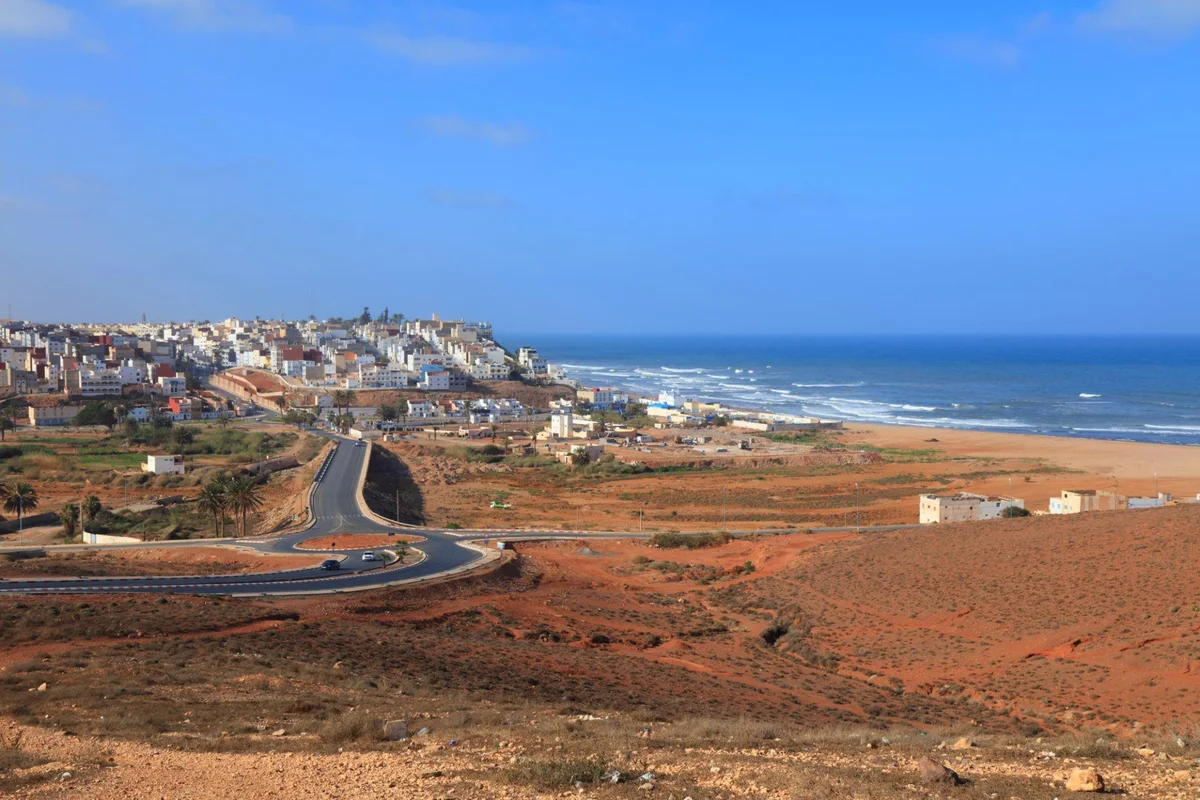
Sidi Ifni, between the Atlantic Ocean and the landscapes of southern Morocco.
Photo credit: Erwan de Kerhister / Wikimedia Commons — CC BY-SA 4.0.
A History Shaped by Spanish Presence
Early History and Amazigh Identity
Long before it became a Spanish enclave, the Sidi Ifni region was inhabited and frequented by Amazigh communities in southwestern Morocco. The Aït Baâmrane hold an important place in the region’s history and identity. Their traditions, social practices and relationship with the land have helped shape the culture of this part of Morocco.
The region lies at the meeting point of several landscapes: the Atlantic coastline, the Anti-Atlas foothills and the semi-arid areas inland. This geographical position encouraged exchanges between coastal communities and populations from the hinterland.
The history of Spanish presence in the area predates the modern town. Historical references to Santa Cruz de la Mar Pequeña are associated with early Spanish settlements along this stretch of coastline in the late fifteenth century. However, these earlier episodes should be distinguished from the development of Sidi Ifni as a modern urban and administrative centre.
From Spanish Settlement to the Return to Morocco in 1969
Spanish claims to Sidi Ifni were formalised in the nineteenth century, notably through the Treaty of Wad-Ras in 1860. The Spanish administration developed the town more substantially during the twentieth century. From 1934 onwards, Sidi Ifni became an important administrative and military centre for Spain in this part of the coastline.
This period profoundly transformed the urban landscape. Administrative buildings, infrastructure, public facilities and residential neighbourhoods were constructed according to European planning principles and architectural styles. The town acquired an appearance that distinguished it from many other Moroccan settlements.
However, the history of this period cannot be reduced to its buildings. Colonial rule unfolded against a background of resistance and national aspirations. Local populations took part in movements associated with Morocco’s struggle for independence and sovereignty.
On 30 June 1969, Spanish forces withdrew from Sidi Ifni, and the territory was returned to Morocco. This event marked an important milestone in the country’s contemporary history.
Today, traces of this period remain visible in the urban layout, public buildings and architectural details. It forms one part of the town’s history, alongside the Amazigh traditions and local dynamics that existed before the colonial period and continue to shape the region.
For further information about this historical transition, consult the Moroccan government’s official portal: The return of Sidi Ifni — Maroc.ma.
Sidi Ifni’s Art Deco Heritage
One of Sidi Ifni’s main attractions is its architecture. The town centre retains buildings constructed during the Spanish period, several of which reflect European architectural movements of the twentieth century. Geometric lines, rounded volumes, understated façades and decorative details evoke Art Deco and the Streamline Moderne style.
The architecture is best explored on foot. Rather than rushing through the town, take time to observe the façades, balconies, entrances and sometimes subtle details of the buildings.
Hassan II Square and the Historic Centre
Hassan II Square is a useful starting point for exploring the town’s architectural heritage. Located at the heart of the historic urban fabric, it provides access to several streets where buildings from the Spanish period remain.
The square is sometimes referred to by its former Spanish name, Plaza de España. The surrounding buildings reflect the ambition to create an organised administrative centre, with public buildings and urban spaces designed according to the principles of the period.
As you walk around, look for differences between official buildings and residential houses. Public buildings often feature more imposing volumes, while private homes tend to display more modest details adapted to everyday life.
The Former Admiralty

The former admiralty, one of Sidi Ifni’s distinctive architectural landmarks.
Photo credit: Mhobl / Wikimedia Commons — CC BY-SA 4.0.
The former admiralty is one of the most recognisable buildings in Sidi Ifni’s architectural heritage. Its distinctive silhouette and position on the coastal terrain illustrate the historical relationship between the town, the Spanish administration and the ocean.
Its architecture evokes the dynamic lines of the Streamline Moderne style, associated with the modernity of the early twentieth century. The building’s volumes and composition also reflect the maritime environment that has long shaped local life.
As with other historic buildings, visitors should respect the premises and avoid assuming that the interiors are open to the public. Much of the interest lies in viewing the exterior and understanding how the town developed around it.
Former Administrative Buildings
Several buildings throughout the town recall the administrative organisation of the Spanish period. The former consulate, public buildings and structures surrounding the historic centre help illustrate how Sidi Ifni developed as an administrative and military town.
Not every building is accessible to the public. Some have changed function, others require maintenance, and some remain privately owned. A respectful visit means admiring façades from public spaces and checking locally whether access is permitted before attempting to enter a building.
An Old Building at Sunset
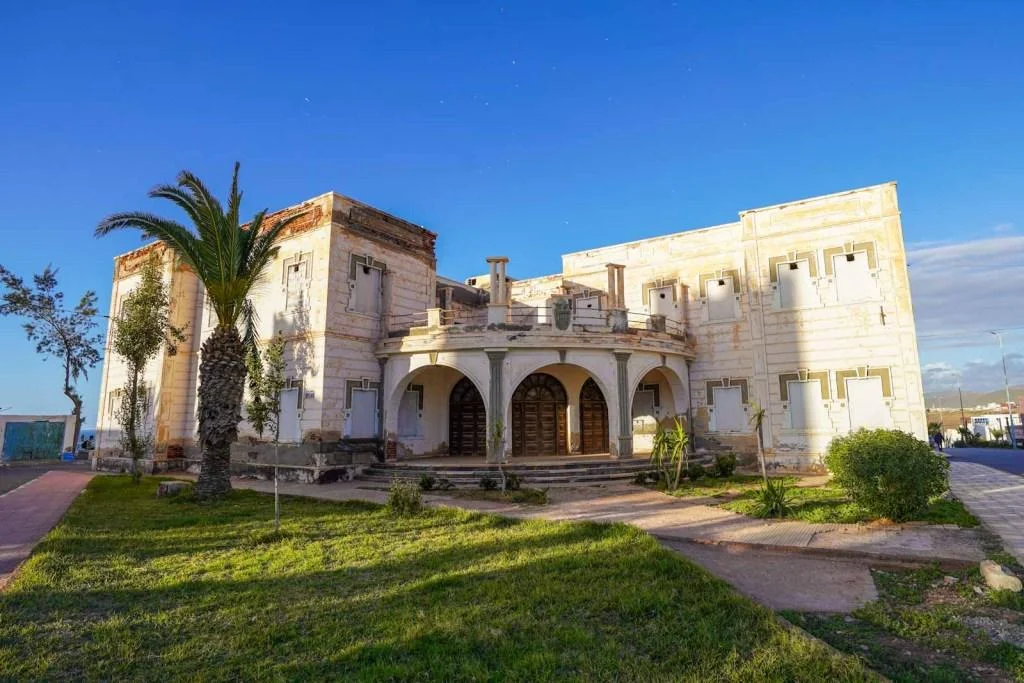
The evening light highlights the shapes and silhouettes of Sidi Ifni’s historic architecture.
Photo credit: Rachidourkia / Wikimedia Commons — CC0 1.0.
The Atlantic light gives Sidi Ifni’s buildings a different character throughout the day. In the late afternoon, shadows stretch across façades and colours become softer. This is an especially pleasant time for architectural photography.
Visitors can use this light to appreciate construction details and capture the town’s quiet atmosphere. Sidi Ifni’s appeal lies not only in its monuments but also in the character of its wider urban landscape.
The Fishing Port: At the Heart of Local Life
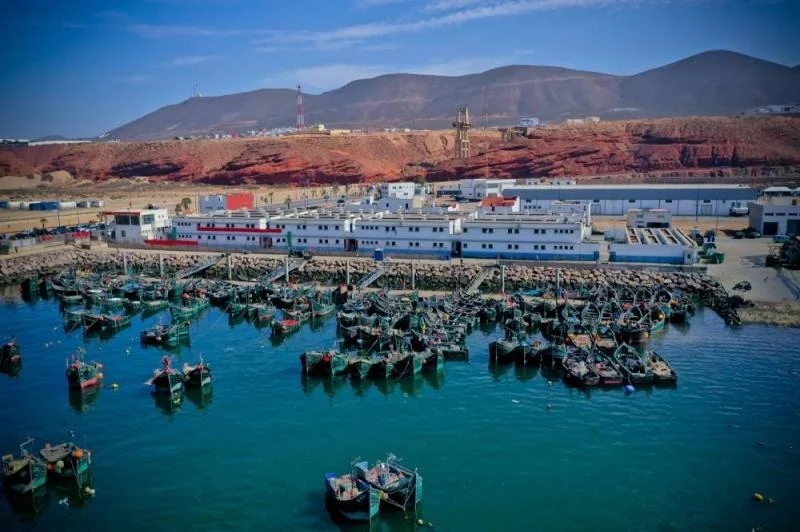
Sidi Ifni’s port, an essential place for fishing and everyday life in the town.
Photo credit: andrez_1 / Wikimedia Commons — CC BY 2.0.
The fishing port represents another essential aspect of Sidi Ifni. While the Art Deco buildings recall the town’s administrative history, the port reflects its contemporary economic activity and its everyday relationship with the ocean.
Fishing contributes to the supply of local markets and restaurants. It also shapes the rhythm of the day, from boats leaving for sea to their return and the unloading of catches.
For travellers, a visit to the port offers insight into the importance of the sea to the local economy. It can also be an opportunity to discover the fish served in local restaurants, ideally choosing establishments that can explain the origin and freshness of their products.
The port is first and foremost a workplace. Visitors should stay in publicly accessible areas, follow safety instructions and ask permission before taking close-up photographs of people or their work.
The Beaches Around Sidi Ifni
The coastline is one of the destination’s greatest attractions. Cliffs, open Atlantic beaches and unusual rock formations create a varied landscape. Sea conditions can change quickly, however, so swimming and water-based activities require caution.
Legzira Beach and Its Red Cliffs
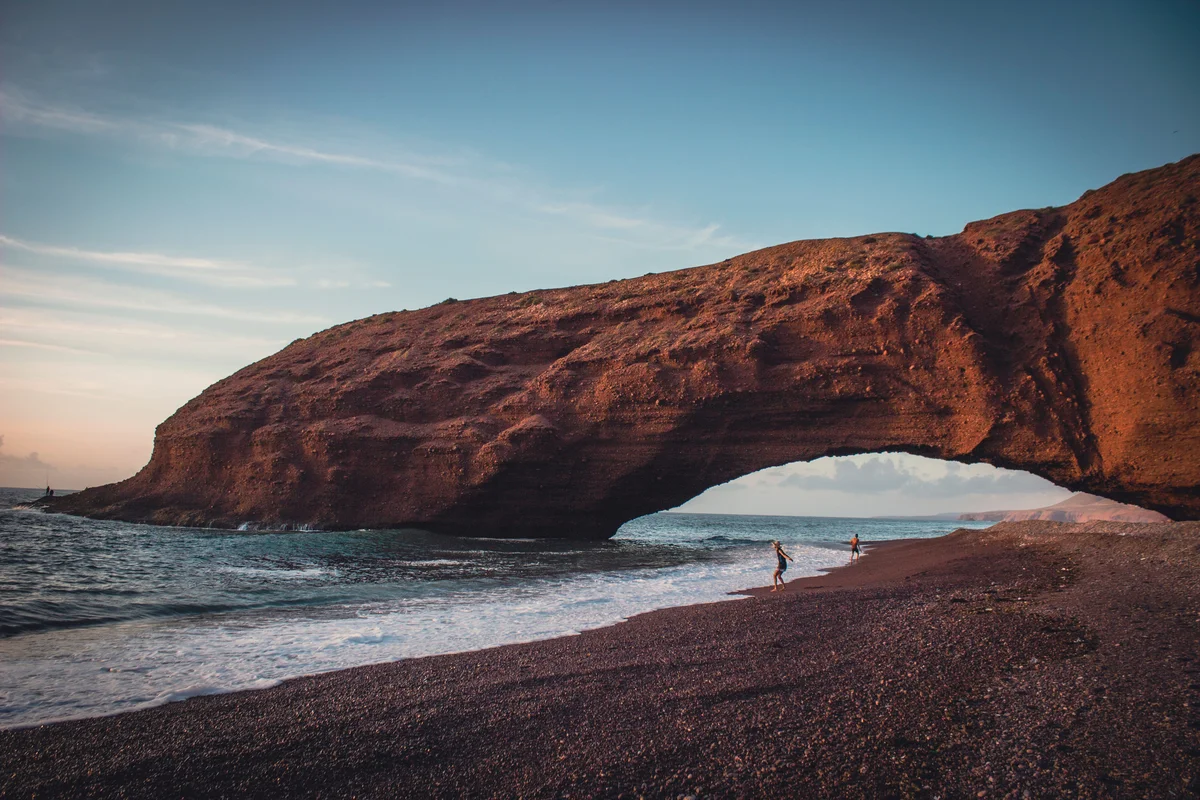
Legzira, a spectacular coastal landscape shaped by Atlantic erosion.
A few kilometres north of Sidi Ifni, Legzira Beach is famous for its red sandstone cliffs and natural arches. Waves, wind and time have gradually sculpted these rock formations, creating a dramatic landscape.
The contrast between the red rock, the sand and the ocean makes Legzira particularly popular with photographers and travellers. The scenery is especially striking in the evening, when the light brings out the copper tones of the cliffs.
The site changed significantly in September 2016, when one of its best-known arches collapsed naturally. Despite the loss of this formation, Legzira remains a remarkable landscape, with its cliffs continuing to evolve under the effects of erosion.
Visitors should avoid sitting beneath the cliffs or approaching unstable rock faces. It is also advisable to check local conditions before descending to the beach, particularly when the tide is rising or the sea is rough.
Mirleft and the Coastal Coves
North of Sidi Ifni, Mirleft offers another way to experience the coastline. The village is known for its beaches, cliffs and small coves, attracting travellers looking for a peaceful stay.
The landscape alternates between open beaches, rocky headlands and more sheltered stretches of sand. Depending on the season and weather, the area is suitable for walks, photography and certain water sports.
Mirleft is also associated with surfing. Its waves and winds attract surfers of different levels, but choosing a suitable spot should always depend on sea conditions and personal experience.
Sidi Ouarzig and More Secluded Beaches
The area around Sidi Ifni contains other, less crowded sections of coastline. These beaches and coves allow visitors to explore beyond the best-known sites.
They can be appealing to travellers with a car who want to discover the coast at their own pace. However, it is important to plan journeys, check access conditions and bring drinking water, as services may be limited near some beaches.
Further south, the coastline opens into broader stretches of coastal landscape, extending towards areas associated with Plage Blanche. An excursion in this direction requires more preparation than a short trip from the town centre.
Amazigh Traditions and the Culture of the Aït Baâmrane
Sidi Ifni’s history is not limited to its Spanish architectural heritage. The town belongs to a region where Amazigh culture remains essential. Traditions, musical practices, languages and economic activities reflect a local identity deeply connected to the land.
The Aït Baâmrane region is particularly known for its traditions and musical expressions. Amazigh music from southern Morocco plays an important role in cultural life, with repertoires passed down through generations and performed at celebrations, gatherings and cultural events.
The Raiss, a traditional singer and musician, is associated with the art of the Rways, an Amazigh musical tradition particularly prominent in the Souss region and neighbouring areas. Songs may explore everyday life, human relationships, collective values, the challenges of existence or attachment to the land.
To discover this culture, look for events taking place during your stay and favour encounters where artists and traditions are presented in their proper context. Music, like handicrafts and gastronomy, offers a way to understand the region beyond its landscapes.
Prickly Pears, Argan and Local Products
The hinterland around Sidi Ifni features a semi-arid landscape where argan trees, prickly pear cacti and other plants adapted to the climate play an important role.
Prickly pears are particularly associated with the Aït Baâmrane region. The fruit is eaten fresh when in season and can also be processed into various products. The seeds are used to produce a valued oil, while other parts of the plant have additional uses.
The argan tree is another important resource in southwestern Morocco. Argan oil is used in food and cosmetics. Cooperatives and producers in the wider region contribute to the development of these resources, although opportunities to visit them and the products available vary from place to place.
Local markets and shops provide an opportunity to discover regional specialities. Buying directly from identifiable producers can help support the local economy. It is worth checking the origin, ingredients and production methods of products before making a purchase.
When Is the Best Time to Visit Sidi Ifni?
Sidi Ifni benefits from the influence of the Atlantic Ocean, which moderates temperatures compared with some inland regions of Morocco. The weather can nevertheless be changeable: coastal mist, wind and humidity may alter how conditions feel throughout the day.
Spring and autumn are often pleasant seasons for combining town walks, architectural sightseeing and coastal excursions. Temperatures generally make it comfortable to spend time outdoors without the intense heat that can occur further inland.
Summer attracts visitors who want to enjoy the coast, although temperatures are not necessarily as hot as in desert regions. The nearby ocean can bring cooler air and wind.
Winter is also a good time to discover the town in a quieter atmosphere. Sea conditions may be more challenging, however, so extra care is needed when choosing water activities or walking close to cliffs.
For architectural photography, mornings and late afternoons often provide attractive light. Keep your schedule flexible, as coastal fog can temporarily obscure views of the ocean.
How to Get to Sidi Ifni from Agadir
Agadir is one of the main starting points for travelling to Sidi Ifni. The journey is by road, generally passing through Tiznit before continuing south. The distance is approximately 160 kilometres, depending on the route chosen.
By car, allow several hours for the journey. Travel time depends on traffic, stops and road conditions. The drive also offers an opportunity to discover the landscapes of the Souss region and Morocco’s southern Atlantic coast.
Travellers without a car can look into intercity bus services, regional transport or private transfers. Schedules and service frequency should be checked before departure.
Agadir-Al Massira Airport is the main air gateway for visitors arriving by plane. From Agadir, Sidi Ifni can be incorporated into a wider itinerary that includes Tiznit, Mirleft and other coastal destinations.
To plan the different stages of your trip, also consult our complete Agadir guide, our Agadir destination page and our Tiznit guide.
What to Do in Sidi Ifni in One Day
One day is enough to discover the town’s main highlights, provided you plan your journeys and allow enough time for the beaches.
Morning: Explore the historic centre
Begin with a walk around Hassan II Square. Take time to admire the Art Deco façades, former administrative buildings and architectural details that define the town centre. Walking without an overly rigid itinerary can help you discover lesser-known buildings.
Around lunchtime: Visit the port and enjoy lunch
Head towards the fishing port or choose a local restaurant to sample seafood. Menus and daily catches vary according to the establishment and season. This is also a good opportunity to observe the town’s rhythm and its connection with maritime activity.
Afternoon: Head to Legzira
Set aside part of the afternoon for Legzira Beach. Allow time for the drive, the descent to the beach and exploring the rock formations. If conditions permit, the late afternoon can offer beautiful light on the red cliffs.
Late afternoon: Enjoy the coastline
Depending on how much time you have, return to Sidi Ifni for a walk or continue to another coastal viewpoint. Avoid squeezing too many stops into the day at the expense of safety, particularly if you will be driving after sunset on unfamiliar roads.
If you would like to discover several places from Agadir, you can also consult our guide to excursions from Agadir.
Practical Tips for Visiting Sidi Ifni
- Wear comfortable shoes: Exploring the historic centre and walking along the coast may involve uneven surfaces.
- Bring drinking water and sun protection: Wind and mist do not eliminate the risks associated with sun exposure.
- Check sea conditions: Atlantic waves and currents can be powerful. Avoid swimming when conditions are dangerous.
- Keep a safe distance from cliffs: Rock formations are subject to erosion. Avoid walking beneath unstable cliff faces or entering restricted areas.
- Ask permission before photographing residents: This is especially important at the port and in workplaces.
- Check opening times and access: Some historic buildings are not open to the public. Confirm access arrangements locally.
- Choose suitable transport: A car makes it easier to explore Legzira, Mirleft and more distant beaches.
- Support local businesses: Restaurants, artisans, small shops and producers all contribute to the region’s economy.
Why Visit Sidi Ifni?
Sidi Ifni has a distinctive identity on Morocco’s Atlantic coast. Its Art Deco heritage tells the story of a particular period in its history, while the port and beaches reflect the town’s everyday relationship with the ocean. Amazigh traditions, local products and the landscapes of the hinterland complete the experience.
The town is worth visiting for more than its monuments. Take time to walk its streets, observe its façades, discover local activities and pause beside the Atlantic. Just a few kilometres away, Legzira and Mirleft extend the journey with remarkable coastal scenery.
For travellers seeking a different side of Morocco, away from the busiest tourist circuits, Sidi Ifni is an appealing stop between Agadir, Tiznit and the southern regions. A rewarding visit depends on a relaxed pace, careful planning and respect for local communities and natural spaces.
Sources and Further Reading
- Maroc.ma — The Return of Sidi Ifni in 1969
- Lonely Planet — Visiting Sidi Ifni
- Le Routard — Sidi Ifni Travel Guide
- Le Routard — Legzira Beach Guide
- MoroccoMuseum — Sidi Ifni and Its Art Deco Heritage