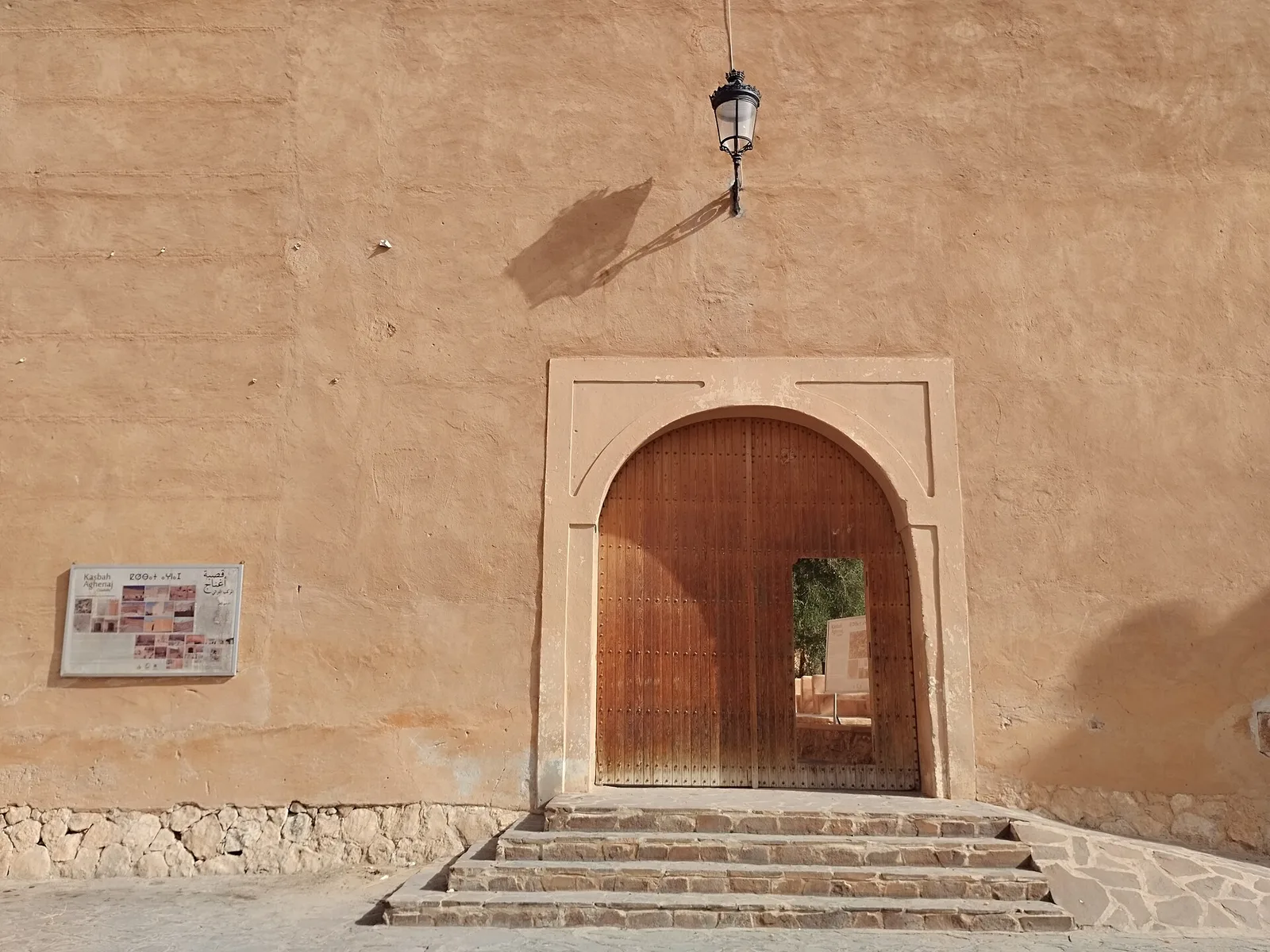
Located around 99 kilometres by road south of Agadir, Tiznit is a city in the Souss region that deserves much more than a brief stop along Morocco's Atlantic coast. Behind its ochre-coloured ramparts lies a distinctive old medina, a history shaped by the reign of Sultan Hassan I and a traditional craft that has earned the city a reputation throughout Morocco: silverwork.
Less frequented than the country's major tourist destinations, Tiznit offers a different kind of experience. Visiting the city is not simply about admiring spectacular monuments. It is about wandering through narrow streets, discovering monumental gateways and lively squares, browsing jewellery shops and exchanging a few words with local craftspeople. The city also offers an opportunity to understand the Amazigh culture of the Souss region, its traditional skills and its historic connections with the Anti-Atlas and the Atlantic coast.
Tiznit is also an excellent base for exploring the surrounding area. Aglou Beach lies a short distance to the west, while Legzira, Sidi Ifni and Tafraout allow travellers to extend their journey through landscapes that range from dramatic coastlines to rugged mountains.
Whether you have just a few hours or an entire day, here is how to discover Tiznit, explore its history and appreciate what makes this city so distinctive.
Tiznit at a Glance: Location, Identity and Atmosphere
Tiznit is the administrative capital of the province of the same name, in Morocco's Souss-Massa region in the southwest of the country. Located close to the Atlantic Ocean, approximately 15 kilometres from the coast, the city occupies a strategic position between Agadir, the villages of the Anti-Atlas and the territories farther south.
This geographical location helps explain its historical importance. Tiznit lies within a network of routes connecting the Souss plains, the mountains, the coastal areas and the historic trade routes of southern Morocco. As a result, the city has developed an identity that is simultaneously urban, artisanal and deeply connected to the region's Amazigh cultures.
Tamazight remains an important language in local life, alongside Moroccan Arabic. Its presence can be seen in local traditions, place names, craft practices and cultural expressions.
Tiznit is particularly known for three things:
- Its historic ramparts, which still surround the medina and give the city its distinctive silhouette.
- Its silver craftsmanship, particularly traditional jewellery and Amazigh fibulae.
- Its living heritage, which brings together architecture, local history, oral traditions and skills passed down through generations.
The atmosphere is generally calmer than in Morocco's major tourist cities. Markets, local shops and workshops shape everyday life, while El Mechouar Square serves as a popular meeting place, particularly towards the end of the day.
For visitors, Tiznit is a city best explored on foot and at an unhurried pace. Moving away from the busiest streets often reveals quieter passages, old gateways and architectural details that tell the story of the city.
The History of Tiznit: The Foundation Under Sultan Hassan I
The history of Tiznit in its present urban form is closely linked to the reign of the Alaouite sultan Hassan I. The city's foundation is generally dated to 1882, although some sources mention 1881. Its fortifications and urban organisation developed during the early 1880s.
The foundation of the city took place at a time when Morocco's central government was seeking to strengthen its authority in the southern regions of the kingdom. The Souss region held strategic importance because of its trade routes, its connections with inland territories and its proximity to the Atlantic coast.
However, the area around Tiznit was not uninhabited before the sultan's intervention. Communities already lived in the region, particularly around water sources. Local traditions and historical accounts refer to several settlements that gradually came together within a fortified urban area.
The construction of the ramparts marked an important transformation. It brought neighbourhoods and populations together within a more clearly defined urban perimeter, organised around a political centre, places of worship, markets and a water source.
The fortifications served purposes of defence and territorial control, but they also helped establish Tiznit as an administrative and commercial centre. The city became an important point of reference for regional trade and travel between the Souss, the coast and territories farther south.
Tiznit and the Events of 1912
The city also played a role in the political events of the early twentieth century. In 1912, Moulay Ahmed al-Hiba, son of the Saharan religious leader Ma el-Aïnin, was proclaimed sultan in Tiznit. He subsequently led a resistance movement against French expansion in Morocco, including a campaign towards Marrakech.
This episode reminds us that Tiznit's history extends far beyond its ramparts and jewellery workshops. It forms part of a period marked by political rivalries, resistance movements and profound transformations throughout the country.
The legacy of Ma el-Aïnin is also present in the city, where his tomb is located. These historical connections give Tiznit a significance that goes well beyond that of a simple stopover destination.
To explore the city's heritage in greater depth, see our dedicated guide to the medina of Tiznit.
The Ramparts of Tiznit: A Walk Through History
The ramparts are among the most distinctive features of Tiznit's urban landscape. Their ochre tones blend into the colours of the surrounding region and contrast with the bright skies of the Souss. They define the boundaries of the old medina and help visitors understand how the city developed around a fortified perimeter.
Built during the early 1880s as part of the city's development under Hassan I, the fortifications include several gateways connecting the medina with the surrounding neighbourhoods. These openings are more than simple passageways: they reflect the organisation of movement, commercial exchanges and relationships between the historic city and its surroundings.
Walking along the ramparts offers an opportunity to observe their proportions, variations in masonry and integration into the modern urban fabric. Some sections are particularly appealing for photography, especially in the morning or late afternoon, when the light brings out the different shades of the earth-coloured walls.
It is worth combining a walk along the ramparts with a visit to the narrow streets inside the medina. The walls tell the story of Tiznit's defensive organisation, while the medina reveals how the city developed around everyday activities.
Take time to notice the gateways, small squares and quieter passages. The appeal lies not only in the overall architecture but also in the details: an old entrance, a restored façade or a change in street level may reveal different stages in the city's urban history.
The Medina of Tiznit: Historic Neighbourhoods and Everyday Life
The medina is the historic heart of Tiznit. Its layout is closely connected to the presence of Aïn Aqdim Spring, around which several settlement areas developed. Local tradition identifies four historic neighbourhoods associated with this arrangement.
Unlike some of Morocco's best-known medinas, famous for their monumental density or extensive tourist circuits, Tiznit's old town is best discovered through careful observation. Its narrow streets, small squares, traditional houses and shops form an urban environment in which heritage remains closely connected to everyday life.
The medina is also home to artisanal activities, particularly metalworking and jewellery making. Shops and workshops offer visitors a glimpse of the craftsmanship that helped establish the city's reputation. However, not every workshop is open to the public, so it is best to ask permission before photographing a craftsperson or entering a working space.
The Living Heritage Centre of Tiznit
A recent architectural project is helping to bring renewed attention to the city's heritage: the Living Heritage Centre, also described as a heritage interpretation centre. Designed by Moroccan architect and anthropologist Salima Naji, it was built using traditional earth-based construction techniques in the heart of the medina, close to the historic ramparts.
The project highlights the materials and building methods traditionally used in southern Morocco. Its use of rammed earth creates a dialogue with the historic surroundings and demonstrates that heritage is not limited to old buildings. It also encompasses the work of craftspeople, knowledge of local materials and traditional ways of inhabiting a landscape.
In 2026, the centre received international recognition through the Terra Landscape Architectural Awards. Salima Naji was also honoured with the Institut du monde arabe's Grand Prix du design 2026 for her work. These distinctions highlight the value of contemporary architecture that draws on local resources and traditions rather than replacing them.
The centre is therefore an interesting place to explore the relationship between conservation and contemporary design. It demonstrates how traditional techniques can remain relevant in today's architectural projects.
Before visiting, check locally for opening hours, access arrangements and any exhibitions that may be available. These details can change.
The Blue Spring: Aïn Aqdim and the Memory of Tiznit
At the heart of the medina lies Aïn Aqdim, a name that can be translated as “the old spring”. Often referred to as the Blue Spring, it occupies an important place in local imagination and in the stories associated with the city's origins.
Local tradition links the spring to Lalla Zninia, a female figure whose repentance is said to have caused water to emerge from the ground. The story is commonly associated with the name Tiznit. Like many foundation legends, it combines local memory, symbolism and interpretations passed down orally. It is best understood as a cultural tradition rather than as a historical account established in every detail.
Water has long played a vital role in the organisation of the city. In a region where water resources are precious, a spring could determine where people settled, support gardens and make permanent habitation possible.
Aïn Aqdim is therefore more than a simple tourist attraction. It reflects the relationship between the city and its natural environment, as well as the importance of water in the history of communities throughout the Souss region.
The site experienced periods of neglect before being restored under the direction of Salima Naji. Its current layout, with stone walls arranged around a semicircular space, aims to give the spring a more visible place within the medina.
The flow of water is said to have decreased considerably over time, partly because of changes in water supply conditions in the surrounding region. The spring should therefore be understood from two perspectives: as a place connected to the memory of Tiznit and as a natural resource whose presence helped shape the city.
During your visit, take a moment to observe the surroundings and consider the spring's role in the historic organisation of the medina. Its significance lies as much in its history as in the stories associated with it.
Tiznit's Silverwork: Amazigh Jewellery and the Art of Silver
If Tiznit is known throughout Morocco, it is largely thanks to its silver craftsmanship. Jewellery making plays an important role in the city's cultural and economic identity. The pieces produced or sold here are connected to regional traditions, particularly Amazigh ones, and to a long history of jewellery worn during ceremonies and family celebrations.
Silver is used to create rings, bracelets, necklaces, pendants and ornaments in a wide range of shapes. Techniques may include hammering, engraving, filigree work and the assembly of different components. Depending on the piece, stones, enamel or other materials may be added to the metal.
The Fibula: An Emblematic Piece of Jewellery
Among the types of jewellery associated with Tiznit, the traditional fibula holds a special place. Often made of silver, this piece is used to fasten or decorate clothing. It may feature geometric or triangular shapes, or more elaborate designs, depending on regional traditions and styles.
In Amazigh cultures, fibulae are not merely decorative. They may express regional identity, aesthetic preferences or social significance. Their shapes, sizes and ornamentation vary from one area to another and according to how they are used.
The terms used for fibulae in Tamazight also differ between regions. It is therefore best not to treat a single name as universal for all Amazigh fibulae.
Traditional jewellery reflects the richness of local craftsmanship. Each piece can reveal the skill involved in working metal, the precision of its patterns and the transmission of techniques between generations.
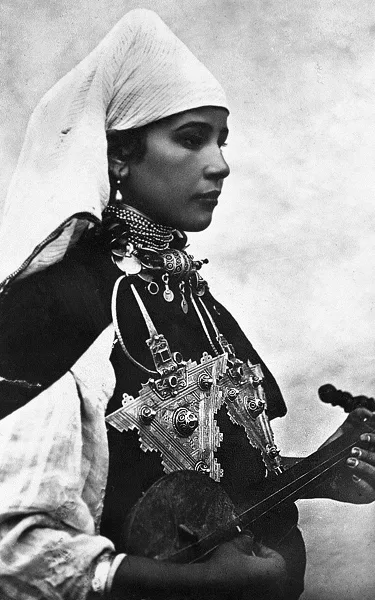
Traditional jewellery reflects the importance of adornment in Amazigh cultures and the central role of silver in the craftsmanship of southern Morocco.
Where to Discover Silver Jewellery in Tiznit
The medina and its specialist shops are the best places to explore Tiznit's silver jewellery. Some shops sell contemporary pieces, while others focus on traditional designs or objects inspired by older models.
If you are considering a purchase, take time to compare different pieces. Ask whether the item was made locally, whether it is a contemporary creation or a reproduction of a traditional design, and what type of metal was used.
The price depends on several factors, including the weight of the silver, the complexity of the work, the presence of stones and the time required to produce the piece. A handmade item may cost more than a mass-produced object, but part of its value lies in the craftsmanship behind it.
Do not hesitate to ask questions about the manufacturing techniques. Buying jewellery can become an opportunity to learn about local craftsmanship rather than simply purchasing a souvenir.
The Timizart Silver Festival
The importance of silverwork is also celebrated through the Timizart Silver Festival. This cultural and artisanal event brings together exhibitors, professionals and visitors to celebrate silver craftsmanship and its place in Tiznit's identity.
The festival helps promote local artisans, showcase their creations and support the transmission of traditional skills. Depending on the edition, the programme may include exhibitions, cultural activities, music and displays of jewellery and other handmade pieces.
Dates, activities and access arrangements should be checked before travelling, as the programme changes from one edition to another.
To explore these traditions further, read our guide to Amazigh culture in the Souss region.
What to See Around Tiznit: Beaches, Nature and Anti-Atlas Villages
Tiznit is a convenient base for exploring the southern part of the Souss-Massa region. Within a relatively short distance, the landscape changes from the medina's ramparts to Atlantic beaches, then to the mountains and villages of the Anti-Atlas.
Aglou Beach
Located approximately 16 kilometres from Tiznit, Aglou Beach is one of the easiest excursions to organise from the city. It opens onto the Atlantic Ocean and offers a coastal atmosphere different from that of Morocco's busier seaside resorts.
The coastline is suitable for walks and observing the marine landscape. Swimming conditions depend on the state of the sea, currents and weather. Visitors should exercise caution, particularly where there is no lifeguard service.
Aglou can be a pleasant break after exploring the medina or the starting point for a day dedicated to the Atlantic coast.
Souss-Massa National Park
Souss-Massa National Park lies farther north, around the mouth of the Oued Massa and several coastal areas. It protects important natural habitats and supports regional biodiversity, particularly birdlife.
The park is not located directly within Tiznit, so visitors need to plan a separate journey to reach areas accessible to the public. Depending on the route, an excursion may require half a day or longer.
Nature enthusiasts can enquire about authorised access, birdwatching opportunities and guided visits. Conditions vary depending on the area and the season.
Legzira and Sidi Ifni
Farther south, the coast offers two remarkable destinations: Legzira and Sidi Ifni. Legzira Beach is known for its red cliffs, sculpted by marine erosion. The rock formations change appearance with the light and tides, making the beach a favourite among photographers and visitors interested in coastal landscapes.
Visitors should take care when exploring the beach. The cliffs and natural arches continue to change through erosion, so it is important to respect safety zones and local instructions.
Sidi Ifni offers a different atmosphere. Once a Spanish enclave, the city retains architectural features dating from the colonial period, including buildings and façades influenced by Art Deco. Its fishing port and Atlantic character add to its appeal.
To plan this part of your journey, read our guide to Sidi Ifni and our dedicated guide to Legzira Beach.
Tafraout and the Landscapes of the Anti-Atlas
East of Tiznit, Tafraout reveals another side of southern Morocco. The road passes through mountain scenery, valleys and Amazigh villages before reaching a landscape dominated by the rock formations of the Anti-Atlas.
The painted rocks of Tafraout, known for their vivid colours, are among the region's most unusual sights. Their mineral landscape contrasts sharply with the Atlantic coastline.
The journey takes longer than a visit to Aglou. To enjoy the road and the surrounding scenery, it is best to allow a full day, or even spend a night in the area if you want to explore at a relaxed pace.
You can also discover our dedicated guide to the painted rocks of Tafraout.
How to Explore Tiznit in One Day
One day is enough to discover Tiznit's main attractions without rushing through the visit. Ideally, spend the morning exploring the medina and ramparts, then devote the afternoon to traditional crafts or an excursion towards the coast.
Morning: The Ramparts and Medina
Begin with a walk along the ramparts and identify the main gateways. Then enter the medina to explore its narrow streets, small squares and traditional architecture.
Continue towards El Mechouar Square, one of the city's central public spaces. Take time to observe its layout and its role in local life.
Late Morning: Aïn Aqdim and Living Heritage
Visit Aïn Aqdim Spring, one of the places most closely associated with Tiznit's collective memory. If the Living Heritage Centre is open to visitors, you can also explore its architecture and its approach to preserving and interpreting local heritage.
Check opening hours and access arrangements in advance, particularly if you wish to visit a specific cultural site.
Lunchtime: Take a Break in the City
Plan a meal at a local restaurant or stop at a café. This is an opportunity to slow down and observe everyday life around the squares and shops.
Menus vary from one establishment to another. If you want to discover regional cuisine, consider choosing places frequented by local residents and asking which dishes are available that day.
Afternoon: Silver Jewellery Workshops
Set aside some time to explore jewellery shops and workshops. Even if you do not intend to buy anything, discovering the designs, patterns and manufacturing techniques is an excellent way to understand Tiznit's artisanal identity.
If you plan to visit Aglou, you may prefer to shorten your time in the medina and drive to the coast after lunch. For Legzira or Sidi Ifni, it is better to organise the route in advance rather than trying to fit too many journeys into a single day.
When Is the Best Time to Visit Tiznit?
Tiznit can be visited throughout the year, although conditions vary by season.
Spring and autumn are often pleasant times to walk through the medina and explore the surrounding area. Temperatures are generally more comfortable for outdoor activities than during the height of summer.
In summer, the heat can be intense, especially around midday. It is advisable to start sightseeing early, take a break during the hottest hours and carry enough drinking water.
Winter can also be a good time to explore the city, although evenings are cooler and weather along the coast can be changeable.
If your trip coincides with the Timizart Silver Festival or another cultural event, check the exact dates and programme for that year's edition. Such events can add another dimension to your visit, but they do not necessarily take place on the same dates every year.
How to Get to Tiznit from Agadir
Tiznit is approximately 99 kilometres by road south of Agadir. The journey generally takes around an hour and a half, depending on traffic, your departure point and road conditions.
There are several ways to reach the city:
- By car: This is the most flexible option, particularly if you plan to continue towards Aglou, Legzira, Sidi Ifni or Tafraout.
- By public transport: Road connections may be available between Agadir and Tiznit. Check operators, departure points and timetables before travelling.
- On an organised excursion: This option may suit travellers who want to combine several destinations without driving themselves. Check which places are included, how much time is allocated to Tiznit and what the return arrangements are.
If you are planning a day trip from Agadir, decide in advance whether your priority is the medina, traditional crafts or the coast. Tiznit, Aglou, Legzira and Sidi Ifni can be combined in a longer itinerary, but attempting to see everything in just a few hours may reduce the enjoyment of each stop.
To plan your stay, consult our complete guide to Agadir, our selection of excursions from Agadir and our Agadir destination page.
Practical Tips for Visiting Tiznit
Allow time for walking. The medina is best explored on foot. Wear comfortable shoes and leave some flexibility in your schedule so you can stop in narrow streets and browse local shops.
Ask before taking photographs. The gateways, ramparts and squares are well suited to photography, but it is best to ask permission before photographing craftspeople, shopkeepers or local residents at close range.
Compare jewellery before buying. If you are purchasing silver, ask about the metal, the manufacturing process and the item's origin. Compare several shops and request a receipt describing the characteristics of the piece.
Respect workshops and cultural spaces. A workshop is not necessarily open to visitors. A respectful conversation with a craftsperson can often help you better understand their work and the conditions in which they operate.
Check opening hours locally. Opening times for heritage sites, workshops and cultural events can change. The Living Heritage Centre, in particular, should be visited according to its current access arrangements.
Plan around the heat. During hot periods, schedule walks for the morning and late afternoon. Carry water, sun protection and suitable clothing.
Do not underestimate travel distances. Tiznit is a useful base for exploring the region, but journeys to Tafraout or the southern coastline require realistic planning.
Why Tiznit Deserves a Place on Your Morocco Itinerary
Tiznit has a distinctive identity shaped by its history, environment and the skills of its inhabitants. Its ramparts recall the transformation of the city under Sultan Hassan I. The medina preserves the memory of an urban layout connected to water. Its jewellers continue a silverworking tradition that remains one of the city's most recognisable features.
The city also offers a living approach to heritage. The Living Heritage Centre demonstrates how traditional earth-building techniques and local knowledge can inform contemporary architecture. Meanwhile, the jewellery shops and workshops remind visitors that traditions are not preserved only in museums: they continue to evolve through the everyday work of craftspeople.
Finally, Tiznit occupies an ideal position for exploring a remarkably diverse region. Over a few days, visitors can move from the medina to the Atlantic beaches, discover the landscapes of Legzira and Sidi Ifni, and then travel inland towards the mountains of Tafraout and the Anti-Atlas.
For travellers who want to go beyond Morocco's best-known tourist routes, Tiznit offers a rewarding cultural experience that complements a stay in Agadir. Half a day is enough to get an overview of the city; a full day allows time to explore its main attractions; and a longer stay provides an opportunity to discover the surrounding area without rushing.
Ultimately, the best way to experience Tiznit is to take your time: walk along the ramparts, stop by the spring, observe the work of the silversmiths and discover the stories that connect the city to its landscape. This is how the full character of this Souss city begins to emerge.
Sources and Further Reading
- Official website of the city of Tiznit — historical information and an introduction to the city.
- Maroc.ma — Salima Naji receives the Institut du monde arabe's Grand Prix du design 2026.
- Office du Développement de la Coopération — Timizart Silver Festival.
- Médias24 — Tiznit's Living Heritage Centre receives recognition at the 2026 Terra Landscape Architectural Awards.
- The Medina of Tiznit — MoroccoMuseum.
- Amazigh Culture in the Souss Region — MoroccoMuseum.
Cover photo: Gate of the Kasbah Aguenaj, medina of Tiznit — Rachidourkia, CC0, Wikimedia Commons.