Agadir is much more than a seaside destination. Beyond its long Atlantic beach and waterfront promenade lies a region of striking contrasts: fishing villages, green valleys, medinas surrounded by historic walls, nature reserves, oases and pink granite mountains. Within a few hours of driving, the scenery can change completely.
The Souss-Massa region is an excellent starting point for discovering different sides of Morocco. To the north, Taghazout attracts surfers, while Paradise Valley leads towards the foothills of the High Atlas. Inland to the east, Taroudant preserves the atmosphere of a historic trading town. To the south, Tiznit, Souss-Massa National Park, Legzira and Sidi Ifni offer a different perspective on Morocco’s Atlantic coast. Further into the Anti-Atlas, Tafraout reveals spectacular rock formations and Amazigh villages.
The best destination depends on how much time you have, the season and the kind of experience you are looking for: a nature excursion, a cultural visit, a day at the beach or a multi-day road trip.
To explore the city itself before heading further afield, start with our complete guide to Agadir.
Half a Day: Taghazout or Paradise Valley
If you only have a few hours, there is no need to plan a long road trip. Two excursions are particularly suitable for a short outing from Agadir: the Taghazout coastline, with its relaxed seaside atmosphere, and Paradise Valley, with its mountain scenery.
Taghazout and the Surf Coast
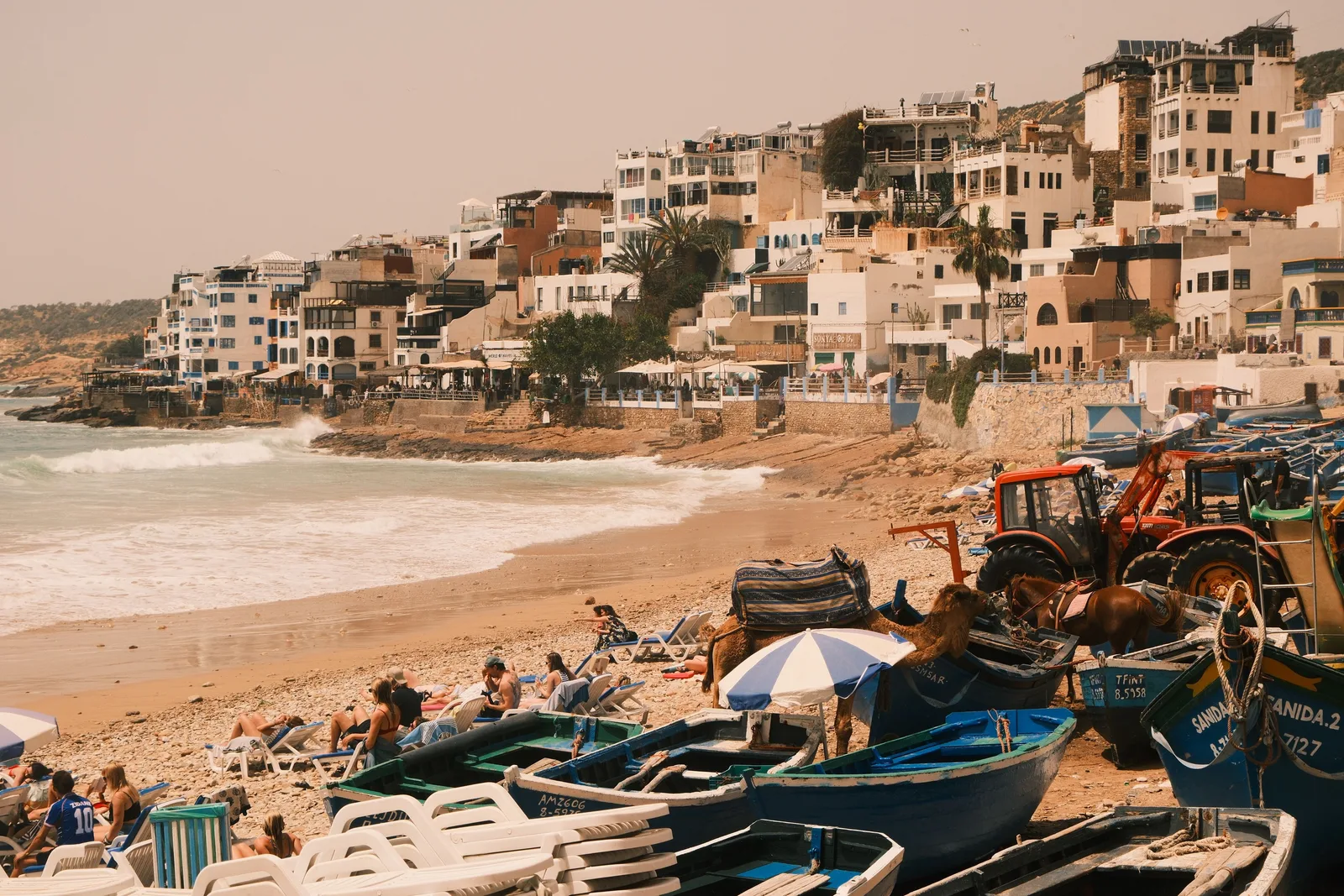
Located approximately 20 kilometres north of Agadir, Taghazout is a former fishing village that has become one of Morocco’s best-known surfing destinations. Its houses, narrow streets and cafés overlooking the ocean give it a different atmosphere from Agadir’s larger beach resort.
The village attracts experienced surfers as well as travellers who simply want to enjoy the coast. Beaches and surf spots stretch along the surrounding shoreline, particularly towards Tamraght and neighbouring coastal areas. Depending on the conditions, some spots are suitable for beginners accompanied by an instructor, while others are better suited to experienced surfers.
Even without a surfboard, Taghazout is worth visiting. You can stroll through the village, enjoy a coffee overlooking the Atlantic, watch local fishing activity and discover small cafés and restaurants. Sunsets are particularly popular when the sky is clear.
The coastal road also allows you to continue north towards Tamri and Imsouane if you want to spend a full day exploring the shoreline.
How much time should you allow? Half a day is enough to explore Taghazout and take a walk along the coast. Allow more time if you plan to take a surf lesson or visit several beaches.
Practical tip: swimming and surfing conditions vary according to swell, currents and weather. Ask a local professional for advice before entering the water.
For more ideas, read our guide to beaches and surfing around Agadir.
Paradise Valley and Imouzzer Ida Outanane
Approximately 60 kilometres from Agadir, depending on the route, Paradise Valley offers a striking contrast with the coastline. The road gradually leaves the city behind and enters the foothills of the High Atlas, passing through villages and along slopes where argan trees and almond trees can be found.
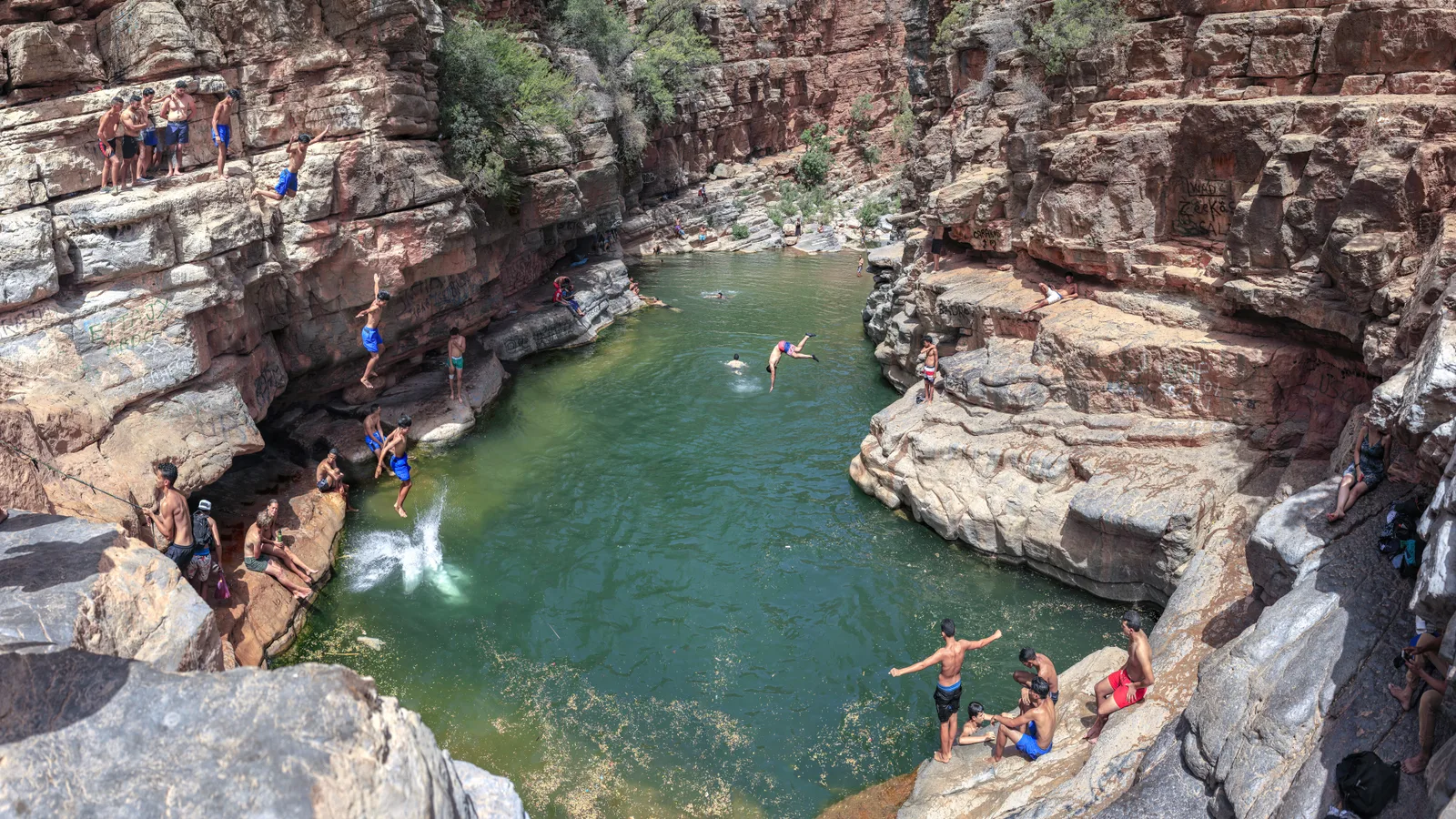
The valley is known for its gorges, rock formations and natural pools. When conditions allow, visitors stop to walk, relax beside the water or cool off. The landscape changes considerably throughout the year: after periods of rainfall, water may be more abundant, while during dry months the valley can be much less green.
The wider region extends towards Imouzzer Ida Outanane, a mountain town associated with valley landscapes and local honey production. The surrounding villages offer a glimpse into rural life and agricultural traditions that contrast with the tourism-oriented atmosphere of the coast.
The waterfalls in the region do not flow with the same intensity throughout the year. It is therefore best not to plan your excursion solely around the expectation of seeing flowing waterfalls. The road, mountain scenery and villages are also part of the experience.
How much time should you allow? Half a day is enough for a focused visit, but a full day is more comfortable if you want to walk, stop in several villages or enjoy the scenery at a relaxed pace.
Practical tip: check road and track conditions before leaving, particularly after heavy rainfall. Wear suitable walking shoes and avoid natural pools when currents are strong or rocks are slippery.
One Day: Historic Towns, Craftsmanship and Nature
With a full day available, you can travel further from Agadir and discover destinations that tell the story of the region. Taroudant is ideal for visitors interested in heritage and traditional markets; Tiznit is known for its historic walls and silver craftsmanship; and Souss-Massa National Park offers a different experience focused on landscapes and wildlife.
Taroudant, the Walled Medina
Approximately 80–85 kilometres east of Agadir, Taroudant is often nicknamed “Little Marrakech” because of its ochre-coloured ramparts, traditional souks and atmosphere as a historic trading town. Located in the Souss Valley, it offers a chance to discover Morocco’s traditional urban heritage without quite the same bustle as Marrakech’s medina.
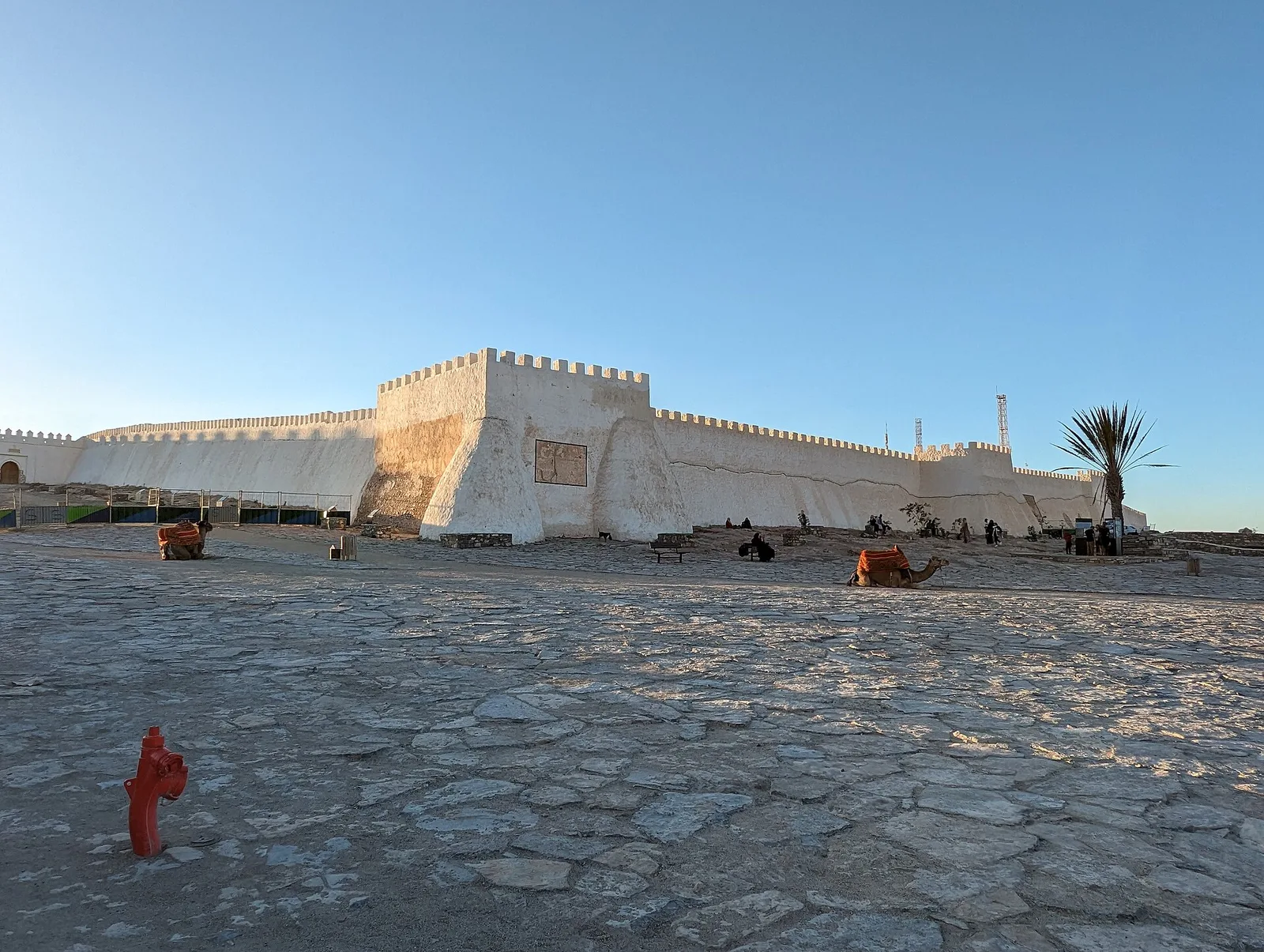
A visit usually begins with a walk alongside the ramparts, where you can observe the towers, gates and changing colours of the walls in the sunlight. The fortifications are among the town’s most distinctive features. Their history is closely associated with the Saadian period, when Taroudant played an important role in the region.
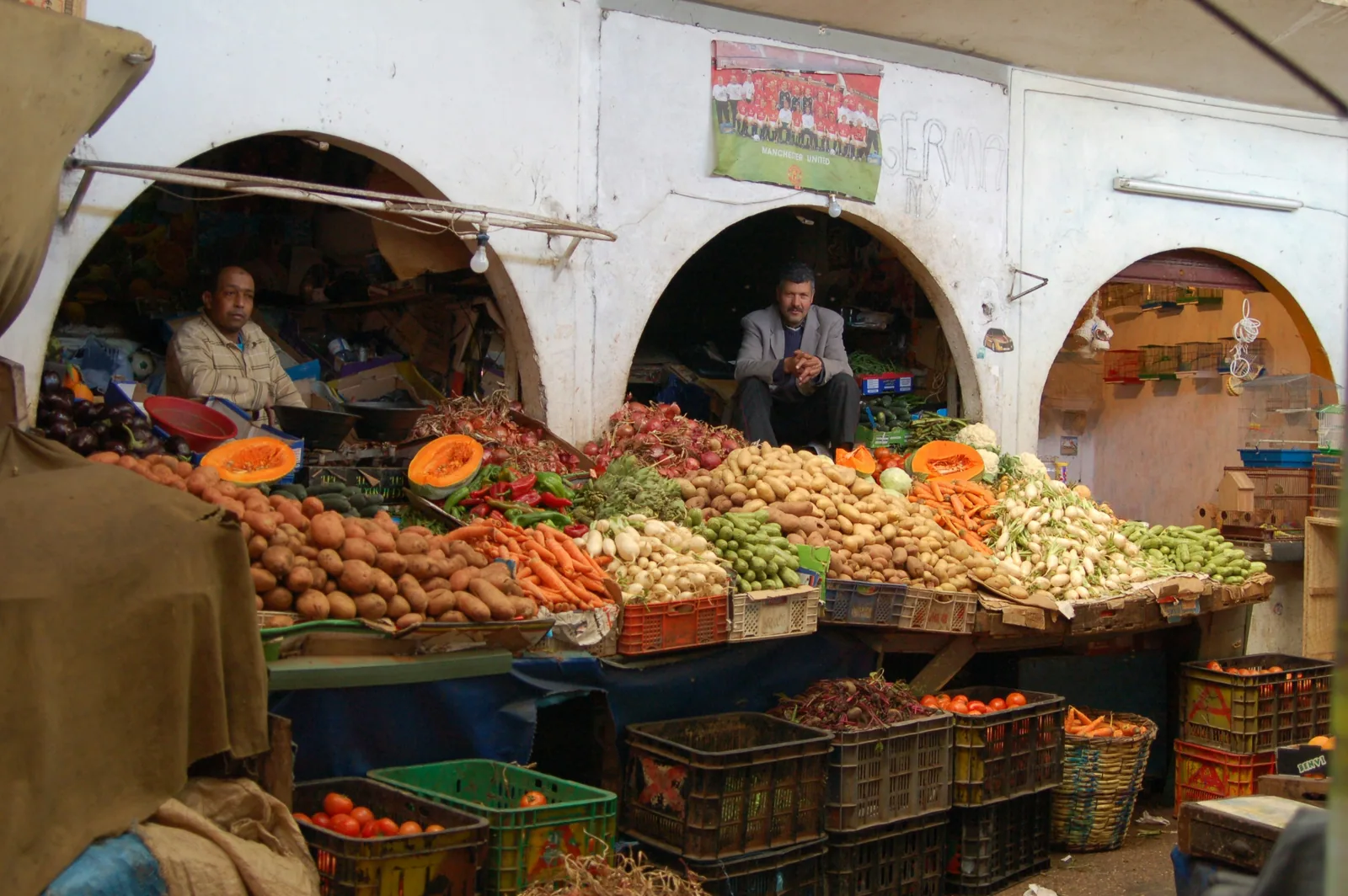
Inside the medina, streets lead towards commercial districts where food products, handicrafts, textiles, leather goods and Amazigh jewellery are sold. The areas around Assarag and Talmoklate squares are useful starting points for finding your way around and exploring the souks on foot.
Taroudant is also an excellent place to stop for lunch, sample local cuisine and observe everyday life. Rather than focusing exclusively on monuments, a walk through the market streets helps visitors understand the town’s historical role in trade between the Souss plains and the inland regions.
If you have more time, consider extending your visit to the nearby Tiout oasis, known for its palm grove and rural scenery. However, check driving times carefully before combining both destinations in a single day.
How much time should you allow? Half a day is enough to explore the ramparts and souks. A full day is preferable if you want to take your time or add a stop in the surrounding countryside.
Practical tip: explore the medina on foot and ask permission before photographing local residents or shopkeepers.
Tiznit, a Town of Ramparts and Silver Jewellery
Approximately 90–100 kilometres south of Agadir by road, Tiznit is particularly appealing to travellers interested in urban history and Moroccan craftsmanship.
The town developed around a historic enclosure built in the late nineteenth century during the reign of Sultan Hassan I. Its earthen and masonry ramparts still surround a substantial part of the old medina, giving Tiznit a distinctive appearance.
A visit often begins with a walk along the walls before continuing through the old town’s narrow streets. Historic gates, small squares and local shops make the medina pleasant to explore on foot.
Tiznit is especially famous for its silverwork. Traditional jewellery, including Amazigh fibulae, reflects a long-established craft tradition. These pieces may be decorative, but they can also carry cultural significance linked to the traditions and regions from which they originate.
To better understand this craftsmanship, take time to speak with artisans and compare the techniques, patterns and finishes. If you intend to buy a piece of jewellery, ask about the material, weight and manufacturing process rather than judging it by appearance alone.
The town is also a useful stop on a southern coastal itinerary towards Aglou, Mirleft, Legzira and Sidi Ifni.
How much time should you allow? Half a day is enough to visit the medina and shopping districts. A full day allows you to add a coastal excursion, provided you plan the journey carefully.
Find more information in our guide to the medina of Tiznit and our complete guide to Tiznit.
Souss-Massa National Park: Birds, Dunes and Atlantic Landscapes
Established in 1991, Souss-Massa National Park covers approximately 33,800 hectares between Agadir and the Tiznit region. It protects a variety of natural environments, including steppes, dunes, cliffs, beaches and wetlands associated with the mouths of the Souss and Massa rivers.
The park is particularly important for the conservation of the northern bald ibis, a rare bird whose wild population is closely monitored. It is also home to many other bird species and a variety of habitats that make it an interesting destination for nature lovers.
Visiting the park is different from visiting a landscaped urban park. Distances between the various areas can be considerable, and access depends on which part you want to explore. Some excursions focus on birdwatching, while others highlight coastal scenery and nearby villages.
The Massa estuary is especially known for its wetlands and birdlife. Observation conditions vary with the season, and a guided visit with someone familiar with the area can help you understand the habitats and identify species without disturbing wildlife.
How much time should you allow? A full day allows you to explore one section of the park at a comfortable pace. It is better to choose your destination in advance than to try to cover the entire protected area.
Practical tip: check access conditions, any restrictions and applicable fees with the relevant park services or your tour operator. Respect protected areas and avoid disturbing wildlife, especially during breeding periods.
Two Days or More: The Anti-Atlas and the Southern Coast
For travellers who want to go beyond the most common excursions, the Anti-Atlas and the coastline south of Tiznit offer more remote landscapes. These destinations involve longer drives, so it is worth planning an overnight stay rather than trying to fit too many stops into a single day.
Tafraout and the Painted Rocks of the Anti-Atlas
Located approximately 170–180 kilometres southeast of Agadir, Tafraout lies in the heart of the Anti-Atlas, in a mountainous landscape characterised by enormous pink granite formations.
The town sits at the foot of Jebel Lekest and provides a base for exploring the Ammeln Valley. Villages, local palm groves, almond trees and argan trees create scenery very different from that of the Atlantic coast.
The region is also known for its spectacular rock formations. Among the most famous sites are the Painted Rocks of Tafraout, coloured in the 1980s by Belgian artist Jean Vérame. The granite boulders, with their vivid colours and surrounding mineral landscape, form a remarkable and unusual sight.
Beyond this site, Tafraout deserves time for exploring the surrounding area. Roads pass through valleys, villages and mountain scenery that changes with the light and the seasons. Photography enthusiasts particularly enjoy the contrast between the rocks, houses and vegetation.
The region is also known for its almond trees. When they bloom, usually towards the end of winter depending on the weather, the valleys can be covered with flowers. The exact dates vary from year to year.
How much time should you allow? Two days are preferable if you want to explore Tafraout and its surroundings without spending most of your trip in the car. A day trip from Agadir is possible, but the long journey leaves less time for sightseeing.
Practical tip: bring water, sun protection and suitable footwear if you plan to walk across rocky terrain. Distances between villages and natural sites can be greater than they appear on a map.
Legzira and Sidi Ifni: Red Cliffs and Art Deco Heritage
Approximately 150 kilometres south of Agadir, depending on the route, Legzira Beach is known for its red cliffs, shaped by erosion, and its open views across the Atlantic.
The beach is famous for its natural arches. One of the best-known arches collapsed in September 2016, but the beach remains an impressive landscape. The cliffs, the colour of the rock and the changing light attract visitors, especially photography enthusiasts.
When visiting Legzira, take tides and sea conditions into account. Waves can be powerful, and the cliffs are exposed to erosion and falling rocks. Follow safety advice, keep your distance from unstable rock faces and avoid entering dangerous areas.
About ten kilometres further south, Sidi Ifni offers a very different atmosphere. The town still bears traces of its Spanish colonial past, particularly in its architecture and the layout of some neighbourhoods.
Art Deco heritage is one of its main attractions. Facades, administrative buildings and the geometric lines of several structures reflect this period. The building known as the Military Treasury, inaugurated in 1938 according to local historical references, is among the structures associated with the town’s architectural identity.
A walk through Sidi Ifni allows you to discover this heritage while enjoying the coastal atmosphere. Cafés, quiet streets and views of the ocean invite visitors to slow down after a day on the road.
How much time should you allow? One day may be enough to visit Legzira and take a short tour of Sidi Ifni, but an overnight stay allows you to enjoy the coast without rushing. If you want to combine this area with Tiznit or Tafraout, plan a two- or three-day trip.
Prepare your visit with our pages on Legzira Beach and Sidi Ifni’s Art Deco heritage, as well as our guide to Sidi Ifni.
Taliouine and Amtoudi: Travelling Further Inland
For travellers with a few extra days, Taliouine and Amtoudi offer opportunities to venture further into the interior.
Taliouine, in Taroudant Province, is associated with saffron cultivation. This valuable spice plays an important role in local agriculture and the region’s gastronomic identity. Visits to cooperatives may offer an opportunity to learn about the production process and the work required to harvest saffron, depending on availability.
The harvest generally takes place in autumn. Events dedicated to saffron may be organised during this period, but their dates and programmes should be checked before travelling.
Amtoudi, further to the southeast, is known for its Anti-Atlas scenery and traditional villages. The surrounding area features arid mountains, valleys and rural heritage closely connected to the landscape. It is best considered as part of a longer road trip rather than an improvised day excursion from Agadir.
These destinations are particularly suitable for travellers who want to explore rural Morocco in greater depth, meet local producers or discover regions less frequented by visitors staying along the coast.
How to Combine Day Trips from Agadir
The best itinerary depends on your pace, transport and the landscapes you want to discover. Here are a few possible combinations.
Option 1: Half a Day by the Ocean
- Leave Agadir and drive towards Taghazout.
- Walk through the village and explore the coastline.
- Take a break at a café or have lunch overlooking the sea.
- Return to Agadir in the afternoon.
This option suits travellers who want to keep time available for the beach, the souk or sightseeing in the city.
Option 2: A Day of Heritage and Craftsmanship
- Leave early in the morning for Tiznit.
- Explore the medina and walk along the ramparts.
- Discover local workshops and silver jewellery.
- Have lunch in town.
- Return to Agadir in the late afternoon.
This itinerary allows you to discover a historic town without making too many long journeys.
Option 3: Two Days on the Southern Coast
Day 1: Leave for Tiznit, visit the medina, then continue towards Legzira and Sidi Ifni. Spend the night in the area.
Day 2: Explore Sidi Ifni or the surrounding coastline before returning to Agadir. An additional stop may be possible depending on your schedule and road conditions.
This option focuses on coastal scenery and architectural heritage.
Option 4: A Mountain and Village Road Trip
- Day 1: Drive to Taroudant and explore its ramparts and souks.
- Day 2: Continue towards Taliouine or another Anti-Atlas destination, depending on your route.
- Day 3: Discover Tafraout and the Ammeln Valley before returning or continuing your journey.
This itinerary requires careful planning. Calculate distances and driving times according to the roads you will actually use.
Option 5: A Day Dedicated to Nature
Choose one area of Souss-Massa National Park or head towards Paradise Valley. Avoid combining too many distant sites in a single day. A well-planned visit is more rewarding than spending several hours travelling between attractions.
When Is the Best Time to Take a Day Trip?
The area around Agadir can be explored throughout the year, but each season offers a different experience.
- Spring: mountain landscapes may be greener, and conditions can be favourable for walking. Almond blossom in the Tafraout region depends on the weather.
- Summer: the coast, Taghazout and the beaches attract many visitors. Inland temperatures can be higher, so leave early and protect yourself from the sun.
- Autumn: temperatures are often pleasant for cultural visits and road trips. This is also the season associated with the saffron harvest around Taliouine.
- Winter: mountain temperatures can be cool, and rainfall may affect road or track conditions. Waterfalls and pools in Paradise Valley depend on rainfall, so flowing water cannot be guaranteed.
Check the weather forecast and local conditions before setting off, particularly for mountain excursions and visits to natural sites.
Practical Tips for Planning Your Excursions
Check driving times. Distances in this guide are approximate. Mountain terrain, roadworks, traffic and road conditions can extend journeys, especially in the Anti-Atlas.
Leave early for full-day trips. An early start gives you more time to enjoy the sites before the hottest part of the day and leaves room for breaks.
Choose the right transport. A car offers more freedom for independent travel. Organised excursions may be more convenient if you prefer not to drive or want the explanations of a local guide.
Bring appropriate equipment. Carry water, sunscreen, a hat and comfortable shoes. For hikes, valleys and rocky terrain, proper footwear is preferable to sandals.
Respect natural sites. Do not leave rubbish, disturb wildlife or ignore instructions in protected areas. Along the coast, keep away from unstable cliffs and take the tides into account.
Confirm information before booking. Opening hours, fees, access conditions and guided-tour availability may change. Check current information with the provider or relevant services before you leave.
Activities to Book from Agadir
If you prefer to travel with a guide, several types of excursions are available from Agadir. Depending on what is offered on your dates, you may choose a guided trip to Paradise Valley, an excursion combining nature and mountain scenery, or a motorised adventure in the surrounding area.
Here are a few examples to explore:
- Agadir Paradise Valley: Guided Tour, Swimming and Breakfast
- Agadir 4x4 Safari: Mini Sahara and a Berber Lunch
- Agadir Desert Quad Bike Safari with Moroccan Tea and Hotel Pickup
Services, routes, durations and booking conditions vary by operator. Read the itinerary, cancellation policy and any restrictions carefully before confirming your reservation.
Related Guides to Help You Plan Your Stay
- Tafraout and the Ammeln Valley: painted rocks, almond trees and Anti-Atlas scenery.
- Tiznit: medina, ramparts and silver craftsmanship.
- Sidi Ifni: Art Deco architecture and the heritage of the former Spanish enclave.
- Beaches and Surfing Around Agadir: Taghazout, Imsouane and the Atlantic coastline.
- Agadir-Al Massira Airport: access to the city, transport and practical advice.
To complete your travel planning, also read our complete guide to Agadir, our article on Agadir’s history and heritage and the Agadir destination page.
Explore the Agadir Region at Your Own Pace
The area around Agadir offers remarkable variety for a destination often associated mainly with the beach. Half a day in Taghazout lets you enjoy the ocean; Paradise Valley provides a nature escape; Taroudant and Tiznit invite you to discover historic walls, traditional markets and local craftsmanship. Further south, Legzira and Sidi Ifni combine coastal scenery with architectural heritage, while Tafraout opens the way to the mountains of the Anti-Atlas.
The key is to choose an itinerary that suits the time you have available. Exploring one destination properly can be more rewarding than rushing through an overloaded schedule. With realistic travel plans and up-to-date local information, you can discover a region where the Atlantic, the mountains and the traditions of Souss-Massa meet.
Cover photo: pool in Paradise Valley, Roy Egloff, CC BY-SA 4.0, Wikimedia Commons.