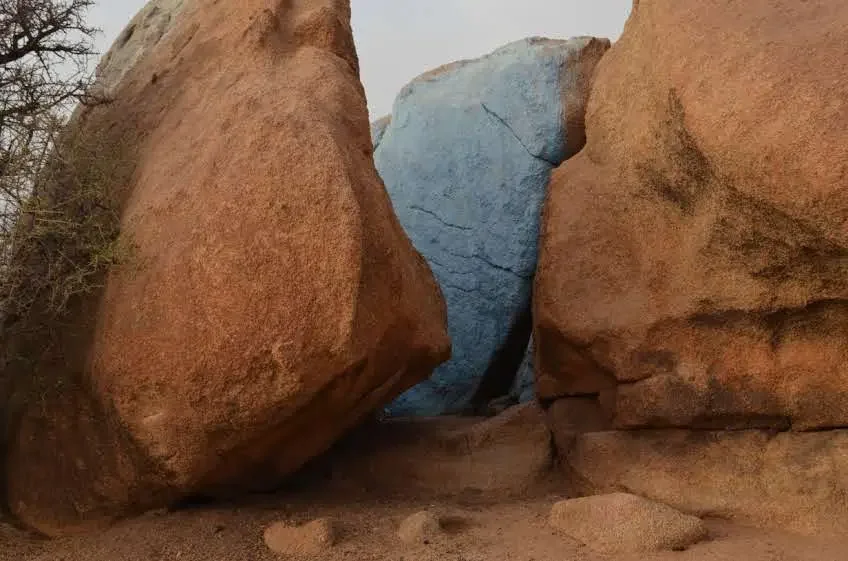
Tafraout: A Different Side of Morocco
Around 170 to 180 kilometres southeast of Agadir, in the heart of the Anti-Atlas mountains, Tafraout seems to move to a different rhythm. Here, the mountains are covered in pink granite, villages blend into the rocky slopes, and palm groves appear in valleys that might otherwise seem barren. Almond trees, argan trees and olive trees punctuate the landscape, while winding roads pass between enormous boulders and traditional earthen buildings.
The town lies at the foot of Jebel Lekest, in a mineral landscape whose colours change throughout the day. In the morning, the mountains take on soft shades; in the afternoon, the sunlight brings out the ochre, pink and red tones of the rock. This scenery is one of the region’s most distinctive features.
Yet Tafraout is much more than its mountains. The town and surrounding villages are deeply connected to Amazigh culture, traditional agriculture, trade and a local history shaped by exchanges between the valleys of the Anti-Atlas and the wider Souss region.
It is also a destination where several experiences naturally complement one another: admiring Jean Vérame’s painted rocks, exploring the villages of the Ammeln Valley, discovering an oasis hidden in a canyon, meeting local artisans or simply taking time to appreciate the scenery.
For travellers who want to discover a side of Morocco less associated with imperial cities and seaside resorts, Tafraout is a particularly rewarding destination. One day is enough to see some of its main attractions, but two days offer greater freedom to explore the villages, mountain roads and oases without rushing.
Tafraout at a Glance
Tafraout is a small town in the province of Tiznit, within the Souss-Massa region. It lies at an altitude of approximately 1,200 metres, according to some sources, and around 170 to 180 kilometres from Agadir. The town has a population of roughly 6,000, according to estimates cited in local descriptions, while the name Tafraout is also used more broadly to refer to the surrounding villages and landscapes.
Originally, Tafraout was a market town. It gradually became an administrative and commercial centre for nearby communities. Its regional importance stems from its location in the heart of the Anti-Atlas, between agricultural valleys, mountains and routes linking the Souss to more southerly territories.
- Region: Souss-Massa
- Province: Tiznit
- Location: Anti-Atlas, southeast of Agadir
- Altitude: approximately 1,200 metres, according to some sources
- Landscapes: pink granite mountains, valleys, palm groves and oases
- Main attractions: painted rocks, Ammeln Valley, Napoleon’s Hat and Aït Mansour Oasis
- Recommended stay: two days to explore the town and its surroundings at a relaxed pace
1. Jean Vérame’s Painted Rocks: An Unexpected Artwork in the Anti-Atlas
The painted rocks are probably the most recognisable images of Tafraout. In the middle of a granite landscape, enormous boulders display shades of blue, red, purple and white. The contrast with the mountains’ natural colours is striking.
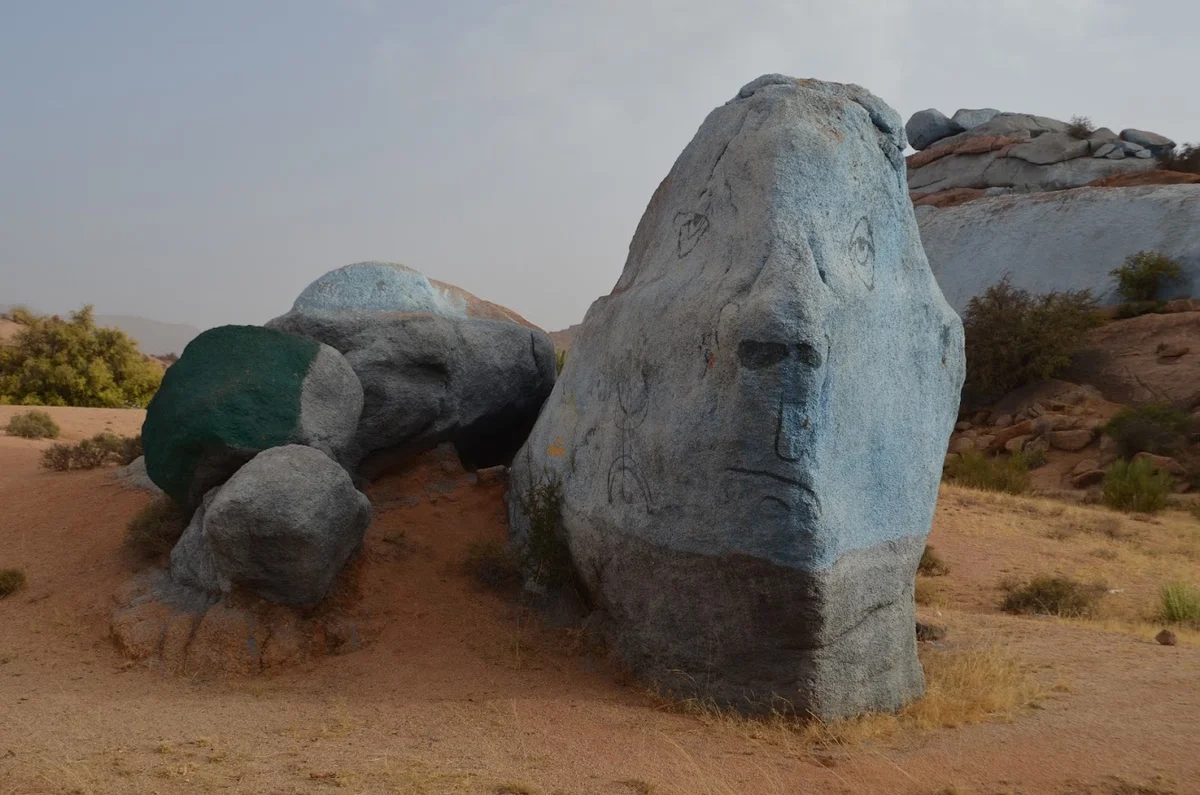
This artistic intervention is associated with Belgian artist Jean Vérame. In 1984, he created a large-scale artwork on a granite site near Tafraout. According to accounts of the project, the work was carried out with the approval of King Hassan II and involved a team and a considerable quantity of paint, often estimated at around 18 tonnes. The project took several months and transformed part of the rocky landscape into a monumental open-air composition.
The work is now known by several names, including the “painted rocks”, “blue rocks” and “blue stones”. It has become one of the region’s tourist symbols.
An Artwork That Divides and Fascinates
The painted rocks provoke different reactions. Some visitors see them as a land art installation that plays with volume, colour and the vastness of the landscape. Others question the human intervention in such a distinctive natural environment.
This variety of responses is part of the site’s interest. The rocks are neither a traditional monument nor an archaeological relic. They represent a contemporary artistic intervention that has profoundly changed the way this natural space is perceived.
Over time, sunlight, wind and erosion have affected the colours. The shades may therefore look different from those in older photographs. The appearance of the site can also change depending on maintenance and any interventions carried out over the years.
How to Visit the Painted Rocks
The site is a short distance from Tafraout. The journey from the town centre is generally brief, but it is advisable to check the route and the condition of the road or track before setting off. Access conditions can vary depending on the area and local circumstances.
Once there, take time to look at the rocks from different angles. The rounded granite formations, cracks, shadows and colours create compositions that change with the light. A late-afternoon visit can be particularly rewarding for photography, when the landscape takes on warmer tones.
Respecting the site is essential: do not add paint, carve into the rock or leave rubbish behind. The value of the place lies in both the artistic intervention and the surrounding landscape.
For more detailed information, visit our page about the painted rocks of Tafraout.
2. The Ammeln Valley: Amazigh Villages and Granite Landscapes
The Ammeln Valley is one of the region’s main attractions. It stretches along the foothills of the Anti-Atlas and contains villages whose houses sometimes seem to merge with the rocky slopes.
The landscape combines granite formations, gardens, fruit trees and cultivated land. In some areas, traditional houses are built with materials and colours that blend naturally into their surroundings. Palm trees and almond trees add patches of green to the otherwise arid terrain.
The valley is not simply a scenic backdrop. It is also a living environment where agriculture, family traditions and community practices remain important. The villages reflect a long process of adaptation to local conditions, including water management, crop cultivation, construction suited to the terrain and movement between settlements.
Discovering the Villages at Your Own Pace
An excursion through the valley offers a different kind of travel experience. Rather than moving quickly from one monument to another, visitors can take time to observe houses, gardens, paths and mountains.
The villages provide starting points for short walks and longer excursions. Some routes offer beautiful views of Jebel Lekest, one of the region’s most recognisable mountains.
If you plan to walk, check the duration of the routes and the condition of the terrain. Heat, limited shade and the lack of water sources along some paths make proper preparation essential. On less clearly marked routes, a local guide can help with navigation and share knowledge about the area.
The Ammeln Valley is particularly suited to slow travel. Stopping in a village, noticing architectural details and enjoying the scenery can be just as rewarding as visiting a famous landmark.
To plan your visit, explore our guide to the Ammeln Valley.
3. Almond Blossoms: Springtime in the Anti-Atlas
Almond trees are among the defining features of the Tafraout region. When they bloom, their branches become covered in white and pink flowers that contrast beautifully with the granite and the mountains’ ochre tones.
This spectacle temporarily transforms the landscape. In gardens and valleys, flowering trees soften an environment otherwise dominated by stone. For photography enthusiasts, this season offers a different perspective on Tafraout from the familiar summer images of rocks and mountains.
However, flowering depends on weather conditions. It is therefore impossible to guarantee that the trees will be in bloom on a specific date every year. If seeing the almond blossoms is the main reason for your trip, check local conditions before booking.
The Almond Blossom Festival
The Almond Blossom Festival is one of the events associated with Tafraout. It celebrates almond cultivation, local produce and traditional skills. It also highlights the role of almond farming in the region’s economy and identity.
According to the official Moroccan portal Maroc.ma, the 2026 edition took place from 11 to 13 April. This illustrates why it is important to check the calendar every year: contrary to what some older descriptions may suggest, the festival should not automatically be assumed to take place in February.
The event can be an opportunity to discover regional products, meet producers and better understand the links between agriculture, heritage and local development. The programme, dates and activities vary from one edition to another.
If you want to combine the blossoms with the festival, check official information before travelling. The two do not necessarily coincide: flowering depends on the weather, while the event dates are set by the organisers.
4. Napoleon’s Hat: A Natural Landmark in Aguerd-Oudad
Near Tafraout, the village of Aguerd-Oudad is known for an unusual rock formation nicknamed “Napoleon’s Hat”.
The name comes from the resemblance some visitors see between the rock’s shape and the famous headgear associated with the French emperor. This is an imaginative comparison: the formation is natural, and its appearance depends on the viewing angle.
That is precisely what makes the site appealing. The Anti-Atlas landscape contains granite boulders with surprisingly varied shapes. Some resemble faces, animals or familiar objects. These interpretations give travellers recognisable landmarks and contribute to the villages’ tourist identity.
Napoleon’s Hat can be included in a circuit around Tafraout. It does not necessarily require a long visit, but it is worth stopping to observe the rock formation and photograph its contrast with the surrounding landscape.
Use the opportunity to explore Aguerd-Oudad rather than limiting your visit to the rock itself. The village and nearby roads offer a better understanding of the relationship between settlement, terrain and local life.
5. The Lion’s Head: When the Mountain Takes Shape
In the Ammeln Valley, a natural formation is known as the “Lion’s Head”. Viewed from certain points in the valley, the outline of a mountain resembles the profile of a feline.
As with Napoleon’s Hat, this is a visual interpretation of the landscape rather than a sculpture. The shape is more or less recognisable depending on perspective, light and distance.
This kind of natural curiosity shows how well Tafraout’s landscapes lend themselves to observation. The mountains are not merely a backdrop; they become a collection of forms to interpret, compare and photograph.
To find a good viewpoint, ask a local resident or guide for advice. Avoid leaving suitable paths or approaching unstable rocky areas simply to get a photograph.
The Lion’s Head can be included in a wider exploration of the Ammeln Valley, alongside its villages and viewpoints overlooking Jebel Lekest.
6. Aït Mansour Oasis: A Green Corridor Through the Rocks
Around 30 kilometres from Tafraout, depending on the route, the Aït Mansour oases and gorges are among the region’s most memorable excursions.
The landscape changes gradually as you approach the canyon. The rocky slopes draw closer together, and a strip of vegetation appears along the valley floor. Palm trees, fruit trees and gardens benefit from the presence of water, creating a striking contrast with the mineral slopes.
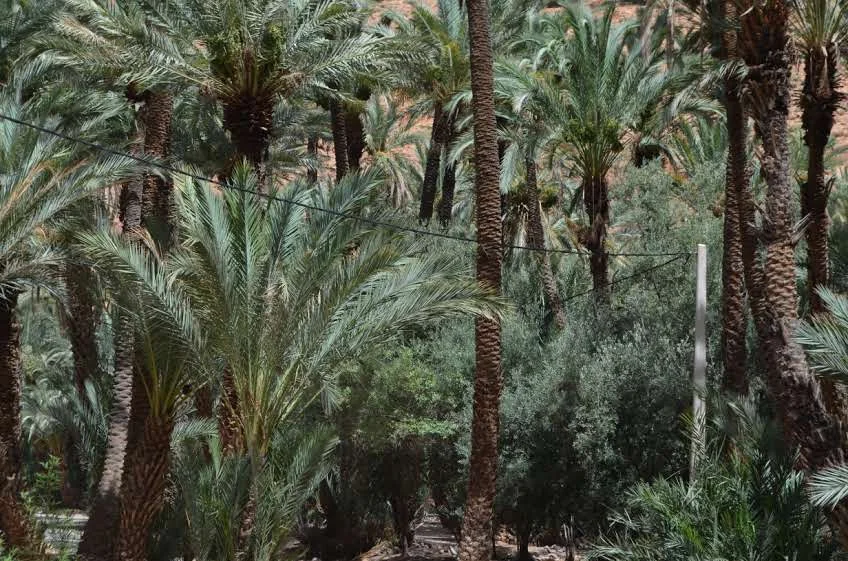
The oasis illustrates the importance of water management in Morocco’s arid southern regions. Where conditions allow, cultivation is concentrated in irrigated areas, while the surrounding slopes and plateaus remain much drier.
What to Do in Aït Mansour
The first experience is simply to travel through the valley and observe the contrast between the rocky walls and the vegetation. Depending on road conditions, local circumstances and the time available, you may be able to stop at different points for a walk or to photograph the landscape.
The visit is particularly appealing to travellers who enjoy natural environments and want to discover another side of the Anti-Atlas. It complements the painted rocks beautifully: one site features an artistic intervention on granite, while the other reveals a landscape shaped by geology, water and human activity.
Allow enough time for the journey, and do not judge the excursion by distance alone. Mountain roads, photography stops and traffic conditions can make the trip longer than expected.
Before setting off, check access conditions and the state of the road. Bring water, protect yourself from the sun and respect gardens and private property. An oasis is also a place where people live and work.
7. Tahala and the Kasbah of Tazka: Local History and Heritage
The Tafraout region has an architectural and historical heritage that extends beyond its best-known landscapes.
Tahala: A Shared History
The village of Tahala is associated with the historical presence of a significant Jewish community. This memory highlights the diversity of communities that contributed to the history of southern Morocco and to the region’s economic and cultural exchanges.
Across Morocco’s towns and villages, relationships between communities have taken different forms depending on the period and location. Understanding this history requires looking beyond individual monuments to the trade networks, professions and social relationships that connected people.
When visiting Tahala, explore the village respectfully and be mindful of its residents. Historical traces are not always marked with explanatory signs, so a local guide can help place the sites in context.
The Kasbah of Tazka (Toughanj)
The Kasbah of Tazka, also referred to as Toughanj in some sources, was added to the national cultural heritage list in 2019 by Morocco’s Ministry of Culture.
This recognition reflects its local architectural character and its integration into a landscape marked by rocky peaks. The ministry highlights the relationship between construction materials and the natural environment, an important feature of traditional architecture in the region.
The kasbah is an example of heritage that deserves attention. Less famous than the painted rocks, it tells another story of Tafraout: the history of local housing, building techniques and adaptation to the surrounding environment.
Before planning a dedicated visit, check access conditions and any restrictions. As with any heritage building, respect the structures, do not remove anything and follow local guidance.
8. Rock Engravings: Tracing the Region’s Ancient Past
The Tafraout region and the wider Anti-Atlas contain numerous rock-art sites. The engravings include depictions of animals, human figures, hunting scenes and geometric motifs.
These traces are valuable for understanding the societies that inhabited southern Morocco at different periods. They show that territories sometimes perceived today as isolated or arid were once home to human communities living in environments that differed from those we see now.
Some engravings depict wild or domestic animals. The representations and their state of preservation vary from site to site. Dating is not always precise, so it is important not to assume that all the engravings in the region are the same age.
A Visit That Requires Respect
Rock engravings can be difficult to locate. Some sites are away from main roads or require local guidance. A guide familiar with the area can help visitors find them and understand their context.
A few rules are essential:
- Do not touch the engravings or apply any substance to the rock.
- Do not add marks, inscriptions or paint.
- Do not move stones or remove fragments.
- Avoid walking over engraved surfaces.
- Do not share inaccurate directions that could lead to damage at a fragile site.
These traces are more than photographic curiosities. They are part of the archaeological heritage and bear witness to a history that extends far beyond the modern era.
For travellers interested in archaeology, geology and ancient landscapes, the rock engravings are an excellent reason to spend more time in the region.
9. Amazigh Culture, Festivals and Local Traditions
Tafraout is deeply connected to the Amazigh culture of the Souss and Anti-Atlas. This identity can be seen in the languages spoken, architecture, agricultural practices, commercial exchanges, celebrations and skills passed down through generations.
Cultural events help bring this heritage to a wider audience and support local activities. Among the events associated with the region are the Almond Blossom Festival and various cultural or artistic gatherings whose schedules may change.
Tifaouine is described in some regional accounts as a summer festival featuring singing and music. Other events, including Anarouz, are associated with cinema and the mountains. However, the names, programmes and regularity of these events should be confirmed with organisers or local authorities before planning a trip around them.
The region also hosts traditional gatherings sometimes referred to as moussems, Anmouggars or Idernane, depending on the context. These events may last several days and bring people together for religious, social, musical or festive activities. Celebrations differ from place to place and should not be generalised across all villages.
How to Attend a Local Event
If you want to experience a festival, start by checking the dates and programme for the relevant year. Information may be available through local councils, associations or the organisers’ social media accounts.
When attending, be respectful. Some events are open to visitors, while other moments may be part of community or religious life. Ask permission before photographing participants and follow the organisers’ instructions.
These gatherings provide an opportunity to discover the region from a different perspective, but Tafraout does not depend solely on its festival calendar. Outside festival periods, the landscapes, villages and encounters with local residents remain central to the experience.
10. Where to Stay and Eat in Tafraout
Tafraout offers a range of accommodation, including hotels, guesthouses and inns suited to different budgets. Standards and services vary between establishments, so it is best to check the facilities, booking conditions and recent reviews before choosing where to stay.
Should You Stay Overnight or Visit on a Day Trip?
A day trip from Agadir is possible, but it involves several hours of driving in both directions. This option suits travellers with limited time who want to see a few major attractions.
For a more relaxed exploration of the Ammeln Valley, painted rocks, Aguerd-Oudad and Aït Mansour, spending at least one night in Tafraout has several advantages. You can start early, enjoy the late-afternoon light and avoid squeezing every visit into an overly busy schedule.
An additional night allows more time for villages, walks and mountain roads. It is also a way to support the local economy by using the services of accommodation providers, restaurants and local guides.
Meals and Local Products
For meals, look for establishments serving regional cuisine and ask about local specialities available during your stay. Local products, particularly almonds, are an important part of the region’s identity.
Menus, opening hours and dining options can vary, especially outside the busiest periods. If you plan to spend the day in the gorges or in more remote villages, plan your breaks in advance and carry enough drinking water.
It is also useful to check which payment methods are accepted and whether food is available along the secondary routes you intend to take.
11. How to Get to Tafraout from Agadir
Tafraout is approximately 170 to 180 kilometres southeast of Agadir. Journey times depend on the route, traffic, road conditions and any stops along the way. Visit Agadir’s tourism portal includes an itinerary exploring the region with a journey of approximately 170 kilometres from Agadir.
By Car
A car offers the greatest flexibility for visiting Tafraout and its surroundings. You can combine the painted rocks, Ammeln Valley, Aguerd-Oudad and Aït Mansour Oasis, adjusting your stops to the time available.
The roads cross mountain landscapes and include bends. Drive carefully, avoid underestimating distances and allow plenty of time for stops. Before using tracks or secondary access roads, check local conditions.
By Public Transport
Transport options between towns in the region may be available depending on the day and operator, but timetables and service frequency should be confirmed before travelling. Reaching natural sites outside the town centre may then require additional arrangements.
If you do not have a car, ask about local transport, taxis or organised excursions. If you want to explore several distant sites in a single day, hiring a vehicle with a driver may be more practical.
Combining Tafraout, Tiznit, Legzira and Sidi Ifni
Tafraout can be included in a two-day trip or a longer journey through the southern Souss region. Tiznit offers a different perspective on regional heritage, with its ramparts, medina and silver jewellery traditions.
Further west and south, the coast offers very different scenery. Legzira is known for its rock formations and Atlantic views, while Sidi Ifni has a distinctive architectural heritage and history.
Combining these destinations allows you to alternate between mountains, villages, cultural heritage and the coast. However, avoid trying to visit everything too quickly. Distances, road conditions and the time needed to enjoy each place make a well-planned itinerary worthwhile.
To organise your journey, consult our guide to excursions from Agadir, the complete Agadir guide and the Agadir destination page.
12. Suggested Itinerary: Discover Tafraout in Two Days
Two days allow you to discover the main sites without turning the trip into a succession of long drives.
Day 1: Tafraout, the Ammeln Valley and the Painted Rocks
Morning: Begin by exploring Tafraout and its granite landscapes. If you want to visit the Ammeln Valley, spend part of the morning discovering the villages and viewpoints overlooking the mountains.
Late morning: Continue towards the valley’s natural landmarks, including the Lion’s Head if conditions allow you to view it safely from a suitable viewpoint.
Afternoon: Visit Jean Vérame’s painted rocks. Take time to appreciate the artwork and the surrounding landscape rather than limiting your visit to a few photographs.
Late afternoon: Stop at Aguerd-Oudad to see Napoleon’s Hat and enjoy the light on the rock formations. End the day in Tafraout.
Day 2: Aït Mansour Oasis and Local Heritage
Morning: Set off for the Aït Mansour gorges and oasis. Allow sufficient time for the drive, stops and a walk in accessible areas.
Early afternoon: Depending on the time available and local conditions, spend part of the afternoon visiting a village or exploring the region’s architectural heritage.
Late afternoon: Return to Tafraout or continue towards Tiznit, depending on the next stage of your journey.
This itinerary is a suggestion rather than a fixed programme. The order of visits should be adapted to the weather, access conditions and your interests. If rock engravings are a priority, plan that visit separately and ask whether a local guide is available.
13. Practical Tips for a Successful Visit
Tafraout is a destination well suited to sightseeing, walking and excursions. A few precautions will help you enjoy it in good conditions.
- Allow enough time: Half a day is sufficient for a brief look at the painted rocks and nearby attractions, but two days are preferable for exploring the region.
- Check access conditions: Roads and tracks can vary in condition. Ask locally before travelling to remote sites.
- Bring water: Some areas are exposed to the sun and have few services.
- Protect yourself from the sun: A hat, sunglasses, sunscreen and suitable clothing are useful even when the air feels cool at altitude.
- Prepare for walks: Appropriate footwear, a known route and a realistic return time are essential for mountain excursions.
- Respect natural sites: Do not damage the painted rocks, touch rock engravings or leave rubbish behind.
- Respect local villages: Ask permission before photographing residents or private spaces.
- Check festival dates: Calendars can change from year to year.
- Plan accommodation ahead: Booking in advance is advisable during festivals and busy periods.
- Do not underestimate travel times: Road distances do not always reflect the time needed to explore mountain landscapes.
14. Why Visit Tafraout?
Tafraout is one of those destinations where the landscape becomes an essential part of the travel experience. Pink granite, Amazigh villages, almond trees and oases create a setting very different from Morocco’s major cities and Atlantic beaches.
Jean Vérame’s painted rocks offer an unusual encounter between contemporary art and the mountains. The Ammeln Valley encourages visitors to slow down and observe the layout of villages, gardens and traditional houses. Aït Mansour Oasis reveals the essential role of water in an arid environment, while the rock engravings recall the long history of human presence in the region.
The local heritage also deserves attention. The Kasbah of Tazka, memories of the Jewish community of Tahala and traditions associated with local festivals add a cultural dimension to the scenery.
Tafraout appeals to curious travellers, photography enthusiasts, geology and archaeology lovers, and anyone wishing to discover southern Morocco at a slower pace. You do not need to fill every hour with activities to appreciate the region. A mountain road, a stop in a village or a walk among almond trees can be enough to make the journey memorable.
If you are travelling from Agadir, consider Tafraout as more than a quick excursion. Spending two days here allows you to better understand the relationship between local communities, the landscape and traditions, and to discover a region whose beauty lies not only in its famous landmarks but also in its wider cultural landscape.
Sources and Further Information
- Visit Agadir – The Rocks of Tafraout: information about the painted rocks and granite landscape.
- Visit Agadir – Discovery of the Tafraout Land: itinerary ideas for the Ammeln Valley, Aguerd-Oudad and Aït Mansour.
- Morocco’s Ministry of Youth, Culture and Communication – The Kasbah of Tazka added to the national cultural heritage list: heritage recognition published in March 2019.
- Maroc.ma – 13th edition of the Tafraout Almond Festival: information about the 2026 edition, held from 11 to 13 April.
- e-taqafa.ma – The Painted Rocks of Tafraout: background on Jean Vérame’s 1984 artistic intervention.
- Tafraout municipal portal – Tafraout and tourism: local information about landscapes, oases and outdoor activities.
Cover photo: Painted rocks near Tafraout, Simohnt, CC BY-SA 4.0, Wikimedia Commons.