Salat Al Azama Synagogue: Practical Visitor Guide
Located in the heart of the Mellah of Marrakech, Salat Al Azama Synagogue is one of the city's most important places for discovering the history of Marrakech's Jewish community.
Behind its discreet entrance lies an inner courtyard, a prayer hall and several spaces that provide insight into the Jewish presence in Marrakech and, more broadly, the history of Moroccan Judaism.
A visit can easily be combined with a walk through the Mellah, including the Bahia Palace, Place des Ferblantiers and the historic streets of Marrakech's former Jewish quarter.
Best Time to Visit
For a quieter experience, visiting in the morning is generally a good choice.
At this time of day, the streets of the Mellah gradually come to life as shops begin to open, while the neighborhood is often more pleasant to explore than during the busiest hours of the day.
The synagogue remains, above all, a religious site. Access conditions may therefore vary depending on services, the religious calendar and Jewish holidays.
Before visiting, it is recommended to check the latest opening hours and access conditions.
What to See at Salat Al Azama Synagogue
The visit is not limited to the prayer hall. Take time to observe the overall layout of the building and the elements that reflect the history of Marrakech's Jewish community.
The Inner Courtyard
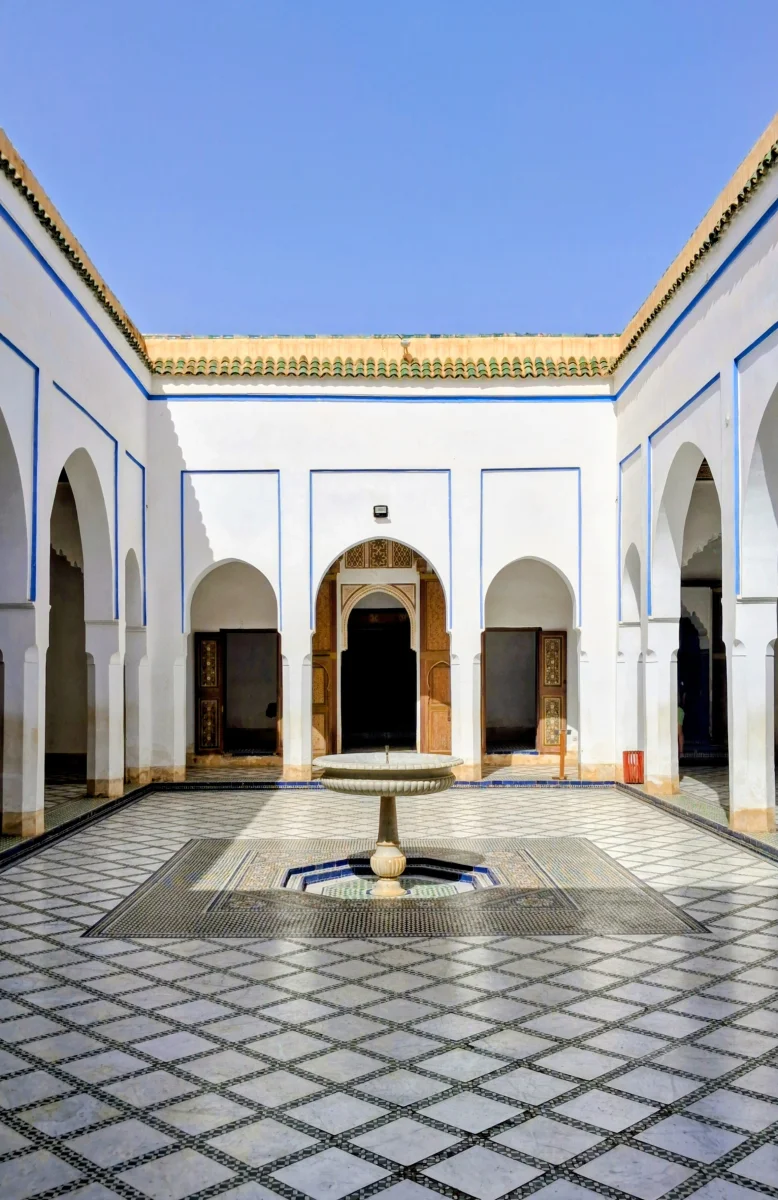
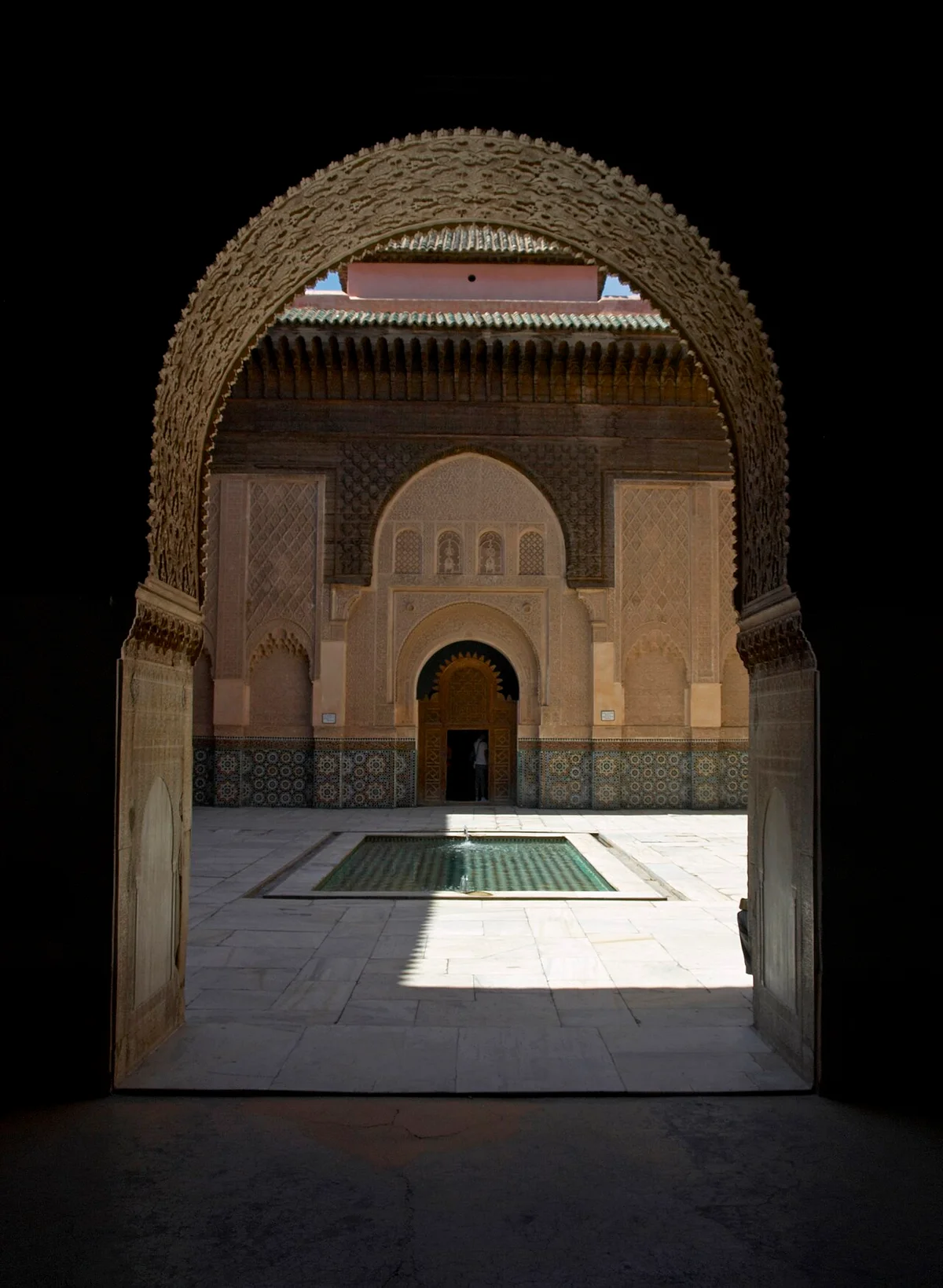
One of the first notable features is the inner courtyard, around which several areas of the synagogue are arranged.
Its relatively understated architecture contrasts with the richly decorated palaces and monuments found elsewhere in Marrakech.
This simplicity is part of the distinctive character of the site.
The Prayer Hall
The prayer hall is the religious heart of the synagogue.
It offers visitors an opportunity to discover a space closely connected with Moroccan Jewish and Sephardic traditions.
During your visit, take time to observe the organization of the room, its religious furnishings and the different elements associated with the reading of the Torah.
Historical Objects and Documents
Depending on which areas are accessible during your visit, you may also encounter objects, photographs and documents relating to the history of Marrakech's Jewish community.
These displays provide useful context for exploring the Mellah and help visitors understand the human, cultural and religious history behind the neighborhood.
Explore the Mellah of Marrakech
A visit to Salat Al Azama Synagogue is best understood within the wider context of the Mellah, Marrakech's historic Jewish quarter.
Rather than leaving immediately after visiting the synagogue, allow some time to explore the surrounding streets.
Observe the Architecture of the Neighborhood
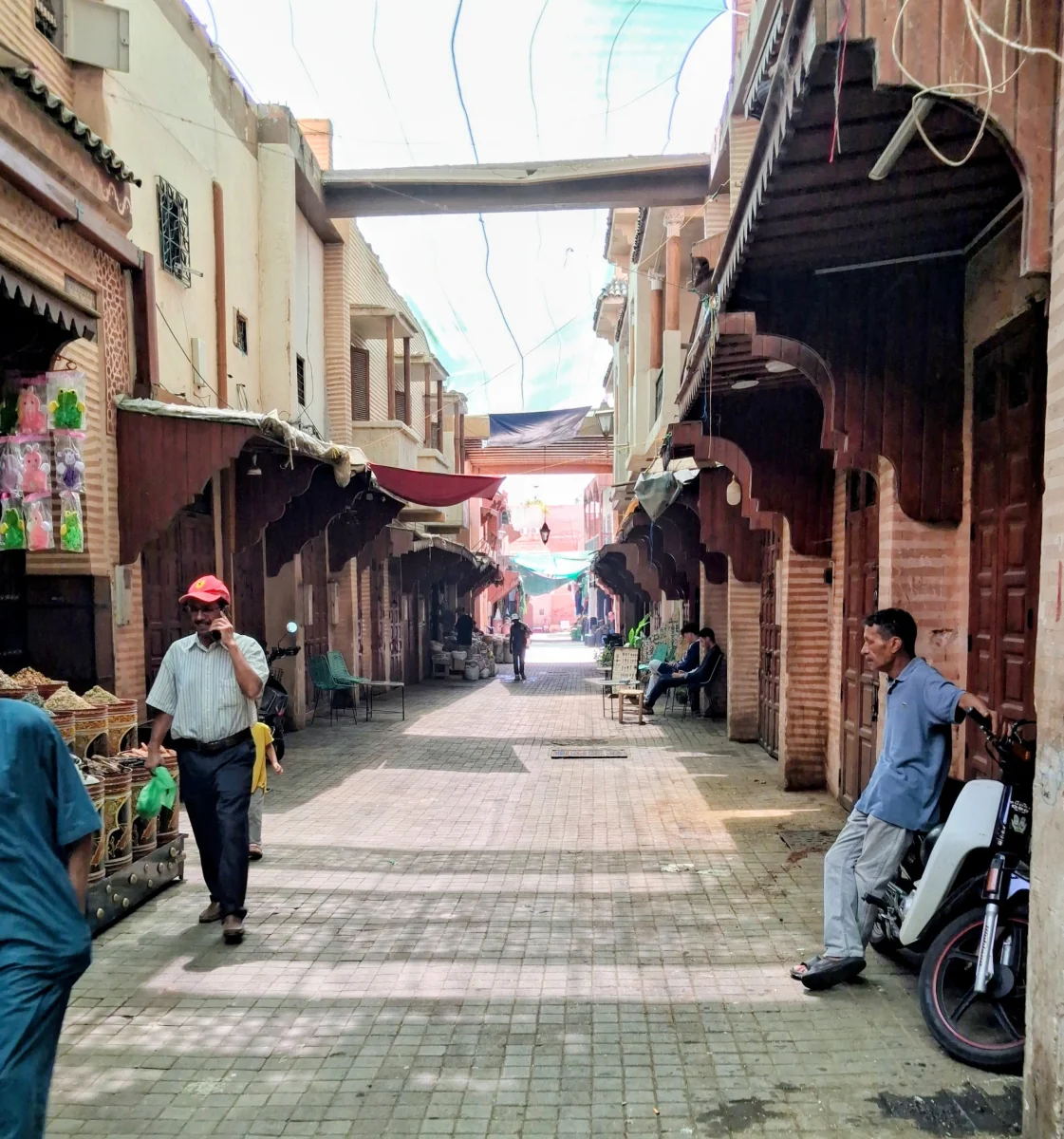
Some houses in the Mellah feature street-facing façades and projecting balconies, architectural elements that are more noticeable here than in certain traditional areas of the Medina, where houses are generally organized around private inner courtyards.
These architectural differences offer an interesting glimpse into the social history of the neighborhood.
Discover the Shops of the Mellah
The neighborhood remains an active commercial district.
You will find shops selling spices, herbs, traditional products and a variety of goods, as well as small workshops.
However, it is important to distinguish the commercial activity of today's Mellah from its historical past. The neighborhood is a living part of Marrakech and has changed considerably over generations.
Respect the Religious Character of the Site
Salat Al Azama is not simply a historical monument.
It is first and foremost a synagogue.
Visitors should therefore wear respectful clothing and follow any instructions provided at the entrance.
Avoid clothing that may be considered inappropriate for a place of worship, particularly very short or revealing garments.
Men may be asked to wear a kippah in certain religious areas. When required, information can usually be obtained directly at the synagogue.
During religious services or ceremonies, some parts of the building may also be temporarily less accessible to visitors.
Can You Take Photos?
Photography rules may vary depending on the area, religious ceremonies and current instructions.
Before photographing the prayer hall, religious objects or people inside the synagogue, always ask for permission.
This is particularly important because Salat Al Azama remains connected to a living religious community.
How Long Should You Allow?
Allow approximately 30 to 60 minutes to explore the synagogue at a comfortable pace, depending on which areas are accessible and your interest in the history of the site.
Add another 30 to 60 minutes if you would like to explore the streets of the Mellah.
Around 1.5 hours is therefore a comfortable amount of time for discovering both the synagogue and the surrounding neighborhood without rushing.
What to Visit Nearby
Salat Al Azama's location makes it easy to include in an itinerary dedicated to the heritage of the southern Medina of Marrakech.
Nearby places to discover include:
- Bahia Palace
- Place des Ferblantiers
- the historic streets of the Mellah
- El Badi Palace
- the Saadian Tombs
- the Kasbah of Marrakech
The concentration of historic sites in this part of the Medina makes it possible to explore several different periods of Marrakech's history within a single half-day itinerary.
Be Careful with Unsolicited Guides
As in several tourist areas of the Medina, you may encounter people offering spontaneously to show you the way to the synagogue, guide you through the Mellah or take you to particular shops.
This does not necessarily mean that they are attempting to scam visitors, but someone offering their services on the street is not automatically a licensed tourist guide.
If you would like to hire a professional guide, verify their status and agree clearly on the price and what the tour includes before starting.
You should also be cautious if someone in the street offers a supposed priority entrance, special rate or ticket whose origin cannot be clearly identified.
For paid tickets or tours, use clearly identified booking channels and always check exactly what is included before making a payment.
Practical Tips for Your Visit
- Visit in the morning for a quieter exploration of the Mellah.
- Check the latest opening hours before travelling to the synagogue.
- Respect the rules associated with a functioning place of worship.
- Ask permission before photographing religious areas.
- Allow extra time to explore the surrounding Mellah.
- Do not automatically accept the services of guides who approach you in the street.
- Always confirm prices and included services before making a payment.
Plan Your Visit to Salat Al Azama
Salat Al Azama Synagogue is an important stop for visitors wishing to understand a lesser-known dimension of Marrakech's history.
Alongside the palaces, madrasas and Islamic monuments of the Medina, the synagogue and surrounding Mellah reveal another part of the city's identity: the long history of Moroccan Jewish heritage.
Before your visit, check the latest information concerning access, opening hours and any available booking options.
Plan your visit — Salat Al Azama Synagogue
Check practical information and available visiting options.
→ View the Salat Al Azama Synagogue page