Taroudant, the Little Marrakech: History, Ramparts, Souks and the Souss Oasis
In southern Morocco, in the fertile Souss Valley, Taroudant reveals itself behind a long ochre-coloured wall that seems to protect another era. Located around 80 kilometres from Agadir, this historic city has a distinctive identity shaped by Moroccan dynasties, commercial exchanges, traditional craftsmanship and Amazigh heritage.
Nicknamed “Little Marrakech”, Taroudant shares the imperial city’s appeal of monumental walls, historic gates and lively souks. Yet it retains a different atmosphere, one more closely connected to the everyday lives of its inhabitants and the agricultural landscapes of the Souss Valley.
Here, discovery goes beyond monuments. It means wandering through the medina’s narrow streets, visiting artisan workshops, exploring traditional markets, sampling local products and discovering the villages stretching towards the Anti-Atlas Mountains.
Often visited on a day trip from Agadir, Taroudant deserves more than a brief stop. Walking along its ramparts, exploring its souks and taking an excursion to the Tiout oasis offer a deeper understanding of the heritage and traditions of this part of southern Morocco.
This guide takes you through Taroudant’s history, its main attractions, its craftsmanship and the landscapes surrounding it. You will also find practical advice for organising your visit from Agadir.
Taroudant at a Glance: What to Know Before Visiting
Taroudant lies in the Souss Valley, between the High Atlas Mountains to the north and the Anti-Atlas to the south. This geographical position has long encouraged exchanges between agricultural plains, mountain regions and trade routes connecting different parts of Morocco.
Today, the city remains an important regional urban centre, particularly for trade and the agricultural production of the surrounding area. Its most visible heritage is its historic defensive wall, which surrounds the medina and gives Taroudant its distinctive silhouette.
Here are a few useful facts to help you plan your visit:
- Location: Souss Valley, southern Morocco.
- Distance from Agadir: approximately 80–85 km by road, depending on the route.
- Travel time from Agadir: generally around 1.5 hours, depending on traffic.
- Main attractions: the ramparts, historic gates, medina, souks and local artisan workshops.
- Nearby destinations: the Tiout oasis, the landscapes of the Anti-Atlas and the Taliouine region, known for saffron production.
- Recommended duration: one day to discover the city, with additional time if you want to explore the surrounding area.
Taroudant is often described as a former Saadian capital. Its history, craftsmanship and location between the two Atlas mountain ranges make it an interesting cultural stop for travellers wishing to discover another side of southern Morocco.
To plan your stay in the region, explore our complete guide to Agadir.
A History Shaped by Dynasties and Trade
Taroudant has a long history, although its exact origins remain difficult to establish with certainty. Some traditions suggest that the settlement existed before the arrival of Islam. Over the centuries, the city developed through periods of political change, competition between regional powers and the growing commercial importance of the Souss Valley.
A Strategic Position in the Souss Valley
The Souss Valley forms a natural corridor between the Atlantic coast, the mountains and the regions further south. This geography encouraged the development of urban centres that could gather agricultural produce, organise trade and serve as stopping points for travellers and merchants.
Taroudant gradually acquired an important role in this regional network. It was not merely a fortified settlement, but also a commercial and political centre closely connected to the surrounding territories.
Over the centuries, different powers sought to control this strategic region. The Almoravids and several dynasties that followed contributed to the political transformations of the Souss.
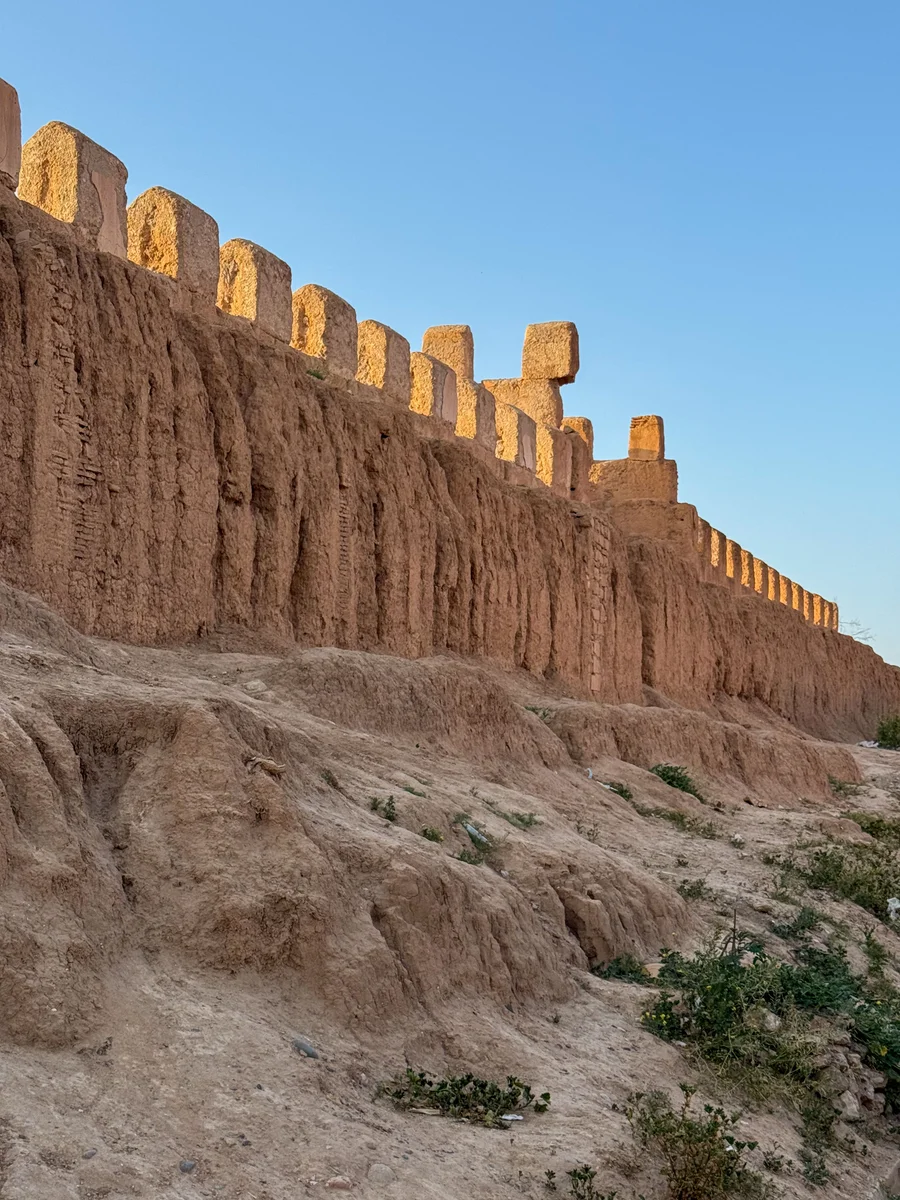
Photo: Historic earthen rampart in Taroudant — Damien Paye Emeraudetrip.
The Saadian Period: A Defining Chapter
The 16th century was a particularly important period in Taroudant’s history. The city became associated with the rise of the Saadian dynasty and the reign of Mohammed ech-Cheikh, one of its principal rulers.
The Souss region occupied a strategic position in the conflicts between Moroccan powers and the Portuguese, who had established themselves at several points along the Atlantic coast. Taroudant benefited from this regional importance and became a major political and military centre.
Several important urban developments are associated with this period, including the ramparts and the Great Mosque. The fortified walls served a defensive purpose while also expressing the city’s status and the authority of the power that controlled it.
Commercial activity also contributed to Taroudant’s prosperity. Trade involved agricultural products and various goods moving between the plains, the mountains and other commercial centres in Morocco.
A City with a Diverse Cultural Heritage
Taroudant’s history is not limited to Muslim dynasties. A Jewish community also lived in the city and contributed to its social and economic history. The memory of this presence forms part of the local cultural heritage, although the precise dates of its establishment and the community’s evolution should be treated with caution.
This diversity reminds us that Morocco’s historic cities were often shaped by exchanges between communities, professions and traditions. Trade, craftsmanship and relationships with surrounding territories contributed to their development as much as political events did.
To understand Taroudant today, it is therefore important to look beyond its monuments. The ramparts tell the story of political power and defence, while the streets and souks reflect the continuity of economic and social life.
Taroudant’s Ramparts: The City’s Most Iconic Landmark
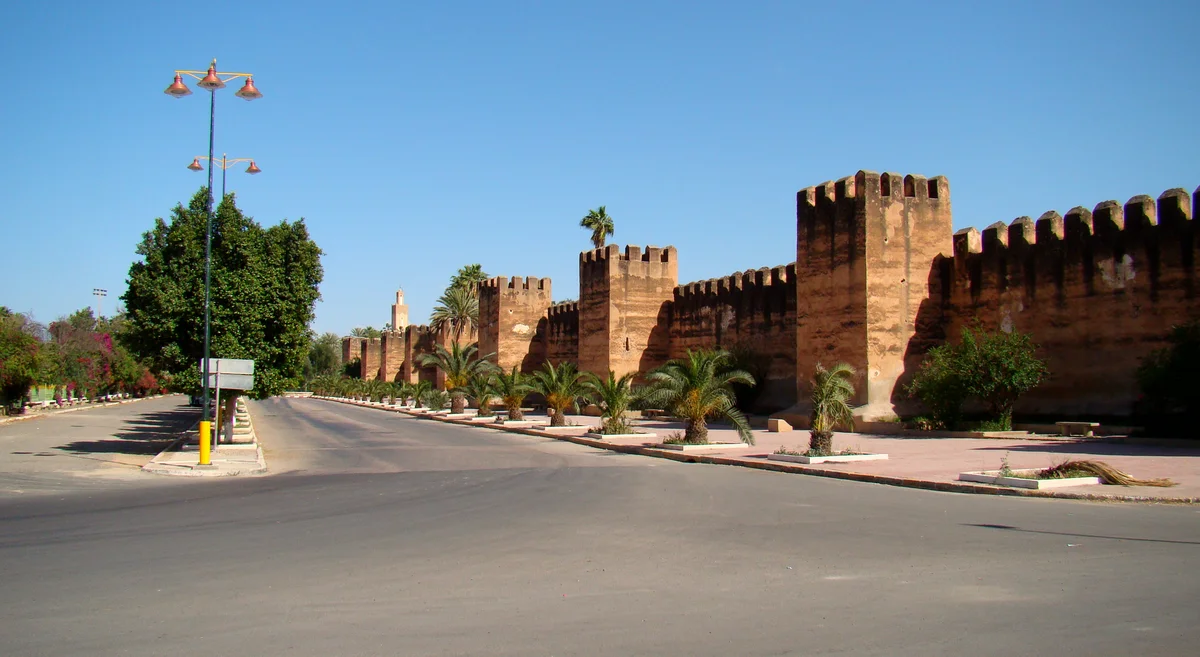
The ramparts are among the most recognisable features of Taroudant’s landscape. Their colour changes with the light, shifting from pale ochre to a warm golden red towards the end of the day. The walls, towers and gates form an enclosure that gives the city its distinctive appearance.
According to tourism information about Taroudant, the walls extend for more than six kilometres and include numerous towers. Exact measurements vary between sources and depend on the methods used. Nevertheless, the ramparts form a remarkable example of Morocco’s historic fortified urban heritage.
Why Were the Walls Built?
The ramparts were primarily defensive structures. They protected the city and its inhabitants, controlled access and helped monitor the surrounding area. In a region where political balances changed over time, fortified walls provided a strategic advantage.
The walls also had a symbolic function. They expressed Taroudant’s political importance and enclosed an urban space organised around commercial, religious and administrative activities.
These structures have survived for centuries, but they require regular maintenance. Weather, erosion and urban changes can weaken parts of the enclosure.
In August 2025, the municipality of Taroudant announced a programme to restore and rehabilitate the historic ramparts. The initiative aims to preserve damaged sections and protect the architectural character of the site. As access conditions may change during restoration work, it is advisable to check locally before visiting.
Historic Gates: Connections Between the City and Its Surroundings
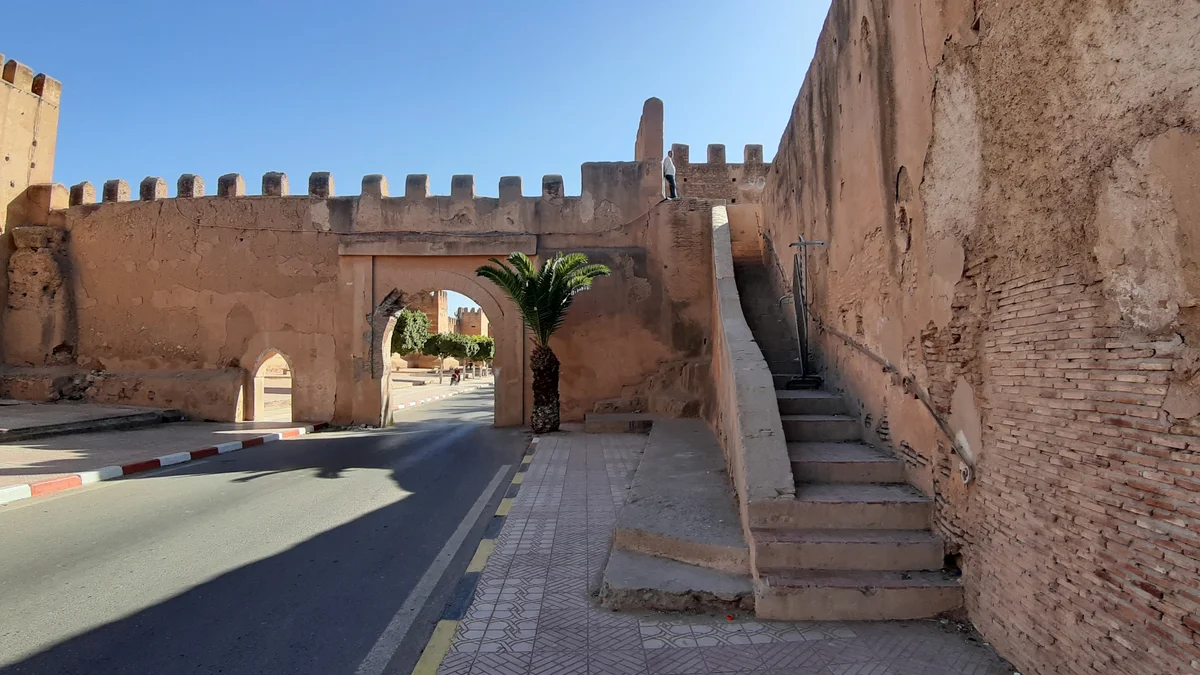
Photo: Historic ramparts and gate in Taroudant — CC BY-SA 4.0.
The gates are essential elements of the fortified enclosure. They controlled entrances, connected neighbourhoods with roads outside the city and facilitated exchanges with agricultural and commercial areas.
Several names are associated with Taroudant’s historic gates, including Bab al-Khamis, Bab Zorgan, Bab Oulad Bounouna, Bab Targhount and Bab El Kasbah. Bab al-Silsila is also mentioned among the city’s important gates.
As you walk around the city, take time to observe the architecture of the gates and their relationship with the streets beyond them. Some open onto busy roads, while others help illustrate how the fortified enclosure fits into the urban layout.
Visiting tip: walk along part of the ramparts in the late afternoon, when the light brings out the different shades of the earth. Respect traffic areas and any restoration works. Not every section of the walls is necessarily accessible on foot.
The Medina: Discover Taroudant at the Pace of Everyday Life
Inside the ramparts, the medina is at the heart of the visitor experience. Its narrow streets, small squares, shops and passageways reveal a city that remains closely connected to the daily lives of its inhabitants.
The best way to explore it is on foot, without trying to see everything too quickly. A busy shopping street may lead to a quieter area, while a modest workshop may reveal a traditional skill you would have missed from a main road.
The medina is first and foremost a living neighbourhood. Residents shop here, traders run their businesses and artisans continue activities passed down through generations. This continuity gives Taroudant a distinctive atmosphere.
Observe the Architecture and Details
During your walk, pay attention to doorways, façades, narrow passages and courtyards visible from open entrances. Traditional architecture is not limited to the most imposing monuments; it can also be seen in the details of homes and the organisation of the streets.
Respect residents’ privacy. An open doorway does not necessarily mean that a house is open to visitors. Always ask permission before photographing someone or a private space.
Take Time to Stop and Look Around
An enjoyable visit to the medina does not require a packed schedule. You can alternate between exploring the streets, taking a break in a café, visiting the markets and browsing local crafts.
If you have only one day, spend the morning exploring the medina and souks, then devote the afternoon to the ramparts or an excursion into the surrounding area. If you stay longer, you will have more opportunities to observe the different rhythms of the city.
Taroudant’s Souks: Craftsmanship, Local Products and Encounters
The souks are among Taroudant’s most interesting places to explore. They serve the everyday needs of local residents while offering visitors an opportunity to discover products made in the region.
Leather goods, terracotta objects, Amazigh jewellery and traditional markets are among the features associated with the city. Depending on the area, you may also find textiles, rugs, tableware, lamps, spices and food products.
The Craft Souk: Leather, Pottery and Traditional Objects
Leather goods are among the crafts associated with Taroudant. Bags, slippers, poufs and other objects reflect techniques that require knowledge of materials and skilled workmanship.
Terracotta objects and pottery are another interesting category. Take time to examine the finish, material and intended use of each piece rather than judging it by appearance alone.
Jewellery and decorative objects inspired by Amazigh traditions are also worth exploring. Patterns, materials and techniques can vary from one artisan to another.
Some shops occupy traditional commercial spaces or older buildings. However, the specific history of each shop or caravanserai should be verified rather than inferred from its appearance.
Traditional Babouches: A Craft of the Souss Region

Photo: Idoukan, traditional embroidered leather slippers — elbasrikhadija.
Traditional slippers, sometimes called idoukan in an Amazigh context, illustrate the importance of leatherwork in the region’s craftsmanship. Their shapes, colours and embroidery vary according to the model and local traditions.
Beyond their decorative appearance, these objects reflect a craft that combines material selection, cutting, assembly and finishing. While visiting the shops, compare different designs and, where possible, ask sellers about how they are made.
Everyday Markets
Taroudant’s markets are not intended solely for tourists. They are part of the local economy, connecting producers, traders, artisans and consumers.
You can find everyday food products, household items, textiles and other goods for both residents and visitors. This variety reveals an essential aspect of Taroudant’s heritage: the close relationship between the historic city and its surrounding countryside.
Opening hours can vary according to the market, day and type of activity. Online schedules should therefore not be treated as guaranteed. Check locally, especially if you want to visit a particular market.
How to Shop Responsibly
A few simple habits can help you make informed choices when buying local crafts:
- Compare several shops before making a decision.
- Ask what material an item is made from and, if it matters to you, where it was produced.
- Choose products whose sellers can explain their origin and manufacturing techniques.
- Check dimensions and packaging options if you need to transport an item by plane.
- For food and cosmetic products, examine the label, storage conditions and available information about the producer.
Bargaining is part of many traditional commercial exchanges, but it should remain respectful. The aim is not necessarily to obtain the lowest possible price; it is also to recognise the value of skilled work.
The Souss Region: Citrus Fruits, Argan Oil and Agricultural Traditions
Taroudant cannot be understood through its architecture alone. The city is closely connected to the Souss Valley, an important agricultural region where cultivation, markets and processing activities contribute to the local economy.
Citrus fruits play a significant role in the regional agricultural landscape, particularly oranges and clementines. Depending on the season and where you shop, you may find products from different local farms.
Argan oil is another speciality associated with this part of Morocco. It is produced from the kernels inside the fruit of the argan tree. The process involves several stages, from cracking the nuts to extracting the oil, and methods may vary depending on whether the oil is intended for food or cosmetic use.
Discover Argan Oil and Local Cooperatives
A visit to a cooperative can be an opportunity to learn more about the production process, the differences between products and the conditions in which they are made.
Before buying, ask whether the oil is intended for culinary or cosmetic use, check the label and favour products whose origin is clearly indicated.
The region’s agricultural products also include olive oil, fruit, spices and other local produce. Availability depends on the season and the producer.
To continue exploring the region’s food culture, read our guide to what to eat in Agadir and the Souss region. It places local specialities within the wider culinary traditions of southern Morocco.
What to See Around Taroudant
One of Taroudant’s advantages is its position between the agricultural valley and the Atlas mountain ranges. As you leave the city, the landscape gradually changes: palm groves and cultivated fields give way to more rugged terrain, villages and areas where traditional agricultural practices remain visible.
If you have more than one day, the surrounding area deserves your attention.
The Tiout Oasis: A Palm Grove at the Foot of the Anti-Atlas
The Tiout oasis is a well-known excursion from Taroudant. Located several dozen kilometres from the city, it offers a striking contrast with the drier landscapes around it.
Palm trees, cultivated plots and irrigation systems demonstrate the importance of water in local life. The village and nearby high ground also reveal a different relationship between settlement, agriculture and the landscape.
Depending on local conditions, walks through the palm grove may be available, sometimes with pack animals. Check the options locally and choose experiences that respect both animals and residents.
How much time should you allow? Set aside half a day if you want to reach Tiout, explore on foot and enjoy the scenery without rushing. Travel times and visiting conditions can vary.
Agadirs: Fortified Communal Granaries
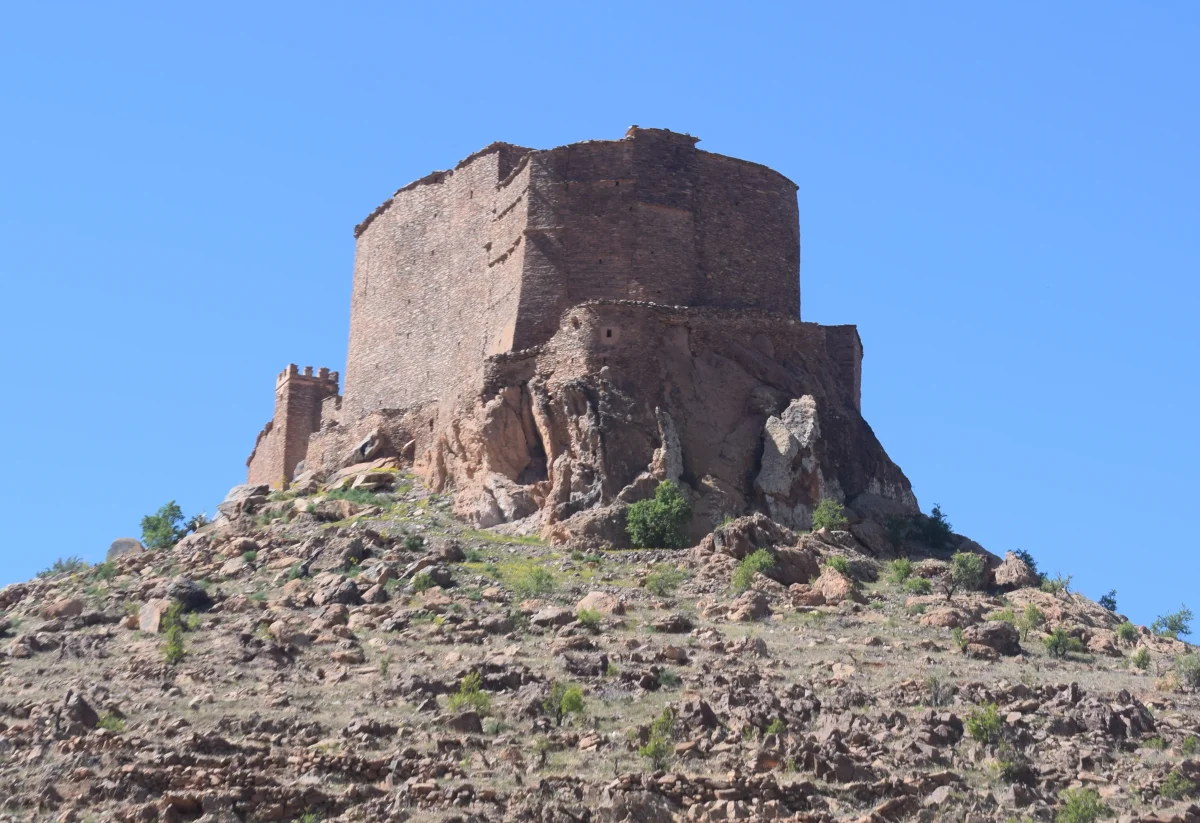
Photo: The fortified agadir of Tasguent, perched on a rocky outcrop — CC BY-SA 4.0.
In several Amazigh regions of southern Morocco, agadirs are fortified communal granaries designed to protect food supplies and other community possessions. They reflect traditional forms of social organisation and resource management adapted to local conditions.
The Souss region and the Anti-Atlas have an important heritage of these structures. Some agadirs remain visible, while others have deteriorated over time or can only be accessed under specific conditions.
These buildings offer more than striking walls and architecture. They also help explain how communities protected their reserves, controlled access and managed valuable resources collectively.
If you would like to visit an agadir, check its accessibility, state of preservation and visiting rules. Some sites are located within villages where respect for private spaces is essential.
Taliouine and Saffron Production
Taliouine is known for saffron production, a valuable spice that plays an important role in the agriculture of certain areas of southern Morocco.
Saffron production is seasonal and requires the delicate harvesting of flowers. If you are planning a visit focused on this crop, check the flowering season and whether producers are welcoming visitors. An off-season visit may still be worthwhile, but you may not be able to observe the harvest.
Taliouine is better suited to a planned itinerary than an improvised detour if you only have a few hours. Check the distances and driving time before adding it to your programme.
How to Get to Taroudant from Agadir
Agadir is a convenient starting point for travellers wishing to visit Taroudant on a day trip. The city lies approximately 80–85 kilometres east of Agadir, depending on the route.
The journey generally takes around an hour and a half, although traffic, roadworks and road conditions can affect travel time.
By Car or Private Driver
Travelling by car allows you to explore Taroudant at your own pace and extend your day to Tiout or other nearby sites. If you prefer not to drive, a private driver or organised excursion can simplify the logistics.
Before booking, check what is included: return transport, free time in the medina, an optional guided visit, meals and additional stops.
An excursion combining Taroudant and Tiout can be convenient, but make sure the itinerary allows enough time to enjoy each stop.
You can explore our excursions from Agadir to plan your discovery of the surrounding countryside.
Can You Visit Taroudant in One Day?
Yes. One day is enough to discover the main aspects of Taroudant: a walk along the ramparts, a visit to the medina, time in the souks and a break for lunch.
If you want to include Tiout, you will need to plan the day more carefully. To avoid spending too much time in the car, you could also stay overnight in Taroudant and continue exploring the following day.
Should You Stay Overnight in Taroudant?
A day trip is suitable for travellers staying in Agadir who want to discover the city without changing accommodation. However, spending a night in Taroudant allows you to take your time, enjoy the late afternoon and explore the markets without having to leave immediately.
The best option depends on your itinerary, transport arrangements and interest in the region’s heritage and landscapes.
Practical Tips for Visiting Taroudant
A little preparation will help you enjoy Taroudant without turning your visit into a rushed sequence of stops.
- Allow time for walking. The medina’s narrow streets and souks are best explored on foot.
- Choose your visiting hours according to the season. Hot weather can make midday walks less comfortable. Choose cooler hours for longer walks.
- Check opening times locally. Market, workshop and visitor-site schedules can change.
- Bring water and sun protection. Southern Morocco can be hot, particularly during the sunniest months.
- Respect residential areas. Ask permission before photographing residents and avoid entering private spaces.
- Compare craft prices. Take time to speak with sellers and understand the materials and origins of the products.
- Plan journeys to nearby destinations. Tiout and other regional stops require additional travel time.
- Check for restoration work. Work on the ramparts may temporarily restrict access to certain areas.
Which Itinerary Should You Choose for Taroudant?
Taroudant in Half a Day
If time is limited, focus on the ramparts, historic gates and medina souks. A walk and a few stops in the shops will give you a first impression of the city.
This option suits travellers passing through Taroudant during a wider journey across southern Morocco.
Taroudant in One Day
For a more complete first visit, start with the medina and souks, then spend time exploring the ramparts. Take a break for lunch and use the afternoon to discover other streets or browse local crafts.
This itinerary offers a good balance between heritage, everyday life and local food culture.
Taroudant and Tiout Over Two Days
If you have two days, devote the first to Taroudant and the second to Tiout or another destination that matches your interests. This slower pace allows you to appreciate the landscapes and avoids an overly crowded excursion.
For a broader discovery of southern Morocco, you can combine Taroudant with other destinations, taking into account distances and realistic travel times.
Is Taroudant Worth Visiting?
Taroudant is well worth visiting if you want to discover a historic Moroccan city that remains closely connected to the everyday lives of its inhabitants. Its ramparts tell a story of political power and military defence, its medina reveals the traditional organisation of the city, and its souks reflect the vitality of local trade.
The experience extends beyond the fortified walls. The Souss Valley, agricultural production, argan oil, traditional craftsmanship and the landscapes of the Anti-Atlas give the region a depth that may be missed during a brief stop.
Comparisons with Marrakech help place Taroudant in context, but they should not overshadow its distinctive character. Here, visitors discover a different urban scale, a closer relationship between the city and its surrounding countryside, and a heritage that can be understood as much by walking through the streets as by looking at the monuments.
If you are staying in Agadir, Taroudant makes an interesting cultural excursion. If you have more time, spending a night in the city allows you to explore its heritage and surroundings at a more relaxed pace.
To continue planning your trip, discover the Amazigh culture of the Souss region, our complete guide to Agadir and our Agadir destination page.
Sources and Further Reading
- Moroccan National Tourist Office – Taroudant: general information about the city, its history, crafts and ramparts.
- Moroccan National Tourist Office – Taroudant Medina: urban heritage, souks, traditional crafts and historic walls.
- Moroccan National Tourist Office – Nature in Taroudant: landscapes, mountains and the Tiout oasis.
- Taroudant Municipality – Historic Ramparts Restoration Project: announcement published in August 2025 about the rehabilitation of the historic walls.