Bab Mansour in Meknes: History and Architecture of the Monumental Gate of the Imperial City
Facing El Hedim Square, in the heart of Meknes, stands one of the city's most iconic monuments: Bab Mansour, also known as Bab Mansour Laalej.
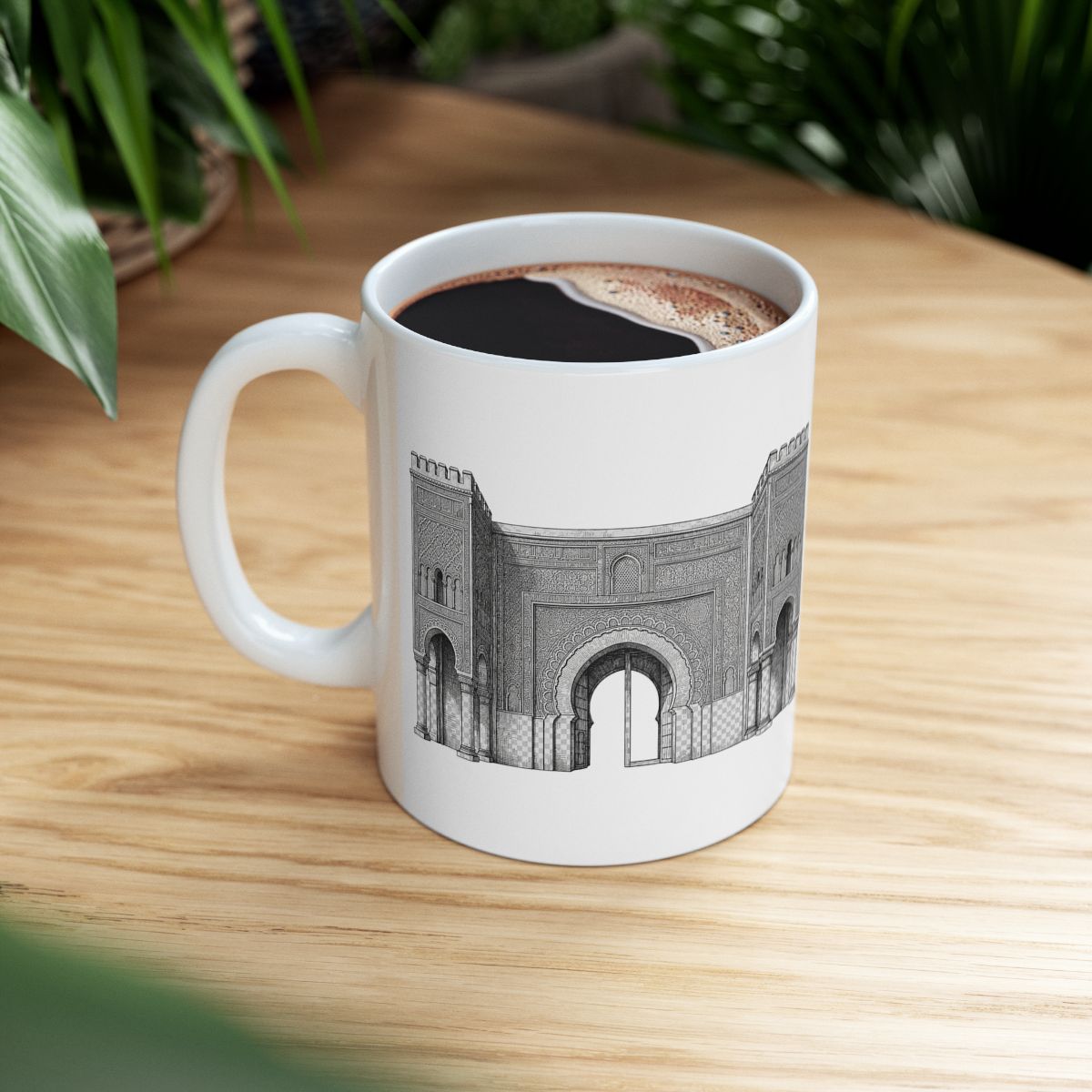
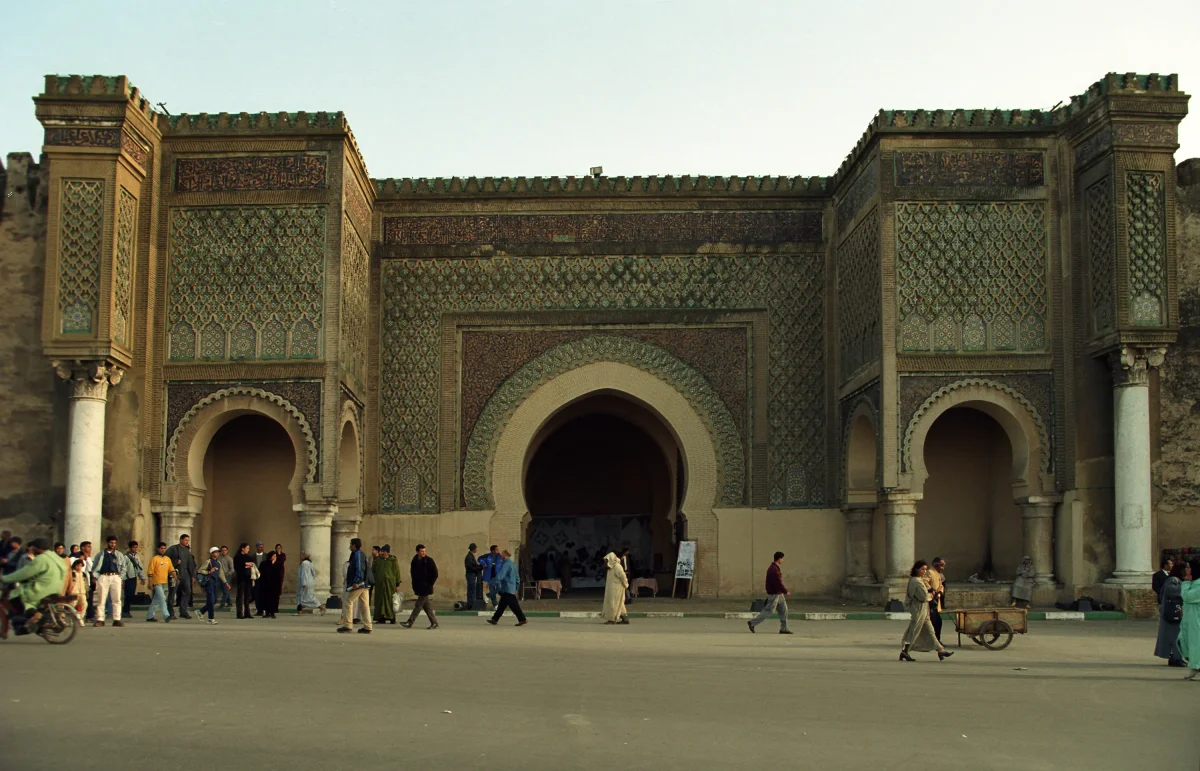
With its monumental façade covered in zellige, geometric patterns, calligraphic inscriptions and large marble columns, the gate is one of the most recognisable symbols of the former imperial capital of Moulay Ismail.
But Bab Mansour was not simply a decorative gate.
It formed part of an immense architectural programme designed to transform Meknes into a royal capital from the late 17th century onwards.
To understand Bab Mansour, we therefore need to return to the period when Meknes became one of the main centres of power in Morocco.
Meknes Before the Construction of Bab Mansour
The history of Meknes began long before the reign of Moulay Ismail.
According to UNESCO, the city was founded in the 11th century by the Almoravids as a military settlement.
Its name is associated with the Meknassa, a major Amazigh tribe that once occupied a large part of this region.
The city continued to develop under several Moroccan dynasties.
The Marinids notably left important monuments, including the Bou Inania Madrasa of Meknes.
However, the transformation that gave Meknes much of its present monumental character began in the 17th century.
Moulay Ismail Transforms Meknes into a Capital
In 1672, Moulay Ismail ascended the throne.
His long reign, which lasted until 1727, profoundly shaped the history of Meknes.
The ruler chose the city as his capital and began constructing an immense imperial complex.
Palaces, ramparts, monumental gates, gardens, granaries, stables and hydraulic infrastructure were developed on a considerable scale.
The project went far beyond the construction of a royal residence.
Moulay Ismail created an entire imperial city beside the old Medina.
A City Behind Massive Walls
The new royal city was protected by powerful fortifications.
UNESCO highlights the monumental character of the ramparts of Meknes, some sections of which reach approximately 15 metres in height.
Several large gates provided access through these walls.
They included:
- Bab Mansour Laalej
- Bab Khemis
- Bab Berdaïn
- Bab Jdid
Bab Mansour became the most famous of these monumental entrances.
The Construction of Bab Mansour
Bab Mansour belongs to the final major architectural projects associated with the reign of Moulay Ismail.
Its construction began under the ruler, but he died in 1727 before the monument was completed.
The gate was subsequently completed under his son and successor, Sultan Moulay Abdallah.
Heritage sources therefore date its completion to the first half of the 18th century.
This chronology is important.
Bab Mansour fully belongs to the great imperial project initiated by Moulay Ismail, even though the ruler did not live to see the gate completely finished.
Why Is It Called Bab Mansour Laalej?
The monument's full name is often given as Bab Mansour al-Aleuj or Bab Mansour Laalej.
According to chronicles cited by Discover Islamic Art, the name is associated with the architect of the gate, described as a Christian convert to Islam, probably of Spanish origin, who adopted the name al-Mansour.
The term al-Aleuj thus appears in the historic name of the monument.
The works are said to have been supervised by the caïd Jilali.
As is often the case with historic monuments, details transmitted through chronicles should be distinguished from information that can be documented directly through the architecture itself.
A Gate Approximately 16 Metres High
Bab Mansour impresses first of all through its dimensions.
According to Discover Islamic Art, the entire structure reaches approximately 16 metres in height.
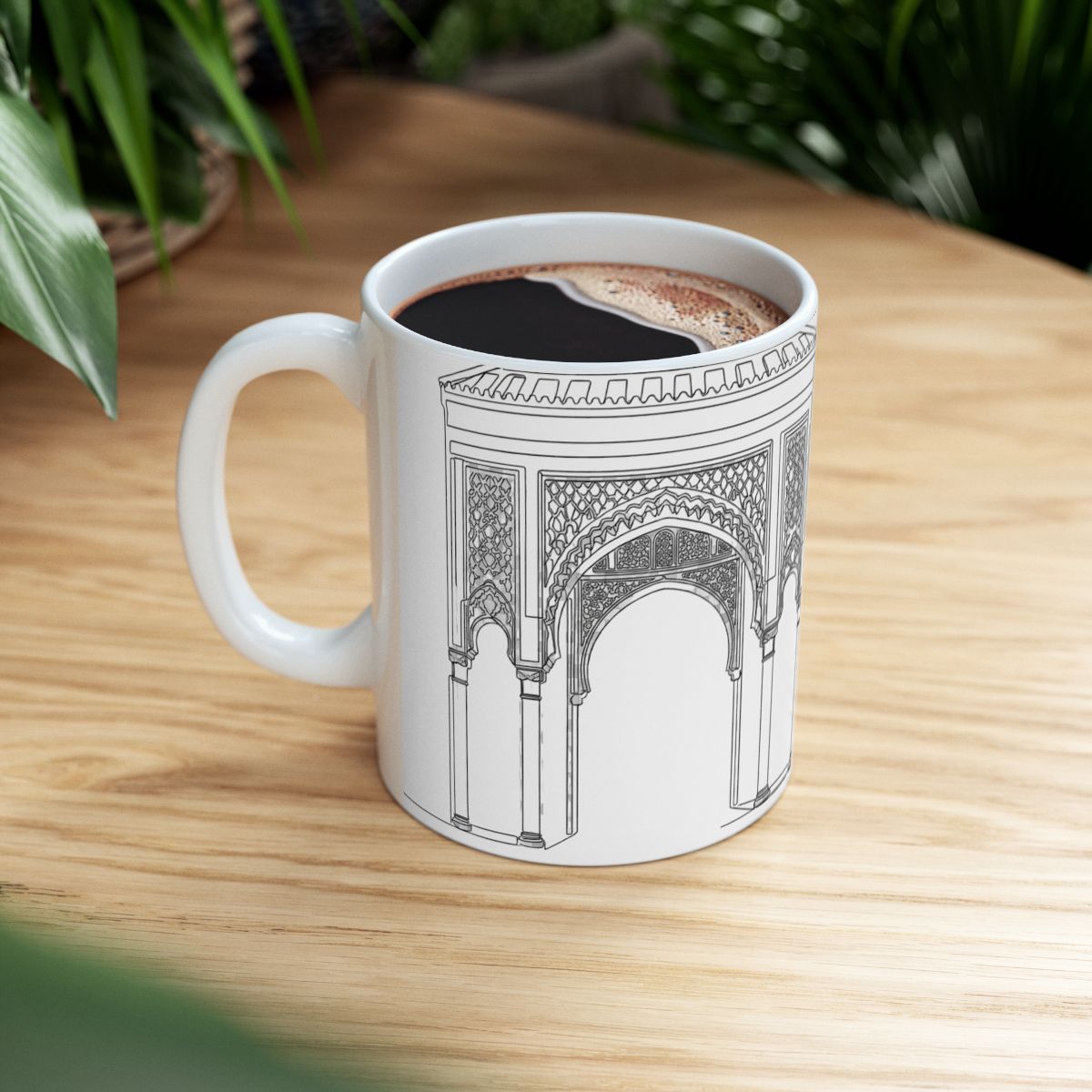
At the centre of the façade is a large opening formed by a monumental, slightly horseshoe-shaped arch.
The arch reaches approximately 8 metres in height.
It is framed by two substantial lateral structures that reinforce the monumentality of the ensemble.
The architectural intention is clear: anyone approaching the gate was meant to immediately perceive the power of the imperial city behind it.
Much More Than a Simple Entrance
Bab Mansour is distinguished by the complexity of its composition.
The exterior façade is organised around the large central opening.
On either side, substantial architectural volumes give the ensemble considerable width and visual presence.
Unlike a purely defensive gate, Bab Mansour therefore had a strong representative function.
It was designed to impress.
The gate was a monumental façade representing imperial power.
The Zellige of Bab Mansour
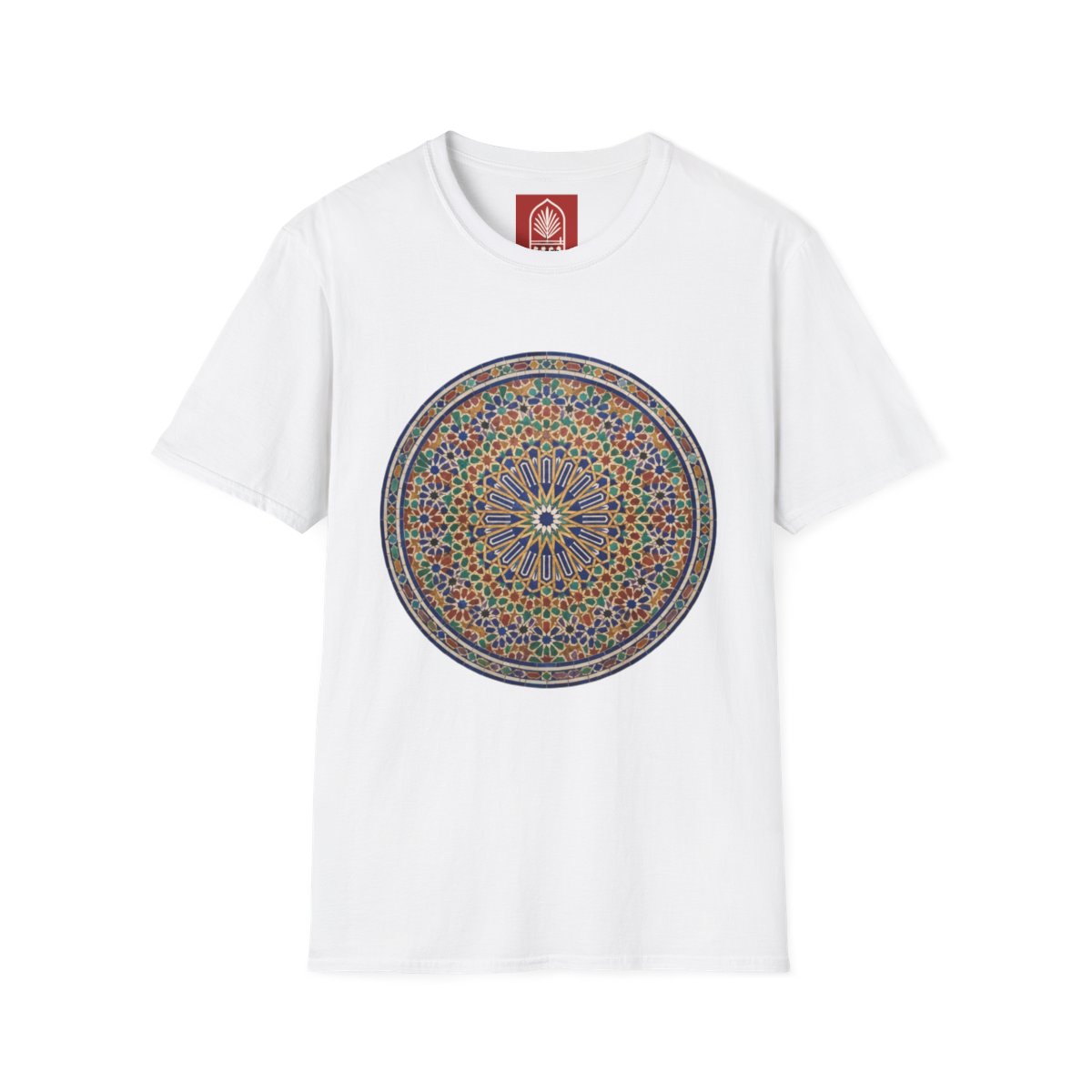
One of the most visible elements of its decoration is zellige.
Small pieces of ceramic are assembled to form complex geometric compositions.
This technique is one of the great traditions of Moroccan craftsmanship.
In Meknes, as in Fez, zellige can be seen in many historic monuments.
It appears particularly in madrasas, palaces, fountains and religious buildings.
At Bab Mansour, zellige helps transform a military and ceremonial structure into a major decorative work.
Geometric Patterns
The decoration of Bab Mansour makes extensive use of geometric forms.
Interlacing designs, diamond patterns and repeating compositions structure much of the façade.
These patterns make it possible to cover large surfaces while creating a highly rhythmic decorative effect.
Moroccan architecture has combined geometry, calligraphy and vegetal motifs for centuries.
Bab Mansour offers one of the most spectacular monumental examples of this tradition in Meknes.
Vegetal Motifs and Arabesques
Geometry is not the only decorative element.
The gate also features vegetal motifs and arabesques.
These compositions soften the strict geometry of the façade and considerably enrich its appearance.
The monument therefore combines several major decorative languages of Moroccan architectural art.
The Great Calligraphic Inscription
An important inscription in cursive script also runs across the upper part of the façade.
Here, calligraphy becomes an architectural element in its own right.
It is not simply added to the decoration.
It contributes directly to the visual organisation of the monument.
This combination of architecture and writing can be seen in many Moroccan monuments, particularly in the Marinid madrasas of Fez and Meknes.
The Marble Columns of Bab Mansour
Among the most intriguing elements of Bab Mansour are its large marble columns.
Two tall white marble columns frame parts of the façade.
Their origin has been the subject of various interpretations.
According to Discover Islamic Art, these columns very probably came from the ancient ruins of Volubilis.
The same source notes, however, that certain elements, including the shafts and composite capitals, may be of Italian origin, while the bases are made from local stone.
This diversity illustrates the circulation and reuse of architectural materials during different periods of Moroccan history.
Bab Mansour and Volubilis
The possible connection between Bab Mansour and Volubilis is particularly interesting.
Located north of Meknes, Volubilis was one of the most important ancient cities in the region.
Its archaeological remains still include columns, mosaics, temples, houses and public monuments.
The reuse of ancient building materials in later monuments was a known practice throughout many parts of the Mediterranean world.
However, precision is important: heritage sources consider a Volubilis origin for the columns of Bab Mansour very probable, but it should not be presented as an absolute certainty.
Architecture Shaped by Multiple Influences
Bab Mansour also illustrates the diversity of influences that shaped the architecture of Meknes.
UNESCO describes the historic city as an ensemble in which elements of Islamic and European architecture and urban planning are harmoniously combined.
The imperial city developed by Moulay Ismail is generally associated with a Hispano-Moorish architectural tradition.
Bab Mansour is one of its most spectacular expressions.
Bab Mansour and El Hedim Square
Today, Bab Mansour is inseparable from El Hedim Square.
The monumental façade of the gate directly overlooks this historic public space.
The relationship between the gate and the square is essential for understanding the organisation of the old city.
El Hedim stands at the meeting point between the historic Medina and the imperial complex developed under Moulay Ismail.
Bab Mansour marked the monumental transition towards the royal city.
The gate was therefore not positioned there by chance.
It created a ceremonial passage between two major urban spaces.
El Hedim: The Great Square in Front of the Gate
El Hedim Square developed in the context of the urban transformations undertaken during the creation of the imperial city.
Its name is generally associated with the idea of demolition and the areas cleared during the major construction works.
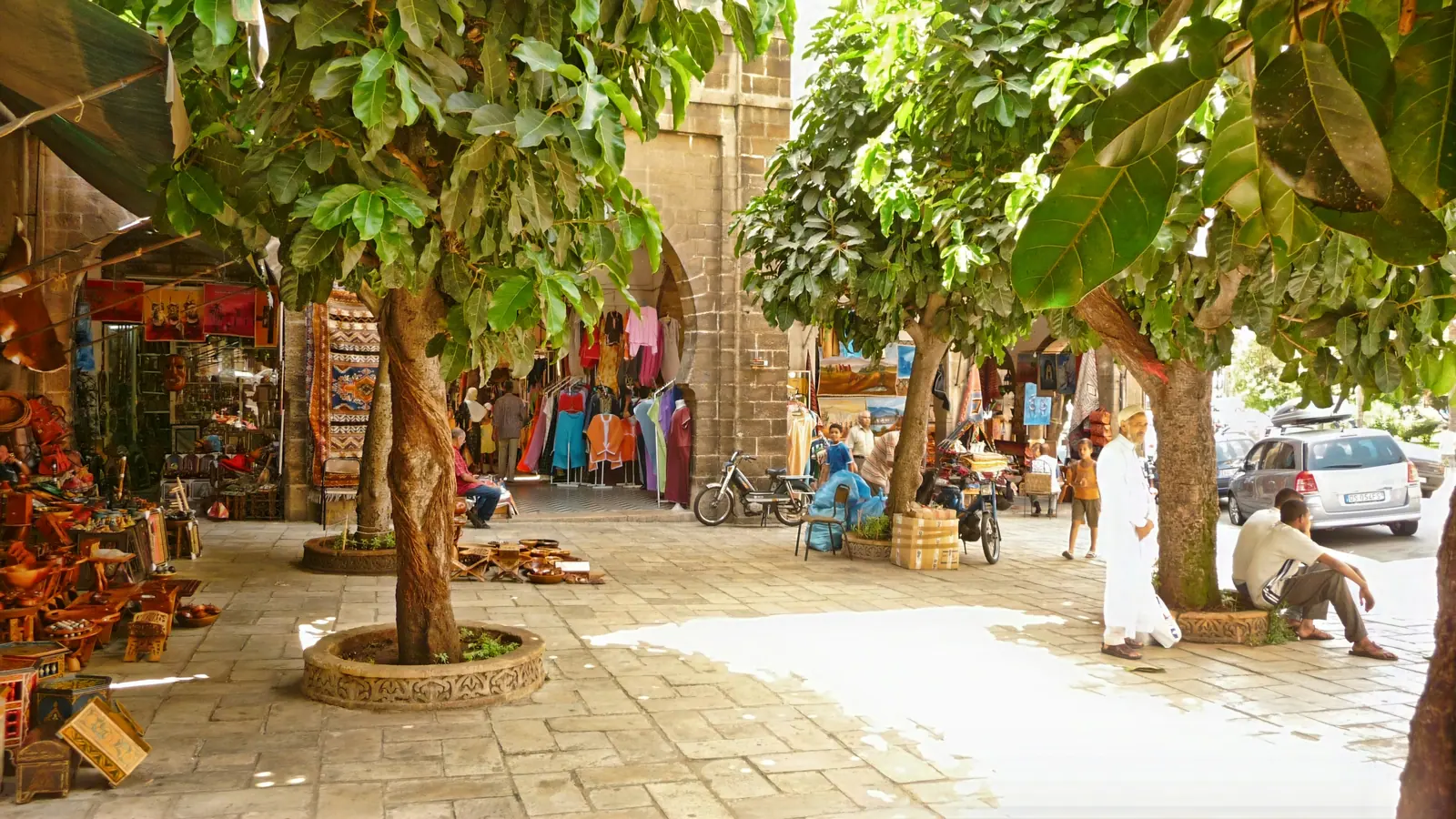
Today, the square remains one of the principal meeting places in Meknes.
Visiting El Hedim also provides enough distance to appreciate the full dimensions and architectural composition of Bab Mansour.
Behind Bab Mansour: The Imperial City
Symbolically passing through Bab Mansour means entering the monumental world created by Moulay Ismail.
The imperial city was not a single palace.
It was an immense complex that included:
- royal residences
- courtyards
- gardens
- fortifications
- granaries
- stables
- cisterns
- military spaces
This organisation explains why the monuments associated with Moulay Ismail are now spread across such a large area of Meknes.
The Mausoleum of Moulay Ismail
Among the most important monuments in this area is the Mausoleum of Moulay Ismail.
The monument is directly associated with the ruler who transformed Meknes into an imperial capital.
After seeing Bab Mansour, visiting the mausoleum is therefore a natural way to continue exploring this period of Moroccan history.
Heri es-Souani
Further into the former imperial city stand the structures known as Heri es-Souani.
These large buildings are associated with the important storage infrastructure developed for the royal city.
They remind visitors that a capital of this size required considerable logistical organisation.
Bab Mansour represented the prestigious façade of the imperial city.
Heri es-Souani provides a better understanding of how this vast complex functioned.
The Imperial Stables
Moulay Ismail also attached great importance to horses and equestrian facilities.
The extensive structures associated with the stables are among the characteristic elements of the imperial city mentioned by UNESCO.
They demonstrate the exceptional scale of the royal complex in Meknes.
The Agdal Basin
The Agdal Basin, also associated with the imperial complex, illustrates the importance of hydraulic infrastructure.
A royal city containing palaces, gardens, soldiers, animals and storage facilities required substantial water resources.
Hydraulic systems were therefore an integral part of the urban project.
Bab Mansour Was Not Just a Gate
One of the interesting characteristics of Bab Mansour is the variety of functions it served during its history.
According to Discover Islamic Art, the building notably housed the court of the pasha of the Medina.
Meetings intended to settle certain disputes could be held there.
The space in front of the gate was also used for religious and military ceremonies.
Bab Mansour was therefore simultaneously:
- a monumental entrance
- a symbol of power
- a ceremonial space
- a place associated with certain administrative functions
This diversity of uses partly explains the monument's importance in the urban history of Meknes.
Bab Mansour and the Bou Inania Madrasa
To understand the architectural evolution of Meknes, it is interesting to compare Bab Mansour with the Bou Inania Madrasa of Meknes.
The two monuments belong to different periods.
The Bou Inania Madrasa represents the Marinid era.
Bab Mansour belongs to the great Alaouite architectural programme developed several centuries later.
This comparison shows that Meknes cannot be reduced to the reign of Moulay Ismail alone.
The city preserves traces of several major periods in Moroccan history.
Do Not Confuse the Two Bou Inania Madrasas
There is also a Bou Inania Madrasa in Fez.
The two buildings are distinct.
This historic connection between Fez and Meknes is nevertheless interesting.
Both cities possess important Marinid heritage before following different historical trajectories in later centuries.
In Fez, monuments such as Al Quaraouiyine, the Al-Attarine Madrasa, the Nejjarine Museum and the Chouara Tanneries notably illustrate the city's intellectual and artisanal importance.
In Meknes, the imperial city of Moulay Ismail gives the monumental landscape a particularly royal and military dimension.
Dar Jamaï
Close to El Hedim Square also stands Dar Jamaï.
Built in the 19th century, this palace belongs to a much later period than Bab Mansour.
Nevertheless, it is an interesting stop for understanding the evolution of Moroccan palatial architecture.
Today dedicated to musical heritage, the monument complements a route around El Hedim and the Medina particularly well.
Bab Mansour and UNESCO World Heritage
The Historic City of Meknes has been inscribed on the UNESCO World Heritage List since 1996.
UNESCO considers Meknes a particularly complete example of the urban and architectural structure of a 17th-century North African capital.
UNESCO notably highlights:
- powerful ramparts
- monumental gates
- the Medina
- the imperial city
- palaces
- mosques
- madrasas
- granaries
- historic commercial structures
Bab Mansour is an integral part of this exceptional heritage ensemble.
Why Has Bab Mansour Become the Symbol of Meknes?
Meknes contains many historic monuments.
Yet Bab Mansour is probably the monument most immediately associated with the city.
There are several reasons for this.
Its position facing El Hedim gives it exceptional visibility.
Its dimensions are impressive.
Its decoration combines several major techniques of Moroccan art.
Above all, however, its history summarises that of imperial Meknes.
Bab Mansour is both an architectural masterpiece and a manifestation of Moulay Ismail's political and imperial project.
From Bab Mansour to Volubilis
A visit to Bab Mansour can be combined with an excursion to Volubilis.
The archaeological site lies north of Meknes and takes visitors much further back into the region's history.
Its ancient remains include:
- houses
- mosaics
- temples
- public buildings
- columns
- a monumental arch
The connection is particularly interesting because of the possible reuse of ancient materials at Bab Mansour.
Moulay Idriss Zerhoun
Near Volubilis lies Moulay Idriss Zerhoun.
The town is closely associated with Moulay Idriss I and the origins of the Idrisid dynasty.
A route combining Meknes, Volubilis and Moulay Idriss Zerhoun therefore provides an opportunity to explore several major periods of Moroccan history.
From Meknes to Fez
Meknes is also located close to Fez, another of Morocco's great imperial cities.
The two destinations offer complementary perspectives on Moroccan heritage.
In Fez, discover in particular:
- Al Quaraouiyine
- the Al-Attarine Madrasa
- the Bou Inania Madrasa of Fez
- the Nejjarine Museum
- the Chouara Tanneries
- Dar Al Batha
In Meknes, a heritage route can be organised around:
- Bab Mansour
- El Hedim Square
- the Bou Inania Madrasa of Meknes
- Dar Jamaï
- the Mausoleum of Moulay Ismail
- Heri es-Souani
Visiting both cities provides a better understanding of the diversity of Morocco's former imperial capitals.
What to See Around Bab Mansour
The location of the monument makes it easy to create a historical walking route.
El Hedim Square
Begin at El Hedim Square to observe the entire façade of Bab Mansour.
The distance provided by the square allows you to appreciate the proportions of the monument.
Medina of Meknes
Then continue into the Medina of Meknes.
Souks, workshops, mosques and historic houses reveal the traditional urban fabric of the city.
Bou Inania Madrasa
The Bou Inania Madrasa of Meknes provides an opportunity to discover the Marinid heritage that predates Moulay Ismail's imperial city.
Dar Jamaï
Dar Jamaï offers another perspective on Moroccan palatial architecture and the cultural heritage of Meknes.
Mausoleum of Moulay Ismail
The Mausoleum of Moulay Ismail is an essential stop for learning more about the ruler behind the city's imperial transformation.
Heri es-Souani
Continue towards Heri es-Souani to discover another dimension of the vast imperial complex.
An Itinerary for Understanding the Imperial City
These monuments are best understood together.
El Hedim explains the organisation of the urban space.
Bab Mansour represents the monumental façade of imperial power.
The Mausoleum of Moulay Ismail recalls the history of the ruler.
Heri es-Souani reveals the scale of the imperial infrastructure.
The Bou Inania Madrasa takes visitors back to the Marinid period.
Dar Jamaï represents a more recent chapter in the architectural history of Meknes.
Through just a few monuments, it is therefore possible to explore several centuries of history.
Why Visit Bab Mansour?
Because it is much more than a beautiful gate.
Bab Mansour helps explain how architecture could be used to represent political power.
Its dimensions, materials, decoration and position facing El Hedim were designed to create a spectacular monument.
Behind this façade begins the story of the immense imperial city developed under Moulay Ismail.
In front of it lies one of the main public spaces of Meknes.
Bab Mansour therefore stands precisely at the meeting point of architecture, power and urban history.
Bab Mansour: The Great Gate of Meknes
More than three centuries after its construction, Bab Mansour remains one of the most recognisable monuments in Morocco.
Its immense arch, zellige, geometric patterns, calligraphy and columns continue to dominate El Hedim Square.
But its true importance goes far beyond its decoration.
The gate tells the story of the transformation of Meknes into an imperial capital.
It recalls the architectural ambition of Moulay Ismail.
It also reflects the multiple influences and forms of craftsmanship that shaped Moroccan architecture.
To discover Meknes, Bab Mansour is therefore much more than a photographic stop: it is a gateway into the history of the entire imperial city.
Read Also
- El Hedim Square in Meknes: History at the Heart of the Imperial City
- Meknes: History and Heritage of the Imperial City
- Bou Inania Madrasa of Meknes: History and Architecture
- Mausoleum of Moulay Ismail: History of the Imperial City
- Heri es-Souani: Granaries and Infrastructure of Moulay Ismail
- Dar Jamaï: History of a Palace in Meknes
- Volubilis: Discover Morocco's Ancient City
- Moulay Idriss Zerhoun: History and Heritage
- Fez: Heritage, Medina and Historic Monuments