Nestled at the foot of the Middle Atlas, facing the vast Tadla plain, Béni Mellal occupies a unique position in the heart of Morocco.
Less known than Marrakech, Fès, or Meknès, the city possesses a strong identity shaped by three essential elements: the mountains, water, and the history of Tadla.
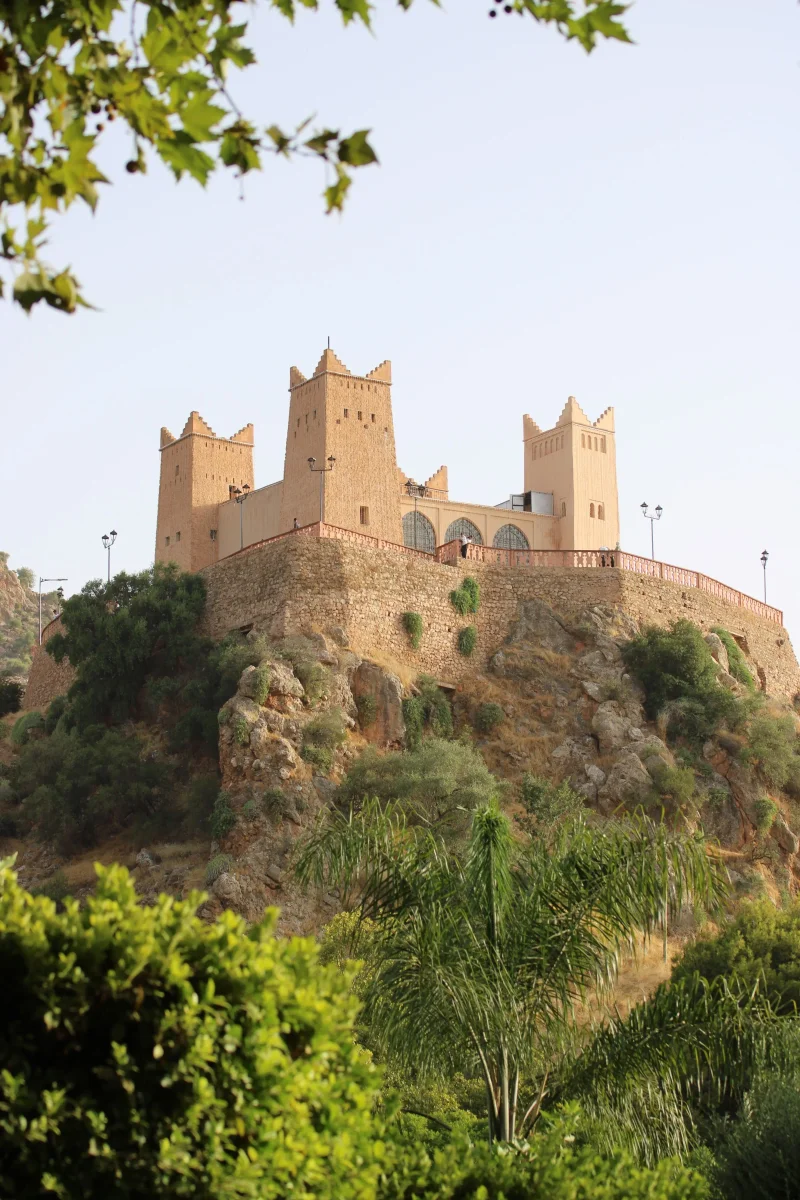
Its most emblematic site is undoubtedly Aïn Asserdoun, a spring surrounded by gardens and dominated by an ancient kasbah. Together, they offer one of the most characteristic landscapes of Béni Mellal.
Today, the city is the capital of the Béni Mellal-Khénifra region and serves as an interesting starting point to explore the landscapes of the Middle Atlas and several major natural sites in central Morocco.
A City at the Heart of Tadla's History
The history of Béni Mellal is closely linked to that of Tadla, a vast historical region located between the plain and the reliefs of the Middle Atlas.
The High Commission for Planning mentions in its regional documentation the ancient existence of a city called Médina Day, associated with Amazigh Masmouda populations and located in the area that roughly corresponds to the current territory of Béni Mellal.
Over the centuries, the Tadla region came under the influence of several major Moroccan dynasties, including the Almoravids, Almohads, and later the Merinids.
This succession of powers reflects the strategic importance of the region, situated between the great plains of central Morocco and the routes leading to the mountains.
The Development of Béni Mellal Under the Alaouites
The formation of the city as we know it today is mainly linked to the Alaouite period.
At the end of the 17th century, under the reign of Sultan Moulay Ismaïl, Béni Mellal gained increasing strategic importance.
The ruler, who reigned from 1672 to 1727, undertook the construction or reinforcement of fortifications in several regions of Morocco to secure territories and major routes.
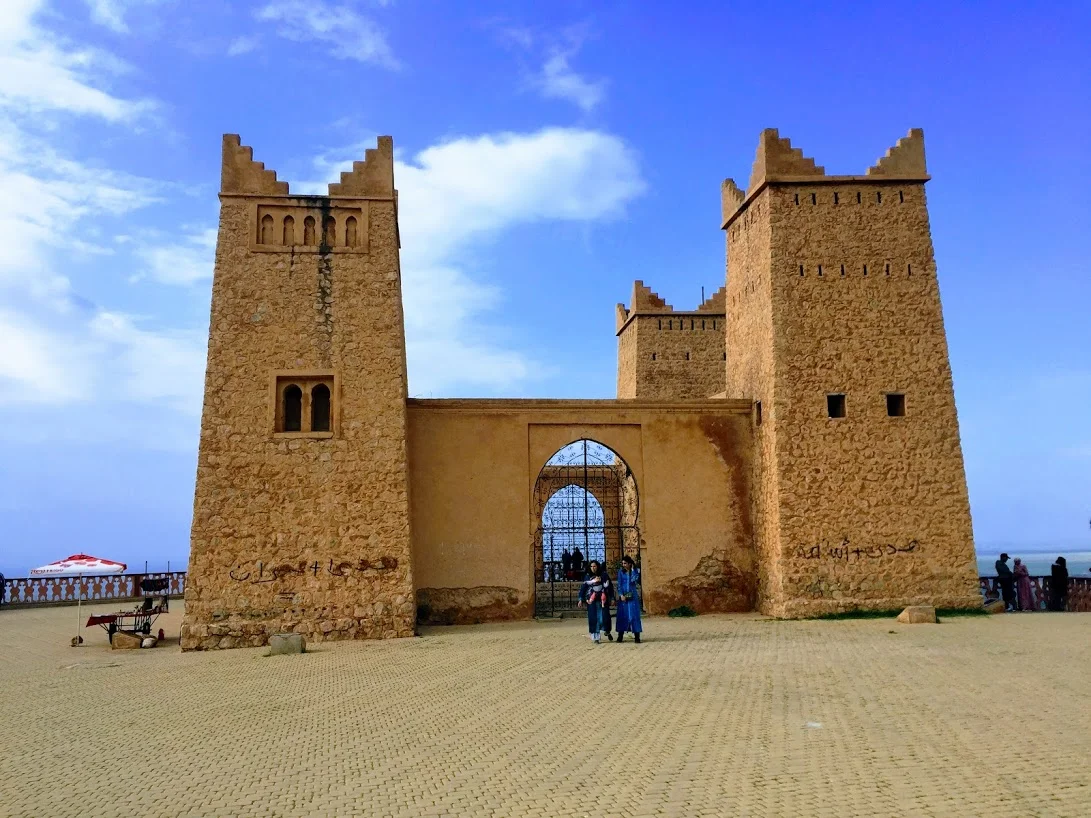
It is in this context that the fortress overlooking Béni Mellal from the heights near the Aïn Asserdoun spring is generally situated—known by various names depending on the sources (Kasbah Bel Kouch, Kasbah Ras el Aïn, Kasbah d'Aïn Asserdoun).
Its dominant position, above the spring and the plain, perfectly illustrates its strategic function.
The Fortress of Aïn Asserdoun
The Kasbah is the main historical monument visible in the city.
Situated on high ground, it overlooks Aïn Asserdoun and offers a spectacular view of Béni Mellal and the Tadla plain.
Its architecture is that of a fortress: massive walls, simple volumes, and a layout primarily designed to monitor the territory.
The Kasbah also helps to understand the geographical logic of Béni Mellal.
On one side rise the reliefs of the Middle Atlas. On the other side stretches a vast agricultural plain.
This position, between mountains and arable land, has profoundly influenced the city's development.
Aïn Asserdoun, Symbol of Béni Mellal
If there is one place inseparable from Béni Mellal, it is Aïn Asserdoun.
Located at the foot of the mountain, this natural spring has long nourished gardens, canals, and agricultural lands situated below.
The site is now developed into a walking area, with vegetation, basins, and flowing water.
Aïn Asserdoun is one of the most frequented spots by the city's residents, especially during warm periods.
The constant presence of water creates a particularly pleasant contrast with the dry and hot climate that the plain can experience in summer.
What Does Aïn Asserdoun Mean?
The name has an interesting origin.
In Arabic, the word aïn can refer to a spring or an eye. The Amazigh term aserdoun refers to a mule.
The name is generally interpreted as "spring of the mule."
A local tradition tells that a mule played a role in the discovery of the spring.
This tale is part of Béni Mellal's oral heritage and is one of the most well-known stories associated with the site.
Like many ancient traditions, there are different versions of the story, passed down through generations.
Water at the Heart of Béni Mellal's Identity
Aïn Asserdoun is not only a tourist site.
It helps to understand the importance of water in the historical development of the entire region.
The Middle Atlas is one of Morocco's major natural water reservoirs. Rainfall and springs feed several important basins and rivers, notably the Oum Er-Rbia.
This resource has long supported agriculture in the Tadla plain.
Even today, the region's economy is closely linked to agricultural lands, irrigated crops, and hydraulic resources.
Thus, Béni Mellal appears as a city born from the meeting of mountains, water, and agriculture.
A City at the Foot of the Middle Atlas
Geography is one of the main attractions of Béni Mellal.
From the heights of Aïn Asserdoun and the Kasbah, the contrast is striking.
Behind the city rise the reliefs of the Middle Atlas. In front of it stretches the fertile Tadla plain.
This situation allows travelers to quickly transition from an urban environment to mountainous landscapes.
It also explains why Béni Mellal serves as an important passage point for exploring the interior of Morocco.
What to See in Béni Mellal?
Aïn Asserdoun
Aïn Asserdoun is naturally the first place to discover.
The gardens arranged around the spring are pleasant for a stroll and allow visitors to observe how water flows down from the mountain.
The site is particularly enjoyable in the morning or late afternoon.
The Kasbah of Aïn Asserdoun
From the gardens, the exploration can continue to the Kasbah.
The monument's interest is twofold: its history related to the control of the region and its panoramic location.
From the heights, visitors can observe a large part of Béni Mellal as well as the agricultural plain.
The City Center of Béni Mellal
The city center allows visitors to discover the contemporary face of Béni Mellal.
Shops, cafes, markets, and residential neighborhoods reflect the city's role as a regional capital.
Unlike the fortified historical core founded by Moulay Ismaïl in 1688—the old medina of Béni Mellal, distinct from the fortress perched on the hill—the current city center does not have the monumental scale of the great medinas of Fès or Marrakech, but its urban fabric remains interesting for understanding the development and economic role of the city in the region.
The Old Medina of Béni Mellal
Established as a fortified city by Sultan Moulay Ismaïl in 1688, the old medina of Béni Mellal constitutes the historical core of the city, distinct from the fortress of Aïn Asserdoun that dominates the city from nearby heights.
Some of its original ramparts still stand today, particularly to the west, facing the current Place de la Marche Verte. Built above ancient cavities, it retains a traditional urban fabric that is now fragile, and its enhancement remains a challenge for the city.
Discover the Old Medina of Béni Mellal
The Kasbah of Tadla
About thirty kilometers north of Béni Mellal stands the most imposing of the Ismaelian fortifications in the region: the Kasbah of Tadla, founded in 1687 by Sultan Moulay Ismaïl.
It gave its name to the city of Kasba Tadla that developed around it. The site includes a bridge crossing the Oued Oum Er-Rbiâ, resting on ten arches, which provides access to the military bastion built at the end of the 17th century. Its enclosing walls still testify to the importance of this citadel, which allowed Moulay Ismaïl to establish his authority over the entire Tadla plain.
The Almoravid Minaret of the Soumâa Mosque
To the east of the medina, the Soumâa neighborhood forms another historical core of Béni Mellal, also classified as national heritage.
The minaret of the mosque that gives its name to the neighborhood dates back to the Almoravid period—therefore predating the foundation of the fortified city by Moulay Ismaïl—and was restored in 1999. It is one of the oldest architectural elements preserved in Béni Mellal, reflecting urban presence in the region well before the rise of the Alaouite city in the 17th century.
Discover the Almoravid Minaret
The El Kebir Mosque
The main place of worship in Béni Mellal, the El Kebir Mosque illustrates the traditional religious architecture of the Tadla region.
Like most active mosques in Morocco, its interior access remains reserved for Muslims, but its architecture is a landmark of the city's religious heritage.
The El Jedid Palace
The El Jedid Palace ("the new palace") is among the remarkable historical buildings of Béni Mellal, showcasing an example of traditional Moroccan palatial architecture.
It complements the city's heritage ensemble alongside its fortresses and fortified medina.
The Place de la Marche Verte
Facing the best-preserved portion of the ramparts of the old medina, the Place de la Marche Verte is now one of the central public spaces in Béni Mellal.
Its name pays tribute to the Green March of 1975, a significant episode in Morocco's contemporary history. It offers one of the best viewpoints of the fortified historical core of the city.
Discover the Place de la Marche Verte
What to Visit Around Béni Mellal?
One of the great advantages of Béni Mellal is its proximity to several remarkable natural sites.
Bin El Ouidane
The lake of Bin El Ouidane is one of the most well-known landscapes in the region.
Surrounded by mountains, it offers a spectacular environment where water contrasts with rocky reliefs.
The area attracts visitors interested in landscapes, water activities, and stays in nature.
The Ouzoud Waterfalls
The famous Ouzoud waterfalls, located in the province of Azilal, are one of the main natural attractions in central Morocco.
They can be easily integrated into an itinerary passing through Béni Mellal or visited as part of a day trip from Marrakech.
The site is known for its significant waterfalls and the lush landscapes that surround them.
Azilal and Mountain Landscapes
The neighboring province of Azilal also offers numerous routes to the mountains, valleys, and villages of the High and Middle Atlas.
The region is particularly suited for travelers wishing to discover a rural, mountainous, and less urbanized Morocco.
How Much Time to Allocate for Visiting Béni Mellal?
To discover just the city, half a day to a full day is sufficient to visit Aïn Asserdoun, ascend to the Kasbah, and explore the center.
To truly enjoy the region, it is advisable to allocate more time.
Two or three days allow for combining Béni Mellal with Bin El Ouidane, Azilal, or the Ouzoud waterfalls.
The city then becomes an excellent base for exploring central Morocco.
How to Get to Béni Mellal?
Béni Mellal is primarily accessible by road.
Its central location in Morocco allows for easy access from several major cities, including Marrakech, Casablanca, and Fès.
Buses and grand taxis provide connections to many regional destinations.
A car is particularly convenient for exploring the surroundings, especially Bin El Ouidane and the mountainous areas.
Practical Tips for Visiting Béni Mellal
Béni Mellal can experience high temperatures during the summer.
For visiting Aïn Asserdoun and ascending to the Kasbah, mornings or late afternoons are generally the most pleasant times.
Comfortable shoes are recommended for navigating the sloped areas.
Aïn Asserdoun is also a popular place for the residents of Béni Mellal. As in any local public space, it is important to respect the tranquility of families and ask for permission before directly photographing individuals.
To explore the surroundings, a car or organized transport greatly facilitates travel.
Béni Mellal, Between Water, Mountains, and Heritage
Béni Mellal may not have the monumental concentration of Marrakech, Fès, or Meknès.
Its interest lies elsewhere.
The city tells another facet of Morocco: that of territories situated between mountains and vast agricultural plains.
Its history is linked to Tadla, its development to the Alaouite period, and its identity to an essential resource: water.
Aïn Asserdoun is the best illustration of this. At the foot of the Middle Atlas, the spring flows through the gardens while the ancient Kasbah overlooks the city and the plain.
This encounter between heritage, nature, and landscape gives Béni Mellal a very different identity from Morocco's major tourist destinations.
For travelers wishing to discover a more interior, rural, and mountainous Morocco, Béni Mellal is well worth a stop.
For a general overview of the city, see our guide Discover Béni Mellal.
Continue Your Discovery of Morocco
Moroccan heritage is not limited to a single place. Palaces, medersas, museums, archaeological sites, and monuments each tell a part of its story.
🎟️ Discover the heritage and book your tickets
📖 Read our guides & inspirations
MoroccoMuseum.com — Discover. Explore. Experience the heritage of Morocco.