Dar El Bacha in Marrakech: History, Architecture and Heritage of the Pasha's Palace
In the heart of the Marrakech Medina, behind the walls of Dar El Bacha Street, stands one of the city's most refined palaces.
Dar El Bacha, whose name means "House of the Pasha," was built in 1910 and became the residence of Thami El Glaoui, who was appointed Pasha of Marrakech in 1912 by Sultan Moulay Youssef.
A place of power, reception and representation, the palace bears witness to a particularly complex period in the political history of Marrakech and Morocco at the beginning of the 20th century.
Today, restored and transformed into the Museum of Confluences, Dar El Bacha offers visitors an opportunity to discover the history of Marrakech, Moroccan palatial architecture and the cultural exchanges that have shaped the country.
Dar El Bacha: The "House of the Pasha"
The name Dar El Bacha literally means "House of the Pasha."
The palace was built in 1910 in the Medina of Marrakech.
Two years later, in 1912, Sultan Moulay Youssef appointed Thami El Glaoui Pasha of Marrakech.
Dar El Bacha then became one of his principal residences and an important center of power.
The palace was not designed simply as a private home.
Its architecture, scale and richly decorated interiors also served to demonstrate the status and influence of its owner to Moroccan and foreign visitors.
Thami El Glaoui, Pasha of Marrakech
It is impossible to understand the history of Dar El Bacha without looking at the life of Thami El Glaoui.
Born in 1879, he belonged to the powerful Glaoua family, whose influence extended across territories in southern Morocco and the High Atlas.
His political career took on a new dimension at the beginning of the French Protectorate.
In 1912, he became Pasha of Marrakech.
Over the following decades, El Glaoui became one of the most powerful political figures in southern Morocco.
His influence extended far beyond Marrakech.
Dar El Bacha therefore became much more than a private residence.
It was also a palace of power, diplomacy and representation.
A Palace Designed to Impress
The organization of Dar El Bacha reflects this function.
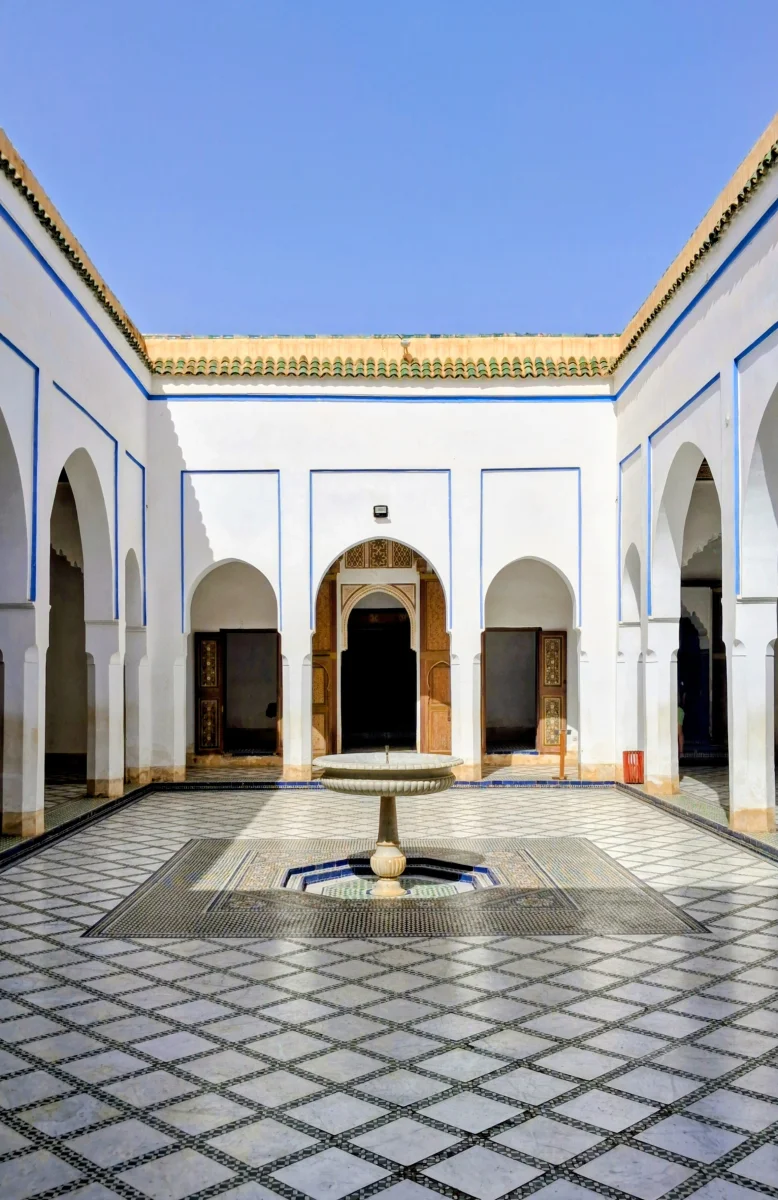
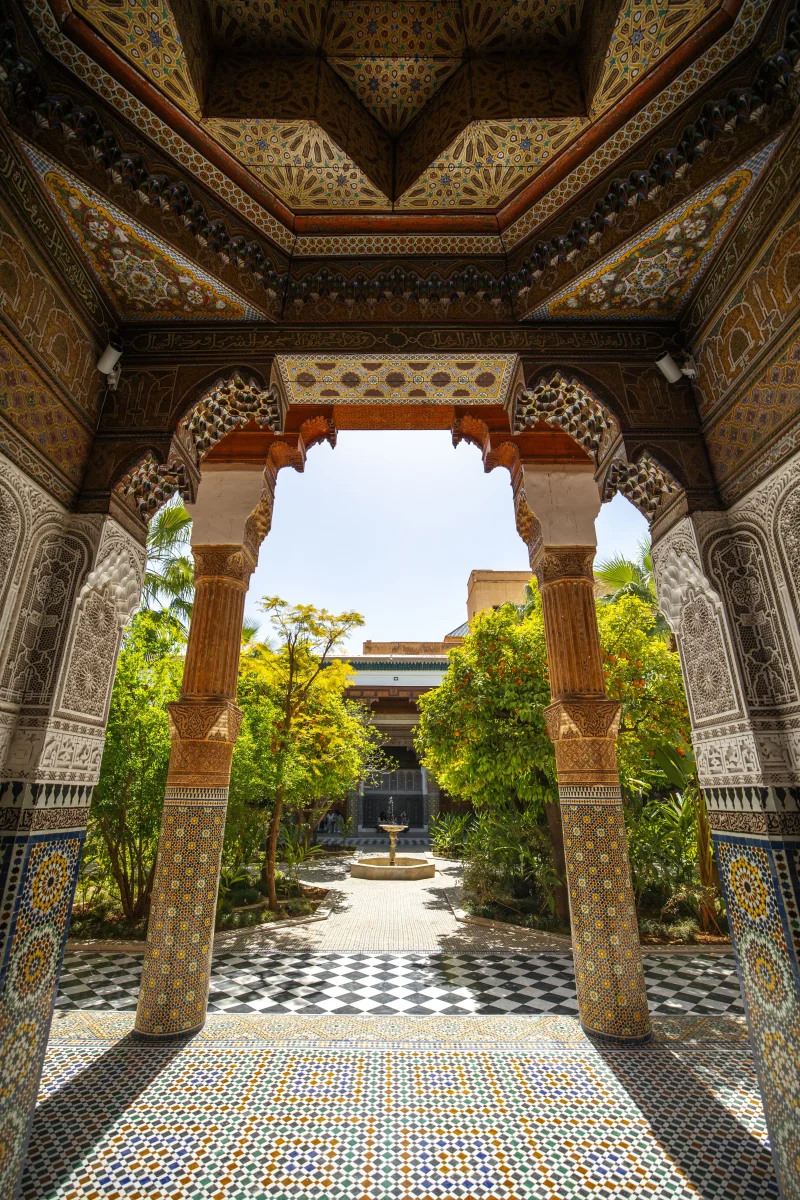
Visitors discover a complex built around a central garden, following the traditional architectural principles of the Moroccan riad.
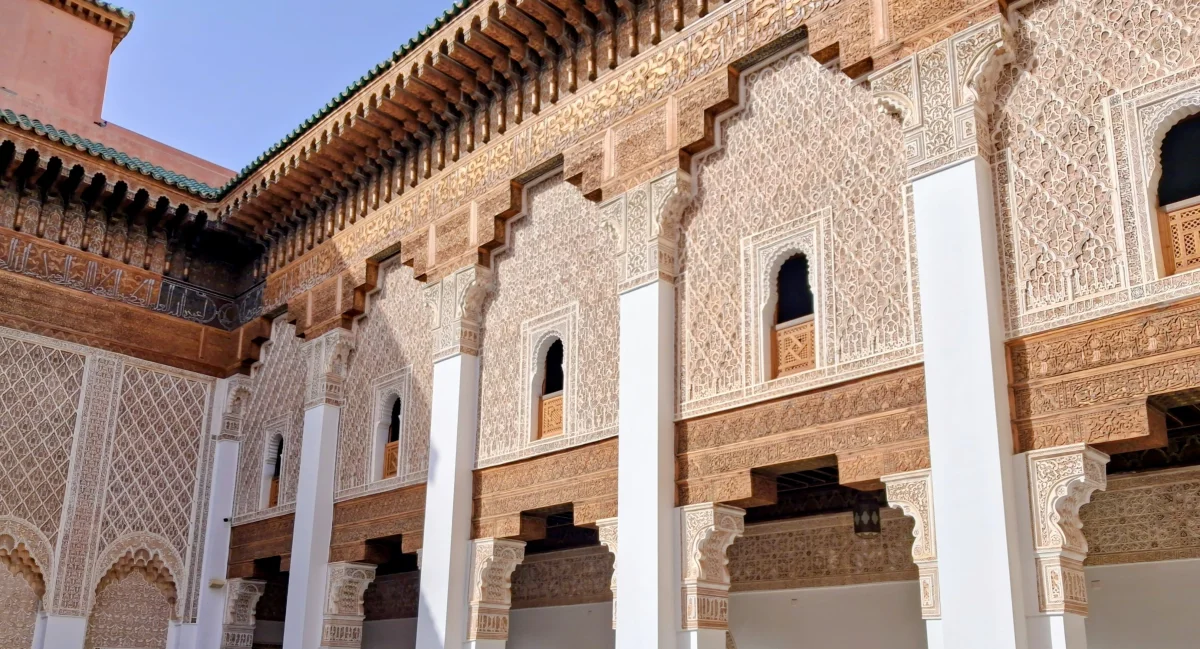
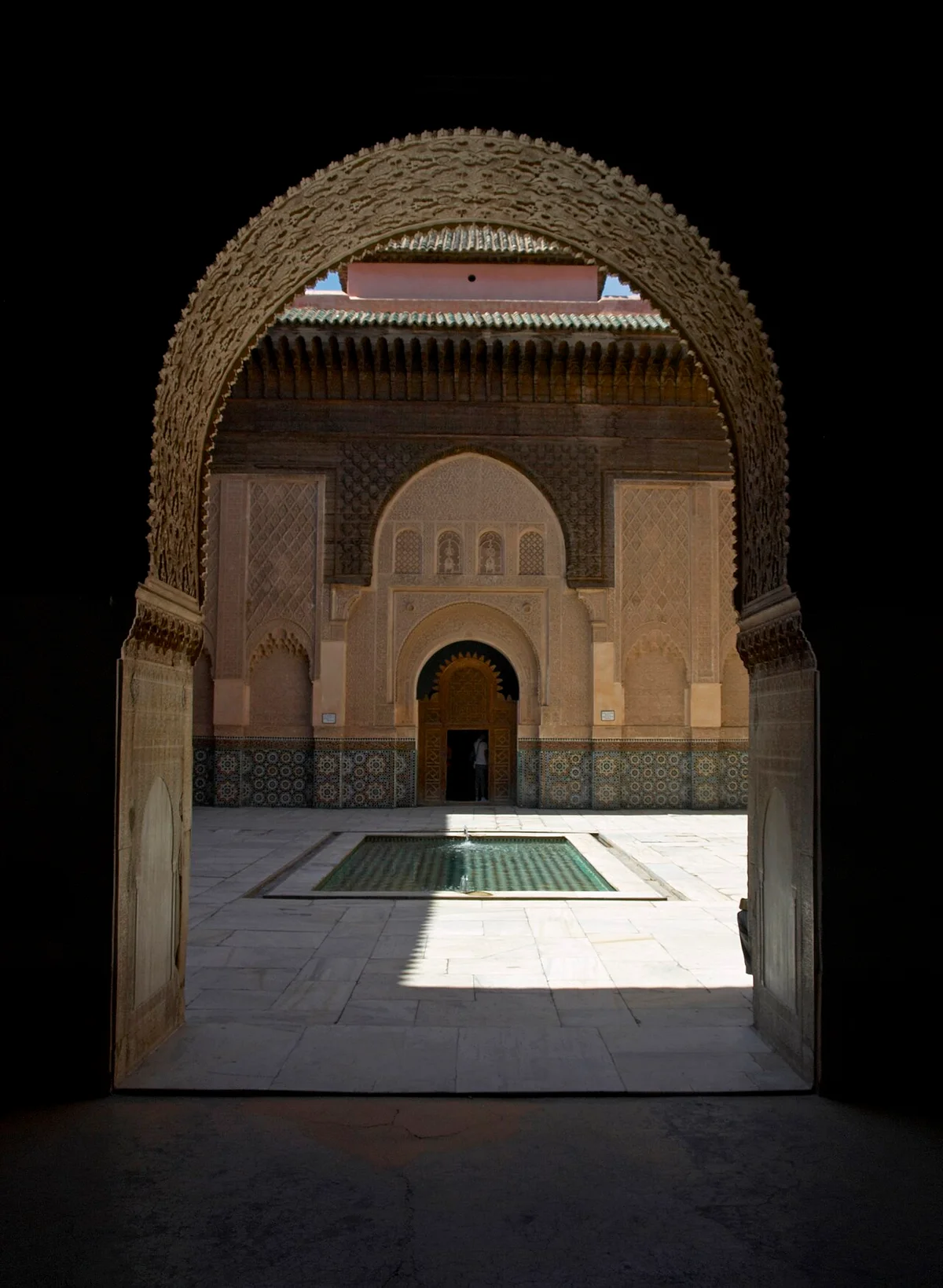
Fountains, orange trees, reception rooms, zellige, carved wooden ceilings, sculpted plasterwork and marble floors create an exceptionally refined setting.
The Central Garden
The heart of the palace is organized around a garden characterized by strong symmetry.
Paths structure the space, while fountains, vegetation and the reception rooms surrounding the garden create a transition between architecture and nature.
This organization is characteristic of many of Morocco's great riads and palaces.
The Reception Rooms
Several reception spaces surround the garden.
Their decoration reveals different forms of traditional Moroccan craftsmanship.
These include:
- geometric zellige;
- carved and painted wood;
- sculpted plasterwork;
- marble floors;
- elaborately decorated doors;
- ornamental ceilings.
Together, they demonstrate the remarkable skills of Moroccan craftsmen at the beginning of the 20th century while continuing decorative traditions that were already centuries old.
The Hammam and Private Areas of the Palace
Dar El Bacha was not limited to rooms intended for official receptions.
The complex also included several spaces necessary for everyday palace life.
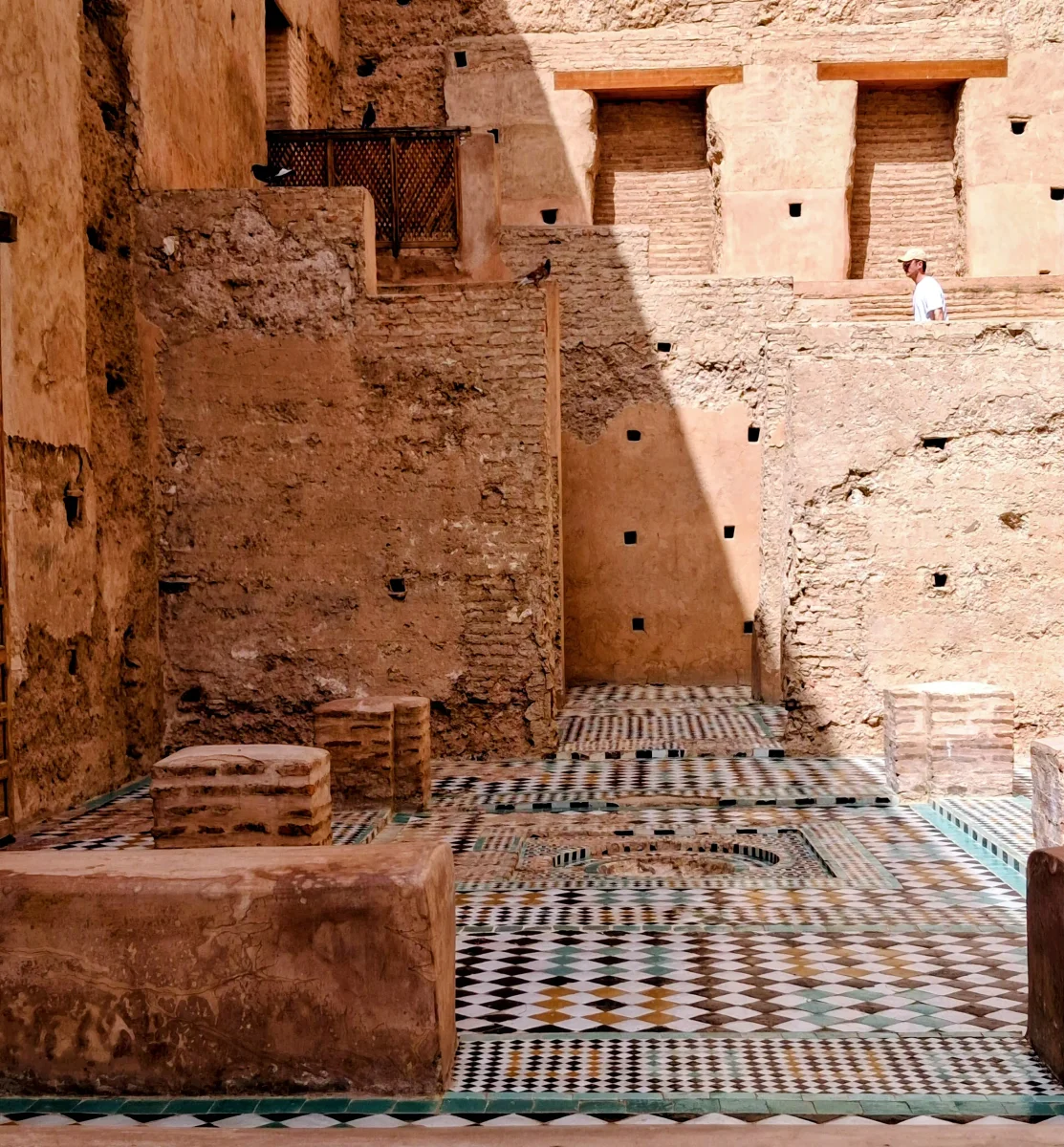
These included a traditional hammam, a douiria associated with service areas, a library and private spaces reserved for the Pasha's family.
The hammam is particularly interesting.
Beyond its decoration, its heating system and the infrastructure used to supply and evacuate water demonstrate the technical knowledge incorporated into traditional Moroccan architecture.
Dar El Bacha therefore helps visitors understand that a major Moroccan palace was a complete residential complex organized around public, private and domestic functions.
Dar El Bacha as an International Reception Palace
The power of Thami El Glaoui and the importance of Marrakech attracted several international personalities to Dar El Bacha.
The National Foundation of Museums notably lists Winston Churchill and Franklin D. Roosevelt among visitors to the palace.
Other sources relating to the history of the site also mention figures from the artistic and cultural world, including Maurice Ravel, Colette, Charlie Chaplin and Josephine Baker.
These visits illustrate the role Dar El Bacha could play as a prestigious reception venue during the first half of the 20th century.
At the time, the palace stood at the intersection of several worlds: Moroccan political power, international diplomacy, politics and artistic creation.
Churchill and Roosevelt in Marrakech
The presence of Winston Churchill and Franklin D. Roosevelt is among the episodes most frequently associated with the international history of Marrakech in the 20th century.
Churchill had a particular affection for Marrakech, especially for its light and landscapes.
Franklin D. Roosevelt also visited Marrakech in connection with his travels in Morocco during the Second World War.
The National Foundation of Museums lists both leaders among the personalities who visited Dar El Bacha.
This international dimension continues to contribute to the historical reputation of the palace today.
Thami El Glaoui and the French Protectorate
The history of Dar El Bacha also has a much more complex political dimension.
Thami El Glaoui was one of the principal allies of French power in Morocco during much of the Protectorate.
His political and economic influence was considerable.
However, his opposition to Sultan Mohammed V would profoundly shape his place in Moroccan history.
The 1953 Crisis
In the early 1950s, tensions between the French authorities and Sultan Mohammed V intensified.
Thami El Glaoui became one of the Sultan's main political opponents.
In August 1953, the French authorities deposed Mohammed V, who was sent into exile, first to Corsica and later to Madagascar.
This event triggered a profound political crisis and strengthened the Moroccan nationalist movement.
The Change of Position in 1955
The situation changed rapidly.
Faced with the growing independence movement and a changing political context, El Glaoui eventually recognized Mohammed V once again as the legitimate sovereign.
In November 1955, he met Mohammed V in France and formally submitted to him.
A few days later, the Sultan returned triumphantly to Morocco.
Thami El Glaoui died in 1956.
His career remains closely associated with the political tensions of the final years of the Protectorate.
From the Pasha's Palace to the Museum of Confluences
Several decades later, Dar El Bacha entered a new chapter in its history.
The National Foundation of Museums undertook the restoration of part of the palace to preserve its architecture and open it to the public.
The Dar El Bacha Museum of Confluences was inaugurated in 2017.
This transformation gave the public access to a monument that had once been one of Marrakech's major centers of power.
Dar El Bacha: Visit the Palace of Confluences in Marrakech
Why Is It Called the "Museum of Confluences"?
The choice of name is significant.
The museum seeks to highlight the different influences and cultural encounters that have contributed to shaping Moroccan identity.
For centuries, Morocco has stood at the crossroads of several cultural and geographic worlds: Africa, the Mediterranean, the Arab world, Amazigh heritage, Al-Andalus and the Sahara.
The collections and exhibitions at Dar El Bacha explore this diversity through historical objects, decorative arts, textiles, jewelry, manuscripts, ceramics and different forms of craftsmanship.
The museum also hosts temporary exhibitions dedicated to cultural exchange, heritage and history.
A Museum Where the Building Is as Important as the Collections
At Dar El Bacha, it would be a mistake to focus only on the objects on display.
The palace itself is one of the main works of art of the visit.
Take time to observe the transitions between the different rooms, the ceilings, doors, zellige patterns and the way the light changes around the central garden.
Every detail offers a better understanding of the principles of Moroccan palatial architecture.
This architectural richness also connects Dar El Bacha with other major monuments in Marrakech.
To explore the city's architecture further, you can also discover the Bahia Palace, El Badi Palace and Ben Youssef Madrasa on MoroccoMuseum.
Dar El Bacha and the Architectural Heritage of Marrakech
Dar El Bacha belongs to a much more recent period than some of Marrakech's most famous monuments.
El Badi Palace dates from the Saadian period.
Ben Youssef Madrasa reflects the city's religious and educational architectural heritage.
Bahia Palace represents the palatial architecture of the late 19th century.
Dar El Bacha, built at the beginning of the 20th century, continues this architectural story.
Visiting these monuments together therefore provides an especially interesting overview of the evolution of architecture and political power in Marrakech across several centuries.
Planning Your Visit to Dar El Bacha
Dar El Bacha is located in the Medina of Marrakech, in the neighborhood that now bears its name.
The museum can be reached on foot from several areas of the historic center.
Opening hours, admission prices and access conditions may change.
For up-to-date practical information, consult our dedicated guide:
Dar El Bacha: Access, Opening Hours and Admission Prices
If you would like to prepare your visit step by step, also see:
Dar El Bacha: Practical Visitor Guide
How Much Time Should You Allow?
The length of your visit will depend largely on your interest in architecture and temporary exhibitions.
A quick visit is enough to see the main rooms and central garden.
However, if you want to examine the architectural details, understand the organization of the palace and explore the museum's collections, allow more time.
Dar El Bacha is particularly rewarding when visited slowly.
Here, much of the experience lies in the details.
What to See Around Dar El Bacha
The palace's location in the Medina makes it easy to continue exploring Marrakech's heritage.
From here, you can reach the souks, Ben Youssef Madrasa and other monuments of the historic center.
Dar El Bacha can therefore be naturally included in a day dedicated to exploring the architectural heritage of the Medina.
To discover more monuments, museums and historic sites in Marrakech, explore the heritage guides and practical visitor pages available on MoroccoMuseum.
Read More on MoroccoMuseum
- Dar El Bacha: Visit the Palace of Confluences in Marrakech
- Dar El Bacha: Practical Visitor Guide
- Dar El Bacha: Access, Opening Hours and Admission Prices
Sources and References
- National Foundation of Museums — Dar El Bacha Museum of Confluences
- National Foundation of Museums — Museums of Morocco
- ICESCO — Dar El Bacha Museum in Marrakesh
- National Foundation of Museums — Exhibitions
Dar El Bacha, a Witness to an Era in Marrakech
Dar El Bacha is much more than a beautiful palace.
Its reception rooms, garden, hammam and decoration tell the story of power in Marrakech at the beginning of the 20th century, as well as the story of the craftsmen who built and decorated this exceptional residence.
The life of Thami El Glaoui adds a complex political dimension to the monument, closely connected to the final decades of the Protectorate and the return of Mohammed V.
Its transformation into the Museum of Confluences has given the palace a new purpose.
A place once reserved for the Pasha, his family and his guests is now open to visitors wishing to discover Morocco's history, architecture and cultural diversity.
Dar El Bacha has thus evolved from a palace of power into a place dedicated to preserving and sharing heritage.