Meknes and Volubilis: History, Imperial Heritage and an Ancient City of Morocco
Between Fez and Rabat, Meknes is one of Morocco's four great imperial cities.
Less visited than Marrakech or Fez, it nevertheless preserves an exceptional heritage: a historic Medina, monumental gates, ramparts, madrasas and the remains of the vast imperial city developed under Moulay Ismail.
About thirty kilometers from the city, the journey through history continues at Volubilis, one of Morocco's most important archaeological sites.
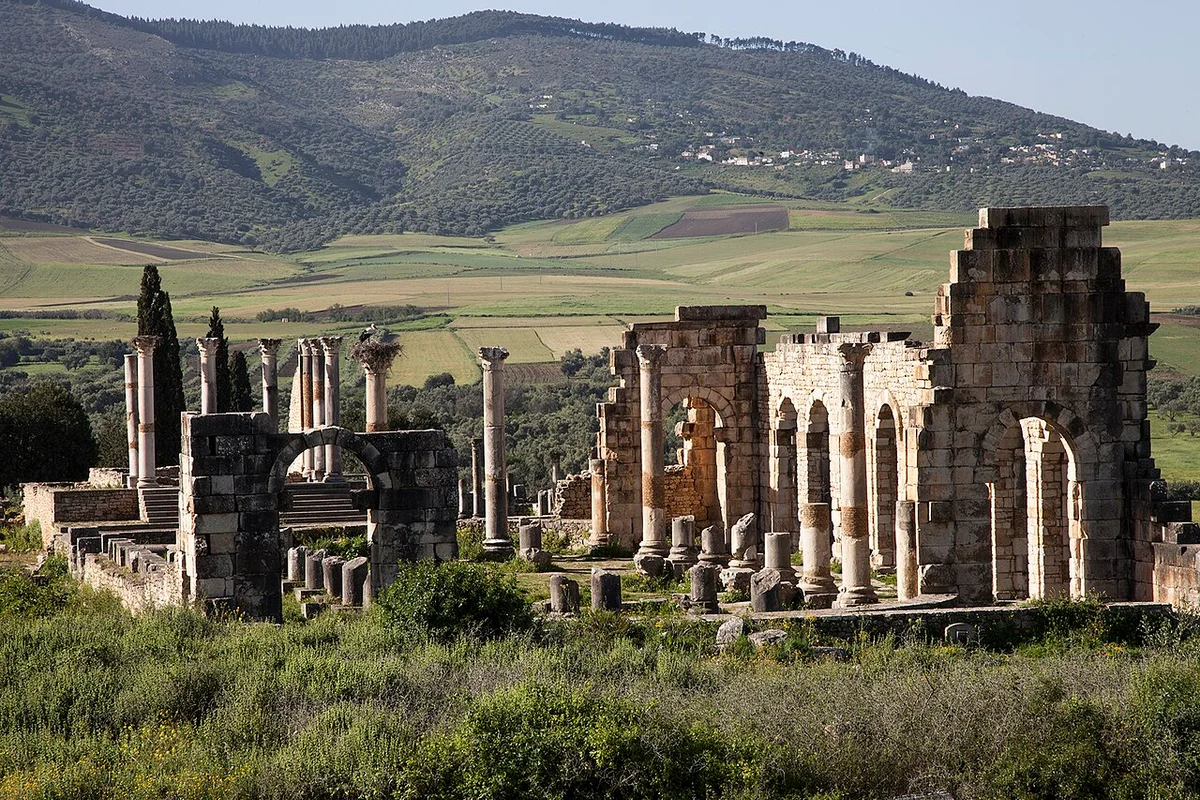
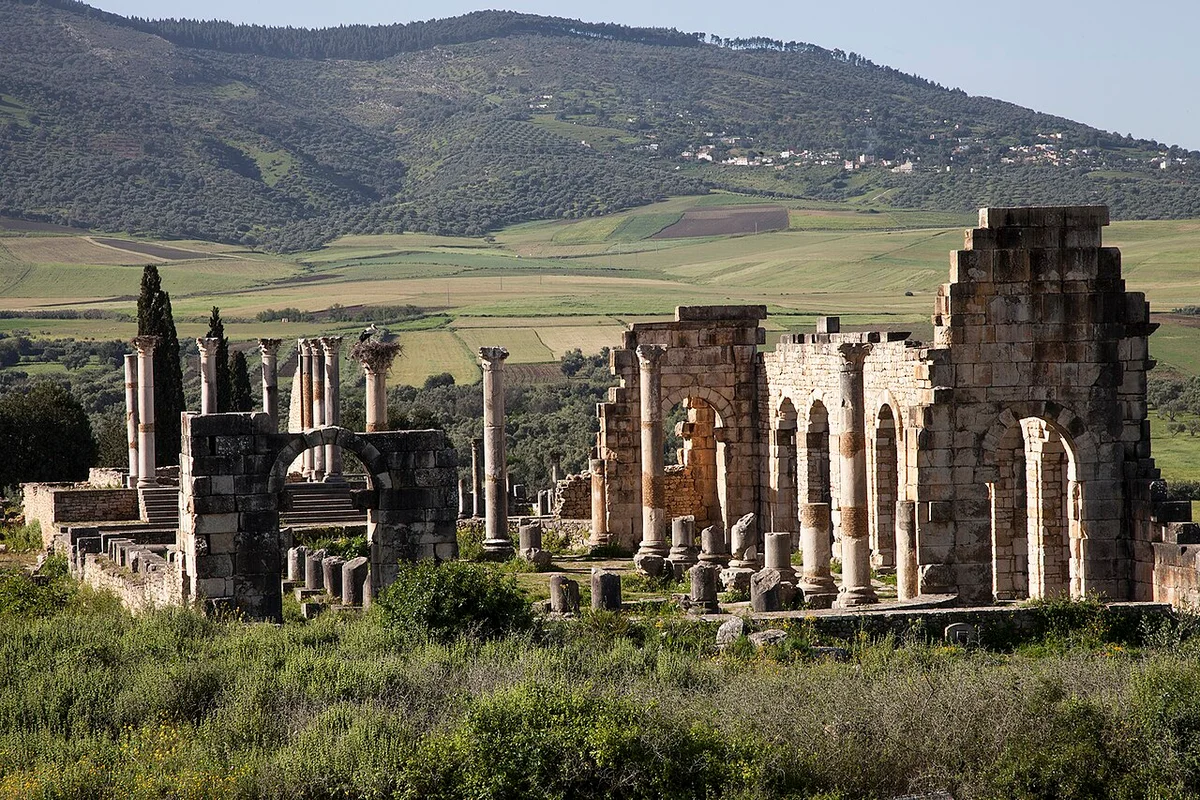
An ancient Mauritanian city that later became an important center of the Roman Empire, Volubilis still preserves temples, a basilica, a monumental arch, houses and mosaics that reveal several centuries of history.
Meknes and Volubilis therefore form one of Morocco's most fascinating heritage combinations: an imperial city and an ancient archaeological site, both inscribed on the UNESCO World Heritage List.
Discover the sites and monuments of Meknes
Meknes, One of Morocco's Four Imperial Cities
Meknes belongs, alongside Fez, Marrakech and Rabat, to Morocco's four imperial cities.
Its history, however, began long before it became an imperial capital.
According to UNESCO, the city was founded in 1061 by the Almoravids as a military settlement.
Its name is associated with the Meknassa, an important Berber tribe that had been present in the region for centuries.
The location of Meknes was no coincidence.
The city stands in the Saiss plain, between the Middle Atlas and the Zerhoun massif, in a particularly fertile agricultural region.
But it was at the end of the 17th century that Meknes entered the period that would permanently transform its history.
Moulay Ismail Transforms Meknes into an Imperial Capital
When the Alaouite sultan Moulay Ismail came to power in 1672, he chose Meknes as his capital.
His reign, which continued until 1727, profoundly transformed the city.
Alongside the existing Medina, the sultan undertook the construction of a vast imperial city containing palaces, gardens, fortifications, granaries, stables and administrative buildings.
UNESCO considers this complex the first major architectural achievement of the Alaouite dynasty.
Meknes became one of Morocco's principal political centers.
This period explains why many of the city's best-known monuments are still associated with Moulay Ismail.
An Imperial City Behind Monumental Walls
One of the most impressive characteristics of Meknes is its system of fortifications.
The historic city and the imperial complex are surrounded by several sets of ramparts.
Large monumental gates connect the different areas.
These fortifications were not merely defensive structures.
They also contributed to the monumental character of the capital and projected the authority of the sultan.
Morocco's Ministry of Culture lists several elements of this heritage among the protected monuments of Meknes, including Bab Mansour Laalej, Bab al-Khamis, the gates and walls of Meknes, and the former stables of Moulay Ismail.
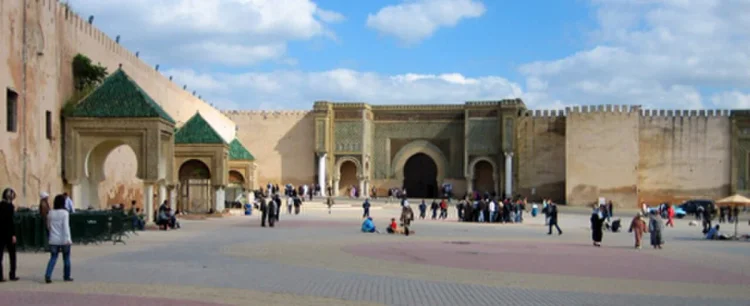
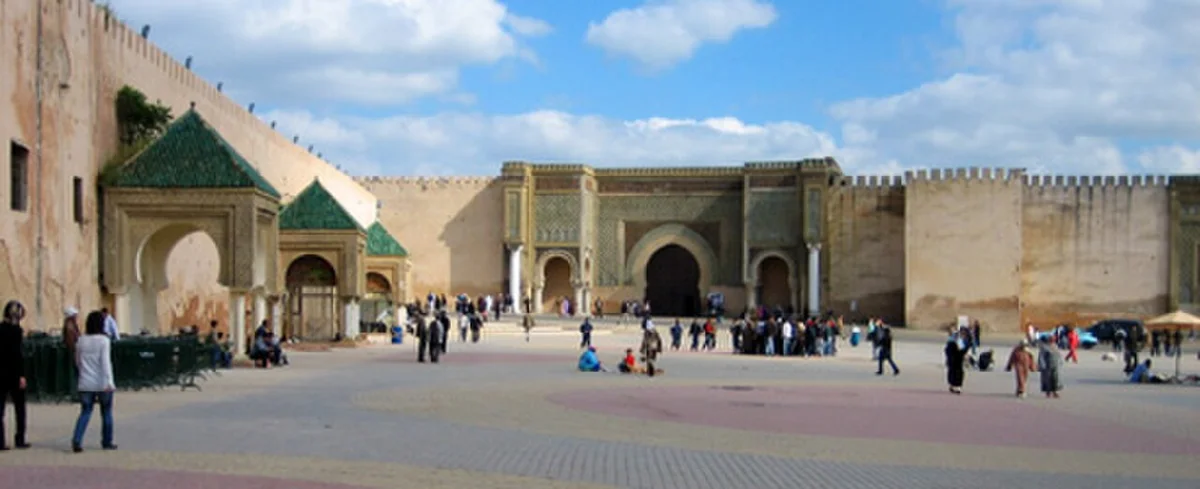
Bab Mansour, a Symbol of Meknes
Among the monumental gates of Meknes, Bab Mansour has become one of the city's most recognizable landmarks.
Located near El Hedim Square, it marks the monumental entrance to the former imperial city.
Its decoration combines zellige, geometric patterns, inscriptions and architectural elements characteristic of Moroccan craftsmanship.
The monument has been protected as part of Morocco's national heritage since the early 20th century.
Bab Mansour perfectly illustrates the monumental ambition of the imperial city developed under Moulay Ismail.
El Hedim Square: Between the Medina and the Imperial City
Facing Bab Mansour is El Hedim Square, one of the main public spaces in the historic center of Meknes.
Its location is particularly interesting.
On one side lies the Medina with its souks and old streets.
On the other are the gates and monuments associated with the imperial city.
The square therefore provides an excellent introduction to the historical structure of Meknes.
It helps visitors understand how the older city and Moulay Ismail's imperial complex developed alongside one another.
The Historic Medina of Meknes
It would be misleading, however, to reduce the history of Meknes to the reign of Moulay Ismail.
The Medina preserves traces of several periods of Moroccan history.
After the Almoravids, the city developed significantly under the Marinids.
Mosques, fountains, religious institutions and madrasas contributed to its urban and intellectual development.
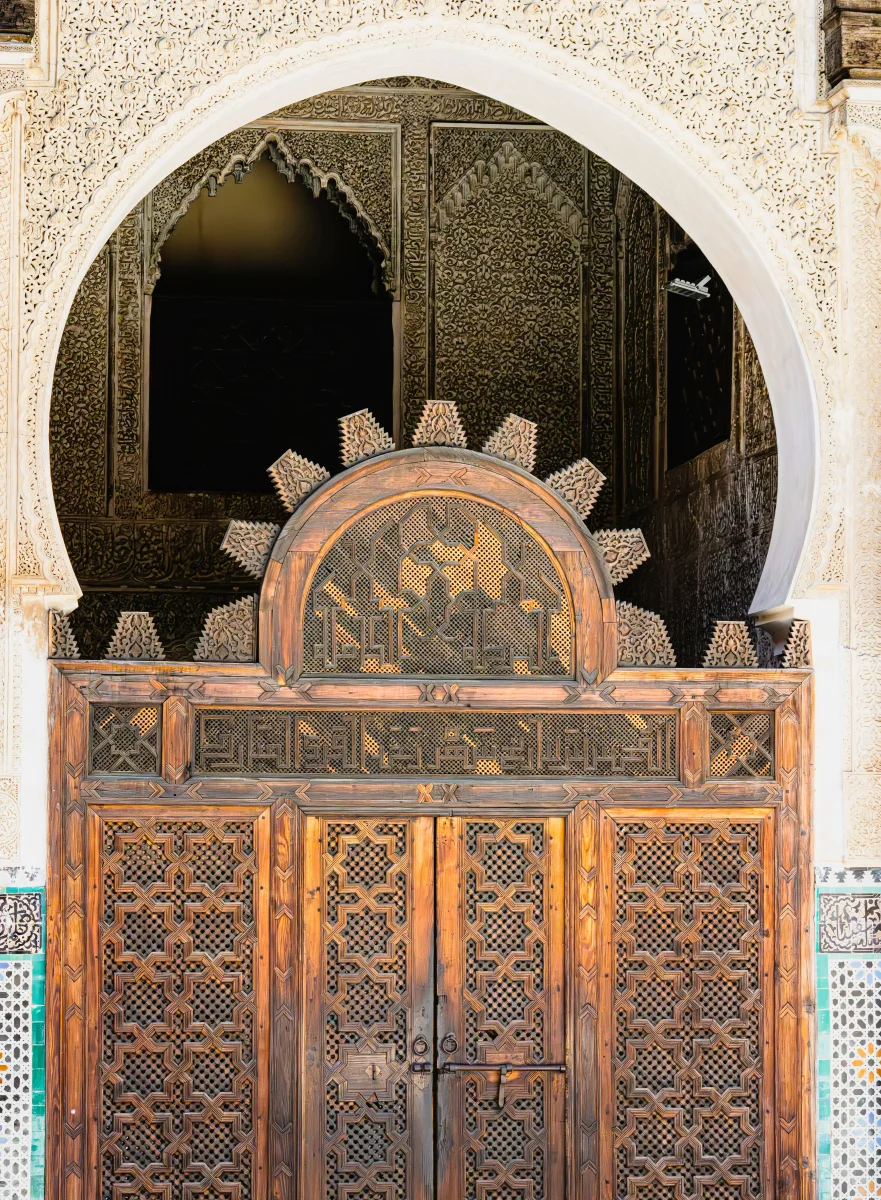
Among the important monuments from this period is the Bou Inania Madrasa of Meknes.
Morocco's Ministry of Culture lists it among the city's protected historic monuments.
The Medina therefore reveals another side of Meknes, predating the creation of the Alaouite imperial city.
Meknes and the UNESCO World Heritage List
The Historic City of Meknes has been inscribed on the UNESCO World Heritage List since 1996.
UNESCO highlights in particular the coexistence of the old Medina and the imperial city created by Moulay Ismail.
The organization also emphasizes the city's Hispano-Moorish architecture and the harmonious combination of Islamic and European influences characteristic of the 17th-century Maghreb.
This inscription recognizes the exceptional importance of Meknes in the history of Moroccan civil and military architecture.
One of the great advantages of staying in Meknes, however, is the opportunity to combine this imperial heritage with a much earlier chapter of Moroccan history.
For that, you need to head toward the Zerhoun massif.
Volubilis: An Ancient City Near Meknes
Around 30 kilometers north of Meknes lies the archaeological site of Volubilis.
Set within a fertile agricultural landscape, the ancient city occupies a remarkable location near the Zerhoun massif.
Volubilis is one of Morocco's most important archaeological sites.
Its ruins reveal several successive periods in the country's history: Mauritanian, Roman, post-Roman and Islamic.
Discover Volubilis and plan your visit
Volubilis Before the Romans
The history of Volubilis did not begin with Rome.
According to UNESCO, the Mauritanian city was founded in the 3rd century BC.
It became an important center of the Kingdom of Mauretania, which controlled part of North Africa before the region was incorporated into the Roman Empire.
This period is essential for understanding the history of the site.
Volubilis was therefore not a city created from nothing by the Romans.
It already had a history and political importance before Roman administration arrived.
Volubilis Under the Roman Empire
After the region was incorporated into the Roman Empire in the 1st century AD, Volubilis became an important city in the province of Mauretania Tingitana.
Its position within a fertile agricultural region contributed significantly to its development.
The city gradually acquired public monuments, residential districts and infrastructure characteristic of Roman urban planning.
The remains visible today still allow visitors to walk along ancient streets and understand how the city was organized.
The Roman Monuments of Volubilis
Several monumental structures demonstrate the prosperity once enjoyed by the city.
Among the best-known remains are:
- the Basilica;
- the Capitol;
- the Arch of Caracalla;
- ancient urban streets;
- several aristocratic houses;
- presses and installations connected with agricultural production;
- numerous mosaic floors.
The arrangement of these monuments helps visitors understand the political, religious, economic and residential organization of the ancient city.
The Mosaics of Volubilis
The Roman mosaics are among the most famous treasures of Volubilis.
Several houses still preserve their decorated floors.
These works depict mythological scenes, animals and various geometric patterns.
Their presence provides an insight into the wealth of some of the city's residences at the height of its prosperity.
One of the remarkable aspects of Volubilis is the opportunity to see several of these mosaics within their archaeological context.
They should not, however, distract from the wider urban landscape surrounding them.
Volubilis was a real city, with public monuments, residential neighborhoods, agricultural activities and places of worship.
The Arch of Caracalla
One of the most recognizable monuments at Volubilis is the Arch of Caracalla.
Built in the 3rd century, it was an important honorific monument within the city.
Its silhouette still dominates part of the archaeological landscape today.
From this area, views extend toward the surrounding hills and agricultural land.
This relationship between the ruins and the landscape is one of the most remarkable aspects of visiting Volubilis.
Volubilis After Rome
The history of Volubilis did not end with the decline of Roman authority.
The city continued to be occupied for several centuries.
This continuity became particularly important toward the end of the 8th century.
Idris I, the founder of the Idrisid dynasty, settled in the region.
UNESCO notes that Volubilis briefly became his capital.
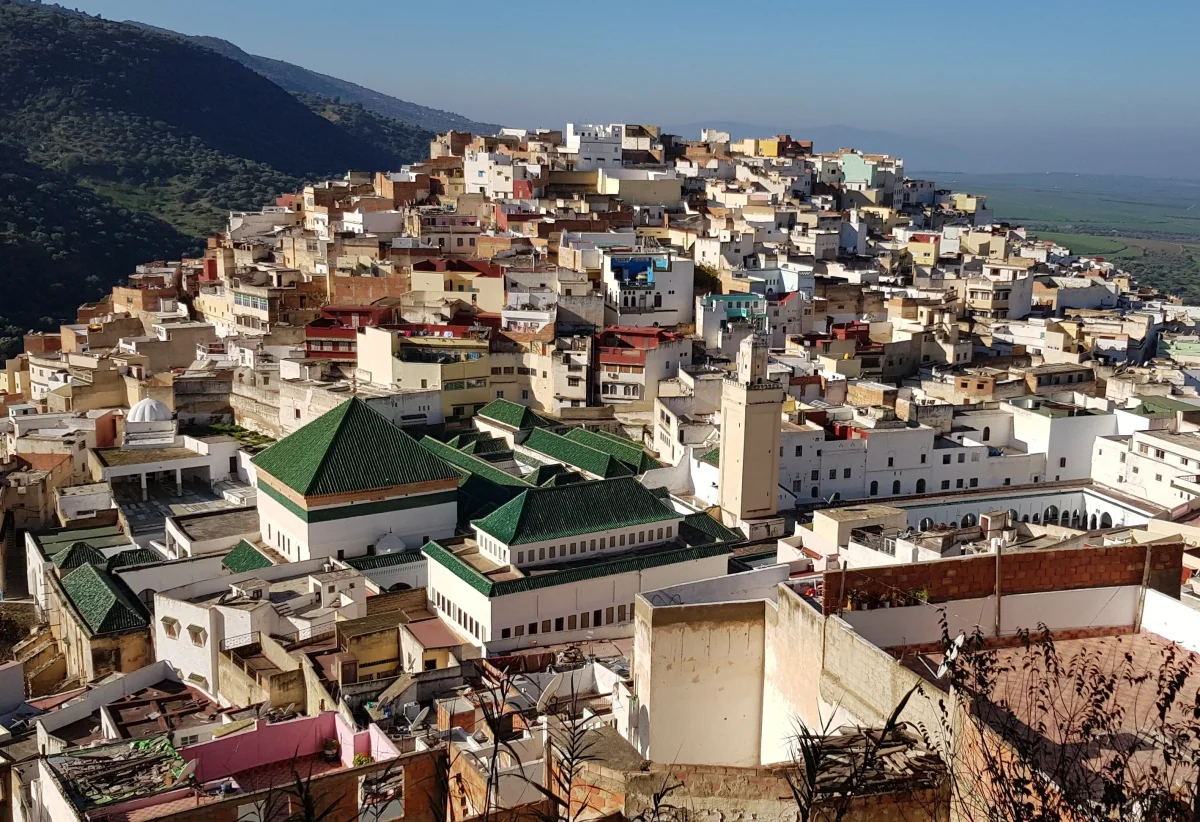
Idris I was later buried in the nearby town of Moulay Idriss Zerhoun, which became one of the region's most important historical and spiritual centers.
This period creates a fascinating connection between the ancient history of Volubilis and the beginnings of Islamic political history in Morocco.
Volubilis and the UNESCO World Heritage List
The Archaeological Site of Volubilis has been inscribed on the UNESCO World Heritage List since 1997.
UNESCO recognizes its importance as an exceptional example of a town that experienced several civilizations and cultures over many centuries.
Its heritage is therefore not limited to the Roman period.
Mauritanian, Roman, Christian and Islamic influences allow visitors to follow a long period in the history of northern Morocco.
Moulay Idriss Zerhoun: Between Meknes and Volubilis
A visit to Volubilis can easily be combined with Moulay Idriss Zerhoun.
The town lies only a few kilometers from the archaeological site, on the slopes of the Zerhoun massif.
Its history is closely connected with Idris I and the beginnings of the Idrisid dynasty.
From parts of Volubilis, you can also see the hills of Zerhoun rising above the surrounding landscape.
Combining Meknes, Volubilis and Moulay Idriss Zerhoun therefore allows visitors to explore several major periods of Moroccan history within a single itinerary.
Why Visit Meknes and Volubilis Together?
Few destinations in Morocco allow visitors to discover so many historical periods within such a small geographical area.
In Meknes, you explore a city whose heritage stretches from the Almoravids through the Marinids to the great imperial period of Moulay Ismail.
At Volubilis, you travel back to the Mauritanian kingdoms and Roman Empire before encountering the beginnings of the Idrisid dynasty.
Together, the two destinations allow you to explore more than two thousand years of Moroccan history.
They also share an exceptional distinction:
Both Meknes and Volubilis are UNESCO World Heritage Sites.
What to See in Meknes
For a first visit to the city, several places help reveal its history:
- Bab Mansour;
- El Hedim Square;
- the historic Medina;
- Bou Inania Madrasa;
- the monumental gates and ramparts;
- the remains of Moulay Ismail's imperial city;
- the former stables and monumental complexes associated with the imperial period.
The appeal of Meknes lies precisely in this diversity.
The city does not tell the story of a single dynasty, but of several successive periods of Moroccan history.
How Much Time Do You Need for Meknes and Volubilis?
To properly explore Meknes, Volubilis and possibly Moulay Idriss Zerhoun, allowing at least two days provides a much more comfortable experience.
The first day can be devoted to the Medina and the imperial city of Meknes.
The second can be reserved for Volubilis and the Zerhoun region.
If you have less time, Volubilis can also be visited on a half-day excursion from Meknes.
When Is the Best Time to Visit Volubilis?
Volubilis is primarily an open-air archaeological site.
Spring and autumn generally offer particularly pleasant conditions for exploring the ruins.
In spring, the agricultural landscapes surrounding the site can also be exceptionally green.
During summer, it is preferable to avoid the hottest hours of the day whenever possible.
A morning visit generally makes it more comfortable to explore the monuments and mosaics.
How to Reach Volubilis from Meknes
Volubilis lies approximately thirty kilometers from Meknes.
The visit can be organized by car, taxi or as part of an excursion.
Many travelers choose to combine Volubilis and Moulay Idriss Zerhoun on the same trip.
Before visiting, check the latest practical information concerning opening hours, admission prices and access conditions:
Volubilis in Meknes: visitor information
Meknes in a Morocco Itinerary
Meknes enjoys a particularly convenient location for exploring northern and central Morocco.
It can easily be combined with Fez, which is relatively close, as well as Rabat on an itinerary devoted to Morocco's imperial cities.
For travelers interested in archaeology, Volubilis can also be linked with other major ancient sites in Morocco, such as Lixus near Larache.
Discover Lixus and its history
This combination provides a broader understanding of the importance of northern Morocco within the commercial, political and cultural networks of Antiquity.
Explore More of Meknes
To continue discovering the city and planning your stay, see also:
- Meknes: history, heritage and complete guide
- Discover the sites and monuments of Meknes
- Volubilis: history and visitor information
- Lixus: discover another major ancient city of Morocco
These pages can help you create an itinerary focused on imperial cities, Moroccan dynasties and the country's archaeological heritage.
Sources and References
- UNESCO — Historic City of Meknes
- UNESCO — Archaeological Site of Volubilis
- Moroccan Ministry of Youth, Culture and Communication — National Material Heritage
- Moroccan Ministry of Youth, Culture and Communication — UNESCO Material Heritage
Meknes and Volubilis: Two Thousand Years of Moroccan History
Meknes and Volubilis tell the stories of very different periods in Morocco's past.
One evokes the great Moroccan dynasties, Marinid madrasas and the monumental ambitions of Moulay Ismail.
The other takes us back to the Mauritanian kingdoms, the Roman Empire and the beginnings of the Idrisid dynasty.
Yet these two remarkable heritage sites are separated by only a few dozen kilometers.
Visiting Meknes and Volubilis means exploring more than two thousand years of Moroccan history within a single journey.
With MoroccoMuseum, discover the heritage of Meknes, plan your visit to Volubilis and explore the historic cities and archaeological sites that tell the story of Morocco.