Less frequented than Marrakech or Fez, Meknes possesses one of the most significant historical ensembles in Morocco.
Behind its monumental ramparts lie an ancient medina, richly decorated gates, palaces, granaries, religious buildings, and the remnants of the vast urban project initiated by Sultan Moulay Ismaïl at the end of the 17th century.
The exceptional value of this ensemble is officially recognized: the Historic City of Meknes has been listed as a UNESCO World Heritage site since 1996.
The organization highlights the coexistence of the old medina and the imperial city, as well as the blend of Islamic and European influences in its architecture.
From Almoravid Origins in the 11th Century
According to UNESCO, Meknes was founded in 1061 by the Almoravids as a military outpost.
Its name is linked to the Meknassa, an Amazigh tribe that settled in this part of Morocco long before the development of the imperial city.
The city developed in the Saïss plain, between the Middle Atlas and the Zerhoun massif, in a fertile and strategic region.
At that time, Meknes did not yet possess the monumental character that would make it famous. Its growth continued gradually under subsequent dynasties.
The Merinid Legacy
Before the great Alaouite period, Meknes experienced significant development under the Merinids, who ruled Morocco from the 13th to the 15th century.
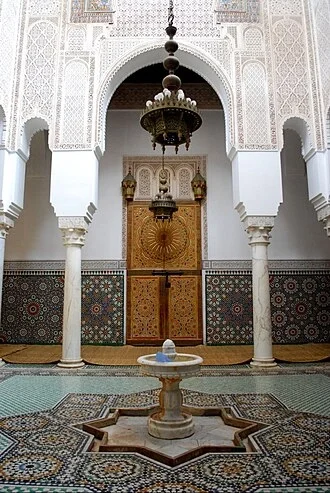
The city retains several testimonies from this era, notably the Bou Inania Madrasa, located in the medina.
This monument serves as a reminder that Meknes has a well-established urban and religious history long before the reign of Moulay Ismaïl.
Its decorations of carved wood, plaster, and zellige testify to the refinement of Merinid architecture and the importance given to religious educational institutions in major Moroccan cities.
Moulay Ismaïl Transforms Meknes into an Imperial Capital
The reign of Sultan Moulay Ismaïl, from 1672 to 1727, marks the decisive period of Meknes's monumental history.
UNESCO indicates that the city became the capital during this time, and the sovereign undertook the construction of an impressive imperial city surrounded by high ramparts and monumental gates.
Moulay Ismaïl did not merely expand the existing medina.
He developed alongside it a vast complex that included palaces, military spaces, storage areas, gardens, and buildings necessary for the functioning of the court and the state.
This juxtaposition between the old medina and the imperial city remains one of the great urban characteristics of Meknes today.
UNESCO considers this ensemble a remarkable example of a Maghreb capital from the 17th century, where Islamic architectural traditions meet European influences.
The Ramparts of Meknes
One of the most impressive features of the city is its system of fortifications.
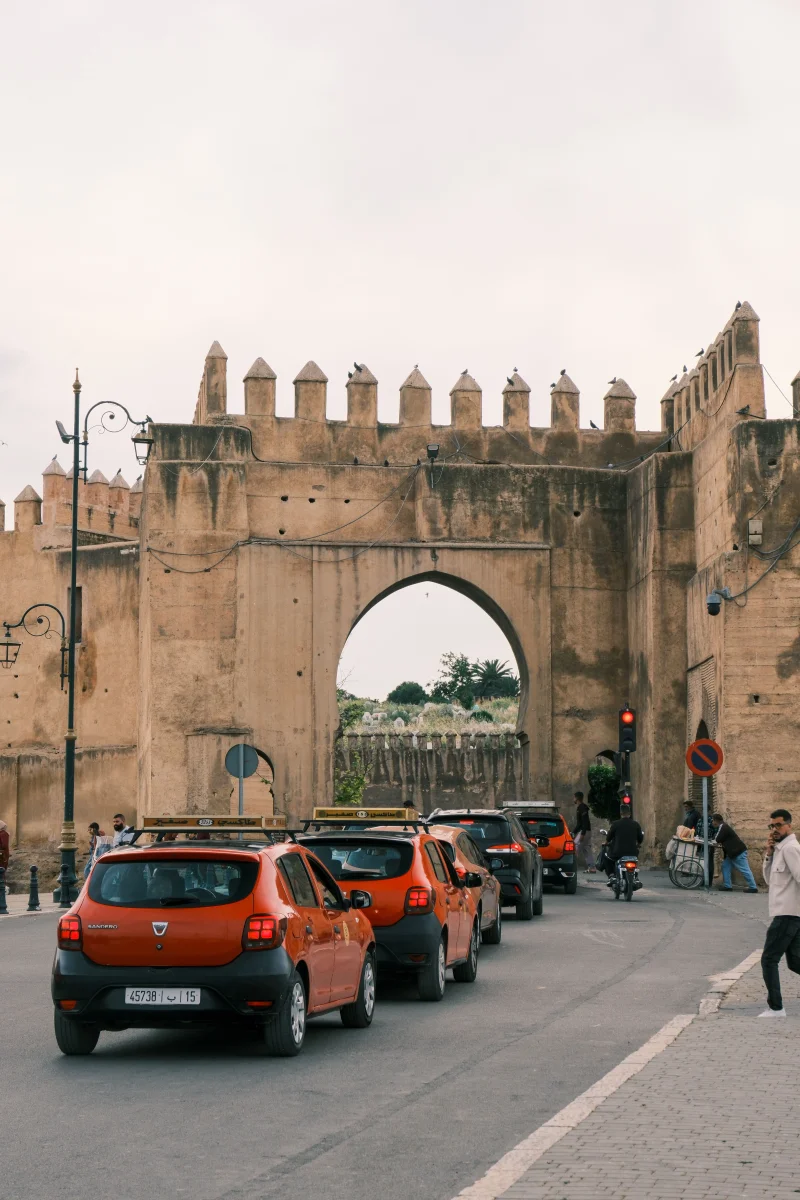
The walls surround and separate several historical ensembles. UNESCO notably mentions nine monumental gates as well as numerous palaces, mosques, hammams, fondouks, and granaries integrated into the historical fabric of the city.
These ramparts still give an idea of the ambition of the project conceived under Moulay Ismaïl.
Meknes was not only intended to be a royal residence: it was to function as a true political, military, and administrative capital.
Bab Mansour, Symbol of Meknes
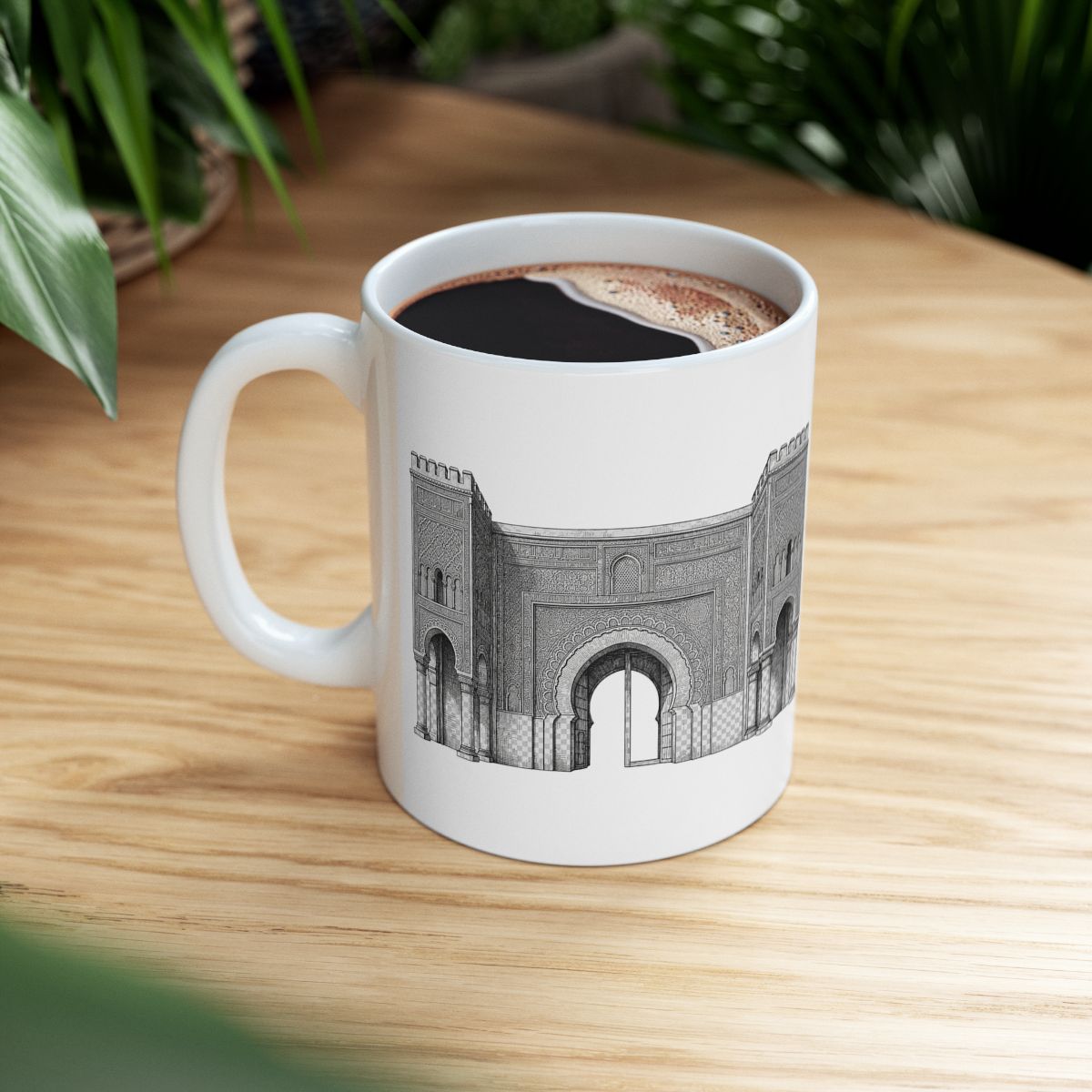
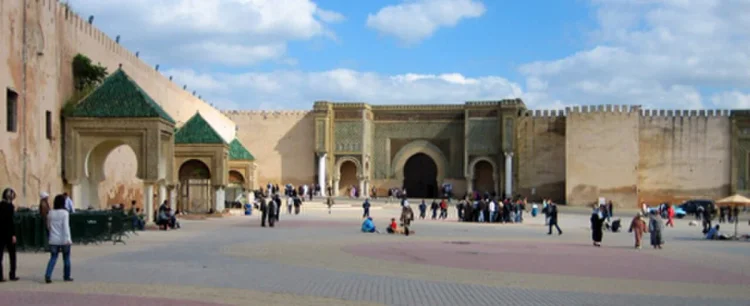
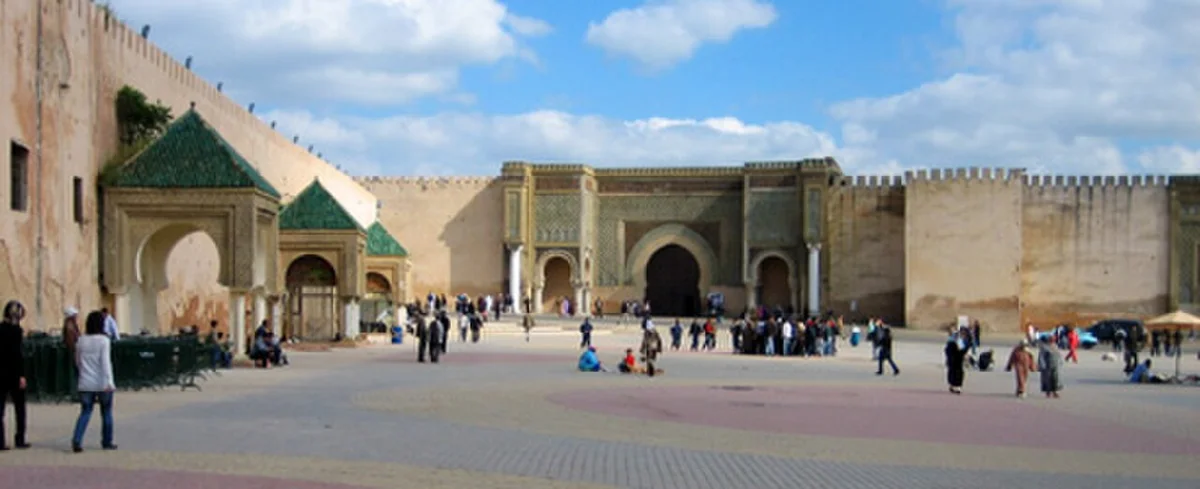
Among all the gates of the city, Bab Mansour (see our dedicated article) has become the emblematic monument of Meknes.
Located opposite El Hedim Square (see our dedicated article), it impresses with its proportions and the richness of its decor.
The Moroccan National Tourist Office presents it as one of the great masterpieces of the city’s architecture.
Its façade combines monumental arches, zelliges, inscriptions, and decorative elements characteristic of Moroccan art.
Bab Mansour is now one of the most photographed landmarks in Meknes and an excellent introduction to the imperial city.
El Hedim Square
Facing Bab Mansour is El Hedim Square, one of the main public spaces in the old city.
It serves as a transition area between the medina and several monuments in the imperial sector.
The square is lined with shops and remains very lively in the late afternoon.
Nearby are the souks and Dar Jamaï, one of the best-preserved historical palaces in Meknes.
Dar Jamaï: A Palace Turned National Music Museum
Dar Jamaï belongs to a much more recent period than the grand monuments built under Moulay Ismaïl.
The National Foundation of Museums states that the palace was constructed in 1882 as a private residence for Mohamed Ben Larbi Jamaï, grand vizier of Sultan Moulay Hassan I.
Throughout the 20th century, the building underwent several functions.
From 1912, part of it was used as a military hospital. In 1920, it was assigned to the Regional Inspection of Fine Arts and became a museum showcasing collections of Moroccan craftsmanship.
After significant restoration, Dar Jamaï reopened in 2022 under a new identity: the National Music Museum.
The National Foundation of Museums presents over a hundred instruments, allowing visitors to discover the diversity of Moroccan musical traditions.
Practical Information for Dar Jamaï
According to information published by the National Foundation of Museums:
- opening hours: 10 AM to 6 PM;
- weekly closure on Tuesday;
- standard ticket price: 30 DH;
- reduced price: 15 DH;
- day pass: 50 DH;
- free for children under 6 years old.
The Mausoleum of Moulay Ismaïl
The mausoleum of Moulay Ismaïl (see our dedicated article) is among the most important monuments in Meknes.
The sovereign who transformed the city into an imperial capital is buried there.
The complex is distinguished by its courtyards, traditional architecture, and decor composed of zelliges, sculpted plaster, and wood.
The monument also has a strong religious and symbolic dimension.
It helps to better understand the importance of Moulay Ismaïl in the history of Meknes and more broadly in that of the Alaouite dynasty.
The Granaries and the Former Royal Stables
The imperial city also includes significant storage structures and former facilities related to the functioning of the royal court.
The complexes generally referred to as the granaries and stables of Moulay Ismaïl, known as Heri es-Souani (see our dedicated article), testify to the logistical scale of the imperial capital.
Their massive architecture and vast spaces remind us that the city had to supply the palace, the administration, and military forces.
These constructions are today one of the most impressive testimonies of the Ismailian urban project.
The Agdal Basin (Sahrij Swani)
Immediately adjacent to Heri es-Souani is the Agdal Basin, also known as Sahrij Swani, a vast open-air water reservoir built during the reign of Moulay Ismaïl.
It once supplied the royal gardens and nearby stables as part of the extensive hydraulic system that allowed the sultan to develop his capital in a semi-arid region. Now freely accessible, the basin offers a peaceful viewpoint on the scale of the Ismailian urban project.
Dar el-Makhzen
Former royal residence of Moulay Ismaïl in the 17th century when Meknes was the capital of Morocco, Dar el-Makhzen is not open to visitors, but its monumental enclosure and vast ochre ramparts, visible from the outside, convey the architectural ambition of the sultan.
A stroll around its walls, between Bab Mansour and Heri es-Souani, allows one to grasp the scale of the site without entering.
The Bou Inania Madrasa
Located in the medina, the Bou Inania Madrasa is one of the main monuments inherited from the Merinid period.
It allows for observing another face of Meknes, very different from that of the 17th-century imperial city.
Its architecture is based on traditional decor combining zellige, carved wood, and worked plaster.
The visit also helps to understand the importance of madrasas in the religious and intellectual education of medieval Moroccan cities.
The Medina of Meknes
Next to the imperial city, the medina retains an older urban fabric made up of narrow streets, traditional houses, mosques, hammams, souks, and former fondouks.
This coexistence of different historical ensembles directly contributes to the heritage value of the city.
In 1996, the World Heritage Committee considered Meknes to be a particularly complete representation of the urban fabric and monuments of a 17th-century Maghreb capital.
The historic city of Meknes is thus part of the Moroccan sites inscribed on the UNESCO World Heritage list.
Volubilis: A Major Site Near Meknes
A visit to Meknes can easily be combined with that of Volubilis.
However, it is a distinct archaeological site from the historic city of Meknes.
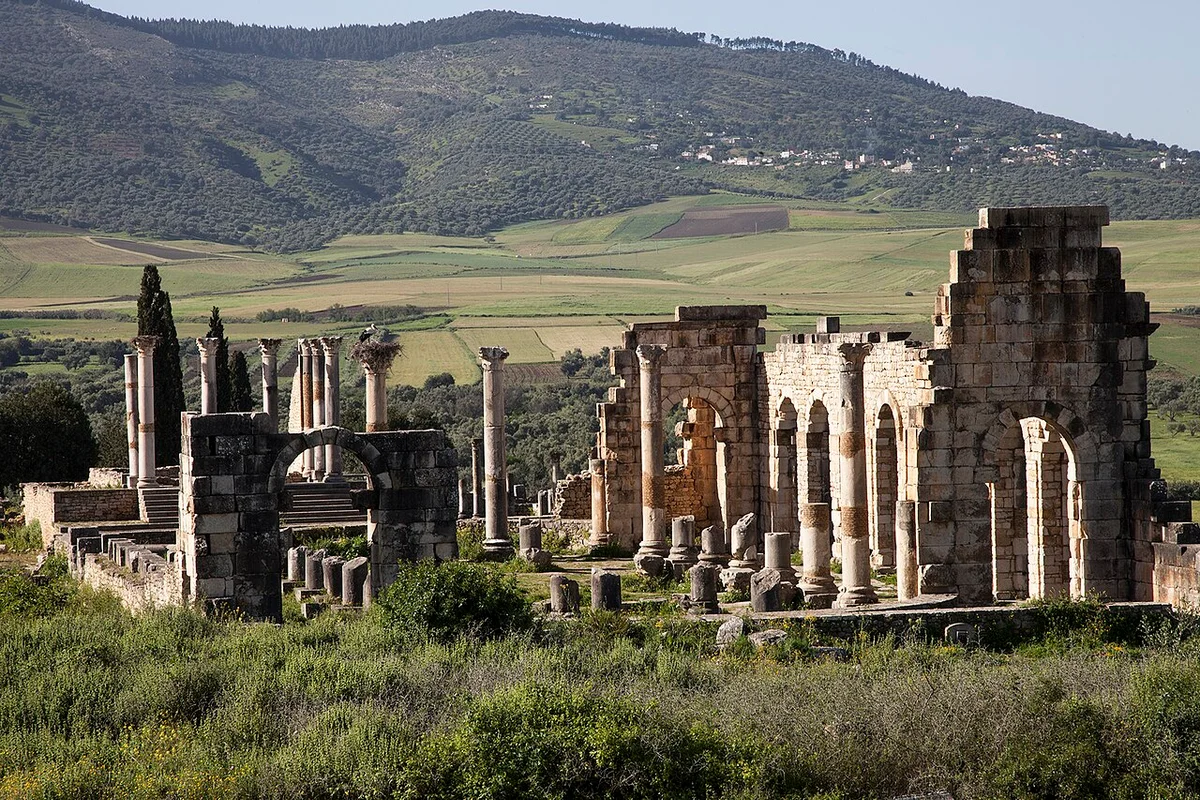
Volubilis retains significant remains from antiquity, including houses, mosaics, a capitol, a basilica, and a monumental arch.
The site has its own UNESCO World Heritage listing since 1997.
Visiting Volubilis allows one to place the Meknes region in a much older history dating back to antiquity.
Moulay Idriss Zerhoun
Nearby Volubilis is also Moulay Idriss Zerhoun.
The town is closely associated with Moulay Idriss I, the founding figure of Morocco's first Idrissid dynasty.
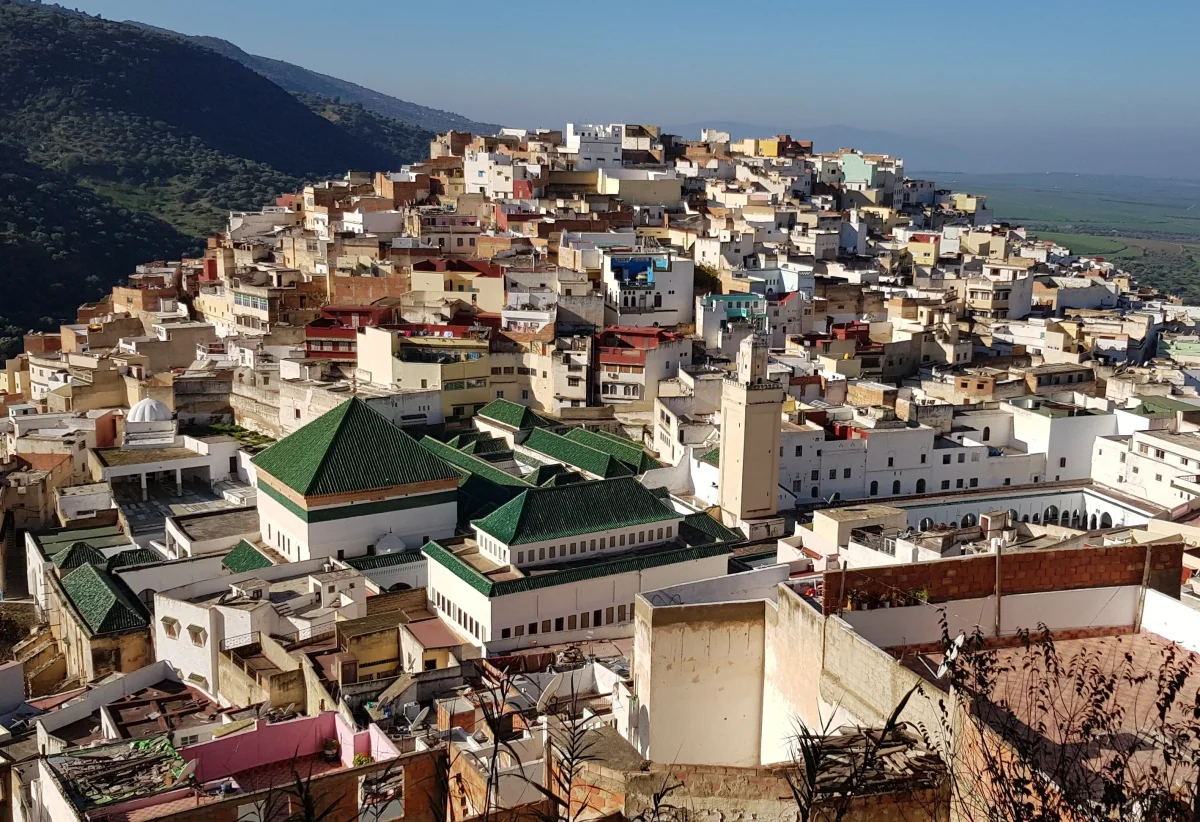
Built on the slopes of the Zerhoun massif, it constitutes an interesting stop in an itinerary combining Meknes and Volubilis.
Its historical and religious significance perfectly complements the discovery of the regional heritage.
How Much Time to Allocate for Visiting Meknes?
A full day is already sufficient to discover several essential sites: Bab Mansour, El Hedim Square, the medina, Dar Jamaï, and part of the imperial city.
Two days offer a much more comfortable visit and allow for the addition of several monuments without rushing.
To include Volubilis and Moulay Idriss Zerhoun, it is advisable to plan for an extra day or dedicate a significant part of the second day to the surroundings.
How to Get to Meknes?
Meknes enjoys a central position in northern Morocco.
The city is connected by train and road to several major destinations in the country.
It is located about 60 kilometers from Fez, making it easy to combine both ancient imperial cities in one trip.
The Moroccan National Tourist Office indicates a travel time of about an hour by road between Fez and Meknes, depending on the route and traffic conditions.
From Rabat or Casablanca, Meknes is also directly accessible by train.
Practical Tips for Visiting Meknes
The historic center is easily explored on foot, particularly around Bab Mansour, El Hedim Square, and the medina.
The monuments of the imperial city are more dispersed. Allocating several hours allows for their discovery without turning the visit into a simple succession of stops.
Comfortable shoes are recommended for walking through the medina and historical areas.
In summer, it is generally more pleasant to start visits in the morning or continue in the late afternoon.
Finally, taking the time to visit Dar Jamaï or the Bou Inania Madrasa allows for the exploration of different periods in local history and avoids summarizing Meknes solely to the reign of Moulay Ismaïl.
Meknes, Much More Than an Ancient Imperial Capital
Meknes holds a special place among Morocco's great historic cities.
Founded as a military outpost in the 11th century, developed under several dynasties, and then profoundly transformed by Moulay Ismaïl between 1672 and 1727, it still retains an exceptional urban ensemble today.
Its walls, monumental gates, palaces, medina, and ancient imperial infrastructures help to understand the political and architectural ambitions of a great Moroccan capital.
But Meknes is not limited to this single period.
The Merinid legacy, the 19th-century palaces, and the proximity to Volubilis and Moulay Idriss Zerhoun give the region remarkable historical depth.
Visiting Meknes is to traverse several centuries of Moroccan history in a city that is still too often overshadowed by Fez and Marrakech.
Continue Your Discovery of Morocco
Moroccan heritage is not confined to a single location. Palaces, madrasas, museums, archaeological sites, and monuments each tell part of its story.
🎟️ Discover the heritage and book your tickets
📖 Read our guides & inspirations
MoroccoMuseum.com — Discover. Explore. Experience the Heritage of Morocco.