Bab Dbagh in Marrakech: How to Get There and When to Visit
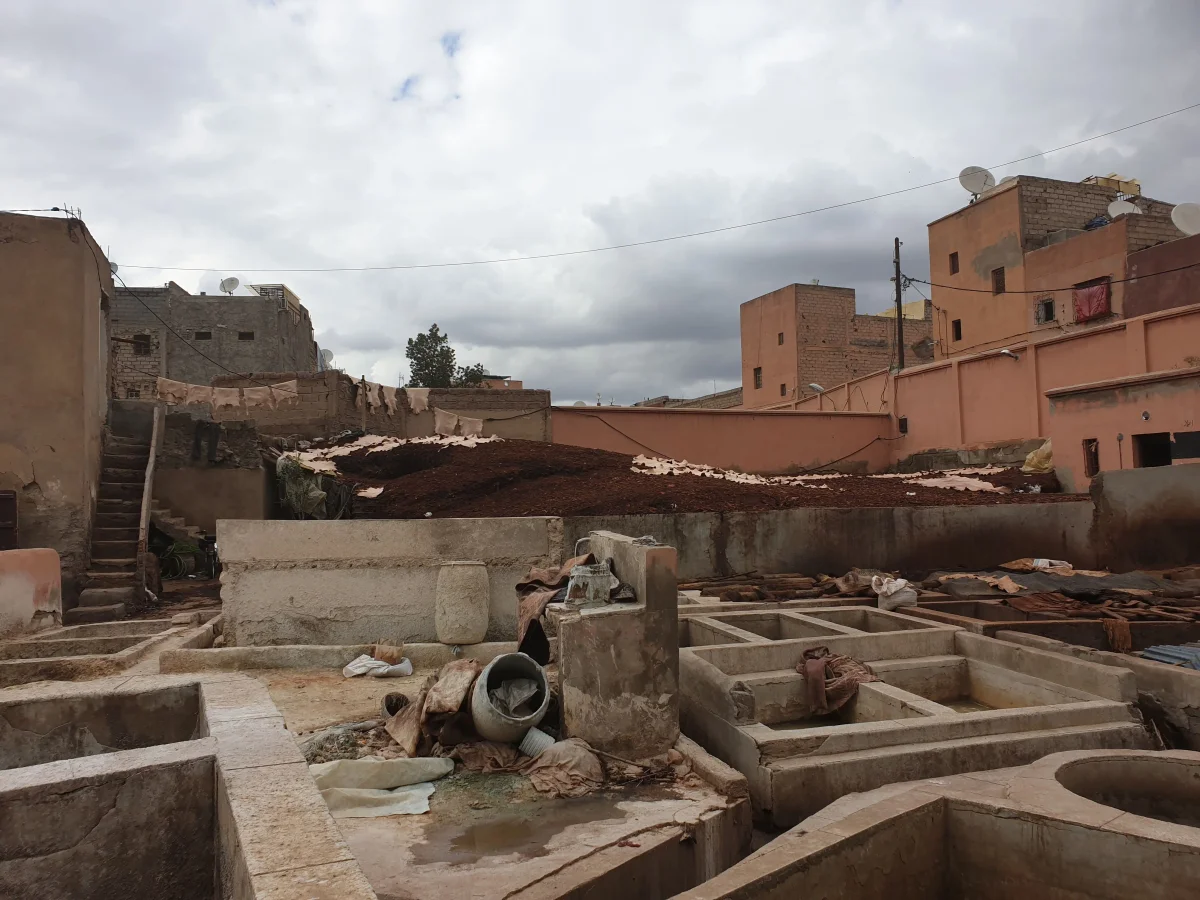
Located on the eastern side of the Medina of Marrakech, Bab Dbagh, also known as Bab Debbagh or Bab Ed-Debbagh, is a historic gate closely associated with the city's traditional tanners' quarter.
Unlike Marrakech's palaces and museums, Bab Dbagh is freely accessible. A visit mainly involves discovering the historic gate, the surrounding ramparts and the traditional leatherworking district.
Here is how to reach Bab Dbagh, when to visit and what you should know before exploring the tanneries.
Where Is Bab Dbagh?
Location: eastern section of the Medina of Marrakech, along the historic ramparts and close to the traditional tanners' quarter.
For centuries, Bab Dbagh has provided access to this artisanal area of the city.
The gate forms part of Marrakech's historic fortification system, whose origins date back to the Almoravid period.
To learn more about its history and architecture, read our article Bab Dbagh: history and heritage of Marrakech's tanners.
How to Get to Bab Dbagh from Jemaa el-Fna
From Jemaa el-Fna, Bab Dbagh can be reached on foot by crossing the medina towards the east and northeast.
Allow approximately 20 to 30 minutes on foot, depending on your route and walking pace.
Walking times inside the medina are always approximate. Its network of narrow streets can make navigation confusing, and small detours are common.
The walk itself is part of the experience, taking you through sections of the souks of Marrakech and gradually away from the busiest tourist areas towards more traditional craft districts.
MoroccoMuseum Tip
Do not rely entirely on the walking time shown by your navigation app.
GPS positioning can sometimes be inaccurate inside the narrow streets of the medina.
When searching on a map, also try the spelling Bab Debbagh, which is frequently used.
From Ben Youssef Madrasa
Ben Youssef Madrasa is an excellent starting point for walking to Bab Dbagh.
Depending on the route, allow approximately 15 to 20 minutes.
This proximity makes it easy to create an interesting itinerary through the northern and eastern parts of the medina.
You can combine:
- Ben Youssef Madrasa
- Almoravid Qubba
- Marrakech Museum
- the souks
- Bab Dbagh
- the tanners' quarter
This route combines historic monuments, medieval architecture and traditional craftsmanship.
Getting to Bab Dbagh by Taxi
From Gueliz, Hivernage or another neighbourhood outside the medina, taking a taxi can be convenient.
Ask for:
"Bab Debbagh"
or
"Bab Dbagh, tanners' quarter."
A taxi can drop you near the gate and the city walls.
Journey times vary considerably depending on traffic and your departure point.
Rather than relying on a fixed fare, make sure the journey follows the applicable local taxi pricing practices and clarify the fare conditions before departure when necessary.
Is Bab Dbagh Free to Access?
Yes.
Bab Dbagh is a gate in the medina and can be accessed freely.
No admission ticket is required to pass through the gate or walk through the surrounding public streets.
Be cautious if anyone offers you a supposed:
- "Bab Dbagh ticket"
- "priority access"
- "skip-the-line ticket"
- "special entrance to the tanneries"
The gate itself requires none of these.
Private services, such as a guided tour or access to a terrace belonging to a shop, may however involve a fee.
When Is the Best Time to Visit Bab Dbagh?
If you simply want to see the historic gate and surrounding ramparts, Bab Dbagh can be included in a daytime walk through the medina.
If your main objective is to discover the tanners at work, the morning is generally more interesting.
The tanneries are genuine working areas, and activity depends on the day, the artisans and the particular stages of leather processing taking place.
It is therefore better not to treat a specific time window as a guarantee.
To See the Artisans at Work
Try to visit on a working-day morning.
You will generally have a better chance of seeing artisanal activity than later in the day.
However, there is no guarantee that all tanning pits will be in use or that every stage of leather production will be visible.
For Photography
Morning light can also be attractive for photographing the ramparts, narrow streets and working areas.
Remember that the tanners are not performers: ask permission before taking close-up photographs of people.
Should You Avoid Friday?
Friday has a particular rhythm in Morocco because of the weekly congregational prayer.
Activity in some workshops and businesses may therefore change around prayer time.
This does not mean that the tanneries are automatically closed every Friday morning.
If seeing as much artisanal activity as possible is your priority, another working day may simply be a safer choice.
How Much Does It Cost to Visit?
Bab Dbagh
Free access.
No ticket is required to see or pass through the gate.
Tanners' Quarter
Walking through the public streets of the neighbourhood is also free.
Panoramic Terraces
Some shops or private properties may offer access to terraces overlooking the tanning areas.
Conditions vary from one property to another.
Access may be presented as free, paid or connected to a visit to a leather shop.
Before going upstairs, ask clearly whether the terrace is free and whether any purchase is expected.
You are not required to buy leather simply because someone has shown you a viewpoint.
Beware of Unofficial Guides
Around the tanneries, people may approach you spontaneously and offer to show you the way or accompany you.
Someone who approaches you in the street is not automatically an officially licensed tourist guide.
If you are offered a paid tour presented as a professional guiding service, agree on the price before starting. If the person claims to be an official guide, you can ask to see their professional identification.
Also be cautious with supposedly "free" visits that may end in a shop with strong pressure to make a purchase.
For more practical advice, read our guide to tourist scams to avoid in Marrakech.
How Long Should You Spend at Bab Dbagh?
Allow approximately 30 to 45 minutes to see Bab Dbagh and explore part of the tanners' quarter.
You can spend longer in the area if you want to explore the surrounding streets, observe local craftsmanship or continue through other parts of the medina.
For more detailed advice, see our Bab Dbagh practical visitor guide.
What to See Near Bab Dbagh
Bab Dbagh can easily be combined with several important sites in the northern part of the medina.
Ben Youssef Madrasa
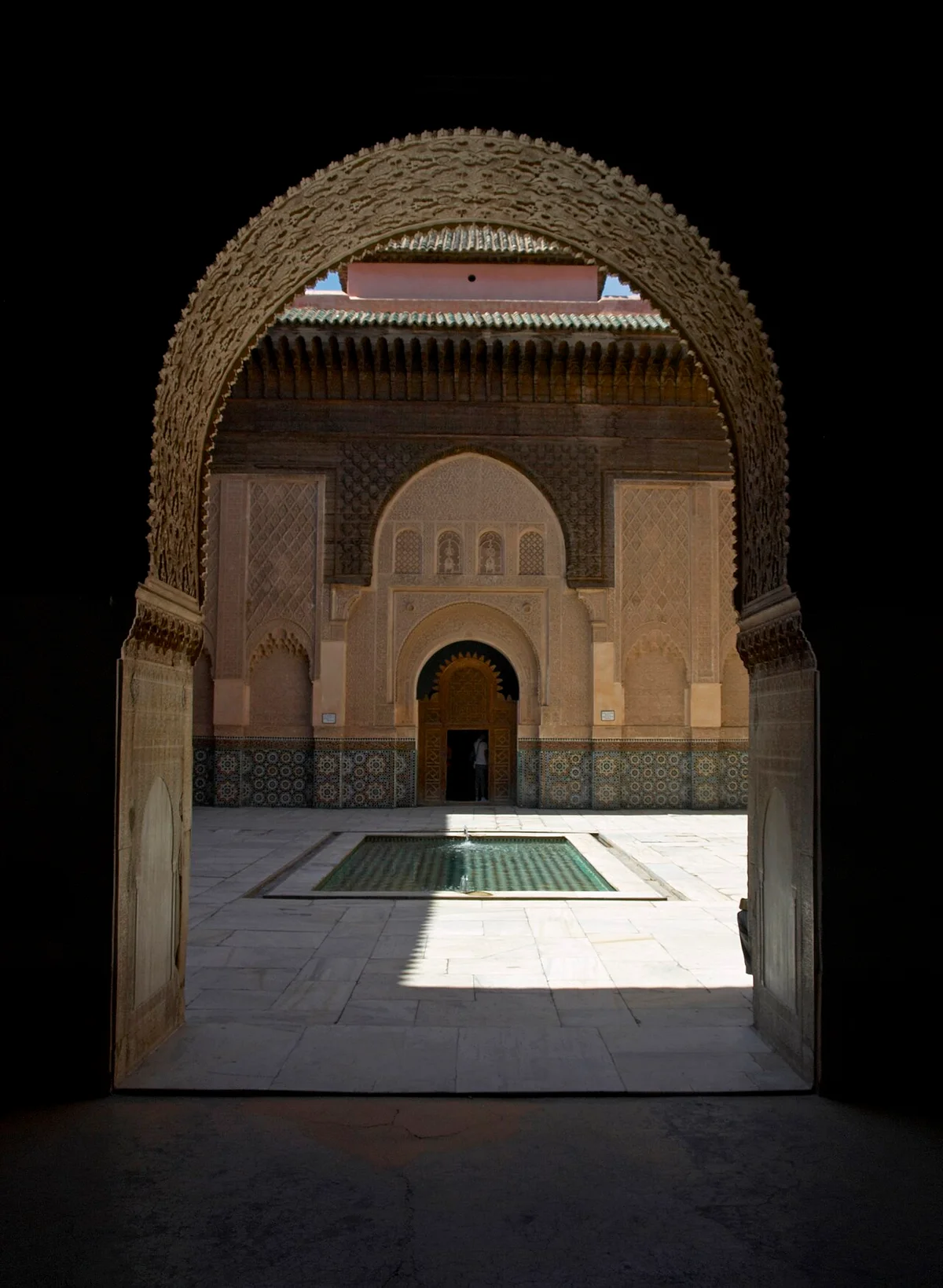
Ben Youssef Madrasa is one of Marrakech's great architectural landmarks.
Its zellige, carved plaster and woodwork provide a striking contrast with the artisanal environment around Bab Dbagh.
Almoravid Qubba
The Almoravid Qubba is particularly relevant when combined with Bab Dbagh.
Together, the two sites offer different perspectives on Marrakech's Almoravid heritage.
Marrakech Museum
Located close to Ben Youssef Madrasa, the Marrakech Museum can also be included in the same itinerary.
Souks of Marrakech
On your way back towards the centre of the medina, explore the souks of Marrakech and observe how raw materials used by artisans are transformed into finished products.
Leatherworking in particular remains an important part of Morocco's long tradition of craftsmanship.
Suggested Medina Itinerary
For a half-day combining historic heritage and traditional crafts, consider the following route:
Ben Youssef Madrasa → Almoravid Qubba → Marrakech Museum → Bab Dbagh → tanners' quarter → souks → Jemaa el-Fna
This itinerary reveals several sides of the Medina of Marrakech: religious architecture, Almoravid heritage, museums, historic ramparts, craftsmanship and everyday life.
Tips Before You Go
Before visiting Bab Dbagh:
- choose the morning if seeing the tanneries at work is your priority;
- wear comfortable shoes suitable for the medina's streets;
- save your route or an offline map;
- also search for Bab Debbagh in navigation apps;
- agree on a price before accepting a private tour or service;
- ask permission before taking close-up photographs of artisans;
- do not pay for any supposed entrance ticket to Bab Dbagh.
Bab Dbagh: A Different Stop in the Medina of Marrakech
Bab Dbagh is interesting precisely because it is different from Marrakech's major monumental attractions.
The historic gate, ramparts and tanners' quarter reveal the connection between architectural heritage and living craftsmanship.
It is also a worthwhile stop after visiting Ben Youssef Madrasa and the Almoravid Qubba before returning through the souks towards Jemaa el-Fna.
Continue your exploration with Bab Dbagh: history and heritage of the tanners and our Bab Dbagh practical visitor guide.