Bab Dbagh in Marrakech: Practical Visitor Guide
Located on the eastern side of the Medina of Marrakech, Bab Dbagh, also spelled Bab Debbagh or Bab Ed-Debbagh, is one of the city's most interesting historic gates.
Its name is directly associated with the tanners of Marrakech: the gate provides access to the traditional district where leatherworking has been part of the medina's artisanal landscape for centuries.
Less monumental and generally less visited than some of Marrakech's major attractions, Bab Dbagh offers a different perspective on the city — one shaped by historic ramparts, traditional crafts and neighbourhoods away from the main tourist routes.
Why Visit Bab Dbagh?
Bab Dbagh is interesting for two main reasons: its historic architecture and its proximity to the traditional tanners' district.
The gate forms part of Marrakech's historic fortifications and dates back to the Almoravid period.
One of its most distinctive features is the configuration of its internal passage, designed with several changes of direction.
According to heritage information published by Visit Marrakech, Bab Debbagh has a passage characterised by five successive bends, an unusual feature among the city's historic gates.
This architecture helps explain the defensive role of Marrakech's old gateways: entrances through the city walls were not necessarily designed as simple straight passages.
To explore its history in greater detail, read our guide to Bab Dbagh: history and heritage of Marrakech's tanners.
The Tanners' District of Marrakech
Bab Dbagh is best known for its proximity to Marrakech's historic tanners' quarter.
Tanning is the process of transforming animal hides into leather that can then be used to make shoes, bags, belts, poufs and many other objects associated with Moroccan craftsmanship.
Traditional leather production involves several stages, including cleaning the hides, preparing and softening them, tanning, colouring and drying.
Around Bab Dbagh, some stages of this process can still be observed in artisans' working areas.
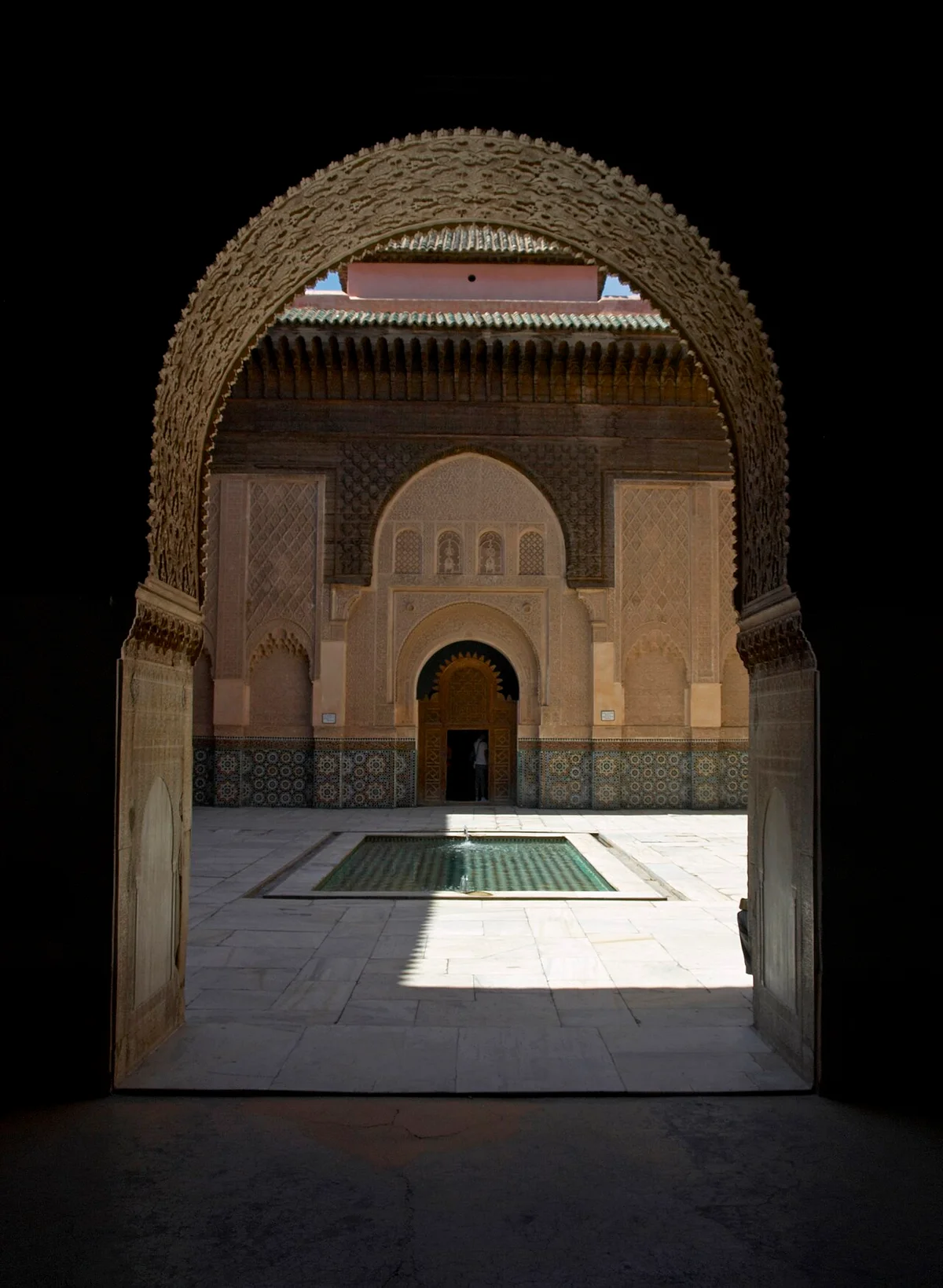
The experience offers a very different perspective from prestigious monuments such as the Bahia Palace, Ben Youssef Madrasa or the Saadian Tombs.
Here, heritage is above all a living artisanal tradition.
Best Time to Visit Bab Dbagh
The morning is generally a good time to explore the neighbourhood.
Artisanal activity may be more visible while workshops are operating, although this varies according to the day, the craftsmen and the different stages of leather production.
For this reason, a specific hour should not be considered a guarantee that the tanning pits will be active or that every stage of the process will be visible.
Morning light can also be particularly attractive for photographing the ramparts, alleyways and working areas.
MoroccoMuseum Tip
If your main objective is to see the tanners working, consider visiting on a working day in the morning.
Remember that this is a genuine artisanal neighbourhood rather than an attraction staged specifically for tourists.
Respect the craftsmen, ask permission before taking close-up photographs of people and avoid interfering with their work.
What Not to Miss
Bab Dbagh Gate
Take a few minutes to observe the gate itself before heading towards the tanning areas.
Its architecture is less decorative than monumental gateways such as Bab Agnaou, but it provides an interesting insight into the defensive system of medieval Marrakech.
The Tanneries
The tanning areas are the main attraction of the neighbourhood.
Depending on the activity taking place that day, you may be able to observe different stages in the transformation of animal hides into leather.
Conditions and activity vary considerably because the tanneries are first and foremost working spaces.
Leather Craftsmen
Part of the interest of Bab Dbagh lies in the connection between leather production and the craftsmanship found throughout Marrakech's souks.
After being treated and dried, leather can be taken to workshops where it is transformed into a wide variety of products.
Traditional craftsmanship remains part of Marrakech's living heritage, visible throughout the souks near Bab Dbagh.
Marrakech's Ramparts
Bab Dbagh forms part of the extensive historic walls surrounding the medina.
A visit to the gate can therefore be incorporated into a broader walk exploring the historic ramparts and gates of Marrakech.
The Smell of the Tanneries
One of the most characteristic aspects of visiting a traditional tanning district is the strong smell associated with the treatment of animal hides.
It can be particularly noticeable in certain areas.
Traditional tanning involves various substances during the cleaning, preparation and treatment of hides.
If you are sensitive to strong smells, carrying a small sprig of fresh mint can make the experience more comfortable.
This practice is particularly well known around Morocco's tanning districts, especially in Fez.
How Long Should You Allow?
Allow approximately 30 to 45 minutes to explore Bab Dbagh and walk through part of the surrounding tanners' district.
You may want to spend longer if you plan to explore the nearby streets or continue walking through the medina.
Bab Dbagh can easily be incorporated into a broader Marrakech itinerary.
Beware of Unofficial Guides
As in several tourist areas of Morocco's medinas, people may approach visitors and spontaneously offer to guide them to the tanneries.
Someone approaching you in the street is not necessarily an officially licensed tourist guide.
If someone offers you a paid tour while claiming to be a professional guide, you can ask to see their professional identification.
It is also sensible to clarify in advance whether a supposedly "free" tour involves an expected payment, tip or visit to a shop afterwards.
For more practical advice, read our guide to tourist scams to avoid in Marrakech.
Terraces Overlooking the Tanneries
In some parts of the district, shops or private buildings may offer elevated views over the tanning areas.
These terraces are not an official entrance to Bab Dbagh.
Before going upstairs, ask clearly whether access is free, paid or connected to a shop visit.
This helps avoid misunderstandings when leaving.
You are never obliged to purchase a product simply because someone has shown you a viewpoint.
Is Bab Dbagh Free to Visit?
Bab Dbagh is a gate in the medina and no entrance ticket is required to pass through it.
There is therefore no need to purchase any supposed "skip-the-line ticket" to access the gate.
Private services around the tanning district — such as guided visits, accompaniment or access to a private terrace — may, however, involve a fee.
Always agree on the price before accepting a service.
How to Get to Bab Dbagh
Bab Dbagh is located on the eastern section of the walls surrounding the Medina of Marrakech, close to the traditional tanners' district.
From the heart of the medina, the area can be reached on foot through Marrakech's historic streets and neighbourhoods.
For detailed directions and practical information, see our guide to Bab Dbagh: access, location and practical information.
What to Visit After Bab Dbagh
Bab Dbagh can be included in a day exploring the northern and eastern parts of the medina.
Nearby and complementary places to discover include:
- Ben Youssef Madrasa
- Almoravid Qubba
- Marrakech Museum
- the souks of Marrakech
- historic fountains and funduqs of the medina
This route allows you to move from monumental architecture to living artisanal heritage.
Bab Dbagh or the Tanneries of Fez?
Morocco's most famous tanneries are located in Fez, particularly the Chouara Tanneries.
The Bab Dbagh district offers a different experience.
In Marrakech, a visit fits naturally into an exploration of the medina and reveals an artisanal activity that is often overlooked by visitors who concentrate mainly on palaces and museums.
If you are also planning a trip to Fez, discover our guide to the Chouara Tanneries in Fez.
Tips for a Responsible Visit
The tanneries are not simply a tourist backdrop.
They are working spaces where artisans continue to practise their craft.
During your visit:
- respect working areas;
- do not touch hides, tools or equipment without permission;
- ask before taking close-up photographs of artisans;
- avoid blocking passages used to transport materials;
- agree on a price before accepting the services of a guide or entering private property.
These simple precautions allow you to discover the neighbourhood while respecting the people who work there.
Bab Dbagh: A Different Way to Discover Marrakech
Visiting Bab Dbagh allows you to step away from Marrakech's busiest tourist routes and discover a different aspect of the city's heritage.
The historic gate, ramparts, tanneries and leatherworking traditions tell a story that extends far beyond Marrakech's famous palaces.
They are also a reminder that the Medina of Marrakech, listed as a UNESCO World Heritage Site, remains a living urban environment where architecture, commerce and traditional craftsmanship continue to coexist.
Continue your exploration with Bab Dbagh: history and heritage of the tanners and our practical guide to Bab Dbagh: access and visitor information.