Practical information checked on 29 October 2026. Opening hours, addresses, offers and prices of restaurants and experiences change: check them before you go or book.
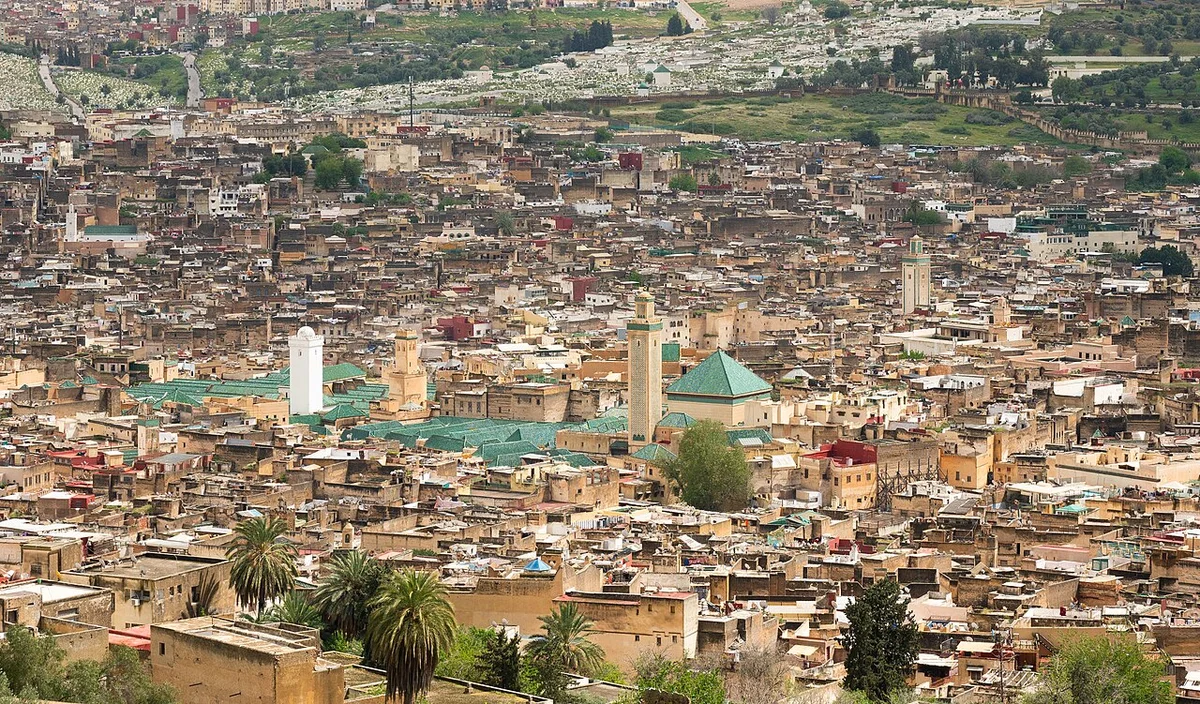
Fès is known as one of the capitals of Moroccan cuisine. In the medina, a UNESCO World Heritage Site since 1981, people still eat to the rhythm of the souks, the neighbourhood ovens and family homes. This guide does not list every Moroccan dish again: it helps you discover and eat Fassi food, meaning what to taste, where to look by area, how to approach street food and how to enjoy a guided culinary experience.
For a broader overview of the dishes, see our article The 30 must-try Moroccan dishes and our guide to Moroccan gastronomy.
What to eat in Fès: Fassi specialities
Here are the most useful dishes to try on a first visit, with when they are usually eaten.
| Dish | What is it? | When to eat it |
|---|---|---|
| Pastilla | Warqa pastry filled with braised pigeon, almonds, saffron and cinnamon; today often made with chicken | Celebrations, dinner |
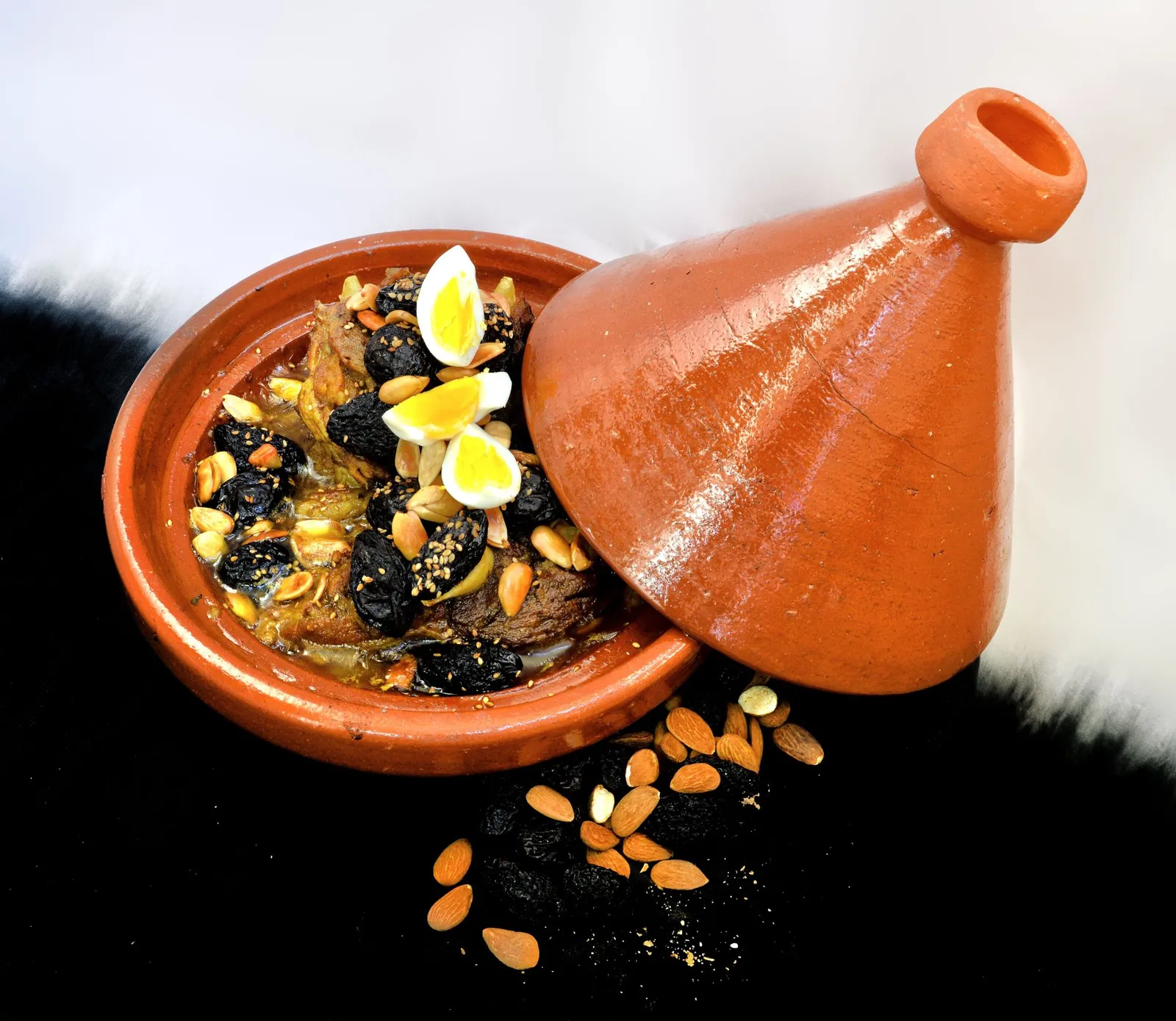
| Tajine | Dish slow-cooked in an earthenware pot, often sweet and savoury, for example with prunes and almonds | Lunch or dinner |
| Khlii | Dried, preserved meat, the Fassi "jerky" | Breakfast, with eggs |
| Bissara | Thick soup of broad beans or split peas, with olive oil and cumin | Morning, cool days |
| Harira | Tomato, lentil and chickpea soup | Starter or snack |
| Maakouda | Spiced potato fritters | Street food |
| Chebakia | Fried pastry coated in honey and rose water, sprinkled with sesame | Tea, Ramadan |
| Sellou | Mix of sesame, almonds and toasted flour | Tea, Ramadan |
| Mint tea | The sign of hospitality | Any time |
Smen. This aged butter, with a strong flavour, scents some dishes of Fassi cuisine.
Bread from the neighbourhood oven. In the medina, many families make dough at home and take it to the neighbourhood oven, the farran, which bakes it for the whole street.
Where to eat in Fès: by area
Rather than a list of restaurants, here is where to look depending on what you want.
Bab Boujloud and the Talaa Kebira
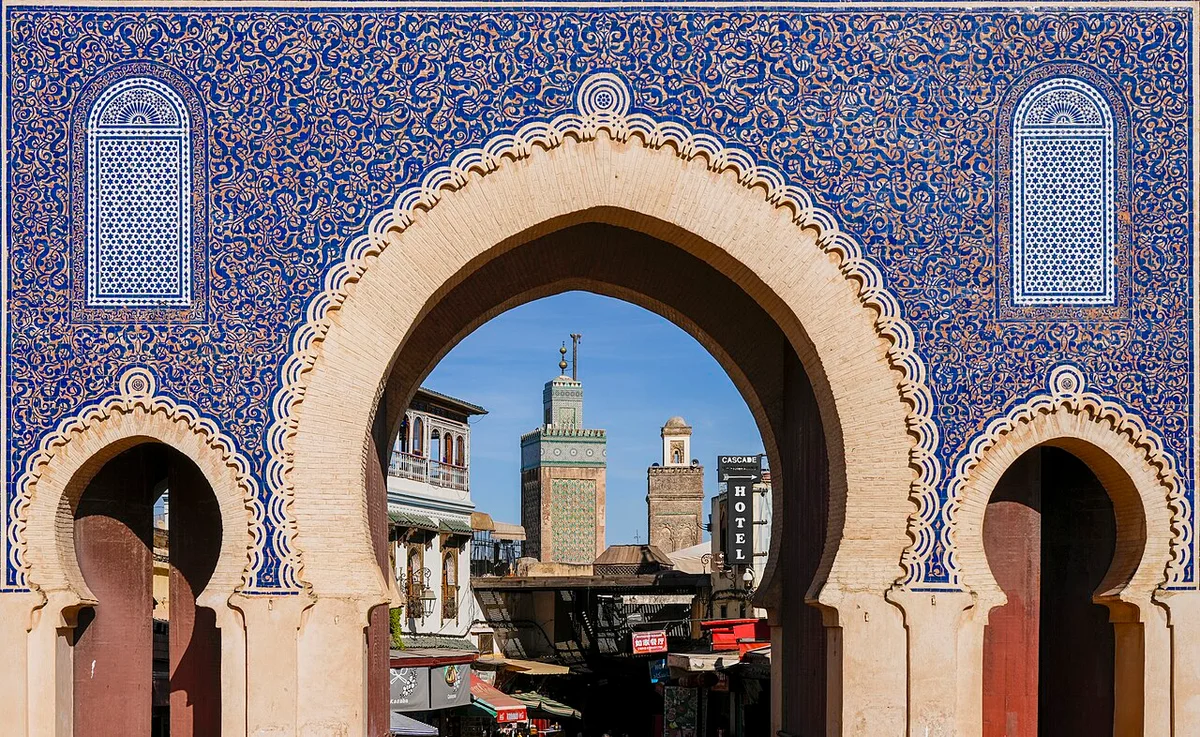
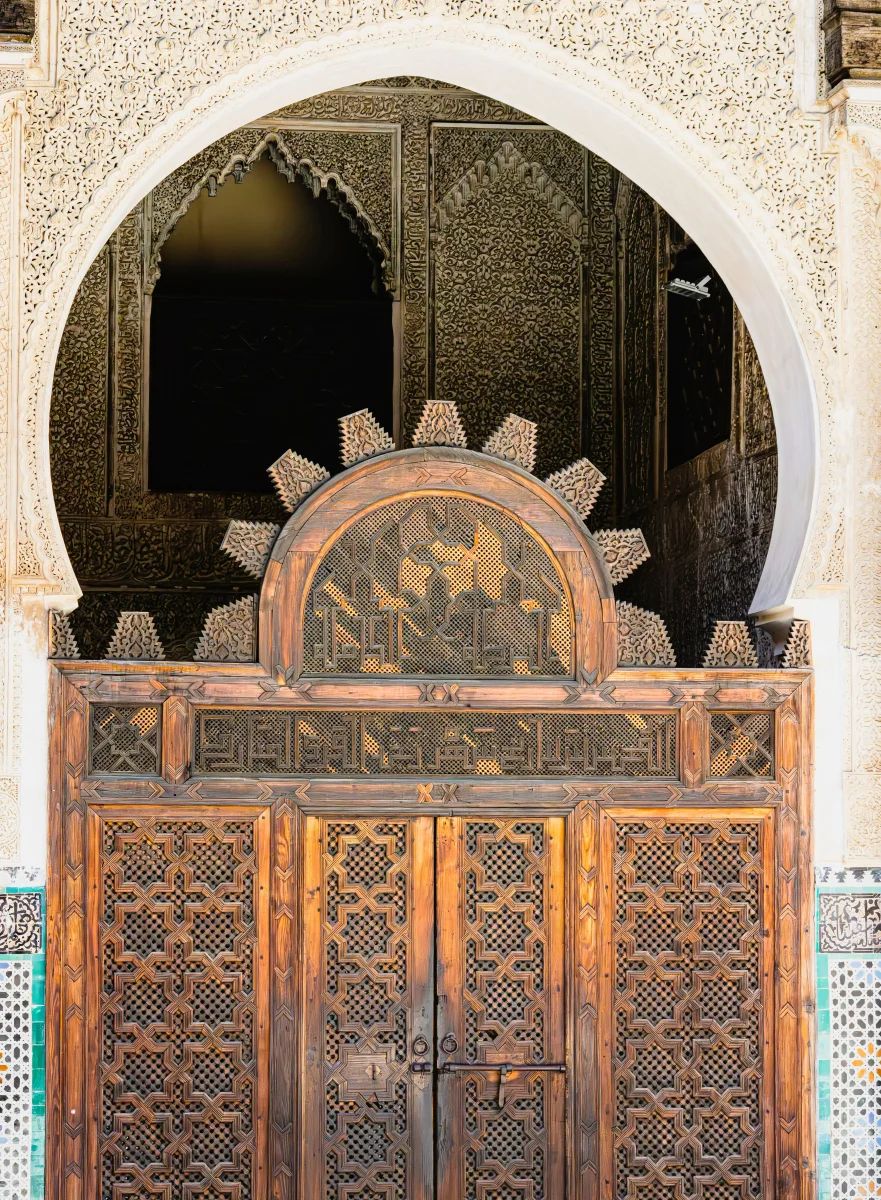
The Bab Boujloud gate is one of the main entrances to the medina. Around it, cafés and small restaurants serve tajines and brochettes. The Talaa Kebira, the main street running down to the heart of the medina, is lined with souks and stalls: pastries, dried fruit, spices and small food stands follow one another. On the way, the Bou Inania madrasa is worth a stop.
The heart of the medina: Seffarine and Qarawiyyin
Around Place Seffarine and the Al Quaraouiyine University, the lanes are narrower. Here you will find houses turned into restaurants, often with a rooftop terrace. Some riads also serve dinner by reservation: ask the day before.
R'cif
Place R'cif is where the main road into the medina ends. It is a convenient taxi access point for a meal in the medina, and a starting point towards Seffarine and the Qarawiyyin.
The new town
Avenues, cafés and more conventional restaurants, Moroccan or international: practical if you are staying outside the medina or want an easier-to-reach dinner.
Markets and food products
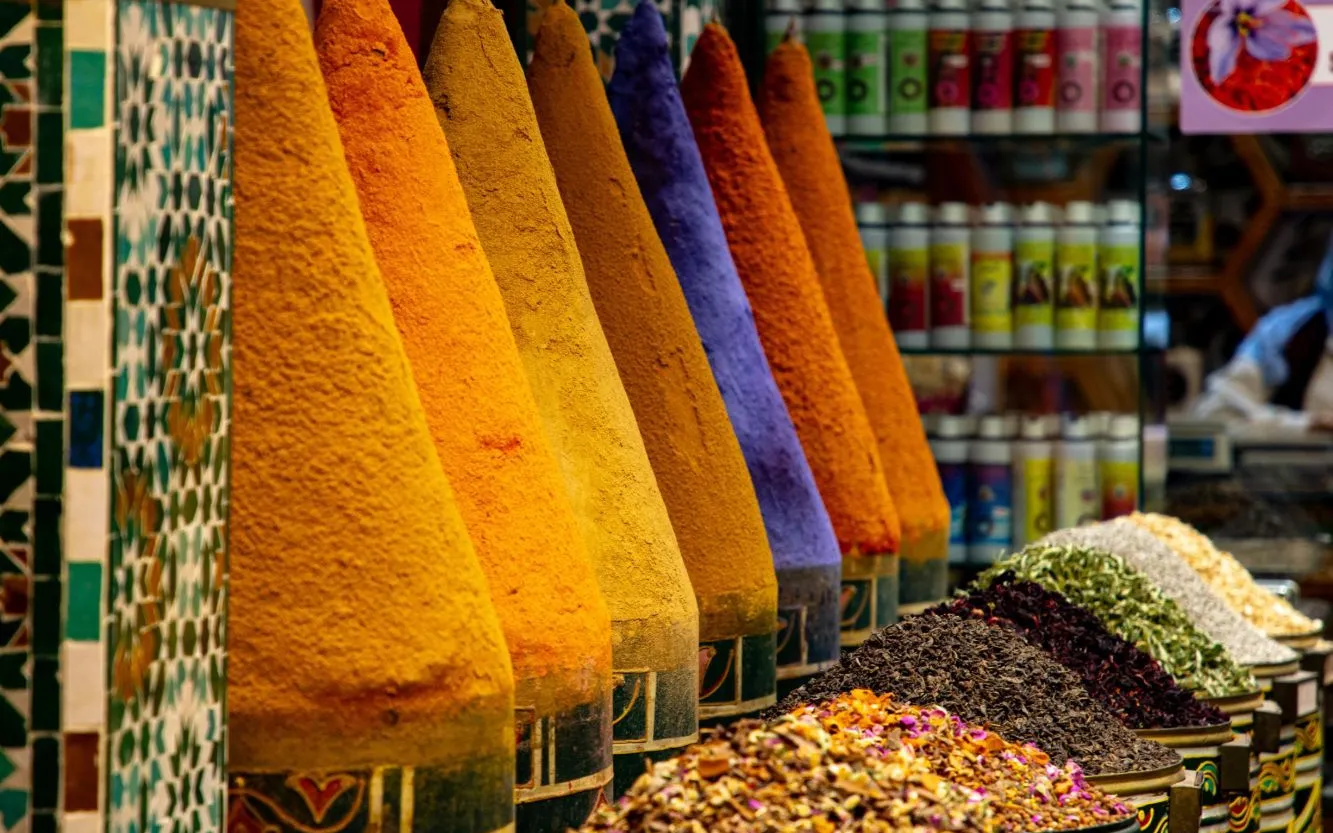
The souks of the medina are the best way to understand Fassi cuisine: olives and preserved lemons, spices, dates and dried fruit, honey, bread, meat and poultry. With a guide, a tasting tour of the souks is part of some cooking workshops (see below).
Street food in Fès: how it works
Street food means brochettes, maakouda, bissara, msemen, pastries, juices and tea. A few simple tips, without being alarmist:
- Look at the turnover: a stand that cooks continuously is more reassuring.
- Choose busy places, especially those popular with locals.
- Check the cooking: meat well cooked and served hot.
- Be careful with raw food if conditions seem uncertain.
- Drink bottled water if you have any doubt about the water.
- Carry tissues or hand gel to clean your hands.
Where to eat Fassi food, by what you want
This table is a guide by need, not a ranking.
| What you want | Area or type of experience |
|---|---|
| Traditional cuisine | House restaurants in the medina, dinner in a riad |
| Pastries | Stalls on the Talaa Kebira and in the medina |
| Street food | Talaa Kebira, around Bab Boujloud |
| A meal with a view | Rooftop terraces in the medina |
| An easy-to-reach dinner | New town |
| Understanding the cuisine | Cooking class, souk tour with a chef |
A food experience with MoroccoMuseum
Would you rather discover Fassi cuisine than simply eat in a restaurant? Here is what MoroccoMuseum offers in Fès, based on our partners' listings. Check each listing for the programme, duration, inclusions, price, cancellation terms and availability.
- Fès cooking school at Palais Amani. A workshop in a restored palace in the medina, with views over the rooftops. The listing mentions a set of recipes and a meal; the longer version of the workshop starts with a tasting tour of the souks with the chef.
- Moroccan cooking class with a family. A class in a local home, followed by a meal and mint tea; the listing says the class can be vegetarian or vegan.
To understand the medina before sitting down to eat, a medina tour with an official guide takes in the madrasas, artisans, the Chouara tanneries and the souks; food is not included.
With children
Moroccan meals are shared: dishes for the table suit a group well. For children, choose mild dishes, brochettes, pancakes or pastries. Moroccan breakfast is often popular with younger ones. In the medina the lanes are narrow and busy: for dinner with young children, a riad or a restaurant near a gate is simpler.
Vegetarians and special diets
Moroccan cuisine offers good meat-free options: vegetable tajine, vegetable couscous, Moroccan salads (zaalouk, taktouka), bissara and harira depending on the recipe. Note that a "vegetable" dish may be made with meat stock, animal fat or smen. Tell the restaurant about your restrictions, ideally in simple words or with an allergy card.
Moroccan breakfast
A good start for a first morning: msemen, baghrir, fresh bread, olive oil, honey, olives, eggs, sometimes with khlii, mint tea and coffee. Most riads serve it on their terrace: check what is included when you book. See our guide on where to stay in Fès and our selection of places to stay in Fès.
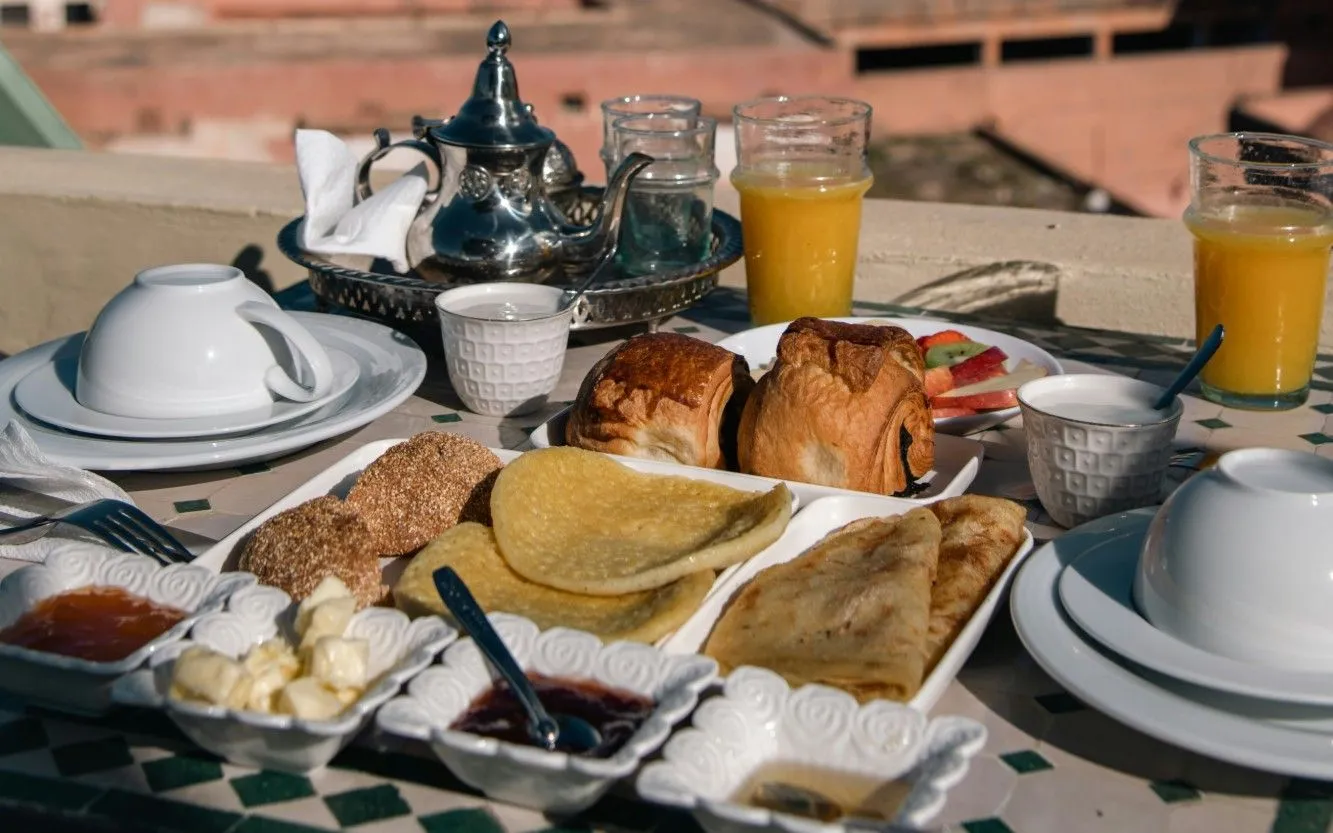
Where to have mint tea?
Mint tea is drunk in the cafés of Bab Boujloud, on medina terraces, in riads and in pastry shops, with chebakia or gazelle horns. Opening hours vary: check before you go.
What budget for eating in Fès?
Prices vary by place, produce and area: we do not publish rates. Think in three levels:
- Small budget: street food, snacks, pastries.
- Mid-range budget: traditional restaurant in the medina.
- Higher budget: dinner in a riad or palace, cooking class.
In restaurants, check whether the menu shows prices and whether drinks are included.
A food day in Fès
An example, to adapt to your tastes and timing:
- Breakfast on your riad's terrace: msemen, eggs, mint tea.
- A walk through the souks from Bab Boujloud along the Talaa Kebira: olives, spices, dried fruit.
- Lunch: a tajine in a house restaurant in the medina.
- Tea and pastries in the late afternoon.
- Cooking class or a souk tour with a chef.
- Dinner: a pastilla, in a riad or on a terrace.
To place the medina, its monuments and its history, see our guide Fès: history, heritage and practical information.
FAQ — Food in Fès
What is the speciality of Fès?
Pastilla, a pastry filled with pigeon or chicken, almonds, saffron and cinnamon, is the dish most associated with Fès. Khlii, dried and preserved meat, is another speciality.
Where to eat in Fès?
In the medina, around Bab Boujloud, the Talaa Kebira and Seffarine, or in the new town, depending on what you are looking for.
What is the street food in Fès?
Brochettes, maakouda, bissara, msemen, pastries, juices and tea.
Can you have dinner in a riad?
Some riads serve dinner by reservation: ask the day before.
Can you take a cooking class in Fès?
Yes: MoroccoMuseum lists a workshop at Palais Amani and a class in a local home. Check the content and conditions of each listing.
Are there vegetarian options?
Yes, many Moroccan dishes can be made without meat. Tell the restaurant about your restrictions.
How much does a meal cost in Fès?
It depends on the place and the type of cuisine. Check the prices on the menu.
Is Fassi food spicy?
It is fragrant and often sweet and savoury rather than spicy, but ask the restaurant if you would like a mild dish.
Discovering Fès through its food
Eating in Fès is a way to understand the medina: the souks, the neighbourhood oven, the welcoming tea and the pastilla of feast days. All our ideas for visits are gathered on the Fès page.
Opening hours, addresses, offers and prices may change. During Ramadan, restaurant hours and offerings change: check them before you go.