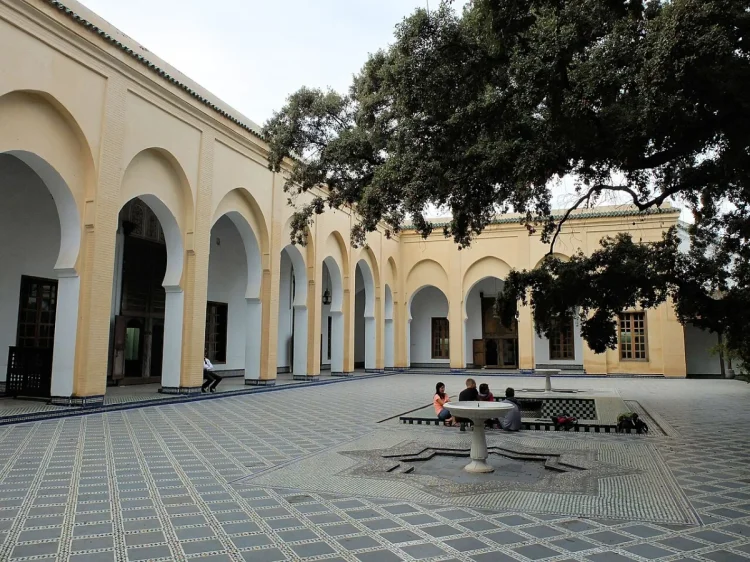
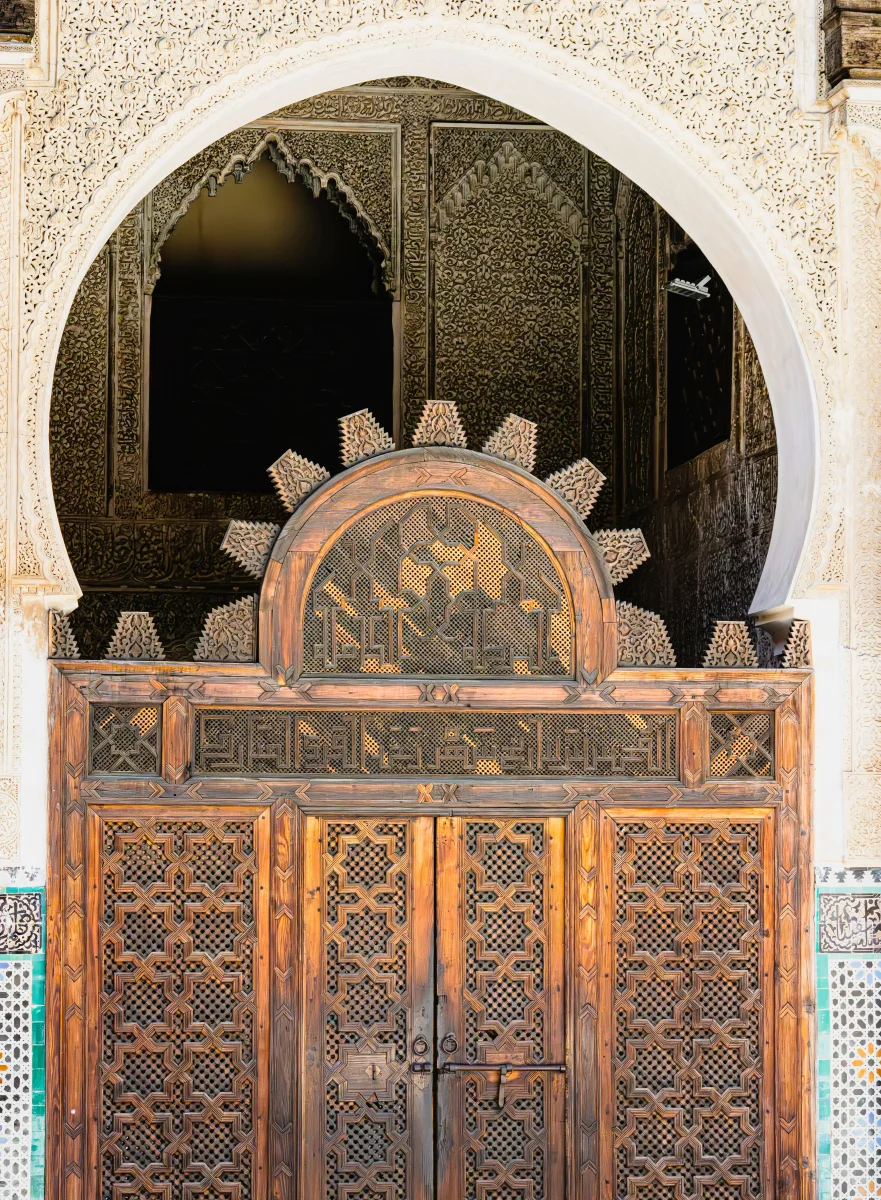
As the oldest of Morocco's imperial cities, Fez has established itself as the spiritual and intellectual capital of the kingdom for over twelve centuries.
Its medina, Fès el-Bali, is now one of the largest car-free urban areas in the world and an exceptional architectural ensemble, listed as a UNESCO World Heritage site since 1981.
Foundation by the Idrisids
The history of Fez begins in 789 when Idris I, a descendant of the Prophet Muhammad and founder of the Idrisid dynasty, established an initial settlement on the eastern bank of the Fès River. His son, Idris II, completed the project in 808-809 by founding a second city, Fas al-Alya, on the opposite bank.
These two distinct and separately fortified urban cores welcomed around 800 Andalusian families fleeing the troubles in Cordoba by 817-818, followed a few years later by nearly 300 families from Kairouan, Tunisia. This demographic influx gave the two banks their current names: Adoua al-Andalous (bank of the Andalusians) and Adoua al-Qarawiyyin (bank of the Kairouanis). Fez remained a dual city until its unification by the Almoravids in the 11th century.
The Merinid Golden Age
It was under the Merinid dynasty, during the 13th and 14th centuries, that Fez reached its peak. The Merinid sultans made the city their capital and established numerous prestigious foundations: monumental madrasas to house and educate students, fundouks for commerce, and in 1276, an entirely new royal city, Fès el-Jdid ("New Fez"), built away from the historic medina to accommodate the royal palace and administration.
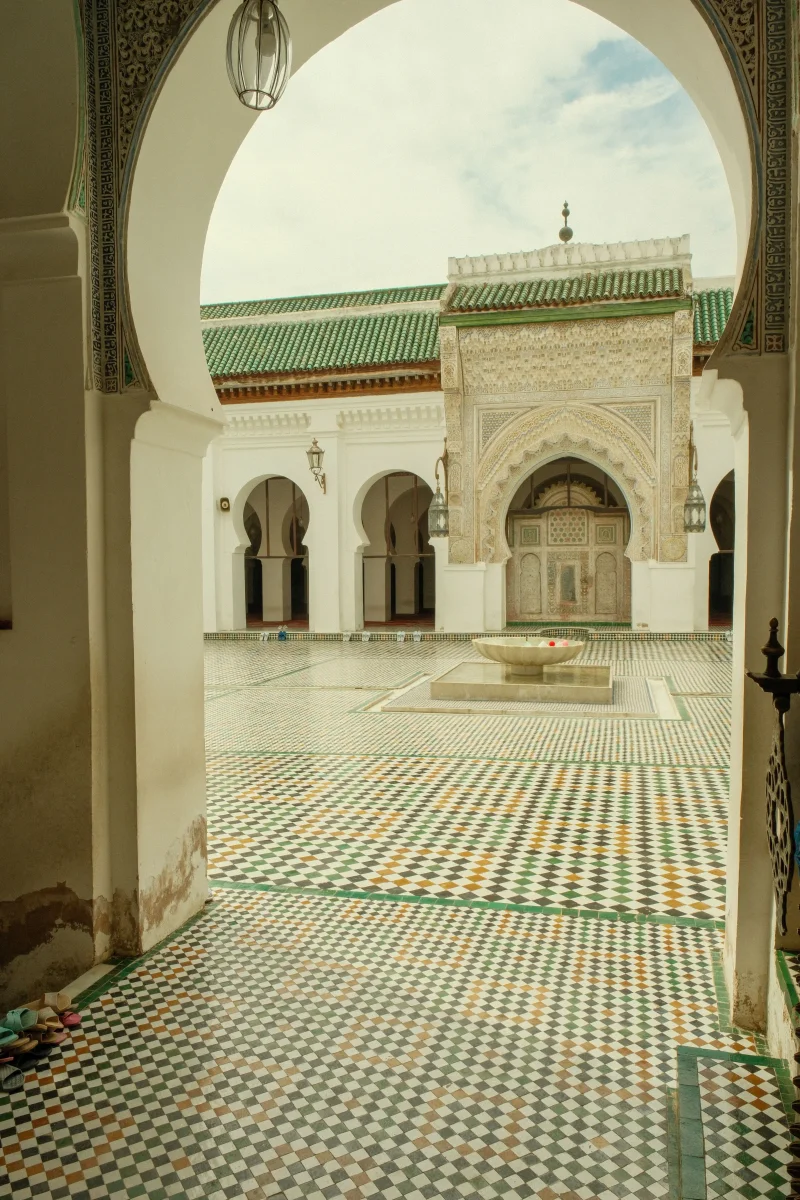
This period made Fez one of the great intellectual and artistic centers of the medieval Muslim world, a reputation notably upheld by the Al Quaraouiyine university-mosque, founded in 859 by Fatima al-Fihriya. Often presented as the oldest university in the world, it deserves a nuance: more precisely, it is one of the oldest continuously operating higher education institutions in the world, as the modern concept of a university did not exist in this form in the 9th century.
Fez, Spiritual Capital of Modern Morocco
Despite the shifts in political capital over subsequent dynasties, Fez has retained its status as the spiritual and intellectual capital of the kingdom. The city continues to be a major center for religious education and cultural influence, a status that endures today through its traditional educational institutions and vibrant craftsmanship.
What to See in Fez?
The rich heritage of Fez is such that several of its major monuments are the subject of dedicated guides on MoroccoMuseum.
Al Quaraouiyine University-Mosque
Founded in 859, it is considered the oldest continuously operating university in the world. → Read our complete guide on Al Quaraouiyine
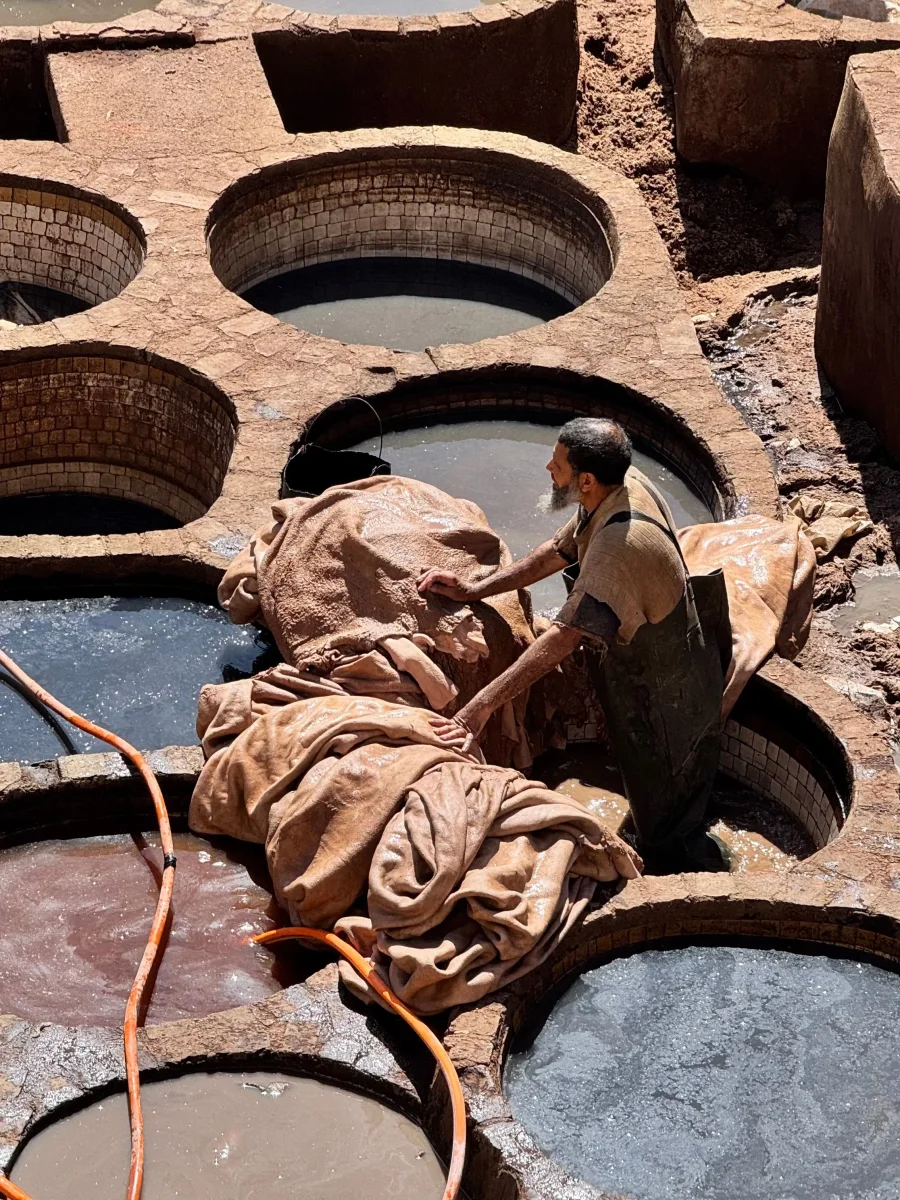
Chouara Tanneries
The largest and oldest traditional tanneries in Fez, with colorful vats dominating one of the most photographed views of the medina. → Read our complete guide on the Chouara Tanneries
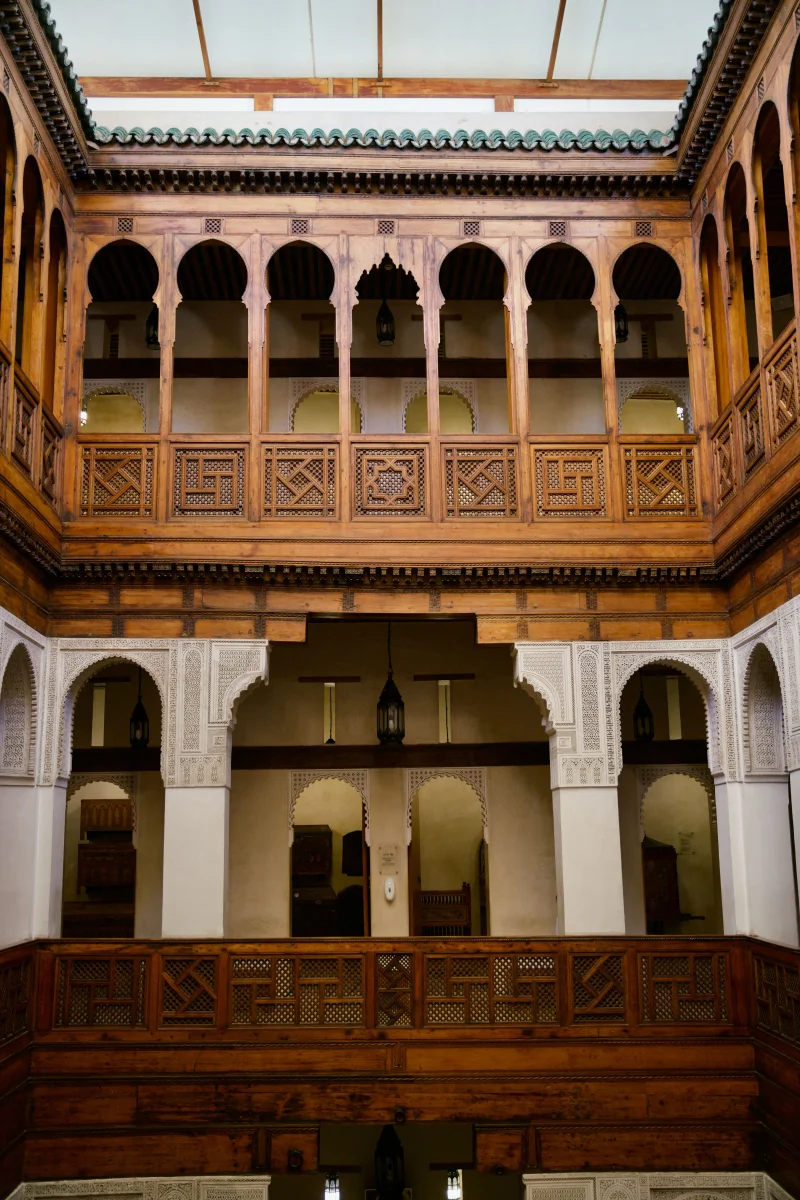
Nejjarine Museum
Housed in a historic fundouk, this museum is dedicated to the arts of wood. → Read our complete guide on the Nejjarine Museum
Al Batha Museum
A former royal palace converted into a museum of Islamic arts, it showcases one of the richest collections of Moroccan craftsmanship in the country. → Read our complete guide on the Al Batha Museum
Bou Inania Madrasa
A Merinid masterpiece from the 14th century, one of the few madrasas in Fez whose interior remains open to visitors. → Read our complete guide on the Bou Inania Madrasa
Al-Attarine Madrasa
Another Merinid masterpiece, renowned for the intricacy of its zellige, stucco, and carved wood decoration. → Read our complete guide on the Al-Attarine Madrasa
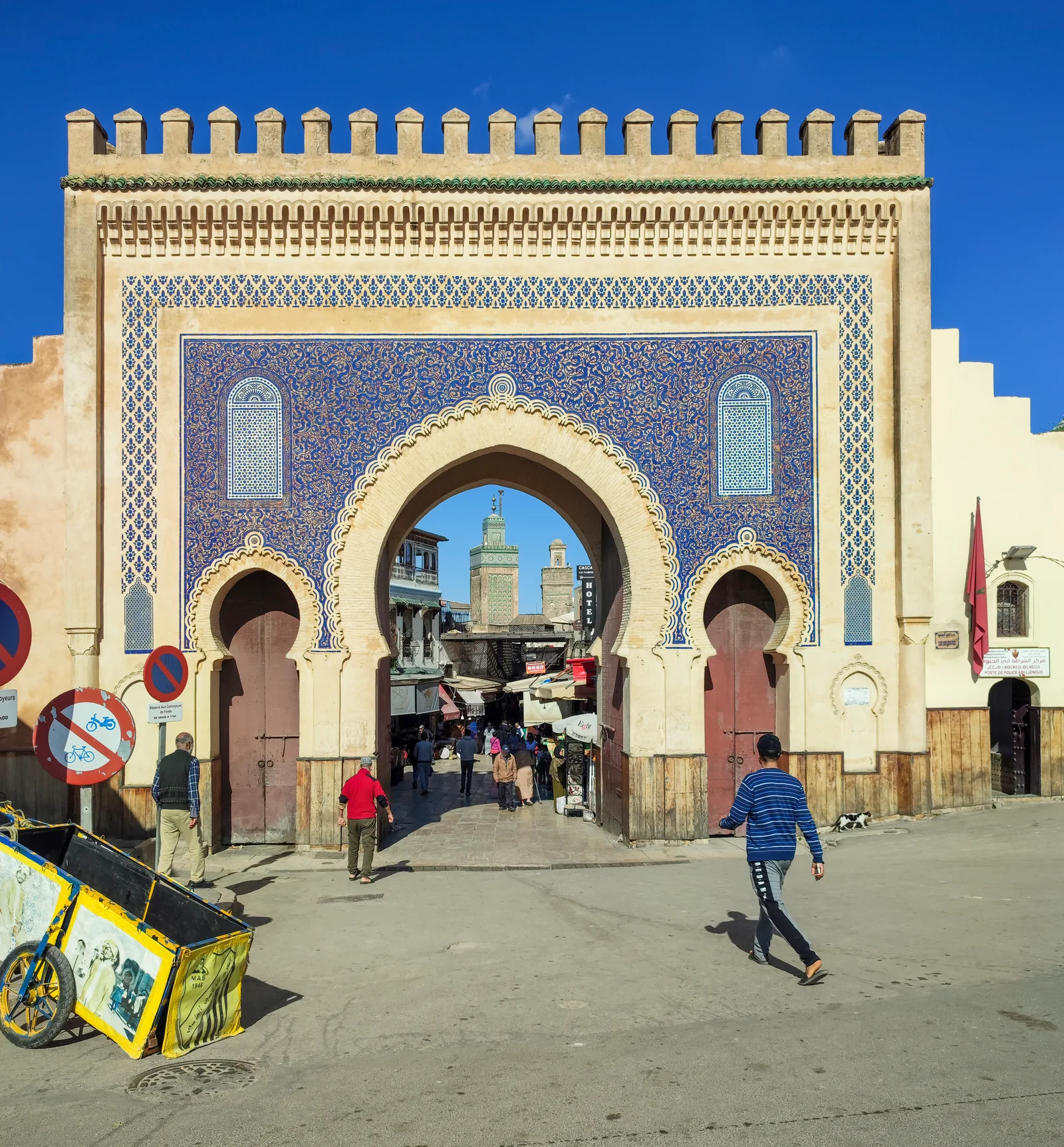
Bab Boujloud
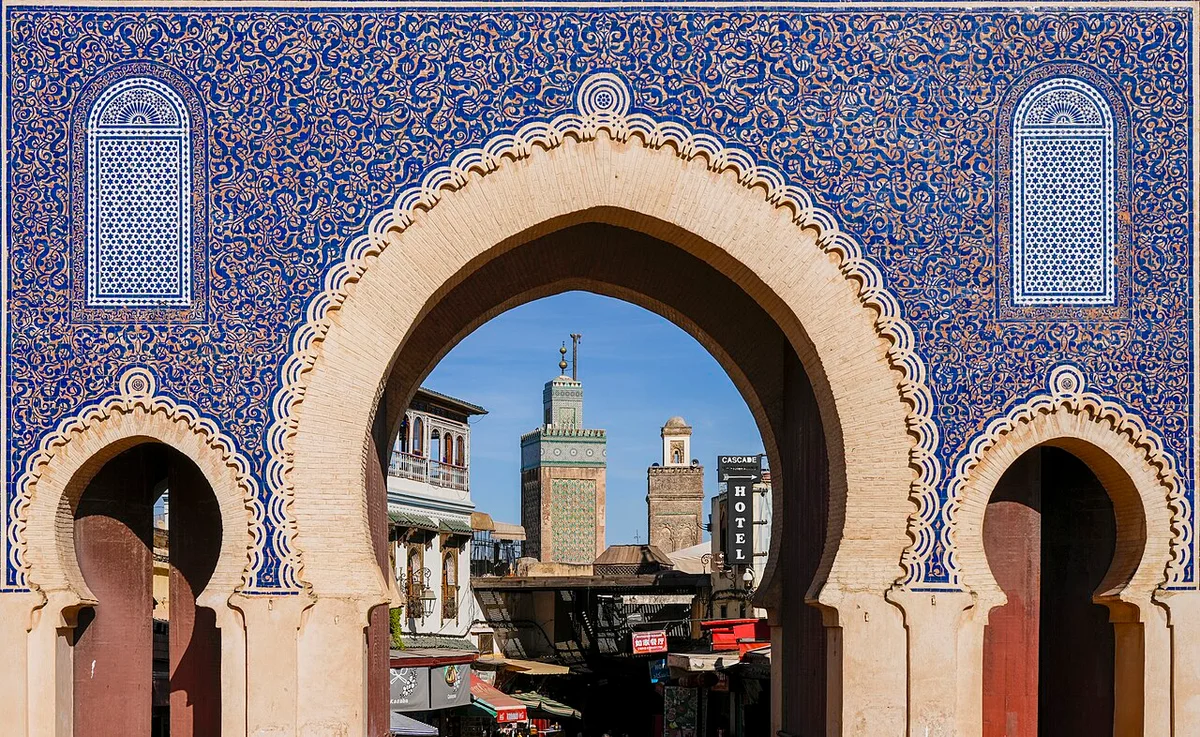
The main entrance to the historic medina, Bab Boujloud is decorated with blue tiles on the outside and green tiles on the medina side — blue being the color traditionally associated with the city of Fez. Built in the early 20th century in the Merinid architectural style, this monumental gate has become one of the city's most recognizable visual symbols.
Seffarine Square
Nestled near Al Quaraouiyine University, Seffarine Square gets its name from the artisans who still hammer copper there using ancient techniques. Surrounded by madrasas and historic fundouks, it offers one of the most authentic artisan scenes in the medina.
Mausoleum of Moulay Idriss II
Located in the heart of the medina, the mausoleum of Moulay Idriss II houses the tomb of the founder of Fez, regarded as one of the city's holiest sites. Its surrounding neighborhood once enjoyed the status of a sanctuary (horm), and its richly decorated architecture makes it one of the most venerated shrines in Morocco.
Discover the mausoleum of Moulay Idriss II
Cherratine Madrasa
Inaugurated in 1670 under the Alaouite dynasty, the Cherratine Madrasa is distinguished from the Merinid madrasas by a more austere and functional style, designed to accommodate a large number of students. Less ornate than Bou Inania or Al-Attarine, it reflects the continuity of Fez's role as a center of religious education through successive dynasties.
Discover the Cherratine Madrasa
Getting Around Fez
The medina of Fès el-Bali, largely off-limits to vehicles, is best explored on foot. Small taxis serve the outskirts of the medina and the new city. Fez has an international airport and a train station served by high-speed trains from Tangier.
Fez, Living Memory of Morocco
From its Idrisid foundation to the Merinid golden age, Fez encapsulates over a thousand years of religious, intellectual, and artisanal history within the confines of its medina.
More than an open-air museum, the city remains a vibrant center: its madrasas still educate students, its tanneries still employ artisans, and its university continues to welcome generations of scholars, twelve centuries after its founding.
Continue Your Discovery of Morocco
Moroccan heritage is not limited to a single location. Palaces, madrasas, museums, archaeological sites, and monuments each tell a part of its story.
🎟️ Discover the heritage and book your tickets
📖 Read our guides & inspirations
MoroccoMuseum.com — Discover. Explore. Experience the heritage of Morocco.
Activities to book in Fez
To make the most of your visit, here are activities that travellers rate highly, best booked in advance.