Bahia Palace: History and Heritage – The Masterpiece of Moroccan Palaces
In the heart of the Marrakech medina stands a palace that, for more than a century, has fascinated travelers, historians, and lovers of Moroccan architecture. With its light-filled patios, fragrant gardens, richly decorated reception rooms, and hand-painted cedar wood ceilings, Bahia Palace is considered one of the finest examples of 19th-century Moroccan architecture.
Unlike many historical monuments, Bahia Palace is not a fortress or an imperial palace built to defend a city. It is above all an exceptional residence, designed to offer comfort, elegance, and prestige to one of the kingdom's most powerful families.
Today, it remains one of Morocco's most visited sites and an essential stop for discovering the history of Marrakech.
A Palace Born from a Great Family's Ambition
The story of Bahia Palace begins in the second half of the 19th century.
The first core of the palace was built by Si Moussa, grand vizier to the Alaouite sultan Hassan I. A trusted figure of the sultan, he had a prestigious residence built in the heart of Marrakech to assert his rank and host the kingdom's dignitaries.
A few years later, his son Ba Ahmed succeeded him as grand vizier. Having become the most influential man in the country and regent for the young sultan Abdelaziz, he undertook to considerably expand the family residence.
Over several years, new pavilions, gardens, courtyards, and apartments were added. The palace gradually grew to nearly eight hectares and became one of Morocco's most luxurious residences.
Its name, "Bahia", generally means the brilliant one, the resplendent one, or the magnificent one — a name that perfectly captures the ambition of its builders.
An Architecture Built Around Light
Bahia Palace does not seek to impress through height.
Its genius lies in its layout.
Each space gradually opens onto the next.
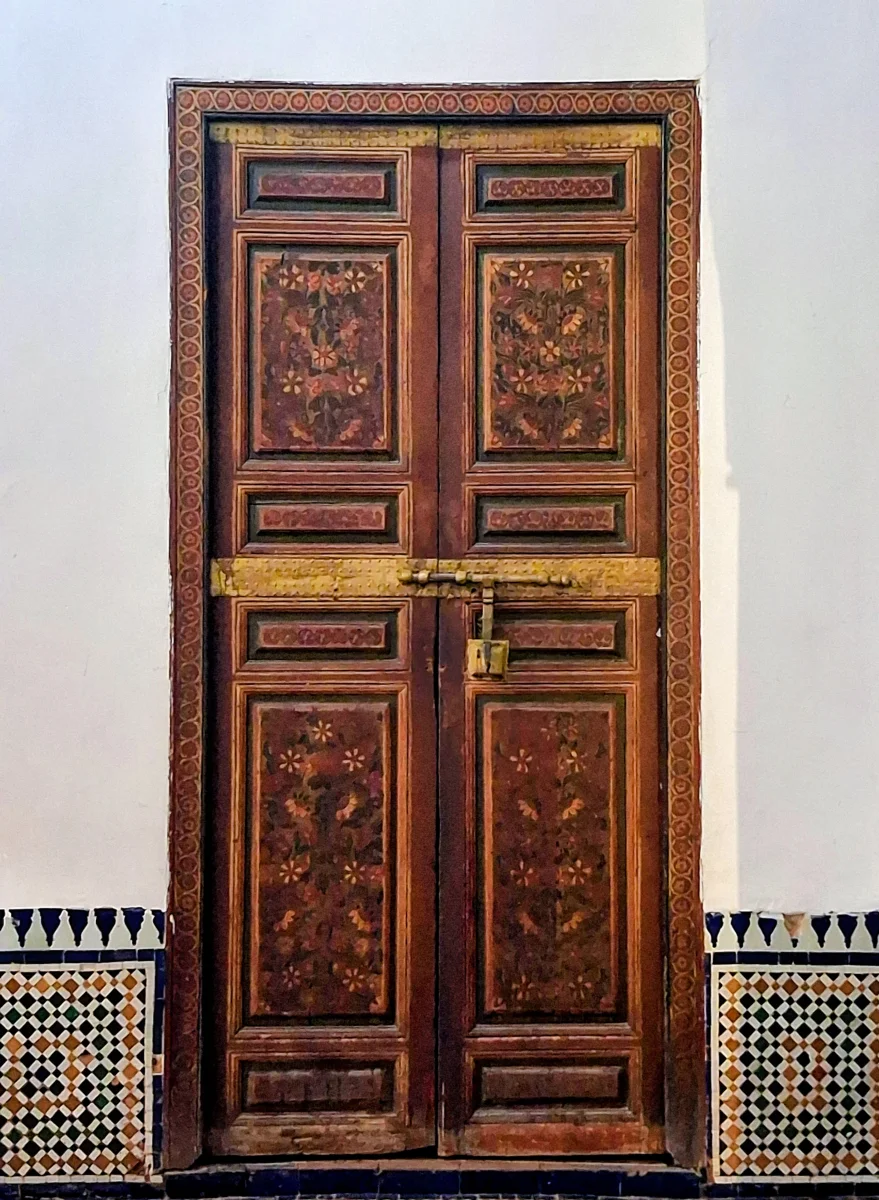
After a discreet door appears a first courtyard.
Then a garden.
Then a patio.
Finally a richly decorated reception room.
This succession of spaces creates a constant sense of discovery.
The architecture follows the traditional principles of Moroccan homes: preserving privacy while promoting coolness and air circulation.
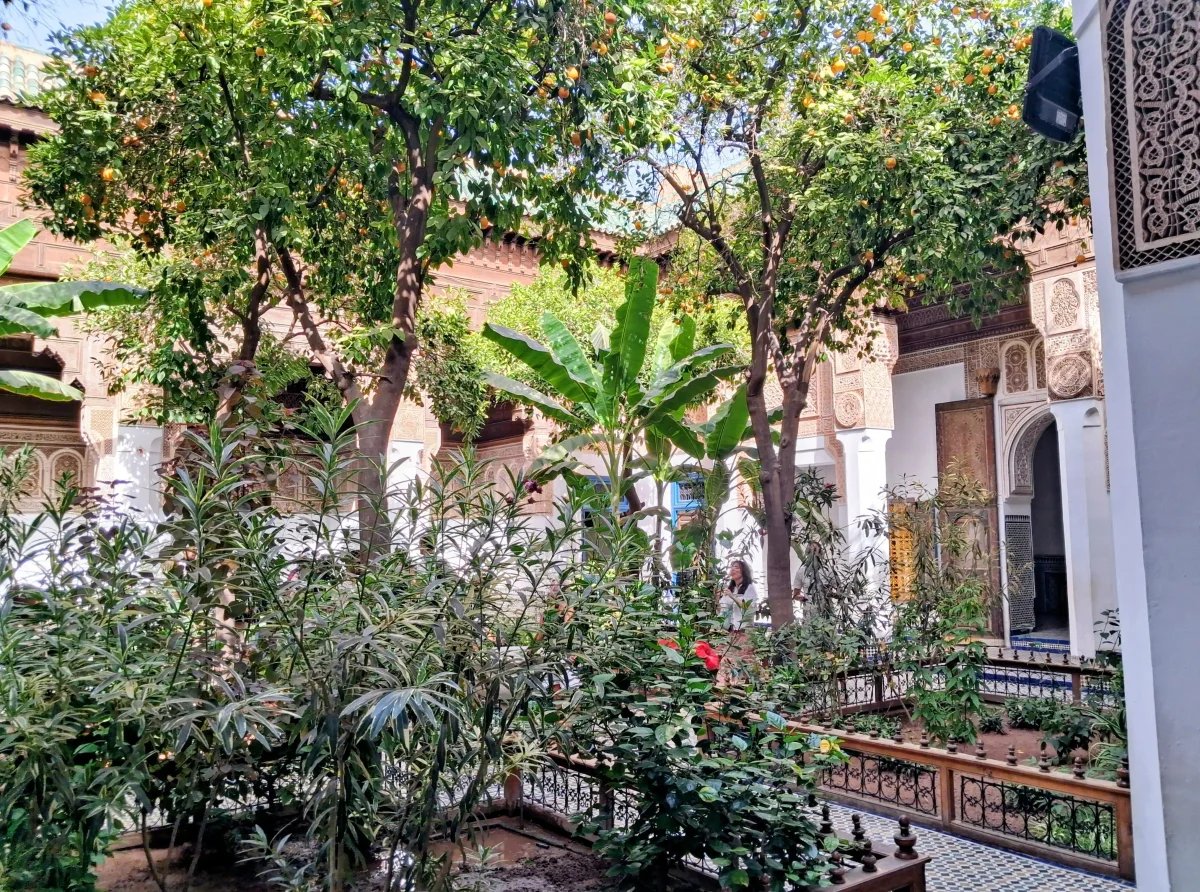
The patios thus become the true heart of the palace.
They distribute the different rooms while letting in natural light that enhances the materials.
The Skill of Moroccan Craftsmen
Bahia Palace is a tribute to the exceptional talent of Moroccan craftsmen.
Every room reveals skills passed down through generations.
The ceilings are made of carved cedar wood, then painted with floral and geometric patterns in vivid colors.
The walls are covered with delicate hand-carved stucco.
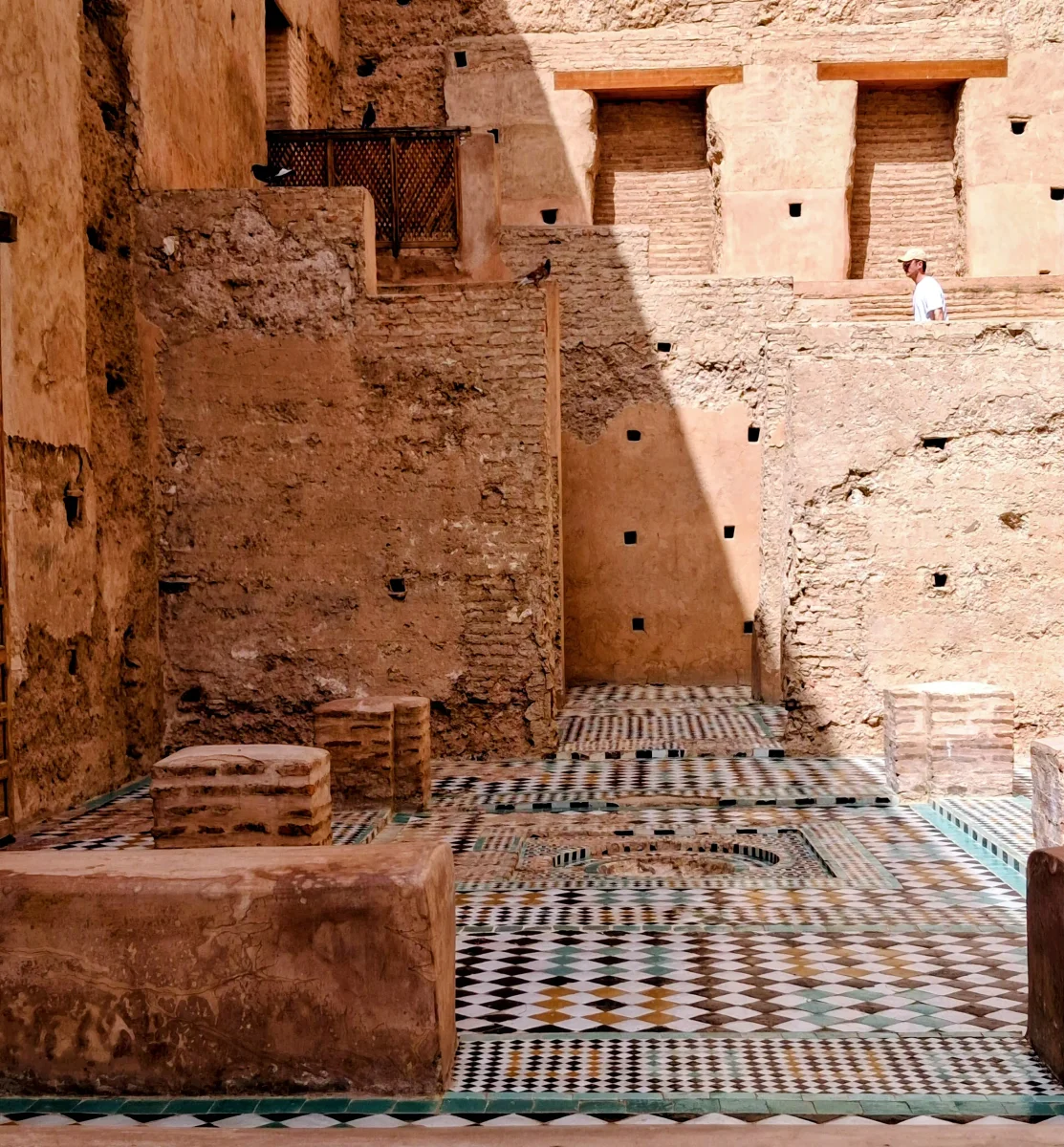
The floors alternate between marble and zellige tiles arranged in remarkably precise geometric compositions.
The carved wooden doors, finely decorated arches, and wrought ironwork testify to the richness of Moroccan crafts at the end of the 19th century.
Even today, these decorations remain a source of inspiration for many craftsmen and architects.
The Gardens, a Symbol of Elegance
Bahia Palace is not just about its buildings.
Its gardens play an essential role in the palace's composition.
Orange trees, lemon trees, palm trees, banana trees, jasmine, and fragrant plants create a true haven of peace in the heart of the medina.
Pools and fountains bring coolness and serenity while reflecting the decorated facades.
In the tradition of Islamic gardens, water symbolizes life, while fruit trees evoke abundance and paradise.
This harmony between architecture and nature contributes to the unique charm of Bahia Palace.
Did you know?
Bahia Palace has more than 150 rooms, spread across numerous courtyards, patios, and gardens. Yet only a portion is currently accessible to visitors, some areas remaining reserved for administrative or heritage purposes.
A Residence at the Heart of Power
At the end of the 19th century, Bahia Palace became one of the centers of Moroccan power.
Ba Ahmed received diplomats, senior officials, tribal chiefs, and foreign representatives there.
The most important political decisions were often prepared in the palace's reception rooms.
Grand ceremonies and official receptions reflected the prestige of Marrakech, which remained one of the kingdom's main imperial capitals.
Every detail of the decoration contributed to this display of power, without ever giving up the refinement inherent to the Moroccan way of life.
A Palace Preserved Through Time
After Ba Ahmed's death in 1900, the palace underwent several transformations.
During the French Protectorate, it notably housed certain administrations before being gradually restored and opened to the public.
Unlike other historical monuments in Marrakech, Bahia Palace has retained much of its original architecture and decoration.
This remarkable preservation now allows visitors to better understand the lifestyle of the Moroccan elite at the end of the 19th century.
Did you know?
Contrary to popular belief, Bahia Palace was never a permanent residence of Morocco's sultans. It was primarily the home of grand vizier Ba Ahmed, then the most influential figure in the kingdom after the sovereign.
Why Visit Bahia Palace Today?
Visiting Bahia Palace means entering one of Morocco's most beautiful architectural ensembles.
Each courtyard reveals a new perspective.
Each ceiling reveals meticulous craftsmanship.
Each garden offers a moment of calm in the heart of the bustling medina.
The palace is also one of the best places to admire the skill of Moroccan master craftsmen: wood carving, stucco, zellige, ironwork, and traditional carpentry are expressed here with remarkable finesse.
For photography enthusiasts, the light passing through the patios throughout the day offers unique compositions.
A Visit to Round Out in the Medina
Bahia Palace enjoys an ideal location to continue exploring Marrakech.
A few minutes' walk away are:
- El Badi Palace, former residence of sultan Ahmed al-Mansour;
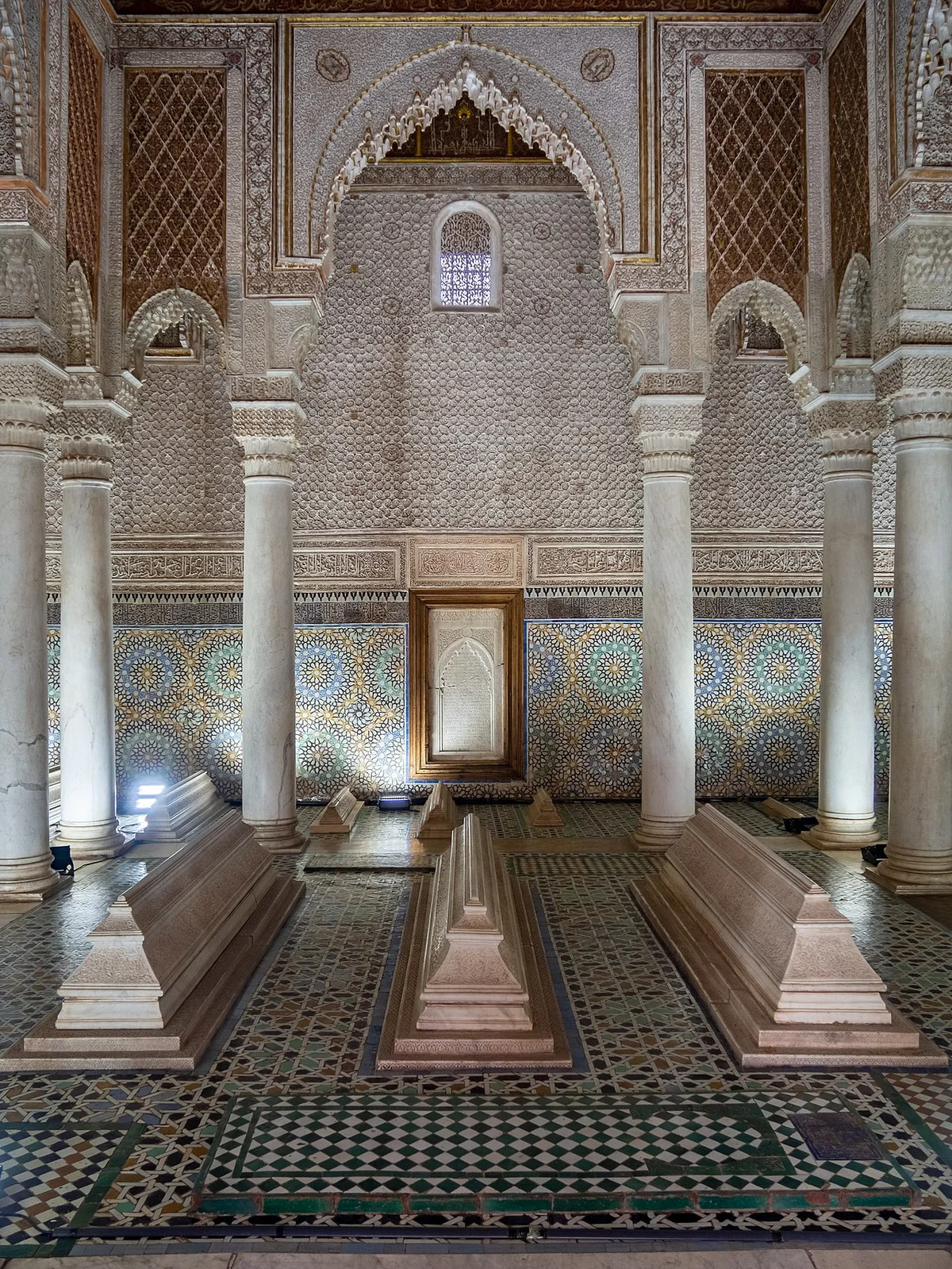
- the Saadian Tombs, a jewel of Saadian funerary architecture;
- Bab Agnaou, one of the city's most beautiful monumental gates;
- Jemaa el-Fna square, listed as UNESCO Intangible Cultural Heritage.
By combining these different sites in a single day, visitors discover nearly five centuries of Moroccan history.
A Living Heritage
Bahia Palace remains today one of Marrakech's most iconic symbols.
Every year, hundreds of thousands of visitors pass through its gates to admire a heritage that continues to inspire architects, historians, and lovers of Moroccan culture.
Its gardens, patios, and decorations tell a story where power, art, and refinement meet in remarkable balance.
More than a simple monument, Bahia Palace embodies the excellence of traditional Moroccan architecture and recalls the genius of the craftsmen who shaped its identity.
Plan Your Visit with MoroccoMuseum
To discover Bahia Palace under the best conditions, plan your visit with MoroccoMuseum.
You'll find official opening hours, prices, practical tips, and all the information needed to organize your day in the Marrakech medina.
By booking your ticket with MoroccoMuseum, you enjoy a simple, quick booking process and access to exclusive content dedicated to Moroccan history and heritage.
Because every monument tells a story, MoroccoMuseum helps you better understand, explore, and appreciate Morocco's most beautiful cultural treasures.
Visit the Bahia Palace with an e-ticket and a digital guide
To prepare your visit to the Bahia Palace, book your e-ticket on MoroccoMuseum.com: electronic ticket sent by email and digital guide included (illustrated guide, narrative account and audio reading of 10 points of interest, in five languages) to explore the site at your own pace. Visiting several monuments? The skip-the-line pass brings tickets and audio guides together, with no visit date.
→ Book my e-ticket for the Bahia Palace