Agadir in One Day: How to Discover the City's Highlights
Visiting Agadir in one day is entirely possible, provided you plan your itinerary carefully. Located on Morocco's Atlantic coast, the city is known for its long beach, sunny climate and lively seafront. However, Agadir is more than a seaside destination: its history, museums, public spaces and markets reveal another side of the city.
Its present-day identity is closely connected to the earthquake of February 29, 1960, which destroyed much of the old city. Reconstruction profoundly transformed Agadir's urban landscape. Unlike Marrakech or Fez, Agadir does not have a historic medina comparable to those of Morocco's great imperial cities. Its heritage can instead be discovered through a handful of emblematic sites, traces of its past, museum collections and places that shape everyday life.
The aim of this itinerary is not to squeeze in as many attractions as possible or turn your visit into a race against the clock. Instead, it combines a historical viewpoint, a cultural visit, a discovery of local commerce and a relaxing walk along the seafront.
The suggested route begins in the morning at the Kasbah of Agadir Oufella, continues to the Reconstruction Museum and the Talborjt area, and then offers a choice between the art museum and Souk El Had. The day ends on Agadir's beach, when the light becomes particularly pleasant.
If you have two days, you can explore other neighbourhoods and take excursions into the surrounding region. With just one day, it is better to focus on the places that help you understand the city without rushing from one attraction to another.
1. Morning: Start at the Kasbah of Agadir Oufella
Link: Kasbah of Agadir Oufella
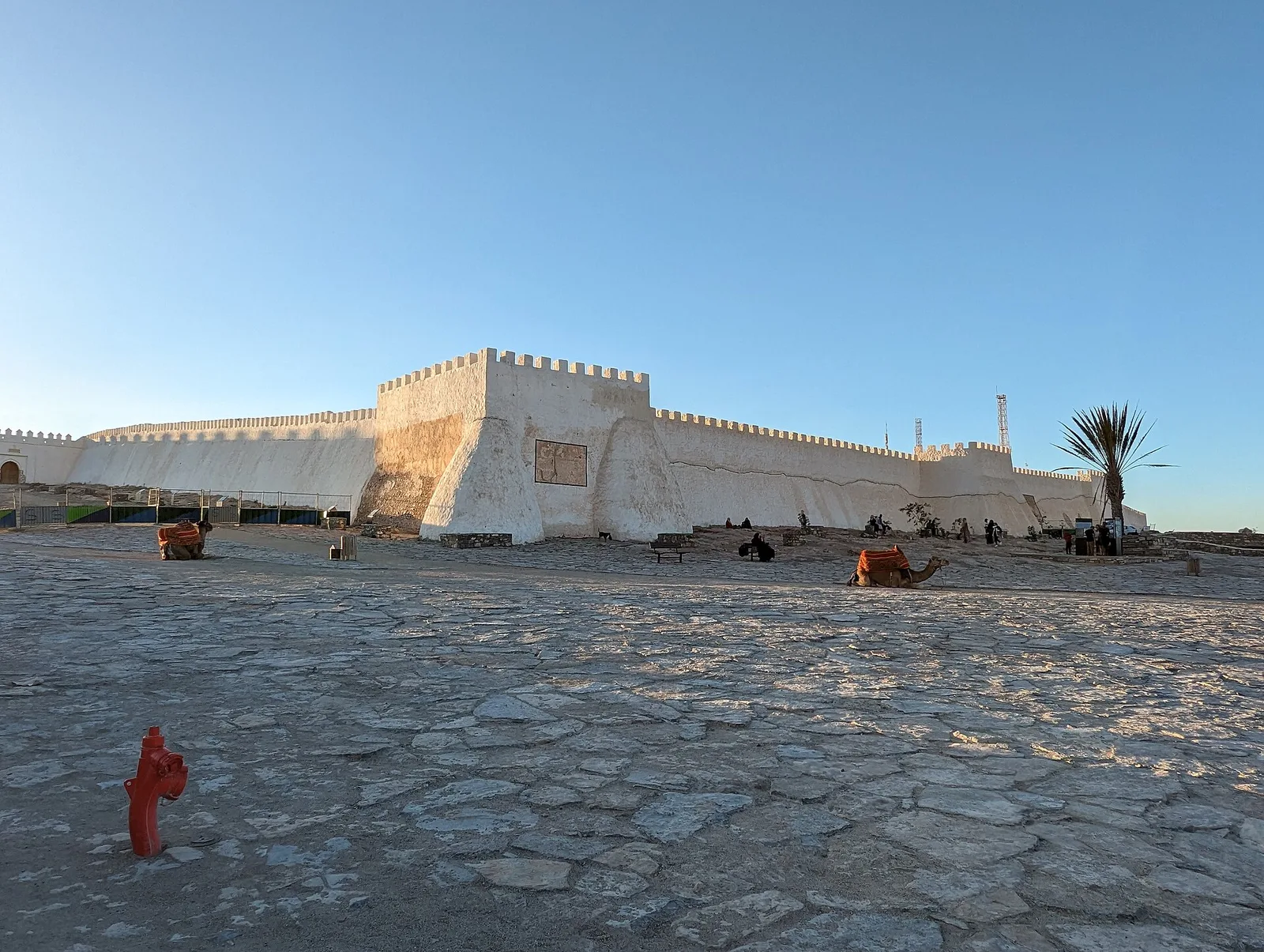
The Kasbah of Agadir Oufella is an excellent starting point. Located on a hill overlooking the city and the port, it offers panoramic views of the bay, the Atlantic Ocean and Agadir's urban landscape.
The visit first helps you understand the city's geography. From the heights, you can see the seafront, modern neighbourhoods, port facilities and areas that developed after the 1960 disaster. This panorama provides a tangible sense of the relationship between Agadir, its coastline and its economic activity.
A site connected to Agadir's history
The fortress is associated with Morocco's history under the Saadian dynasty. Its development is linked in particular to the period following the Saadian victory of 1541, when the Portuguese were expelled from Santa Cruz do Cabo de Gué, the former Portuguese settlement in the region.
Before the 1960 earthquake, the Kasbah was an inhabited neighbourhood. It included places of worship, communal facilities and residential areas. The disaster profoundly affected the site and its surroundings.
Today, visitors mainly come for the panoramic views and the historical significance of the location. The surviving remains recall the existence of the old city and place Agadir within a much broader historical context than its modern image as a seaside resort might suggest.
How much time should you allow?
Allow around one hour to enjoy the views, observe the remains and take photographs. You can stay longer if you want to explore the different viewpoints.
Morning is generally a pleasant time to begin your day before continuing towards the city centre. Check access arrangements and any visitor information before setting off.
Practical tip: Bring water and wear comfortable shoes. Even when temperatures are mild, exposure to the sun can be considerable.
2. Discover the City's History at the Agadir Reconstruction Museum
Link: Agadir Reconstruction Museum
After visiting the Kasbah, the Reconstruction Museum helps put Agadir's history into context. This stop is particularly worthwhile for visitors who want to understand why the city now has a different architectural style and urban layout from Morocco's historic medinas.
Housed in the former Bank Al-Maghrib building on Avenue du Général-Kettani, the museum focuses on memory and historical preservation. It explores the 1960 earthquake, its human and urban consequences, and the reconstruction process that shaped modern Agadir.
Understanding modern Agadir
The exhibition uses documents, photographs, archival material and interpretive displays. These elements help visitors visualise the city before the disaster and understand the scale of the changes that followed.
The visit complements the experience at the Kasbah: from the hilltop, you observe the city and its landscape; inside the museum, you discover historical material that sheds light on its transformation.
The venue may also offer digital interpretation spaces, exhibitions and cultural activities. Available content can vary according to the programme, so it is advisable to check the latest information before visiting.
The museum is particularly interesting for anyone interested in urban history, students, families and travellers who want to look beyond beaches and leisure activities.
Indicative opening hours and admission prices
The available information lists the following details:
- Opening hours: 10 am to 6 pm.
- Weekly closing day: Tuesday.
- Listed admission for Moroccan nationals and residents: MAD 20.
- Listed admission for visitors under 18: MAD 10.
- Listed admission for international visitors: MAD 50.
These details should be treated as indicative and confirmed with the museum before your visit. Opening hours, admission conditions and prices may change.
Allow around one hour to explore the museum at a comfortable pace. If you enjoy reading historical documents and taking time to examine the exhibitions, you may want to stay longer.
3. At Midday: Explore Talborjt and Olhão Garden
After the museum, take some time to discover part of the city centre and enjoy a break before your afternoon visits.
The Talborjt area offers a different perspective on Agadir: that of a rebuilt city organised around avenues, shops and public spaces. It provides an interesting contrast with the narrow lanes of Morocco's historic medinas.
Olhão Garden: A Green Escape in the City
Olhão Garden is a green space where you can slow down and take a break from sightseeing. Inaugurated in 1992, it is named after the Portuguese city of Olhão, which is twinned with Agadir.
Its pathways and landscaped areas provide a pleasant setting for a short rest, particularly on warm days. It is also an opportunity to observe everyday local life away from the busiest tourist routes.
You do not need to spend long here: a walk of around 20 to 30 minutes is usually enough to enjoy the garden.
Mohammed V Mosque
If you pass nearby, you can also admire the exterior of Mohammed V Mosque. Its architecture forms part of the city's religious and urban landscape.
As with any place of worship, visitors should respect access rules and dress expectations. If entry is not permitted, viewing the building from outside is still a way to appreciate this aspect of local life.
Where to Have Lunch in Agadir
Lunch is an opportunity to discover Moroccan cuisine and take a break before resuming your sightseeing.
Depending on your preferences, you can choose a traditional meal, home-style Moroccan cooking or a restaurant serving fish and seafood. As a coastal city, Agadir has an important seafood offering, although the available options vary from one establishment to another.
For a one-day visit, choose a restaurant along your route to minimise travel time. Allow around one hour for lunch.
To plan this part of your visit, consult our guide to Agadir's gastronomy.
4. Afternoon: Choose Between the Art Museum and Souk El Had
For the rest of the afternoon, two visits reveal different sides of Agadir. The art museum is better suited to visitors interested in collections and artistic expression. Souk El Had is particularly appealing to those who want to discover local products, craftsmanship and commercial life.
If your schedule allows, you can visit both, but you will need to manage your time according to opening hours and the size of the market.
Option A: Agadir Musée d'Art
Link: Agadir Musée d'Art
Located on Avenue Hassan II, Passage Aït Souss, Agadir Musée d'Art is an interesting cultural stop to complement the morning's historical visit.
Inaugurated in 2023, the museum showcases different forms of artistic expression, including collections connected with jewellery, carpets and visual arts. It brings together regional heritage and works of modern and contemporary art.
A Different Perspective on Moroccan Heritage
The collections introduce visitors to the diversity of artistic practices and material traditions. Jewellery and carpets, in particular, reflect craftsmanship passed down through generations, while modern and contemporary works offer a different perspective on artistic creation.
The exhibition may include sections devoted to twentieth-century easel painting, abstraction from the 1950s onwards and contemporary artistic approaches.
The visit complements the Reconstruction Museum. The first venue helps explain the city's recent history, while the art museum explores artistic expression and Morocco's cultural heritage.
Indicative Opening Hours and Admission Prices
The available information lists the following details:
- Opening hours: 10 am to 6 pm.
- Opening days: Tuesday to Sunday.
- Weekly closing day: Monday.
- Listed admission for visitors under 18 and students: MAD 10.
- Listed admission for Moroccan nationals and residents: MAD 20.
- Listed admission for international visitors: MAD 40.
Opening hours and prices should be confirmed before your visit, as they may change.
Allow between 45 minutes and an hour and a half, depending on your interest in the collections. If you want to spend more time at the museum, shorten your visit to the souk or organise the stops around the day's opening hours.
Option B: Souk El Had, a Glimpse of Agadir's Commercial Life
Link: Souk El Had in Agadir
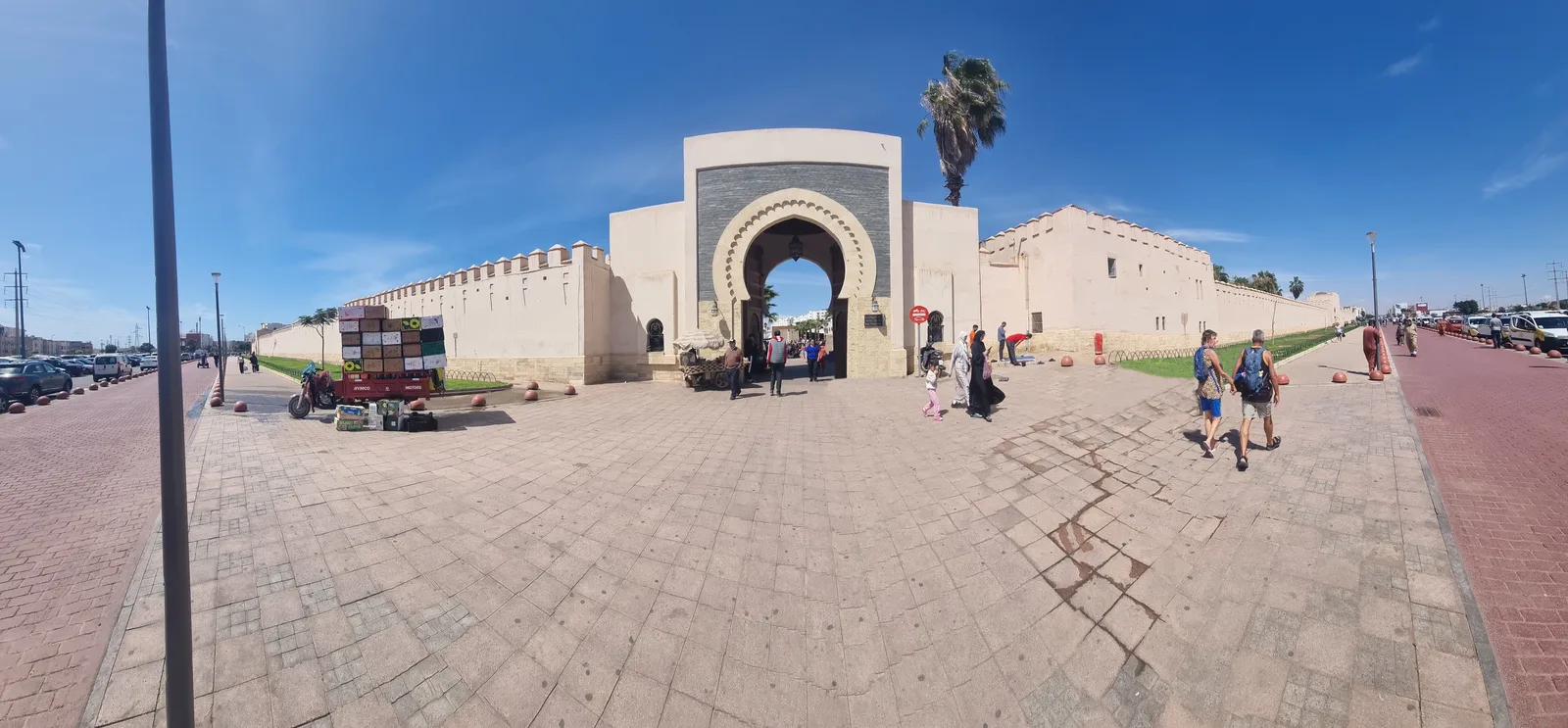
Souk El Had is one of the liveliest places in the city. Its layout, market stalls and wide variety of goods make it an interesting stop for travellers who want to discover local commercial life.
The present-day market forms part of Agadir's history after the 1960 earthquake. It should therefore not be approached as a preserved ancient medina, but as an important commercial space within the modern city.
What Can You Find at Souk El Had?
The market consists of numerous lanes and sections dedicated to different types of products. Depending on the area, you can find:
- Fresh fruit, vegetables and food products.
- Spices, olives and grocery items.
- Clothing, textiles and everyday goods.
- Carpets and handicrafts.
- Jewellery and accessories.
- Cosmetics and beauty products.
- Souvenirs and other items aimed at visitors.
This variety allows you to observe both residents doing their everyday shopping and tourists looking for particular products. The market is also a place to experience the colours, scents and atmosphere of Moroccan commercial life.
Tips for a Successful Visit
Allow at least one hour if you want to explore several lanes without stopping for long in every section. If you enjoy markets, you can easily spend more time here.
The souk can become busy, particularly during peak periods. Keep your belongings secure and ask for the price before making a purchase. If you wish to bargain, do so politely and respectfully.
Opening hours and traders' activity may vary. Some traders may take Monday off, for example. Check opening arrangements before planning your visit, especially if you have limited time.
Which option should you choose? If you are interested in history and art, choose Agadir Musée d'Art. If you prefer markets, local products and observing everyday life, Souk El Had is an excellent choice. If you have enough time, the two visits can complement each other.
5. Late Afternoon: Enjoy Agadir Beach
Related guide: Beaches and Surfing in Agadir and Taghazout
After your cultural visits and urban discoveries, finish the day at Agadir Beach. With its long Atlantic shoreline and seafront promenade, it is one of the city's most characteristic spaces.
The beach stretches for several kilometres and is ideal for walking, sitting facing the ocean or simply enjoying the coastal atmosphere. The promenade is also lined with places where you can have a coffee or stop for a refreshing drink.
A Walk Along the Atlantic
The beach requires little planning, so you can adapt this final stop to the time available. A short walk is enough to unwind after a day of sightseeing, while an hour or more allows you to enjoy the seafront at a more relaxed pace.
In the late afternoon, the light can be particularly attractive for photography. The views of the ocean and the movement of the waves provide a pleasant contrast with the streets, museums and market.
If you want to swim, check sea conditions and follow local safety instructions. Currents and waves can vary, and the Atlantic Ocean should not be assumed to be calm at all times.
If you would rather stay out of the water, the promenade is still an excellent way to end the day. You can also enjoy the seafront for dinner or sample some local specialities.
6. Visiting Agadir in One Day with Children
Agadir can be a good destination for a family day out, provided you adapt the pace to the children's ages and avoid including too many stops.
The Kasbah offers panoramic views that can appeal to children and adults alike, although you should account for the sun and allow for breaks. The Reconstruction Museum introduces visitors to the city's history, while the beach provides space to relax after sightseeing.
Depending on your children's ages and interests, you could also consider an additional activity such as the tourist cable car or Crocoparc. However, it is better to choose just one extra attraction than to try to fit every activity into a single day.
Useful links for planning your itinerary:
- Agadir City Tour: Kasbah, Souk and Cultural Highlights
- Agadir City Tour with a Cable Car Experience
- Crocoparc Agadir: Admission Ticket and Round-Trip Hotel Transfer
- All activities in Agadir
Check availability, access conditions, duration and booking requirements for each activity before finalising your plans.
7. If You Have Less Than a Full Day
If you only have a few hours in Agadir, perhaps during a stopover or before a departure, focus on two or three places that are easy to combine.
A simple option is to start at the Kasbah of Agadir Oufella, then visit the Reconstruction Museum if its opening hours fit your schedule. You can finish with a short walk along the beach before heading to your next destination.
If you prefer a market atmosphere, replace the museum with Souk El Had, provided it is open when you visit.
Avoid making too many journeys between distant sites. Allow extra time for transport, meals and possible changes to opening hours. This is particularly important if you need to reach the airport afterwards.
To plan your arrival or departure, consult our practical guide to Agadir-Al Massira Airport.
8. Practical Tips for Planning Your Day in Agadir
A few simple precautions can help you make the most of your visit.
Check Opening Days
Museums do not necessarily close on the same day. The available information indicates that the Reconstruction Museum closes on Tuesdays and Agadir Musée d'Art closes on Mondays. Souk El Had may also have different levels of activity depending on the day.
If you want to visit several places, check their opening hours before setting off. This will help you avoid having to change your plans at the last minute.
Plan Your Transport
The suggested itinerary follows a logical sequence: start at the Kasbah, continue to the museum and city centre, then choose an afternoon visit before heading to the beach.
You can adjust the order according to your accommodation, traffic conditions and opening hours. For a short visit, reducing travel time is often more useful than adding another attraction.
Bring Water and Sun Protection
Agadir's climate is generally pleasant, but exposure to the sun can be significant, particularly on the Kasbah hill and along the seafront. Bring water, use sun protection and wear comfortable shoes.
Leave Time for Meals and Breaks
A one-day itinerary should remain flexible. Allow time for lunch, rest and enjoying the places you visit without constantly watching the clock. If a particular attraction interests you, spend longer there and remove a less important stop.
Check Information Before Booking
Opening hours, prices, activities and access conditions can change. The amounts listed in this guide are indicative figures based on the available information and are not a guarantee of current prices. Check details with the establishments or activity providers before your visit.
9. Which Itinerary Should You Choose for One Day in Agadir?
For a first visit, the following indicative schedule combines history, culture, local life and the seafront.
| Time of day | Visit | Suggested duration |
|---|---|---|
| Morning | Kasbah of Agadir Oufella | 1 hour |
| Late morning | Reconstruction Museum | 1 hour |
| Midday | Talborjt, Olhão Garden and lunch | 1.5 to 2 hours |
| Afternoon | Agadir Musée d'Art or Souk El Had | 1 to 2 hours |
| Late afternoon | Beach and seafront promenade | 1 hour or more |
This schedule is only a guide. Adapt it to actual opening hours, your interests and the time required for transport.
If you prefer museums, devote more time to cultural visits. If you mainly want to experience local life, give Souk El Had and the beach a more prominent place in your schedule.
The key is to maintain a comfortable pace and avoid treating every stop as compulsory.
10. Should You Stay Longer in Agadir?
One day is enough to gain a first impression of the city, but it does not allow you to explore every aspect of Agadir. Travellers who stay longer can discover other sites, spend more time exploring local cuisine, enjoy water sports or plan excursions into the surrounding region.
If you have a second day, our Agadir in 2 Days itinerary offers a complementary programme. The idea is to use the extra time to broaden your experience rather than simply repeat the same visits.
To plan your stay more comprehensively, you can also consult:
- Complete Guide to Agadir
- Agadir's History and Heritage: A Complete Guide
- Beaches and Surfing in Agadir and Taghazout
- Agadir-Al Massira Airport: Practical Information
- All activities in Agadir
- Discover Agadir
Conclusion: Agadir in One Day, Between History, Culture and the Ocean
Visiting Agadir in one day allows you to discover a city whose identity has been shaped by history, reconstruction and its relationship with the Atlantic. The Kasbah of Agadir Oufella offers remarkable views of the bay and provides an introduction to the city's past. The Reconstruction Museum helps explain the transformation brought about by the 1960 earthquake. Talborjt and Olhão Garden offer an opportunity to observe the urban landscape, while Agadir Musée d'Art or Souk El Had lets you explore either artistic expression or local commercial life.
The beach and seafront provide a more relaxed ending to the day.
To make the most of your visit, choose the places that match your interests, check opening hours and allow enough time for transport. You will discover an Agadir that is more than a seaside destination: a modern city shaped by its history, alive with everyday activity and looking out towards the ocean.
Cover photo: entrance to Souk El Had in Agadir, Adville, CC BY-SA 4.0, Wikimedia Commons.