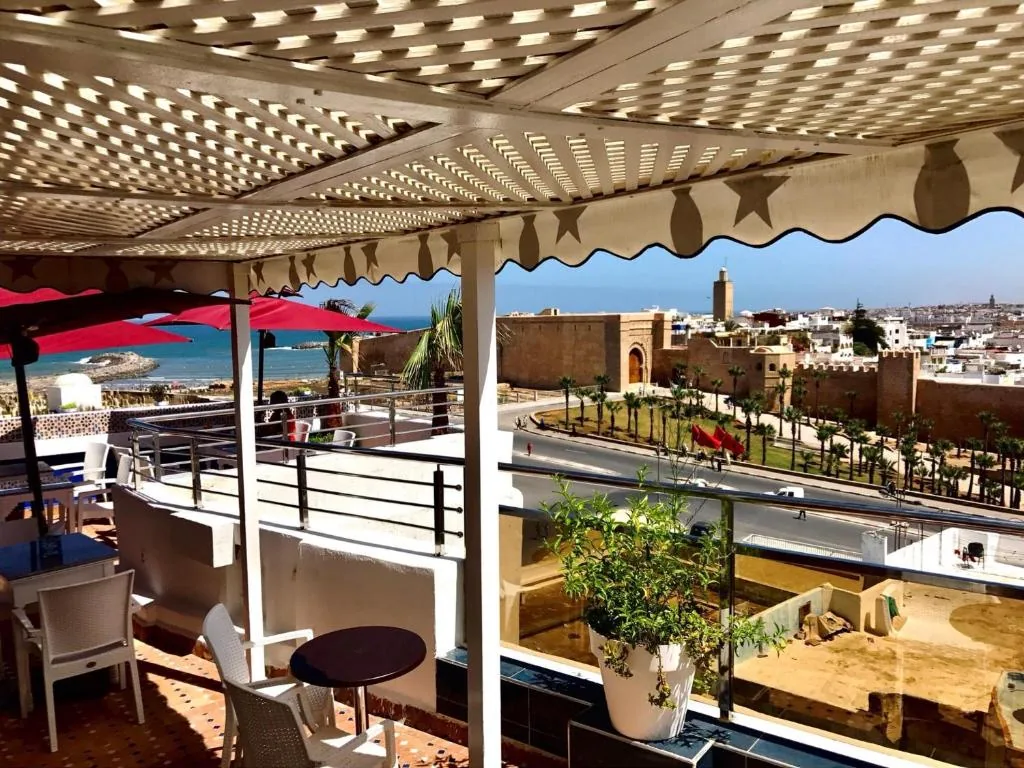
At the mouth of the Bouregreg River, facing the Atlantic Ocean, Rabat has held a strategic position on the Moroccan coast for over eight centuries.
As the political capital of the kingdom since 1912, the city features ancient ruins, an Almohad fortress, and one of the largest modern urban planning projects built in Africa in the 20th century — a cohesive ensemble that earned it UNESCO World Heritage status in 2012.
Sala Colonia, the Ancient Heritage
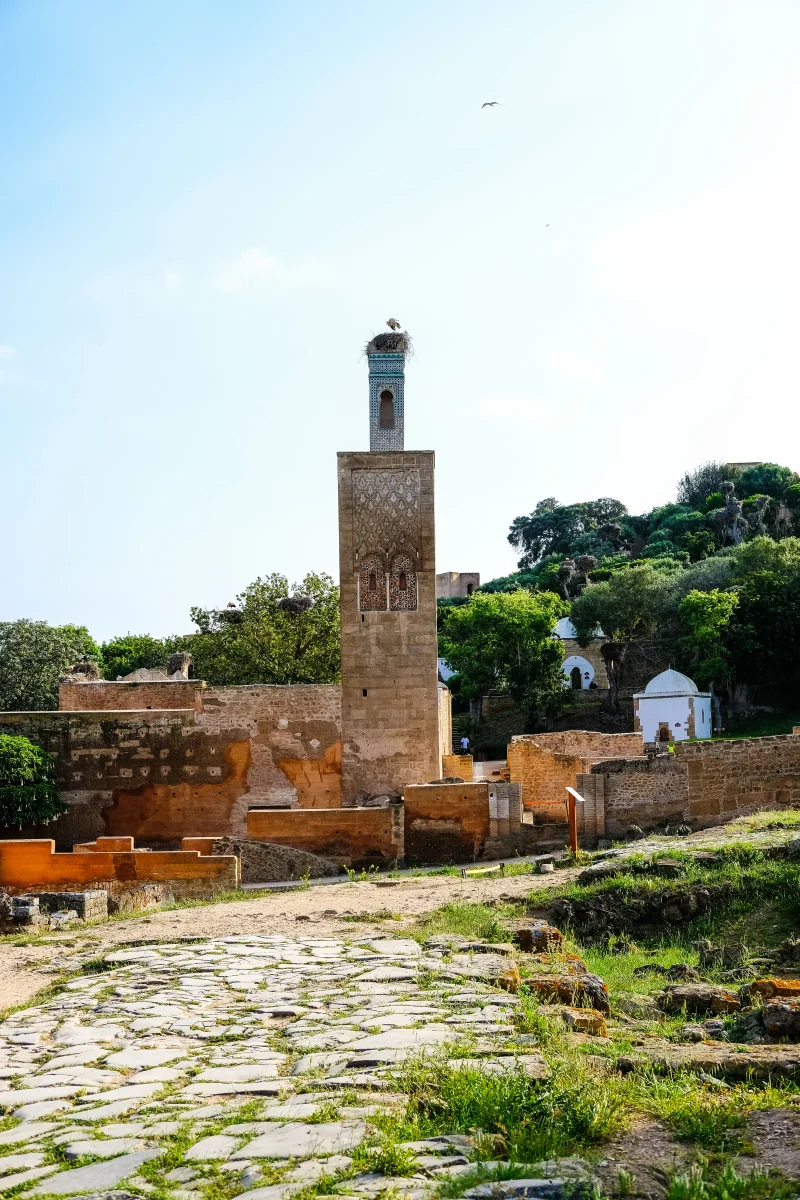
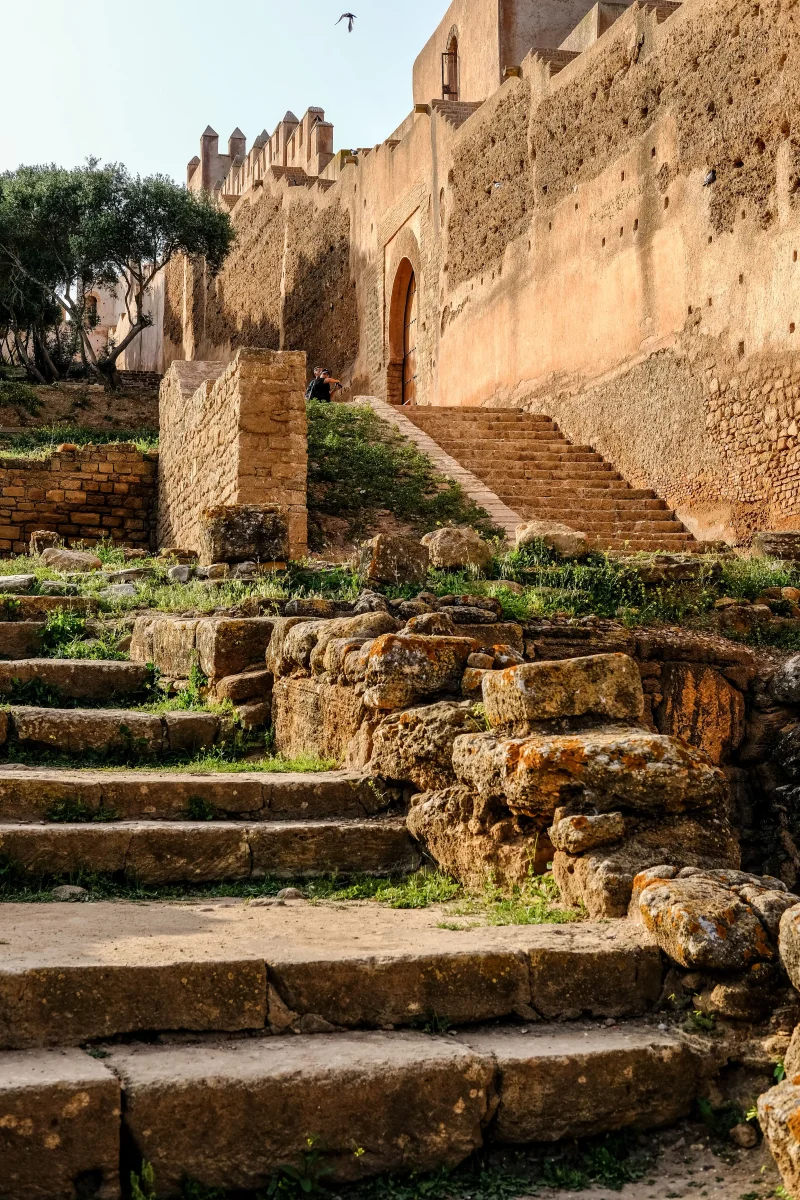
Even before the founding of Rabat, the site was occupied by Phoenician, Carthaginian, and then Roman settlements, known as Sala Colonia. These ancient remains, now part of the Chellah site, testify to human occupation well before the arrival of the Muslim dynasties.
The Birth of the Almohad Ribat
Around 1150, the Almohad caliph Abdelmoumen established a fortified stronghold, a ribat, on the left bank of the Bouregreg, intended to serve as a military base for campaigns in Andalusia. This fortification gave the city its name: Ribat al-Fath, "the camp of victory."
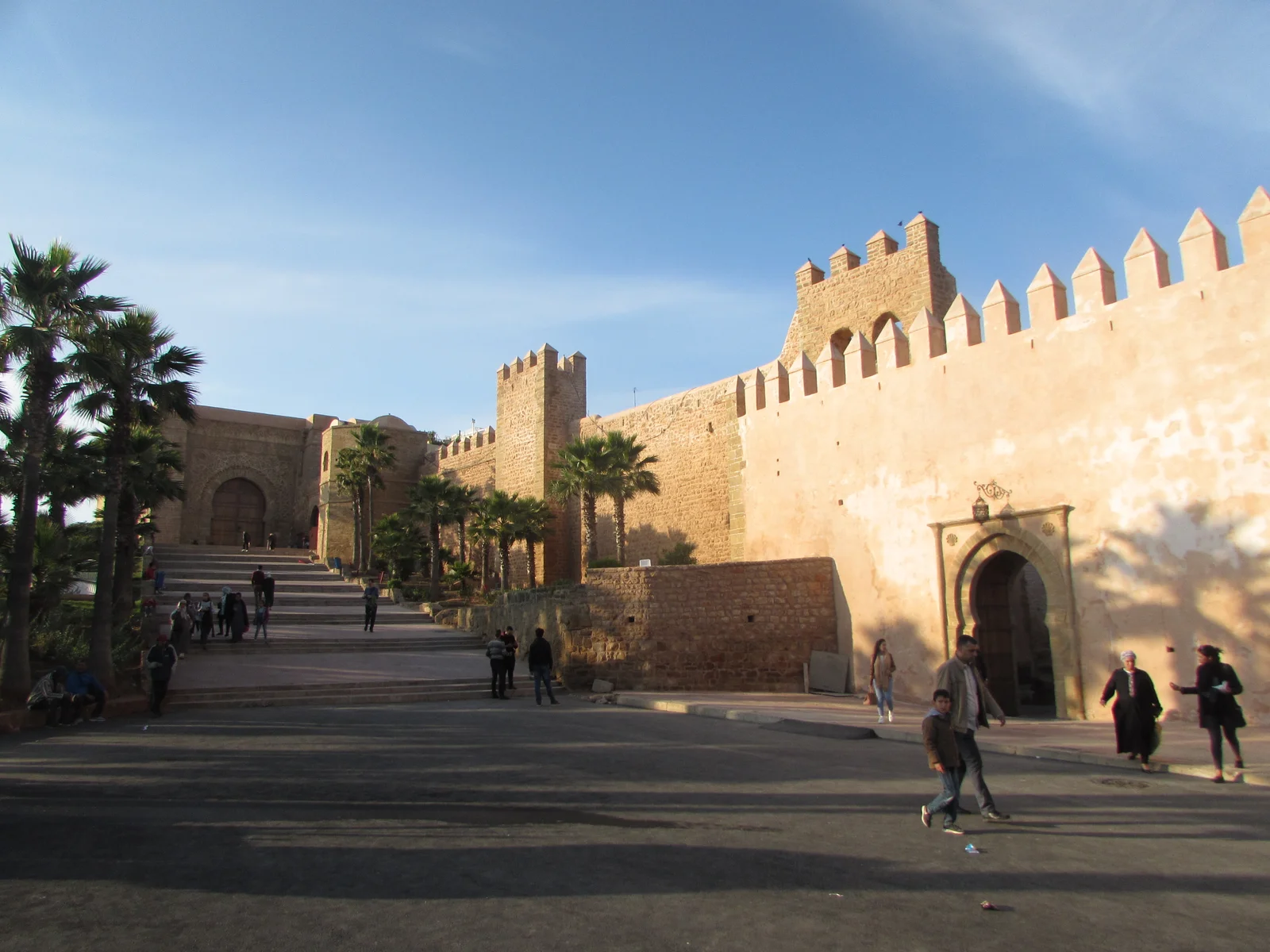
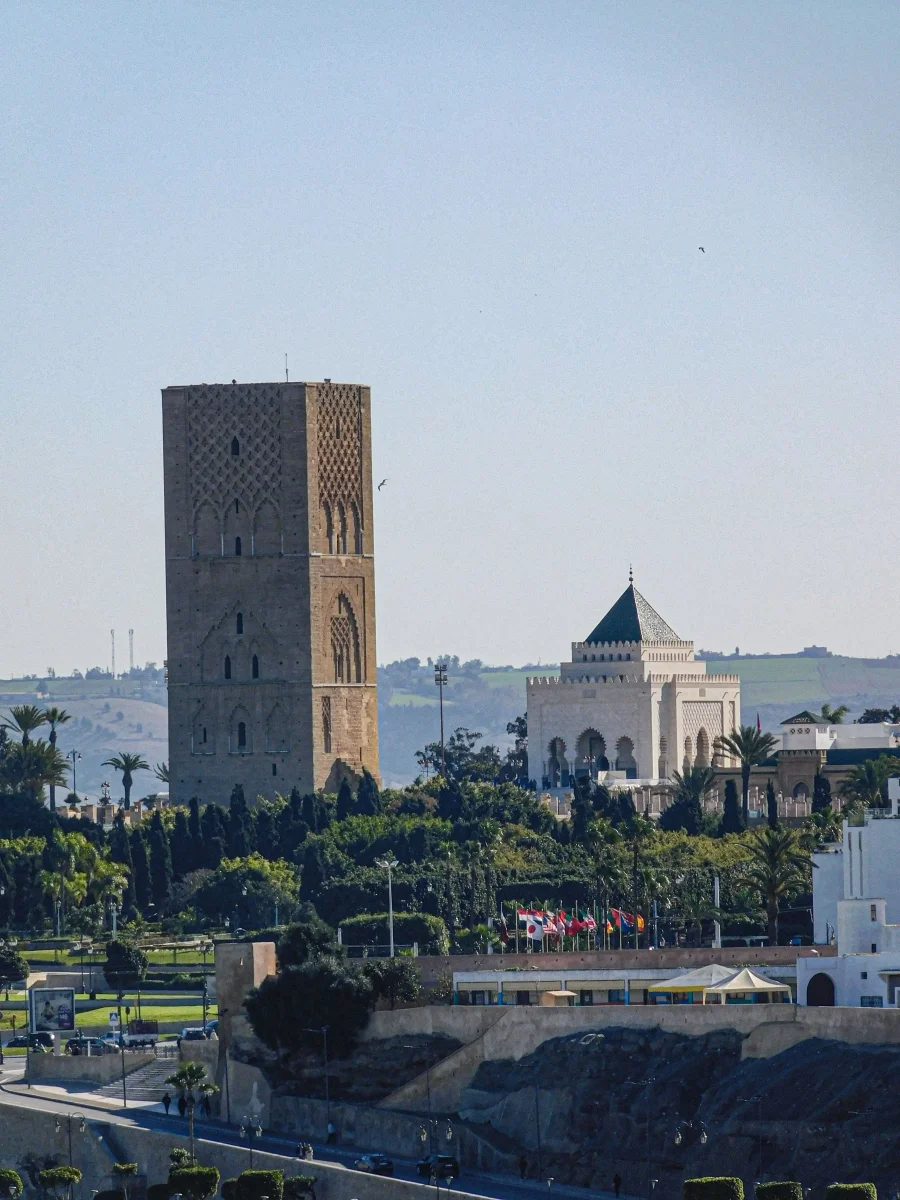
His grandson, Caliph Yacoub al-Mansour, embarked at the end of the 12th century on a much grander project: to make Rabat an imperial capital akin to Fez or Marrakech. He surrounded the city with a powerful wall over 5 km long and initiated the construction of a monumental mosque, whose unfinished minaret would become the Hassan Tower. His death in 1199 interrupted the project before its completion.
Decline, then a Refuge for the Moriscos
After the fall of the Almohads, the Merinid dynasty preferred Fez as its capital, leading to a long period of decline for Rabat, which shrank to a few hundred houses clustered around the kasbah.
A turning point occurred in the early 17th century: between 1609 and 1610, the expulsion decree by King Philip III of Spain forced over 13,000 Moriscos (Muslims from Andalusia) to seek refuge in Rabat and Salé. These refugees restructured the old medina and introduced their artisanal skills, contributing to the city's long-term revitalization.
Rabat, Capital of the Protectorate and Independent Morocco
In 1912, General Resident Louis-Hubert Lyautey chose Rabat as the administrative capital of the French protectorate, rather than Fez or Casablanca. He entrusted urban planner Henri Prost with designing a new city, built between 1912 and the 1930s according to European urban planning principles: wide avenues, administrative buildings, residential neighborhoods, and public gardens, while meticulously preserving the medina and Almohad monuments.
This dialogue between ancient heritage and modern urban planning, unique in its scale and coherence in 20th-century Africa, led to Rabat's UNESCO World Heritage inscription in 2012. Upon Morocco's independence in 1956, the city retained its status as the capital, which it still holds today.
What to See in Rabat?
Three major monuments in Rabat have dedicated guides on MoroccoMuseum, as their histories deserve to be explored in detail.
Chellah
A Merinid necropolis built on the ruins of ancient Sala Colonia, Chellah layers the history of Rabat from Antiquity to the Middle Ages. → Read our complete guide on Chellah
The Kasbah of the Oudayas
The Almohad cradle of the city, the Kasbah of the Oudayas overlooks the mouth of the Bouregreg and houses one of Morocco's most admired monumental gates, Bab Oudaïa. → Read our complete guide on the Kasbah of the Oudayas
The Hassan Tower and the Mausoleum of Mohammed V
The unfinished minaret from Yacoub al-Mansour's imperial project, the Hassan Tower faces the mausoleum housing the tombs of Kings Mohammed V and Hassan II. → Read our complete guide on the Hassan Tower and the Mausoleum of Mohammed V
The Medina of Rabat
An integral part of the UNESCO inscription alongside the Kasbah of the Oudayas and the Hassan Tower, the medina retains a traditional urban fabric where souks, the street of the Consuls, and houses remodeled by the 17th-century Morisco refugees intermingle.
Smaller than those of Fez or Marrakech, it offers a calmer immersion, reflecting the generally laid-back character of the Moroccan capital. Notably, it features the street of the Consuls, the former center of diplomatic trade in the 19th century, where foreign representatives resided before the establishment of the protectorate.
Bab Oudaïa
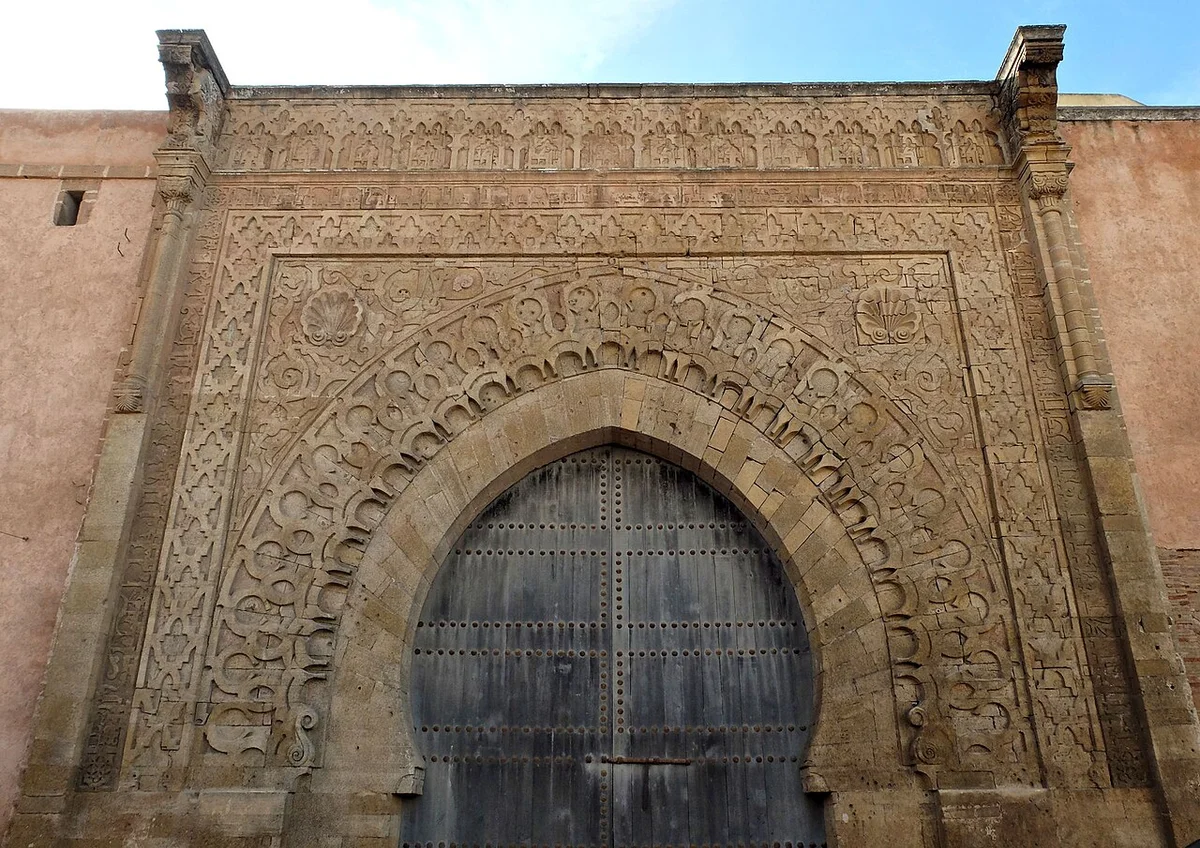
A masterpiece of 12th-century Almohad art, Bab Oudaïa marks the monumental entrance to the Kasbah of the Oudayas. Its richly sculpted façade, with its characteristic polylobed arches, makes it one of the most admired gates in Morocco.
Built during Yacoub al-Mansour's reign at the end of the 12th century, it takes its name from the Oudayas tribe, a contingent placed in the kasbah in the 18th century by Sultan Moulay Ismaïl to maintain order. Its sculpted façade is considered one of the peaks of Almohad art in Morocco.
Bab Chellah
This historic gate traditionally marks the passage between the medina and the road leading to the Chellah necropolis, completing the ensemble of monumental gates of the capital alongside Bab Oudaïa.
Like the other Almohad gates in the city, it reflects the scale of Yacoub al-Mansour's urban project, whose fortified enclosure extended over 5 km, flanked by 74 square towers.
The Andalusian Garden
Established in the early 20th century within the Kasbah of the Oudayas, the Andalusian Garden offers a refreshing haven contrasting with the white and blue alleys of the citadel, featuring geometric flowerbeds, orange trees, and a fountain.
It adjoins the National Museum of Moroccan Arts, located in the former sultan's palace within the kasbah, which showcases a collection of jewelry, carpets, pottery, and traditional costumes.
Discover the Andalusian Garden
The Mohammed VI Museum of Modern and Contemporary Art
Inaugurated in 2014, this museum is the largest in Morocco, featuring international temporary exhibitions and a permanent collection dedicated to Moroccan art from the 20th and 21st centuries. Its contemporary architecture deliberately contrasts with the historical heritage of the capital.
Its permanent collection traces the history of modern Moroccan art through the major movements that have influenced it since independence, while its temporary programming regularly hosts international artists.
Discover the Mohammed VI Museum
The Museum of History and Civilizations
Opened in 1932 and renovated in 2017, this institution houses some of the most important archaeological discoveries in Morocco, including the famous ancient bronzes from the site of Volubilis.
Among the major pieces are the bust of King Juba II and the renowned "Dog of Volubilis," both discovered at the Roman archaeological site of Volubilis, near Meknès.
Discover the Museum of History and Civilizations
The Cathedral of Saint Peter
Built during the French protectorate and completed in 1930, the Cathedral of Saint Peter exemplifies the Art Deco urban planning and architecture that characterize the "new city" envisioned by Lyautey. Its twin white towers make it a visual landmark in the city center.
Its twin white towers, visible from several points in the city, have made it an occasional filming location and one of the most recognizable architectural landmarks of Rabat during the protectorate.
Discover the Cathedral of Saint Peter
Getting Around Rabat
Rabat has a tram system connecting several key neighborhoods, including the medina and Agdal. Small taxis operate on a meter for short trips. The city is served by high-speed trains from Tangier and Casablanca, as well as the Rabat-Salé International Airport.
Rabat, Between Imperial Memory and Modernity
From Sala Colonia to the new city of Lyautey, through the Almohad ribat and the refuge of the Moriscos, Rabat has accumulated layers of history as dense as its current political status.
This continuity between past and present, rare on such a scale, makes the Moroccan capital much more than just an administrative center: a living heritage, recognized by UNESCO as one of the great urban projects of the 20th century.
Continue Your Discovery of Morocco
Moroccan heritage is not limited to a single location. Palaces, madrasas, museums, archaeological sites, and monuments each tell a part of its story.
🎟️ Discover the heritage and book your tickets
📖 Read our guides & inspirations
MoroccoMuseum.com — Discover. Explore. Experience the heritage of Morocco.