Essaouira: History, Heritage, Medina, and Gnaoua Culture of the Former Mogador
On the Atlantic coast of Morocco, a few hours' drive from Marrakech, Essaouira presents a very different face from the Red City.
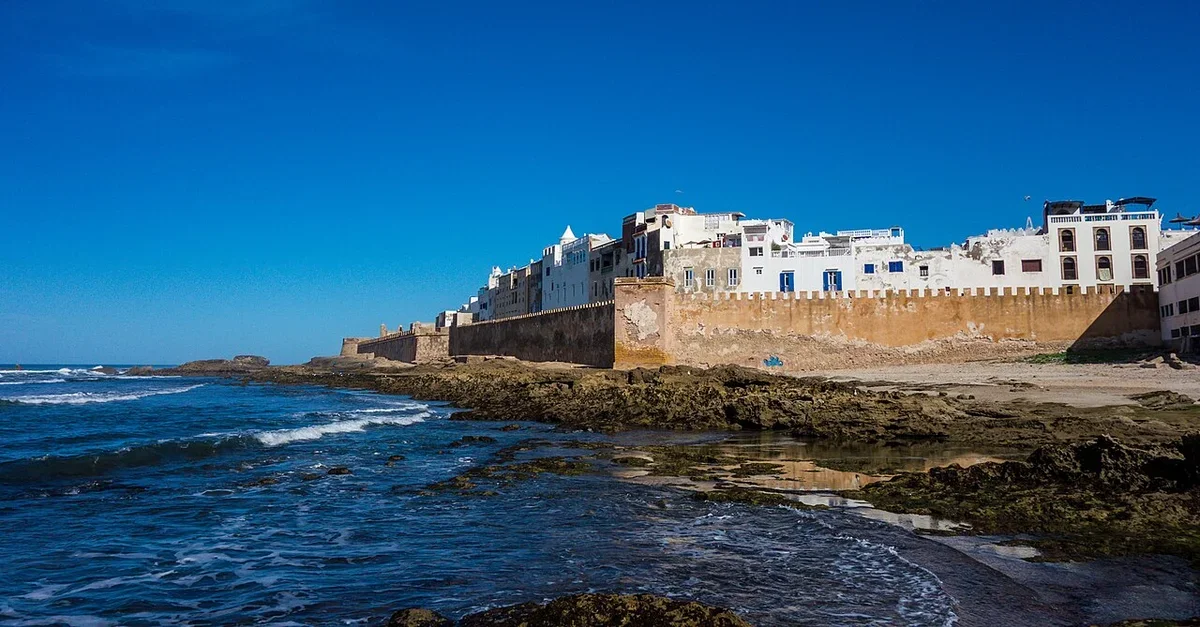
Here, the ramparts face the ocean, blue boats fill the fishing port, the white alleys of the medina lead down to the souks, and the trade winds accompany almost every stroll.
Formerly known as Mogador, Essaouira is also one of Morocco's great historical cities.
Its medina has been listed as a UNESCO World Heritage site since 2001, while the gnaoua culture, deeply linked to the cultural identity of the city and Morocco, has been included on the Representative List of the Intangible Cultural Heritage of Humanity since 2019.
Among the city's iconic monuments, the Sqala du Port recalls the maritime and defensive vocation of the former Mogador.
Discover the sites and heritage of Essaouira
Essaouira, the Former Mogador
The history of the Essaouira region is much older than the current city.
The coast and nearby islands have been frequented since antiquity by various Mediterranean and Atlantic civilizations.
However, the city we know today truly took shape in the 18th century.
In 1765, the Alaouite sultan Sidi Mohammed Ben Abdellah decided to develop a major port at this location to enhance Morocco's trade with the outside world.
The project was driven by both commercial and strategic ambitions.
Essaouira gradually became one of the key meeting points between Morocco, Europe, Saharan caravan routes, and sub-Saharan Africa.
A Port City Designed in the 18th Century
To design the new city, the sultan notably called upon Théodore Cornut, a French engineer specializing in fortifications.
Cornut drew inspiration from European military architecture principles of his time, particularly the fortifications associated with Vauban.
However, Essaouira is not simply a European city built in Morocco.
Its urban planning combines these influences with a deeply Moroccan organization and culture.
This intersection of various architectural traditions is precisely one of the reasons why Essaouira's medina is now recognized by UNESCO.
The Medina of Essaouira, a UNESCO World Heritage Site
The Medina of Essaouira, former Mogador, has been listed as a UNESCO World Heritage site since 2001.
UNESCO describes it as a remarkable example of an 18th-century fortified port city, built according to European military architecture principles adapted to a North African context.
The city also played a major role in international trade exchanges.
For several generations, Moroccan merchants, European traders, Jewish communities, people from various regions of Morocco, and foreign travelers met here.
This history largely explains the cosmopolitan character that still distinguishes Essaouira.
A Medina Different from Marrakech and Fès
The medina of Essaouira offers a very different experience from those of Marrakech or Fès.
Its layout is generally easier to understand, and several major streets clearly structure the historic center.
The white facades, blue doors, artisan workshops, and the constant proximity of the ocean create an immediately recognizable atmosphere.
A stroll through the medina allows you to discover:
- the historic ramparts;
- the souks;
- the artisan workshops;
- the old merchant houses;
- the Mellah;
- the fishing port;
- the Sqalas;
- Moulay Hassan Square.
The best way to discover Essaouira is often to take the time to walk without a rigid itinerary.
The Sqala du Port: Guardian of the Former Mogador
At the entrance to the port stands one of the most emblematic monuments of Essaouira: this historic bastion.
This fortified platform was part of the defensive system designed to protect the port and the city's maritime access.
From its fortifications, the view embraces the port, the ramparts, the Atlantic Ocean, and the islands offshore.
The Sqala thus serves as both a historical monument and one of the best viewpoints of Essaouira's maritime landscape.
Discover the Sqala du Port of Essaouira
Why Are the Fortifications of Essaouira Important?
In the 18th century, the port represented a major strategic issue.
Protecting Essaouira meant safeguarding one of Morocco's main trade gateways to the Atlantic.
The city's fortifications were therefore designed to control maritime access and defend the port.
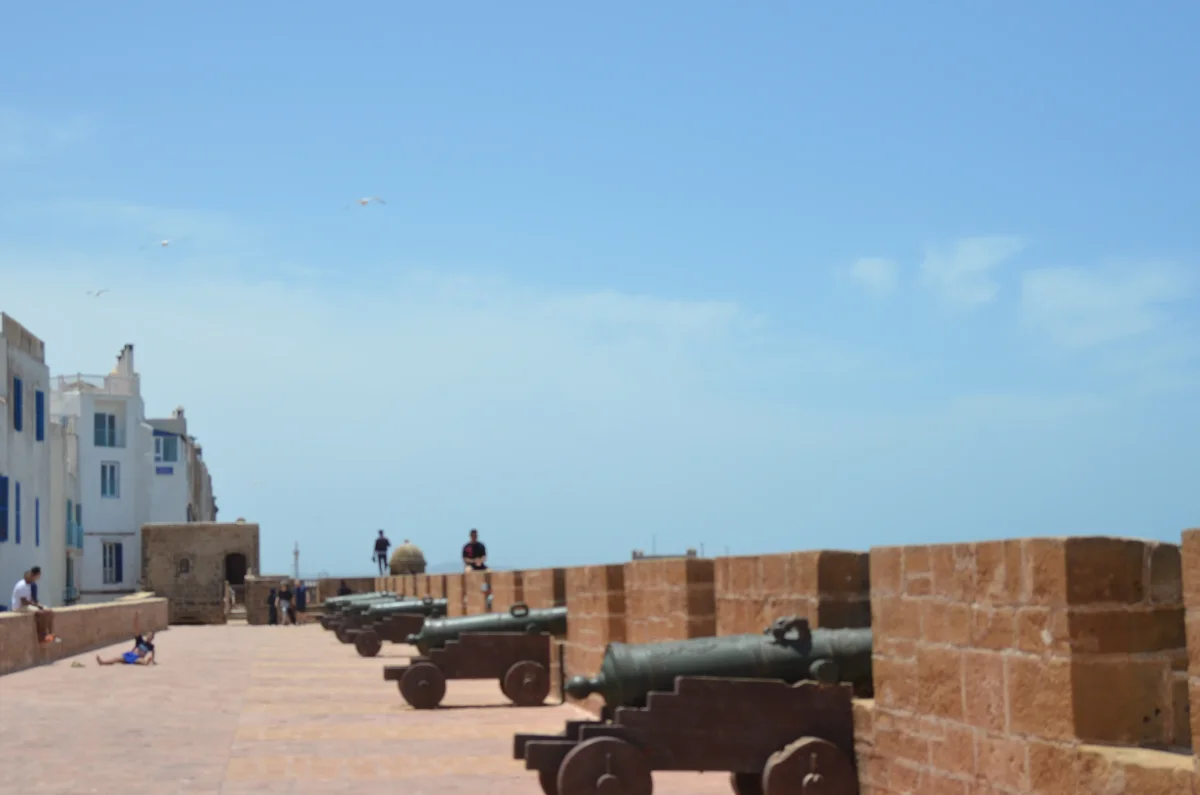
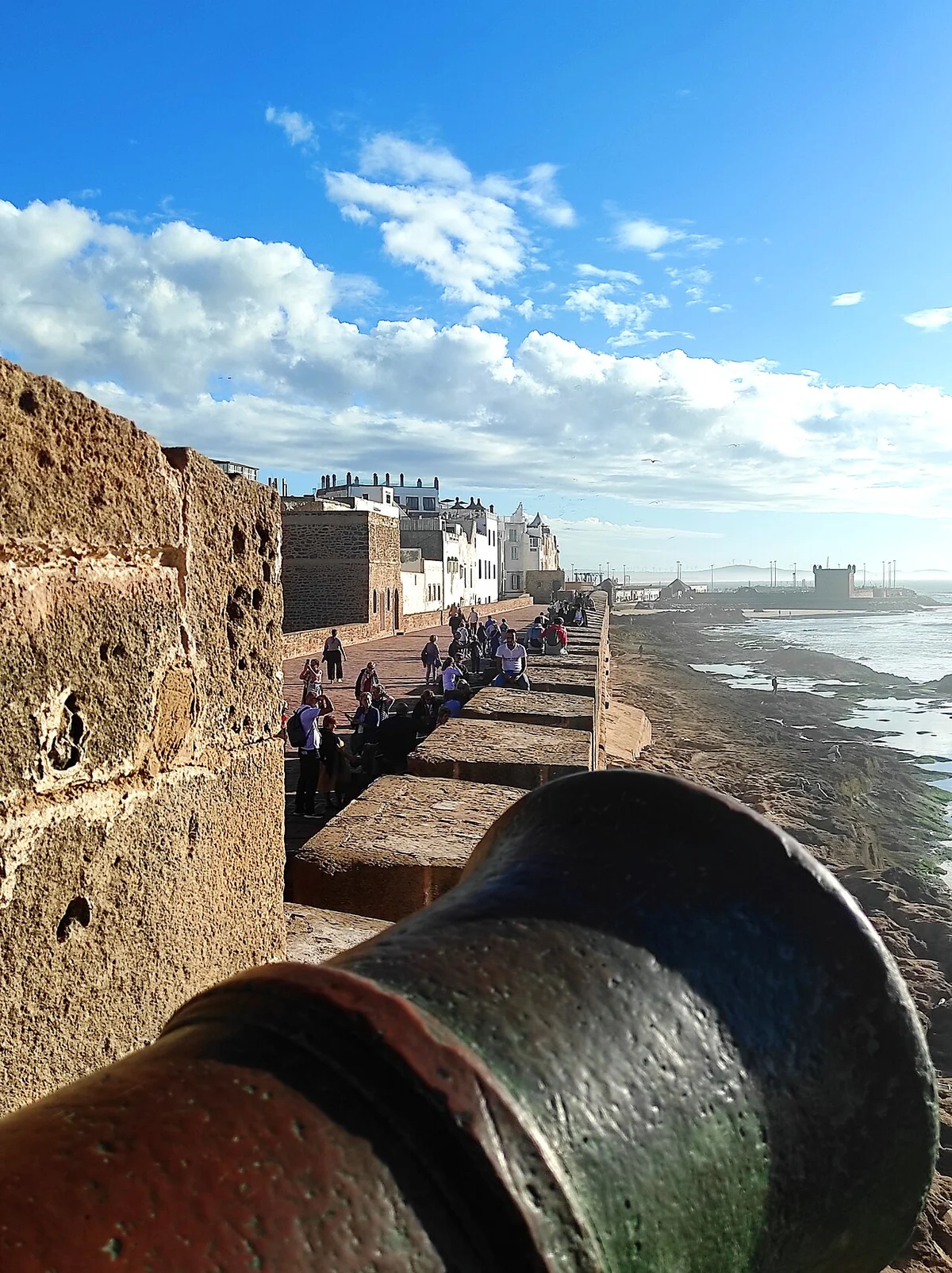
Even today, the ramparts and artillery platforms remind us of this military function.
But they have also become one of the most powerful visual symbols of Essaouira.
Between the stone, the cannons, the seagulls, and the waves of the Atlantic, the waterfront constitutes one of the most recognizable landscapes of the city.
The Port of Essaouira: At the Heart of the City's History
It is difficult to understand Essaouira without visiting its port.
For centuries, it played a crucial economic role in the exchanges between Morocco and the outside world.
UNESCO highlights that Essaouira became one of the major centers of Atlantic trade between Africa and Europe in the late 18th and 19th centuries.
The city was even nicknamed the "Port of Timbuktu" for a time, due to its role in linking trans-Saharan trade routes to the Atlantic.
Today, the port remains particularly active in fishing.
The blue boats, nets, fishermen, and fish sales are part of the daily landscape.
Essaouira and African Trade Routes
The prosperity of Mogador relied partly on its position at the confluence of major trade routes.
Goods circulated between the interior of Morocco, Saharan regions, sub-Saharan Africa, Europe, and Mediterranean ports.
This commercial history has also contributed to the multicultural character of the city.
For a long time, Essaouira was a meeting place for different languages, religions, and communities.
This dimension is essential for understanding its current heritage.
The Jewish Heritage of Essaouira
The Jewish community has played a particularly important role in the economic and social history of Essaouira.
Under the reign of Sidi Mohammed Ben Abdellah, some Jewish merchants enjoyed special status and actively participated in international trade.
They are notably known as Toujjar es-Sultan, the "Sultan's merchants."
Jewish heritage is still visible in several parts of the city, particularly in the old Mellah.
Synagogues, houses, and memorial sites today help to better understand this fundamental dimension of Essaouira's history.
The city thus serves as a particularly interesting place to explore the long history of coexistence and exchanges between Muslim and Jewish communities in Morocco.
Essaouira and Gnaoua Culture
It is impossible to mention Essaouira without discussing gnaoua.
Gnaoua culture combines music, brotherhood practices, spirituality, rhythms, songs, and rituals.
Its roots are linked to a complex history that intertwines African heritage, the history of slavery and the slave trade in North Africa, Arab-Muslim influences, and local cultural traditions.
Over time, gnaoua has become a major component of Moroccan cultural heritage.
In 2019, UNESCO inscribed gnaoua on the Representative List of the Intangible Cultural Heritage of Humanity.
The Guembri and the Qraqeb
Gnaoua music possesses an immediately recognizable sound identity.
The guembri, a string instrument with a deep sound, plays a central role.
It is accompanied notably by the qraqeb, large metal castanets producing a characteristic repetitive rhythm.
Singing, group responses, and rhythmic progression contribute to a music whose dimension far exceeds mere performance.
In its traditional context, gnaoua is also linked to spiritual and brotherhood practices.
Understanding this dimension helps avoid reducing this tradition to a simple folk music intended for visitors.
Essaouira, International Capital of Gnaoua
Essaouira is now globally associated with gnaoua.
The city hosts the Gnaoua and World Music Festival, which has become one of Morocco's major cultural events.
Gnaoua masters meet musicians from jazz, African music, and many other traditions.
This openness perfectly aligns with Essaouira's historical identity: a city of encounters and exchanges between different worlds.
But gnaoua is not limited to the festival.
Throughout the year, this culture remains present in the city's musical and cultural life.
Essaouira and Artists
In the 20th century, Essaouira also attracted artists, writers, travelers, and musicians.
This reputation particularly grew in the 1960s and 1970s.
The city gradually became associated with a certain international artistic culture and the image of an Atlantic Morocco open to the world.
This history has produced numerous stories, some of which have become difficult to distinguish from legend.
The case of Jimi Hendrix, who briefly visited the region in 1969, is probably the most famous example.
Many local stories attribute connections to various places in Essaouira, but several of these accounts belong more to tourist legend than to solidly documented historical facts.
The Artisans of Essaouira
The cultural identity of the city is also expressed through its workshops.
Essaouira is particularly known for its thuya wood craftsmanship, traditionally used to create boxes, trays, furniture, and decorative objects.
In the medina, many workshops still allow visitors to observe this artisanal tradition.
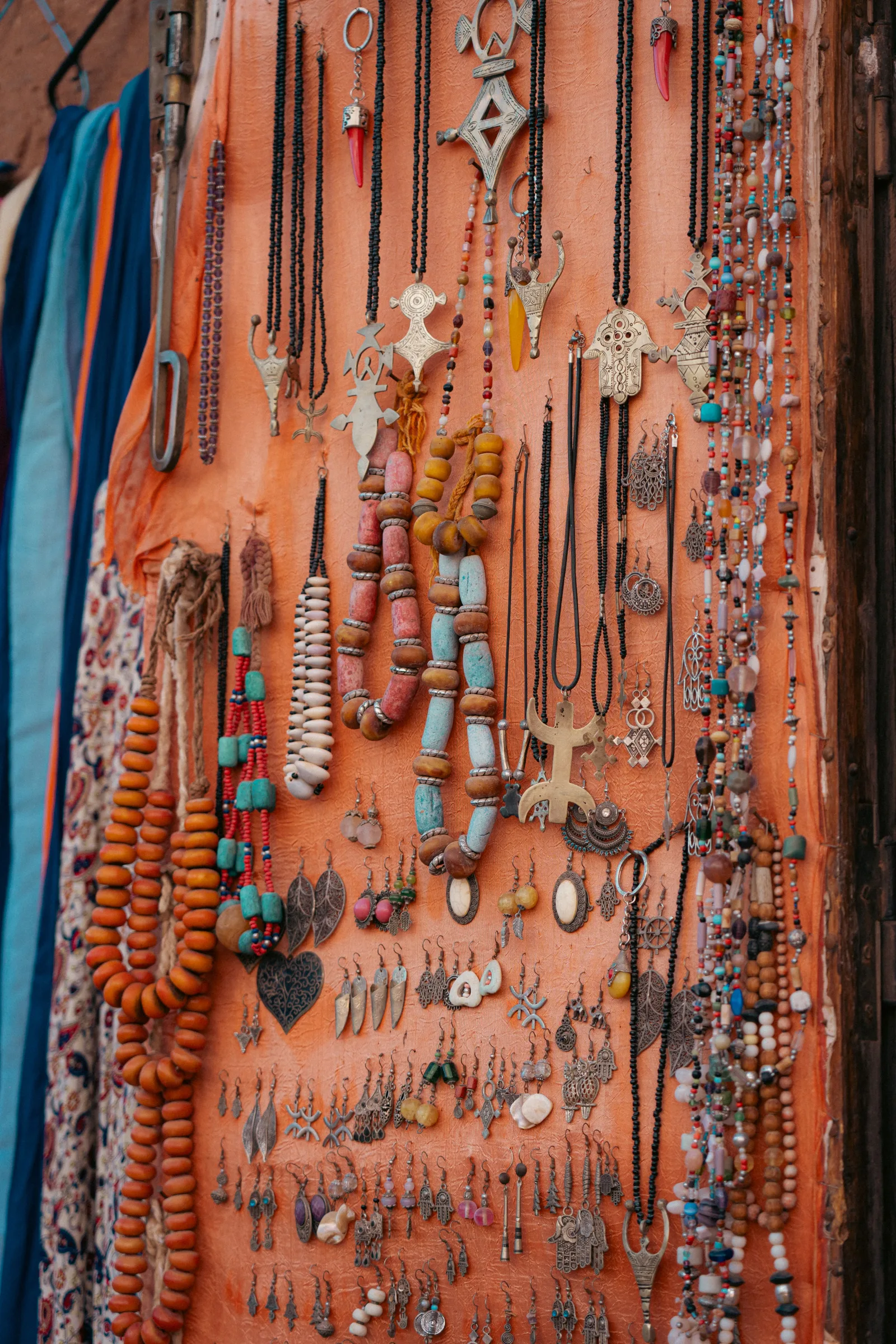
Other trades are also present: jewelry, textiles, leather goods, painting, and decorative objects.
Taking the time to visit the workshops reveals a facet of Essaouira that differs from its monuments.
What to See in Essaouira?
A first exploration of the city can easily be organized around the essential sites of its classified heritage.
The Medina
Designed by Théodore Cornut on a checkerboard plan inspired by Saint-Malo, the medina of Essaouira contrasts with the labyrinthine fabric of Morocco's larger medinas. Start with its historic streets, souks, and various neighborhoods to understand this urban planning conceived from the outset.
Discover the Medina of Essaouira
The Skala de la Ville
Do not confuse it with the Sqala du Port: the Skala de la Ville is Essaouira's most emblematic rampart, still lined with old bronze cannons pointed towards the ocean. It offers one of the most beautiful walks in the city, between crenellated ramparts and views of the port and Mogador Island.
Discover the Skala de la Ville
The Sqala du Port
This port fortification has protected the entrance to the fishing port since 1770 and remains one of the most comprehensive viewpoints of the city's maritime activity.
The Mellah
Explore the old Jewish quarter to discover another essential dimension of Essaouira's history, alongside its two main memorial sites:
The Haïm Pinto Synagogue
Dating from the 19th century, this still-active synagogue is dedicated to the rabbi of the same name, whose tomb attracts Jewish pilgrims from Morocco and abroad each year.
Discover the Haïm Pinto Synagogue
The House of Memory (Bayt Al Dakira)
Housed in the restored former Simon Attia synagogue, the House of Memory traces the history of Moroccan Judaism and the centuries-old coexistence between communities in Essaouira.
The Southern Bastions and Bab Marrakech
The defensive system of Essaouira is not limited to its two Sqalas: the Southern Bastion, nicknamed the Belvedere, extends the fortifications near the port, while the Bab Marrakech Bastion, built in the 19th century, overlooks the southern entrance of the medina.
The Fishing Port
Take the time to observe the blue boats, the fishermen, and the daily activity of the kingdom's third sardine port.
Moulay Hassan Square
Located between the medina and the port, it constitutes one of the city's major meeting spaces.
The Sidi Mohammed Ben Abdallah Museum
Housed in a 19th-century noble residence and named in honor of the sultan who founded the city, this museum presents a collection dedicated to craftsmanship, musical traditions, and the history of Essaouira.
Discover the Sidi Mohammed Ben Abdallah Museum
Essaouira from Marrakech
Essaouira is one of the most popular day trips from Marrakech.
The journey gradually allows you to leave the landscapes of the interior to reach the Atlantic coast.
A day trip allows you to discover the main sites of the city.
However, spending at least one night in Essaouira allows you to enjoy a very different atmosphere once the day visitors have departed.
Discover the sites and monuments of Marrakech
A Day or Several Days in Essaouira?
For a first exploration, a full day allows you to visit the medina, the port, and the main ramparts.
However, two days offer a much more enjoyable experience.
You will then have more time to:
- explore the souks;
- visit artisan workshops;
- discover gnaoua heritage;
- explore the Mellah;
- enjoy the waterfront;
- watch the sunset over the Atlantic.
Essaouira is precisely a city that lends itself to a slower pace.
When to Visit Essaouira?
Essaouira can be visited almost year-round.
Its Atlantic climate is generally milder than that of Marrakech.
Spring and autumn are particularly pleasant for exploring the medina and the ramparts.
In summer, temperatures often remain more moderate than in the interior of the country.
Wind is, however, an important characteristic of the destination.
Even in summer, a light jacket may be useful in the evening.
Essaouira and Water Sports
The regular winds along the coast have also made Essaouira a popular destination for several water sports.
The region particularly attracts enthusiasts of surfing, windsurfing, and kitesurfing.
This contemporary dimension complements the city's historical heritage.
In just a few hours, it is thus possible to transition from an 18th-century medina to a beach open to the Atlantic.
Preparing Your Visit to Essaouira
To continue your discovery, also consult:
- Discover the sites and heritage of Essaouira
- Sqala du Port: History and Visit
- Discover Marrakech and its Heritage
These pages help prepare a visit to Essaouira alone or integrate it into a broader itinerary between Marrakech and the Atlantic coast.
Sources and References
- UNESCO — Medina of Essaouira, former Mogador
- UNESCO — Gnaoua, Intangible Cultural Heritage of Humanity
- UNESCO — Decision to Inscribe Gnaoua on the Representative List
- Ministry of Youth, Culture and Communication of Morocco
Essaouira: Between Atlantic, Heritage, and Living Cultures
Essaouira is not just about its ramparts or its beaches.
Its identity has been built around the port, commercial exchanges, the communities that have lived in the city, craftsmanship, and musical traditions that continue to be passed down.
This bastion tells the story of when Mogador was a strategic place in Moroccan maritime trade.
The medina recalls the meeting of Moroccan architecture and European influences.
The Jewish heritage testifies to the role of different communities in the city's development.
And the gnaoua culture shows that Essaouira's heritage does not belong solely to the past: it continues to live, to be transmitted, and to reinvent itself.
With MoroccoMuseum, discover the heritage of Essaouira, prepare your visit to the Sqala du Port, and continue your journey between Marrakech and the Atlantic coast.