Larache: History, Spanish Heritage, and the Ancient City of Lixus
On the Atlantic coast of northern Morocco, between Tangier and Rabat, Larache is a city where multiple eras of Moroccan history converge.
Its medina, 20th-century architecture, open squares leading to the modern city, and proximity to the ocean give it a distinct identity from Morocco's major imperial cities.
However, Larache is primarily known for its much older heritage.
Just a few kilometers from the city center lies Lixus, one of Morocco's most significant archaeological sites.
Phoenicians, Carthaginians, Mauritanians, Romans, and later Islamic populations occupied this site for over two millennia.
Exploring Larache allows you to journey through urban heritage, the history of northern Morocco, and ancient archaeology.
Larache: A City Facing the Atlantic
The history of Larache is closely tied to its geographical location.
The city overlooks the mouth of the Oued Loukkos, one of northern Morocco's main rivers.
This position between river and ocean has played a crucial role in the region's development.
Long before the current city was established, ancient populations recognized the strategic importance of this site.
It was on a hill overlooking the Loukkos that the city of Lixus developed.
Larache would appear much later, gradually becoming the heir to this ancient territory.
Larache and Spanish Influence
A significant part of Larache's current face is linked to the history of northern Morocco in the 20th century.
During the period of the Spanish Protectorate in northern Morocco, the city underwent major urban transformations.
New neighborhoods were developed alongside the historic medina.
This evolution created an urban landscape where Moroccan architecture coexists with buildings and public spaces stemming from 20th-century Spanish urban planning.
This duality remains one of Larache's most interesting characteristics today.
Place de la Libération: The Heart of the City
One of the best places to observe this architectural meeting point is the Place de la Libération, formerly known as Plaza de España.
The square serves as a natural transition between the medina and the city developed in the 20th century.
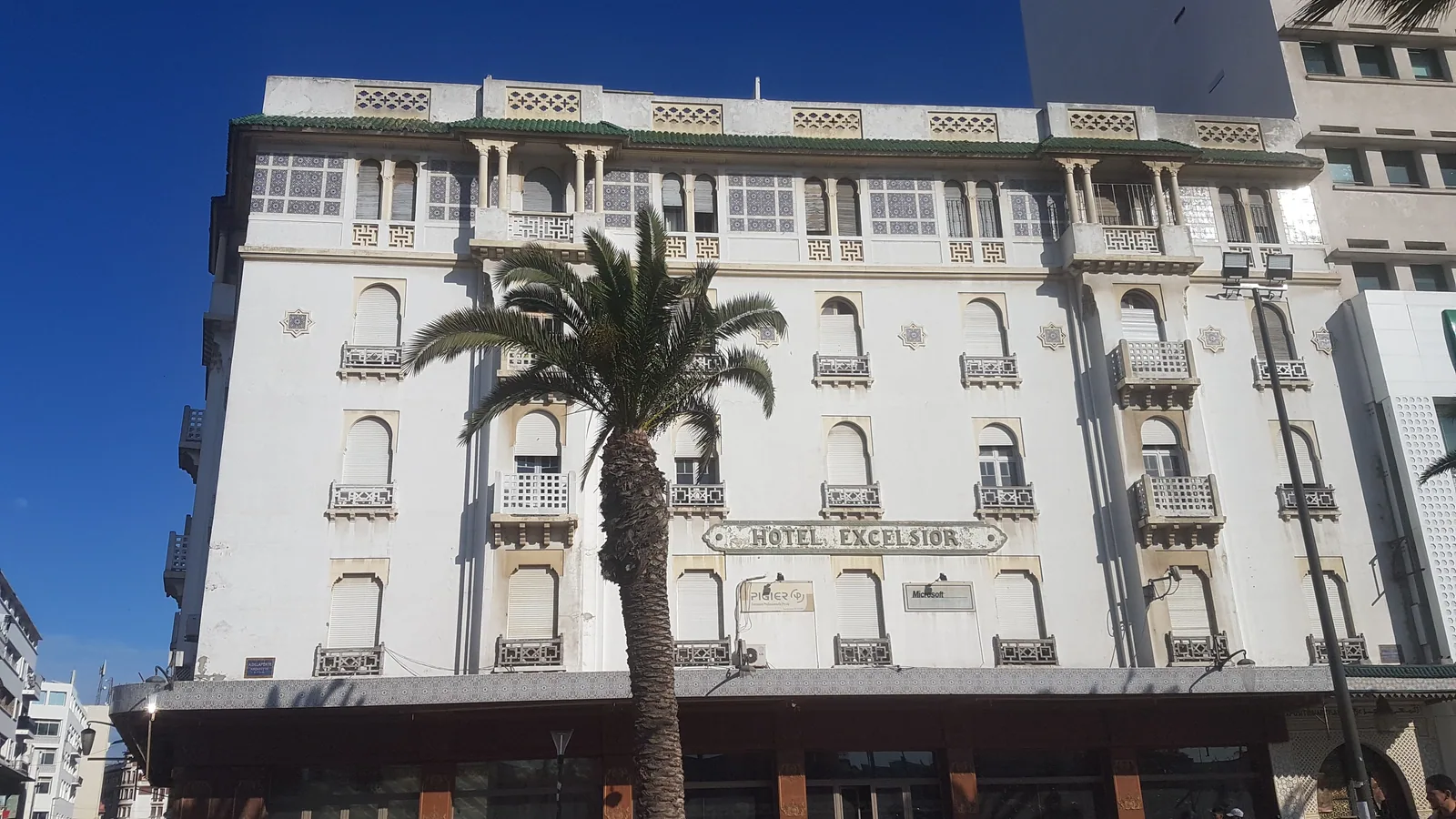
Surrounding it, the facades, balconies, and buildings reflect various architectural influences from this period.
In contrast to the narrow alleys of the medina, this space is largely open.
This opposition allows for an immediate understanding of the different stages of urban development in Larache.
Nearby, the Jardin des Lions offers another aspect of this Spanish urban heritage: a historic green space in the heart of the city, where locals and visitors come to enjoy a leafy retreat.
The Medina of Larache
The medina represents another face of the city.
More compact and less frequented by international visitors than those of Fez or Marrakech, it offers a different atmosphere of Moroccan urban heritage.
Its alleys lead to small squares, traditional houses, and viewpoints linked to the proximity of the ocean and the estuary of the Loukkos.
Larache is not a city to be explored solely by following a list of monuments.
Part of its appeal lies in the stroll between the medina, the 20th-century neighborhoods, and the waterfront.
Among the other sites that punctuate this walk are the Château de la Cigogne, a 17th-century fortress built by the Spanish and one of Larache's most visible monuments, as well as the Balcon Atlantico, the city's most famous viewpoint, particularly sought after at sunset over the ocean.
Jean Genet and Larache
Larache is also associated with the French writer Jean Genet.
The author had a special connection with Morocco and chose to be buried in Larache after his death in 1986.
His grave is located in the Spanish cemetery of the city, facing the Atlantic.
This presence has contributed to making Larache a known place for travelers interested in literature and the cultural history of the 20th century.
However, to understand the region's oldest roots, one must leave the city center and trace back over two millennia of history.
Lixus: One of Morocco's Oldest Ancient Cities
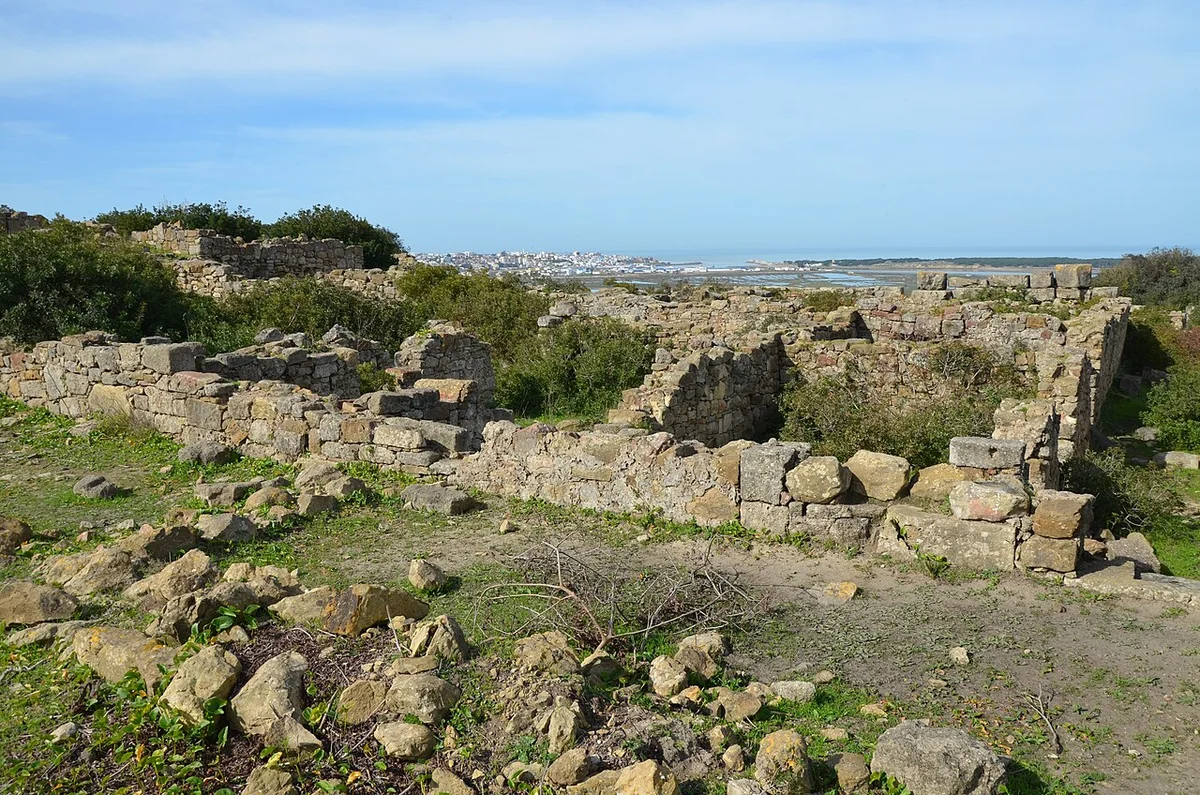
About 5 kilometers from Larache, on the right bank of the Oued Loukkos, lies the archaeological site of Lixus.
Situated on a hill overlooking the river, the ancient city occupies an exceptionally strategic position.
Archaeological research shows that the site has experienced a very long period of occupation.
The remains allow for the identification of several major historical phases:
- Phoenician;
- Carthaginian;
- Mauritanian;
- Roman;
- Post-Roman and Islamic.
UNESCO indicates that the site's occupation extends from the 8th century BC to the 14th century.
Lixus thus serves as an exceptional testimony to several major periods of ancient Moroccan history.
Discover the archaeological site of Lixus
The Phoenician Origins of Lixus
Lixus is considered one of the oldest cities in the Mediterranean west.
The first documented phases of occupation date back to the 8th century BC.
The Phoenician presence is part of a vast network of exchanges connecting different regions of the Mediterranean and the Atlantic coast.
Lixus's location near the mouth of the Loukkos facilitated trade with the interior while providing access to maritime routes.
Over the centuries, the site continued to develop under various influences.
Lixus in the Mauritanian Era
From the 3rd century BC, Lixus experienced significant urban development.
The city then belonged to the Mauritanian world that preceded the region's integration into the Roman Empire.
Residential neighborhoods, fortifications, and religious spaces testify to the city's growing importance.
This period is essential to understanding that ancient Moroccan history is not limited to Roman presence.
Structured local kingdoms and societies existed long before the Roman annexation.
Lixus Becomes a Roman City
A new phase began in the 1st century AD.
From 42 AD, under Emperor Claudius, Lixus became a Roman colony.
The city then experienced considerable economic and urban development.
Several major monuments were constructed or developed.
Excavations have notably revealed:
- a theater-amphitheater;
- baths;
- several temples;
- residential neighborhoods;
- houses decorated with frescoes and mosaics;
- a significant industrial complex related to canning.
These remains make Lixus one of the most important archaeological sites for understanding Roman presence in northern Morocco.
The Canning Workshops of Lixus
One of the most remarkable features of the site is its vast industrial complex.
Lixus had significant facilities dedicated to the processing and preservation of seafood.
UNESCO describes its canning complex as one of the most important in the Mediterranean basin.
These facilities testify to the city's economic role and its integration into the trade networks of antiquity.
Processed products could then circulate to other regions of the Roman world.
Thus, Lixus was not merely a monumental city.
It was also an important center of production and trade.
The Theater-Amphitheater of Lixus
Among the most characteristic monuments of the site is the theater-amphitheater.
Its presence illustrates the monumental development of Lixus during the Roman period.
The Moroccan Ministry of Culture mentions this monument among the major public facilities of the city, alongside the baths and temples.
The site thus allows for an understanding of how Roman urbanism developed in this part of Morocco while fitting into a city with a long-standing history.
Temples, Baths, and Mosaics
The archaeological quarters of Lixus have also revealed several religious and residential buildings.
Houses were decorated with frescoes and mosaics.
Among the works discovered at the site are representations of Mars and Rhea, the Three Graces, and Helios.
These discoveries testify to the level of wealth reached by part of the population of Lixus during the Roman period.
They also allow for placing the city within the major artistic and cultural currents of the ancient Mediterranean world.
Lixus After Rome
The history of Lixus does not end with the fall of Roman domination.
The site continued to be occupied during the early centuries of the Islamization of Morocco.
Archaeological excavations have notably uncovered a courtyard house, a hammam, and a small mosque with a mihrab and square minaret.
Coins discovered at the site also testify to this occupation.
In the 11th century, the geographer Al-Bakri still mentioned the place.
Occupation continued until the Middle Ages, before Larache gradually established itself as the main urban center of the region.
Lixus and UNESCO World Heritage
Lixus also holds significant international heritage recognition.
Morocco included the City of Lixus on its Tentative List for UNESCO World Heritage on July 1, 1995.
It is important to distinguish: Lixus is not currently inscribed on the World Heritage List.
The site is on the Tentative List, which includes properties that Morocco may consider proposing for World Heritage inscription.
This potential candidacy nonetheless reflects the exceptional archaeological importance of the site.
Learn more about Lixus and prepare your visit
Why Visit Larache and Lixus Together?
Larache and Lixus tell two very different but complementary stories.
Larache allows you to discover a Moroccan city shaped by its relationship with the Atlantic, its medina, and its modern urban history.
Lixus allows you to delve much further back in time and explore the civilizations that have succeeded one another in the region for over two millennia.
Visiting them together provides insight into how the same territory has evolved from antiquity to the modern city.
What to See in Larache?
For a first discovery, several stops help to understand the city and its heritage:
- the medina of Larache for its traditional architecture and atmosphere;
- the Place de la Libération to observe the urban heritage of the 20th century;
- the waterfront and the estuary of the Loukkos to understand the geography of the city;
- the Spanish cemetery associated notably with Jean Genet;
- the archaeological site of Lixus to discover over two millennia of history.
Lixus remains the major heritage stop during a stay in Larache.
Asilah: The Must-See Excursion from Larache
About thirty kilometers south of Larache, the small town of Asilah deserves a trip of its own. Surrounded by perfectly preserved 15th-century Portuguese ramparts, its medina has transformed since 1978 into a living museum: every summer, the International Cultural Moussem invites artists from around the world to cover its whitewashed walls with monumental frescoes, renewed each year.
Borj Al Kamra
An imposing defensive tower built by the Portuguese in the 15th century, Borj Al Kamra overlooks the medina of Asilah and is part of the fortified system that protected the city from maritime attacks.
The Raissouli Palace
Built in the early 20th century by Moulay Ahmed er Raissouli, a tribal chief and governor of the region under the sultan, this palace overlooking the ocean reflects the colorful personality of its builder, whose kidnapping of foreign figures made international headlines at the time.
Bab el-Homar
A traditional entry point into the fortified medina of Asilah, Bab el-Homar is part of the ensemble of gates and towers built by the Portuguese in the 15th century.
The Great Mosque of Asilah
Built at the end of the 17th century under the reign of Moulay Ismaïl, the Great Mosque of Asilah stands within the old kasbah. Its octagonal minaret belongs to an architectural style typical of northern Moroccan cities.
Discover the Great Mosque of Asilah
Place Ibn Khaldoun
Located at the end of Asilah's waterfront, just in front of the Sea Gate and facing the Portuguese ramparts, Place Ibn Khaldoun is a must-see passage between the Atlantic Ocean and the fortified medina, recognizable by its modern sculpture representing a tuna leaping out of the water.
How Much Time to Plan for Visiting Larache?
A day is sufficient to discover the main sites of Larache and visit Lixus.
The morning can be devoted to the archaeological site, when temperatures are generally more pleasant.
The afternoon allows for exploring the medina, the Place de la Libération, and the coastline.
If you are traveling slowly through northern Morocco, spending a night in Larache allows for a deeper experience of the city's atmosphere.
When to Visit Larache and Lixus?
Spring and autumn are particularly pleasant for discovering Larache and its archaeological site.
Lixus is largely an outdoor site.
It is therefore advisable to avoid, when possible, the hottest hours of summer days.
A morning visit also allows for a more comfortable experience of the remains and views over the Loukkos valley.
Larache in an Itinerary Through Northern Morocco
Larache's location makes it easy to integrate into a journey through the north of the country.
The city is situated on the axis connecting Tangier to Rabat and can serve as an interesting stop between major tourist destinations.
For travelers interested in archaeology and ancient heritage, Larache can also be included in an itinerary dedicated to the major archaeological sites of Morocco.
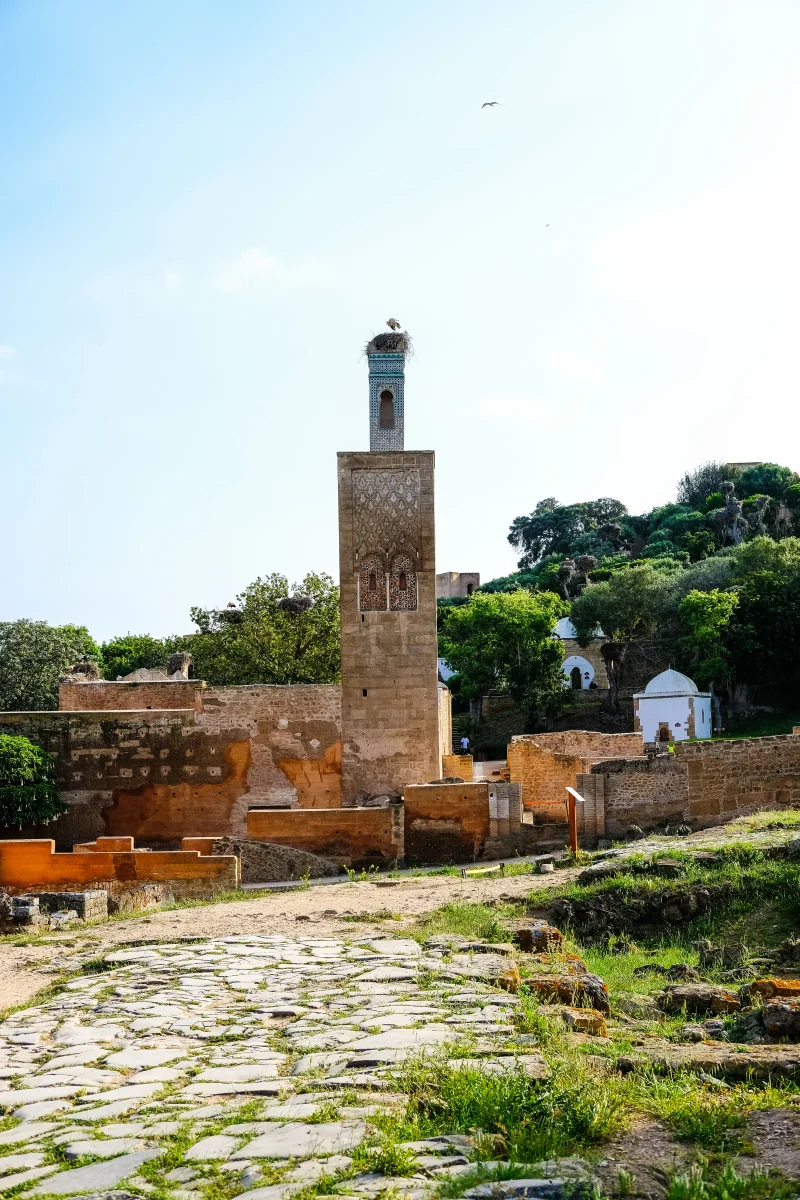
Lixus then complements the discovery of other ancient cities such as Volubilis or the archaeological site of Chellah in Rabat.
Explore More of Larache
To find the sites, monuments, and practical information available on MoroccoMuseum, check our:
To prepare your visit to the main archaeological site in the region:
Lixus in Larache: History and Visitor Information
This network allows for continued exploration between the modern city and one of Morocco's oldest archaeological sites.
Sources and References
- Ministry of Youth, Culture, and Communication — Archaeological Site of Lixus
- UNESCO World Heritage Centre — City of Lixus
- UNESCO — Tentative List of Morocco
- Ministry of Youth, Culture, and Communication — Valorization of the Archaeological Site of Lixus
Larache: Between the Atlantic and Ancient Civilizations
Larache is sometimes overshadowed by Tangier, Rabat, or Morocco's major imperial cities.
Yet, its heritage tells a particularly rich story.
The medina and the neighborhoods developed in the 20th century reflect the various influences that have shaped the modern city.
Just a few kilometers away, Lixus opens a window into a much older history.
Phoenicians, Carthaginians, Mauritanians, Romans, and later Islamic populations have left their marks on this hill overlooking the Loukkos.
Visiting Larache and Lixus is a journey through over two millennia of Moroccan history in just a few kilometers.
With MoroccoMuseum, explore the heritage of Larache, prepare your visit to Lixus, and discover the historical and archaeological sites that narrate the story of Morocco.