Moroccan Heritage, Volume 2: Casablanca and Expanding Destinations
What This Second Guide Reveals
Our first Moroccan heritage guide presented twelve destinations and their must-see monuments. Since its publication, the map has changed significantly.
A thirteenth city has joined our catalog: Casablanca, long seen merely as a gateway before heading to Marrakech or Fez. Several already-known destinations have also expanded considerably. Tangier, which had only one listed monument in our first guide, now boasts four. Ouarzazate, Larache, Tétouan, Chefchaouen, Béni Mellal, and Salé follow the same trend.
This second volume invites you to discover these new highlights. You will find:
- Casablanca, presented here in detail for the first time;
- new monuments enriching Tangier, Ouarzazate, Larache, and Asilah;
- deeper insights into Tétouan, Chefchaouen, Béni Mellal, and Salé;
- a new site in Meknès;
- activities and excursions to explore these places;
- suggested itineraries to incorporate these new additions into your trip.
This guide does not claim to be exhaustive: more additions will follow in a future volume 3.
Casablanca: The Major Absentee from Our First Guide
Casablanca was never founded as an imperial city, which distinguishes it from the destinations featured in our first guide. Born from an ancient Amazigh and then Phoenician trading post named Anfa, destroyed in the 15th century, and rebuilt by the Portuguese as Casa Branca, the city truly flourished under the French protectorate starting in 1912, when Marshal Lyautey and urban planner Henri Prost transformed it into Morocco's major economic port.
It is this dual identity — an ancient city and a 20th-century metropolis — that Casablanca reveals today to those who take the time to explore it.
Hassan II Mosque
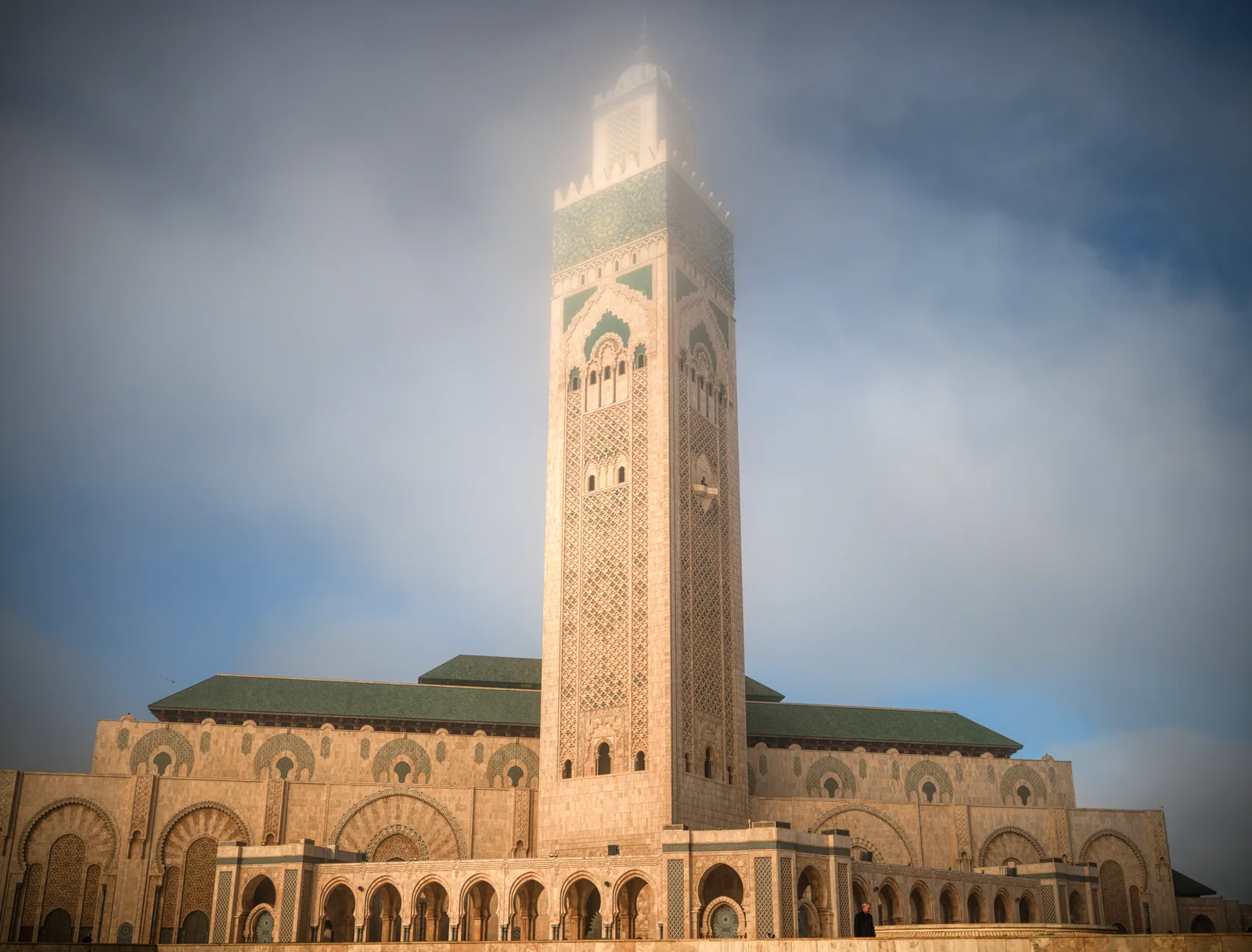
The Hassan II Mosque is the city's most famous monument and one of the largest religious buildings in the world. Built in seven years facing the Atlantic Ocean, it combines traditional Moroccan craftsmanship — zelliges, sculpted plaster, cedar wood — with modern engineering feats, including a retractable roof.
➡️ Prepare your visit to the Hassan II Mosque
Old Medina of Casablanca
More modest than those of Fez or Marrakech, the old medina of Casablanca retains an authentic historical urban fabric, far from the grand boulevards typically associated with the city.
➡️ Discover the old medina of Casablanca
Habous Quarter
Constructed in the 1930s by the urban planners of the protectorate, the Habous Quarter was meant to embody an "ideal" medina, conceived from Paris rather than inherited from the past. Today, fully integrated into the urban fabric, it remains one of the most pleasant neighborhoods to explore on foot.
La Sqala
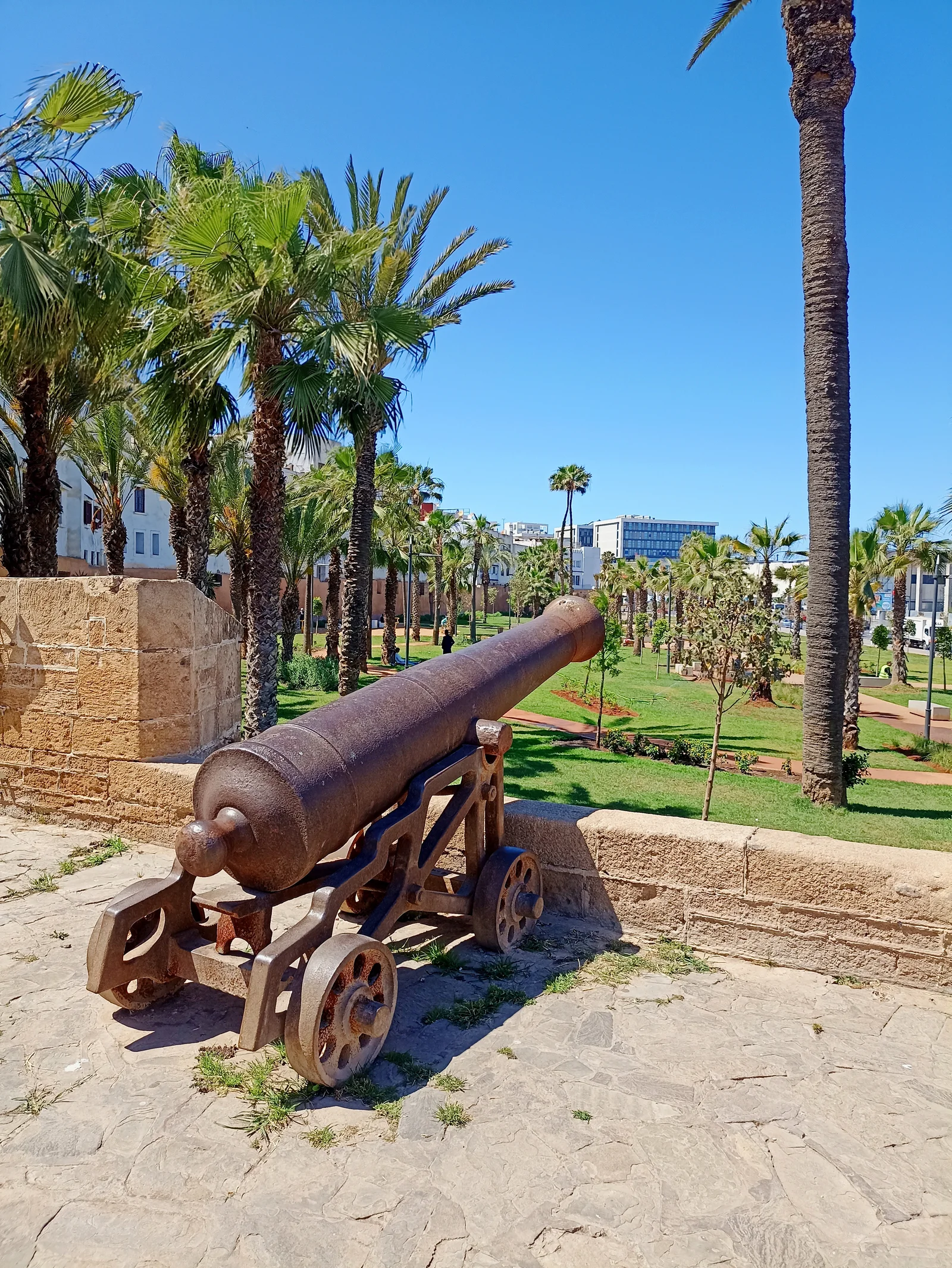
A fortified bastion from the 18th century, La Sqala still holds its cannons pointed towards the ocean, a remnant of a time when the city had to defend itself against maritime incursions.
➡️ Discover La Sqala of Casablanca
Mahkamat al-Pacha
Former court of the pasha of Casablanca, Mahkamat al-Pacha hides behind a discreet facade intricately carved cedar ceilings and interior courtyards adorned with zellige, worthy of the grand palaces of Marrakech.
Ettedgui Synagogue
The Ettedgui Synagogue bears witness to a history rarely associated with Casablanca: that of a Jewish community that was once one of the most significant in Morocco, with roots dating back several centuries.
➡️ Discover the Ettedgui Synagogue
Sacred Heart Church
Built during the protectorate and now desacralized, the Sacred Heart Church surprises with its Art Deco architecture, now converted into a cultural space.
➡️ Visit the Sacred Heart Church
Abderrahman Slaoui Museum and Villa des Arts
To extend your artistic exploration, the Abderrahman Slaoui Museum showcases a collection of Moroccan silverware and decorative arts, while the Villa des Arts hosts exhibitions of contemporary Moroccan art in a preserved Art Deco residence.
➡️ Explore the Abderrahman Slaoui Museum ➡️ Discover the Villa des Arts
Why Visit Casablanca to Discover Moroccan Heritage?
Casablanca effectively complements an initial trip focused on the imperial cities: it tells a more recent story of Morocco, shaped by the 20th century, without renouncing its older roots.
➡️ Consult our complete guide to Casablanca
MoroccoMuseum Offers: A Different Perspective on Casablanca
Guided tour of the Hassan II Mosque. MoroccoMuseum.com offers a guided tour of the Hassan II Mosque, one of the few places of worship in Morocco accessible to non-practitioners. A guide will accompany you through the prayer halls, recounting the seven years of construction and the artisanal techniques employed — zelliges, sculpted plaster, cedar wood.

Stroll through the old medina and the Habous. MoroccoMuseum.com offers a walking tour that connects the old medina of Casablanca to the Habous Quarter, to understand in one morning the vast gap between the historic city and this "ideal" medina imagined by the urban planners of the protectorate in the 1930s.
A cooking workshop at a local's home. To end your day in Casablanca differently than at a restaurant, MoroccoMuseum.com offers a cooking workshop at a local's home, where you prepare dishes and share a meal in a family home.

Tangier: A Medina That Has Grown Significantly
Our first guide presented Tangier through its Kasbah, medina, and the Hercules Caves. The city has since greatly enriched its heritage offerings.
Tangier Cinematheque
Located in the former Cinema Rif, on the Grand Socco square, the Tangier Cinematheque is a beautiful example of 20th-century architectural heritage repurposed into a vibrant cultural space.
➡️ Discover the Tangier Cinematheque
Petit Socco
The Petit Socco witnessed an international artistic scene in the 1950s: that of the Beat Generation writers, led by Paul Bowles, who made Tangier their refuge.
Perdicaris Palace
The Perdicaris Palace gained notoriety due to a sensational diplomatic episode: in 1904, its American owner was kidnapped by Raissouli, a local warlord — an affair that reached President Theodore Roosevelt.
Why Does Tangier Deserve a Return Visit?
With these additions, Tangier exceeds the mere promise of the Strait of Gibraltar: it reveals a cultural and diplomatic history as rich as its architectural heritage. A combined excursion to Cap Spartel and the Hercules Caves remains one of the city's most popular outings (activity already validated in the previous vol.2).
➡️ Deepen your discovery of Tangier
MoroccoMuseum Offers: The North from Tangier
From Tangier, an excursion to each new highlight in the North. MoroccoMuseum.com offers several day trips from Tangier: to Chefchaouen and the God’s Bridge of Akchour, or to Chefchaouen and Tétouan combined in one trip, to discover the Andalusian heritage of the second city. This transforms Tangier into a base for exploring the entire North without changing hotels each night.

Larache and the Excursion to Asilah
Larache was only known in our first guide for Lixus. The destination now enriches itself with a genuine complementary excursion.
Lixus
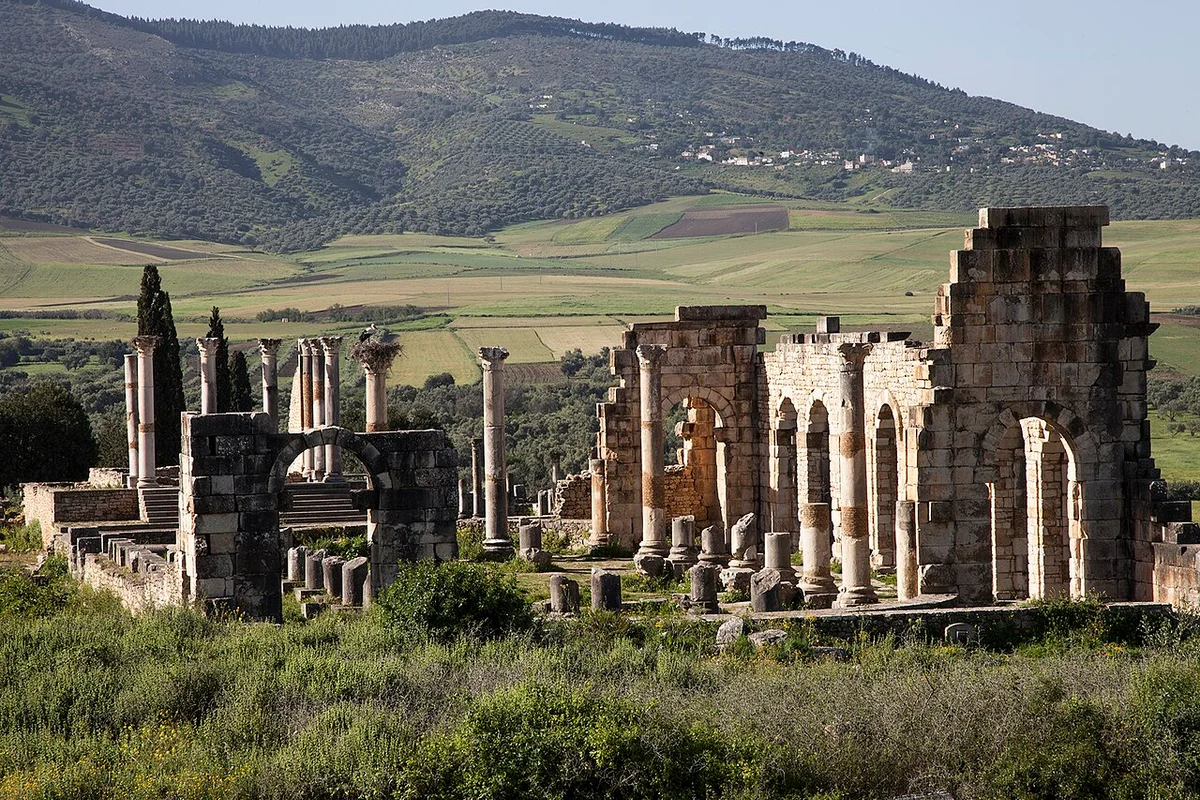
Lixus, a Phoenician then Roman city, remains the must-see of the destination and one of Morocco's major archaeological sites.
➡️ Prepare your visit to Lixus
Medina of Asilah
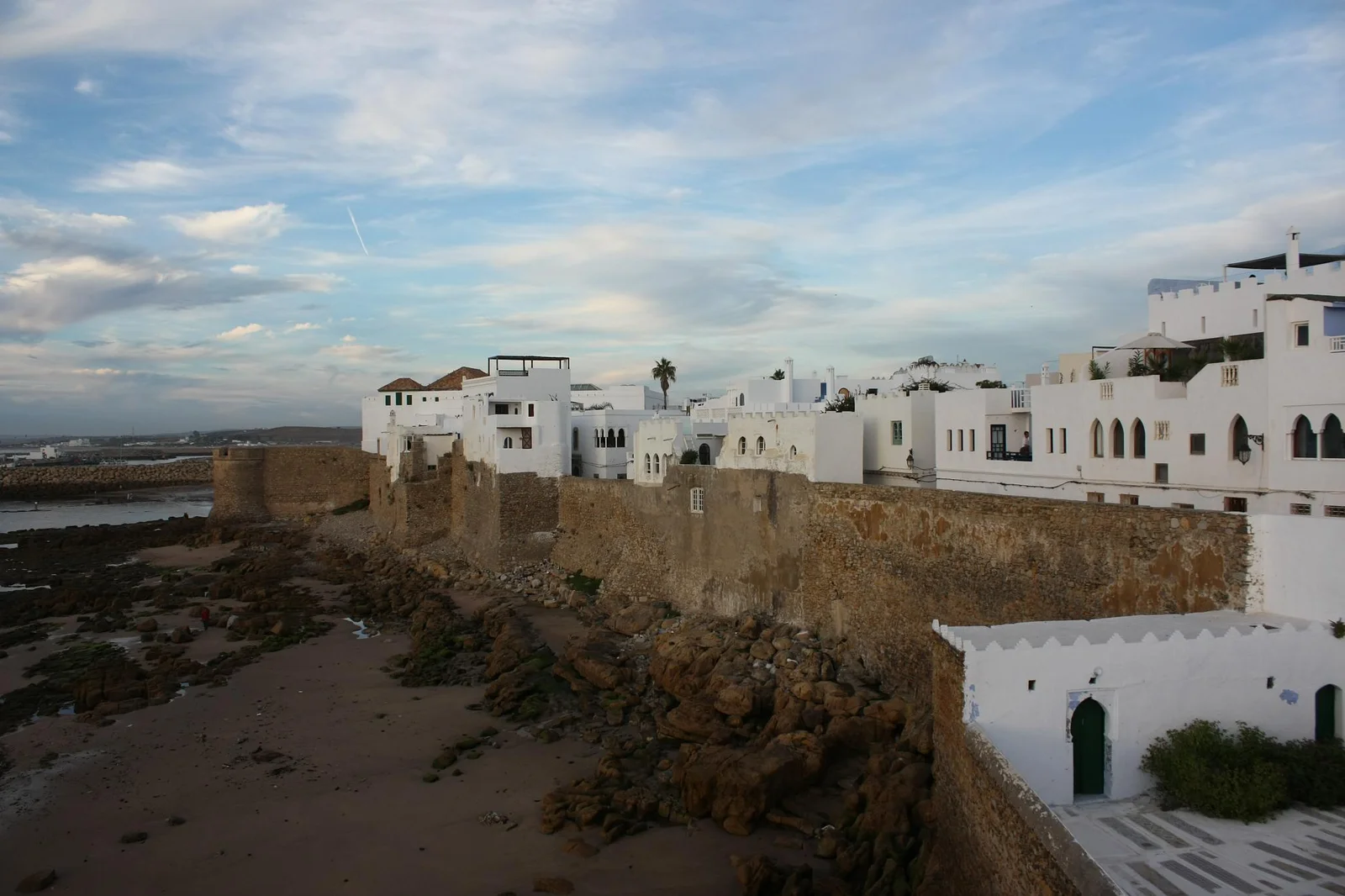
Thirty kilometers from Larache, the medina of Asilah stands out for its international street art festival, held every summer since 1978, which transforms its white walls into an open-air gallery.
➡️ Discover the medina of Asilah
Raissouli Palace
The Raissouli Palace keeps the memory of its owner, a warlord who became a local lord at the turn of the 20th century — the same Raissouli involved in the kidnapping of the owner of Perdicaris Palace in Tangier.
Bab el-Homar and Grand Mosque of Asilah
You enter the medina of Asilah through Bab el-Homar, one of the historical gates pierced in the 16th-century Portuguese ramparts. The Grand Mosque of Asilah, recognizable by its octagonal minaret, completes the visit.
➡️ Discover Bab el-Homar ➡️ Explore the Grand Mosque of Asilah
Why Visit Larache and Asilah?
Combining the two cities allows for a mix of ancient archaeology and more recent urban heritage, on an easy half-day excursion from Tangier or Rabat. No organized activity currently connects both cities in a turnkey outing — for now, it's best to get there on your own.
Ouarzazate: Beyond the Film Studios
Our first guide presented Ouarzazate primarily as the gateway to Aït-Ben-Haddou and film studios. The destination has since been enriched with several kasbahs.
Taourirt Kasbah
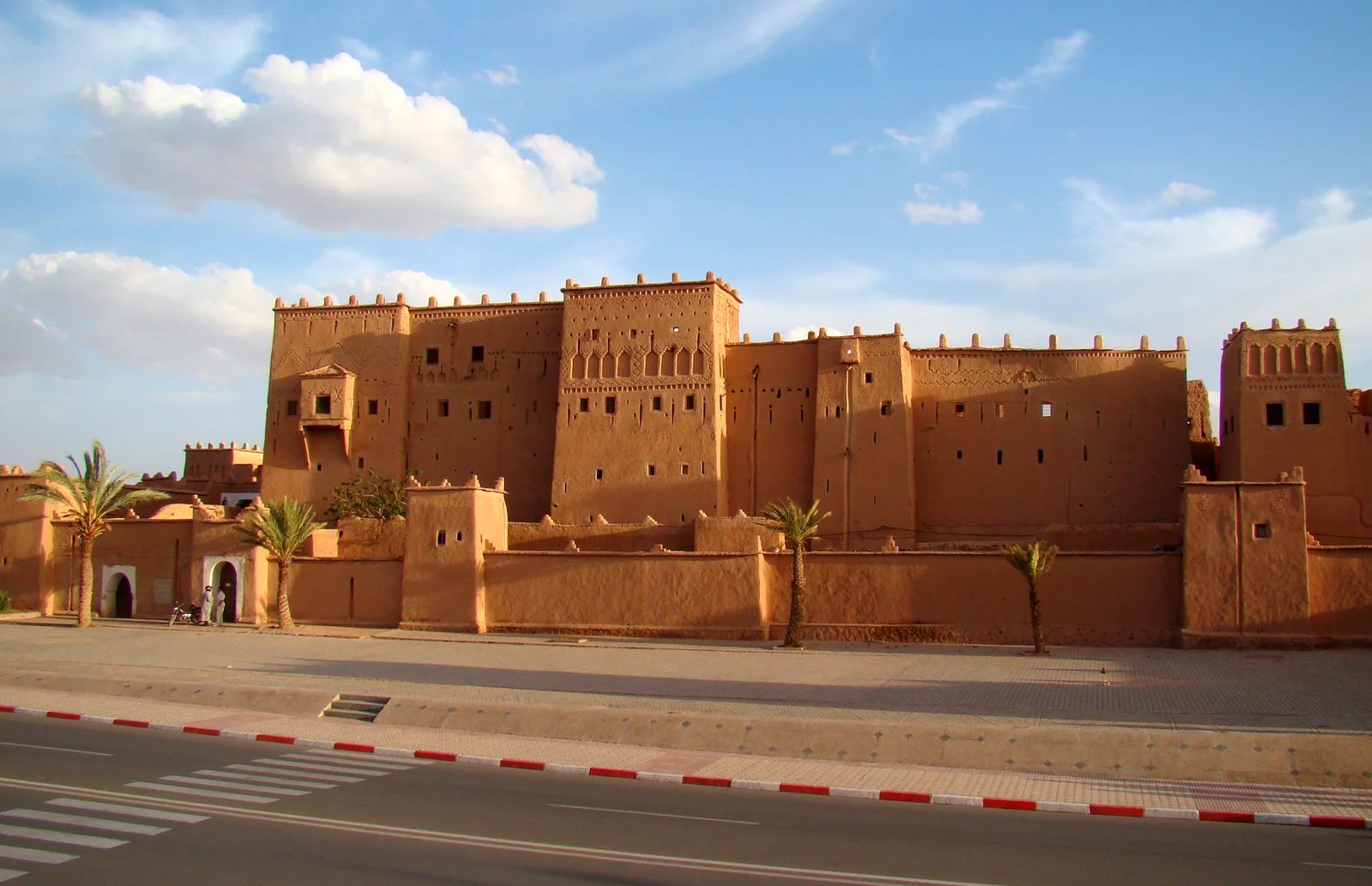
Former residence of the Glaoui caids, the Taourirt Kasbah remains one of the most visited historical sites in the city.
Tifoultoute Kasbah
A few kilometers away, Tifoultoute Kasbah completes the exploration of the fortified earthen architecture characteristic of the region.
Fint Oasis
The Fint Oasis offers a striking contrast: a palm grove nestled just a few kilometers from the arid landscapes that have made the region famous in film.
Why Does Ouarzazate Deserve More Than Just a Stop?
These additions show that Ouarzazate is not just a movie set: the city and its region carry a distinct architectural history, predating the first film shoots by several centuries.
MoroccoMuseum Offers: Tours and the Sahara
From Tangier to Marrakech in 7 days. MoroccoMuseum.com offers a 7-day tour from Tangier to Marrakech that now traverses Asilah and Larache before reaching Chefchaouen, Fez, and then Marrakech. Over a week, this journey combines the newly enriched heritage of the North and the major imperial cities already featured in our first guide, without ever repeating the same landscape.
The Sahara on a private tour. To extend a stay in Marrakech or Ouarzazate, MoroccoMuseum.com offers a private 5-day tour of the Sahara, with a stop at Aït-Ben-Haddou and passage through the kasbahs recently added to our catalog — Taourirt and Tifoultoute in particular. A private formula designed to take the time rather than rush through the kilometers.

Tétouan, Between Andalusia and Antiquity
Our first guide presented Tétouan through its medina, marked by Andalusian heritage. The destination now reveals a longer timeline.
Royal Palace and Moulay El Mehdi Square
The Royal Palace and Moulay El Mehdi Square complete the discovery of Tétouan's historic center.
➡️ Discover Moulay El Mehdi Square
Cotta Ruins and Ksar Sghir
These two lesser-known archaeological sites allow for a glimpse into a Roman presence well before the arrival of Andalusian refugees.
➡️ Discover the Cotta Ruins ➡️ Explore the Ksar Sghir Ruins
Why Deepen Your Visit to Tétouan?
These additions place the medina of Tétouan in a broader historical context, from Roman antiquity to the Andalusian heritage that shaped its architectural identity.
Chefchaouen, Beyond the Blue Walls
The Kasbah and the blue medina remain the highlights of Chefchaouen in our first guide. The destination now reveals other facets.
Akchour and the God’s Bridge
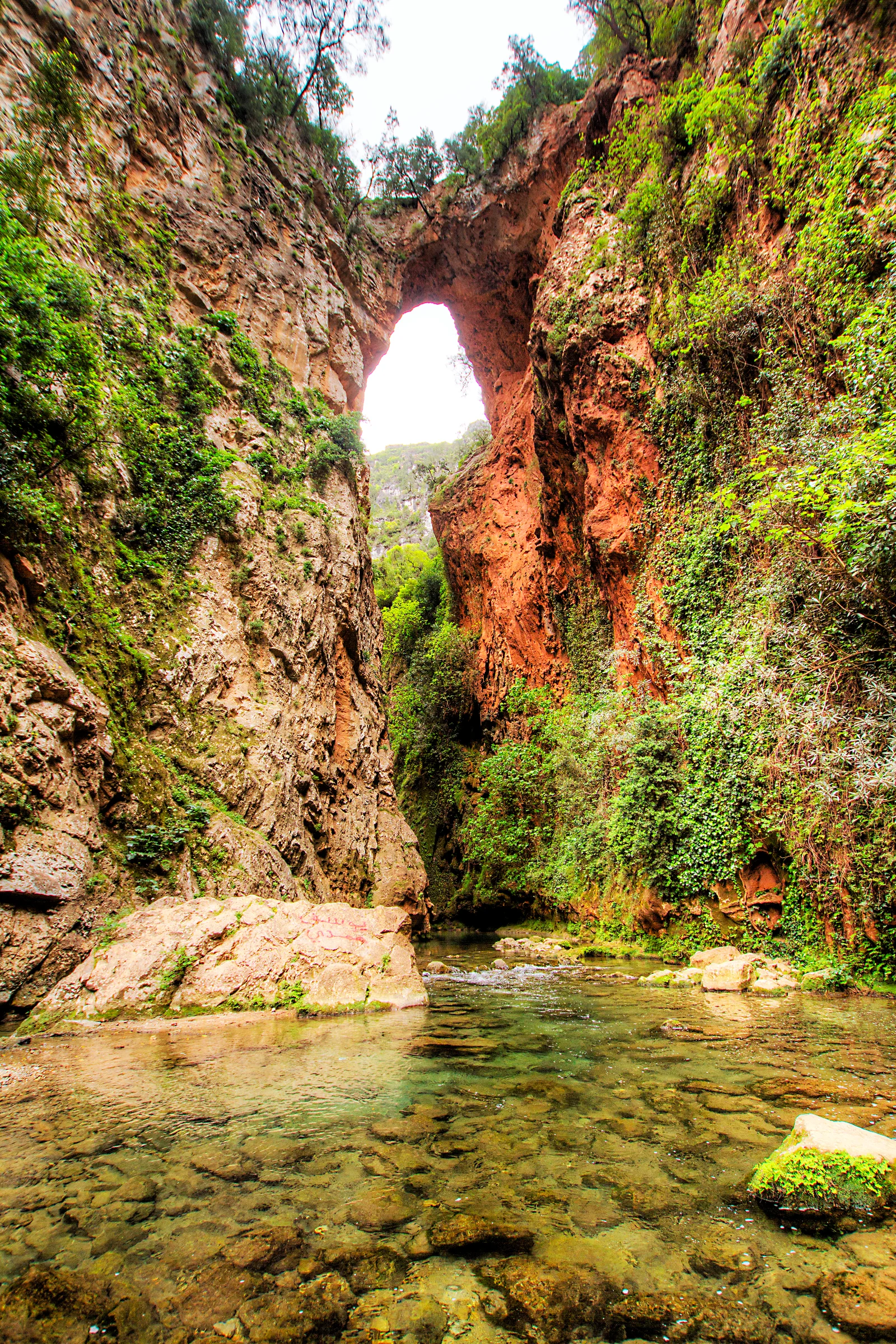
About twenty kilometers from the medina, Akchour hides the God’s Bridge, a stone arch sculpted by centuries of erosion, at the end of a hike that crosses rivers and olive groves.
➡️ Discover Akchour and the God’s Bridge
The Mellah and the Old Jewish Cemetery
The Mellah and the old Jewish cemetery bear witness to a community that left the city in the 1960s, but whose neighborhood — Derb Laâssel — still retains its name and memory.
➡️ Explore the Mellah of Chefchaouen
Why Venture Beyond the Blue Medina?
Akchour lends itself well to a full day outside the walls for those staying more than a day in the Rif.
Béni Mellal and Salé, Two Destinations Emerging from the Shadows
Béni Mellal: Kasbah of Tadla and Almoravid Minaret
In Béni Mellal, the fortress of Aïn Asserdoun remains the star of the destination. The Kasbah of Tadla, an ancient stronghold on the route between Fez and Marrakech, the Almoravid minaret of the Soumâa — one of the few remnants of this founding dynasty from the 11th century — and the Place de la Marche Verte now complete the destination.
➡️ Discover the Kasbah of Tadla ➡️ Explore the Almoravid minaret of the Soumâa
Salé: The Gates of the Corsair City
Long overshadowed by its neighbor Rabat, Salé was once the stronghold of the Corsair Republic, whose ships roamed the Atlantic in the 17th century. Bab Mrisa, the maritime gate through which they entered, still retains its impressive dimensions. Bab Lakhmis and the Kasbah of the Gnaouas, which overlooks the Bou Regreg estuary, complete this tour of fortifications.
➡️ Discover Bab Mrisa ➡️ Explore the Kasbah of the Gnaouas
Why Do These Two Cities Deserve a Visit?
Béni Mellal and Salé remain less frequented by foreign visitors, making them excellent destinations for those wishing to venture off the beaten path.
Meknès: A New Witness to Moulay Ismaïl's Ambition
Agdal Basin
Our first guide already featured Bab Mansour, the Mausoleum of Moulay Ismaïl, and Heri es-Souani. The Agdal Basin, a vast 17th-century water reservoir next to the latter, now completes this picture of the sultan's hydraulic ambition.
Explore These New Highlights by Type of Heritage
Palaces with Unique Destinies: Mahkamat al-Pacha (Casablanca), Raissouli Palace (Asilah), Perdicaris Palace (Tangier), Royal Palace (Tétouan).
Religious and Community Memory: Ettedgui Synagogue and Sacred Heart Church (Casablanca), Mellah and Jewish Cemetery (Chefchaouen), Grand Mosque of Asilah, Almoravid Minaret of the Soumâa (Béni Mellal).
Gates and Kasbahs: Bab Mrisa and Bab Lakhmis (Salé), Bab el-Homar (Asilah), Taourirt Kasbah and Tifoultoute (Ouarzazate), Kasbah of Tadla (Béni Mellal).
Archaeological Sites: Lixus (Larache), Cotta Ruins and Ksar Sghir (Tétouan).
Nature and Escapes: Akchour and the God’s Bridge (Chefchaouen), Fint Oasis (Ouarzazate).
Practical Tips for These New Stops
- Check updated hours before your visit, especially for sites recently added to our guides.
- Some places of worship, like the Grand Mosque of Asilah or the Hassan II Mosque, have access restrictions for non-practitioners — however, the Hassan II Mosque offers dedicated guided tours.
- For Akchour, wear hiking shoes: the trail to the God’s Bridge crosses several fording points.
- The Ouarzazate/Aït-Ben-Haddou and Tangier/Cap Spartel excursions can easily be booked as guided day activities.
Prepare Your Visits with MoroccoMuseum
Each of the sites presented in this guide has its own practical sheet — hours, prices, access — and the relevant destinations now have a complete guide to prepare your visit in detail.
➡️ Explore the monuments and heritage sites of Morocco
➡️ Discover our guides and travel inspirations
A Guide Set to Grow
This second volume does not close the subject. Other destinations will continue to enrich, and a third volume will come, in due time, to tell the next chapter.
Moroccan heritage is not only visited: it is discovered, understood, and passed on — one monument at a time.
For answers to the most frequently asked practical questions before departing, check our article 50 Questions Tourists Ask Before Visiting Morocco.
References and Sources
- Ministry of Culture, Youth and Sports — Morocco
- UNESCO — Morocco: Properties Inscribed on the World Heritage List
- MoroccoMuseum — Heritage of Morocco
- MoroccoMuseum — Guides and Inspirations
- MoroccoMuseum — What to Visit in Morocco, Volume 1